What if your Saturday mornings didn’t involve battling a lawnmower in 95-degree humidity or adhering to the strict “Extreme” water shortage restrictions currently affecting our region? For many South Florida homeowners, the dream of a lush, emerald landscape often feels like a losing battle against intense heat, persistent pests, and rising utility costs. You aren’t alone if you’ve looked at a patchy, sun-scorched yard and wondered: is artificial grass worth it in florida? It’s a question that balances the desire for a pristine aesthetic with the practical realities of long-term property investment.
We understand that your home is a sanctuary, and maintaining its curb appeal shouldn’t feel like a full-time commitment. In this 2026 cost-benefit analysis, we’ll demonstrate how high-end synthetic turf serves as a sophisticated lifestyle upgrade that solves the twelve-month maintenance trap. You’ll discover the financial breakeven points, the impact of the 2025 Florida HB 683 legislation, and the resilience of custom-engineered drainage systems during tropical storms. This guide provides a clear, data-driven roadmap to help you decide if a permanent green lawn is the right choice for your home and your peace of mind.
Key Takeaways
- Understand how Florida’s year-round growing season creates a continuous maintenance expense and why eliminating tropical pests provides immediate relief for homeowners.
- Calculate the long-term return on investment to determine if is artificial grass worth it in florida by comparing upfront installation costs against 15 years of monthly savings.
- Learn about the latest 2026 cooling technologies and specialized infills that ensure your synthetic lawn remains comfortable and resilient under the intense South Florida sun.
- Explore how custom-designed solutions for pet-friendly areas and professional-grade putting greens can transform problematic yard patches into high-performance landscape features.
- Identify the critical red flags to avoid when selecting a local installer to ensure your project meets high standards for craftsmanship and tropical storm drainage.
The Reality of Maintaining a Florida Lawn: Why Homeowners Are Switching
Living in South Florida offers a paradise of sunshine, but that same climate creates a relentless cycle of lawn maintenance. While northern homeowners enjoy a winter reprieve, Florida lawns never sleep. This 365-day growing season means your mower, edger, and budget are constantly in motion. When evaluating whether is artificial grass worth it in florida, you must first account for this non-stop demand on your resources. Beyond the constant growth, tropical pests like chinch bugs and sod webworms can decimate a yard in days, while dollar spot fungus thrives in our high humidity. These biological pressures require a heavy rotation of chemical treatments that often fail to produce a truly healthy lawn.
Coastal homeowners face an even steeper challenge. The salt-laden air from the Atlantic or Gulf is corrosive to traditional sod varieties, often leading to unsightly brown patches regardless of how much you water. Since the history and development of artificial turf began, material science has evolved to create fibers that remain impervious to salt air and intense UV exposure. This resilience is a key factor for residents from Miami to Palm Beach. Additionally, local municipalities are tightening water restrictions. With the Southwest Florida Water Management District extending “Extreme” water shortage declarations through late 2026, keeping natural grass green is becoming both legally difficult and financially draining.
The Hidden Toll of Constant Upkeep
Maintaining a pristine natural lawn in 90-degree weather is more than a chore; it’s a physical tax. Many residents find themselves losing every Saturday morning to yard work or paying rising premiums for professional landscaping services. These crews, while effective, often rely on noisy gas-powered equipment that disrupts the peace of your neighborhood. Switching to a synthetic solution eliminates the need for fertilizers and pesticides, which often wash into our local waterways during daily summer downpours. It’s an investment in your time and the local environment.
Why Natural Sod Struggles in South Florida
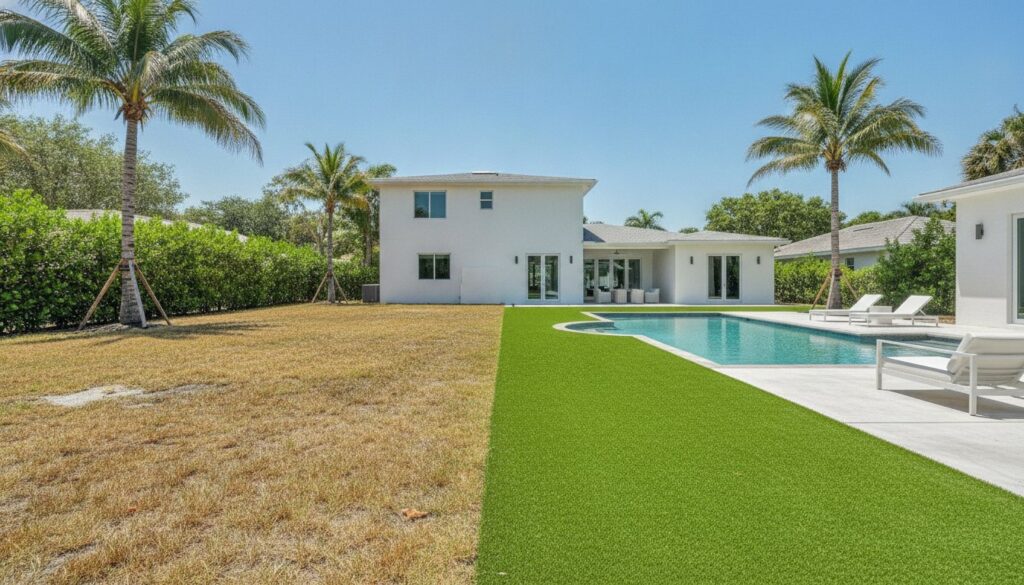
Even with perfect care, natural sod often fails under the dense shade of mature tropical canopies like live oaks or banyan trees. Our sandy soil lacks the organic matter needed to hold nutrients, meaning expensive fertilizer often bypasses the roots entirely. During our intense tropical storms, these sandy foundations are prone to erosion. When homeowners ask is artificial grass worth it in florida, they often find the answer in the structural benefits. High-performance turf systems utilize custom-engineered drainage that manages heavy rainfall far more effectively than compacted soil. This ensures your landscape remains intact even after a South Florida deluge.
Calculating the ROI: Is Artificial Grass Actually Worth the Money?
While the initial capital requirement for synthetic turf is higher than traditional sod, the long-term financial trajectory tells a different story. When considering is artificial grass worth it in florida, homeowners must look past the installation day and evaluate the 15-year lifecycle. A natural lawn in our climate demands constant financial inputs. By eliminating monthly recurring costs like professional mowing, fertilization, and pest control, the system begins paying for itself immediately. This transition from a landscape liability to a high-performance asset is a primary driver for the switch among savvy property owners.
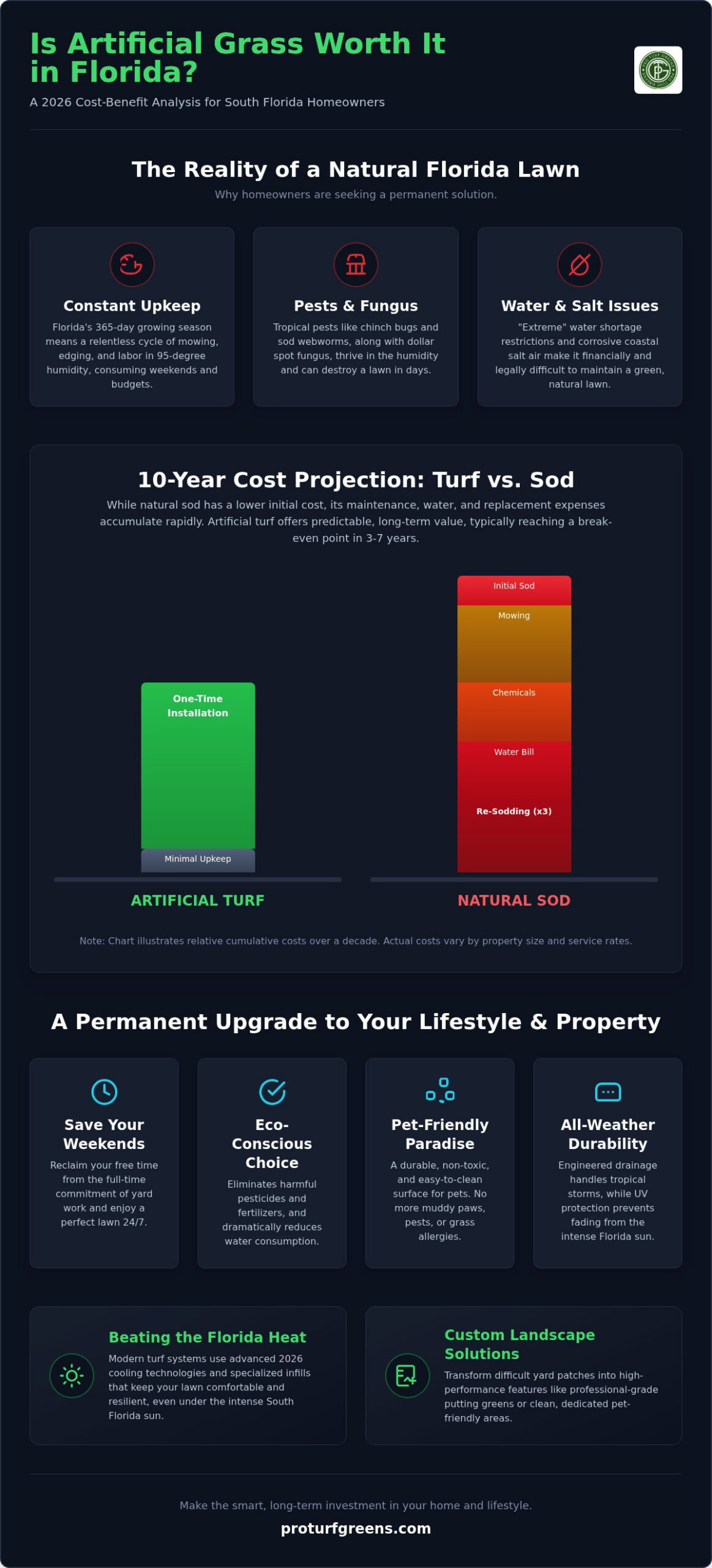
Based on 2026 data, the break-even point for a professional installation typically occurs between three and seven years. This window depends on your current water rates and the frequency of your landscaping services. While a university study on turf heat highlights the thermal differences between natural and synthetic surfaces, the financial cooling effect on your bank account is undeniable. Over a decade, the compounding savings on utilities and chemicals often exceed the original cost of the project.
Turf vs. Sod: A 10-Year Financial Comparison
In Florida, St. Augustine sod often requires replacement every three to four years due to disease, salt damage, or heavy tropical rain. Over a decade, you might pay for three full lawn replacements just to maintain basic curb appeal. A 2,000-square-foot lawn can consume over 110,000 gallons of water annually according to average consumption rates. Synthetic turf reduces this consumption to nearly zero. When you aggregate the costs of fuel for mowers, bags of fertilizer, and professional pest treatments, the fiscal advantage shifts heavily toward turf.
The Value of an ‘Always-Ready’ Outdoor Space
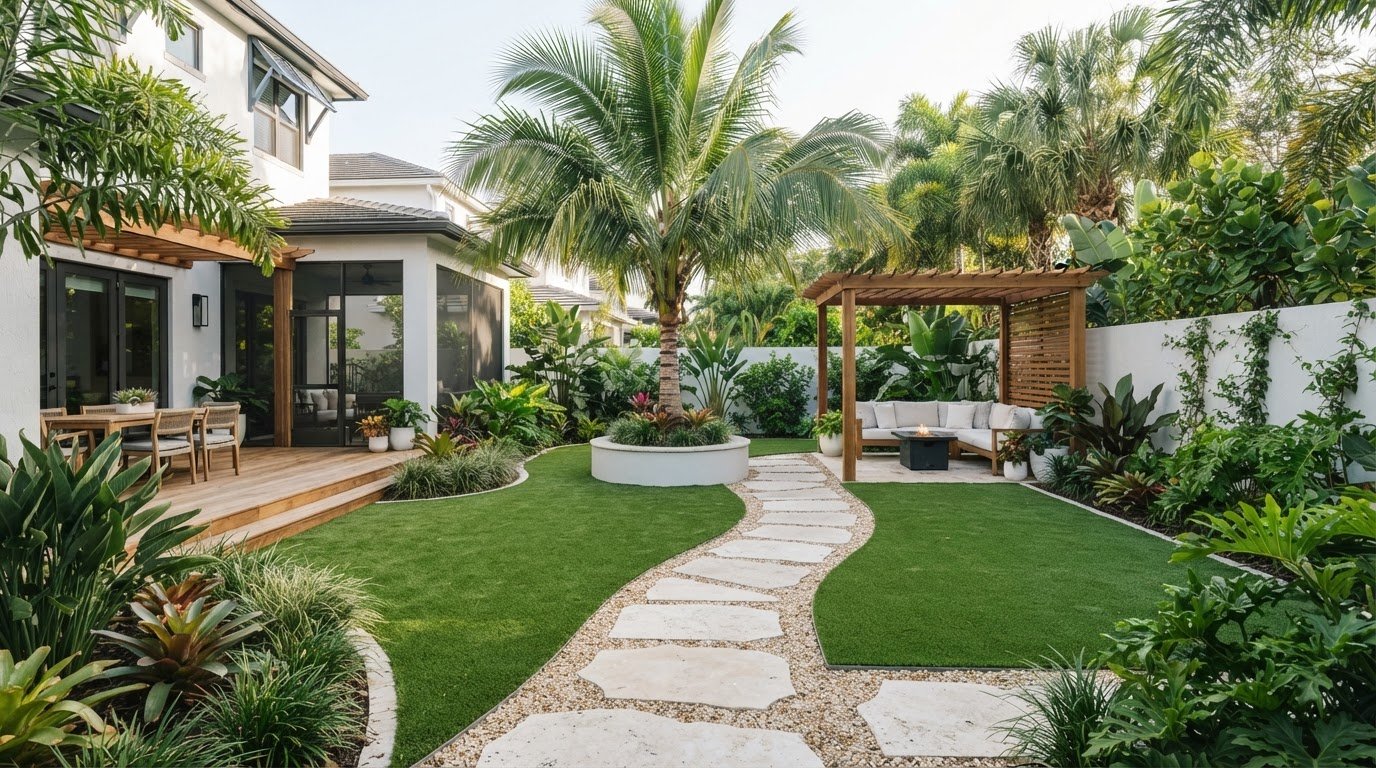
Beyond the ledger, there is the intangible value of consistent aesthetic excellence. In luxury markets like Boca Raton and Weston, a perfectly manicured lawn is a prerequisite for high resale values. A custom-designed turf system provides a resort-style aesthetic that never fades, regardless of the season. It also keeps your interiors cleaner by preventing mud or grass clippings from being tracked inside. When deciding if is artificial grass worth it in florida for your home, consider the value of an outdoor space that is always ready for entertaining. You can explore custom lawn and pet turf solutions to see how these benefits apply to your specific property and lifestyle goals.
Beating the Heat: Addressing the #1 Florida Turf Concern
The most frequent hesitation homeowners express regarding synthetic landscapes is the surface temperature during our peak summer months. It’s a valid concern; older, low-quality turf products could indeed become uncomfortably hot under the direct South Florida sun. However, material innovation has fundamentally changed the conversation about whether is artificial grass worth it in florida. Today’s high-end installations utilize specialized yarns designed to reflect infrared light rather than absorbing it, ensuring the lawn remains an inviting part of your home even in July.
Modern Cooling Technologies for the Florida Sun
Modern synthetic systems leverage advanced infill technologies like HydroChill to manage thermal retention. These systems utilize the power of evaporative cooling to significantly lower surface temperatures. By storing moisture from rainfall or a brief morning rinse, the infill releases water vapor slowly as the sun heats the surface. This process can reduce turf temperatures by 30 to 50 degrees compared to standard synthetic products. Choosing a slightly higher pile height and a multi-toned, lighter green blade also helps by increasing airflow between the fibers. Keeping your lawn comfortable during an August peak is often as simple as a thirty-second misting before you step outside.
Water Drainage and Hurricane Resilience
Beyond temperature, resilience during our intense tropical storm season is a critical factor for any South Florida landscape. Standard sod often becomes oversaturated during heavy downpours, leading to standing water that serves as a primary breeding ground for mosquitoes. Professional turf systems are engineered with perforated backings and a custom-crushed stone base that facilitates rapid drainage. These systems can often process water at rates exceeding 30 inches per hour, which far outperforms the percolation rates of our native sandy soils. This infrastructure prevents soil erosion and protects your property from the shifting or minor sinkholes that often plague natural lawns after a deluge.
When you weigh these engineering advancements, the question of is artificial grass worth it in florida moves beyond simple aesthetics. It’s about creating a landscape that offers environmental benefits through massive water conservation and the total elimination of chemical runoff into our local canals and the Everglades. By selecting a custom-tailored solution built for our specific climate, you’re investing in a high-performance outdoor space that remains functional, cool, and beautiful regardless of the weather forecast.
Specialized Uses: When Turf is the Only Real Solution
In many scenarios, the question isn’t just about general curb appeal. For specific high-impact areas of your property, the answer to is artificial grass worth it in florida becomes clear because natural sod simply cannot survive the stress. Whether it’s the recurring chemical burn from pets or the structural demands of a luxury driveway, certain applications require a material that goes beyond biological limits. Natural grass simply dies in these conditions. Synthetic turf, however, thrives where nature fails.
Artificial Turf for Dogs in South Florida
Pet owners often struggle with a cycle of replacing sod every few months. Traditional grass quickly develops unsightly brown patches from urine and turns into a muddy mess after our frequent tropical downpours. High-performance pet turf systems eliminate these issues through advanced antimicrobial protection and rapid-drain backings that prevent liquid from pooling. These systems are built to withstand digging and high-speed ‘zoomies’ without thinning or tearing. It’s a permanent solution for a sanitary yard. For a deeper look at creating a durable space for your four-legged family members, check out our Artificial Turf for Dog Runs in South Florida: The 2026 Pet Owner’s Guide.
Golf and Lifestyle Upgrades
For the dedicated golfer, maintaining a consistent practice surface in Florida’s humidity is nearly impossible with natural grass. Professional-grade putting greens utilize high-density fibers that hold their speed and true roll regardless of the weather. These custom-tailored installations allow you to adjust green speeds and fringe textures to match your local club’s conditions. This creates a PGA-caliber experience in your own backyard. You can find technical specifications and design inspiration in our Professional Backyard Putting Green Installation: The 2026 Elite Guide.
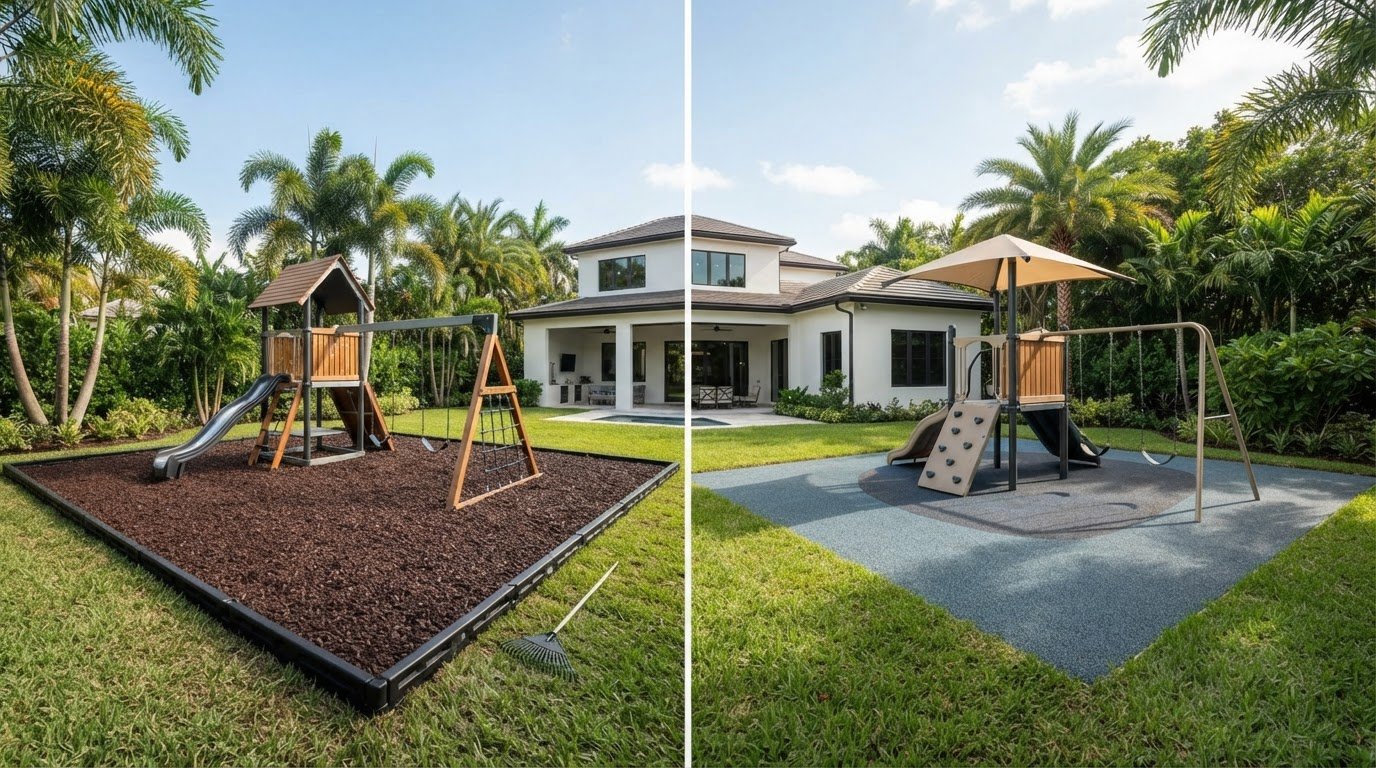
The “Turf Ribbon” aesthetic is another area where synthetic material is the only viable choice. Integrating strips of green between driveway pavers or stone walkways creates a modern, high-end look that defines South Florida luxury. Natural grass in these narrow spaces is impossible to mow and quickly dies from the heat radiating off the stones. Synthetic turf remains perfectly manicured in these tight spots, providing a permanent pop of color that withstands vehicle weight. Similarly, for playgrounds and recreational areas, turf offers a consistent safety surface that won’t wash away during a storm or harbor pests like fire ants. When you consider these high-performance needs, is artificial grass worth it in florida? For most homeowners, the answer is found in the versatility of the product. If you’re ready to see how these specialized applications can elevate your property, you can explore our custom-designed turf solutions today.
Conclusion: Is it Worth It for Your Florida Home?
Deciding to transition from natural sod to a synthetic landscape is a significant step toward modernizing your property. For most homeowners in our unique climate, the question of is artificial grass worth it in florida is answered by the immediate improvement in quality of life. You’re no longer just buying a lawn; you’re investing in a high-performance infrastructure that withstands salt air, intense UV exposure, and tropical deluges. While the upfront cost is higher than a palette of St. Augustine sod, the elimination of chemical runoff, water bills, and weekend labor creates a compelling long-term value proposition.
A Quick Decision Checklist
To determine if this investment aligns with your specific needs, consider the following factors. Turf is often the superior choice when your priorities include:
- High-traffic areas or pets: If your yard currently suffers from brown spots or muddy tracks, synthetic fibers provide a permanent, sanitary solution.
- Challenging environments: If you’re struggling with deep shade under palms or sandy soil that refuses to hold nutrients, turf provides a lush look where nature fails.
- Lifestyle freedom: If your primary goal is to reclaim your weekends and reduce your environmental footprint by eliminating fertilizers and pesticides, turf is the clear winner.
- Budget considerations: If your primary goal is the lowest possible upfront cost, natural sod remains the entry-level option, though it carries higher recurring expenses.
Selecting a Professional South Florida Installer
The longevity of your lawn depends entirely on the quality of the installation and the materials used. In the intense Florida sun, “cheap” turf options often degrade within a few years because they lack sufficient UV-stability. It’s vital to partner with a seasoned expert who understands local drainage requirements and hurricane resilience. A dedicated partner will ensure your base layer is engineered to prevent shifting or sinkholes during our heavy summer rains. They should also provide a robust local warranty that protects your investment against the specific environmental pressures of the region.
When you’re ready to evaluate your property’s potential, a professional site assessment is the logical next step. This allows for a custom-tailored design that accounts for your specific sunlight patterns, drainage needs, and aesthetic goals. You can learn more about the process in our guide to a Miami Artificial Turf Consultation: What to Expect in 2026. By choosing a meticulous craftsman, you ensure that the answer to is artificial grass worth it in florida remains a resounding “yes” for decades to come. Your home deserves a landscape that is as resilient and beautiful as the South Florida lifestyle itself.
Invest in a Landscape That Works for You
Transforming your yard into a high-performance landscape is a decision that pays dividends in both time and property value. By moving away from the relentless 12-month maintenance cycle, you gain an outdoor space that is always ready for entertaining or relaxation. Our custom designs for Fort Lauderdale, Miami, and Palm Beach utilize specialized cooling infill to combat the heat, ensuring a surface that remains comfortable even in mid-August. With a 15+ year lifespan, your professional installation serves as a durable, beautiful foundation for your home’s exterior.
The data from 2026 suggests that the financial and lifestyle benefits far outweigh the initial costs. When you weigh the reduction in utility bills against the consistent aesthetic appeal, it becomes easy to see why is artificial grass worth it in florida for discerning homeowners. We’re here to act as your knowledgeable guide through every step of the design and installation process. We invite you to Request Your Free South Florida Turf Consultation today. Let’s work together to create a resilient, luxury lawn that you’ll be proud of for years to come.
Frequently Asked Questions
Does artificial grass get too hot for dog paws in Florida?
High-quality synthetic turf remains safe for dog paws when integrated with specialized cooling infills. These advanced materials utilize evaporative cooling to significantly reduce surface temperatures during peak sunlight hours. While standard surfaces might absorb heat, a brief rinse with a garden hose provides immediate relief and lowers the temperature further. It’s a reliable way to ensure your pets enjoy the outdoors comfortably even when the Florida sun is at its most intense.
How long does artificial turf actually last in the Florida sun?
A professionally installed synthetic lawn typically lasts between 15 and 25 years in our tropical environment. The longevity depends heavily on the quality of the UV inhibitors integrated into the yarn during the manufacturing process. These stabilizers prevent the fibers from becoming brittle or breaking down under constant solar exposure. Choosing a custom-engineered product ensures your landscape maintains its structural integrity and aesthetic excellence for nearly two decades of heavy use.
Will artificial grass increase the risk of flooding during a hurricane?
Modern synthetic systems actually reduce flooding risks because they are engineered with high-flow drainage backings. These systems can often process water at rates exceeding 30 inches per hour, which is significantly faster than our native sandy soil. By providing a stable, permeable base, the turf prevents standing water from pooling during tropical storms. This efficient water management helps protect your property’s foundation and eliminates potential mosquito breeding grounds after a heavy deluge.
Can you put artificial turf over existing Florida sand or dirt?
Installing synthetic turf directly onto raw sand or dirt is not a recommended practice as it leads to uneven surfaces and poor drainage. A professional installation requires excavating the existing soil and replacing it with a custom-compacted base of crushed stone or aggregate. This foundation provides the necessary stability to prevent shifting or sinkholes. It ensures your lawn remains perfectly level and resilient against the heavy foot traffic common in South Florida homes.
Is artificial grass allowed by most Florida HOAs?
Most Florida Homeowners Associations now permit synthetic turf thanks to the 2025 passage of House Bill 683. This legislation prevents local governments and HOAs from banning artificial grass on residential properties of one acre or less. However, associations can still regulate aesthetic elements such as pile height, color, and material quality. It’s always a professional best practice to submit your design to your Architectural Review Committee for final approval before beginning your project.
How do you clean artificial grass if you have pets?
Cleaning your lawn is a straightforward process that primarily involves regular rinsing with a standard garden hose to remove dust and pet waste. For households with multiple pets, using an enzymatic cleaner helps neutralize odors and maintain a sanitary environment. Because high-quality pet turf features antimicrobial protection, the risk of bacteria buildup is significantly reduced. This simple maintenance routine ensures your outdoor space remains fresh and inviting for your family throughout the entire year.
Does artificial grass fade over time with Florida’s intense UV rays?
High-end artificial grass is designed specifically to resist fading through the use of advanced UV-stabilized polymers. These inhibitors are not just a coating; they’re part of the chemical makeup of the grass blades. This ensures that the emerald green hue remains consistent despite the relentless South Florida sun. When residents ask is artificial grass worth it in florida, the permanence of the color is often a deciding factor for those tired of sun-bleached natural sod.
What is the average cost per square foot for professional installation in South Florida?
Determining the investment for your project involves evaluating several variables including the total square footage, the complexity of the site’s drainage needs, and the specific turf variety selected. While upfront costs are higher than traditional sod, the long-term savings on water and maintenance often justify the expenditure. To understand if is artificial grass worth it in florida for your specific property, a custom site assessment is necessary to provide an accurate estimate based on your unique landscape goals.