In the relentless humidity of South Florida, a pristine synthetic lawn can turn from a luxury oasis into a source of musty odors and unsightly black patches if the invisible science of drainage is ignored. You likely made the switch to artificial grass to escape the constant cycle of mowing and mud, expecting a clean environment for your family and pets. It is discouraging to find that the heat and moisture of our tropical climate can occasionally lead to bacterial growth or visible spores on a surface that was meant to be worry-free. Preventing mold on artificial turf florida properties requires more than just a surface rinse; it demands a sophisticated understanding of material engineering and moisture management.
We are here to share the professional secrets that keep high-end lawns fresh and resilient even during the peak of hurricane season. You will discover how the 2026 FDEP standards for permeability affect your property and which antimicrobial infills, such as Wonderfill or OptiFILL+, are most effective at neutralizing odors. This guide provides a clear maintenance schedule and identifies the specific installation techniques that ensure your backyard remains a beautiful, hygienic extension of your home for years to come.
Key Takeaways
- Understand how South Florida’s unique humidity creates a moisture-trapping micro-climate beneath the turf and learn the professional methods used to disrupt spore growth.
- Learn why high-flow percolation rates and edge-to-edge permeable backings are the most essential metrics for preventing mold on artificial turf florida installations.
- Identify the technical benefits of antimicrobial-coated infills over standard silica sand for maintaining a hygienic, odor-free environment for your family and pets.
- Establish a proactive 2026 maintenance schedule that includes monthly deep rinses and critical hurricane-prep steps to ensure your drainage paths remain clear.
- Discover why specialized professional installation is the most reliable way to avoid the common drainage failures that often plague DIY projects within the first two years.
Why Florida Humidity is a “Mold Factory” for Artificial Turf
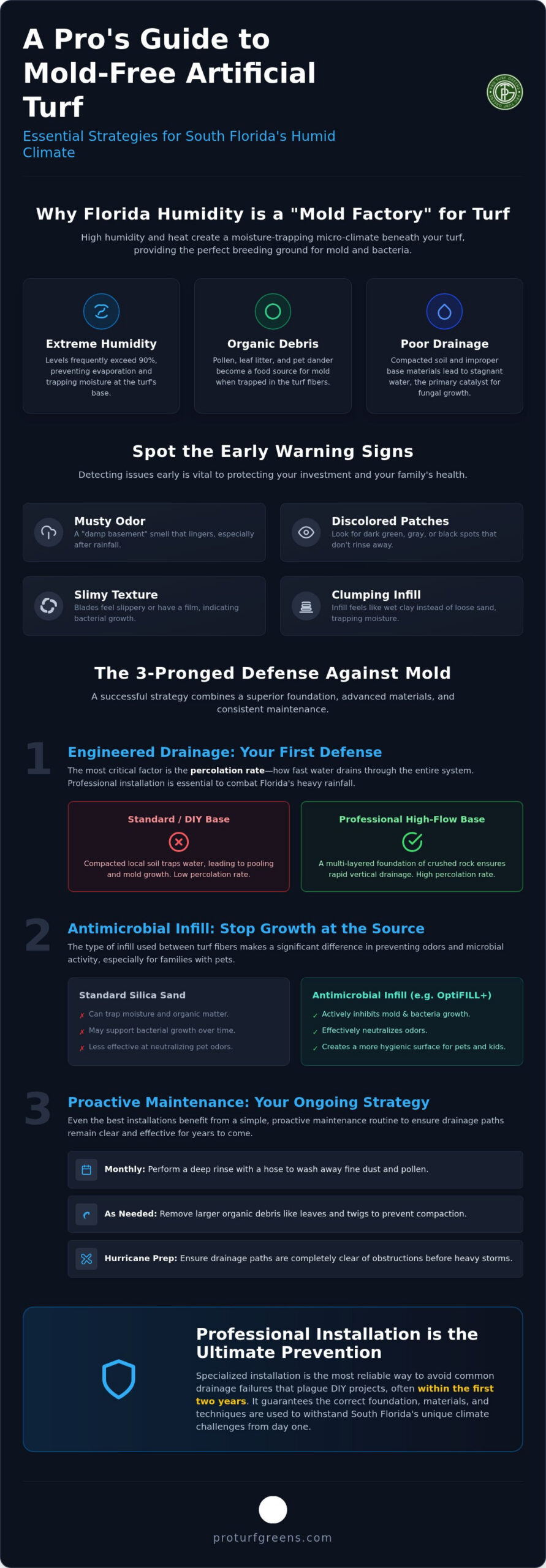
Florida’s subtropical climate presents a unique engineering challenge for synthetic lawns that differs significantly from the arid conditions of the Southwest. Our state frequently experiences humidity levels exceeding 90 percent, which creates a specific, moisture-heavy micro-climate between the turf backing and the sub-soil. This hidden layer often remains damp long after a storm passes because the surrounding air is too saturated to allow for rapid evaporation. When you combine this persistent moisture with South Florida’s high temperatures, you create the ideal conditions for mold growth. Understanding these environmental pressures is the first step in effectively preventing mold on artificial turf florida homeowners invest in for their properties.
Stagnant water and trapped organic matter are the primary drivers of fungal issues in our region. In drier climates, the sun acts as a natural disinfectant by drying out surfaces quickly. In Florida, the density of the turf fibers can trap water in the “thatch” layer, turning it into a catalyst for microbial activity. When fine dust, skin cells, or pet dander settle into the fibers, they provide the biological nutrients mold needs to thrive. This is why local expertise is essential; a lawn installed with desert-style drainage simply won’t survive a Florida summer without developing issues.
The Role of Organic Debris in South Florida
The idea that synthetic grass requires “zero maintenance” is a myth in the Sunshine State. Florida oak pollen and tropical leaf litter are particularly aggressive contributors to mold colonies. During our heavy seasonal rains, these fine organic particles are often driven deeper into the turf system rather than being washed away. This process creates a compacted layer of debris at the base of the fibers that holds onto moisture like a sponge. Without a proactive strategy to clear this organic “food” source, the turf’s drainage capacity will slowly diminish, inviting mold to take root in the cooling shade of the synthetic blades.
Signs Your Turf is Developing a Mold Problem
Early detection is vital for protecting your high-end investment and ensuring the health of your family and pets. The most common indicator is a subtle, “musty basement” odor that lingers in your backyard, especially after a light rain. You should also look for these specific visual and tactile cues:
- Slimy Textures: If the grass blades feel slippery or have a film that doesn’t disappear after a dry spell, bacteria or mold may be present.
- Discolored Patches: Watch for dark green, gray, or black spots that don’t wash away with a standard garden hose.
- The Clumping Infill Test: Gently push your fingers into the turf. If the infill feels like wet clay or clumps together rather than moving like loose sand, moisture is trapped at the foundation.
The Foundation: High-Flow Drainage as Your First Defense
The most critical metric for any Florida lawn isn’t the aesthetic of the blades; it’s the percolation rate. This technical specification measures how many inches of water can pass through the turf and sub-base per hour. In a region where a single afternoon thunderstorm can drop several inches of rain, a low percolation rate leads to stagnant water. Controlling moisture is the key to preventing mold on artificial turf florida homeowners must prioritize during the design phase. Without a high-flow system, even the most expensive synthetic grass will eventually trap the humidity that fuels fungal growth.
A standard soil base is a recipe for mold in Miami and Palm Beach. Local soil often consists of dense limestone or fine sand that compacts over time, losing its ability to move water away from the surface. Professional installation is the only way to guarantee a system that handles South Florida’s volume. By engineering a foundation that prioritizes vertical drainage, we ensure that moisture never has the opportunity to sit long enough to invite spores. This proactive approach transforms your backyard from a potential moisture trap into a resilient, self-drying environment.
Base Preparation for Florida Soil
Florida’s natural landscape requires a specialized sub-base to maintain structural integrity and drainage. We replace standard dirt with a multi-layered foundation of crushed stone and decomposed granite. These materials create a porous reservoir that allows water to move vertically away from the turf instantly. Proper grading is equally vital; it ensures that water is directed away from the home and doesn’t collect in low spots during heavy downpours. In areas like Fort Lauderdale, where the water table is exceptionally high, this meticulous grading prevents the “bathtub effect” that often ruins DIY projects. If you want a lawn that stands up to the elements, consulting with a drainage expert is the first step toward a long-lasting installation.
Permeable Backing vs. Traditional Hole-Punch
Many homeowners don’t realize that the backing of the turf is just as important as the base beneath it. Traditional turf often uses a hole-punched backing, where drainage relies on water finding small, spaced-out perforations. In high-humidity zones, these holes can easily become clogged with fine silt or organic debris, leading to moisture retention. We utilize 100% edge-to-edge permeable technology, which allows the entire surface area of the turf to breathe and drain without physical barriers. Permeable backing is the gold standard for Florida installations because it provides a completely porous surface that eliminates the risk of trapped water between the turf and the sub-base.
Antimicrobial Infills: Stopping Growth Before It Starts
Infill is often the most overlooked component of a synthetic lawn system, yet it serves as the primary barrier against surface-level contamination. While the sub-base handles the volume of Florida’s heavy rains, the infill sits directly among the turf fibers, where it interacts with humidity, pollen, and pet waste. Standard silica sand, though widely used, is inherently porous. In the intense Florida heat, these tiny pores can trap moisture and organic nutrients, creating a microscopic habitat for fungal spores. Choosing a specialized, non-absorbent material is a proactive step in preventing mold on artificial turf florida homeowners can take to ensure their lawn remains a pristine, sanitary environment.
The science of infill has evolved significantly, moving away from raw materials that act like sponges toward engineered solutions. High-end installations now utilize materials designed to resist moisture absorption entirely. By selecting infills that don’t hold water, you eliminate the damp conditions that lead to musty odors and visible growth. This strategy aligns with the core principles found in the EPA guide on moisture control, which establishes that keeping surfaces dry and clean is the most effective way to stop fungal colonization before it takes root.
Acrylic-Coated Antimicrobial Infill
Acrylic-coated infills feature a smooth, non-porous outer shell that prevents the “sponge effect” typical of raw sand. This specialized coating is often infused with antimicrobial agents that disrupt the metabolic processes of bacteria and mold. Unlike topical sprays that eventually wash away, these treatments are bonded to the infill, ensuring they withstand the intense UV exposure of the Sunshine State without degrading. For residents in Broward County, selecting the Best Infill for Pet Turf in Fort Lauderdale Climates is essential for maintaining both the structural integrity and the hygiene of a high-traffic lawn.
The Pet Factor: Ammonia and Mold Synergy
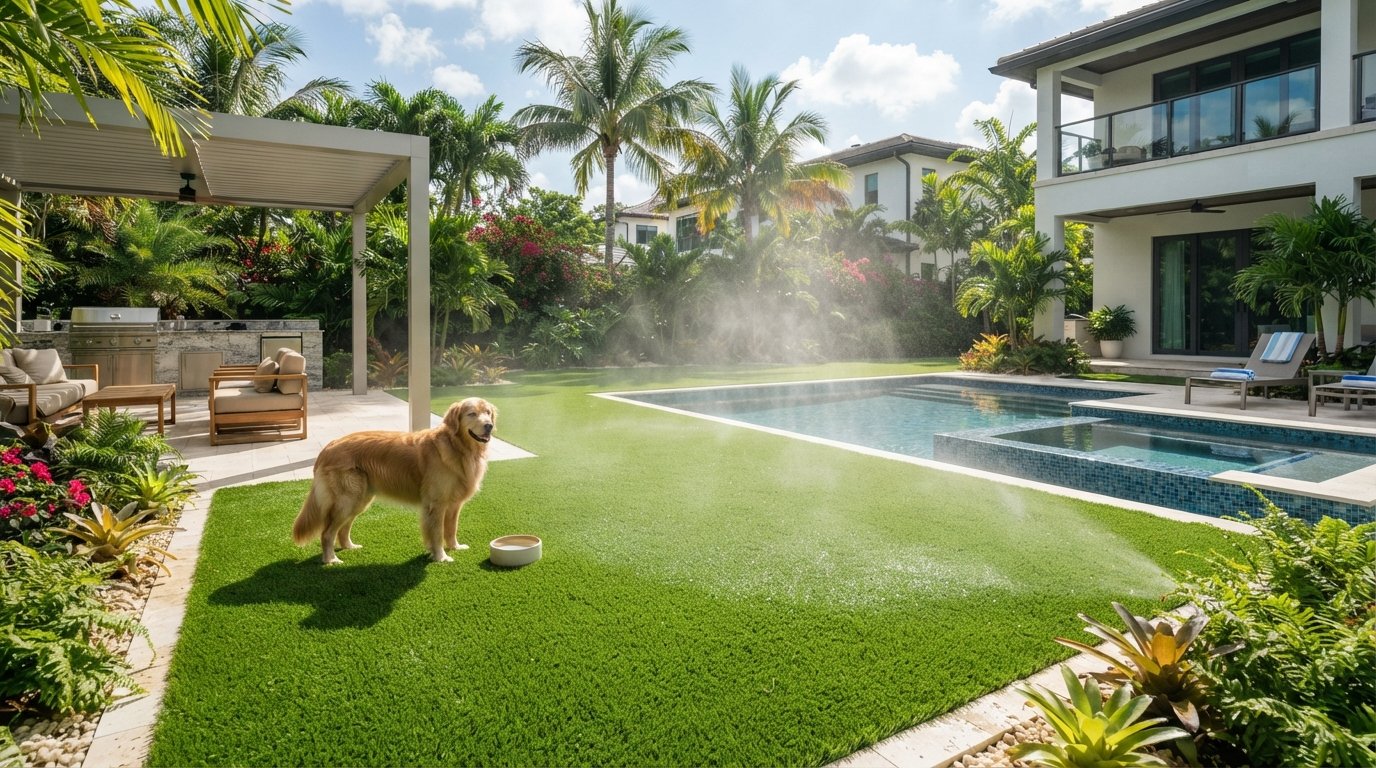
Pet owners face a specific challenge: the interaction between ammonia and moisture. When pet urine breaks down, it releases ammonia, which can alter the pH balance of the turf and encourage rapid bacterial blooms. These bacteria often work in synergy with mold, creating stubborn, unpleasant odors that are difficult to remove with simple rinsing. Zeolite infills act as a molecular sieve, trapping ammonia gases and preventing them from reacting with moisture. Maintaining a pet-friendly artificial lawn requires this specialized material approach to ensure your backyard remains a clean, welcoming space for your family and your pets.
The South Florida Maintenance Routine for 2026
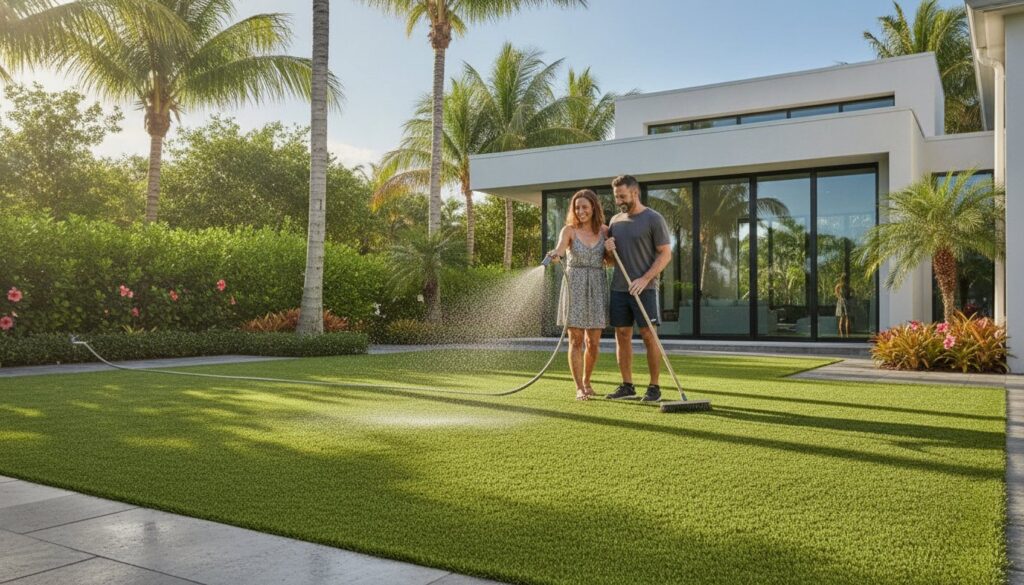
Maintaining a high-end synthetic lawn in South Florida requires more than an occasional sweep. Because our environment is so saturated with moisture and organic particulates, a structured maintenance routine is essential. We recommend a monthly “Deep Rinse” to flush out the fine dust and pollen that accumulate within the thatch. This process ensures that the high-flow drainage system remains unobstructed. It’s a simple step that goes a long way in preventing mold on artificial turf florida residents want to keep pristine and odor-free.
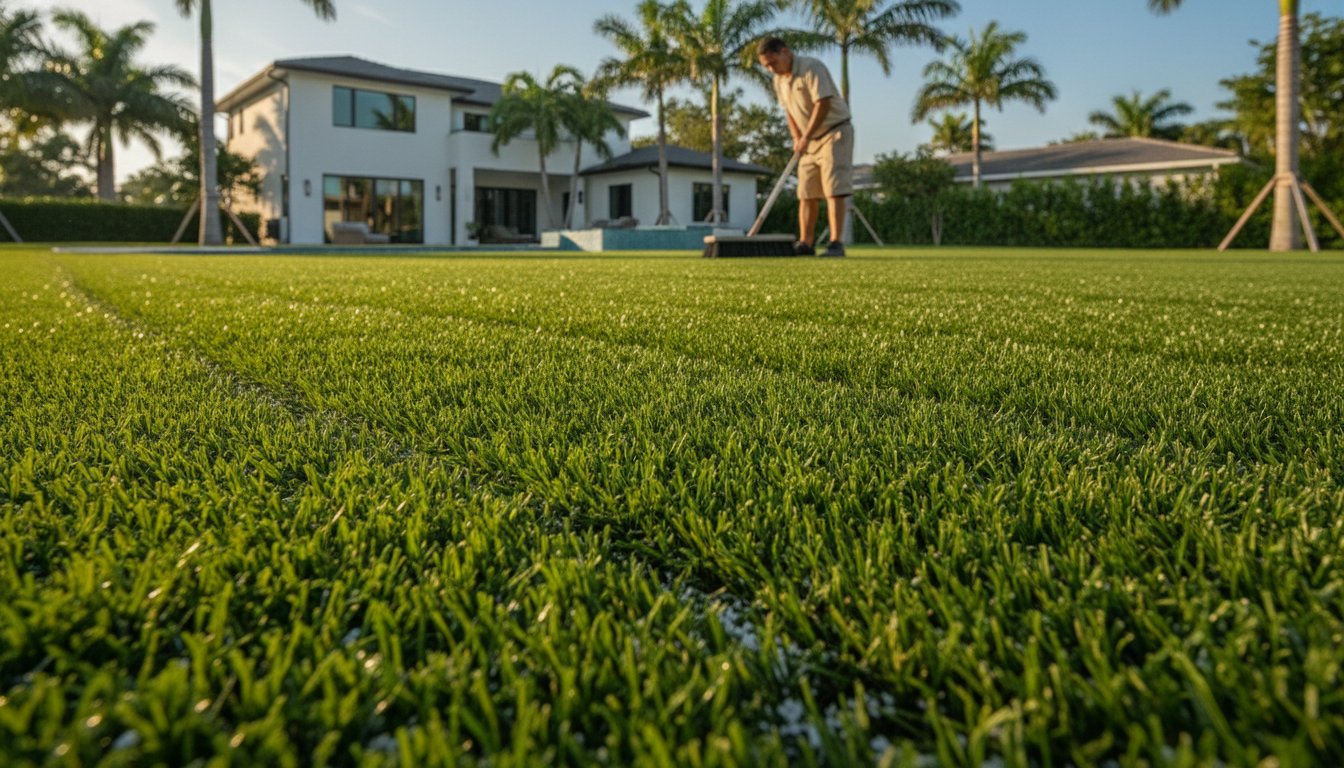
Airflow is your greatest ally against fungal spores. Regularly brushing your turf with a synthetic-bristled broom or a specialized power brush keeps the fibers upright. This doesn’t just improve the aesthetic appeal; it allows air to reach the infill layer, facilitating faster drying after our daily afternoon showers. If you’re unsure about the current state of your lawn’s drainage, scheduling a professional maintenance consultation can help identify potential issues before they become costly repairs. We view this as a partnership in protecting your investment.
Post-Storm Cleanup: Preventing the Mold Surge
Tropical storms and hurricanes bring an influx of organic debris that can quickly compromise your turf’s hygiene. After a significant weather event, your priority should be the immediate removal of heavy leaf litter and branches. If left to sit in the humid heat, these materials decompose into a fine mulch that clogs the backing and provides a rich nutrient source for mold. You should also inspect the perimeter of your installation for any signs of sub-base shifting or blockages in the primary drainage paths. Ensuring these pathways are clear before the next storm hits is a vital part of your hurricane prep checklist.
Safe Cleaning Agents for Florida Turf
While it’s tempting to reach for heavy-duty disinfectants, harsh chemicals like bleach can permanently damage the synthetic fibers and the integrity of the permeable backing. Specialized turf cleaners are designed to neutralize bacteria without compromising the material’s longevity. However, for routine preventative care, you don’t always need complex solutions. A 1:1 water-vinegar mix is the safest DIY preventative. This natural acidity helps inhibit spore growth without leaving behind toxic residues that could harm pets or family members. Using these turf-safe antimicrobial sprays as a preventative measure ensures that you are stopping problems before they start rather than reacting to visible growth.
Professional Installation: The Ultimate Mold Prevention
DIY installations often appear successful initially, but they frequently succumb to mold within 24 months. The reason is simple: a lack of specialized engineering. Professional installation is the most effective strategy for preventing mold on artificial turf florida homeowners can utilize. Our “South Florida Standard” involves a meticulous assessment of your property’s specific topography. We don’t just lay turf; we design a comprehensive drainage system that accounts for local wind patterns, shade from native palms, and existing water runoff pathways. This level of precision is vital for preventing mold on artificial turf florida properties that face extreme seasonal rainfall.
A professional build offers a superior long-term ROI by eliminating the need for expensive remediation. When a base is improperly compacted or graded, water pools in the sub-layers, creating a permanent damp zone. Fixing these issues later often requires a full tear-out of the materials. By investing in a high-flow, professionally engineered system from the start, you protect your lifestyle upgrade and ensure your backyard remains a healthy, functional space for your family. Our team acts as a dedicated partner, ensuring that every layer of your lawn is built to withstand the unique pressures of the Sunshine State.
Custom Solutions for South Florida Homes
The environmental demands on a lawn in coastal Palm Beach differ significantly from those in an inland community like Weston. Coastal properties must contend with salt air and higher wind speeds, while inland areas often face denser soil and less natural airflow. We provide site-specific evaluations to ensure your turf selection and base preparation match your local micro-climate. For homeowners looking to enhance their curb appeal while maintaining functionality, we specialize in integrating turf with custom turf driveway designs. These projects require precise engineering to ensure whole-property drainage remains efficient during the rainy season. To discuss your project, you can reach us at 561-221-1010 for a detailed site evaluation.
Expert Remediation: Fixing a Moldy Lawn
If your existing synthetic lawn is already showing signs of significant fungal growth, you must determine the point of no return. Surface mold can often be treated with professional-grade antimicrobial agents. However, if the “musty basement” smell persists after deep cleaning, the issue likely resides in a failing sub-base. In these cases, we can upgrade your existing foundation with high-percolation materials to restore performance and hygiene. We take pride in delivering results that are both beautiful and functional, even when correcting previous installation errors. Ready for a lawn that stays fresh and beautiful? Book your Fort Lauderdale consultation today and let us help you secure your investment.
Secure Your High-End Outdoor Lifestyle
Achieving a pristine, odor-free lawn in South Florida requires a strategic blend of specialized engineering and proactive care. We’ve explored how high-flow drainage systems and antimicrobial infills serve as your primary defense against the region’s intense humidity. By prioritizing these professional-grade materials from the start, you ensure that your investment remains a beautiful and hygienic sanctuary for your family and pets. Local expertise in Fort Lauderdale and Palm Beach is essential for preventing mold on artificial turf florida properties, as every installation must account for unique coastal water tables and runoff patterns.
Our team at Pro Turf Greens is dedicated to providing specialized South Florida drainage systems and pet-friendly options that stand the test of time. We invite you to partner with a seasoned expert who values craftsmanship and long-term satisfaction. It’s time to transform your backyard into a resilient, mold-free oasis. Get a Free South Florida Artificial Turf Consultation and discover the difference that professional dedication makes. Your perfect lawn is within reach.
Frequently Asked Questions
Can mold actually grow on plastic grass in Florida?
Yes, mold can certainly develop on the surface and within the infill of synthetic grass in our tropical climate. While the polyethylene or polypropylene fibers are inorganic, they act as a filter that traps organic matter like oak pollen and fine dust. When combined with South Florida’s high humidity and heat, these trapped particles provide the perfect nutrients for fungal spores to thrive. Proper drainage is the most effective method for preventing mold on artificial turf florida homeowners can implement.
How often should I wash my artificial turf in Miami?
You should perform a thorough rinse of your lawn at least once a month to flush out accumulated organic debris. In high-traffic areas or homes with multiple pets, a bi-weekly rinse may be necessary to maintain optimal hygiene. This routine prevents the buildup of fine particulates that can clog the permeable backing and restrict airflow. Regular rinsing ensures that your drainage system continues to function at its peak percolation rate throughout the rainy season.
Is antimicrobial infill worth the extra cost for Florida homeowners?
Investing in antimicrobial-coated infill is highly recommended for any Florida installation due to our persistent moisture levels. These specialized materials feature a non-porous coating that inhibits the growth of bacteria and fungi directly at the source. Unlike standard silica sand, which can trap water and nutrients, antimicrobial options like Wonderfill or OptiFILL+ provide a cleaner foundation. This choice significantly reduces the risk of musty odors and protects the long-term health of your family.
Will a power washer remove mold from my synthetic lawn?
A power washer can be effective for removing surface mold, but you must use it with extreme caution. High-pressure settings can inadvertently displace your infill or damage the delicate fibers of the turf. It is safer to use a low-pressure setting combined with a turf-safe antimicrobial cleaner or a mild vinegar solution. This approach ensures you neutralize the spores without compromising the structural integrity or the aesthetic quality of your high-end lawn.
Does shade increase the risk of mold on Florida turf?
Shaded areas do carry a higher risk of mold development because they lack the natural disinfecting power of direct UV light. In these zones, moisture from morning dew or afternoon rain takes much longer to evaporate, creating a damp environment for spores. If your property has significant canopy cover from oak trees or structures, you must prioritize a high-flow drainage base. Increasing the frequency of manual brushing in these areas will also help improve airflow between fibers.
What is the best way to prevent pet odors and mold simultaneously?
The most effective solution for managing both pet odors and fungal growth is the use of Zeolite infill combined with a 100 percent permeable backing. Zeolite works as a molecular sieve to neutralize ammonia before it reacts with moisture to create odors. When paired with a high-percolation base, this system ensures that urine and rainwater are flushed away immediately. This dual-action approach is a cornerstone of preventing mold on artificial turf florida pet owners rely on for a sanitary backyard.
How long does a professional antimicrobial treatment last?
The longevity of an antimicrobial solution depends on the application method. Coated infills, where the treatment is bonded to the material, typically last for the entire lifespan of the turf system because they are resistant to UV degradation. Topical antimicrobial sprays are excellent for maintenance but generally require reapplication every six to twelve months depending on rainfall and usage. Choosing professional-grade materials during the initial installation provides the most reliable long-term protection against microbial colonization.
Can I install artificial turf myself and still prevent mold?
While DIY installation is possible, it rarely achieves the drainage precision required to prevent mold in Florida’s climate. Professional installers use specialized equipment to ensure the sub-base is perfectly graded and compacted for vertical water flow. DIY projects often suffer from minor unevenness that leads to stagnant water pockets beneath the turf. These hidden moisture traps are the primary cause of mold issues that appear within the first two years of a home installation.