A professional-grade putting green is a precision-engineered athletic surface designed to respond exactly like the greens at your favorite private club. You’ve likely encountered conflicting information online regarding the actual cost to build a putting green in backyard, which often leads to uncertainty about whether the investment matches the long-term value. For South Florida homeowners, these questions are compounded by concerns over heavy seasonal rains and how synthetic materials will withstand the intense tropical sun over time. Recent legislative updates, such as Florida House Bill 683, have made it easier than ever to upgrade your property, yet the technical requirements for a high-performing green remain complex.
This 2026 guide provides the clarity you need by detailing the specific factors that drive project expenses for luxury homes in areas like Fort Lauderdale and Palm Beach. You’ll gain a thorough understanding of how professional site preparation, climate-resilient materials, and advanced drainage systems protect your investment. We will explore the essential components of a pro-grade installation, helping you plan a low-maintenance feature that sharpens your short game and enhances your backyard’s aesthetic for decades to come.
Key Takeaways
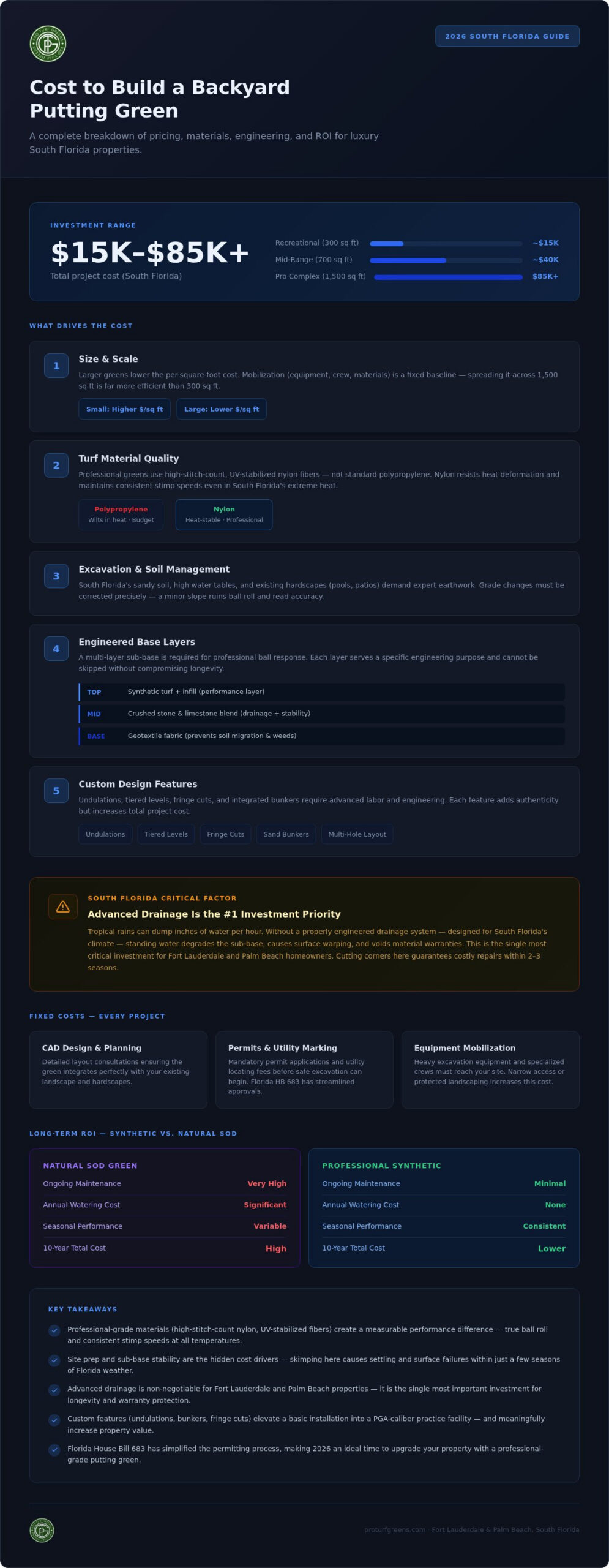
- Learn why professional-grade materials and custom engineering create a significant performance difference compared to standard recreational turf.
- Understand how site preparation and sub-base stability directly impact the total cost to build a putting green in backyard.
- Discover why advanced drainage systems are the most critical investment for South Florida homes to ensure longevity during heavy tropical rains.
- Explore how custom features like undulations and fringe cuts transform a basic lawn into a PGA-caliber practice facility.
- Evaluate the long-term return on investment by comparing the high maintenance costs of natural sod against the durability of professional synthetic greens.
Understanding the Foundation of Backyard Putting Green Pricing
The cost to build a putting green in backyard is determined by a sophisticated blend of material science and civil engineering. Unlike standard landscaping turf, a professional green is a high-performance athletic facility designed to replicate the specific components of a golf course found at elite clubs. Homeowners often find that pricing is tiered based on the intended use of the surface. A “recreational” green might look the part, but a professional-grade installation utilizes dense, high-stitch-count fibers that allow for true ball roll and consistent stimp speeds. This technical complexity means that the initial investment reflects the precision required to create a surface that holds a shot from 40 yards out while remaining smooth for a three-foot putt.
Size matters, but it isn’t the only variable. Mobilization costs often surprise homeowners because they don’t scale linearly with square footage. Whether we’re building a 300-square-foot practice area or a 1,500-square-foot multi-hole complex, the logistics remain similar. We must transport heavy excavation equipment, specialized base materials, and expert crews to your site. Because these baseline operational expenses are fixed, smaller greens typically carry a higher price per square foot than larger installations. Custom design also plays a pivotal role. A green with significant undulations, tiered levels, or integrated bunkers requires more intensive labor and specialized engineering than a flat, circular surface.
Standard vs. Premium Turf Materials
Material choice is the most visible driver of quality. Premium synthetic turf features a higher stitch rate and specific pile heights that mimic different grass species. In South Florida, we prioritize UV-stabilized fibers to ensure the green doesn’t fade or degrade under the intense tropical sun. We often recommend nylon over polypropylene for putting surfaces because nylon maintains its shape and performance under higher temperatures. It doesn’t “wilt” or become sluggish when the thermometer climbs, ensuring your practice sessions remain productive year-round.
Fixed Costs in Professional Installation
Every project begins with essential administrative and logistical steps. These fixed costs include detailed CAD layout planning and design consultations to ensure the green fits perfectly within your landscape. We also manage standard permit applications and utility marking fees, which are mandatory for safe excavation. Site access is another critical factor. If our equipment must navigate narrow side yards or protected landscaping, the additional time and specialized machinery required will influence the total cost to build a putting green in backyard. These foundational steps ensure the project is legally compliant and built for longevity.
Primary Cost Drivers: Site Preparation and Engineering
The true cost to build a putting green in backyard often lies hidden beneath the vibrant green surface. While the synthetic fibers provide the visual appeal, the underlying engineering determines whether the green remains level after a season of heavy Florida rains. Professional installation requires a meticulous approach to earthwork, transforming a standard residential lawn into a stable, high-performance foundation. This phase involves heavy machinery and specialized labor, making it a primary driver of the overall investment for any serious golfer.
Excavation and Soil Management
Excavating the site is the first significant hurdle in the construction process. We must remove existing sod and topsoil to create a clean slate, which involves both intensive labor and disposal fees. In South Florida, managing sandy soil or high water tables requires specific expertise to prevent future settling. Addressing grade changes is essential for a true roll; even a minor slope can ruin the “read” of a putt. If your design integrates with existing hardscapes like patios or pool decks, the labor hours naturally increase to ensure seamless transitions and structural integrity across the entire project area.
Engineered Base Layers
Achieving a professional ball response requires a multi-layered approach. We start with a heavy-duty geotextile fabric to separate the sub-soil from our base aggregates, which prevents material migration and weed intrusion. We then utilize a specific blend of crushed stone and limestone, chosen for its superior drainage and stability in the local climate. This academic and realistic guide explains how these layers function to support the surface while allowing water to pass through efficiently, which is a critical consideration for longevity.
Precision compaction is where the “PGA feel” is truly born. We utilize industrial vibratory compactors to reach 95% compaction, ensuring the base is rock-solid and resistant to shifting. This process prevents the “spongy” feel often found in DIY or landscaping-grade projects that lack proper sub-base engineering. A firm, consistent base is the only way to guarantee a reliable stimp rating across the entire surface for years to come. For those ready to begin their backyard transformation, scheduling a professional consultation is the most effective way to assess your specific site requirements and engineering needs.
Custom Features That Influence Your Final Investment
Beyond the foundational engineering, the specific features you choose will define your daily practice experience. The cost to build a putting green in backyard scales with these additions because they require specialized materials and increased technical labor. While a basic green is excellent for standard stroke practice, most South Florida enthusiasts prefer features that simulate actual course conditions. These upgrades transform a simple turf area into a comprehensive short-game facility that adds significant aesthetic value to your property.
The Cost of Complexity: Breaks and Contours
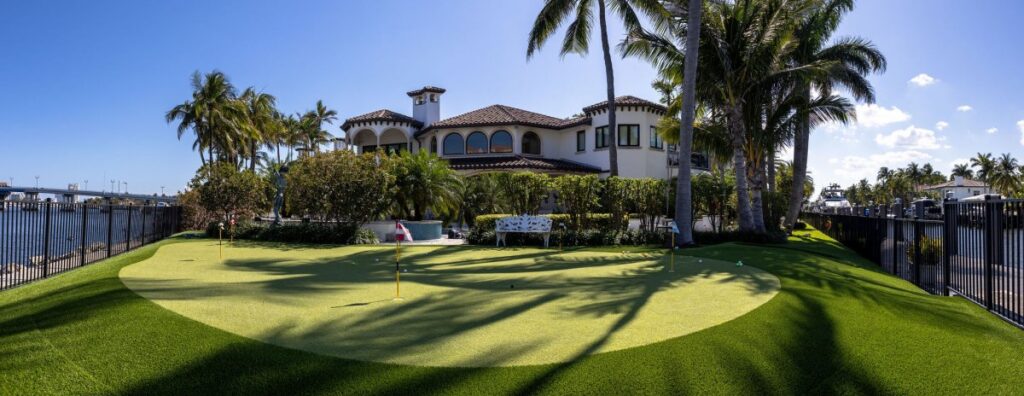
Shaping the “read” of a green is a meticulous process. It requires our craftsmen to hand-shape the sub-base aggregates before the final turf layer is secured. Creating realistic undulations isn’t just about aesthetics; it’s about engineering a surface that challenges your ability to judge speed and line. Multi-tiered designs provide a sophisticated practice environment for advanced players, yet they necessitate additional base materials and extended labor hours to ensure the transitions remain smooth and durable. This level of detail ensures your backyard feature remains a functional tool for lowering your handicap rather than just a visual ornament.
Practice Enhancements: Fringes and Bunkers
A professional-grade green often includes a “fringe” or “first cut” to allow for realistic chipping practice. This involves integrating a secondary turf type with a higher pile height around the perimeter, which requires precise seaming and additional material waste during the cutting process. For the ultimate short-game facility, sand bunkers are a popular choice. These aren’t simple pits of sand. They require dedicated drainage systems and specialized liners to prevent water pooling and sand migration during South Florida’s frequent thunderstorms. Research indicates that adding features like bunkers can increase a project’s total investment by $1,000 to $2,500 due to these technical requirements.
We finish every project with professional-grade hardware to match the quality of the turf. This includes heavy-duty aluminum cups that provide a satisfying sound when you sink a putt and tournament-style flags. Many clients in Fort Lauderdale and Palm Beach also opt for integrated LED lighting. This allows for evening practice sessions when the Florida heat has subsided, extending the utility of your green well into the night. These final touches represent the difference between a basic landscaping project and a world-class athletic facility. When you consider the cost to build a putting green in backyard, these custom elements often provide the highest return in terms of both skill development and personal enjoyment.
South Florida Specifics: Drainage and Climate Factors
Installing a high-performance green in a tropical environment presents challenges that standard national guides often overlook. In South Florida, the cost to build a putting green in backyard is heavily influenced by the need for climate-resilient engineering. With an average annual rainfall exceeding 50 inches in cities like Miami and Fort Lauderdale, a basic surface will quickly become a swamp without specialized sub-surface intervention. Our approach treats every installation as a hydraulic project first and an athletic surface second, ensuring your investment remains playable even after the heaviest afternoon thunderstorms.
Advanced Drainage for Tropical Rain
Standard drainage protocols are rarely sufficient for the volume of water we experience locally. We utilize advanced sub-surface drainage systems that incorporate perforated turf backing, allowing water to pass through the surface at a rate of several inches per hour. For properties in low-lying areas or those with existing pooling issues, we often integrate high-capacity drainage cells. These specialized modules create a void beneath the green to manage surge volumes, preventing the base materials from becoming saturated and shifting. While these systems represent a technical addition to the project, they are the primary safeguard for the longevity of your green’s foundation.
UV Resistance and Heat Management
The intensity of the Florida sun can degrade inferior synthetic materials within a few years. We specify turf with high-grade UV inhibitors that are chemically bonded to the fibers, preventing the fading and brittleness common in lower-quality products. For coastal residents in Palm Beach and Jupiter, salt-air resistance is equally critical; we select materials that won’t corrode or break down in the presence of sea spray. To ensure summer playability, we utilize heat-reflective technology and specialized infills. These choices manage surface temperatures and prevent the growth of bacteria or mold in our high-humidity environment, keeping the green fresh and safe for the whole family.
Investing in a climate-specific design prevents the costly repairs associated with drainage failure and sun damage. If you want a surface that stands up to the unique demands of the South Florida coastline, contact our team for a professional assessment of your property’s drainage and UV needs.
ROI Analysis: Installation Costs vs. Long-Term Savings
Evaluating the cost to build a putting green in backyard requires looking beyond the initial installation phase. While the upfront investment is significant, it’s essential to analyze the Total Cost of Ownership (TCO) over a ten-year horizon. In the high-demand real estate markets of South Florida, a professional-grade synthetic green often transitions from a luxury expense to a strategic property enhancement. By removing the recurring financial burdens associated with high-maintenance natural turf, homeowners can achieve a break-even point much sooner than they might expect.
The ‘Invisible’ Costs of Natural Grass
Maintaining a natural grass putting green in Florida is an uphill battle against heat, humidity, and invasive pests. To keep natural sod at a tournament-ready stimp rating, homeowners must invest in specialized mowers, frequent chemical treatments, and intensive irrigation. Research indicates that replacing traditional lawn areas with synthetic turf can save approximately 55 gallons of water per square foot annually. When you factor in the rising costs of professional lawn services and specialized fertilizers required for golf-grade turf, the “free” alternative of natural grass becomes remarkably expensive. Synthetic greens eliminate these monthly outlays entirely, requiring only occasional brushing and debris removal to maintain their elite performance.
Boosting Property Value in Luxury Markets
A meticulously designed green serves as a powerful differentiator in the competitive South Florida housing market. Beyond the personal enjoyment of a better short game, these installations contribute to a property’s “lifestyle” appeal. Industry data suggests that high-quality landscaping features can add between 5% and 15% to a home’s perceived value. For those considering Backyard Putting Green Installation in Fort Lauderdale, the feature acts as a turn-key amenity that resonates with discerning buyers looking for private recreational spaces. It provides a “wow factor” that standard landscaping simply cannot match, positioning the home as a premium estate.
This long-term perspective changes the narrative around the cost to build a putting green in backyard. Instead of viewing it as a one-time cost, it’s a reallocation of your landscaping budget into a durable asset that pays dividends in water savings, time, and home equity. In 2026, the trend toward drought-conscious luxury continues to grow, making synthetic greens a responsible choice for the environmentally aware homeowner. By choosing professional installation, you ensure the technical details, like the drainage and base compaction discussed earlier, protect this investment for the next 15 to 25 years.
Transforming Your Backyard Into a Professional Practice Facility
Investing in a private green is about more than just aesthetics; it’s a commitment to your game and your property’s value. We’ve explored how the cost to build a putting green in backyard is driven by meticulous site preparation, climate-resilient engineering, and the high-performance materials required for a true roll. By prioritizing advanced drainage and UV protection, you ensure that your investment remains a centerpiece of your home for decades, regardless of the intense Florida sun or heavy seasonal rains.
Whether you’re in Fort Lauderdale or Palm Beach, your project deserves a specialist who understands the nuances of our local landscape. Pro Turf Greens delivers PGA-caliber short game performance through custom designs tailored to any yard size. Our installations are specifically engineered for South Florida drainage, providing a reliable surface that holds up year after year. We take pride in our craftsmanship and are dedicated to helping you achieve an aspirational lifestyle upgrade right at home.
Ready to take the first step toward your dream short-game facility? Request Your Free Custom Putting Green Consultation today to receive a precise, professional assessment of your unique space. We look forward to helping you master your game in the comfort of your own backyard.
Frequently Asked Questions
Is a backyard putting green worth the investment in 2026?
A backyard putting green is a high-value investment in 2026 because it combines luxury recreation with significant long-term savings. Homeowners in South Florida benefit from increased property values, often seeing a boost of 5% to 15% in perceived home equity. Beyond the financial return, the environmental benefits are substantial. Replacing natural grass with synthetic turf saves approximately 55 gallons of water per square foot annually while eliminating the need for expensive fertilizers and professional lawn services.
How long does a professional synthetic putting green last?
A professionally installed synthetic putting green typically lasts between 15 and 25 years. This longevity depends heavily on the quality of the materials and the precision of the initial engineering. In South Florida, we utilize high-grade UV inhibitors to prevent the fibers from becoming brittle under the intense sun. Choosing a premium, climate-resilient surface ensures your practice area maintains its stimp rating and aesthetic appeal for decades with minimal intervention.
Can I build a backyard putting green myself to save on costs?
While a DIY approach may reduce the initial cost to build a putting green in backyard, it often results in poor drainage and inconsistent ball roll. Professional installation ensures the sub-base is compacted to 95% density, preventing the surface from shifting over time. In our local climate, improper engineering leads to pooling and mold growth. Enlisting a specialist guarantees a PGA-caliber surface that remains stable and functional for its entire lifespan.
What is the average size of a residential putting green?
Most residential putting greens range from 400 to 1,500 square feet. The ideal size depends on your available space and practice goals, such as including a fringe for chipping or multiple cup placements. While larger projects require more materials, they often provide a better value per square foot. Smaller installations still require equipment mobilization and site preparation, which are fixed costs regardless of the total area covered by the new turf.
How does the Florida rain affect the cost of the base?
The cost to build a putting green in backyard in South Florida includes specialized engineering to handle our frequent tropical rain. In cities like Miami or Jupiter, we often integrate specialized drainage cells and perforated turf backing. These components allow water to pass through the surface quickly, preventing the base from becoming saturated. This technical approach protects the structural integrity of the green and ensures it remains playable immediately after a storm.
Does a putting green increase my home’s resale value?
A professionally designed putting green significantly enhances resale value, particularly in luxury markets like Boca Raton and Palm Beach. Real estate data indicates that high-quality outdoor amenities can increase a home’s perceived value by up to 15%. Prospective buyers view a custom green as a turn-key lifestyle upgrade that requires zero maintenance. This “wow factor” differentiates your property from others, making it more attractive to enthusiasts who value private recreational facilities.
What kind of maintenance does a synthetic green require?
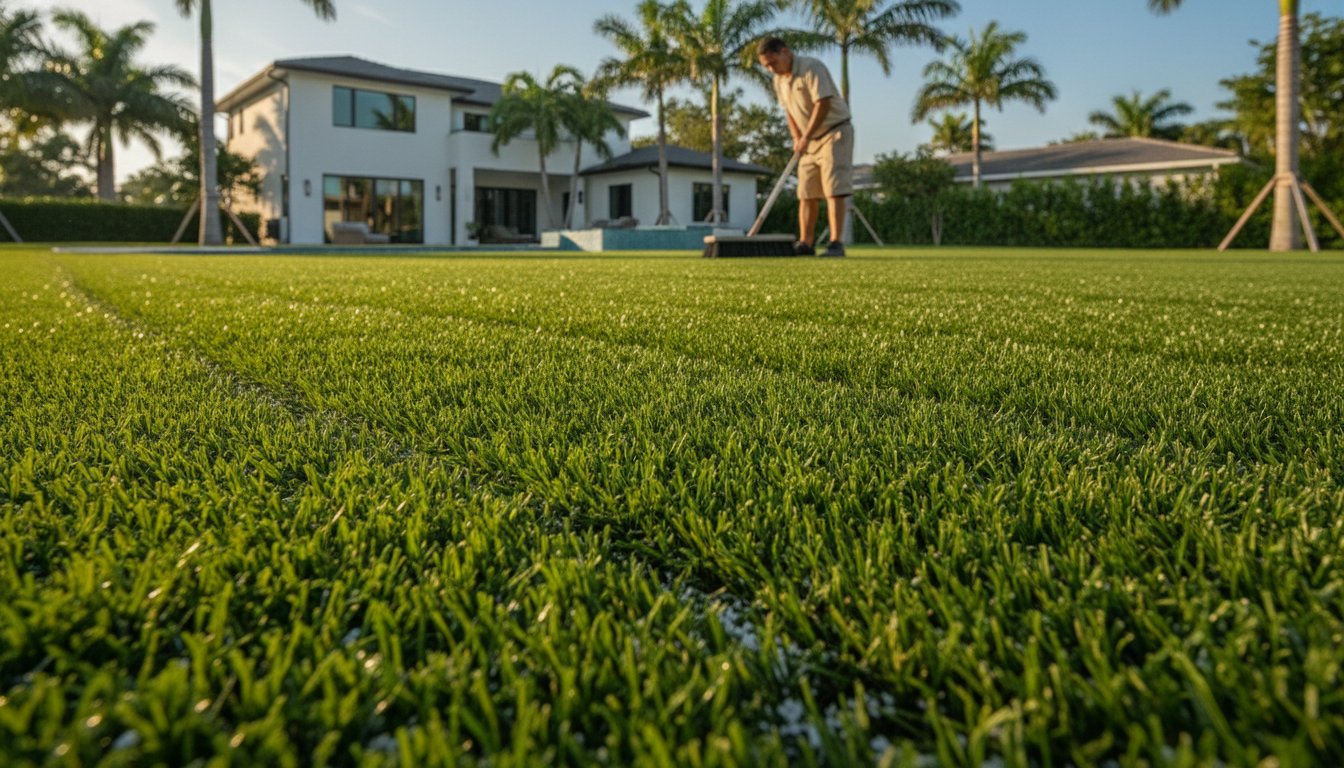
Maintenance for a synthetic green is remarkably simple compared to the intensive care required for natural grass. You only need to clear organic debris like leaves or twigs and occasionally brush the fibers to keep them upright. We also recommend checking the infill levels periodically to ensure consistent ball speed. Because there’s no need for mowing, watering, or chemical treatments, the ongoing operational costs remain exceptionally low throughout the year.
How long does the installation process take from start to finish?
The installation process generally takes between one and three weeks from the initial excavation to the final grooming. This timeline varies based on the complexity of the design, such as the addition of bunkers or multi-tiered undulations. Our crews manage every phase, including utility marking, site leveling, and base compaction. While custom features add time to the schedule, they ensure the final product meets the high standards required for a professional practice environment.