What if the secret to a twenty-year lawn in the South Florida sun isn’t about how much water you use, but how little you actually need to do? Many homeowners transition to synthetic grass to escape the relentless cycle of mowing and fertilizing, yet it’s natural to feel some uncertainty about protecting that investment. You might worry about the intense Miami heat affecting surface temperatures or wonder if pet odors will eventually compromise your outdoor sanctuary. This artificial turf maintenance guide for homeowners provides the professional clarity you need to ensure your lawn remains a source of pride rather than a point of concern.
It is true that high-end synthetic surfaces are remarkably resilient, but they are best described as low maintenance rather than no maintenance. We understand that you want a backyard that reflects your commitment to quality and aesthetic excellence. This guide outlines a proactive strategy to prevent matting, manage drainage during heavy rains, and counteract the unique challenges of our coastal, salt-air environment. You will discover an actionable cleaning schedule, specialized solutions for pet areas, and professional techniques to keep your blades standing tall for fifteen years or more. By mastering these simple habits, you transform a beautiful installation into a lifelong lifestyle upgrade that withstands the brightest summer days.
Key Takeaways
- Master the foundational cleaning habits outlined in this artificial turf maintenance guide for homeowners to significantly extend your lawn’s lifespan.
- Use specialized rinsing and cooling techniques to neutralize pet odors and manage surface temperatures during intense South Florida afternoons.
- Monitor your infill levels regularly to prevent blade matting and ensure your synthetic grass remains upright, resilient, and lush.
- Recognize the specific indicators that your lawn requires a professional refresh to maintain its aesthetic excellence and high-performance drainage.
The Fundamentals of Artificial Turf Longevity
Replacing natural sod with synthetic grass is a significant lifestyle upgrade for South Florida residents. You reclaim your weekends by eliminating the need for mowing, weeding, and chemical treatments. However, understanding the basic structure of your lawn is the first step in this artificial turf maintenance guide for homeowners. While it’s significantly easier to manage than traditional grass, a proactive approach ensures your investment remains lush for decades. Think of it as a high-end vehicle; it doesn’t need a daily tune-up, but periodic care keeps it performing at its peak.
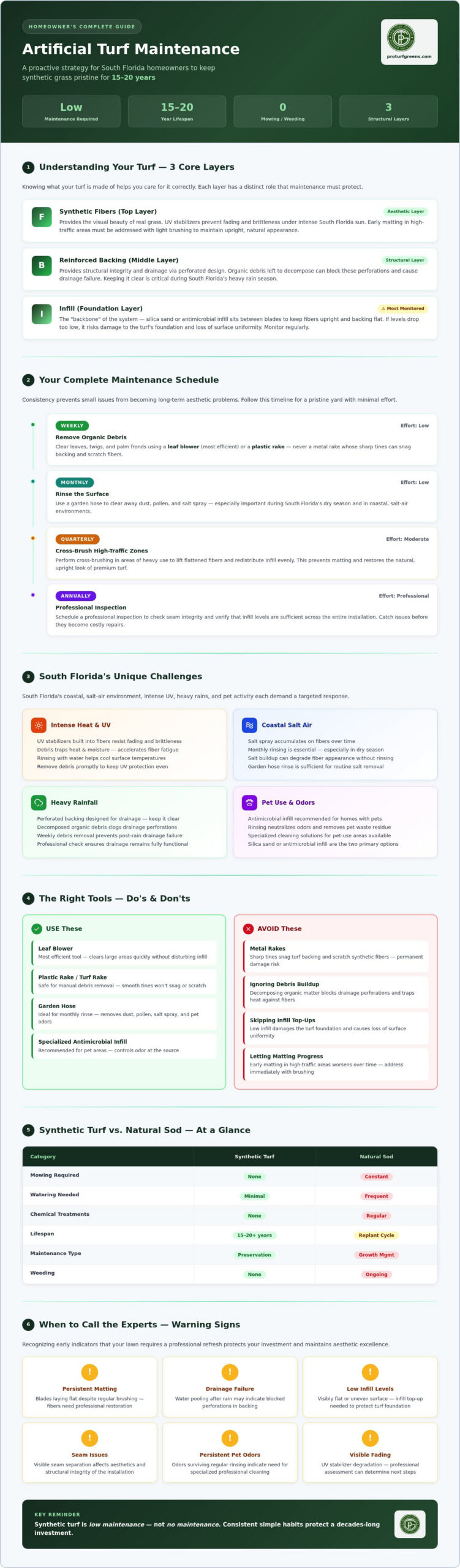
To care for your lawn effectively, you must understand its components. Modern artificial turf consists of three primary layers: the resilient synthetic fibers, the reinforced backing that provides structural integrity, and the infill. Each layer serves a specific purpose. The fibers provide the aesthetic beauty, while the backing ensures proper drainage and stability. Regular care prevents common issues like matting or drainage clogs, which can occur if organic debris is allowed to decompose within the turf system and block the perforated backing.
Unlike traditional lawns that require constant intervention just to stay alive, synthetic turf is designed for durability. Your primary goal is no longer growth management, but preservation. You won’t spend hours wrestling with a mower in ninety-degree heat. Instead, you’ll focus on simple tasks like rinsing away dust or removing palm fronds. Setting these realistic expectations allows you to enjoy a pristine yard without the exhaustive labor of South Florida gardening.
Preserving Fiber Integrity and UV Protection
Pro Turf Greens uses specialized UV stabilizers designed to withstand the intense South Florida sun. These stabilizers prevent the grass from fading or becoming brittle over time. However, debris like fallen leaves or twigs can trap moisture and heat against the fibers, potentially causing premature fatigue. You should watch for early signs of matting, where the blades begin to lay flat in high-traffic areas. Addressing this early through light brushing maintains the upright, natural look of a high-end installation and ensures the UV protection remains effective across the entire surface.
The Role of Infill in Surface Stability
Think of infill as the backbone of your turf system. It sits between the blades, providing the weight necessary to keep the backing flat and the support needed to keep fibers standing. In our region, we often recommend a mix of standard silica sand or specialized antimicrobial infills, especially for homes with pets. Maintaining the correct volume of infill is a cornerstone of any effective artificial turf maintenance guide for homeowners who want their lawn to last. If infill levels drop too low, you risk damage to the turf’s foundation, which can lead to costly repairs or a loss of surface uniformity.
Your Essential Maintenance Schedule: Daily to Seasonal Tasks
Establishing a consistent rhythm is the most effective way to protect your investment and ensure your yard remains a pristine retreat. While you’ve moved past the days of constant mowing and watering, this artificial turf maintenance guide for homeowners provides a structured timeline to keep your synthetic surface looking its best. Consistency prevents small issues, like dust accumulation or minor matting, from becoming long-term aesthetic problems. By following a predictable schedule, you maintain the high-end appeal of your property with minimal effort.
- Weekly: Remove organic debris such as leaves, twigs, and palm fronds to prevent buildup.
- Monthly: Rinse the surface with a garden hose to clear away dust, pollen, and salt spray, especially during the South Florida dry season.
- Quarterly: Perform cross-brushing in high-traffic zones to lift the fibers and redistribute infill.
- Annually: Schedule a professional inspection to check seam integrity and verify that infill levels are sufficient across the entire installation.
Step 1: Removing Organic Debris
Clearing your lawn of organic matter is vital for maintaining proper drainage. A leaf blower is the most efficient tool for this task, as it quickly clears large areas without disturbing the infill. If you prefer a manual approach, always use a plastic rake or a specialized turf rake. You should never use metal rakes; their sharp tines can snag the turf backing or scratch the synthetic fibers. Managing this debris is particularly important in Miami and Fort Lauderdale, where tropical storms often scatter palm berries and fronds. If you encounter sticky palm sap, a simple mixture of warm water and mild household soap will safely dissolve the residue without damaging the turf’s UV coating.
Step 2: Brushing for Aesthetic Excellence
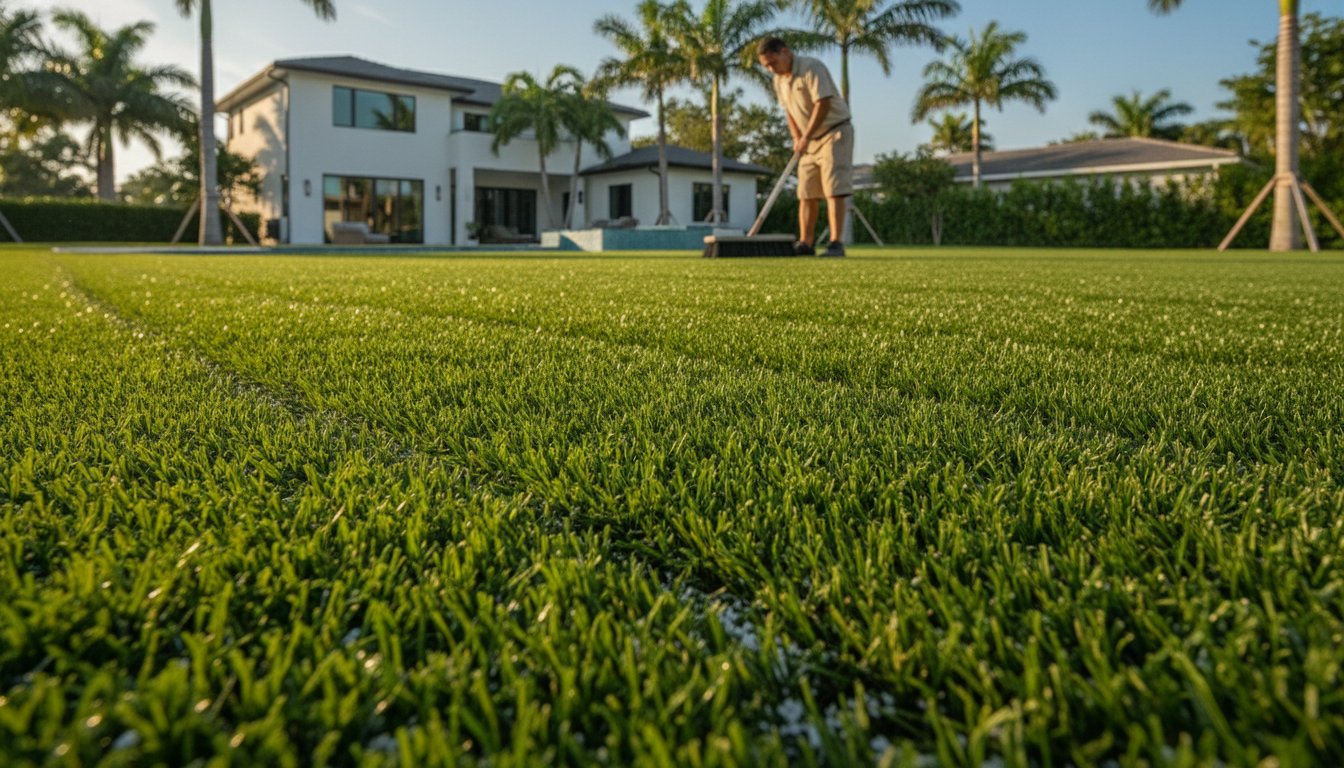
To keep your lawn looking lush and vibrant, you must master the technique of cross-brushing. This involves brushing the turf fibers against the grain, which encourages them to stand upright and prevents the flat, matted look that can occur in heavily used areas. For smaller residential lawns, a synthetic turf rake with nylon bristles is perfect. For larger recreational spaces or driveways, a power broom can save time and provide a more uniform finish. If you’re unsure about the current condition of your lawn, you can always reach out for professional guidance to keep your yard in peak condition. Ornamental areas may only need brushing twice a year, but pathways and pet zones benefit from a monthly touch-up to maintain surface resilience.
Managing South Florida Challenges: Pets, Heat, and Heavy Rain
South Florida’s unique ecosystem demands a specialized approach to lawn care. While synthetic surfaces are durable, the combination of intense UV exposure and tropical moisture requires strategic intervention. This artificial turf maintenance guide for homeowners addresses the environmental realities of our region, ensuring your lawn remains a functional and beautiful extension of your home. From the high humidity of Miami to the salt-air of Palm Beach, your maintenance routine should adapt to these local conditions to preserve the long-term integrity of the fibers.
Odor Control for Pet-Friendly Turf
Heat and humidity can amplify pet odors, particularly the smell of ammonia from urine. To maintain a fresh environment, it’s essential to use non-toxic, enzymatic cleaners that break down organic compounds rather than just masking them. You can find more detailed strategies in our 2026 pet owner’s guide for dog runs. Beyond topical cleaning, we recommend using zeolite infill. This natural mineral traps odors at a molecular level, preventing gas from escaping into the air. A quick weekly rinse of high-use pet runs further ensures that waste is flushed through the system and into the drainage sub-base.
Temperature Regulation in the Florida Sun
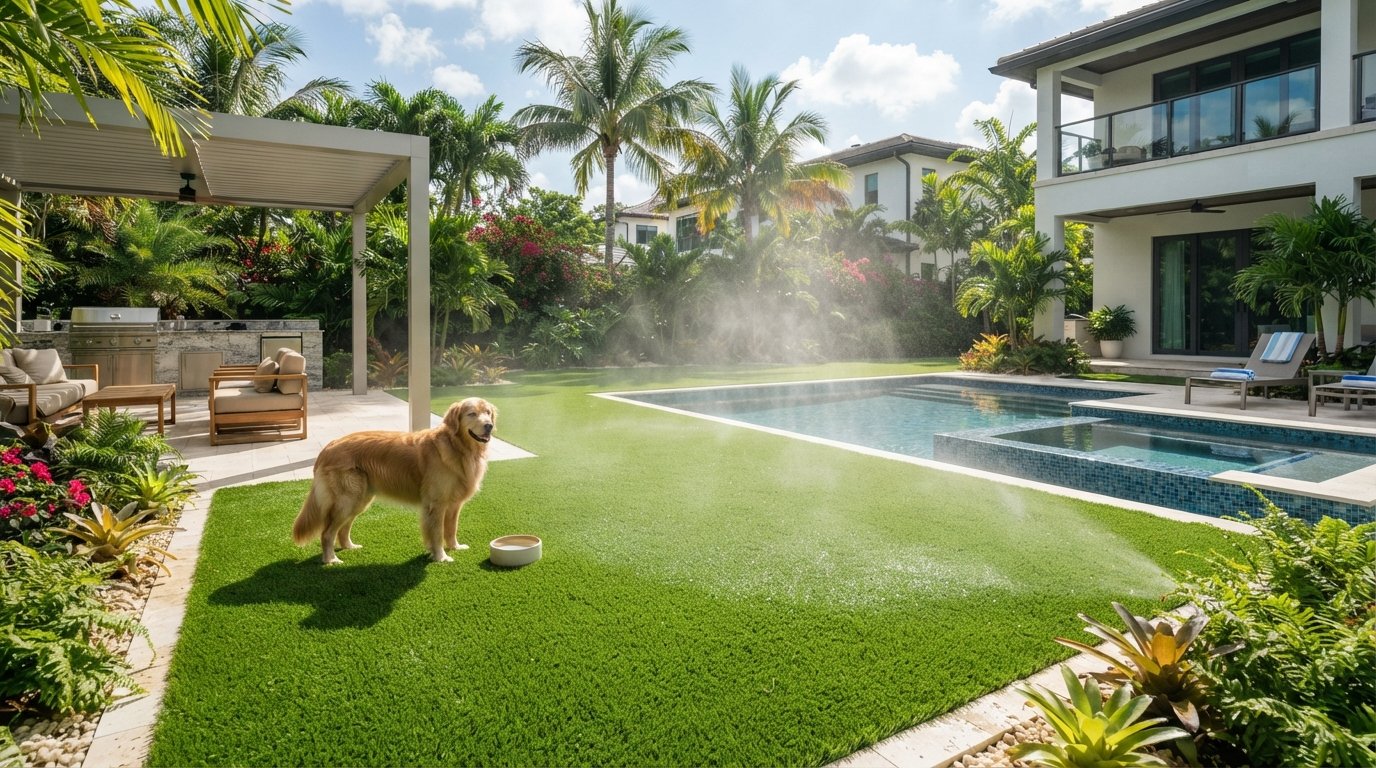
The mid-day sun in Miami and Fort Lauderdale can cause surface temperatures to rise significantly. You don’t have to stay indoors, though. A simple, two-minute misting with a garden hose can drop the turf temperature by as much as 20 degrees through evaporative cooling. This effect lasts for a considerable time, making the surface comfortable for bare feet or paws. When we design these spaces, we often suggest light-colored infills to reflect more sunlight. If you’re still in the planning phase, incorporating shaded layouts or pergolas can naturally mitigate heat absorption during the hottest hours of the day.
Resilience Against Heavy Rain and Salt Spray
The Atlantic hurricane season brings torrential downpours that test any drainage system. Maintaining clear drainage holes in your turf’s backing is non-negotiable. If you’ve followed the debris removal steps mentioned earlier, your lawn will easily handle several inches of rain per hour. For those living along the coast in areas like Palm Beach, salt spray is an additional factor. Salt crystals can accumulate on the fibers, leaving a dull film or potentially attracting more dust. A monthly rinse is usually enough to dissolve these deposits and restore the vibrant, natural luster of your synthetic grass. By staying ahead of these seasonal challenges, you ensure your yard remains a steady, beautiful sanctuary regardless of the weather.
Advanced Maintenance: Infill Care and Surface Restoration
Infill is not a static component; it naturally migrates and settles over time due to foot traffic and heavy South Florida rainfall. Recognizing when your levels have dropped is a critical skill in this artificial turf maintenance guide for homeowners. If you notice the synthetic blades are no longer standing upright or if the black backing material becomes visible between the fibers, it’s time for a top-off. To perform this correctly, you should lightly sprinkle the appropriate infill material across the area and use a turf rake to work it down into the base. Avoid overfilling, as this can create a messy surface and actually impede the natural feel of the grass.
High-traffic areas, such as driveway strips or the paths leading to a pool, are particularly prone to flattening. You can restore these sections by using a power broom to lift the fibers and then adding a small amount of extra infill to provide additional support. In the damp, shaded corners common in Miami’s lush landscapes, you might occasionally spot moss or algae. A gentle solution of white vinegar and water usually resolves this without harming the turf’s integrity or the environment.
Maintaining Backyard Putting Greens
For those who have invested in a professional-grade short game area, maintenance requires a higher level of precision. Specialized brushing is required to ensure a golf-caliber ball roll, as even small amounts of fine dust can significantly slow down your green speeds. You should also regularly inspect the cup integrity and ensure the surface remains perfectly level to avoid unintended breaks. For a deeper look at managing these high-performance surfaces, consult our 2026 elite guide to backyard putting green installation.
Turf Driveway and Paver Maintenance
Artificial turf driveways are a hallmark of modern South Florida design, but they require specific care to handle vehicle loads. Keep the turf strips between pavers clean of organic debris and ensure they are trimmed to the correct height to prevent catching on tires. If your vehicle develops a minor oil or fluid leak, address it immediately with an absorbent material followed by a grease-cutting detergent. Maintaining base stability is essential here, as the sub-base must remain compacted to support the weight of cars without shifting. If you notice any dipping or unevenness in your driveway strips, contact our team for a professional assessment to ensure your installation remains both beautiful and functional.
When to Call the Experts: Professional Turf Refreshes
While this artificial turf maintenance guide for homeowners provides the foundation for daily success, certain milestones in your lawn’s life cycle benefit from an expert touch. A standard garden hose rinse is excellent for surface dust, but it cannot reach the deep-seated particulates that settle within the infill over several years. Professional deep-cleaning utilizes high-suction extraction to remove fine silt and allergens that may eventually impede drainage. This process restores the system’s hygiene and permeability, especially in pet-heavy environments where organic matter can accumulate beneath the surface.
Occasional structural issues also require specialized attention. You might notice a seam separation due to ground shifting or a small burnt spot caused by concentrated sunlight reflecting off high-efficiency windows. Attempting to patch these areas without professional tools can result in visible lines or uneven surfaces. A master craftsman can secure edges and replace damaged sections seamlessly, preserving the uniform aesthetic of your landscape. This level of precision ensures that repairs are invisible and the structural integrity of the backing remains intact.
Pro Turf Greens Maintenance Services
Our professional refresh services go beyond simple aesthetics to address the engineering of your synthetic lawn. We provide deep extraction cleaning that pulls debris from the base of the fibers, followed by a mechanical re-blooming process. While manual raking is effective for weekly upkeep, our industrial power brooms use consistent, high-torque rotation to lift every blade, even in areas that have seen years of heavy traffic. We also perform a comprehensive infill audit, replenishing levels to ensure your lawn continues to feel soft and resilient underfoot.
The ROI of Professional Care
Investing in periodic professional refreshes does more than keep the grass green. It serves as documented proof of care that can protect your manufacturer’s warranty and enhance your property’s resale value. A pristine, well-maintained lawn is a significant asset when it’s time to host a major event or list your home for sale. Potential buyers in South Florida view high-end synthetic turf as a premium feature, and a professionally refreshed yard offers the ultimate curb appeal. To ensure your investment continues to deliver these lifestyle benefits, you can Schedule your professional turf consultation in Fort Lauderdale today. This proactive step secures the longevity of your lawn and provides peace of mind that your outdoor sanctuary is being cared for by local experts.
Securing Your Outdoor Sanctuary’s Future
Maintaining a high-end synthetic landscape doesn’t have to be a burden when you follow a structured approach. By implementing the strategies in this artificial turf maintenance guide for homeowners, you’ve taken the first step toward protecting a significant lifestyle investment. You now understand how to counteract the intense Miami sun, manage drainage during tropical storms, and preserve the upright resilience of your lawn’s fibers. These simple habits ensure your yard remains a lush, functional retreat that enhances your home’s value for years to come.
Pro Turf Greens has served as expert South Florida installers since 2015, and we bring PGA-caliber putting green maintenance standards to every residential project. Whether you need non-toxic, pet-safe cleaning recommendations or a professional mechanical re-blooming, our team is here to act as your dedicated partner. We invite you to Request a Free Artificial Turf Consultation to discuss a custom-tailored care plan for your property. Your dream lawn is built to last, and with the right care, it will remain beautiful for decades.
Frequently Asked Questions
How often should I clean my artificial turf if I have dogs?
Weekly rinsing is the standard for pet owners in South Florida. You should pick up solid waste immediately, then hose down the area to flush liquids through the perforated drainage system. In the high humidity of Miami, using an enzymatic cleaner once a month prevents ammonia odors from developing. This routine is a vital part of any artificial turf maintenance guide for homeowners who want a fresh, safe backyard for their family and pets.
Can I use a power washer on my synthetic grass?
You can use a power washer, but you must exercise extreme caution. Keep the nozzle at least one foot away from the surface and use a wide-angle spray pattern to avoid tearing the fibers or blowing out the infill. High pressure can damage the backing or create uneven dips in the sub-base. For most residential needs in Fort Lauderdale, a standard garden hose with a spray nozzle provides sufficient pressure for routine cleaning.
What is the best way to remove weeds growing through the turf?
Most weeds grow in the organic debris that settles on top of the turf rather than through the backing itself. You should pull them by hand to ensure the root is removed from the fiber mesh. If weeds persist, a mild, water-based weed killer is safe for high-quality synthetic grass. Regularly clearing palm berries and leaves prevents the organic buildup that allows seeds to germinate, keeping your South Florida lawn pristine.
Does artificial grass get too hot for kids to play on in Florida?
Synthetic surfaces do absorb heat, but they rarely become too hot for play if managed correctly. During the peak afternoon sun in Palm Beach, a quick two-minute rinse with water can lower surface temperatures by 20 degrees almost instantly. We also recommend choosing light-colored infills during the installation phase to reflect more sunlight. This proactive approach ensures a comfortable environment for children even during the hottest South Florida summer months.
How do I remove furniture indentations from my turf?
Removing indentations is a straightforward process that involves lifting the compressed fibers. Use a synthetic turf rake or a stiff-bristled nylon brush to cross-brush the area against the grain. If the spot is particularly stubborn, pouring a little warm water on the fibers can help them become more pliable before brushing. This simple technique restores the lush, upright look of your lawn and prevents permanent matting in areas used for heavy patio seating.
Is it necessary to add more infill every year?
Most homeowners don’t need to add infill annually, though high-traffic zones may require periodic top-offs. Infill can settle or migrate during the heavy rain of the Atlantic hurricane season. This artificial turf maintenance guide for homeowners recommends a visual inspection of the surface every twelve months. If you see the black backing or notice the blades laying flat, adding a small amount of infill will restore the structural support and aesthetic beauty of the grass.
Can I use a vacuum cleaner on my outdoor artificial grass?
You should avoid using a standard household vacuum on your outdoor turf. Vacuums can suck up the essential infill material, which compromises the stability of the blades and the weight of the system. Instead, use a leaf blower to clear away debris or a specialized turf vacuum designed to leave infill undisturbed. For residents in Boca Raton, a leaf blower is the safest and most efficient tool for maintaining a clean surface.
What should I do if my turf develops a stubborn stain or burn?
Most stains from food or drinks can be removed with warm water and a mild household detergent. For tougher marks like grease or oil, a small amount of mineral spirits on a cloth will usually work. If you encounter a burn from a grill or reflected sunlight, the damaged section may need to be cut out and replaced. Pro Turf Greens offers professional repair services to ensure these patches are invisible and secure.