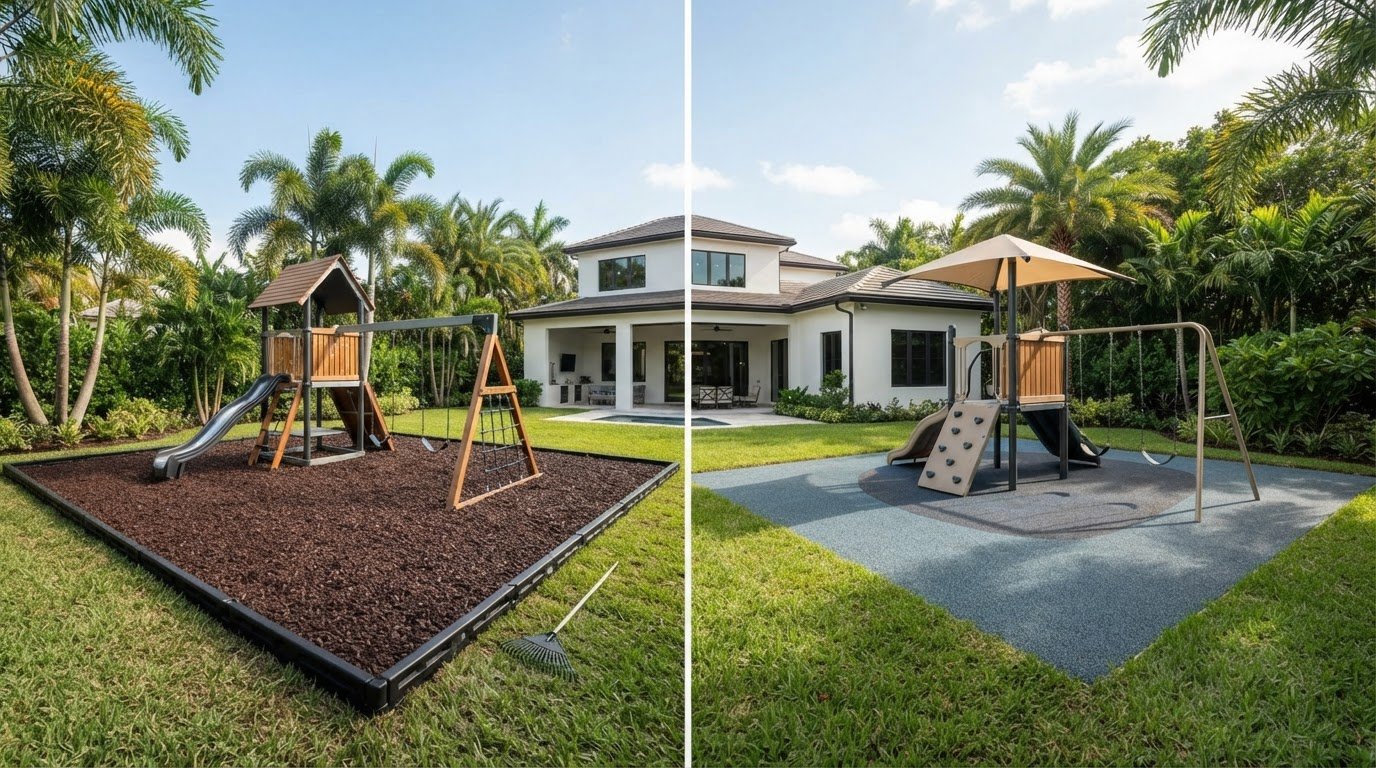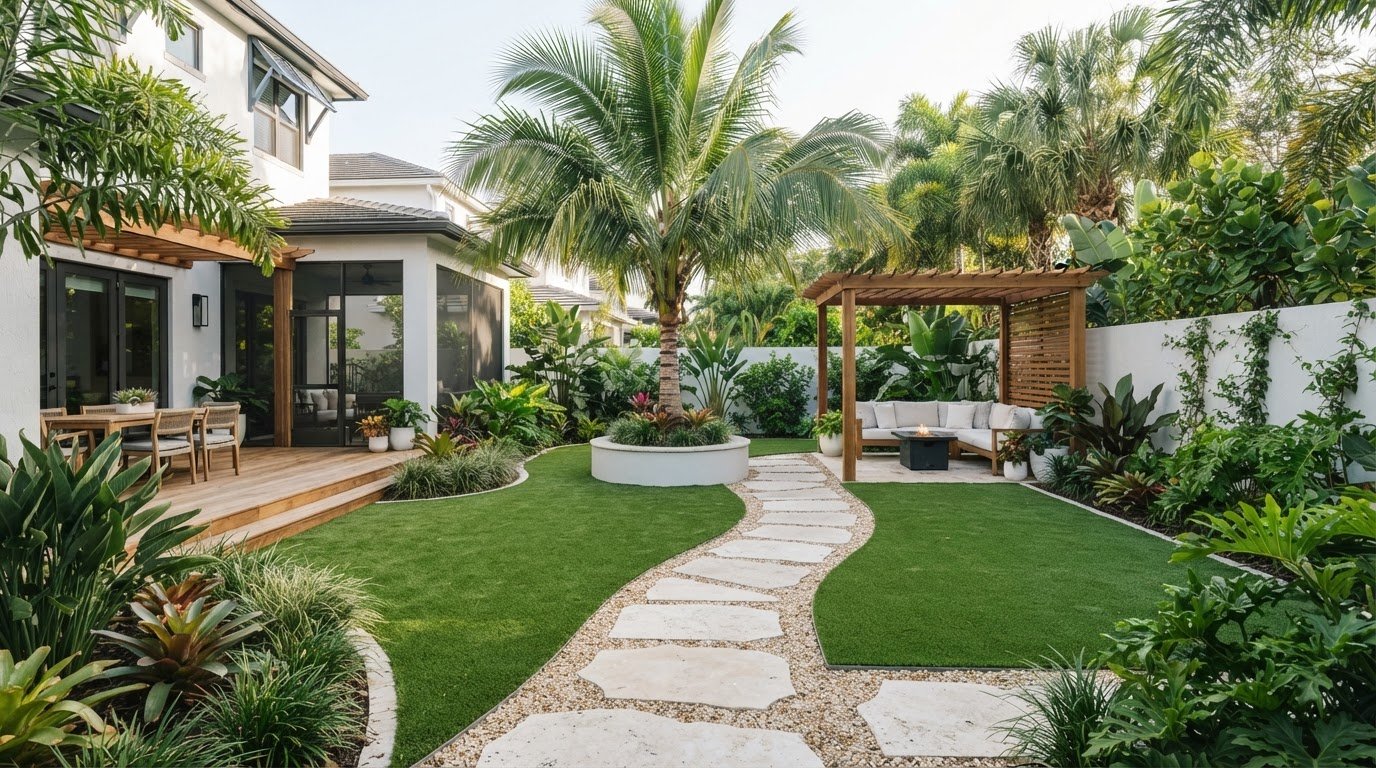
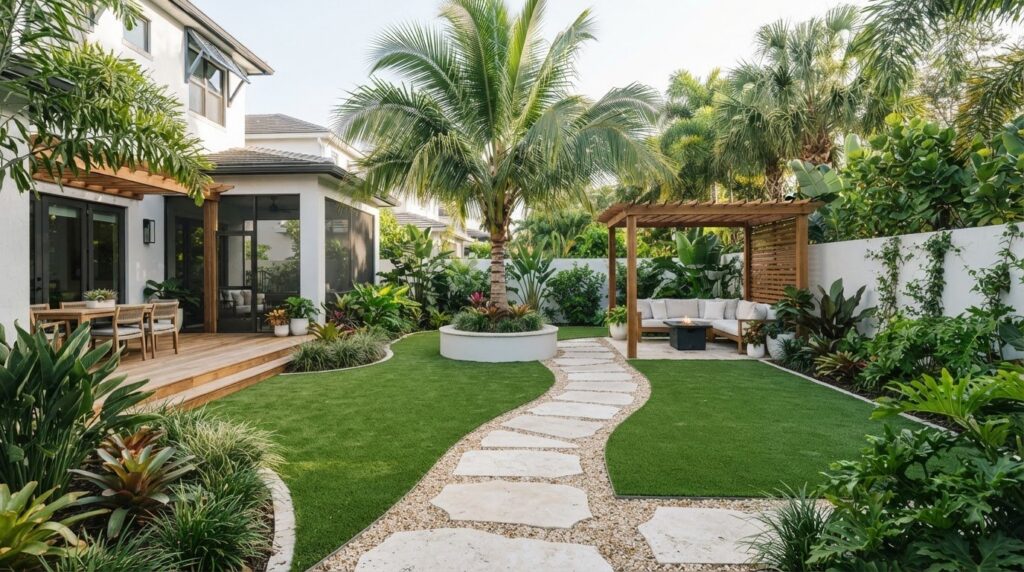
A compact backyard can feel more spacious when its surfaces have a clear purpose. For artificial turf ideas in a small backyard, start with the garden’s main use: turf with fibres 30 to 40 mm high is recommended for areas used by children or pets.
Choosing turf is only one part of creating a garden that works. A thoughtful layout balances open lawn with planting and practical paths, helping a compact space feel purposeful rather than crowded.
This guide explores artificial turf for small backyard ideas, including how to combine turf with stepping stones, wood, stone, and gravel. Learn how to define zones, make use of awkward shapes, and create a cohesive look in a compact backyard.
Key Takeaways
- Choose turf for how the garden will be used; fibres 30 to 40 mm high are recommended for spaces used by children or pets.
- Use stepping stones to create a clear route across the lawn while keeping the layout open and easy to move through.
- For an awkward or compact space, shape the turf around existing features and use planting to define distinct areas.
- Pair turf with wood, stone, or gravel to add contrast; gravel borders can use medium grains of 8–16 mm.
- Keep the layout visually calm by repeating materials and directing the eye along a clear path through the backyard.
1. What type of artificial grass is best for a garden?
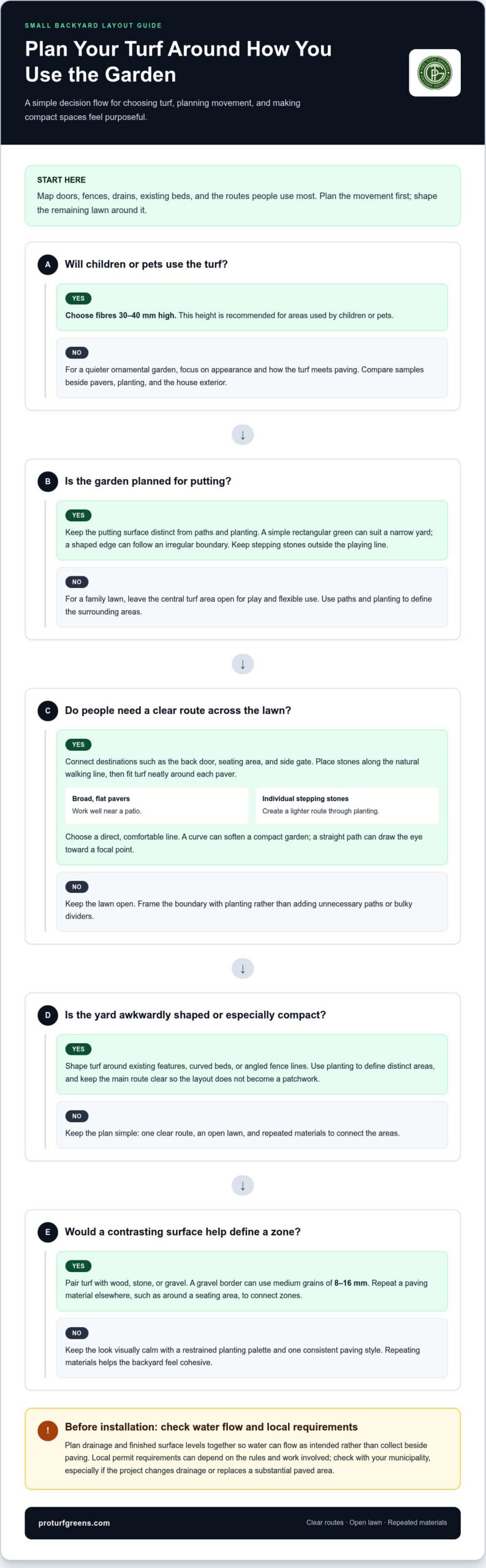
Start with the garden’s main use, then match turf texture and layout to that activity. Artificial grass fibres between 30 and 40 mm high are recommended for areas used by children or pets. In a quieter ornamental garden, appearance and how the turf meets paving may matter more than a play surface. Compare samples beside existing pavers, planting, and the house exterior before settling on a consistent look.
For a path across turf, place pavers or stepping stones along the natural walking route, such as between a patio door and a seating area. Plan the route before installation, then arrange the stones in a direct, comfortable line. Fit the turf neatly around each paver for a deliberate finish. A curved route can soften a compact garden, while a straight path can draw the eye toward a focal point.
Artificial grass between pavers works best when the paving has a clear purpose. Use larger slabs for a stable patio-style landing, or individual stepping stones for a lighter path through a planted corner. Repeat the same stone elsewhere, such as around a small seating area, to connect the zones. Avoid mixing too many shapes. One paving style and a restrained planting palette can help a small backyard feel cohesive.
For small-backyard zoning, use different surfaces to signal how each area is meant to be used. Keep a central turf area open for play, mark the route with pavers, and frame the boundary with planting. For example, run a narrow path between the back door and a bench, leaving the rest of the turf flexible. This defines each area without fences or bulky dividers.
Concrete and grass pavers combine firm footing with green coverage. Arrange concrete pavers in a repeating pattern, then fit turf into the openings or between units where the design allows. This can visually connect a paved area with the lawn. Plan drainage and finished surface levels together so water can flow as intended instead of collecting beside the paving.
A backyard putting green needs a different layout from a family lawn. Plan the green to suit the available footprint and intended use, keeping the putting surface distinct from paths and planting. A simple rectangular green can make efficient use of a narrow yard, while a shaped edge can follow an irregular boundary. Keep stepping stones outside the playing line for a clear surface.
Residential turf projects may be subject to local permit requirements, depending on the rules and work involved. Check your municipality’s requirements, especially if the project changes drainage or replaces a substantial paved area. For a simple turf-and-paver design, map the surfaces and water flow before work begins. This helps the garden plan account for both appearance and property requirements.
2. Turf combined with stepping stones and planting
Plan the walking route before choosing plants or placing stones. For example, connect the back door, a small seating area, and a side gate with one clear path. Arrange stepping stones along it, then place planting outside the main walking line. This keeps the lawn usable and gives each feature its own place. A gentle curve can soften a narrow yard, while a straight route suits a more formal layout.
Choose stones that suit the garden’s architecture and the route people need to walk. Broad, flat pavers work well near a patio, while smaller stepping stones create a lighter path through a planted border. Arrange them on the ground and walk the route before installation. Adjust the spacing until each step feels natural. Keep the path consistent rather than mixing shapes that compete for attention.
Use planting to frame the path, not obstruct it. A low border beside the stones can guide the eye toward a bench or garden gate. Repeat one plant type along the route, then add a contrasting plant near a corner. Ornamental grasses bring upright texture, while compact shrubs can define an edge. Leave room for plants to mature without spreading across the stones.
Low-maintenance plants and movable planters make a layout easier to adapt. Group containers near a patio or place one at the end of a path as a focal point. Succulents can suit a sunny container display, while shade-tolerant foliage is better beneath a covered area. Choose plants for the light and watering needs of their location. Consistent planter materials, such as terracotta or dark metal, help varied foliage feel connected.
For a clean turf border beside planters, establish a clear edge before setting out the containers. A narrow paved strip can separate turf from soil and make the transition look intentional. Alternatively, keep planters entirely on a hard surface to prevent loose potting mix from reaching the turf fibres. Make sure each container sits level and leaves the path clear. Moveable pots let you revise the arrangement without redesigning the garden.
Build maintenance into the layout. Place plants that need regular watering near a convenient water source, and keep loose leaves or soil away from busy paths. Leave room around larger pots so they can be tended without walking through planted beds. In a compact backyard, a repeated path material, a restrained plant palette, and a few well-placed containers create order while preserving open turf.
Before installation, mark the path and planter locations with removable garden markers. View the layout from both the house and the gate. If a planter narrows the path or a stone interrupts the direct route, reposition it. Walking through the plan helps balance greenery, movement, and usable lawn before finalizing the arrangement.
3. Artificial turf for compact backyards
Start with a simple site plan showing doors, fences, drains, and existing garden beds. Mark the routes people use most, such as the walk from the kitchen to a patio chair. Keep those routes clear before shaping the remaining lawn. This practical sketch helps prevent a small yard from becoming a patchwork of surfaces without a clear purpose.
Artificial grass can be cut to fit irregular shapes, including curved beds and angled fence lines. Trace each boundary on the plan before installation, then consider how the turf will meet paving, planting, or a wall. A clean edge follows the garden’s actual outline instead of forcing a rectangle into an awkward footprint, preserving usable lawn around existing features.
When considering artificial turf for a small backyard, give each surface a specific role. Keep a central turf area open for flexible use, while paving creates a landing beside the back door. A narrow planting bed can soften a fence without cutting across the lawn. Limit the number of zones so the layout is easy to read at a glance.
Let the main view guide the design. From a kitchen window, for example, a simple lawn shape leading toward a focal planter can make the garden feel composed. Avoid placing a large feature in the centre if it blocks the view across the space. A bench or planter along an edge leaves more turf visible.
Make awkward corners useful rather than treating them as leftover space. Shape turf around a garden bed or create a paved landing for a compact chair near a side fence. Keep the route from the gate to the house clear. If a corner has too little room for movement, use it for planting instead of squeezing in another seating area.
Choose borders that support the overall layout. A continuous paved edge can frame a small lawn, while a planted border can soften one side and define the garden’s limits. Repeating the same material around a patio and path ties separate areas together. A restrained palette prevents a compact yard from feeling divided by too many colors and textures.
Before finalizing the plan, walk through it from each entrance. Check that doors open freely, chairs fit on hard surfaces, and paths reach every intended area. Adjust any feature that interrupts movement. These checks help the finished turf follow the backyard’s actual shape while preserving room for everyday use.
4. Combining turf with wood, stone, and gravel
Artificial turf provides a consistent green surface, while natural grass grows and changes with conditions. Pavers create firm walking areas, and gravel can define borders or drainage paths. Combining materials gives each part of a small backyard a clear function.
Start with one dominant surface, then add materials to meet specific needs. For example, use turf as the main lawn, stone for a patio, and gravel beside a fence. This creates distinct zones without dividing the yard into lots of small patches. Repeat one material in another location to connect the areas visually.
For a decorative gravel border, use medium grain sizes of 8–16 mm. A perimeter strip with a uniform width of 10–20 cm can create a crisp transition beside turf or paving. Mark the border first with a garden hose or removable markers. This lets you judge its shape before setting the edge and filling it with gravel.
Wood adds warmth beside a green surface. A timber deck can establish a seating area, while a wood edging strip can separate turf from a planted bed. Keep materials consistent across nearby features, such as a deck and planter surround. The contrast between wood grain and turf texture adds definition without introducing more colors.
Stone suits paths, patios, and compact landing areas. Choose one stone finish for the main route, then repeat it around a bench or doorway. A clear boundary between stone and turf keeps each surface distinct. Fit the turf neatly to the paving, especially at corners where uneven joins can disrupt the design.
Gravel works well in narrow borders and where a softer transition is useful. For instance, place a gravel strip between a fence and the turf, then repeat it around a planter. Keep the strip a consistent width. A defined boundary helps keep gravel separate from the lawn and gives the perimeter a deliberate finish.
Plan surface changes around everyday movement. For example, place a timber seating area beside the house, a stone path toward the gate, and open turf between them. Gravel can frame the fence without narrowing the route. Avoid loose gravel where people walk often, as stones can shift underfoot and spread onto nearby surfaces.
Before installation, sketch each material boundary and mark it on the ground. Check the route from the door to the gate, then make sure each seating or planting area has enough usable space. Consider fire placement carefully: artificial turf can melt if embers or coals from fire pits and grills land on it. Keep those heat sources away from the turf.
5. How can artificial turf make a small backyard look larger?
A simple visual plan can make a compact yard feel more open. From the back door, identify the longest clear view across the space. Keep that sightline free of tall planters, bulky furniture, and unnecessary dividers. For example, position a low bench along a side boundary instead of across the view. This lets the eye travel farther and keeps the centre visually calm.
Use one continuous turf area where possible instead of splitting the lawn into small shapes. Several narrow patches can make the ground feel fragmented. A broad, uninterrupted surface creates a stronger sense of flow from the house to the far boundary. If the backyard has an irregular outline, shape the turf to follow it rather than forcing in a box-shaped lawn.
Repeat a small selection of colors and finishes across the garden. For example, match a planter’s finish to a nearby fence detail and keep the remaining surfaces visually quiet. Repeated materials connect separate features. Too many contrasting borders, patterns, and decorative objects draw attention to every boundary, making a compact garden seem busier than it is.
Place a focal point at the far end or along one edge. A single feature, such as a sculptural planter or small seating nook, gives the eye somewhere to travel. Keep the surrounding area uncluttered. In a narrow garden, align the main view with its longer direction to create visual depth without adding physical space.
Lighting can extend the garden’s visual presence after sunset. Warm outdoor lighting up to 3000 K is recommended for a natural effect. Place a light near a feature or boundary rather than scattering bright points across every surface. For instance, a softly lit planter at the far end can draw attention outward, while discreet lighting beside a doorway helps define the transition outside.
Choose furniture that keeps sightlines open. A slim table, chairs with visible legs, or a bench against a boundary leaves more ground visible. Keep the walking route clear and avoid placing storage containers in the centre. Before settling on a layout, use temporary markers to show where furniture and focal features might go. View the arrangement from inside the house and from the garden entrance.
A measured layout can help bring these visual choices together. Plan a backyard turf design around the shape, sightlines, and features you want to emphasize.
Pro Turf Greens: Backyard Putting Greens
Pro Turf Greens designs and installs Backyard Putting Greens for homeowners who want a dedicated putting area in a compact yard. A defined green can give an underused corner a clear purpose while leaving room for paths, planting, or seating. Share how you plan to use the space and which backyard features the design needs to accommodate.
If putting is not your main goal, Pro Turf Greens also offers Lawns & Pet Turf and Playgrounds & Recreational Turf. These options suit different household priorities, from a lawn-like gathering area to a space for play. Start by choosing the intended use, then shape the surface and overall layout around it.
Contact Pro Turf Greens to discuss a backyard putting green for your space.
Shape a Backyard That Works for You
Decide what you want the backyard to make easier. You might want a quiet place to unwind, room for family play, or a dedicated spot to practice putting. Let that priority guide your artificial turf for small backyard ideas before you choose finishing details. A simple sketch can show how each area supports the way you want to use the space.
Pro Turf Greens offers Backyard Putting Greens, Playgrounds & Recreational Turf, and Tee Lines & Driving Ranges for different outdoor goals. Decide which use suits your yard, then shape the design around that purpose rather than adding features without a clear role.
Contact Pro Turf Greens today to discuss a backyard turf project. With a clear purpose and thoughtful plan, your outdoor space can become a more welcoming part of home.
Frequently Asked Questions
What type of artificial grass is best for a garden?
Choose garden turf according to its primary use and the surface it must fit beside. For areas used by children or pets, recommended fibre height is 30 to 40 mm. A useful selection step is to compare samples near the garden’s paving and planting, then view them in daylight. This helps you judge color and texture against the materials already in the yard, rather than choosing from a small product image.
What are the best artificial turf ideas for a small backyard?
A strong shortlist of artificial turf for small backyard ideas starts with one clear purpose, such as open play or a quiet seating area. For example, keep a clear route from the door to a side gate and place movable chairs near the house. This makes the layout easier to adjust as household needs change, without committing every corner to a permanent feature.
What are the best artificial turf types and pile heights for small yards?
Match the turf type to its activity rather than choosing by appearance alone. To compare artificial turf for small backyard ideas, first decide where people will walk, play, or putt, then choose a surface for each use. Garden turf for children or pets is recommended at 30 to 40 mm fibre height, while a putting surface serves a different purpose. Avoid treating one turf type as ideal for every zone.
What are the drawbacks and drainage risks of artificial turf in small yards?
Drainage depends on the prepared base, the yard’s slope, and where runoff can travel. In Fort Lauderdale, Miami, or Palm Beach, mark downspouts and low spots before planning the turf boundary so water movement is part of the layout. The CDC notes that aged and weathered artificial turf can release lead in dust that may be ingested or inhaled. Keep the surface maintained and avoid disturbing accumulated dust.