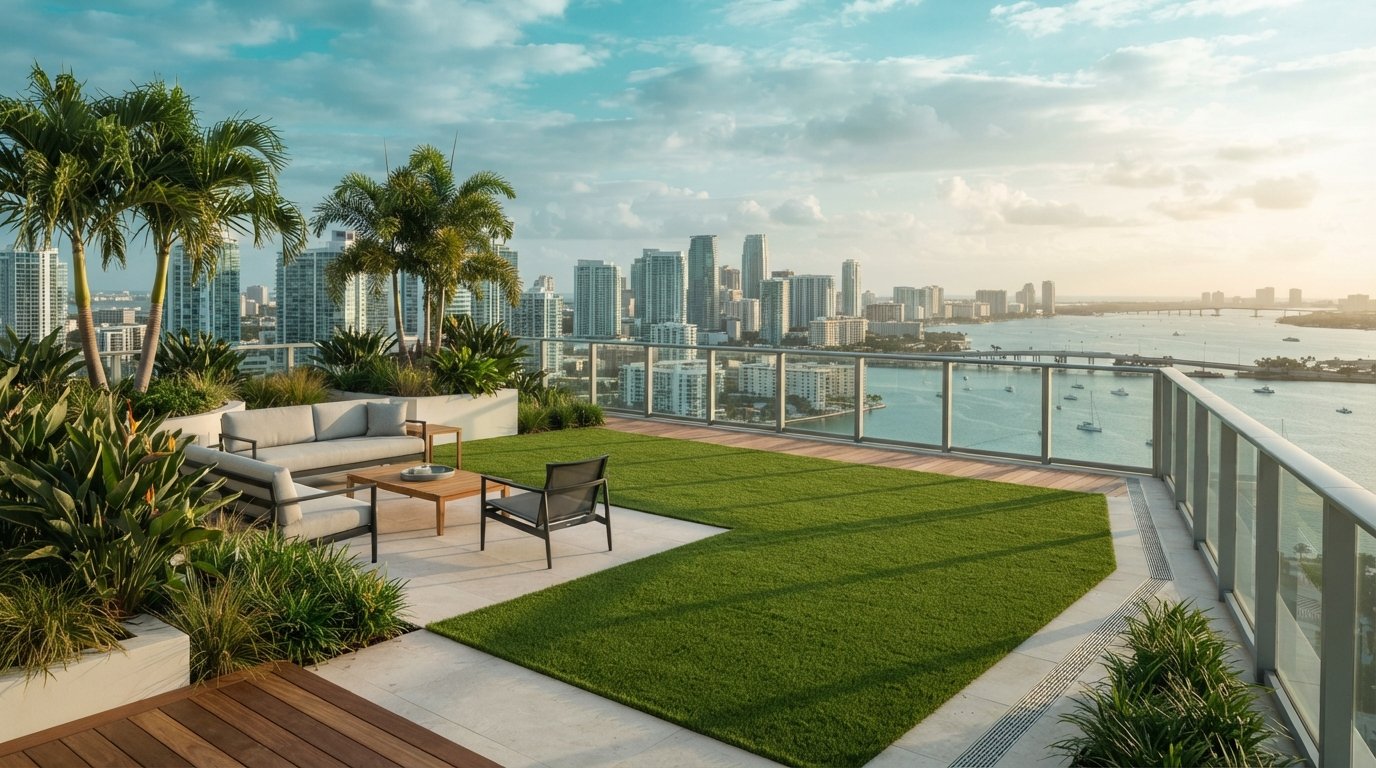
Pavers and decking aren’t the only options for a rooftop terrace. Artificial turf for a rooftop terrace in Miami can add a green, softer-feeling surface alongside hardscape. A non-penetrating installation method is intended to protect the roof membrane, while flow-through backing and a drainage pad can direct water toward existing roof drains or scuppers. Turf, pavers, and decking can also be combined in a coordinated layout.
Before choosing a rooftop surface, weigh appearance alongside drainage, upkeep, and building requirements. This guide compares turf with pavers and decking, explains how rooftop and balcony turf systems manage water, and outlines practical care. It also discusses fire and safety considerations, including how materials and installation relate to the building’s requirements.
Key Takeaways
- Compare turf, pavers and decking by how each fits your terrace’s intended use, look and drainage needs; they can also be combined in a level layout.
- For rooftop turf, consider how a flow-through backing and drainage pad can channel water toward existing roof drains or scuppers.
- Plan on light, regular care to clear debris and keep fibers upright, alongside attention to roof drains and periodic surface inspections.
- Before choosing materials and installation details, account for the building’s fire and safety requirements as well as the roof membrane.
- If a recreational putting area is part of your outdoor-space plans, explore how a backyard putting green could suit the available layout.
Why Should You Use Synthetic Turf for a Rooftop/Balcony?
For a Miami rooftop terrace, artificial turf can provide a green, softer-feeling surface without penetrating fasteners. The right system depends on drainage, roof protection, building approvals, and how you plan to use the space.
Rooftop Turf Options
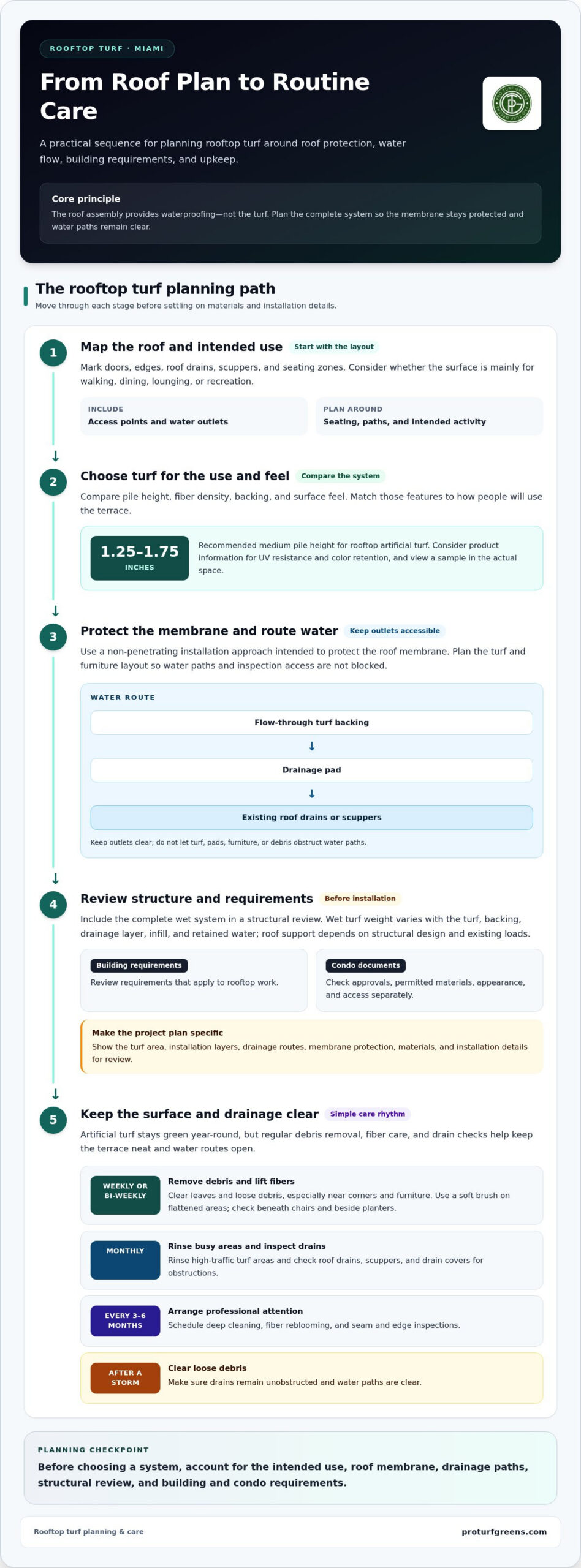
Rooftop systems differ in pile height, backing, and the layers beneath the turf. A medium pile of about 1.25-1.75 inches is recommended for rooftop artificial turf. Compare the surface feel, fiber density, and backing, then match those features to seating, walking, or recreation.
Consultation and planning should begin with the roof layout and intended use. Map doors, edges, drains, and seating zones before selecting materials. A non-penetrating installation method is intended to protect the roof membrane. Once materials and approvals are set, projects can move from design to completion within a few weeks.
Drainage and Waterproofing Requirements
Miami rain makes drainage a central design consideration. Rooftop turf systems can use flow-through backing and a drainage pad to direct water toward existing roof drains or scuppers. Keep outlets accessible, and plan the layout so turf, pads, or furniture do not obstruct water paths.
The roof assembly provides waterproofing, not the turf. Use a non-penetrating approach and preserve access for roof inspections and maintenance. Wet turf weight varies with the turf, backing, drainage layer, infill, and retained water. Because roof support depends on structural design and existing loads, include the complete wet system in a structural review before installation.
Building Codes and Condo Rules
For a Miami-Dade building, review building requirements and condo documents separately. Applicable building requirements address rooftop work, while association documents may govern approvals, permitted materials, appearance, and access. Review both before choosing a system or scheduling installation.
Prepare a concise project plan showing the turf area, installation layers, drainage routes, and how the roof membrane will be protected. Include material information and installation details in the approval submission. Specific details give reviewers more to assess than a general description of “rooftop turf.”
Heat, UV, Rain, and Humidity
Direct Miami sun can heat exposed surfaces, and turf warmth varies with color, fiber material, shade, and airflow. Compare product information for UV resistance and color retention, then consider where umbrellas or other shade will fall during the day. Viewing a sample in the actual space can help you assess its appearance and feel.
Rain and humidity make drainage and drying important. Flow-through backing and a drainage pad can route water to roof drains or scuppers, while clear outlets support runoff. During planning, consider sun exposure, water flow, access points, and intended use. These details help shape a practical layout without compromising roof access.
Want Great Artificial Grass For Rooftops/Balconies?
Rooftop artificial grass can keep a terrace looking green throughout the year without the routine mowing associated with a natural garden. A simple care schedule helps manage debris, keep fibers upright, and maintain clear drainage routes.
Low-Maintenance Turf
Choose artificial grass based on how you use the space, not appearance alone. A rooftop dining area may collect crumbs around furniture, while a balcony used for relaxing may mainly gather leaves and dust. Fiber height, density, and backing influence the surface’s feel and how easily debris can be removed.
Artificial turf stays green 365 days a year, but it still benefits from light maintenance. Plan to remove leaves and other loose debris weekly or bi-weekly, especially near corners and furniture legs. Clearing the surface regularly makes it easier to spot flattened fibers and keep the terrace neat.
For an easier upkeep routine, divide the terrace into clear zones. Sweep the path from the door to the seating area, then lift fibers where chairs or planters press them down. Keep heavy planters on suitable supports and avoid placing objects over drains. These steps make upkeep manageable without turning the terrace into a garden chore.
Cleaning and Maintenance
Clean lightly every week or two to remove debris and lift rooftop turf fibers. A soft brush can help restore flattened areas. Brush with the fiber direction first, then work gently against it where fibers remain compressed. Remove leaves by hand around edges and fixtures, where windblown material can collect.
Each month, rinse high-traffic rooftop turf areas and check roof drains for obstructions. Direct water across the turf rather than letting debris gather near an outlet. Pay attention to scuppers and drain covers: clear water paths matter as much as a clean-looking surface.
Arrange professional deep cleaning, fiber reblooming, and seam and edge inspections every three to six months. These visits can address details a quick sweep may miss, including compacted fibers, visible seams, and edges that need attention. After a storm, remove loose debris and make sure drains remain unobstructed.
A written checklist helps household members follow the same routine: remove debris, lift flattened fibers, rinse high-traffic sections monthly, and inspect drainage. Note areas beneath chairs or beside planters, since repeated pressure can change how fibers sit. For another outdoor application, explore artificial turf driveway options as you plan a cohesive surface palette.
Comparison with pavers and decking
Choosing a rooftop surface means balancing comfort, appearance, upkeep, and function. Artificial turf creates a softer-feeling zone for bare feet, lounging, or children’s play. Pavers offer a firm, structured surface for dining furniture and walking routes. Decking adds a linear texture that can define a seating area or create visual contrast. The right choice depends on how you’ll use each part of the terrace.
Porcelain paver tiles offer a clean, precise finish, while IPE Ironwood decking has a natural wood appearance. Turf adds a green visual break between these harder materials. Used in different rooftop areas, the finishes can form a connected, level layout. For example, pavers can frame a dining table, decking can define a lounge zone, and turf can soften the open area between them.
Think through everyday movement before selecting materials. Mark the route from the balcony door to the table, then consider where chairs slide and planters stand. Pavers provide a stable base beneath dining furniture, while decking can define a compact seating nook. Turf can soften an open section. This zoning exercise gives each finish a clear purpose and keeps pathways easy to follow.
Compare maintenance needs with how you use the space. Turf requires debris removal, fiber care, and attention to drainage. Pavers and decking have different surface-care needs, and joints or board gaps affect how debris collects. Outdoor dining may require frequent cleanup beneath chairs, while a quieter balcony may mainly gather windblown leaves. Consider upkeep alongside appearance, not as an afterthought.
Material selection also shapes installation planning. Each finish has its own thickness, edge details, and transition points, so account for door thresholds, drains, and roof access in the layout. A coordinated plan can keep adjoining finishes level while preserving clear routes to drainage outlets. View samples beside one another, then assess color, texture, and balance across the terrace.
For a smaller balcony, one surface may create a calmer, more unified look. A larger terrace can use two or three finishes to distinguish spaces without adding partitions. Sketch the intended zones first, then compare turf, pavers, and decking against each activity. That practical sequence makes the choice about comfort and function, not appearance alone.
Fire and safety considerations
Rooftop turf planning should account for ignition sources, walking routes, and access to building equipment. Treat the turf as one part of the terrace, not as a reason to block exits, drains, or service areas. Mark these features on a plan before installation and keep them clear in the finished design.
Start with the material documentation. Review the stated fire-performance information for the turf and any underlayment, then compare it with the requirements for the building and proposed rooftop use. Include product documentation in the project review. Do not assume that outdoor use or appearance establishes a product’s fire suitability.
Keep open flames and heat-producing equipment away from synthetic fibers. Position a grill or portable heater on a suitable hard surface, not directly over turf. Follow the equipment’s safety instructions, and keep hot cookware, ash, and smoking materials off the artificial grass. A designated cooking area can separate those activities from a lounge or play zone.
Plan Clear Routes and Accessible Equipment
Trace the route from the terrace door to every exit and service point before setting the turf boundary. Keep doors, stairs, roof hatches, electrical equipment, and fire-safety fixtures accessible. Furniture should not narrow the route, and planters should not cover drains or equipment. Revisit the layout after furnishing, since a clear installation plan can become obstructed later.
Surface transitions also affect everyday safety. Secure edges and seams, and avoid loose corners that could catch a shoe or moving chair. Check boundaries beside pavers, decking, and door thresholds. After installation, walk each route and test furniture movement. Address raised edges or shifting transitions before regular use.
Consider Slip, Heat, and Routine Checks
Rain can leave rooftop surfaces wet, so keep drainage paths clear and remove loose leaves from walking areas. Consider wet conditions when placing furniture and using the terrace. After strong weather, inspect the turf for displaced edges, debris, or blocked drains. A quick visual check can identify hazards before the space is used.
Direct sun can heat exposed surfaces, including turf and nearby hardscape. Provide shade where practical, and use care before walking barefoot or letting children play. Keep walkways open, store equipment securely, and supervise activities near roof edges.
Use a simple handover checklist: review product fire documentation, confirm clear routes, locate heat sources, and inspect edges and drains. Record who handles routine checks and where rooftop equipment remains accessible. This makes safety part of the terrace’s ongoing use, not just an installation consideration.
Artificial turf for rooftop terraces
A successful rooftop turf system is more than a roll of green material. It combines turf, a drainage layer, secure edges, and a layout that preserves access to roof features. For a Miami terrace, begin by mapping drains, doors, furniture areas, and exposed edges. That plan helps the surface feel intentional while keeping its practical functions in view.
Choose turf based on how people will use each area. A medium pile height of about 1.25-1.75 inches is recommended for rooftop artificial turf. This can suit a lounge or walking area, while a shorter pile may create a firmer feel beneath compact furniture. Compare samples in the terrace’s sunlight, since color and texture can look different outdoors.
Drainage design shapes the entire installation. Flow-through backing and a drainage pad can guide water toward existing roof drains or scuppers. A tapered roof layer can use a slope of 1/4 inch per linear foot to direct water toward drainage. Keep outlets visible and accessible, rather than covering them with turf, furniture, or planters.
Before installation, document the roof’s existing condition and note access points. Plan the turf layout around those features, with seams and edges positioned away from high-use transitions where possible. A non-penetrating installation method is intended to protect the roof membrane. Consider the drainage layer, turf backing, and any added materials together in the system design.
Durable performance depends on choosing a system suited to rooftop exposure, not simply selecting the softest sample. Review product details for UV exposure and intended outdoor use. Consider how windblown leaves, foot traffic, and moving furniture affect the area. For example, a route between a balcony door and dining table may need a firmer, easy-to-clear surface than a quiet lounge corner.
Once the layout is set, keep maintenance access in the design. Leave room to reach drains, inspect seams, and move furniture without catching edges. After installation, walk the full route and check transitions beside pavers or decking. A clear handover plan should identify drainage locations and routine inspection points.
If your outdoor project also includes a ground-level approach, explore artificial turf driveway options as a separate way to coordinate turf across your property.
Pro Turf Greens: Backyard Putting Greens
Pro Turf Greens designs and installs dedicated outdoor recreation spaces, including professional-grade putting greens tailored to how you want to practice and play. A putting green can provide a focused place to work on your short game. For other outdoor needs, the company also installs playground and recreational turf, tee lines and driving ranges, and lawns and pet turf.
Consider the activity, available layout, and how the space connects with the rest of your property before choosing an option. This helps identify a turf solution suited to how you’ll use the area.
Contact Pro Turf Greens or visit proturfgreens.com to discuss your outdoor turf project.
Shape Your Next Outdoor-Space Plan
Before choosing a surface, write a short design brief for your rooftop or balcony. Note how you want to use the space, which areas should remain open, and what matters most in appearance and upkeep. For artificial turf for a rooftop terrace in Miami, this brief can help organize discussions with your building team and clarify which design details need attention.
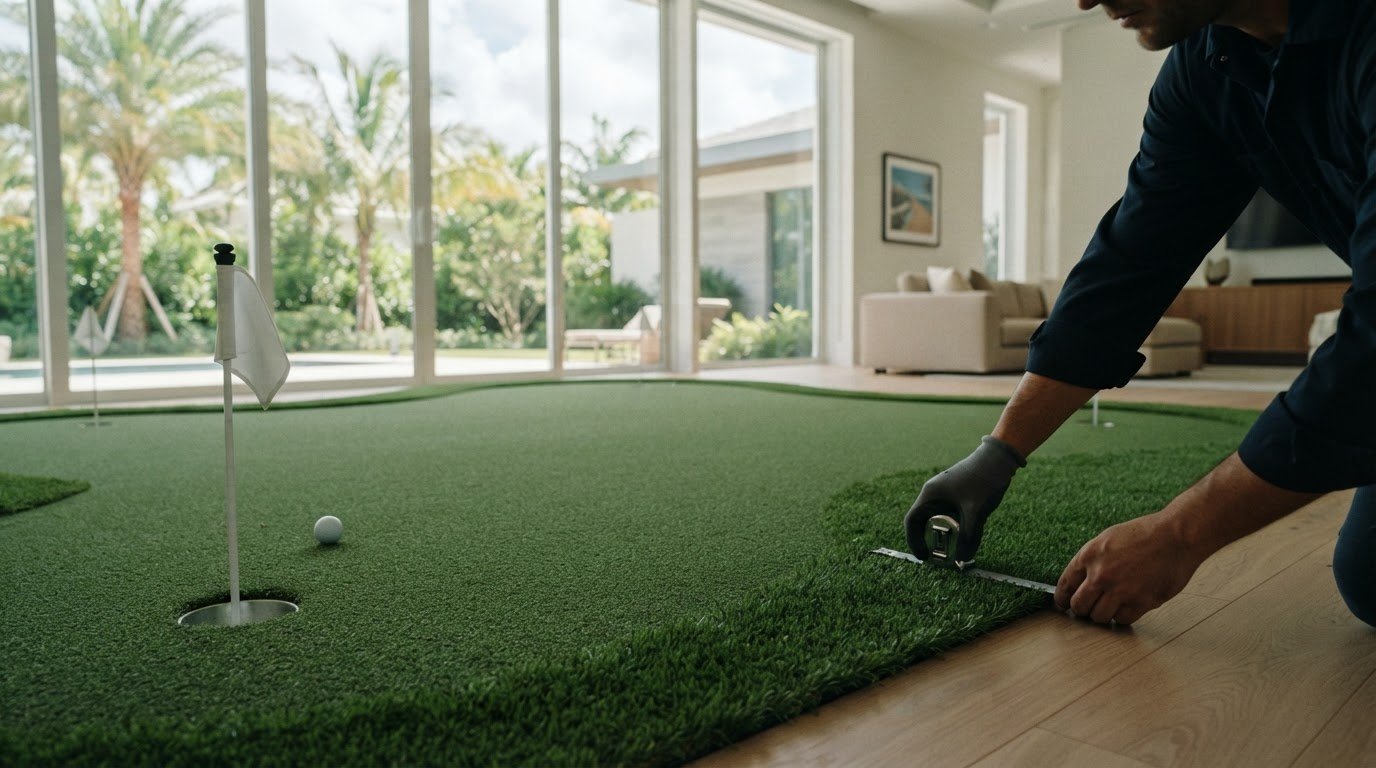
Think beyond the terrace, too. If your plans include a separate recreation area at ground level, a backyard putting green can provide a dedicated place to practice. Pro Turf Greens also installs playground and recreational turf, tee lines, and driving ranges.
Contact Pro Turf Greens today to discuss a recreational turf project that fits your property. With a clear purpose for each outdoor space, you can move toward a design that feels considered, functional, and distinctly your own.
Frequently Asked Questions
What Makes a Great Artificial Turf Roof System?
A well-designed system suits the roof’s drainage plan, intended use, and installation constraints. Consider the turf, backing, drainage layer, edges, and how the components work together. A lounge area needs comfortable footing, while a route to rooftop equipment needs clear access and secure transitions. A coordinated design accounts for the whole roof assembly, not just the visible turf.
What types of artificial turf are best for a rooftop terrace in Miami?
Choose rooftop turf according to intended use, fiber feel, exposure, and drainage compatibility. A medium pile height of about 1.25-1.75 inches is recommended for rooftop artificial turf. A lounge space may suit a softer-feeling pile, while a frequently used path may call for a firmer surface. Review product details for outdoor exposure and choose a look that complements nearby finishes.
How much does rooftop artificial turf installation cost per square foot in Miami?
There is no single per-square-foot figure for every Miami rooftop project. Cost depends on the project, including the roof’s condition, preparation needs, turf selection, drainage layers, access for moving materials, and details around doors, drains, and edges. A defined layout helps clarify the work involved when preparing a project quote.
Which Miami contractors install artificial turf on rooftop terraces?
Pro Turf Greens is a South Florida artificial turf provider and has featured a rooftop artificial-grass patio design for a Miami estate. Its offerings include putting greens, playground and recreational turf, tee lines and driving ranges, lawns and pet turf, athletic turf, and artificial turf driveways. Service-area references include Fort Lauderdale, Miami, Palm Beach, Boca Raton, Delray Beach, Jupiter, Palm Beach Gardens, Weston, and Coral Gables.
What turf backing and infill are safest for rooftop drainage and wind resistance?
For drainage, look for flow-through backing paired with a drainage pad that directs water toward existing roof outlets. Keep drains accessible and runoff paths clear. Wind resistance depends on the complete installation, including edge treatment and how the turf is held in place. Consider backing, infill, and attachment details together rather than treating any one material as a stand-alone safety solution.
How do artificial turf and other rooftop flooring options compare in cost and maintenance?
Cost depends on material selection, preparation, access, and layout. When comparing project quotes, use the same area and scope. Maintenance also varies by surface: turf needs debris removal and fiber care, while pavers and decking need care suited to their joints or boards. A dining area may collect crumbs beneath chairs, while an exposed terrace may gather windblown leaves across every finish.
What are the steps to install artificial turf on a rooftop terrace?
Start by documenting the roof layout, intended use, drains, doors, and equipment access. Plan turf boundaries and transitions around those features. Select compatible turf and drainage layers, then prepare the surface and install the system without obstructing outlets. Finish by walking the routes, checking seams and edges, and confirming that drains and rooftop equipment remain accessible.
What maintenance, cleaning, and odor-control issues come with rooftop artificial turf?
Remove debris regularly, lift compressed fibers, and keep drains clear so water can pass through the system. For odor control, promptly remove food spills, pet waste, and other organic material rather than letting residue sit in the fibers. Rinse affected areas as appropriate for the system, and avoid leaving furniture or planters over damp debris. Routine attention to seams and edges also helps keep the surface orderly.