What if the best-looking turf isn’t the best choice for your South Florida yard? The best artificial grass for south florida climate is the option that suits the site as well as the view. Intense sun, heavy rain, and humidity all affect what to consider, along with whether the space is for pets, play, or everyday use. Before choosing a surface, ask how it may feel in direct sun, how water moves across the property, and what demands the area will face.
The right choice depends on more than color or pile height. Compare turf options by sun exposure, drainage planning, intended use, and documented product details. It also helps to review local requirements and environmental trade-offs before planning an installation. A residential lawn, pet area, recreational space, and athletic surface each have different priorities, so the goal is to plan a turf system around the property and its purpose.
Key Takeaways
- The best artificial grass for south florida climate depends on the site, sun exposure, and planned activity, not appearance alone.
- Compare the surface, any infill, and the prepared base as parts of one system.
- Set different priorities for lawns, pets, play, sports, and putting greens.
- Before planning installation, note shade, existing surfaces, site access, and how water moves across the area.
- Review applicable local requirements and HOA rules as part of planning a turf project.
What Makes Artificial Grass Suitable for South Florida’s Climate?
Artificial grass is a suitable choice when its design and installation plan fit the property and the way you’ll use the space. Consider sun and shade, the ground beneath the turf, how rainwater moves through the site, and whether the surface is for lounging, pets, play, or sport. No single appearance or product specification tells the whole story.
In South Florida, a good turf choice accounts for sun, warmth, humidity, rainfall, site conditions, and planned activity as connected factors. A consistently green appearance may be appealing, but it doesn’t show how comfortable a surface will feel or how it will perform on a particular property. The Artificial turf overview offers background on the product and its components. Choosing a system still requires attention to the installation site.
How South Florida sun and humidity affect turf decisions
Start by observing the area at different times of day. An open lawn exposed to direct sun has different conditions from a space shaded by a building or trees. Warm, humid weather is also part of the local setting, so consider when people or pets will use the surface and whether shade is available then.
Don’t assume that a particular color or material will feel cooler based on appearance alone. Comfort depends on the specific turf and installation details, so look for product-specific information rather than broad claims. For a play area or pet space, note the usual hours of use and the amount of shade across the site.
Why heavy rain makes site conditions part of the choice
How a site handles water depends on more than rainfall. Existing ground conditions, the shape of the area, nearby surfaces, and the path water already takes all matter during project planning. The turf product and drainage plan are related, but they aren’t interchangeable. Choosing a surface alone doesn’t determine how water will move through the finished system.
There isn’t one base or drainage approach for every property. Note low spots, areas where water collects, slopes, and places where the turf will meet hardscape. These observations help shape a design around the site instead of relying on a general solution.
That’s the practical way to identify the best artificial grass for south florida climate: consider how sun, shade, warmth, rain, and intended use interact at the specific site. A custom design can address those factors together, whether the project is a residential lawn, recreational area, or athletic surface.
Which Turf-System Factors Matter Most in South Florida?
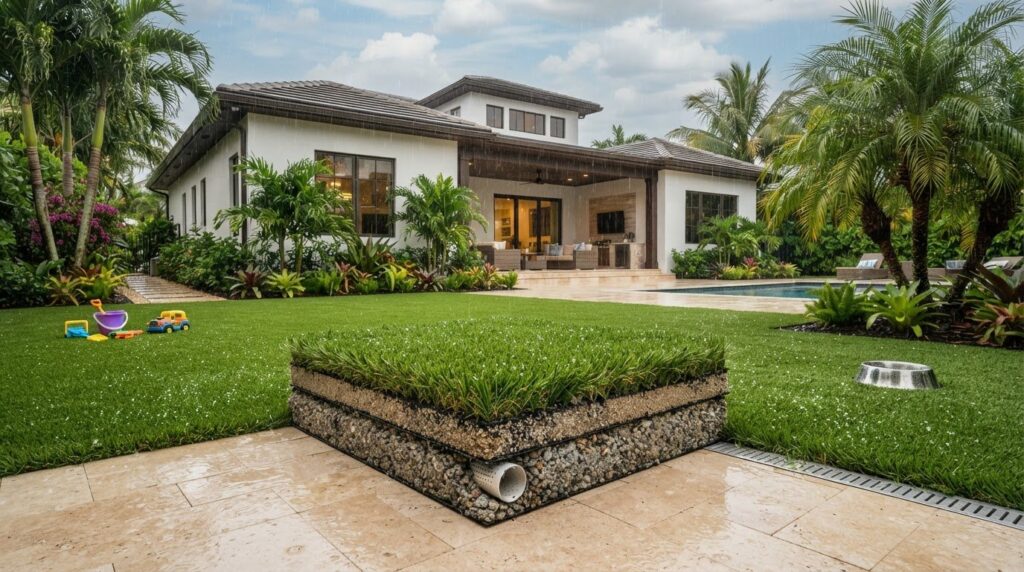
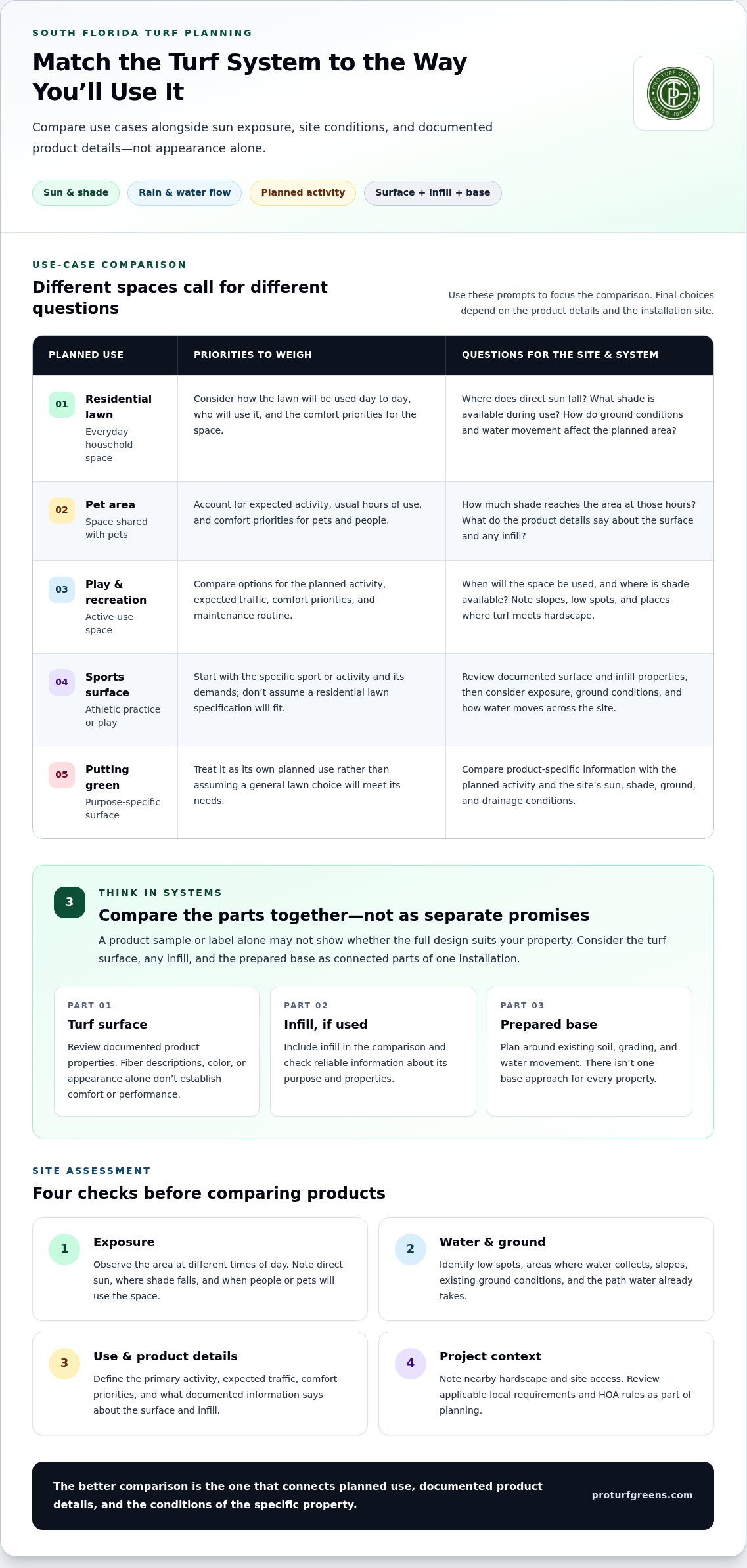
Artificial turf is a system, not just the visible synthetic fibers. Depending on the design, it can include the turf surface, infill, and a prepared base. Each part contributes to how the finished area is intended to function, so a product label or sample alone may not show whether the overall design suits your property.
Evaluate turf and base conditions together because the surface is part of the system installed beneath it. A sunny residential lawn, pet area, and athletic surface have different demands. South Florida weather and the property’s own conditions add further considerations. The best artificial grass for south florida climate isn’t a universal material choice; it’s a system planned around exposure, activity, and the installation site.
Surface and infill: compare documented properties, not labels
Fiber descriptions alone don’t establish how turf will feel, handle warmth, or stand up to use. Those qualities depend on product-specific characteristics and the conditions where the turf will be installed. If the system uses infill, include it in the comparison and review reliable information about its purpose and properties.
Focus on documented details rather than broad claims. Don’t assume a certain fiber type or shade is always cooler or more resilient. Relate available product information to the planned use, daily sun exposure, and comfort priorities of the people or pets using the space.
Base preparation and drainage belong in the same discussion
The prepared base is a functional part of the installed system, not a finishing detail. Existing soil, grading, and water movement across the site all affect project planning. Because properties differ, one base design shouldn’t be treated as the answer for every South Florida installation. The system design needs to account for site conditions as well as the selected surface.
Before comparing options, organize the decision around a few connected questions:
- Exposure: Which parts of the planned area receive direct sun, and where does shade fall?
- Activity: Will the space primarily serve as a household lawn, pet area, recreational space, or sports surface?
- System details: What documented information describes the surface and any infill being considered?
- Site conditions: What are the ground, slope, and water-flow patterns in the installation area?
These questions keep comparisons focused on the property instead of appearance alone. A site assessment can bring the surface choice, prepared base, and intended activity into one project plan. For a South Florida project, custom South Florida turf design can be tailored to the site and how you plan to use the finished space.
How to Compare South Florida Artificial Grass for Different Uses
The right turf depends on what happens on it every day. A residential lawn has different priorities from a space for active play, pets, athletic practice, or putting. Compare options by activity, expected traffic, comfort priorities, maintenance routine, and sun exposure. Don’t assume one lawn specification fits every application.
Use this table to identify questions that matter for your space. It’s a starting point, not a substitute for evaluating the site and system design.
| Use | Activity and traffic | Comfort and maintenance priorities | Site exposure to consider |
|---|---|---|---|
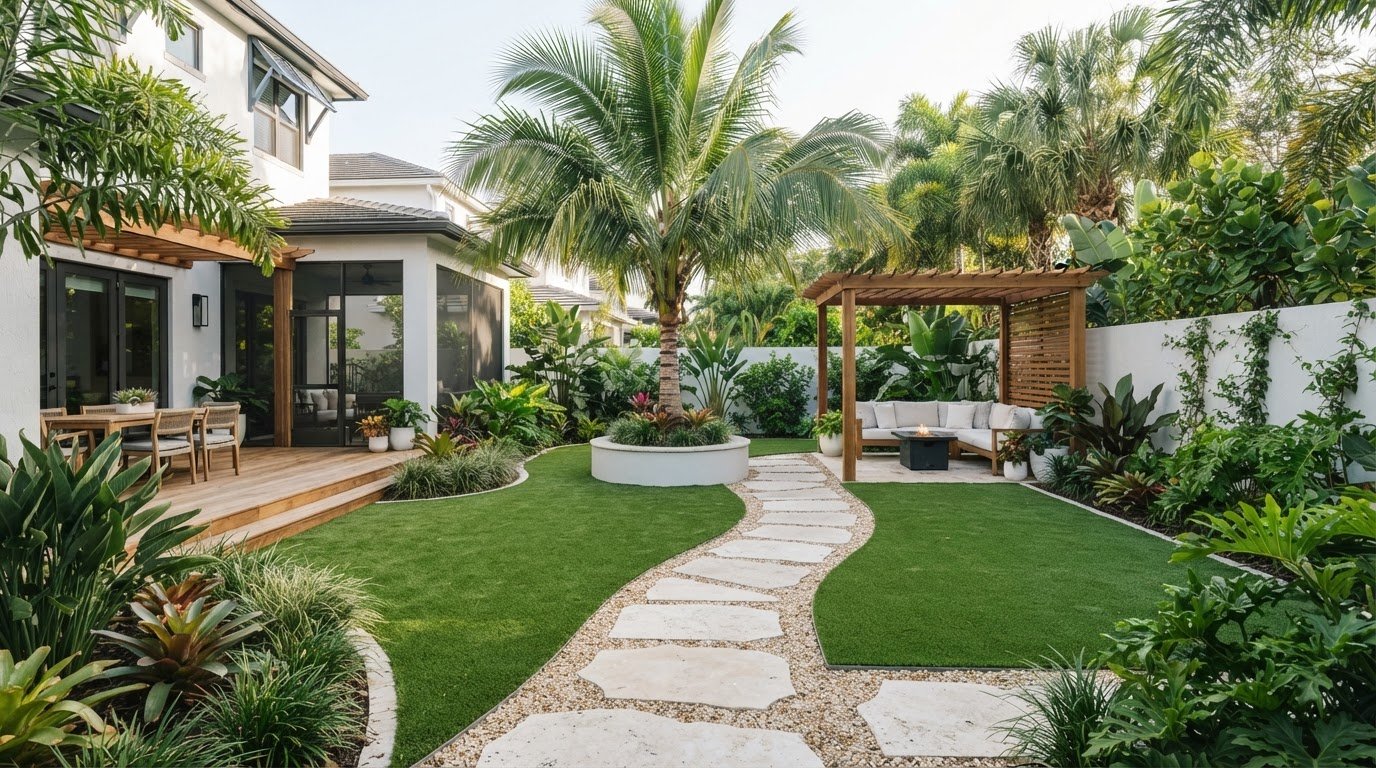
| Lawns | Everyday household use, with traffic shaped by how the yard is used | Consistent appearance, comfort for walking or relaxing, and a manageable care routine | Direct sun, shade patterns, and transitions to patios or other surfaces |
| Pet areas | Frequent access and concentrated use in preferred spots | Comfort for pets and a practical routine for removing debris and cleaning the area | Sun exposure, nearby washing or access areas, and how water moves across the site |
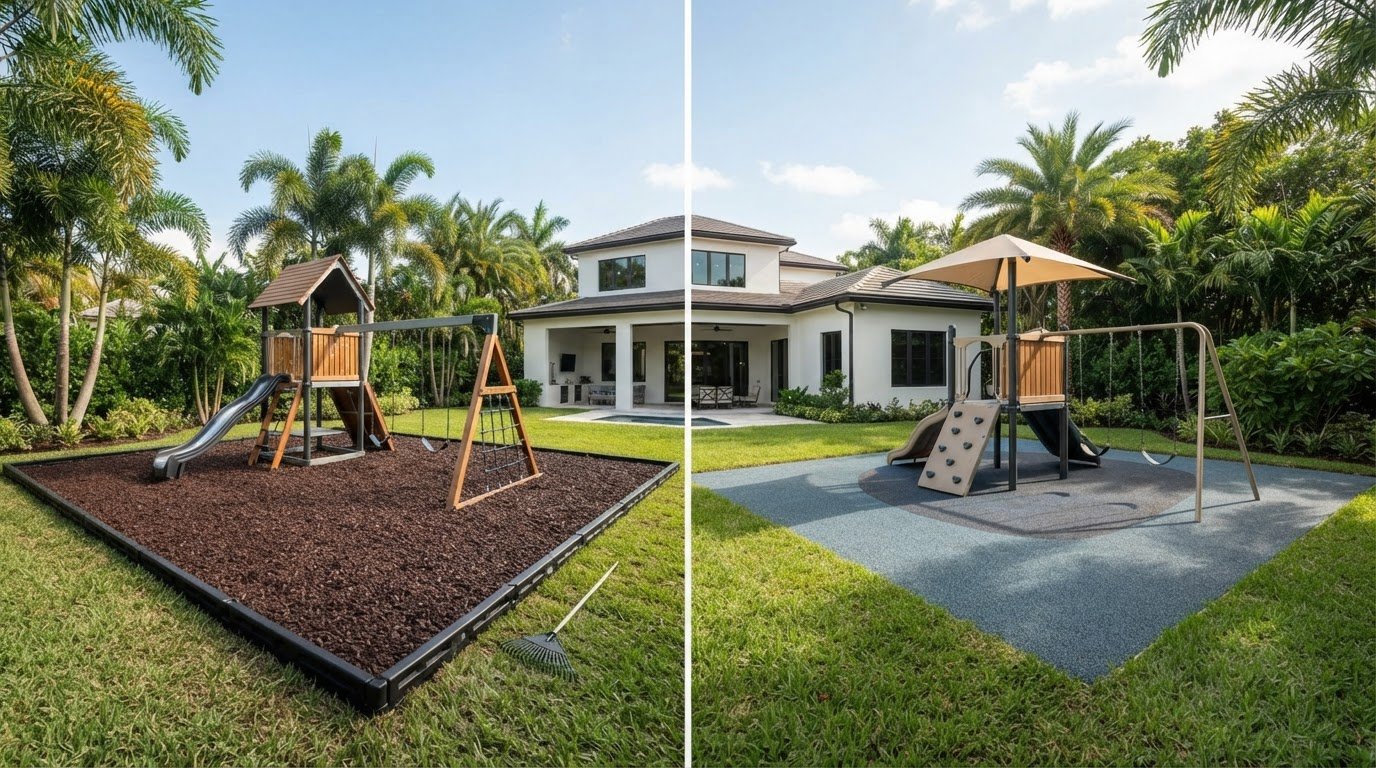
| Playgrounds | Active play and repeated use in a defined space | Comfort during play and questions about the intended impact-surface design | Shade, surrounding play equipment, and site conditions beneath the planned area |
| Sports surfaces | Movement and traffic associated with the specific sport | Play requirements and how the surface will be used during practice or recreation | Open or shaded exposure and the dimensions and layout of the activity area |
| Putting greens | Putting practice, with use focused on the designed green area | Practice goals and the desired putting experience, rather than general lawn comfort | Sun and shade, available space, and the placement of the green within the property |
Choose lawn, pet, or play turf around daily use
For a lawn, weigh the appearance you want against how people use the yard and where the sun falls. In a pet area, think through cleanup and how the space connects to the rest of the property. A dedicated dog-run guide can offer more detail. For a play area, consider the intended activities and how the surface design addresses impact needs. Don’t assume every turf system offers the same level of protection.
Sports and putting surfaces need activity-specific priorities
For athletic turf, start with the sport, expected traffic, and qualities needed for play. A deeper sports-turf guide can help you explore those considerations. Putting greens call for a different comparison: define your practice goals and the putting experience you want, rather than judging the surface by ordinary lawn priorities. Specialized surfaces need use-specific design, not a one-size-fits-all lawn choice.
Matching the application to its purpose helps clarify the best artificial grass for south florida climate for a particular property. Once the intended activity is clear, compare comfort, upkeep, and site exposure in that context, then consider how the full design can support the way the space will be used.
What Should You Check Before Installing Artificial Grass in South Florida?
Preparing a few observations before comparing turf options helps shape a design around the property, not just a product sample. Use this checklist to move from assessing the site to clarifying how you’ll use it and reviewing local requirements.
Assess the property before comparing options
Observe the area during the part of the day when it’s normally used. Sun, shade, slopes, and water flow can vary across one yard, so record what you notice rather than treating the whole space as identical. Include existing surfaces and access points, since they can affect installation planning.
- Map sun and shade. Note which areas receive direct sun and which are shaded during typical use. If conditions change over the day, record when.
- Sketch the ground. Mark slopes, low points, patios, walkways, and other existing surfaces. Note where rainwater flows or collects.
- Consider access. Identify gates, narrow passages, and transitions into the planned area so the design reflects the property layout.
- Define the activity. List who will use the space and how, such as for household recreation, pets, children’s play, sports, or putting practice.
- Set upkeep expectations. Consider the routine you can maintain, including cleaning needs for pet areas and general surface care.
Check local rules and set realistic expectations
Requirements can differ between municipalities and may change over time. Miami-Dade, Broward, and Palm Beach counties offer regional context, but county boundaries don’t establish the rules for an individual property. Check current landscaping and permitting requirements with the relevant city or municipality, and review any HOA requirements separately.
Weigh environmental trade-offs without assuming artificial turf is impact-free. Consider the materials involved, how the installation is planned to handle water, and how the surface might be managed or disposed of at the end of its useful life. These factors vary by project and product, so a general environmental claim doesn’t prove a specific outcome.
Use your notes to identify which choices matter most before settling on the best artificial grass for south florida climate. A clear picture of exposure, access, water movement, intended activity, and local requirements gives the design process a practical starting point.
For a site-specific discussion, request a free South Florida turf consultation with Pro Turf Greens.
Plan a South Florida Artificial Grass Installation Around Your Property
A successful project starts with a clear brief: what the space needs to do, how sun and shade affect it, what the site is like, and which local requirements apply. Those priorities turn a broad search for the best artificial grass for south florida climate into a practical plan for one property. Residential lawns, pet areas, playgrounds, sports surfaces, and putting greens each need a design shaped around their intended use.
Bring together your observations about the property and how you expect to use it. Include areas that receive direct sun, shaded portions, existing surfaces, site access, and places where water tends to collect or flow. These details help focus the design discussion on your priorities, not appearance alone.
Turn your climate and use priorities into a project brief
Note the intended activity, expected users, comfort priorities, and the maintenance routine that suits your household or organization. For a pet space, describe how it will be used and cleaned. For a putting green or sports area, explain the kind of practice or play you have in mind. Pro Turf Greens provides custom design and professional installation for residential and commercial projects.
Miami readers can also use an artificial turf consultation guide to organize project questions and priorities before planning.
Explore a locally designed turf solution
Pro Turf Greens designs and installs artificial turf in South Florida for a range of properties and applications. Its work includes lawns and pet turf, playground and recreational surfaces, athletic turf, and putting greens. Each application serves a different purpose, so the design can reflect how the space is meant to function instead of treating every project like a standard lawn.
Pro Turf Greens serves communities including Fort Lauderdale, Miami, Palm Beach, Boca Raton, Delray Beach, Jupiter, Palm Beach Gardens, Weston, and Coral Gables. Bring your site notes and a clear sense of how you want the space to be used when discussing a project. A consultation gives you an opportunity to talk through those goals and the property conditions that may shape the design.
Request a free consultation to discuss a South Florida artificial turf project for your property.
Make Your Next Turf Decision a Property-Specific One
You don’t have to choose a product immediately. Start by deciding what you want the space to make possible, then bring notes about its exposure, layout, and everyday use into a project conversation. This gives the design process a clear purpose and keeps the decision focused on how the finished area should serve you.
The best artificial grass for south florida climate is planned for your property, not simply chosen because it looks appealing in a sample. Pro Turf Greens designs and installs artificial turf for residential and commercial projects, from lawns to recreational and sports surfaces. You can request a free consultation by phone at 561-221-1010 or through the website.
Ready to discuss your plans? Request a free artificial turf consultation and take the next step toward a space designed around your property.
Frequently Asked Questions
Does artificial grass get too hot in South Florida?
Artificial grass can become warm in direct sun, but how it feels depends on the surface, exposure, and installation. If children or pets use the area, note when they’re usually outside and whether shade is available at those times. Product-specific information can help set expectations. A shaded patio-side lawn and an open play area may have different comfort considerations, even on the same property.
Can artificial grass handle heavy South Florida rain?
That depends on the full installation and how the property handles water, not just the visible turf. After rain, note whether puddles remain, where water travels, and whether runoff reaches a neighboring area or building. These observations help clarify site-specific drainage needs. In places such as Miami and Fort Lauderdale, don’t assume two yards will behave alike simply because they experience similar weather.
Is artificial grass allowed in Miami or other South Florida cities?
There isn’t one answer for every address. Current requirements depend on the municipality and may change. Before scheduling work, check local government landscaping, zoning, and permitting guidance for your property. This applies across the region, including Miami, Fort Lauderdale, Palm Beach, and Boca Raton. If an HOA applies, review its requirements separately, since municipal guidance may not cover private community rules.
Is artificial grass environmentally friendly in Florida?
Artificial grass has environmental trade-offs, so it shouldn’t be treated as impact-free. It may reduce routine mowing and watering, while synthetic materials raise questions about production, drainage, and disposal when the surface is eventually removed. For a considered comparison, look for documentation about the specific product and installation, and think about how the site will be maintained. Avoid applying general environmental claims to every project.
Can artificial grass be installed over sandy soil?
Sandy soil alone doesn’t determine whether an installation is suitable. A flat area with stable existing ground may have different planning needs from a sloped section where water gathers. Note soft spots, shifting ground, or recurring puddles, and include them in project planning. The installation approach should respond to the property’s conditions and intended use rather than rely on one assumed base design.
How do I choose artificial grass for a South Florida dog area?
Start with your dog’s routine: where it spends time, how often the area needs cleaning, and whether it gets direct sun or frequent rain. Consider how the space connects to gates, paths, and washing areas, then compare product information relevant to pet use. No single choice fits every dog or yard. Pro Turf Greens also offers a guide to artificial turf for dog runs in South Florida.
How long does artificial grass last in South Florida?
There’s no single lifespan that applies to every turf installation. Sun exposure, foot or paw traffic, product specifications, preparation, and ongoing care can all affect how the surface performs over time. When comparing lifespan statements, look for evidence tied to the specific product and conditions rather than treating a broad estimate as a promise. Keep product and care information for reference as the installation ages.