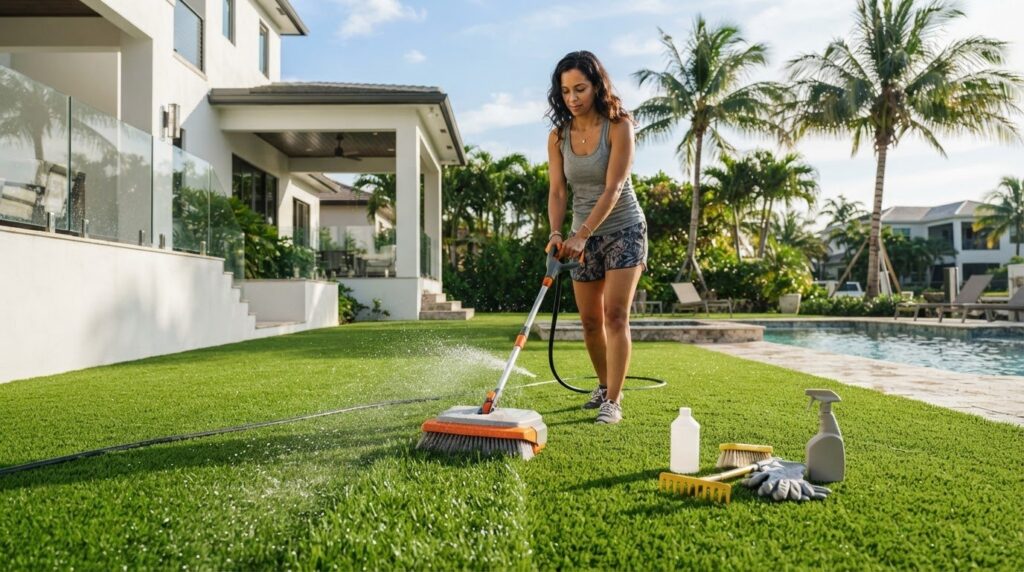
Did you know that a high-performance synthetic lawn can reduce your annual water usage by up to 70 percent while costing significantly less to maintain than traditional sod? It’s a transformative upgrade for any modern home, yet maintaining that pristine, high-end look depends entirely on your upkeep routine. Learning how to clean synthetic grass correctly is the difference between a lawn that lasts decades and one that succumbs to lingering pet odors or matted fibers. Whether you’re dealing with intense summer heat or high-traffic play areas, the right approach protects your investment and ensures your turf remains as vibrant as the day it was installed.
We understand the frustration of seeing beautiful blades look dull or worrying that a common household cleaner might accidentally damage the specialized backing. You deserve an outdoor space that stays fresh, drains instantly, and feels soft under bare feet without requiring hours of physical labor. This guide provides the exact steps, pet-friendly techniques, and specialized tools needed to maintain a professional-grade finish. We’ll walk you through everything from neutralizing stubborn odors with enzymatic solutions to using power brooms that restore natural verticality to every blade.
Key Takeaways
- Develop a consistent debris removal schedule to prevent organic matter from decomposing and compromising your lawn’s rapid drainage system.
- Learn to distinguish between surface odor masking and deep enzymatic cleaning to keep pet runs sanitary and free of lingering uric acid.
- Discover exactly how to clean synthetic grass using safe household detergents that effectively remove water-soluble stains without degrading the turf backing.
- Master cross-brushing techniques and infill management to lift matted fibers, restoring a soft, upright appearance to high-traffic pathways.
- Identify the essential tools for your maintenance kit, including why you must avoid metal rakes to preserve the long-term integrity of your synthetic lawn.
Routine Care: How to Clean Synthetic Grass from Daily Debris and Dust
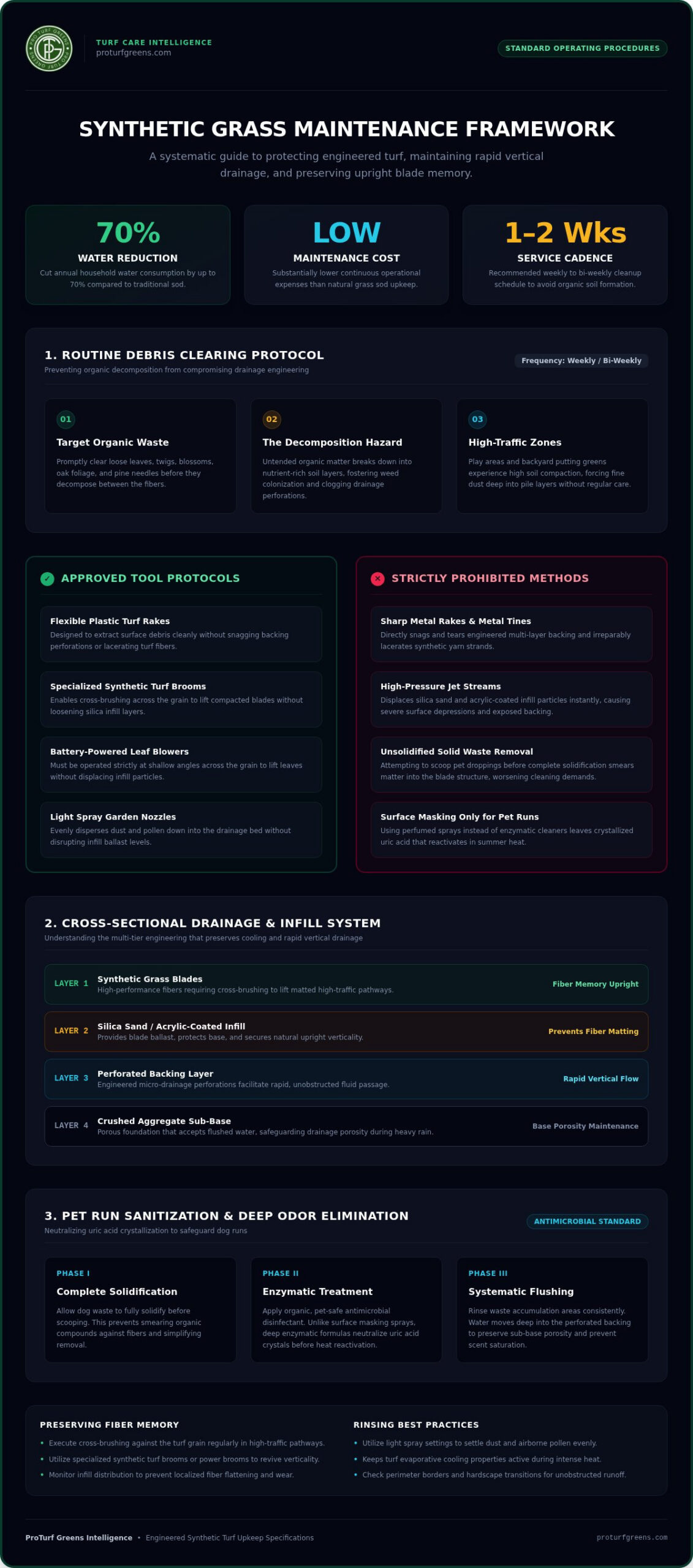
Maintaining a luxury lawn requires more than just an initial investment; it demands a structured approach to preservation. Understanding how to clean synthetic grass effectively starts with a proactive schedule, typically weekly or bi-weekly depending on your landscape’s exposure. While Artificial turf is designed for durability, it isn’t entirely “no maintenance.” You should prioritize clearing loose leaves, twigs, and tree blossoms before they have a chance to decompose into organic mulch. When organic matter breaks down, it creates a nutrient-rich soil layer between the fibers that can encourage weed growth and eventually clog the drainage holes in the backing.
High-traffic family zones, such as areas around playgrounds or backyard putting greens, require extra attention. These spots are prone to soil compaction, where fine dust particles settle deep into the pile. Regular care ensures the engineered multi-layer base continues to provide rapid vertical drainage during heavy rainfall. You should also check perimeter borders and hardscape transitions to ensure drainage remains unobstructed. This simple rhythm keeps the lawn looking vibrant while preventing the long-term issues associated with neglected organic buildup.
Removing Organic Debris Without Damaging Turf Fibers
Precision is vital when handling debris. You should always use a flexible plastic rake or a specialized synthetic turf broom. Never use sharp metal tines, as these can snag the perforated backing or tear the synthetic fibers. If you prefer power tools, operate a battery-powered leaf blower at shallow angles across the grain. This technique lifts the debris without displacing the infill. It’s especially important to collect pine needles and oak leaves promptly. If left to settle, these small particles can work their way deep into the turf, making them much harder to remove later.
The Proper Rinsing and Dust-Clearing Technique
Rinsing is the final step in a standard maintenance cycle. It’s the best way to eliminate airborne pollen and surface dust that can make the lawn look dull. When you learn how to clean synthetic grass, you’ll find that water pressure matters immensely. Use a light spray setting on your garden nozzle to settle dust evenly across the surface. Avoid narrow jet streams at all costs. High-pressure water can easily displace silica sand or acrylic-coated infill particles, leading to uneven spots in your lawn. Instead, let the water flow steadily, allowing it to move through the perforated backing and into the crushed aggregate base below. This process keeps the cooling properties of the turf active and ensures the entire system remains sanitary for your family.
Eliminating Pet Odors: Deep Cleaning Techniques for Dog Turf
Pet owners often choose synthetic solutions for their resilience, yet maintaining a sanitary environment requires specialized knowledge. Regular maintenance is the cornerstone of an odor-free yard, especially in high-use areas. Learning how to clean synthetic grass when you have pets involves moving beyond simple surface rinsing to address the chemical composition of animal waste. Without the right approach, uric acid can crystallize within the infill, leading to persistent smells that reactivate in the summer heat.
To ensure your lawn remains a luxury feature, you must integrate maintenance habits compatible with dedicated artificial turf for dog runs. This involves systematic flushing of urine accumulation zones to safeguard the underlying sub-base porosity. If you notice that standard cleaning isn’t resolving lingering scents, it may be time for a professional consultation to evaluate your drainage system or sub-base saturation levels.
Solid Waste Removal and Immediate Sanitization
Efficiency in pet cleanup starts with patience. You should allow dog droppings to solidify completely before attempting to scoop them. This prevents the waste from smearing against the synthetic blades, which makes deep cleaning significantly more difficult. Once the waste is removed, spray the affected area with an organic, pet-safe antimicrobial disinfectant. This step is crucial for maintaining a sanitary playground for your family. Finish by rinsing the spot with cool water from a garden hose, guiding any remaining residue downward through the drainage holes and into the aggregate base.
Neutralizing Ammonia Salts with Enzymatic Cleaners
A common mistake homeowners make is using vinegar or scented sprays to mask pet odors. While these might provide temporary relief, they fail to break down the crystallized uric acid salts that bind to the infill ballast. Mastering how to clean synthetic grass requires bio-enzymatic solutions that actually digest these organic compounds rather than just covering them up. For the best results, apply these cleaners during cooler dusk hours. This maximizes active dwell time by preventing the liquid from evaporating too quickly in the sun. Avoid harsh chemical bleaches; these can discolor polyethylene fibers and irritate sensitive paw pads. By allowing the enzymes to penetrate beneath the turf carpet, you ensure the lawn stays fresh and inviting year-round.
Treating Stubborn Stains, Sticky Spills, and Subtropical Mildew
Even the most meticulous homeowner will eventually face a spilled glass of wine or a dropped plate of food during a backyard gathering. Understanding how to clean synthetic grass effectively requires you to identify the spill classification before reaching for a bottle of cleaner. Most common accidents, such as soda, wine, or barbecue sauce, are water-soluble and respond well to mild household detergents. However, petroleum-based spills like motor oil or greasy food residue require a more precise approach to prevent permanent damage to the synthetic polyethylene fibers.
Before applying any specialized solution across your entire lawn, you must test the mixture on an inconspicuous corner. This simple step ensures the cleaner won’t degrade the backing adhesives or cause unexpected discoloration. While high-end turf is engineered for extreme resilience, using the wrong solvent can lead to costly repairs that compromise the entire installation’s integrity. By following a logical progression from gentle rinsing to targeted treatment, you protect your investment while maintaining a flawless aesthetic.
Household Spills: Oils, Food Residue, and Chewing Gum Removal
When dealing with greasy food or motor oil, time is your greatest ally. You should blot fresh spills immediately using absorbent microfiber towels to prevent the liquid from reaching the infill or the aggregate base. For sticky substances like chewing gum or tree sap, don’t attempt to scrub them while they’re soft. Instead, rub ice cubes across the residue until it hardens completely. Once the material is brittle, you can carefully scrape it away without tearing the synthetic blades. A simple solution of mild dishwashing liquid dissolved in warm water, applied with a soft nylon hand brush, is usually sufficient for most food-related stains.
Preventing Algae, Moss, and Mildew in Humid Climates
In high-humidity environments, lingering shade and intense moisture can lead to mold or algae growth. You’ll often recognize this as a green slime or dark spots forming along shaded walls or beneath dense palm canopies. A diluted mixture of distilled white vinegar and water or eco-friendly hydrogen peroxide is highly effective at neutralizing these spores without harming the environment. It’s particularly important to keep hardscape seams clear where drainage borders connect with custom turf driveway designs. Proper airflow and clear drainage paths prevent the standing moisture that allows mildew to thrive, ensuring your luxury lawn remains pristine despite the tropical humidity.
Preserving Fiber Memory: Cross-Brushing and Infill Replenishment
High-end turf is engineered with a characteristic known as “fiber memory,” which allows synthetic blades to return to an upright position after being compressed. However, constant foot traffic eventually overcomes this resilience, causing the blades to lay flat and lose their natural aesthetic. Understanding how to clean synthetic grass involves more than just washing away surface dust; it requires mechanical restoration to maintain a lush, vertical appearance. By actively managing the pile height, you ensure your lawn feels soft underfoot and continues to drain rapidly during heavy Florida rains.
Maintaining these standards is especially vital for specialized areas like backyard putting green installations, where fiber consistency directly impacts ball roll and performance. If your lawn has reached a point where manual brushing no longer restores its original luster, you may need an expert evaluation of the sub-base. Schedule a professional consultation to assess your turf’s structural integrity and fiber health.
The Mechanics of Cross-Brushing Matted Blades
When blades become matted, they lose their ability to filter debris and drain water efficiently. You should push a synthetic bristle broom firmly against the natural lean of the turf fibers. This action, known as cross-brushing, lifts the blades back to their intended vertical state. High-traffic patio exits and poolside pathways benefit from a monthly brushing to reverse heavy matting. It’s critical to avoid wire-bristle or stiff metal brushes. These tools are far too abrasive and can pull fibers directly from the latex or polyurethane backing, causing permanent damage to the lawn’s foundation.
Monitoring Infill Depth to Protect Backing and Drainage
Infill acts as the ballast that keeps your lawn weighted down and provides the structural support necessary for the blades to stand upright. It also serves as a protective shield against direct ultraviolet sun exposure, which can otherwise degrade the turf backing over time. You should measure your infill level periodically, ensuring that roughly half to three-quarters of the turf blade remains exposed. If the infill becomes too low, the blades will lack support and flatten more quickly under foot traffic.
To top off high-traffic zones, use clean, round silica sand or antimicrobial-coated green infill. Evenly distribute these replenished granules across the yard using a standard drop spreader to ensure a professional-grade finish. Once the infill is spread, use your turf broom to work the granules down into the base of the fibers. This routine replenishment keeps the lawn resilient, protects the backing from heat damage, and maintains the rapid drainage capabilities engineered into the multi-layer base preparation.
Essential Turf Cleaning Tools and What to Never Use on Your Lawn
Assembling a specialized synthetic turf cleaning kit streamlines your monthly yard care while protecting the structural integrity of the installation. While many generic guides suggest that any standard garden tool will suffice, using improper equipment can lead to irreversible damage. Understanding how to clean synthetic grass involves a careful selection of tools that support the fibers rather than stressing the backing. Beyond mechanical tools, you must remain vigilant against environmental hazards. Low-E window reflections can act as magnifying glasses, creating concentrated heat that melts polyethylene blades. Similarly, open flame grills should always be placed on hardscape surfaces rather than directly on the turf to prevent catastrophic melting.
Safe vs Harmful Equipment: Brooms, Blowers, and Pressure Washers
Selecting the right brush is the foundation of effective maintenance. You should choose medium-stiffness nylon or polypropylene push brooms specifically calibrated for turf pile. These materials provide enough resistance to lift matted blades without being abrasive. If you choose to use a pressure washer for deep cleaning, you must cap the pressure below 1500 PSI. Keeping the fan tip at least twelve inches above the grass prevents the water from tearing the backing or cutting through the seams. Conversely, never operate metal garden tillers, rotary mowers, or sharp metal snow shovels on your lawn. These implements are designed for soil and natural sod; on synthetic surfaces, they will shred the fibers and destroy the infill ballast.
When to Call a Professional Turf Specialist
Even with a meticulous routine, certain issues require professional remediation to prevent long-term failure. You should recognize warning signs such as sub-base erosion, sagging seams, or severe drainage blockages that result in standing water. While homeowners can handle surface debris, deep mechanical power broom extraction and infill redistribution require specialized industrial equipment that most residential tool sheds lack. These processes are essential for restoring the rapid vertical drainage that high-performance installations are known for. If you notice chronic settling or odors that persist after enzymatic treatments, it’s time to take the next step. You can schedule an artificial turf consultation to evaluate aging or underperforming turf and ensure your outdoor space remains a pristine lifestyle upgrade.
Protect Your Investment with Professional Standards
Mastering the exact steps of how to clean synthetic grass ensures your luxury lawn remains a vibrant, high-performance centerpiece for your home. By establishing a consistent rhythm of debris removal and using enzymatic solutions for pet areas, you prevent the organic buildup that compromises both aesthetics and hygiene. Regular cross-brushing restores fiber memory, keeping the blades upright and soft under bare feet even in high-traffic zones. These simple habits protect the lifespan of your turf while maintaining a pristine look year-round.
The longevity of your outdoor space starts with a superior foundation. Pro Turf Greens delivers precision installation across Miami, Fort Lauderdale, and Palm Beach, featuring custom-engineered multi-layer sub-bases built for rapid drainage during South Florida downpours. Our durable, pet-safe fibers are specifically designed to withstand extreme UV exposure while resisting odors. Ready for an immaculate, maintenance-friendly lawn? Schedule your artificial turf consultation today with the experts at Pro Turf Greens. It’s time to enjoy a pristine landscape that looks beautiful year-round with minimal physical effort.
Frequently Asked Questions
Can you power wash synthetic grass without ruining the turf fibers?
Yes, you can power wash synthetic grass, but you must keep the pressure capped below 1500 PSI to avoid damaging the installation. Always use a wide fan tip nozzle and maintain a distance of at least twelve inches from the turf surface. Direct, high-pressure streams can easily tear the backing material, cut through professional seams, and displace the necessary infill ballast that keeps your lawn stable.
How do you get dog urine smell out of artificial grass permanently?
Eliminating pet odors permanently requires a bio-enzymatic cleaner rather than a standard fragrance spray. These specialized solutions contain live bacteria that digest the crystallized uric acid salts trapped within the infill ballast. For homeowners in Miami and Fort Lauderdale, applying these treatments during the cooler dusk hours ensures the liquid remains active longer without evaporating in the intense South Florida heat.
Can I use vinegar and baking soda to clean my artificial lawn?
Yes, distilled white vinegar and baking soda are excellent natural options for mild maintenance and spot treatments. Sprinkling baking soda over a specific area can help absorb moisture, while a diluted vinegar rinse effectively neutralizes light odors and hard water stains. While this combination works well for routine household spills, it lacks the chemical strength required to break down severe bacterial pet waste buildup permanently.
What happens if leaves and organic debris are left on synthetic turf?
Leaving organic debris on your lawn will eventually compromise its drainage capabilities. As leaves, twigs, and palm blossoms accumulate, they decompose into a dense organic mulch layer between the synthetic blades. This breakdown creates a nutrient-rich environment where weed seeds can easily take root, while simultaneously blocking the perforated backing holes designed for rapid vertical water drainage during heavy downpours.
How often should synthetic grass be brushed and washed down?
A standard residential lawn should be cross-brushed monthly and rinsed bi-weekly to maintain its upright appearance. High-traffic areas, such as pool surrounds in Palm Beach or dedicated pet runs, may require weekly rinsing to prevent dust compaction and odor accumulation. This consistent maintenance rhythm ensures the fibers remain soft underfoot and the engineered sub-base continues to drain instantly during tropical storms.
Does bleach ruin artificial grass or fade its green color?
Yes, harsh chemical bleaches can permanently discolor synthetic polyethylene fibers and damage the underlying backing material. High-end turf is manufactured with built-in UV stabilizers, but caustic household chemicals break down these protective polymers over time. Additionally, bleach residues can remain trapped within the infill ballast, creating a chemical hazard that can severely irritate your pet’s sensitive paw pads.
Can weeds grow through synthetic grass, and how do you remove them?
Weeds can occasionally grow around the perimeter borders or through the drainage holes if organic debris has been allowed to decompose. To remove them safely, pull the weeds by hand or apply a pet-safe, eco-friendly weed killer directly to the affected spot. Professional-grade turf installations incorporate a specialized weed barrier beneath the aggregate base, which significantly minimizes growth compared to standard natural sod yards.