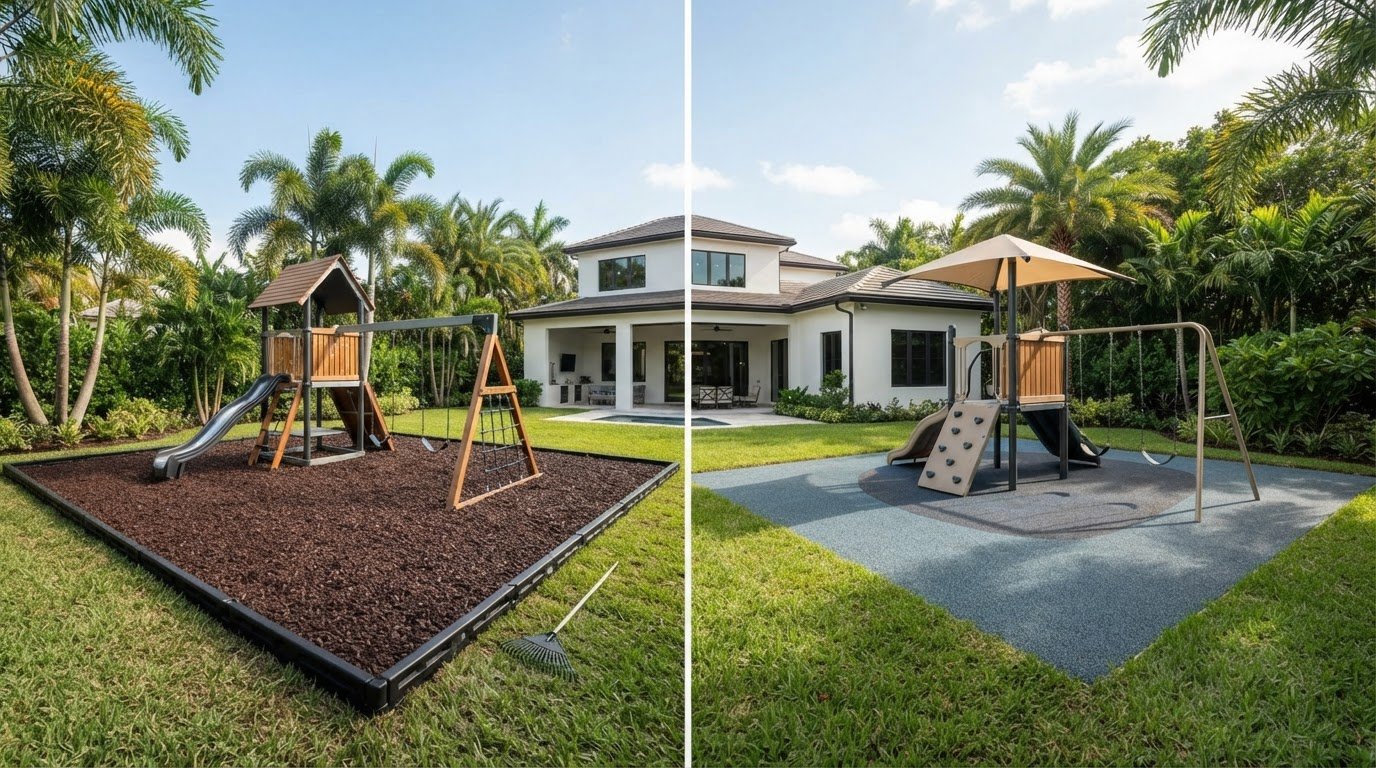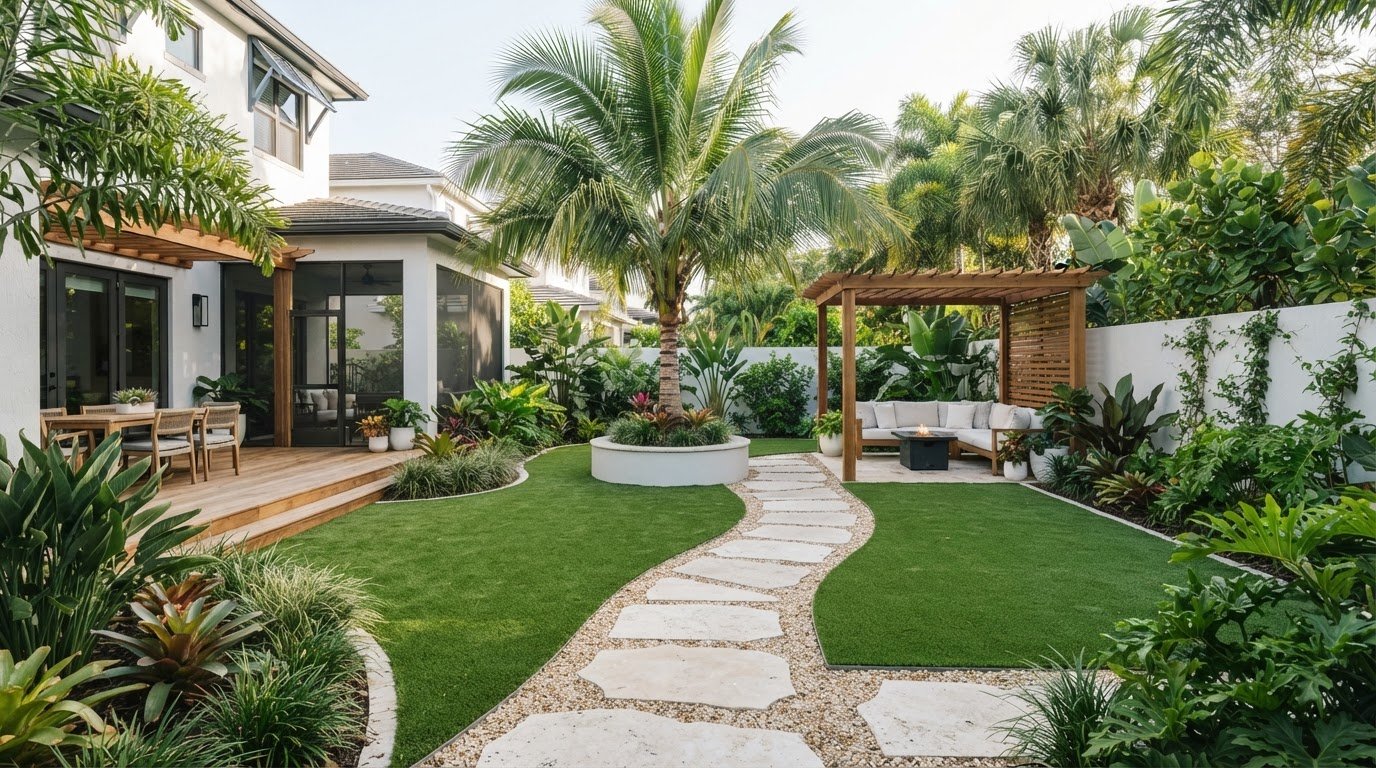
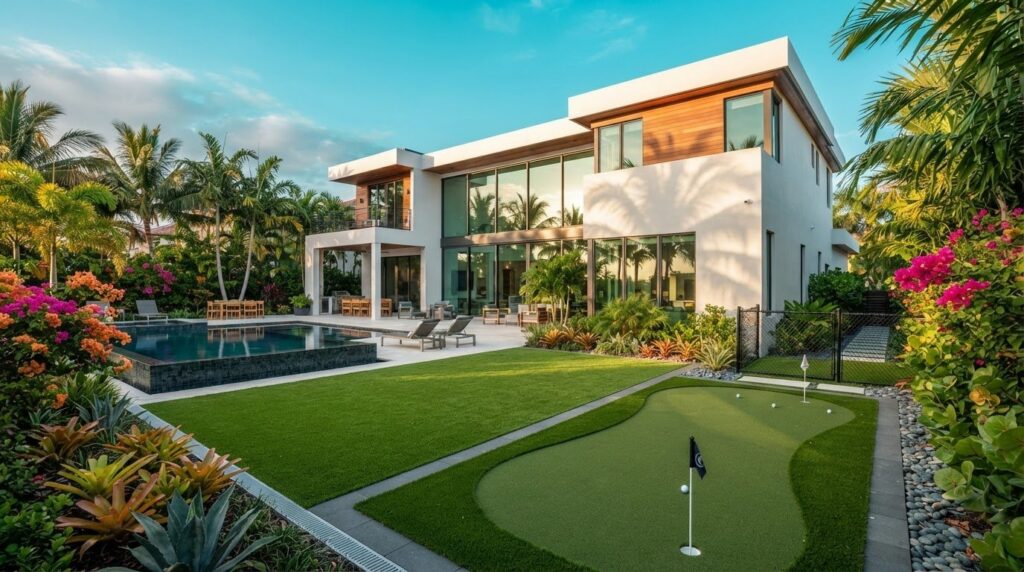
What if synthetic turf could make a modern Miami home feel more connected to its landscape, not less? It’s understandable to wonder whether an artificial lawn will look out of place beside clean architectural lines, patios, and other hardscape. The key is treating turf as part of the overall design rather than filling every open space with green. Thoughtful turf landscaping for modern homes Miami homeowners choose starts with the home, the site, and how the outdoor areas are used.
This buyer’s guide will help you plan a landscape that feels cohesive and works for your household. You’ll learn how to decide where turf belongs, coordinate it with surrounding materials, and account for practical site conditions such as drainage, sun exposure, and foot traffic. You’ll also see how distinct areas, from a family lawn to a putting green or pet zone, can support different routines while sharing a unified design. With a clear picture of your priorities and property, you can bring useful details to a design consultation and discuss the decisions that will shape the installation.
Key Takeaways
- Start with your home’s architecture and how you use the outdoor space, rather than treating turf as a substitute for every planting area.
- Plan turf, planting beds, borders, and hardscape together to create a balanced, intentional look.
- For turf landscaping for modern homes miami, account for sun exposure, drainage, and everyday activity when shaping each zone.
- Map existing surfaces, access routes, boundaries, and transitions before deciding where turf fits.
- Bring your priorities and reference images to a planning conversation to help shape a tailored residential turf landscape.
What Makes Turf Landscaping Work for Modern Miami Homes?
Modern turf landscaping isn’t simply a matter of replacing every planting bed with synthetic grass. It means placing turf deliberately to complement the home’s architecture, respond to the property’s conditions, and support how residents use the outdoor space. That distinction matters for turf landscaping for modern homes in Miami, where a considered layout can make artificial grass feel integrated rather than like an afterthought.
Miami’s strong sun and heat can affect how comfortable outdoor areas feel, while periods of heavy rain make drainage an important part of planning. Notice when direct sun reaches each part of the yard, where water flows after rain, and whether the ground stays wet in particular spots. Also consider which areas need a convenient transition from the home. A site-aware design treats each part of the property according to its conditions instead of assuming the whole yard will function alike.
Artificial turf has practical and environmental considerations as well as visual ones. Weighing these alongside your household’s needs can help you decide where turf fits, how much of the landscape it should occupy, and which areas are better suited to other materials or planting.
How synthetic turf complements contemporary architecture
Clean edges and restrained shapes help turf sit comfortably alongside contemporary lines. A defined lawn can soften the appearance of stone or concrete, while a deliberate border gives the transition a finished look. Compare the home’s exterior colors with existing paving and other hardscape when considering the landscape palette. Turf should connect these elements, not compete with them or erase every contrast in the yard.
Which outdoor routines should shape the design?
Start with the activities that matter most. A space for everyday relaxation has different layout needs from a pet area, play zone, or golf practice area. Define the routine first, then decide where turf belongs and whether separate areas can work together without feeling fragmented. Residential lawns, pet turf, backyard putting greens, and turf driveways are distinct project types, each serving a different purpose.
- Relaxation: Consider how the lawn area connects to seating, doors, and the home.
- Pets: Identify the spaces your pets use most often and how they move between them.
- Play: Consider how activity areas relate to nearby surfaces, boundaries, and routes through the yard.
- Golf practice: Set aside a purposeful area for practice rather than treating it as general lawn space.
When architecture, site conditions, and daily routines guide the layout, turf can feel like a deliberate part of the landscape. Next, compare the design details that help the different zones work together.
How to Choose Turf Landscaping Details for a Modern Miami Home
A useful selection process begins with the project, not a product swatch. Choose turf and layout according to the space’s intended use, so appearance and function work together rather than compete. For turf landscaping for modern homes in Miami, compare practical needs with the home’s architecture and the way outdoor areas connect.
Use this checklist to organize the decisions:
- Intended use: Decide whether the space is mainly for relaxing, pets, play, or golf practice.
- Available space: Mark the area that can serve that use without crowding walkways, planting beds, or seating.
- Visual character: Consider color, blade appearance, and how the surface will sit beside the home’s exterior.
- Site conditions: Note sun patterns, existing surfaces, slopes, and places where rainwater collects.
Consider the proportion of turf to other materials. A large, uninterrupted lawn can create a calm visual plane, while smaller turf zones separated by planting beds or paving may suit a compact yard better. Borders define the shape, and planned transitions make the change from turf to stone or concrete look deliberate. Too much turf can flatten a layered landscape; too many small patches can make it feel busy. Sketching the main shapes can help you compare these options before settling on a layout.
Match layout and turf areas to the home’s style
Broad, simple shapes can echo a home with strong geometric lines, while defined zones may work better around varied hardscape or multiple outdoor activities. Neither layout is universal. Consider the property’s proportions and the routes people take through it. For a hardscape-adjacent application, custom turf driveway design ideas can help you consider how turf and driveway surfaces might relate visually.
When comparing samples, look beyond the display setting. Place them in the yard and view them in direct sun and shade, beside exterior finishes and paving. Check whether the color appears overly bright or muted in that light, and whether the surface texture feels consistent with the home. Viewing a sample outdoors gives you context that an indoor display cannot.
Assess appearance and intended use before deciding
Match the project category to the routine: a lawn for general outdoor use, pet turf for a pet area, or a backyard putting green installation for a dedicated golf practice zone. If you’re comparing synthetic turf with living lawn options, the University of Florida Turfgrass Science Research offers Florida-focused information about turfgrass, a different material choice.
Sketch the proposed area, note nearby materials, and collect a few reference images before settling on details. Include examples of shapes, borders, or transitions you like. These notes can make a design discussion more productive. To explore a tailored residential layout, view Pro Turf Greens’ turf landscaping services.
Does Synthetic Turf Suit Miami Heat, Rain, and Everyday Use?
Synthetic turf can suit a Miami home, but it isn’t a one-size-fits-all answer. Suitability depends on where it will go, how the property handles sun and rain, and what residents plan to do there. Miami’s climate makes site-specific planning important, not a blanket verdict for or against turf. For turf landscaping for modern homes in Miami, the design should reflect the conditions of each area, not just the look of a sample.
Use the comparison below to identify what deserves attention during planning. These are prompts for evaluating the site, not guarantees about how a particular surface will perform.
| Site factor | What to observe | Planning response |
|---|---|---|
| Sun exposure | Which areas receive direct sun, and at what times? | Consider where shade or comfortable seating could fit alongside the turf. |
| Drainage | Where does rainwater flow or collect after a storm? | Include water movement and existing ground conditions in project assessment. |
| Use patterns | Will the area serve pets, play, relaxation, or golf practice? | Shape the layout around the activity and how people reach the space. |
| Adjacent surfaces | How do paving, walls, and planting areas affect the space? | Plan transitions and boundaries as part of the overall composition. |
Plan for sun exposure and surface comfort
Direct sun and nearby materials can influence how an outdoor area feels. Turf beside sunlit paving may feel different from turf shaded by the home or landscape. Map the sunniest parts of the yard and consider whether seating can go in a shaded area where the property allows. Think about when and how the space will be used, and don’t assume turf will stay cool in full sun.
Give rainfall and drainage a place in the design
Heavy rain makes it useful to observe the property before finalizing a layout. Note low spots, slopes, downspouts, and places where water tends to move or linger. Site preparation and drainage planning belong in a professional project assessment. The appropriate approach depends on the actual conditions, so record what you observe rather than relying on a generic claim about a particular system. A Miami artificial turf consultation can help you discuss how the site’s conditions relate to the project.
Daily activity matters, too. A frequently used path may need a different layout from a quiet corner, and an area for pets or play should be planned around its purpose and connection to the rest of the yard. Walk the property after rain and during sunny hours, then bring those observations into your design discussion. A tailored turf landscape consultation can help translate site conditions and intended use into a project plan.
How to Plan a Turf Landscape for Your Miami Property
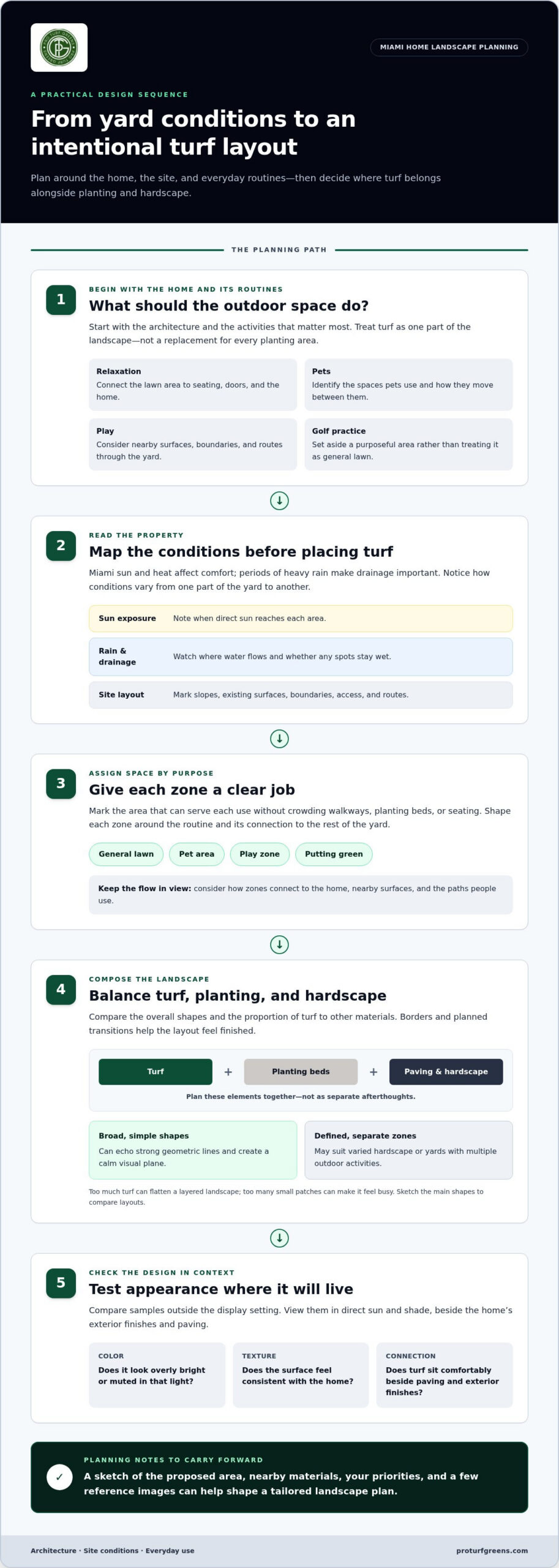
A clear project brief helps turn ideas into a design that fits the property. For turf landscaping for modern homes in Miami, prepare observations about how the yard works today and what you want it to do. You don’t need to make technical assessments yourself. A sketch, a few photographs, and notes about everyday routines give a design discussion a useful starting point.
Use this sequence to organize your thoughts:
- Map activities. Note who uses each area and what they do there, from relaxing to playing or practicing golf.
- Record site conditions. Mark sunny and shaded areas, places where rainwater collects, and any access constraints you’ve noticed.
- Define the look. Gather words or examples that describe the visual style you prefer, such as simple, structured, or softly layered.
- Prepare references. Photograph the yard and home exterior in daylight, and collect images that show materials, layouts, or transitions you like.
Create a useful brief for the outdoor space
Walk the property and sketch its basic shape. Mark existing surfaces, gates or access routes, boundaries, planting areas to retain, and the points where the yard meets a patio, driveway, or other outdoor space. Add notes about which parts get regular use and which are rarely visited. This simple record helps distinguish must-haves from ideas that are still flexible.
Daylight photographs can show how the home’s exterior, hardscape, and landscape relate in their real setting. Include wide views for context and closer views of edges or transitions you want to address. If you’re planning a dog-use area, pet-friendly turf planning for South Florida can help you think through the needs of that part of the project.
Prepare for a professional site-specific design discussion
Pro Turf Greens designs and installs artificial turf landscapes for residential properties across South Florida, including Miami and Coral Gables. A useful conversation connects your visual goals with what the site can accommodate. Share your notes about sun exposure, rainfall patterns you’ve observed, access, intended use, and the style you want. The design can then respond to the actual property rather than a generic yard template.
Discuss which areas you want to keep open, where people should move between surfaces, and which existing features should remain part of the plan. These details help frame the project, while site preparation and other technical decisions are addressed through the professional assessment.
With your activity map, photos, and sketch in hand, you’ll be ready to discuss a landscape shaped around your home and routines. Request a free turf landscaping consultation to start planning your South Florida project.
Plan Your Modern Miami Turf Landscape with Pro Turf Greens
A cohesive turf landscape brings together the home’s architecture, the activities planned for each area, the desired visual character, and the property’s conditions. Rather than treating the yard as one uniform surface, a tailored plan can assign different roles to distinct spaces while making the whole landscape feel connected. That’s the foundation of thoughtful turf landscaping for modern homes in Miami.
Pro Turf Greens designs and installs residential artificial turf landscapes across South Florida, including Miami and Coral Gables. The project is planned around your home and priorities, not simply a turf selection made without considering how it fits the setting.
What a tailored turf project can bring together
Different areas serve different purposes. A residential lawn can create an open space for everyday outdoor use, while pet turf can define an area for dogs. A backyard putting green gives golf practice its own zone, and an artificial turf driveway brings turf into a hardscape-adjacent part of the property. Each application has a distinct role, so the layout should make those roles clear.
The landscape concept also needs to account for what’s already there. Existing patios, driveways, planting areas, walkways, and the home’s exterior all affect how turf zones can connect. A plan can coordinate those features through considered shapes, boundaries, and transitions, with the intended use guiding where each application belongs. The result is a project designed for the property rather than a generic pattern applied to every yard.
Take the next step toward a Miami turf design
A productive consultation begins with the context you’ve gathered. Share your location, which activities the landscape should support, the visual style you prefer, and reference images that help explain your ideas. Photos of the home and yard can also help frame a discussion about existing outdoor features and how you want the areas to relate.
During a free consultation, you can discuss your property and project goals with Pro Turf Greens. Bring up the parts of the yard you use most, the features you hope to retain, and the look you want to achieve. These priorities help shape a tailored design-and-installation conversation without assuming every home needs the same layout.
Ready to discuss your plans? Request a free turf landscaping consultation online, or call 561-221-1010.
Shape an Outdoor Space That Feels Like Home
A successful landscape should make everyday time outdoors feel more natural, whether that means a quiet place to unwind or a space designed around an active household. Before moving ahead, choose one priority you want the finished yard to support and picture how you’d like to experience it. That focus can turn inspiration into a clear direction for turf landscaping for modern homes in Miami.
Pro Turf Greens designs and installs artificial turf for residential projects across South Florida. Use your preferred look, daily routines, and property observations to start a conversation about a landscape tailored to your home. A thoughtful first step can bring your ideas into focus and help you move forward with a clear plan.
Request a free turf landscaping consultation and begin shaping an outdoor space that reflects the way you want to live.
Frequently Asked Questions
Is artificial turf a good fit for a modern home in Miami?
Yes, artificial turf can complement a modern Miami home when its placement and appearance suit the property. A defined lawn beside a minimalist patio, for example, can add a softer surface without overwhelming the architecture. The right plan depends on how you use the yard and the conditions on site. Pro Turf Greens serves homeowners across South Florida, including Miami, Coral Gables, Fort Lauderdale, Palm Beach, Boca Raton, Delray Beach, Jupiter, Palm Beach Gardens, and Weston.
Can synthetic turf be used in a small Miami yard?
Yes, a small yard can include synthetic turf, and a compact area may be enough for a specific purpose. For example, a narrow section might serve as a pet zone or a small patch of lawn near a seating area. Keep the layout in scale with the space, and preserve clear routes to gates and doors. A simple sketch can help show how turf would fit without making the yard feel crowded.
Does artificial turf need mowing?
No, artificial turf doesn’t need mowing because it isn’t a growing lawn. That can simplify upkeep for homeowners who don’t want to schedule regular cuts or store mowing equipment. It still helps to keep the surface clear of leaves and other debris, especially near fences, corners, or planting areas where material can collect. Think of it as a different kind of surface care, not a completely maintenance-free outdoor space.
Will artificial turf get hot in Miami’s sun?
Yes, artificial turf can become hot in direct sun, so don’t assume it will feel comfortable underfoot during the hottest part of a sunny day. Consider how you’ll use the area: a shaded seating spot nearby may be more comfortable for relaxing, while pet routines may work better in a shaded part of the yard. Consider shade and surface use together before choosing where turf belongs.
Can synthetic turf be installed in a yard that gets heavy rain?
It may be suitable, but heavy rain makes the property’s water movement an important part of project planning. Notice whether runoff travels toward the house, follows a path along a fence, or gathers in a low corner after a storm. Share those observations during a site assessment. They help inform decisions about placement and preparation, while the appropriate installation approach depends on the conditions of the individual yard.
Can I combine artificial turf with pavers and planting beds?
Yes, artificial turf can be paired with pavers and planting beds to create distinct surfaces and add visual structure. For example, pavers can define a route through the yard while a planting bed frames a smaller turf area. Consider how the shapes meet and whether the transitions feel intentional from the patio and the home’s windows. Keeping a consistent palette across these elements can help the different areas feel connected.