What if your driveway wasn’t just a place to park your vehicle, but a high-performance drainage system disguised as a luxury landscape feature? In the unique climate of Miami and Palm Beach, homeowners often seek a balance between aesthetic excellence and functional resilience, leading many to investigate the turf driveway cost south florida. It’s natural to worry about how synthetic grass handles the weight of heavy SUVs or the intense tropical sun, especially when you want a solution that stays green year-round without the maintenance of traditional sod.
This guide explores the real-world factors that influence your investment, from specialized site preparation to the selection of high-end materials designed for vehicle traffic. You’ll discover how modern IR-reflective cooling technologies prevent the grass from overheating and why advanced sub-base engineering is vital for managing drainage in our sandy terrain. We’ll also preview how to ensure your project complies with local permeability regulations, transforming your property entrance into a durable, value-adding asset that requires minimal upkeep.
Key Takeaways
- Learn how a hybrid driveway system combines the durability of stone pavers with the aesthetic appeal of synthetic grass to enhance curb appeal while meeting local permeability standards.
- Identify the primary variables affecting your turf driveway cost south florida, including the complexity of your chosen geometric pattern and the specific site preparation required for our region’s sandy soils.
- Understand the engineering behind high-performance drainage systems that can process significant rainfall while maintaining stability through the use of specialized geofabrics.
- Explore different design configurations, from cost-effective ribbon driveways to sophisticated custom grid patterns, to find the perfect aesthetic match for your property’s architecture.
- Discover why technical sub-base expertise is the most critical factor in ensuring your driveway remains level and resilient against heavy vehicle weight over time.
Understanding the Value of a Turf Driveway in South Florida
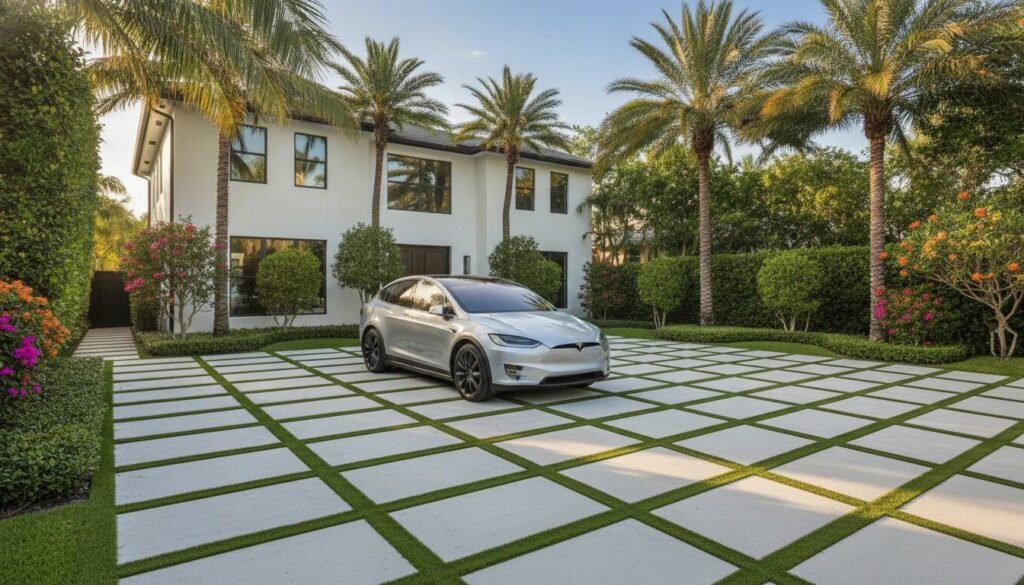
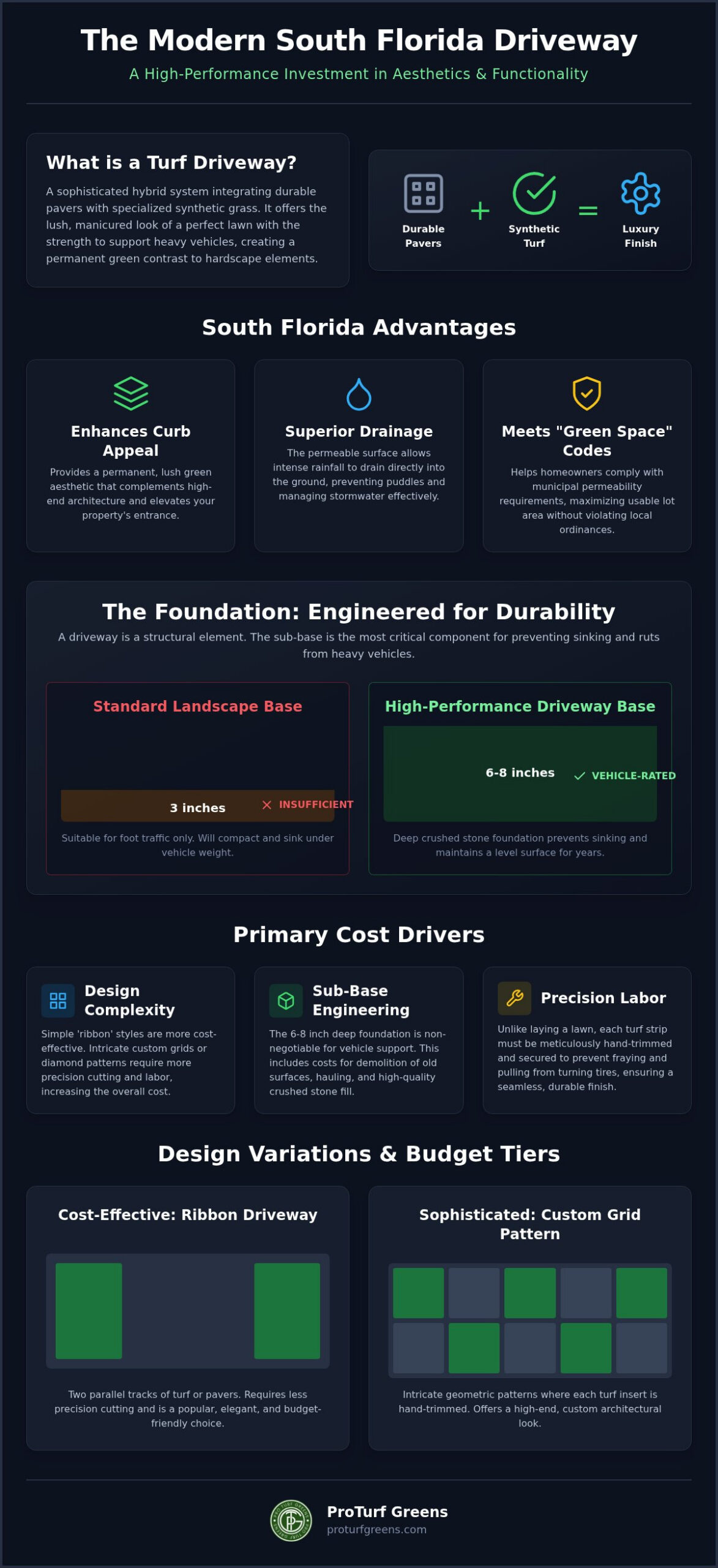
A turf driveway is a sophisticated hybrid system that integrates durable concrete or stone pavers with specialized synthetic grass strips. To appreciate the engineering involved, it’s helpful to understand what artificial turf is and how it has evolved from sports fields into a resilient, vehicle-ready landscape solution. This design offers a lush, manicured aesthetic that natural sod simply cannot sustain under the weight of a car, providing a permanent green contrast to hardscape elements.
In our local market, homeowners often evaluate the turf driveway cost south florida as a strategic investment in both curb appeal and property functionality. Unlike traditional asphalt or solid concrete, these systems provide a luxury finish that complements the high-end architecture found from Miami to Jupiter. The shift toward synthetic solutions stems from the inherent difficulty of keeping natural grass alive in narrow strips. In these confined spaces, intense heat, soil compaction, and lack of consistent irrigation create a hostile environment for organic growth, leading to muddy patches and brown spots.
Beyond aesthetics, these driveways serve a critical regulatory purpose. Many South Florida municipalities, such as Coral Gables and Weston, enforce strict “Green Space” or permeability requirements to manage urban density and stormwater. Because these hybrid systems allow water to permeate back into the ground rather than pooling on the surface, they often help homeowners meet municipal codes that would otherwise limit the size of a standard driveway. This functional drainage can be a deciding factor for homeowners looking to maximize their usable lot area while remaining compliant with local ordinances.
The ‘Ribbon’ Driveway Trend in Miami and Palm Beach
The “ribbon” or “grid” style has become a hallmark of modern and Mediterranean homes across the Gold Coast. These custom designs significantly reduce the “heat island” effect by replacing large expanses of sun-absorbing concrete with cooling synthetic fibers. While natural grass in these patterns often fails due to the intense reflection of heat from adjacent pavers, modern synthetic turf remains vibrant and structurally sound regardless of the temperature. It provides a clean, architectural line that elevates the home’s entrance without the messy overgrowth associated with traditional sod.
Functional Benefits for the Florida Climate
Our region faces unique challenges, particularly the sudden, intense afternoon thunderstorms that can overwhelm standard drainage. A professionally installed turf driveway acts as a high-capacity filter, managing runoff effectively and preventing puddles from forming near the home’s foundation. Additionally, these systems are engineered to withstand the extreme UV index of the subtropics, ensuring the surface doesn’t fade or degrade over time. You gain a perfectly manicured look that requires no weekly weeding, no pesticides, and no irrigation, providing a maintenance-free entrance that stays green through every season.
Key Cost Drivers for Turf Driveway Installation
Estimating the investment for a synthetic grass driveway involves more than a simple calculation of square footage. While a standard lawn installation focuses on surface aesthetics, a driveway is a structural element that must support several tons of moving weight. Consequently, the turf driveway cost south florida is primarily influenced by the complexity of the design and the engineering required to maintain a level, rut-free surface. A simple “ribbon” design with two parallel tracks requires less precision cutting than a custom diamond grid, where every single turf insert must be hand-trimmed to fit the paver dimensions perfectly.
Precision labor is often the most overlooked expense. Unlike a backyard lawn where large rolls are laid out, driveway turf is essentially a series of intricate upholstery tasks. Installers must meticulously secure the edges of every turf strip to prevent the fibers from pulling away or fraying under the friction of turning tires. This level of craftsmanship ensures that the finished product looks like a seamless architectural feature rather than an afterthought.
Demolition and Sub-Base Construction
The foundation is the most critical component of a vehicle-ready system. While a standard landscape project might only require a three-inch base, a driveway necessitates a deeper six-to-eight-inch crushed stone foundation to prevent sinking. In areas like Broward County, the cost of hauling away existing cracked concrete or old asphalt slabs can add to the initial budget. However, skipping this step leads to “rutting,” where the weight of a vehicle creates permanent depressions in the soil. A properly compacted sub-base ensures the driveway remains perfectly flat for decades, regardless of how often you pull in and out of the garage.
Turf Quality and Infill Selection
Not all synthetic grass is suitable for vehicles. High-performance driveways require “vehicle-grade” turf, which typically features a shorter, denser pile height to prevent the fibers from matting under tire pressure. In the intense 2026 Florida sun, these materials must also include advanced UV-stabilization technology. When selecting materials, many homeowners refer to Florida-Friendly Landscaping™ guidelines to understand how synthetic options impact local ecosystems and heat retention.
Infill selection also plays a vital role in both longevity and comfort. We often recommend specialized cooling infills or pet-friendly options that manage odors and reduce surface temperatures by up to 30 degrees. These materials are brushed into the turf fibers to provide ballast and protect the backing from UV exposure. If you’re curious about how these technical factors apply to your specific lot, consulting with a specialist can help clarify the scope of your project.
Performance: South Florida Sun, Rain, and Soil
The environmental conditions of the Sunshine State demand more than just visual appeal; they require a surface that can withstand extreme saturation and high UV exposure. When evaluating the turf driveway cost south florida, it’s essential to consider how performance engineering protects your home’s foundation and preserves long-term curb appeal. Investing in these performance features ensures that your initial turf driveway cost south florida translates into decades of reliable service without the cracking or fading common in traditional materials.
During hurricane season, traditional solid surfaces often contribute to localized flooding by forcing water toward the street or the house foundation. In contrast, modern turf systems are designed as permeable pavement systems that can process over 30 inches of rain per hour. This rapid infiltration prevents standing water, reducing the hydrostatic pressure on your property’s foundation during intense tropical downpours. By allowing the earth to breathe, you create a natural drainage path that mimics the original Florida landscape.
South Florida’s sandy soil is notoriously prone to shifting and erosion, which often causes traditional concrete driveways to crack or settle unevenly. We utilize high-strength geofabrics beneath the crushed stone base to stabilize the ground and keep the surface perfectly level. This layer acts as a structural separator, preventing the heavy base materials from sinking into the sand even under the weight of oversized vehicles. It’s a critical step that ensures your driveway doesn’t develop the “waves” or dips often seen in older paver installations.
Heat mitigation is another critical performance factor for local homeowners. While dark asphalt can reach temperatures that are painful to touch, synthetic turf with IR-reflective technology stays significantly cooler than most dark hardscapes. It provides a comfortable surface for residents while reducing the ambient heat radiated back toward the home’s exterior walls. This cooling effect is particularly noticeable in the tight corridors between houses where airflow is limited.
Mastering Drainage in Miami-Dade and Broward
Modern turf features a perforated backing that allows water to return directly to the local water table, bypassing the need for complex gutter systems. This reduces the strain on municipal storm drains during peak weather events in Miami-Dade and Broward counties. The percolation rate of synthetic turf in South Florida’s sandy soil represents the speed at which water moves through the turf fibers and sub-base into the earth below. This efficiency is why many local building departments favor these systems for high-density residential lots.
UV Resistance and Color Longevity
By 2026, turf technology has advanced to withstand over 3,000 hours of direct, high-intensity sunlight without visible fading. Specialized “Cool Turf” polymers reflect infrared light to keep the fibers from absorbing excessive solar energy and becoming brittle. To maintain this vibrant look against our high humidity, we recommend occasional rinsing to clear away salt spray and dust. This simple maintenance ensures the green strips remain a crisp architectural highlight that doesn’t brown or wilt like natural sod strips.
Design Variations and Budget Tiers
The geometric layout you choose is the most significant variable affecting your total turf driveway cost south florida. While the volume of synthetic grass remains relatively consistent across different styles, the labor required to cut, fit, and secure the material scales with complexity. A standard ribbon driveway represents the most cost-effective entry point. This design features two continuous, linear strips of turf positioned where the tires travel, requiring minimal precision cutting and a straightforward installation process.
Moving into moderate complexity, the grid pattern utilizes large rectangular pavers with turf “grout” lines. This style demands more time for hand-trimming each segment to ensure a snug fit against every paver edge. At the highest luxury tier, checkerboard or diamond patterns require an intensive labor commitment. In these layouts, every square or diamond of turf is an individual piece that must be meticulously secured. Custom inlays, such as circular driveways or integrated logos, further increase the labor budget due to the intricate curves and specialized seaming required to maintain a seamless appearance.
Choosing the Right Paver Material
The selection of hardscape material directly influences the installation technique and the final aesthetic. Concrete pavers are a versatile and popular choice for South Florida homes, but many high-end properties opt for natural shell stone or modern porcelain for a more refined look. It’s vital that the paver thickness aligns with the turf’s pile height. If the paver is too shallow, the turf will sit higher than the stone, creating a tripping hazard and making the surface difficult to clean. For visual inspiration, explore these 15 Stunning Custom Turf Driveway Designs for South Florida Homes (2026) to see how different layouts transform a property’s entrance.
Labor vs. Material: Where the Budget Goes
Intricate patterns can easily double the labor investment even if the material volume stays the same. Precision is the primary cost driver here. Every edge must be fastened securely to prevent the synthetic fibers from pulling away when a vehicle turns its wheels. We also utilize heavy-duty edge restraints to ensure that neither the pavers nor the turf strips shift over time due to the weight of your vehicle or the natural movement of Florida’s sandy soil. This structural integrity is what separates a professional installation from a DIY attempt that might fail after a single summer. If you’re ready to see how these designs fit your specific property, you can schedule a design consultation to discuss your vision.
Selecting a South Florida Turf Specialist
Selecting a contractor for a high-performance driveway requires a different set of criteria than hiring a standard lawn maintenance crew. While many general landscapers are skilled in horticultural care, they often lack the specialized engineering knowledge required for vehicle-grade synthetic surfaces. A turf driveway is essentially a structural pavement system that uses synthetic fibers as a functional component. If the sub-base is not meticulously compacted or the drainage is poorly calculated, the entire system can fail under the weight of a vehicle. This makes the turf driveway cost south florida a reflection of technical expertise as much as material quality.
When vetting a specialist, prioritize those with a deep portfolio of local, aged projects. It’s one thing for a driveway to look pristine on installation day; it’s quite another for it to remain level and vibrant after several seasons of tropical sun and heavy summer rains. Ask for references in your specific neighborhood to see how their work holds up against local soil conditions. A professional artificial turf consultation in Fort Lauderdale should involve a thorough site analysis, including soil density checks and a review of existing drainage patterns to ensure long-term stability.
The ROI of a Professional Installation
A well-executed turf driveway is more than a convenience; it’s a value-adding asset for your property. In luxury markets like Miami and Palm Beach, high-end hardscaping can significantly influence appraisal values by enhancing the architectural narrative of the home. When calculating the long-term turf driveway cost south florida, consider the significant reduction in utility bills and landscaping fees. You’ll realize immediate savings by eliminating the need for irrigation, expensive fertilizers, and weekly mowing. Professional installers also provide comprehensive warranty coverage, ensuring that both the UV-stabilized fibers and the structural labor are protected for years to come.
Starting Your Project with Pro Turf Greens
Our approach at Pro Turf Greens is rooted in a commitment to craftsmanship and long-term reliability. We guide you through a methodical process that begins with a detailed consultation to understand your aesthetic goals and technical requirements. Every project is custom-tailored to match the architectural style of your home, whether you prefer a minimalist modern ribbon or a classic Mediterranean grid. We handle the entire transformation from site preparation to the final walk-through, ensuring every turf strip is precision-cut and secured for vehicle traffic. To discuss your vision and receive a custom quote, you can reach our experts directly at 561-221-1010.
Elevate Your Property with a High-Performance Turf Driveway
Investing in a modern driveway system is a strategic decision that balances architectural beauty with environmental responsibility. While the initial turf driveway cost south florida is influenced by design complexity and structural engineering, the long-term benefits of zero maintenance and superior drainage provide a significant return on investment. You’ve learned how specialized sub-base construction prevents rutting and why IR-reflective technology is essential for our intense tropical climate. These systems don’t just stay green; they protect your foundation and meet municipal permeability codes while elevating your home’s curb appeal.
Pro Turf Greens specializes in creating vehicle-grade synthetic surfaces that are specifically engineered for the unique demands of Miami, Fort Lauderdale, and Palm Beach estates. Our team brings dedicated expertise to every custom design, ensuring your driveway remains a durable and stunning landmark for years to come. If you’re ready to transform your property entrance with a solution that combines luxury and longevity, we invite you to Request Your Free South Florida Turf Driveway Consultation today. We look forward to partnering with you to create an aspirational landscape that truly stands the test of time.
Frequently Asked Questions
Is a turf driveway more expensive than a standard paver driveway?
A turf driveway generally involves a higher initial investment than a standard paver installation because it requires specialized labor and additional materials. Beyond the cost of the pavers and the structural sub-base, installers must hand-trim the synthetic grass to fit the specific geometric pattern of your design. While the turf driveway cost south florida reflects this meticulous craftsmanship, the long-term savings from eliminated irrigation and mowing often offset the upfront price difference.
Can artificial turf driveways handle the weight of an SUV or truck?
Professionally installed turf driveways are specifically engineered to support the weight of heavy SUVs and trucks without sinking or rutting. The secret lies in a reinforced sub-base, typically six to eight inches of compacted crushed stone, which distributes vehicle weight evenly. We use high-density, short-pile synthetic fibers that resist matting under tire pressure. This ensures the surface remains stable and level even with daily use by large family vehicles or commercial delivery trucks.
How do you clean oil leaks or tire marks off the synthetic grass strips?
Cleaning oil leaks or tire marks is straightforward and requires only basic household supplies. For minor spots, a mixture of warm water and mild dish soap usually lifts the residue from the non-porous synthetic fibers. If an oil leak occurs, an absorbent material like cat litter can soak up the excess before rinsing the area with a gentle degreaser. Because the fibers are non-absorbent, stains don’t set in the same way they do on natural concrete.
Does the turf between pavers get too hot for pets or bare feet in Florida?
Modern synthetic turf utilized in South Florida includes IR-reflective polymers designed to dissipate heat rather than absorb it. While any surface exposed to direct sunlight will warm up, these “cool turf” technologies can remain 30 to 50 degrees cooler than traditional dark asphalt or standard synthetic grass. Using a hydro-chilled infill further enhances this effect through evaporative cooling. This makes the surface much more comfortable for pets and bare feet during our peak summer months.
Do I need a permit for a turf driveway in Miami-Dade or Broward County?
Permits are typically required for artificial turf installations in Miami-Dade and Broward counties, especially for projects exceeding 200 square feet. Local building departments often classify synthetic turf as an impervious surface, which impacts your lot’s total drainage plan. You should check with your specific city office, as regulations in places like Boynton Beach or Coral Gables may require a signed drainage plan from a licensed engineer to ensure compliance with municipal stormwater management codes.
How long does a synthetic turf driveway last in the South Florida climate?
A high-quality synthetic turf driveway is built for longevity and typically lasts between 15 and 20 years in the South Florida climate. The primary factor in its lifespan is the UV-stabilization technology used during manufacturing, which prevents the fibers from becoming brittle under the intense 2026 sun. Choosing a specialist who understands the turf driveway cost south florida ensures that the sub-base and edge restraints are built to withstand our unique soil conditions and heavy rainfall.
Will weeds grow through the turf strips between the pavers?
Weeds are highly unlikely to grow through a professionally installed turf driveway. The system includes multiple layers of protection, including a heavy-duty weed barrier and a densely compacted crushed stone sub-base that prevents seeds from reaching the soil. While occasional airborne seeds might sprout in the infill, they lack a deep root system and are easily pulled by hand. This eliminates the need for toxic herbicides and the constant weeding associated with natural grass strips.
How does a turf driveway affect my property’s drainage and flood risk?
Turf driveways significantly reduce flood risk by acting as a high-capacity filtration system. Unlike solid concrete that forces runoff into the street, these permeable systems allow water to flow through a perforated backing and into the ground at rates exceeding 30 inches per hour. This reduces the load on municipal storm drains during tropical events. By managing water on-site, you protect your home’s foundation and contribute to a more resilient local water table.