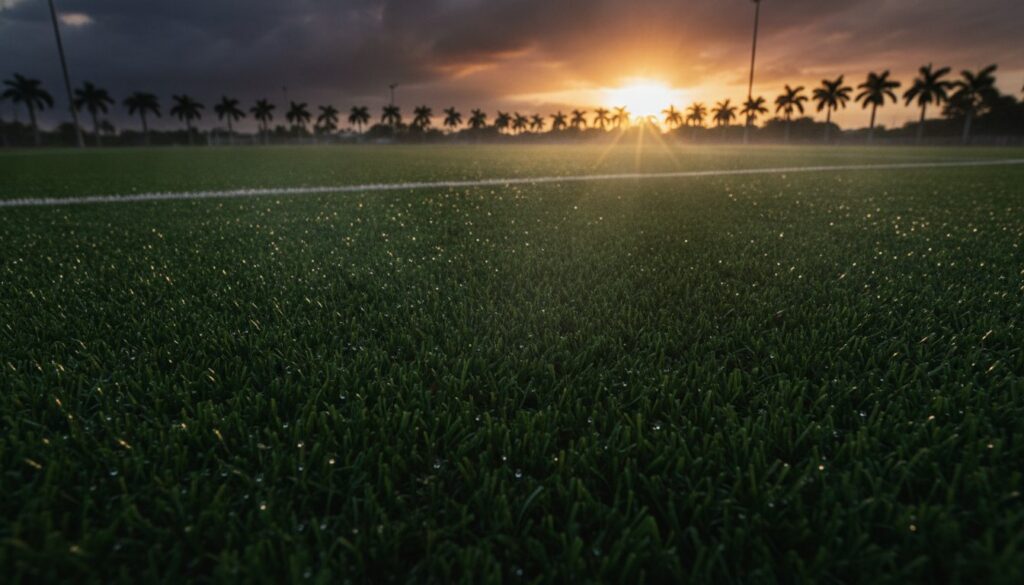
Why do some professional-grade fields in Miami remain playable minutes after a tropical downpour while others turn into dangerous, sweltering marshes? The answer is found in the specialized engineering required for sports turf installation South Florida projects. In our specific climate, a field has to do more than look pristine; it must withstand intense UV radiation and manage heavy rainfall without compromising athlete safety. Pro Turf Greens understands that a surface is a foundation for excellence, requiring meticulous craftsmanship to handle the unique pressures of the Florida sun.
You probably understand that elite performance and player health are directly tied to the quality of the surface beneath their cleats. This guide details the 2026 standards for high-performance synthetic surfaces, focusing on the critical intersection of material science and local environmental demands. We’ll explore how advanced cooling technologies, superior G-max ratings, and high-capacity drainage systems create a professional-grade environment that reduces long-term maintenance costs while protecting your athletes. From mitigating surface heat to ensuring optimal shock absorption, discover what defines a truly elite athletic facility today.
Key Takeaways
- Learn to distinguish between standard synthetic grass and biomechanically engineered athletic surfaces designed for 2026 performance standards.
- Understand how expert sports turf installation South Florida services address tropical rainfall through high-capacity drainage systems and heat-reflective fiber technology.
- Discover the critical role of specialized infills and fiber shapes in maintaining athlete safety, superior G-max ratings, and surface longevity.
- Identify custom turf requirements for diverse applications, ranging from high-intensity CrossFit training zones to professional-grade soccer and football fields.
- Explore why the engineering of the sub-base layer is the primary factor in protecting your investment and preventing premature seam failure or UV degradation.
What Defines High-Performance Sports Turf in 2026?
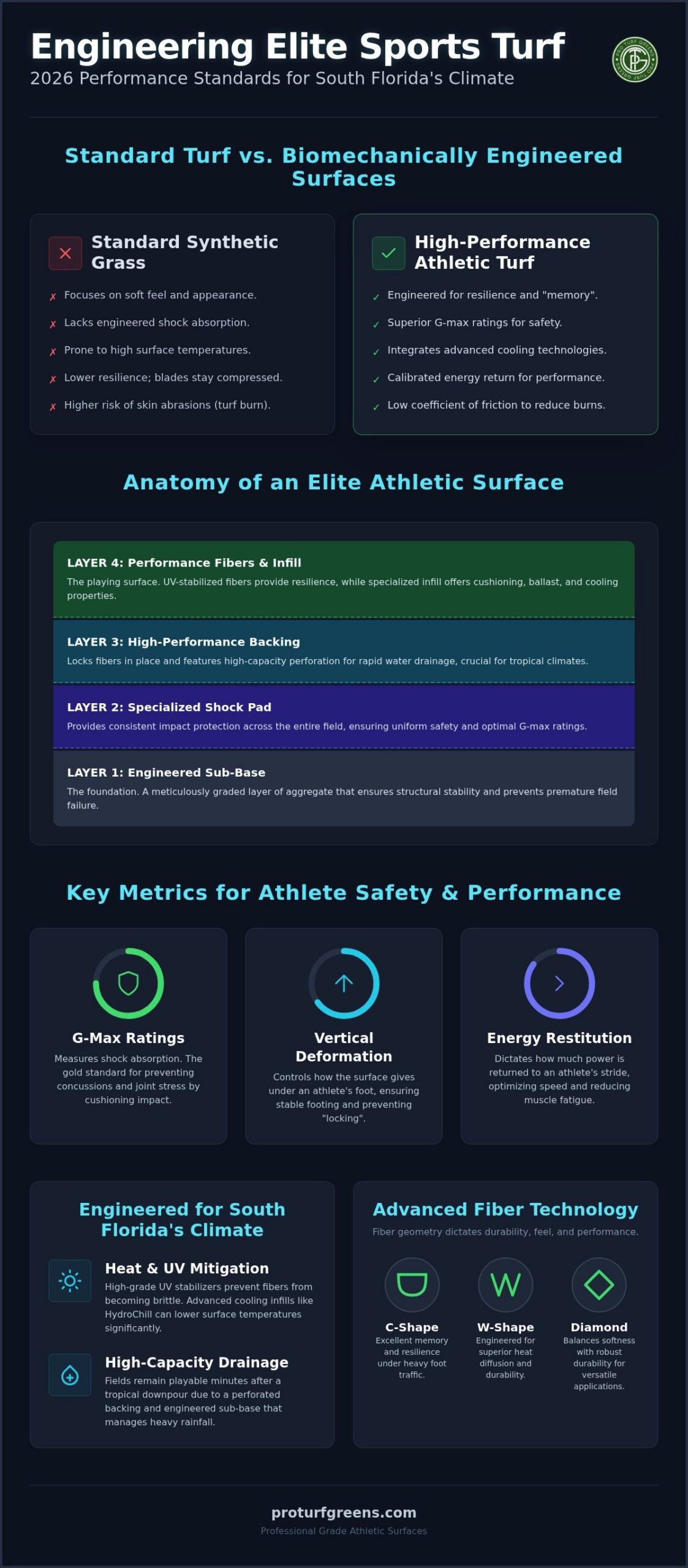
High-performance turf in 2026 is no longer just a durable alternative to sod. It’s a biomechanically engineered system where every component serves a specific athletic purpose. Professional sports turf installation South Florida requires a deep understanding of safety metrics that go far beyond appearance. G-max ratings, which measure the shock-absorption of a surface, are now the gold standard for preventing concussions and joint stress. We’ve seen a shift toward prioritizing these safety values over simple product longevity. Vertical deformation and energy restitution are equally vital; they dictate how a player’s foot interacts with the ground and how much power is returned to their stride. A field that fails these tests is a liability, not an asset.
The Biomechanics of the Playing Surface
The interaction between a player’s cleat and the turf determines both performance and safety. If the turf density is insufficient, traction becomes unpredictable. However, if it’s too high, the foot can become “locked,” increasing the risk of ligament tears. Energy return must be carefully calibrated. A surface that feels too soft can lead to premature muscle fatigue, while a surface that’s too hard fails to protect the body during a fall. To solve this, modern systems often incorporate specialized shock pads beneath the turf. Understanding the technical evolution of these materials, often referred to as The Anatomy of Elite Athletic Synthetic Surfaces, helps facility managers make informed decisions. These pads provide consistent impact protection across the entire field, ensuring safety remains uniform even as infill shifts during heavy use.
Standard Grass vs. Athletic Turf
It’s a common mistake to assume all synthetic grass is created equal. While residential turf focuses on a soft feel and a natural look, athletic-grade polymers are built for resilience and “memory.” The blades must spring back immediately to ensure the ball rolls true and the footing remains stable. Engineering also focuses on the coefficient of friction to protect players. By using specific blade shapes and advanced polymers, high-performance sports turf installation South Florida specialists can significantly reduce turf burn during high-contact maneuvers. This focus on friction management allows athletes to play aggressively without the fear of painful skin abrasions. The result is a surface that supports the speed of the game while maintaining the highest safety standards.
High-performance sports turf is a system of integrated layers designed for safety and speed.
The Anatomy of Elite Athletic Synthetic Surfaces
An elite athletic field is far more than a green carpet. It’s a sophisticated, multi-layered system where each component must work in harmony to ensure athlete safety and performance. When planning a sports turf installation South Florida project, understanding these layers is essential for achieving a 15-year lifespan. Modern Synthetic Turf Systems integrate advanced polymers with high-performance backing and infill to create a surface that mimics the best natural grass while offering superior resilience. This engineering is what separates professional facilities from standard landscaping.
Fiber Technology and Durability
The choice of fiber dictates how the field plays and how long it lasts. Monofilament fibers are single strands that offer a natural appearance and excellent resilience, while slit-film fibers are wider and better at encapsulating infill. Blade geometry plays a massive role in this; C-shape and W-shape blades are engineered to stay upright under heavy foot traffic, while Diamond shapes offer a balance of softness and durability. In the intense South Florida sun, UV stabilization is a non-negotiable requirement. Without high-grade stabilizers, fibers can become brittle and fade within just a few seasons. We match specific denier and pile height specs to your sport to ensure the surface doesn’t just look good, but performs exactly as your athletes expect.
The Critical Role of Infill
Infill is the soil of the turf system, providing the necessary ballast and cushioning. For indoor gym environments, antimicrobial coatings are vital for maintaining a sanitary training space. On outdoor fields, performance infills are designed to reduce flyout, which is that annoying spray of material during intense drills. Given our local climate, cooling technologies like HydroChill are revolutionary. These systems can lower surface temperatures by 30°F to 50°F through evaporative cooling, keeping players safe during the hottest summer months. If you’re looking for a custom solution that prioritizes these details, our team at Pro Turf Greens can help you select the ideal combination for your facility.
The foundation of the system rests on the backing and shock pads. High-performance backing must provide rapid drainage, with some modern systems capable of managing over 1,200 inches of water per hour. This is crucial for handling sudden tropical downpours without puddling or downtime. Finally, shock pads are now considered essential for contact sports. They provide a consistent G-max rating across the entire field, significantly reducing the risk of impact-related injuries. Professional sports turf installation South Florida ensures these layers are perfectly integrated to create a world-class facility that stands the test of time.
Navigating South Florida’s Climate: Heat and Drainage
South Florida presents a unique set of environmental challenges that standard turf products aren’t designed to handle. In urban centers like Miami and Fort Lauderdale, the “Heat Island” effect can push surface temperatures to levels that limit playing time. For facilities in Palm Beach or Jupiter, constant exposure to salt air requires fibers with specialized resistance to prevent premature degradation. Professional sports turf installation South Florida requires a localized approach that accounts for these stressors while ensuring the entire system remains hurricane-resilient. A field must be built to withstand both the intense UV radiation of July and the sudden, violent pressure of a tropical storm.
Advanced Drainage for High-Performance Fields
The intensity of Florida’s rainy season demands a drainage system that far exceeds industry averages. While many systems struggle with a sudden 3-inch-per-hour downpour, elite athletic surfaces utilize 100% permeable or advanced perforated backings. These modern systems are capable of draining over 1,200 inches of water per hour, ensuring that even the most severe tropical deluges don’t result in puddling or significant downtime. However, the turf itself is only one part of the equation. A properly engineered aggregate base is essential to prevent sub-base washout during extreme weather events. You can explore the technical mechanics of these drainage layers in our high performance sports turf pillar. This foundation ensures the field stays level and stable regardless of the weather.
Thermal Management Strategies
Managing surface heat is a matter of both athlete comfort and safety. In our region, surface temperatures can soar, but modern material science offers effective solutions. Specialized cooling technologies, such as HydroChill, use evaporative cooling to lower surface temperatures by as much as 30 to 50 degrees Fahrenheit. The choice of fiber color and blade geometry also influences heat retention; lighter multi-tonal blends and specific shapes help dissipate thermal energy rather than trapping it. We recommend combining these engineered solutions with smart hydration protocols and scheduled cooling intervals. By prioritizing thermal management during the sports turf installation South Florida process, facility owners can extend their daily hours of operation and protect their athletes from heat-related fatigue. It’s about creating a professional environment that remains inviting even during the peak of summer.
- Select UV-stabilized fibers to prevent brittleness in high-salt coastal environments.
- Ensure the aggregate base is compacted to hurricane-resilient standards.
- Utilize heat-reflective infills to maintain a safer playing environment.
- Verify that the drainage capacity exceeds local peak rainfall statistics.
Choosing the Right Surface for Your Athletic Application
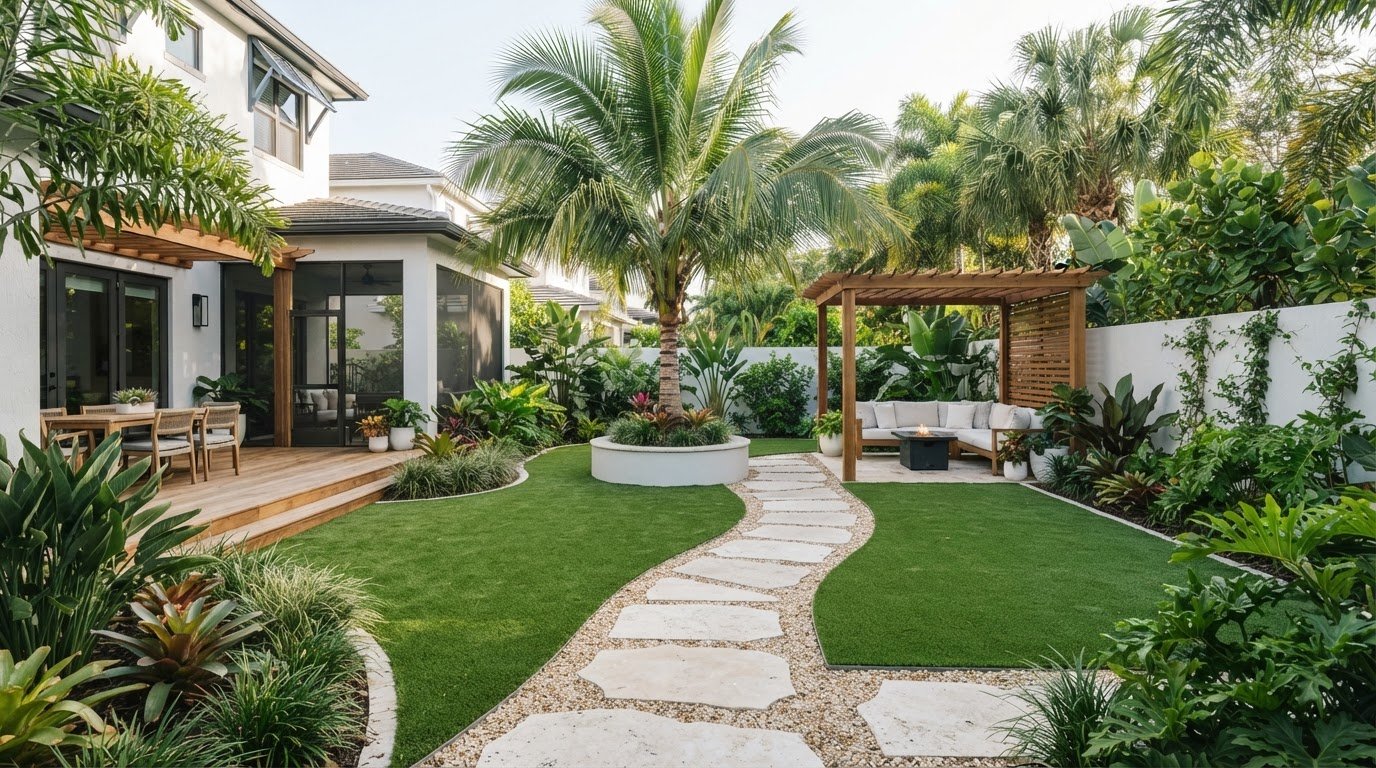
Selecting the perfect surface requires a deep understanding of the specific movements and stresses unique to your sport. A professional sports turf installation South Florida project begins with matching the polymer type and pile height to the intended activity. Whether you’re designing a high-performance soccer pitch or a specialized zone for synthetic turf for driving ranges, the engineering must align with the biomechanical demands of the user. No single product fits every scenario; a sled pull track needs different structural integrity than a community playground.
Indoor Gyms and Agility Centers
Indoor facilities face challenges that differ significantly from outdoor fields. Acoustic performance is a primary concern for commercial gyms. The right turf system can significantly dampen the noise of dropped weights and heavy foot traffic, creating a more professional atmosphere. For CrossFit and agility centers, sled pull resistance is critical. We utilize specific installation techniques to ensure the turf won’t “bunch” under the horizontal force of a weighted sled. Additionally, we prioritize antimicrobial fibers in these high-contact environments to maintain a sanitary space for athletes performing floor-based drills or high-intensity interval training.
Multipurpose Community Fields
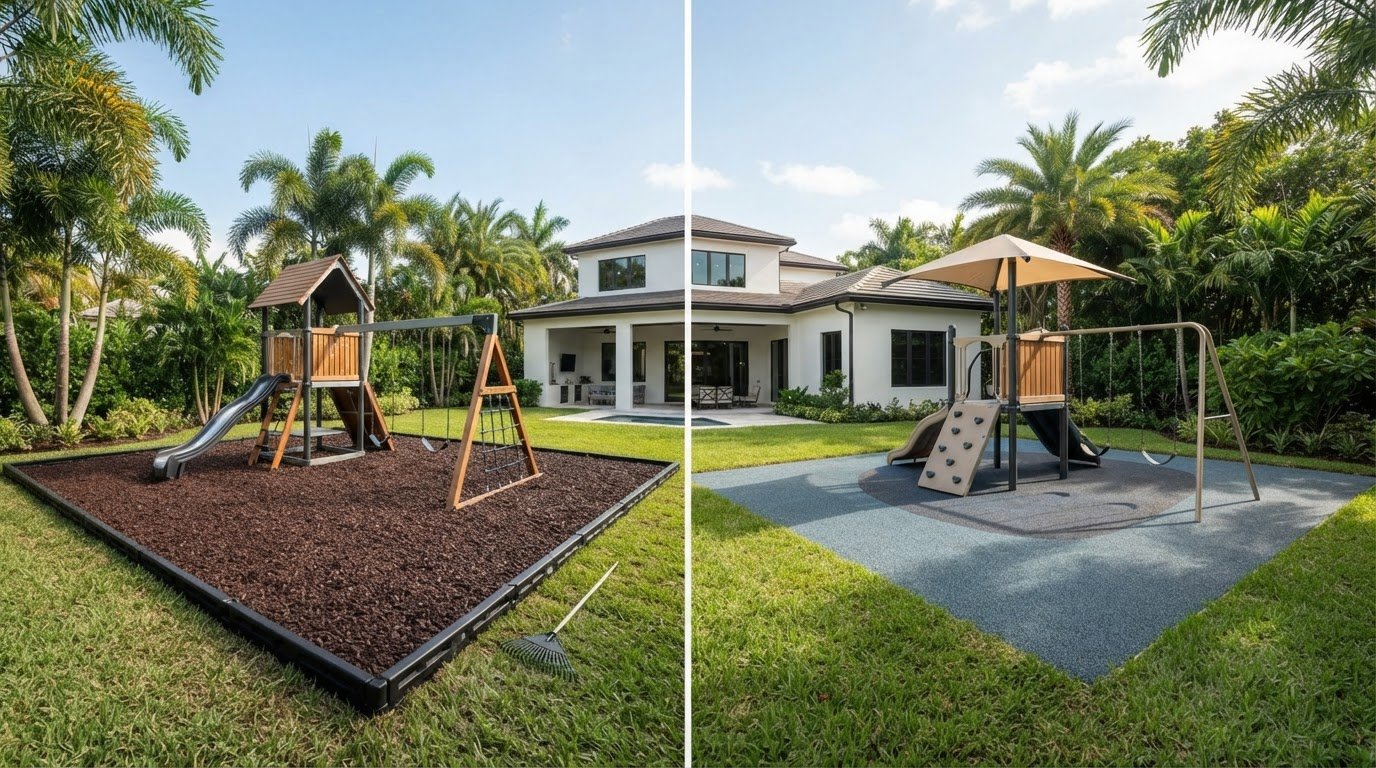
Community parks and school grounds often require a versatile surface that balances athletic performance with extreme durability. These fields must be tough enough for daily playground use while remaining safe for organized soccer or lacrosse matches. Maintaining playground turf safety standards Florida is non-negotiable for these installations. This includes verifying fall height ratings and ensuring the infill remains consistent across high-traffic community hubs. A structured maintenance schedule is essential for these areas to prevent compaction and keep the safety ratings within compliant levels.
For field sports like football or soccer, the focus shifts to ball interaction and player traction. Soccer requires a specific blade memory to ensure consistent ball roll, while football demands enhanced shock absorption for high-impact tackles. By choosing a custom-tailored sports turf installation South Florida plan, you ensure that every athlete, from the recreational toddler to the competitive varsity player, has a surface that supports their goals. If you’re ready to transform your facility with a precision-engineered surface, contact the experts at Pro Turf Greens today for a professional consultation.
- Soccer: Focuses on ball roll, blade memory, and predictable traction.
- Football: Prioritizes G-max ratings and heavy-duty shock absorption layers.
- CrossFit: Requires high-density thatch to resist sled-pull bunching.
- Playgrounds: Emphasizes fall-height safety compliance and soft-touch fibers.
Maximizing ROI: Professional Installation and Longevity
High-performance athletic fields represent a significant capital investment. To ensure this investment yields the highest return, facility managers must look beyond the initial price tag and focus on the total cost of ownership over a 10-year period. Professional sports turf installation South Florida is the single most important factor in determining whether a field reaches its full potential or requires costly repairs within its first few seasons. While “budget” options may seem attractive, they often lead to hidden expenses like premature UV fading and catastrophic seam failure. By prioritizing quality from the start, you can significantly reduce long-term maintenance costs while providing a safer environment for your athletes.
The Installation Difference
The longevity of your field is primarily determined by what lies beneath the surface. In fact, the base layer accounts for approximately 90% of a turf system’s lifespan. Pro Turf Greens employs rigorous base compaction standards to avoid the “dipping” effect that occurs when a sub-base settles unevenly over time. Precision seaming is another hallmark of a professional build; it prevents trip hazards and edge lifting that can sideline players. For those considering a new project, an artificial turf consultation miami provides a detailed site evaluation to ensure the foundation is engineered for South Florida’s unique soil conditions. Professional installation can double the lifespan of high-performance sports turf by ensuring every component is perfectly integrated and secured.
Long-Term Maintenance and Care
Synthetic surfaces are low-maintenance, not no-maintenance. To keep your field in peak condition, a consistent care routine is essential. Regular brushing and grooming prevent the fibers from matting, which keeps them upright for optimal play and aesthetic appeal. Infill replenishment is equally vital; it ensures the G-max safety ratings stay within professional standards by maintaining the necessary shock absorption. Our team acts as a dedicated partner, guiding you through the best practices to protect your facility’s resilience.
- Grooming: Redistributes infill and lifts fibers to prevent compaction.
- Debris Removal: Prevents organic matter from breaking down and clogging drainage.
- Seam Inspection: Identifies minor issues before they become major safety liabilities.
- Infill Top-offs: Maintains the consistent surface depth required for traction.
When you calculate the 10-year ROI, the savings on water, chemicals, and labor often offset the initial cost of a premium sports turf installation South Florida. A professionally installed field doesn’t just save money; it provides a reliable, high-performance stage for every game, practice, and community event. Our dedication to craftsmanship ensures your facility remains a point of pride for years to come.
Elevating Your Facility’s Performance Standards
Building a world-class athletic facility requires moving beyond standard landscaping and embracing biomechanically engineered systems. Success depends on selecting the right fiber geometry, high-performance infills, and advanced drainage layers that can handle our local tropical downpours. A precision sports turf installation South Florida ensures your surface remains safe, cool, and resilient against the intense UV exposure found in Miami and Fort Lauderdale. By prioritizing expert craftsmanship and site-specific engineering, you protect your athletes while maximizing your long-term return on investment.
Pro Turf Greens is a locally owned and operated authority dedicated to delivering custom-designed athletic surfaces for schools, commercial gyms, and private residences. Our team understands the unique drainage requirements of our coastal environment and uses specialized techniques to prevent sub-base failure. Whether you’re upgrading a community soccer field or installing a high-density agility track, we’re here to act as your knowledgeable guide and dedicated partner. Take the first step toward a superior playing experience and schedule your free South Florida sports turf consultation today. We look forward to helping you create a space where performance and safety meet.
Frequently Asked Questions
What is the lifespan of high-performance sports turf in Florida?
High-performance synthetic surfaces generally last between 12 and 15 years when subjected to the intense Florida sun. This longevity is achieved through advanced UV-stabilized polymers and a robust, professionally engineered sub-base. While standard products might degrade faster, sports turf installation South Florida projects utilize specific materials designed to resist salt air and tropical humidity. Consistent maintenance, such as infill grooming, ensures the fibers remain resilient throughout their entire service life.
How does sports turf drainage work during heavy South Florida rain?
Modern athletic surfaces utilize 100% permeable backings and a multi-layered aggregate foundation to manage extreme precipitation. These systems are designed to drain over 1,200 inches of water per hour, which far exceeds the volume of a typical tropical downpour. By directing water vertically through the turf and into the stone sub-base, the surface remains playable and free of puddles or saturation even minutes after a heavy storm concludes.
Is high-performance turf safe for children and pets in community parks?
Elite athletic turf is exceptionally safe for children and pets in community settings. These systems utilize non-toxic, lead-free materials and can be integrated with antimicrobial infills to maintain a sanitary environment. Because they’re designed for high-impact sports, they offer superior cushioning compared to natural grass or standard landscaping turf. This makes them an ideal choice for multipurpose parks where safety compliance and fall-height protection are primary concerns for all users.
How much cooler is professional-grade turf compared to standard artificial grass?
Professional-grade turf can be 30 to 50 degrees Fahrenheit cooler than standard artificial grass when equipped with advanced cooling technologies. Systems like HydroChill use evaporative cooling to significantly lower surface temperatures during the peak of summer. Additionally, heat-reflective fibers and specific blade shapes help dissipate thermal energy rather than absorbing it. This ensures that sports turf installation South Florida facilities remain comfortable and safe for athletes during the hottest parts of the day.
Does high-performance turf require a shock pad for home gyms?
A shock pad is highly recommended for home gyms, especially those used for high-impact training or floor-based exercises. While the turf itself provides traction, the shock pad adds a critical layer of impact absorption that protects your joints and reduces the risk of injury during plyometrics or heavy lifting. It also enhances the acoustic properties of the room, dampening the sound of dropped weights and creating a more professional training environment.
What maintenance is required for a commercial-grade athletic field?
Maintaining a commercial-grade field involves a structured routine of brushing, grooming, and debris removal. Brushing keeps the fibers upright to ensure consistent ball roll and traction, while grooming redistributes the infill to prevent compaction. It’s also important to periodically replenish the infill levels to maintain the surface’s safety ratings. These simple steps, performed on a scheduled basis, preserve the biomechanical integrity of the field and protect your long-term investment from premature wear.
Can sports turf be installed over existing concrete or asphalt?
Synthetic turf can be installed over existing concrete or asphalt, provided the surface is level and has adequate drainage slopes. In these applications, we utilize a specialized shock pad or drainage mat between the hard surface and the turf to provide the necessary cushioning and water flow. This is a common solution for rooftop courts, school courtyards, or indoor training zones where excavation isn’t possible, transforming underutilized hardscapes into functional, high-performance athletic areas.
How do you measure the safety of a synthetic sports surface?
The safety of a synthetic surface is primarily measured through G-max testing, which calculates the shock-absorption capacity of the field. A lower G-max score indicates a surface that is better at absorbing impact and reducing the risk of concussions or joint injuries. We also evaluate Head Injury Criterion (HIC) for playgrounds and multipurpose fields. These objective metrics ensure the facility meets professional safety standards and provides a consistent, protective environment for every athlete.