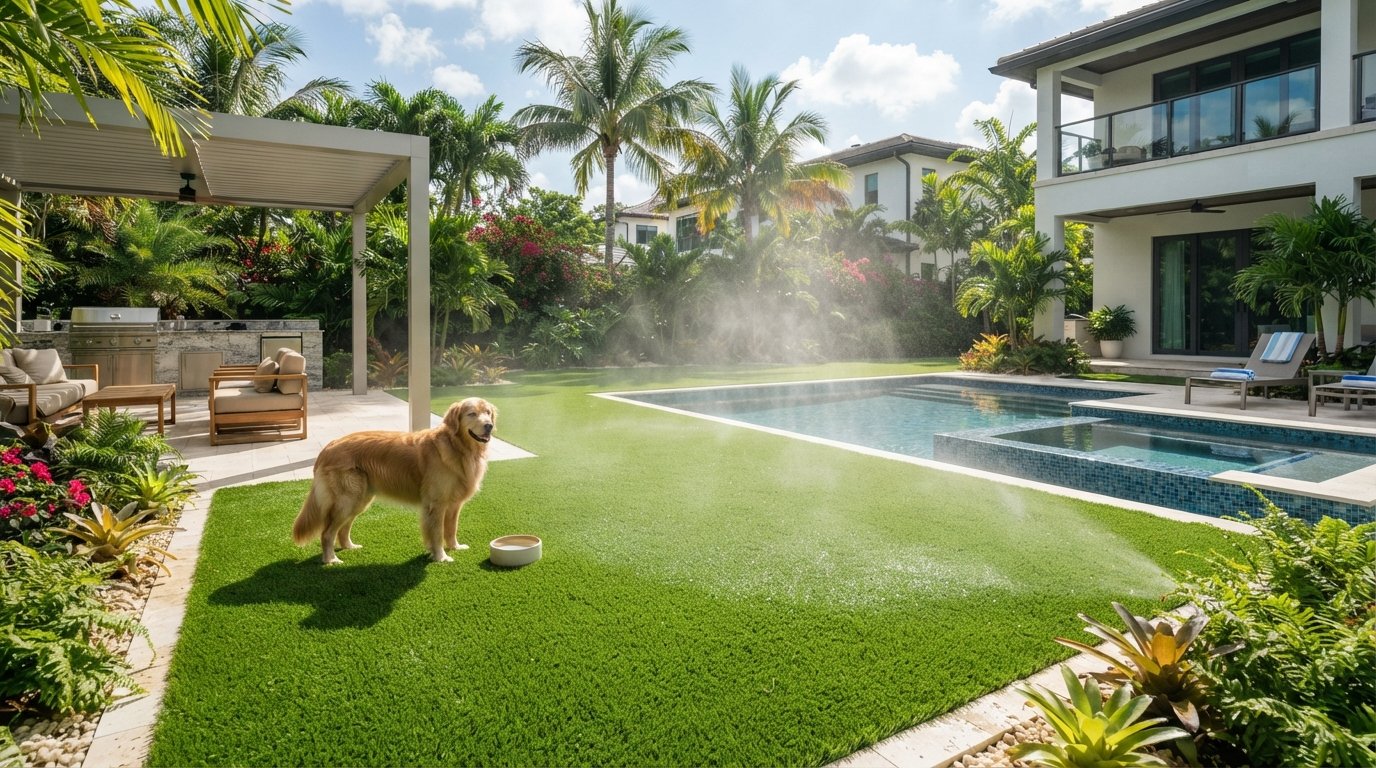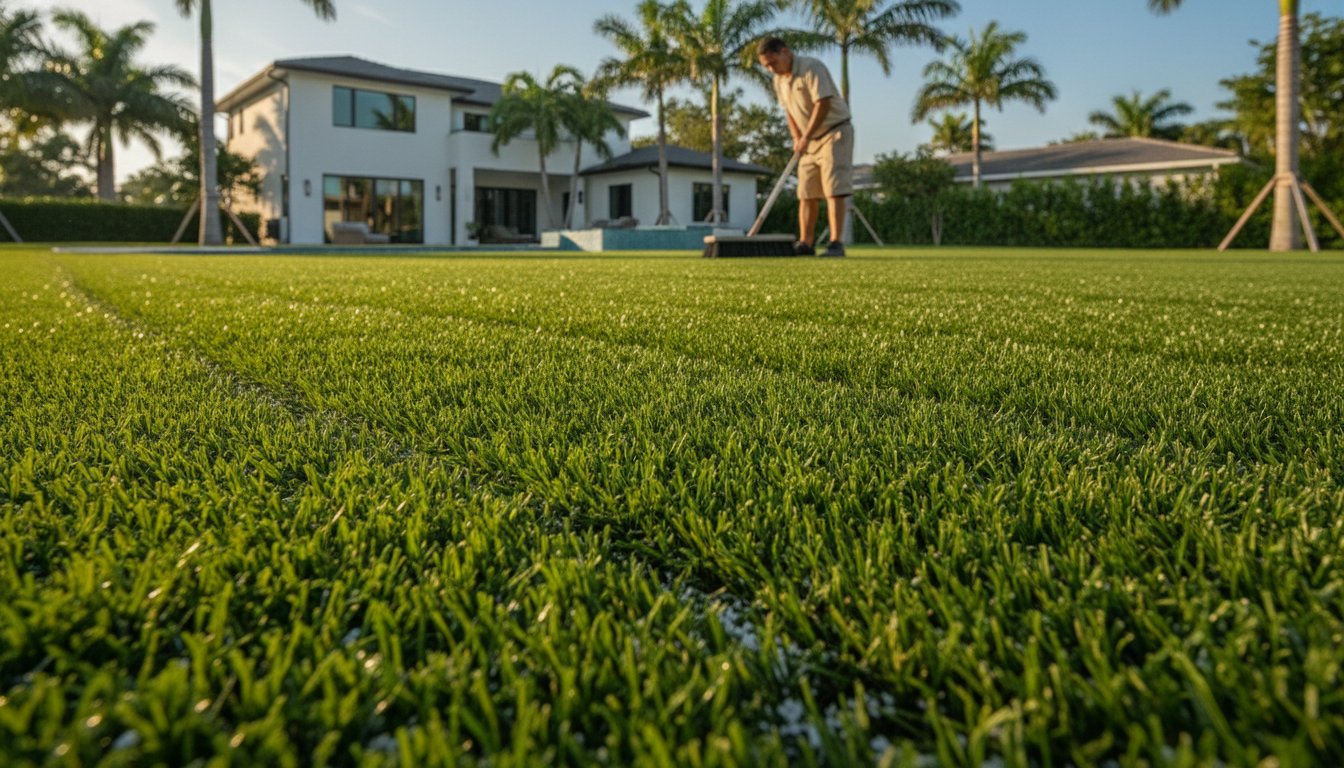
What if your beautifully manicured backyard became completely unusable for six months of the year simply because of the sun? For many homeowners in Miami and Palm Beach, the discovery that synthetic turf can reach temperatures exceeding 150 degrees is a distressing surprise that often leads to burned paws and restricted outdoor time. You aren’t alone in worrying that your beautiful green investment was the wrong choice for this intense tropical climate. Finding a reliable artificial grass getting too hot solution is essential for reclaiming your outdoor living space and ensuring the safety of your family and pets during the peak of summer.
We understand that a high-end lawn should be an aspirational lifestyle upgrade, not a source of constant concern. This guide explores the most effective professional cooling technologies and maintenance strategies designed specifically for the unique demands of the South Florida environment. You’ll learn how specialized heat-reflective fibers and moisture-retaining infills work together to maintain a comfortable surface temperature even during record-breaking heatwaves. We’ll also provide expert guidance on selecting the right materials for sunny backyards, ensuring your synthetic lawn remains a functional, resilient, and beautiful asset for your home.
Key Takeaways
- Gain a clear understanding of how solar radiation and thermal mass impact synthetic fibers to better manage your lawn’s temperature during peak summer hours.
- Discover how a simple misting method can provide instant relief by dropping surface temperatures by 30 degrees in just two minutes.
- Evaluate professional-grade options like heat-reflective pigments and HydroChill technology as a long-term artificial grass getting too hot solution for your property.
- Learn why your choice of infill is the most overlooked factor in heat management and which specific materials you must avoid to prevent a heat trap.
- Understand how specialized site analysis and drainage stone selection during the installation process can significantly improve heat dissipation in sunny South Florida backyards.
Why Does Artificial Grass Get Hot? The Science of Thermal Absorption
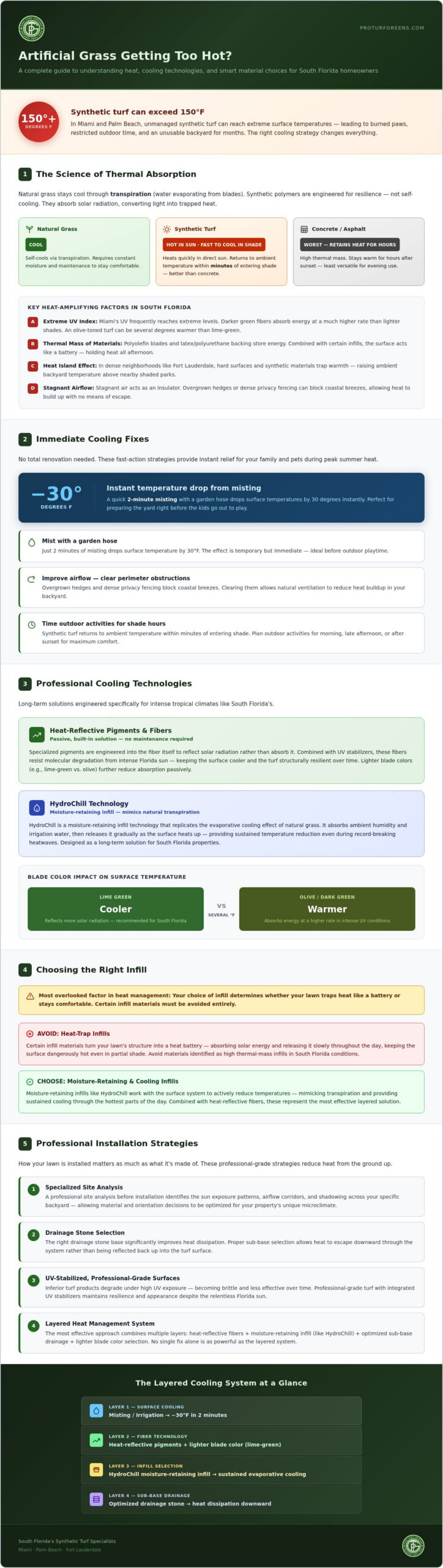
Synthetic grass provides a stunning, low-maintenance aesthetic, but its thermal behavior differs significantly from natural sod. While living grass stays cool through transpiration, a process where water evaporates from the blades, synthetic polymers are designed for resilience rather than self-cooling. These fibers absorb solar radiation, converting light into heat that remains trapped within the lawn’s structure. Many homeowners find that implementing a layered artificial grass getting too hot solution, involving both material choice and site design, is the most effective way to manage these thermal properties.
The materials used in construction, specifically the polyolefins in the blades and the latex or polyurethane in the backing, possess specific artificial turf heat retention properties that allow them to store energy. This stored energy is known as thermal mass. When you combine these fibers with certain types of infill, the surface can act like a battery, holding onto the sun’s warmth throughout the afternoon. In dense Fort Lauderdale neighborhoods, the Heat Island Effect occurs when hard surfaces and synthetic materials trap warmth, raising the ambient temperature of your specific backyard compared to nearby shaded parks.
The Impact of South Florida’s UV Index
Miami’s UV index frequently reaches extreme levels, which directly impacts the surface temperature of your lawn. Intense radiation causes darker green fibers to absorb energy at a much higher rate than lighter shades. For example, choosing an olive-toned turf may result in a surface that is several degrees warmer than a lime-green alternative. Selecting a lighter blade color serves as an effective, passive artificial grass getting too hot solution for local residents who want to maintain a cooler outdoor environment. Beyond the immediate heat, high UV exposure can degrade the molecular structure of inferior turf products, making them brittle over time. Investing in professional-grade surfaces with integrated UV stabilizers ensures the lawn remains resilient and maintains its aesthetic excellence despite the relentless Florida sun.
Thermal Conductivity: Turf vs. Concrete vs. Natural Grass
Thermal conductivity in synthetic grass refers to the rate at which heat moves through the polymer fibers compared to the water-cooled cellular structure of natural sod. Because synthetic turf lacks the natural cooling process of transpiration, it relies entirely on its material density and color to manage energy. You’ll notice your lawn feels hotter than the air temperature because the blades are absorbing and concentrating radiant energy rather than reflecting it. However, the advantage over traditional hardscapes is significant. While a concrete patio might stay warm for hours after sunset, synthetic turf typically returns to ambient temperatures within minutes of entering the shade. This rapid cooling cycle makes it a much more versatile option for evening entertaining in South Florida.
- Natural Grass: Stays cool via transpiration; requires constant moisture and maintenance.
- Synthetic Turf: Heats quickly in direct sun but cools rapidly in shade or after sunset.
- Concrete/Asphalt: High thermal mass; retains heat long after the sun goes down.
Immediate Fixes: How to Cool Down Existing Artificial Grass
You don’t need a total renovation to reclaim your lawn from the summer sun. If you already have a synthetic surface, implementing a few practical adjustments can provide immediate relief for your family and pets. While long-term upgrades are ideal, these short-term tactics serve as a reliable artificial grass getting too hot solution for those mid-summer heatwaves. Water is your fastest ally. A quick, two-minute misting with a garden hose can drop surface temperatures by 30 degrees instantly. This cooling effect is temporary, but it’s perfect for preparing the yard right before the kids go out to play.
Airflow also plays a significant role in temperature management. Stagnant air acts as an insulator for synthetic fibers, allowing heat to build up without any means of escape. You can improve natural ventilation by clearing perimeter obstructions, such as overgrown hedges or dense privacy fencing, which might be blocking the coastal breeze. For specific high-traffic zones like pet runs or play areas, installing retractable awnings or shade sails provides a versatile shield during the most intense hours, typically between 11 AM and 3 PM. Our experts at Pro Turf Greens can help you evaluate your yard’s layout to maximize these natural cooling effects.
Strategic Watering for Maximum Cooling
It’s a common misconception that you need to soak the turf to keep it cool. Evaporative cooling is the actual goal, meaning the transition of water to vapor is what pulls the heat away from the blades. The best time to rinse your turf is immediately before use, rather than early in the morning. Because South Florida’s water is notoriously high in calcium, frequent rinsing can sometimes leave a white film on the fibers. To prevent this mineral buildup, use a light mist rather than a heavy stream and occasionally use a turf-safe cleaning solution to maintain the aesthetic excellence of your lawn.
Landscaping for Natural Shade
Integrating nature into your design is a sophisticated way to manage surface heat. Strategically placing native Florida palms or canopy trees can provide dappled sunlight that significantly reduces the thermal load on your grass. When selecting plants, focus on species that offer broad coverage without excessive leaf drop to keep maintenance low. You can learn more about choosing the right plants in our guide to low maintenance backyard landscaping. This balanced approach ensures your yard remains a functional, aspirational space that stays comfortable even in the peak of July.
Cooling Technologies: Heat-Reflective Fibers and HydroChill
While rinsing provides temporary relief, a permanent artificial grass getting too hot solution requires advanced material engineering. Modern synthetic turf isn’t just plastic; it’s a sophisticated system designed to manage solar energy through built-in cooling technologies. These innovations focus on two primary methods: reflecting heat before it’s absorbed and using moisture to mimic the natural cooling of living grass. By selecting a turf system with integrated cooling, you ensure your lawn remains a comfortable, high-end retreat throughout the year.
The shape and density of the fibers also play a critical role in heat dissipation. Standard flat blades tend to trap heat because they lack surface area for airflow. In contrast, specialized shaped fibers, such as those with a “W” or “U” profile, are engineered to stand upright, which promotes air circulation between the blades. This structural design, combined with high-density materials, allows the turf to shed thermal energy more efficiently than traditional products.
How Heat-Reflective Pigments Work
Standard synthetic grass often uses simple green dyes that absorb infrared (IR) light, the primary source of solar heat. Heat-reflective technology replaces these dyes with specialized pigments that reflect IR light back into the atmosphere. This simple shift in chemistry can keep fibers significantly cooler than traditional turf. These technologies are especially vital for high performance sports turf, where maintaining a safe surface temperature is critical for athlete safety and endurance during intense South Florida matches.
The HydroChill Evaporative System
HydroChill represents the pinnacle of evaporative cooling technology. It works by storing moisture within the turf’s infill, which is then released slowly as the sun’s energy heats the surface. This process effectively mimics the transpiration of natural sod, providing a sustained cooling effect that far outlasts a simple rinse. On days when temperatures exceed 90 degrees, HydroChill has been shown to reduce surface temperatures by up to 50 degrees. To keep this system active, you simply need to hydrate the lawn periodically, allowing the specialized infill to recharge its moisture reserves.
When comparing your options, consider the longevity of the treatment. Built-in technologies like IR-reflective pigments are extruded directly into the fiber during manufacturing, meaning they won’t fade or wear off over time. Topical cooling treatments, while helpful for a single season, often require annual reapplication and can’t match the consistent performance of a fully engineered cooling system. For a truly resilient and aspirational backyard, investing in built-in technology is the most reliable artificial grass getting too hot solution.
Choosing the Right Infill: The Key to a Cooler Surface
While most homeowners focus on the aesthetics of the blades, the material settled at the base of the turf is the hidden engine of temperature control. Infill serves multiple purposes, from protecting the backing to keeping the fibers upright, but its thermal properties are often overlooked. If you are searching for a reliable artificial grass getting too hot solution, your choice of infill is arguably the most critical decision in the installation process. The wrong material can act as a heat sink, while the right one can actively dissipate energy and provide a much more comfortable surface for your family.
In South Florida, you must avoid the “heat trap” created by traditional black crumb rubber. While common in commercial athletic fields, this recycled rubber absorbs nearly all solar radiation and can raise surface temperatures to dangerous levels. For residential lawns in Miami and Palm Beach, we recommend high-performance alternatives that prioritize thermal management. Professional-grade options like Zeolite and Envirofill represent the modern standard for climate-resilient landscapes, offering a sophisticated blend of functionality and comfort that basic silica sand cannot provide.
Cooling Infill Comparison: Zeolite vs. Envirofill vs. Silica Sand
Selecting the right material requires a balance of cooling capacity and lifestyle needs. Zeolite, often branded as ZeoFill, is a natural volcanic mineral with a honeycomb structure that excels at moisture retention and odor control. It captures water from humidity or rain and releases it slowly, providing a sustained evaporative cooling effect. Envirofill consists of acrylic-coated sand grains that are specifically engineered to stay cooler than raw silica. While standard silica sand is a neutral baseline that won’t actively trap heat like rubber, it lacks the advanced cooling properties found in specialized minerals. For homeowners with pets, we recommend reviewing our artificial turf for dog runs south florida guide to see how these infills manage both heat and hygiene in high-traffic areas.
The Importance of Infill Color and Density
The visual properties of your infill directly impact how much solar energy your lawn retains. Lighter-colored materials reflect a higher percentage of sunlight, preventing the deep thermal absorption that occurs with darker aggregates. Additionally, the depth and density of the application affect the turf’s ability to “breathe.” An overfilled lawn can become compacted, restricting the airflow necessary for heat dissipation. As a professional tip, ensuring uniform distribution during installation prevents the formation of isolated heat pockets where energy becomes trapped in uneven layers. To ensure your yard is engineered for maximum comfort, consult with the specialists at Pro Turf Greens to identify the ideal infill density for your specific site layout.
Professional Installation Strategies for South Florida Heat
The most effective artificial grass getting too hot solution isn’t found in a single product, but rather in a comprehensive installation strategy. While high-tech fibers and specialized infills are vital, they must be supported by a foundation engineered for the unique climate of Miami and Palm Beach. Professional installation moves beyond simple aesthetics to address the thermal dynamics of your specific yard. By treating the entire project as an integrated system, we ensure your investment remains comfortable and functional even during the most intense summer months.
One of the most critical components of a cool lawn is the base layer selection. Traditional soil and certain types of compact dirt can act as thermal reservoirs, holding heat and preventing the turf from cooling down quickly. We utilize a specific drainage stone base, typically consisting of clean, crushed aggregate, which creates natural voids or “air gaps” beneath the turf backing. This sub-base architecture promotes consistent airflow and allows heat to dissipate into the ground rather than reflecting back up through the fibers. This structural approach is a fundamental artificial grass getting too hot solution that DIY installations often overlook.
Site Analysis: Sun Exposure and Yard Orientation
Every backyard in South Florida has its own microclimate, shaped by the path of the sun and surrounding structures. During our artificial turf consultation miami, we conduct a detailed analysis of sun exposure to identify potential high-heat zones. For residents in Boca Raton or Weston with West-facing backyards, the afternoon sun can be particularly punishing. In these scenarios, we might recommend adjusting the turf pile height or density. While a lush, tall pile looks beautiful, it can sometimes restrict the airflow needed for cooling in high-exposure areas. Selecting a style with a slightly lower profile or a more open thatch can significantly improve the surface’s ability to “breathe” and stay within a safe temperature range.
The Pro Turf Greens Advantage
Our commitment to excellence means we only utilize high-end, climate-tested materials that have proven their resilience in the Florida sun. This dedication to quality extends to every project, whether we are installing a pet run or a professional backyard putting green installation. By combining heat-reflective technology with meticulous site preparation, we transform your outdoor space into a cool, aspirational retreat. We take pride in our role as a dedicated partner, guiding you through every technical decision to ensure long-term satisfaction and comfort. Ready for a cooler lawn? Book your free South Florida turf consultation today and let us design a custom solution for your home.
Reclaim Your Outdoor Sanctuary This Summer
Transform your backyard into a comfortable, year-round retreat by moving beyond basic synthetic turf. You now understand that a truly effective artificial grass getting too hot solution involves an integrated system of heat-reflective fibers, specialized cooling infills like Zeolite, and strategic site design. Whether you’re implementing immediate fixes like strategic misting or investing in long-term HydroChill technology, the goal is to ensure your lawn remains a safe, beautiful asset for your family even during the most intense Florida heatwaves.
Pro Turf Greens specializes in providing climate-resilient installations across Fort Lauderdale, Miami, and Palm Beach. We take pride in crafting custom cooling solutions tailored specifically for energetic pets and high-performance athletes. Our meticulous approach to installation ensures that every project meets the highest standards of craftsmanship and heat management. Don’t let the summer sun limit your lifestyle or your investment. Schedule Your Free Cooling Turf Consultation today and discover how our professional expertise can transform your sunny backyard into a refreshing, high-end oasis.
Frequently Asked Questions
Does all artificial grass get too hot for dogs?
While all synthetic surfaces absorb some solar energy, high-quality pet turf engineered for the South Florida climate includes specific features to mitigate extreme temperatures. Standard turf can become uncomfortable for paws during a Miami July afternoon if it lacks cooling technology. We recommend choosing products with heat-reflective fibers and moisture-retaining infills. These additions ensure your furry companions can enjoy the yard safely without the risk of surface burns.
Can artificial grass melt in the Florida sun?
Ambient solar heat alone won’t melt professional-grade synthetic grass in cities like Boca Raton or Weston. However, highly reflective windows can create concentrated hot spots that exceed the turf’s melting point. This phenomenon occurs when sunlight bounces off energy-efficient glass onto the lawn. We analyze these reflection patterns during our consultation to ensure your investment remains protected from accidental thermal damage caused by concentrated light magnification.
How much cooler is cooling turf compared to standard synthetic grass?
Cooling turf technologies can reduce surface temperatures by 15% to 20% compared to traditional synthetic products. When you integrate advanced systems like HydroChill, the reduction can be as significant as 50 degrees on a 90-degree day in Palm Beach. This difference transforms a scorching surface into a comfortable outdoor living area. It’s a comprehensive artificial grass getting too hot solution for homeowners who prioritize safety and long-term usability.
Will watering my artificial grass damage the backing over time?
Frequent watering won’t damage the backing of a professionally installed turf system in Fort Lauderdale. Our high-end products feature perforated or fully permeable backings designed specifically for rapid drainage in tropical environments. This architecture allows water to pass through into the crushed stone base without pooling or degrading the material. Regular rinsing actually helps maintain the lawn by removing dust and allergens while providing an immediate evaporative cooling effect.
What is the coolest infill for artificial turf in South Florida?
Zeolite and Envirofill are currently the most effective cooling infills for the South Florida market. Zeolite is a volcanic mineral that captures moisture and releases it slowly to provide sustained evaporative cooling for your lawn. Envirofill uses a specialized acrylic coating that prevents heat absorption more effectively than raw silica sand. These materials are far superior to crumb rubber, which acts as a heat trap and should be avoided in sunny backyards.
Is it worth paying more for heat-reflective turf technology?
Investing in heat-reflective technology is highly recommended for properties in Miami and Coral Gables with significant sun exposure. This technology is extruded directly into the fibers, providing a permanent artificial grass getting too hot solution that won’t wear off over time. Beyond comfort, these specialized pigments protect the molecular integrity of the grass. This prevents the blades from becoming brittle and extends the overall lifespan of your luxury landscape investment.
Can I add a cooling solution to artificial grass that is already installed?
You can certainly enhance the cooling properties of an existing lawn by upgrading your infill or adding topical treatments. Swapping out standard sand for Zeolite provides an immediate boost in moisture retention and temperature control. Additionally, installing strategic shade structures or planting native palms provides natural relief for the surface. While built-in fiber technology is ideal, these secondary strategies are effective ways to improve the comfort of an older turf installation.
How long does the cooling effect of a HydroChill system last?
The cooling effect of a HydroChill system typically lasts for several days after a single hydration cycle. In the humid climate of Delray Beach or Jupiter, the moisture stored in the infill evaporates slowly as the sun hits the surface. You’ll find that a quick weekly rinse is usually sufficient to keep the system active and effective. It provides a consistent, predictable way to maintain a safe temperature range throughout the peak of the summer.