Replacing lawn with artificial turf starts with the site, not just the turf sample. How water moves across the yard, how much sun it gets, and how your household plans to use the space all influence the right preparation and surface for your property.
It’s reasonable to have questions before making the change. In South Florida, heavy rain can make drainage an important part of planning. Surface heat, pets, children, and everyday use can also affect which turf and installation approach make sense.
This guide explains how to assess your existing lawn, plan the replacement, and understand the main installation stages, from removing grass to preparing the base and laying turf. You’ll learn what site conditions and household needs to discuss with a local installer, and what to ask about drainage, heat, turf selection, and maintenance. With those details in view, you can decide whether synthetic turf fits your property and plan the finished space more confidently.
Key Takeaways
- Before replacing lawn with artificial turf, consider how your household uses the yard and whether the site is suitable for a synthetic surface.
- Understand the main installation stages, from assessing and removing the existing lawn to preparing the base and finishing the turf.
- Compare artificial turf and natural grass for upkeep, appearance, water needs, intended use, and site suitability.
- Prepare for an assessment by noting yard dimensions, access points, existing landscaping, and places where water collects after rain.
- Share your observations and questions with a local installer to help shape a design around your property and household needs.
Replacing a Lawn with Artificial Turf: Is It Right for Your Property?
Replacing a lawn with artificial turf means removing an existing natural lawn and preparing the site for a synthetic surface. The project changes more than the visible grass. The condition of the ground beneath it and the way you plan to use the yard both shape the work.
Homeowners may consider turf to change the look of a yard, reduce routine lawn-care tasks, or create a more usable area for pets and play. Those goals call for different priorities. If a consistent appearance matters most, consider how the turf will look across the entire space. If children or pets will use it, focus on the intended activities and care needs. The right choice depends on your preferences, the site, and the upkeep you’re prepared to provide. Artificial turf isn’t maintenance-free, and it won’t suit every property or household.
For background on the material and its common uses, see this comprehensive overview of artificial turf. For a replacement project, the most useful starting point is your own yard.
What changes when natural grass is replaced?
The finished surface becomes synthetic, but site preparation and the base beneath the turf remain essential. Existing grass and unsuitable material need to be removed so the area can be prepared for the new surface. Intended use also guides planning. A space for pets may call for different considerations than one meant mainly for relaxing or children’s play. Share those priorities early rather than choosing turf by appearance alone.
Synthetic turf still needs appropriate care and periodic inspection. Ask the installer what upkeep is recommended for the turf under consideration and how to check the finished area over time.
Which South Florida lawns may need extra assessment?
Walk the yard after rain and note where water stands or collects. Mark uneven areas, shaded sections, and visible runoff paths, too. These observations give an installer useful context, but they don’t establish on their own what preparation the site needs.
Sun exposure and heavy rain are relevant site considerations in South Florida, though conditions vary between properties. Ask how they may affect turf selection and project planning, and what site information supports the recommendation. A professional evaluation is especially important if you’re concerned about drainage or grading, or if underground utilities may be near the work area. A careful assessment helps determine whether replacing lawn with artificial turf suits your property before you settle on the finished surface.
How Artificial Turf Lawn Replacement Works, from Removal to Finish
An artificial turf lawn replacement typically involves site assessment, existing lawn removal, base preparation, turf placement, and finishing. The work depends on the property, intended use, and site conditions. Treat this as a planning framework, not a fixed installation formula.
What happens during lawn removal and site preparation?
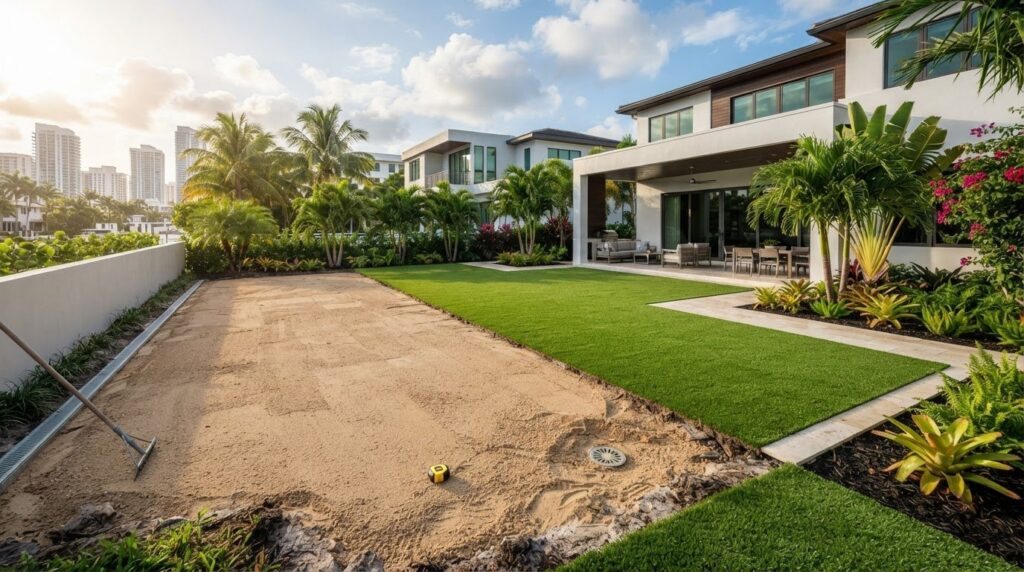
Before work begins, the installer evaluates existing vegetation, the yard’s grade, access for equipment and materials, and how the finished area will be used. Those details help determine what needs to be removed and how the surface should be prepared. Existing grass and unsuitable material are taken out so they don’t remain beneath the new surface or interfere with preparing a suitable base.
Removal and disposal are project-specific. There’s no single removal depth or base recipe that suits every yard. Grading and base choices should reflect the property’s conditions and the plan for managing water. If the yard has standing water, uneven areas, or visible runoff paths, point them out during the assessment. Ask how the proposed preparation addresses those observations, and raise concerns about underground utilities before work starts.
How is artificial turf fitted and finished?
Once the site is prepared, the installer measures and positions the turf, then cuts and joins sections as needed to fit the planned area. The surface is secured and finished, with edges and transitions planned around paths, garden beds, and hardscape. Discuss these boundaries early so you understand how the synthetic lawn will meet the parts of the yard that remain unchanged.
Ask the installer to explain the materials and methods proposed for your project, including how the base, drainage plan, seams, and edges will be handled. Technical specifications can vary, so verify product and installation details with the company instead of assuming one method applies to every property.
If irrigation use is part of your planning, keep water regulations separate from installation decisions and check the current South Florida landscape watering restrictions directly with the South Florida Water Management District. For a property-specific discussion of the sequence and design, you can explore artificial lawn design and installation with Pro Turf Greens.
Artificial Turf vs. Natural Grass: Compare the Tradeoffs Before Replacing Your Lawn
Neither surface is right for every household. Before replacing lawn with artificial turf, compare the day-to-day experience you want with the needs and conditions of your property. The table shows general differences. Actual results depend on the grass or turf selected, the installation, and how you use the yard.
| Consideration | Artificial turf | Natural grass |
|---|---|---|
| Upkeep | Doesn’t need mowing to maintain a lawn-like appearance, but debris removal and other care may still be needed. | Typically needs ongoing care to maintain its appearance, with tasks shaped by the grass and property. |
| Appearance | Provides a manufactured surface; its look depends on the turf chosen and how it’s installed. | Has a living appearance that can change with growth, weather, and care. |
| Use | Selection should reflect intended activities, such as household recreation or pet use. | Suitability for activities depends on the grass, site, and care. |
| Water needs | Doesn’t need watering to grow, though care instructions may call for water in some circumstances. | May need irrigation to support growth, depending on conditions and care goals. |
| Site suitability | Requires assessment of the ground, drainage plan, sun exposure, and intended use. | Depends on whether the site and selected grass can support healthy growth. |
Cost is another project-specific consideration. The scope, site preparation, and selected materials affect what an installation involves. Compare proposals by what each includes instead of assuming either surface will always cost less over time. For a Florida-focused perspective on landscape choices, consult the University of Florida IFAS discussion of synthetic turf and Florida-Friendly Landscaping™ principles.
What maintenance should homeowners expect from artificial turf?
Ask what routine debris removal and occasional surface care are recommended for the specific turf being considered. Pets, foot traffic, nearby landscaping, and local conditions can affect care needs, so don’t assume every synthetic lawn is maintained the same way. If pets are part of your decision, the guide “Artificial Turf for Dog Runs in South Florida” may help you identify questions to raise with an installer.
How should heat, rain, and drainage affect the decision?
Consider how much sun the area receives and whether people or pets will use it during warm weather. Ask about comfort for your intended activities and check product information rather than relying on broad claims about surface temperature. Drainage performance depends on the property, prepared base, installation, and turf specifications. Discuss how those factors will be evaluated for your yard, especially if water collects there after rain.
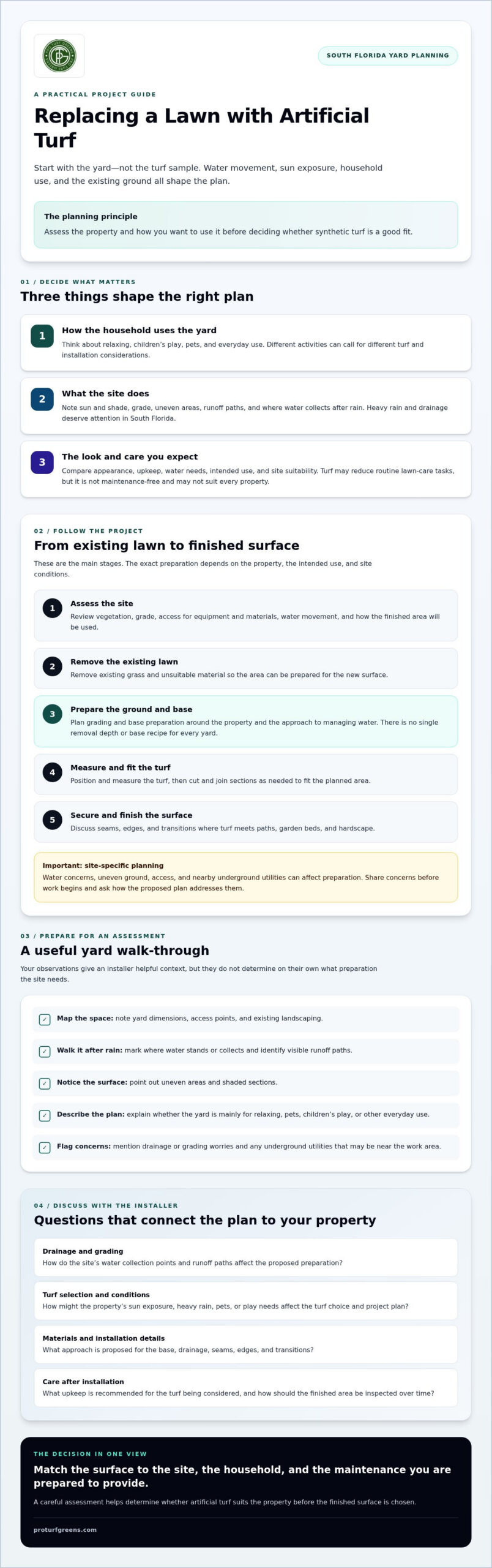
How to Prepare Your Yard for an Artificial Turf Replacement Project
A little preparation can make a site assessment more useful. Before replacing lawn with artificial turf, gather details about how you use the yard and what you’ve observed there. You don’t need technical measurements or a drainage diagnosis. Clear notes, photos, and questions help an installer understand your priorities and evaluate the property.
What should you document before requesting an assessment?
Use this checklist to organize the information you’ll want to share:
- Intended use: Note whether the area is for recreation, pets, entertaining, or mostly low-traffic enjoyment. Identify any spots that need to serve different purposes.
- Yard size and shape: Record available measurements if you have them, and mark irregular boundaries or sections you’d like included or left natural.
- Access: Note gates, narrow passages, steps, and other features that may affect how people and materials reach the work area.
- Existing features: Point out landscaping, paths, drains, hardscape, and other obstacles that could affect the design or edges.
- Site conditions: Record slopes and shaded areas, and photograph uneven or troublesome spots. After rain, note where water collects and any visible runoff paths.
Photos from several angles can help show how different areas connect. If you’ve noticed water collecting, describe when and where you see it. Ask the installer how the concern will be evaluated rather than guessing at its cause.
Which questions should you ask an artificial turf installer?
Use the assessment to understand the proposed plan, not just the finished appearance. Ask how the recommended surface and site preparation fit your intended use and the conditions you’ve observed. Then clarify the project details:
- What existing grass or unsuitable material needs to be removed, and how will removal and disposal be handled?
- How will the base preparation and drainage plan respond to the site?
- How will seams and edges be planned around paths, beds, drains, and hardscape?
- What cleanup should I expect, and what care does the selected turf require?
- Are there site features or household needs that could change the proposed plan?
For additional preparation, review the existing guide “Miami Artificial Turf Consultation: What to Expect in 2026.” Bring your notes and questions to a project discussion with Pro Turf Greens about artificial lawn installation. A focused conversation can connect your observations to a design and preparation plan for your property.
Plan Your South Florida Artificial Turf Installation with Pro Turf Greens
Once you’ve considered how you use the yard and noted any site concerns, discuss those details with a specialist. Pro Turf Greens designs and professionally installs artificial lawns in South Florida, including residential lawn and pet turf. Its local coverage includes Fort Lauderdale, Miami, Palm Beach, Boca Raton, Delray Beach, Jupiter, Palm Beach Gardens, Weston, and Coral Gables.
What can a professional site assessment clarify?
An assessment gives you a chance to discuss the existing lawn, intended activities, access to the work area, and site conditions such as slopes or places where water collects. Those details help shape the conversation about turf selection, design, and preparation. Each property has its own layout and priorities, so the proposed approach should respond to your yard rather than follow a presumed standard package.
Use the discussion to understand what’s known about the site and what needs further evaluation. An assessment can inform planning, but the appropriate design, project duration, and scope depend on the property and should be discussed directly.
How do you take the next step in South Florida?
Bring a few practical notes to your consultation. Photos can show the layout and areas of concern, while a clear description of how you want to use the space helps focus the conversation. Include observations about drainage, access, existing landscaping, and questions about removal, preparation, turf edges, seams, and ongoing care.
Whether you’re considering an open lawn area or a space for pets, Pro Turf Greens can discuss its artificial lawn and pet turf installation offerings in relation to your property. A prepared list of priorities makes it easier to ask focused questions and understand the options without assuming one solution fits every yard.
If you’re ready to discuss your project, request a free artificial turf consultation. Bring your observations and intended uses to start a property-specific conversation about replacing lawn with artificial turf.
Start with a Site-Specific Plan for Your Yard
Replacing lawn with artificial turf is a property decision, not just a surface selection. Start by connecting your household’s priorities, such as pets or recreation, with what you’ve observed about the yard, including access, existing landscaping, and areas where water collects.
A thoughtful assessment can help clarify how removal, base preparation, turf selection, and finishing should be considered for your site. Comparing synthetic turf with natural grass also helps set realistic expectations for appearance, upkeep, water needs, and everyday comfort. There isn’t one answer for every home, so bring your questions and observations to the conversation.
Pro Turf Greens designs and installs artificial turf for residential and commercial clients in South Florida, including residential lawns and pet turf. If you’re ready to discuss your property and intended use, request a free artificial turf consultation. Share your priorities and site observations to discuss the options for your yard.
Frequently Asked Questions
Can you install artificial turf over an existing lawn?
Usually, replacing lawn with artificial turf involves assessing and preparing the site rather than simply covering living grass. Existing vegetation may need removal, and grading, base preparation, and drainage planning depend on the property and installation plan. Covering grass without addressing the site can leave important conditions unresolved. Ask the installer what will happen to existing vegetation and how uneven areas will be evaluated before work begins.
How is a lawn prepared before artificial turf is installed?
Preparation typically begins with a site assessment, followed by removal of the existing lawn, site and base preparation, and fitting the turf. The exact methods and specifications depend on the yard’s conditions and the selected turf system. Before work starts, ask how the plan addresses drainage, edges, access to the work area, and removal and disposal of existing material. A clear explanation helps you understand the proposed scope.
Does artificial turf need drainage in South Florida?
Drainage should be considered during assessment and installation, particularly if water already collects in the yard or heavy rain affects the area. Turf alone can’t guarantee that water will drain as desired. The property, base, grading, and installation details all matter, so ask a local installer to evaluate them together. Point out where water stands after rain and ask how that condition will inform the proposed plan.
Does artificial turf get hot in the Florida sun?
Artificial turf surface temperature can vary with sunlight, material, weather, and site conditions. Don’t assume a particular turf will stay cool or feel comfortable in every situation. Consider how much direct sun the yard receives and whether people or pets will use it during warm weather. When comparing options for a South Florida property, ask the installer about the proposed material and discuss your comfort expectations and intended use.
Is artificial turf a good choice for a yard with dogs?
Artificial turf may suit a dog’s yard, but the fit depends on how the space is used, the selected turf system, drainage, and your care expectations. No surface should be assumed to be odor-proof or maintenance-free. Ask about site preparation and the care instructions for the turf being considered. For additional planning ideas, see the guide “Artificial Turf for Dog Runs in South Florida.”
How long does artificial turf lawn replacement take?
Project timing varies with yard size, access, removal needs, site conditions, weather, and the installation plan. Without details about your property, a standard duration may not be reliable. Ask the installer for a project-specific schedule during your consultation, and clarify which stages are included, from lawn removal and base preparation through turf placement and finishing. This helps you understand what the proposed timeline covers.
How do I choose an artificial turf installer in South Florida?
Compare how thoroughly each installer assesses the site, explains preparation and drainage, matches turf to intended use, and discusses care. Ask what materials and installation specifications are proposed, and how your property-specific questions will be addressed. For projects in Fort Lauderdale, Miami, Palm Beach, Boca Raton, Delray Beach, Jupiter, Palm Beach Gardens, Weston, or Coral Gables, request a consultation and assess the plan rather than relying on broad promises or an unverified quote.