The grass you see isn’t always where problems with cheap artificial grass begin. A low upfront price can be tempting, but unsuitable backing or infill, a poorly prepared base, or an installation that doesn’t account for the site may lead to drainage trouble, uneven areas, fading, or early wear. In South Florida, intense sun, heavy rain, and frequent use can put those hidden details to the test.
It’s reasonable to want a polished lawn without paying for features you don’t need. The challenge is knowing which savings are sensible and which may compromise how the turf performs. Artificial grass works as a system, and the materials and installation beneath the surface matter as much as the visible fibers.
This article explains common signs and causes of turf problems, including how backing, infill, drainage, and site preparation affect performance. You’ll also learn what to consider for different uses, from a residential lawn to pet turf or a putting green, and how project-specific design can account for South Florida’s heat and rain.
Key Takeaways
- Look for flattening, loose seams, uneven areas, standing water, and an inconsistent finish as possible signs of problems with cheap artificial grass.
- Evaluate turf as a complete system. Visible fibers are only one part of how the surface performs.
- Compare specific details such as pile construction, backing, drainage approach, intended use, and installation scope rather than relying on broad quality claims.
- Consider your site’s sun, rain exposure, grade, access, and expected traffic before choosing turf specifications.
- Match the design to the application. A lawn, pet area, putting green, playground, and sports surface have different priorities.
Problems with Cheap Artificial Grass: The Warning Signs You May Notice First
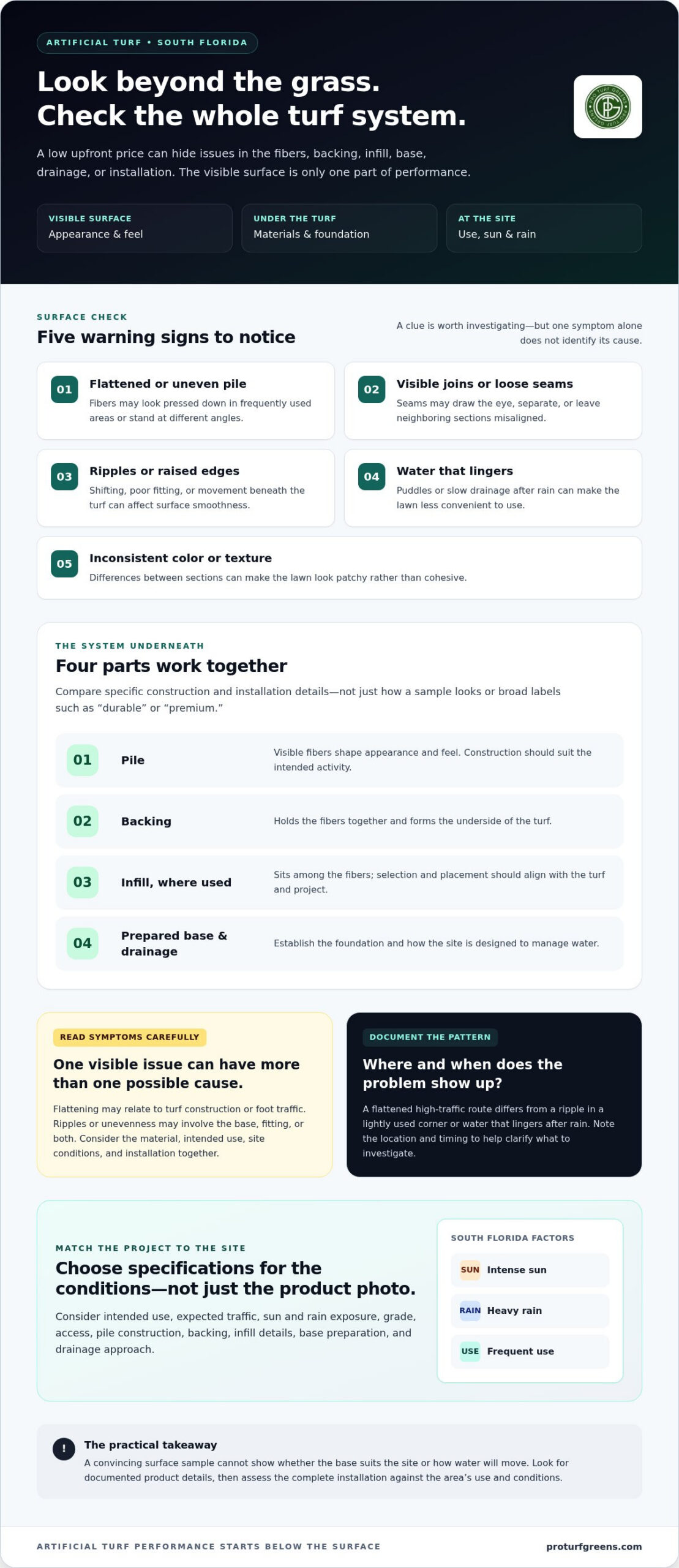
A low purchase price can look appealing, but the finished surface depends on more than the turf roll. Fibers, backing, infill where used, the prepared base, drainage, and installation all contribute to how an artificial lawn looks and feels. Problems with cheap artificial grass may become noticeable as flattening, loose seams, uneven areas, poor drainage, or a finish that looks inconsistent across the yard.
Look closely at how the surface behaves, not just how it appears in a product photo. Artificial turf combines several materials and components, as described in this Artificial turf overview, so one visible symptom can have more than one possible cause.
- Flattened or uneven pile: Fibers may look pressed down in frequently used areas or stand at different angles.
- Visible joins or loose seams: Seams may draw the eye, separate, or make adjacent sections look misaligned.
- Ripples or raised edges: Shifting, poor fitting, or movement beneath the turf can affect the surface’s smooth appearance.
- Water that lingers: Puddles or slow drainage after rain can make the lawn less convenient to use.
- Inconsistent color or texture: Differences between sections can make the lawn look patchy rather than cohesive.
A visible symptom points to a possible problem, but it doesn’t identify the cause on its own. Flattening could relate to the turf’s construction or the amount of foot traffic. Rippling or unevenness may involve the base, how the turf was fitted, or both. Before concluding that the material is low quality, consider the turf, its intended use, site conditions, and installation as a whole.
What does cheap artificial grass look or feel like?
Possible warning signs include pile that looks uneven, fibers that don’t recover well after foot traffic, and joins that remain conspicuous. Pay attention to edges and transitions, too. Exposed edges, infill that shifts from one area to another, or ripples can interrupt the finished look and make the surface feel less even underfoot. These clues are worth investigating, but they don’t prove that every budget product will develop defects.
Which problems affect daily use most?
Standing water or slow drainage can leave a lawn inconvenient after rain, especially if household members want to use the space soon afterward. Loose seams and uneven areas are functional concerns as well as visual ones, since they can disrupt a smooth, consistent surface. Heat and comfort deserve attention in sunny Miami yards, but how a surface feels depends on the specific turf and site. Compare options in the context of how you plan to use the area.
Distinguish appearance issues from performance concerns, then look for patterns. A patch of flattened fibers along a high-traffic route tells a different story from a ripple across a lightly used corner or water that lingers after rain. Note where and when each issue appears. That record can help clarify whether the concern relates to material selection, traffic, site conditions, or installation.
Why Cheap Artificial Grass Can Fail: Materials, Base, and Drainage
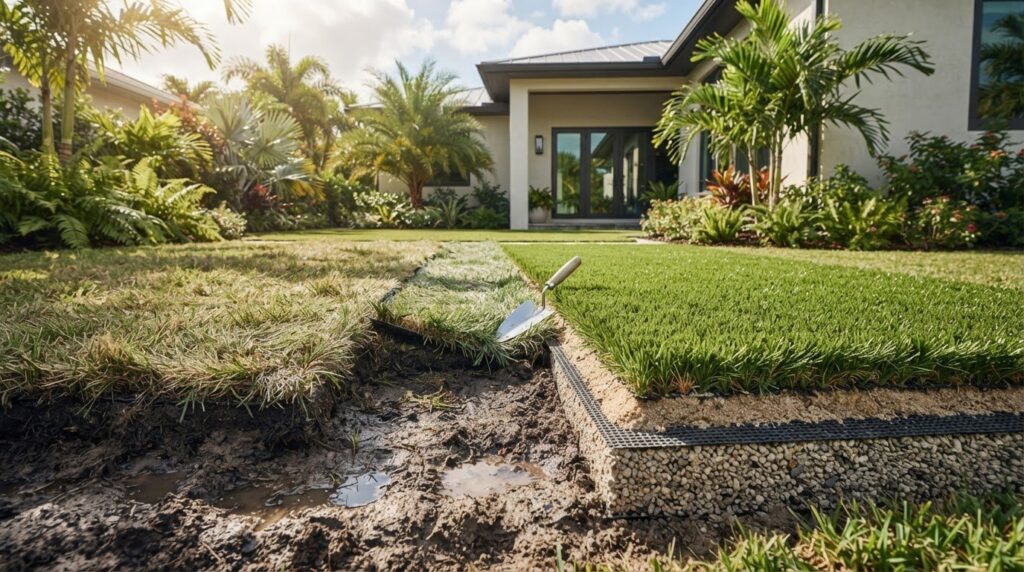
An artificial-turf installation is a system, not simply a roll of green material. The visible turf sits above a prepared base, while backing, infill where applicable, and the site’s drainage approach all influence how the finished surface functions. If one part is poorly suited to the project, the result may disappoint even when the grass looked convincing before installation.
The visible grass can show what a surface looks like, but it can’t establish how well the complete installation was designed or built. A flat-looking sample won’t reveal whether the base suits the site, how water is intended to move, or whether the selected turf fits the area’s use. Problems with cheap artificial grass can stem from material choices, preparation, installation, or several factors together.
- Pile: The visible fibers shape the surface’s appearance and feel. Their construction should suit the intended activity.
- Backing: This layer holds the fibers together and forms the underside of the turf. Its details matter as part of the overall system.
- Infill: Where used, infill sits among the fibers. Its selection and placement should align with the turf and project.
- Prepared base and drainage: These establish the foundation and how the site is designed to manage water.
How can turf materials influence performance?
Each component has a different role, so compare documented specifications rather than relying on appearance or broad labels such as “durable” or “premium.” Look for stated pile, backing, and infill details, then consider what they mean for the intended use. Claims about UV resistance, fiber resilience, or material composition should be supported by product documentation. Color or a brief description alone can’t establish those qualities.
Material decisions can also have environmental considerations beyond day-to-day use. Utah State University Extension’s overview of artificial turf water-quality impacts discusses potential concerns associated with artificial-turf systems. It’s a useful reminder to consider the materials and the site together, rather than treating the visible fibers as the whole product.
Why do base preparation and drainage matter?
Before turf goes down, the site needs preparation suited to its existing grade, ground conditions, and planned use. An unstable or uneven base may contribute to movement or an inconsistent surface. In Miami and across South Florida, rainfall makes a site-appropriate drainage plan especially relevant. The right approach depends on the property and system. No single backing or base design can be assumed to prevent pooling in every setting.
A considered installation brings the site, materials, and intended use into one plan. Pro Turf Greens combines custom design, site preparation, material selection, and professional installation for turf projects. Project-specific turf design helps align those decisions with the conditions and use of your space.
Cheap vs. Well-Specified Artificial Grass: What Should You Compare?
A meaningful comparison looks beyond color, softness, or a “premium” label. Review the details that explain how the turf is constructed, how the project will be installed, and whether the proposed system fits your site. This gives you a clearer basis for comparing options than appearance alone and can help you spot omissions that may contribute to problems with cheap artificial grass.
Which product details deserve a closer look?
Product documentation helps separate specific information from marketing language. Look for stated fiber composition, pile characteristics, and backing details where available. A description such as “durable” doesn’t tell you what the fibers are made from or how the product is intended to be used. Check numerical claims about dimensions or performance against the product documentation before relying on them.
Then relate those details to the site. A residential lawn used for casual gatherings has different priorities from a pet area, putting green, or sports surface. The goal isn’t to find one specification that suits every application. It’s to understand why the selected materials fit the expected traffic and activity.
How does installation scope change the comparison?
A proposal that describes turf alone may leave important work unclear. Compare the full scope: what site preparation is included, which materials are part of the project, how installation is addressed, and what finishing work is planned. These details help explain how the visible product connects to the finished surface.
For example, two options may describe similar-looking turf but differ in how they account for the site and its preparation. Comparing only the turf can hide that distinction. Pro Turf Greens brings design, materials, site preparation, and professional installation together, tailored to the project. The South Florida artificial turf consultation guide outlines what to expect when planning a local project.
How to Reduce Artificial Grass Problems in South Florida
A well-planned turf project starts with the property, not a product photo. Sun exposure, rainfall, existing grade, access, and everyday activity can all shape which materials and installation approach make sense. Assess the site before selecting the turf so the system is matched to the conditions it will face.
Use this sequence to reduce avoidable issues and make decisions in context:
- Identify how the space will be used. Consider who will use it, how often, and what activities it needs to support. A pet area has different priorities from a putting green or playground.
- Assess the site. Note sunny and shaded areas, existing surfaces, slope, runoff paths, and access for installation. Consider how rain moves across the property rather than assuming every yard needs the same drainage approach.
- Select suitable specifications. Compare product details with the intended use and expected traffic. Choose materials as part of a complete system, not only for their appearance.
- Plan base preparation. The prepared surface should account for existing conditions and the project design. Site preparation is central to supporting the finished turf.
- Maintain the installed surface. Follow the product’s care instructions, remove debris routinely, and pay attention to changes such as lifted edges or shifted infill.
What should a site assessment consider?
Start by observing where water travels during and after rain, whether the area slopes toward or away from nearby surfaces, and what lies beneath the proposed turf. Existing paving, planting beds, and access points can affect project planning. Sun exposure and intended activity matter, too. A lawn designed for everyday use has different demands from a surface planned for focused practice or active play. Drainage decisions should respond to the specific property, not a one-size-fits-all assumption.
For pet areas, plan around how the space will be used and maintained. A dog run has different considerations from a putting green or playground, so its design should reflect its purpose. The South Florida dog-run turf guide offers additional context for pet-focused planning.
Which maintenance habits help protect the finished surface?
Keep up with routine debris removal and follow the care guidance for the installed product. If you notice displaced infill, lifted edges, or a seam that appears to be changing, note it and address it promptly. These habits can help you monitor the surface, but maintenance can’t make unsuitable materials or inadequate installation appropriate after the fact.
Pro Turf Greens designs and installs turf for South Florida properties, with project plans shaped around the site and intended use.
A Better Artificial Grass Solution Starts with Project-Specific Design
A successful turf project is shaped by what happens beneath and around the visible surface. Pro Turf Greens brings custom design, site preparation, material selection, and professional installation together, considering how the property will be used and what its conditions call for. This coordinated approach helps homeowners look beyond the initial purchase and consider the complete system.
How does custom design match turf to its use?
Different spaces have different priorities. A residential lawn may be planned around appearance and everyday activity, a pet area around its intended use and care, a putting green around golf practice, and playground or sports turf around recreational play. Layout and expected traffic influence project planning, as do site conditions such as grade, sun, and rain exposure. There isn’t one turf specification that suits every property or application.
Project-specific planning connects the materials and preparation to the area’s purpose. A design for a putting green, for example, has a different goal from a general lawn or recreational surface. Pro Turf Greens designs and installs turf for lawns, pet areas, putting greens, playgrounds, and sports use, tailoring the design and materials to each project rather than treating every space alike.
What can readers expect from a consultation?
A consultation is an opportunity to discuss your goals, site conditions, and how you plan to use the space. That conversation can clarify which decisions matter for your project, from layout to site preparation and material selection. Arrive with questions about traffic, shade, rain, or planned activities to make the discussion more useful.
For homeowners considering a golf practice area, the backyard putting-green installation guide offers a relevant starting point. For other applications, a tailored discussion keeps the project centered on the property and its intended use. Addressing these details early helps focus decisions on the complete installation, not just the surface material.
Pro Turf Greens offers free consultations by phone or through its website. To discuss your goals and site, request a South Florida turf consultation or call 561-221-1010.
Plan a Turf Project That Fits Your Home
Before choosing a surface, picture how you want the space to work in everyday life. A yard used for family gatherings may call for different priorities than a quiet practice area or a dedicated place for pets. Starting with that vision gives you a practical way to weigh appearance, activity, and site needs, rather than letting a low initial price make the decision for you. It can also turn concerns about problems with cheap artificial grass into a clearer plan for a surface designed around your priorities.
The next step is a conversation with Pro Turf Greens about how a residential or commercial turf project might take shape. Design, preparation, materials, and installation are considered together. Bring your ideas, questions, and a sense of how you want to use the space.
Request a free artificial turf consultation with Pro Turf Greens and take the first step toward a thoughtfully planned outdoor space. Your project can begin with a clear vision and a solution tailored to it.
Frequently Asked Questions
Is cheap artificial grass always a bad choice?
No. A lower-cost option may suit a lightly used area if its documented features fit the project and the installation is planned appropriately. The key is understanding what’s included rather than assuming price alone predicts quality. A decorative corner used occasionally has different demands from a path used daily. Compare product information and project scope with your intended use before deciding whether a lower-cost option makes sense.
Can cheap artificial grass cause drainage problems?
It can contribute to drainage concerns, but turf price alone doesn’t explain every puddle. The site’s grade, existing runoff patterns, turf details, and installation all affect how water moves. After rain, note where water remains and whether the same spots recur. A small, isolated wet area may have a different cause from pooling across a broad section. That observation can help guide an assessment of the site and installation.
How long does cheap artificial grass last?
There isn’t one reliable lifespan for every low-cost turf product. Longevity depends on its materials, how often and intensively it’s used, exposure to site conditions, and the quality of installation and care. Treat a fixed lifespan claim cautiously unless product documentation explains what it applies to. Compare the stated specifications and terms for the particular product, and consider whether its intended use matches your household’s expectations.
What happens if artificial grass is installed without proper base preparation?
An inadequately prepared base can contribute to a surface that shifts, feels uneven, or changes shape under regular use. Water may also collect in areas where the finished surface doesn’t account for the property’s grade and runoff. For example, a low point in the yard can remain troublesome even if the turf itself appears intact. If changes develop, note their location and pattern to help identify what needs attention.
Does artificial grass get hot in South Florida?
Yes, artificial grass can feel hot under direct sun, though the experience varies with the product, shade, and conditions at the site. Across Miami, Fort Lauderdale, Palm Beach, Boca Raton, Delray Beach, Jupiter, Palm Beach Gardens, Weston, and Coral Gables, sun exposure is worth considering when planning an outdoor space. Observe how sunlight falls through the day and consider shade or how the area will be used during sunny periods.
Can artificial grass be used for both pets and a putting green?
Both uses can be included in a property’s overall turf plan, but a single surface may not suit both equally well. Pet activity and golf practice place different demands on layout and use. Separate zones can help each area serve its purpose without asking one specification to do everything. During planning, consider where pets will spend time, where putting practice will happen, and how people will move between the spaces.
How can I tell whether an artificial grass problem is from the turf or the installation?
A visible issue alone often can’t identify its source. Compare the affected area with nearby sections and note when the change appears: after rain, along a join, or where people regularly walk. Check the product documentation for relevant material details, too. A wider assessment can consider the turf, its backing and infill where applicable, the base, and the site conditions together, rather than assuming the grass itself is responsible.