Artificial turf may remove grass from the picture, but it can’t make a yard allergy-proof. If grass pollen, weeds, or mowing leave you uncomfortable, it’s natural to look for allergy-free lawn alternatives. Start by identifying what seems to trigger your symptoms: replacing grass may reduce exposure to some sources, but airborne pollen and mold concerns related to South Florida’s humidity can still affect outdoor comfort.
You shouldn’t have to trade one problem for another. A surface that suits your priorities still needs to handle your yard’s heat, heavy rain, drainage, and everyday use. This guide compares synthetic turf, living groundcovers, and hardscape by upkeep, drainage, comfort, and appearance. You’ll learn what each option may help with, what it can’t promise, and how to weigh your property’s conditions before choosing. Whether you’re planning a yard in Fort Lauderdale, Miami, Palm Beach, Boca Raton, Delray Beach, Jupiter, Palm Beach Gardens, Weston, or Coral Gables, the best fit balances your concerns with the landscape you want to live with.
Key Takeaways
- “Allergy-free” usually means reducing selected triggers, not removing every outdoor allergen.
- Compare synthetic turf, hardscape, low-pollen planting, and mixed designs by upkeep, drainage, comfort, and appearance.
- Use your likely triggers and yard conditions to narrow down allergy-free lawn alternatives for your South Florida property.
- Separate health concerns from landscaping priorities, and seek medical guidance rather than trying to diagnose symptoms through yard choices.
- A thoughtfully designed artificial turf project can reduce mowing needs, while site conditions, intended use, and drainage still shape the right solution.
What Does “Allergy-Free Lawn Alternative” Really Mean?
“Allergy-free” can sound like a complete solution, but a landscape can only reduce particular sources of exposure. Replacing a pollen-producing lawn may change what grows in your yard; it won’t stop pollen from arriving on the breeze or remove every substance that can bother a sensitive household. In this article, allergy-free lawn alternatives means surfaces and planting choices that may help limit selected triggers, not a promise of an allergen-free outdoor space.
It helps to distinguish between potential triggers. Pollen comes from grasses, weeds, trees, and other plants. Mold spores are a separate concern and can be associated with damp organic debris. Dust can settle on outdoor surfaces, while pet dander may be carried into the yard or left where animals spend time. These sources call for different considerations, so changing the lawn surface alone may not address them all.
Which yard triggers can affect allergy-sensitive households?
Some grasses and weeds produce pollen that can contribute to seasonal exposure. Pollen also travels beyond property lines: trees and plants in nearby yards or public spaces may release it into the air around your home. Damp leaves, thatch, and other organic material are separate potential sources of mold spores, especially in a warm, humid climate. A different groundcover, such as clover, changes the planting mix rather than eliminating outdoor allergens; the overview of Clover Lawn Benefits describes it as an alternative to conventional grass.
Can changing the lawn eliminate allergy symptoms?
No. Changing a lawn may reduce exposure to some triggers, such as pollen from plants removed from the property, but it can’t guarantee relief from symptoms. Other plants may still release pollen, and mold, dust, or pet dander may remain. People can also respond differently to the same environment, so a surface choice shouldn’t be treated as a diagnosis or medical treatment. If symptoms are persistent or severe, consult a healthcare professional about possible causes and appropriate care.
No outdoor lawn can promise zero allergens, because some triggers can come from beyond the yard and others depend on what grows or collects within it. Start by considering which concerns matter to your household, then weigh them against drainage, maintenance, comfort, and how you want to use the space. The aim is a yard that better suits your needs, not a material that removes every possible trigger.
Compare Allergy-Conscious Lawn Alternatives for South Florida
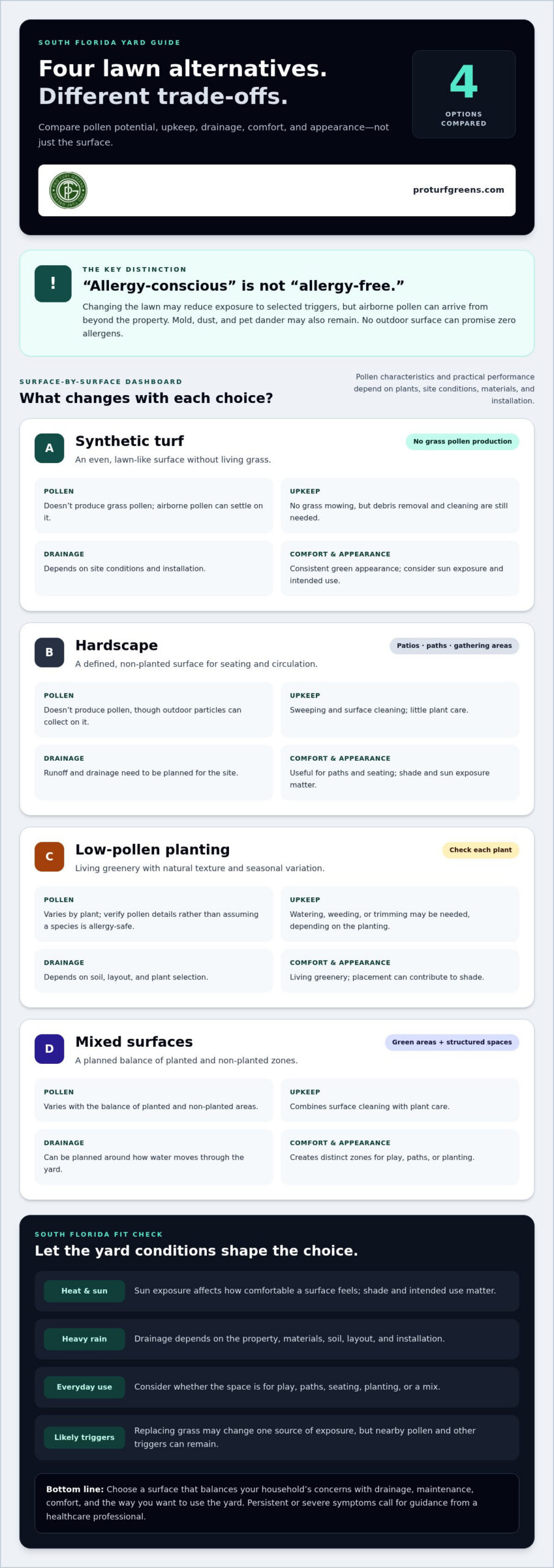
Each surface changes a different part of the yard, so compare more than its potential to reduce grass pollen. Synthetic turf doesn’t produce grass pollen, but pollen from nearby plants and other debris can settle on it. Hardscape removes planted lawn from an area, while groundcovers and mixed designs retain living greenery with different upkeep needs. No option is allergy-proof, and pollen characteristics should be considered for the specific plant species and local conditions.
Miami’s heat, humidity, and heavy rain also shape the decision. Sun exposure affects how comfortable a surface feels, while drainage depends on the property, materials, and installation. Use this table as a starting point, then consider how each option fits your own yard.
| Option | Pollen potential | Upkeep | Drainage | Comfort | Appearance |
|---|---|---|---|---|---|
| Synthetic turf | Doesn’t produce grass pollen; airborne pollen can settle on it. | Needs debris removal and cleaning; no grass mowing. | Depends on site conditions and installation. | Consistent green surface; consider sun exposure and intended use. | Even, lawn-like appearance. |
| Hardscape | Doesn’t produce pollen, though outdoor particles can collect on it. | Sweeping and surface cleaning; little plant care. | Plan runoff and drainage for the site. | Useful for paths and seating; shade and sun exposure matter. | Defined patios, paths, and gathering areas. |
| Low-pollen planting | Varies by plant; verify pollen details rather than assuming a species is allergy-safe. | May require watering, weeding, or trimming, depending on planting. | Depends on soil, layout, and plant selection. | Living greenery; placement can contribute to shade. | Natural texture and seasonal variation. |
| Mixed surfaces | Varies with the balance of planted and non-planted areas. | Combines surface cleaning with plant care. | Can be planned around how water moves through the yard. | Offers distinct zones for play, paths, or planting. | Combines green areas with structured spaces. |
Synthetic turf: less lawn mowing, but not allergen-proof
Synthetic turf isn’t living grass, so it doesn’t produce grass pollen. Pollen, dust, leaves, and pet debris may still collect on the surface, which means cleaning remains part of care. Drainage should be considered during project design, especially in a rainy, humid climate. A custom turf layout can be planned around the yard’s conditions and how the space will be used.
Hardscape, groundcovers, and mixed planting
Patios and paths create practical areas for seating and circulation, while planted sections preserve greenery and may provide shade depending on their design. Groundcovers are a broad category, not a guarantee of low pollen; consider the suitability and pollen characteristics of each plant for South Florida. Reducing lawn area can create a deliberate mix of surfaces, but it also means balancing surface cleaning with the care living plants need.
For homeowners considering a synthetic lawn, custom artificial turf design can bring yard layout, intended use, and drainage into the planning conversation.
What Are the Tradeoffs of Allergy-Friendly Lawn Alternatives?
Changing the lawn can alter which triggers come from plants on your property, but it won’t remove every outdoor allergen. Compare options by project scope, ongoing care, comfort underfoot, appearance, water movement, and how you plan to use the yard. These criteria matter independently: a surface that reduces mowing may still need cleaning, while a planted area can preserve greenery but require continued plant care.
Synthetic turf trades mowing and living grass for surface cleaning and careful drainage planning; hardscape trades greenery for defined, practical areas; planting trades a more structured surface for ongoing care and species-specific pollen considerations. Mixed layouts can balance those compromises, but they also combine the upkeep needs of their different materials.
Consider project scope as well as recurring work. Replacing one play area is different from redesigning most of a yard, and each choice has its own installation and maintenance considerations. A realistic goal for allergy-free lawn alternatives is a landscape that better fits your priorities, not one that promises to eliminate symptoms.
Does artificial turf get hot or collect pollen?
Surface temperature can vary with sun exposure, shade, and material, so don’t assume synthetic turf will feel cooler or more comfortable in every part of a South Florida yard. It doesn’t produce grass pollen, but airborne pollen, dust, leaves, and pet debris can settle on it. Cleaning needs depend on what collects and how the space is used. When planning a turf area, consider whether it will sit in full sun and how you’ll keep it clear of debris.
How do rain and humidity affect South Florida yards?
Heavy rain makes water movement a central design consideration, not an afterthought. Drainage needs depend on the property and planned layout, so evaluate them alongside soil, sun exposure, shaded areas, and intended use. Persistent moisture in damp organic material may also contribute to mold concerns. A yard that stays wet or shaded can present different upkeep considerations from a sunny, open space.
Picture ordinary use as well as weather: children playing, pets moving through the yard, or guests gathering on a patio. This practical view helps clarify which tradeoffs are acceptable and whether a combination of turf, planting, and hardscape makes more sense than one surface throughout.
How to Choose the Right Lawn Alternative for Your Yard
A good decision starts with two separate questions: what might be triggering symptoms, and what should the yard do for your household? Landscaping can change the surfaces and plants on your property, but it can’t diagnose allergies or guarantee symptom relief. Use these steps to build a practical shortlist for your South Florida home.
- 1. Track concerns, not diagnoses. Note when symptoms seem to occur and what was happening outdoors, then discuss persistent or troubling symptoms with a healthcare professional. A symptom diary can help organize observations, but it can’t establish the cause on its own.
- 2. Map how the yard works. Mark play and pet areas, existing plants, paths, and places where water collects or runs after rain. Note which zones receive direct sun and which stay shaded. These details help reveal where a surface or planting change may be most useful.
- 3. List household needs. Consider whether children need room to play, pets need a dedicated run, or your family wants space for seating and entertaining. Think about comfort underfoot and how much time you can devote to cleaning surfaces or caring for plants. A layout can combine different surfaces rather than forcing one choice across the whole yard.
- 4. Compare realistic tradeoffs. Weigh upkeep, appearance, drainage, comfort, and how much greenery you want to retain. Synthetic turf may reduce the need to mow a living grass surface, while planted areas preserve natural texture and hardscape creates defined paths or gathering spaces. Each option still has care and site-planning needs.
- 5. Shortlist, then refine the design. If you don’t want to replace all planted space, consider a mixed layout, such as a defined turf area with planted borders or a hardscape path. Pet owners planning a dedicated run can also read about artificial turf for dog runs and consider how the space will be used, cleaned, and drained.
There’s no single answer for every property. A thoughtful plan connects your household’s priorities with the yard’s shade, soil, drainage patterns, and intended use, without treating any surface as a cure for allergies. Pro Turf Greens designs artificial turf projects around site conditions, layout, and use. Explore custom artificial turf design for your South Florida yard.
Plan an Allergy-Conscious Artificial Turf Project with Pro Turf Greens
Synthetic turf is one option for homeowners who want to reduce mowing and replace a living grass surface. It doesn’t produce grass pollen, but it can’t stop pollen from nearby trees and plants, or other outdoor allergens, from entering the yard. The goal is a considered landscape design, not an allergy-free guarantee.
Pro Turf Greens designs and installs artificial turf for residential lawns and pet areas across South Florida. A well-planned project begins with your priorities: which parts of the yard need a usable surface, how your household will use them, and what site conditions may affect the layout. These details matter as much as the surface choice itself.
What a custom turf design can take into account
Every property has its own layout, sun and shade patterns, surrounding vegetation, and drainage considerations. A design can account for whether the space is intended for everyday lawn use or pets, where people and animals will move, and how water travels across the site. If you’re planning a dedicated dog run, the article Artificial Turf for Dog Runs in South Florida: The 2026 Pet Owner’s Guide offers a pet-focused perspective to consider alongside your yard’s needs.
Make the next step a site-specific conversation
Before discussing a project, list what matters most: reducing mowing, creating a pet-friendly area, retaining planted space, planning for drainage, or shaping part of the yard for daily use. This keeps the conversation focused on both your goals and the property itself.
Custom design connects those priorities with the site’s conditions and intended use. It also helps clarify whether synthetic turf suits the area you have in mind or whether a mixed layout better fits your plans. Artificial turf remains one choice among several, and it won’t prevent pollen or other allergens from reaching your outdoor space.
If you’re considering artificial turf as one of your allergy-free lawn alternatives, Pro Turf Greens offers a free consultation to discuss your yard and project goals. Schedule a free consultation to explore a site-specific turf design for your South Florida home.
Choose a Yard That Fits Your Needs
The most useful lawn change starts with realistic expectations: no surface can remove every outdoor allergen, and allergy-free lawn alternatives are best understood as ways to reduce selected exposures. Compare synthetic turf, hardscape, planting, and mixed layouts by what matters on your property, including upkeep, drainage, comfort, appearance, and everyday use.
Synthetic turf may reduce mowing and replace a living grass surface, but pollen and other debris can still reach the yard. In South Florida, site-specific design matters too. Sun, shade, heavy rain, intended use, and the way water moves across the property all help shape a practical plan.
Pro Turf Greens provides custom artificial turf design and installation for South Florida homes, including residential lawn and pet-turf applications. Schedule a free consultation with Pro Turf Greens to discuss your priorities and explore whether turf fits your project.
Frequently Asked Questions
Is there a truly allergy-free lawn?
No outdoor lawn can be guaranteed allergen-free. Grass and weed pollen may come from plants on the property, while pollen from nearby trees and landscapes can travel into the yard. Mold spores, dust, and pet dander are separate considerations. The aim of allergy-free lawn alternatives is to reduce selected exposures, not eliminate every possible trigger. Symptoms and triggers vary, so no surface choice can guarantee relief.
Can artificial turf help with grass allergies?
Artificial turf doesn’t produce grass pollen because it isn’t living grass, and replacing a lawn may reduce contact with grass on that property. It can also reduce the need to mow a living grass surface. However, pollen from surrounding plants, dust, leaves, and pet debris can still reach or settle on the turf. It may change some yard exposures, but it can’t guarantee symptom relief or replace medical guidance.
What is the best ground cover for people with allergies?
There isn’t one ground cover that’s best for every allergy-sensitive household. Plant pollen varies by species, and conditions such as shade, soil, and drainage also affect whether a ground cover suits a particular South Florida yard. Options to research locally include frogfruit, perennial peanut, and twinflower. Check plant-specific pollen information before choosing, and discuss persistent symptoms with a healthcare professional rather than relying on a plant choice to address them.
Can mulch or hardscaping reduce lawn allergy triggers?
Hardscape can replace planted lawn in selected areas, reducing the amount of vegetation there, but pollen can still blow in from beyond the property. Mulch doesn’t eliminate allergens, and damp organic material may contribute to mold concerns. For households concerned about mold, gravel, crushed stone, or rock may be worth considering in place of moisture-retaining wood mulch. Plan any surface around drainage, use, and the upkeep it will need.
Does artificial turf collect pollen?
Yes. Artificial turf doesn’t produce pollen, but airborne pollen can settle on its surface, along with dust, leaves, and pet debris. The amount of debris depends on the surrounding landscape and how the yard is used. Cleaning can help remove what accumulates, but turf shouldn’t be treated as a barrier to allergens or as an allergen-free surface. Include routine debris removal in your expectations for upkeep.
Is artificial turf suitable for a South Florida yard?
It can be an option if the design accounts for the property’s drainage, sun and shade, layout, and intended use. South Florida heat, humidity, and heavy rain make site conditions important to consider. Pro Turf Greens designs and installs artificial turf for residential lawns and pet areas in Miami, Fort Lauderdale, Palm Beach, Boca Raton, Delray Beach, Jupiter, Palm Beach Gardens, Weston, and Coral Gables. Turf still needs care and doesn’t block outdoor allergens.
How can I make my yard more comfortable if I have allergies?
Start by noting when symptoms occur and discussing persistent or severe concerns with a healthcare professional. Then map where you spend time, where pets play, which areas are shaded, and where water collects after rain. Compare turf, hardscape, planting, or a mixed layout by upkeep, comfort, drainage, and the greenery you want to retain. A well-planned yard can better fit your household, but no landscape choice can guarantee an allergen-free environment.