What if a faded patch doesn’t mean your whole lawn needs to go, but a smooth-looking surface is hiding a bigger problem? The signs your artificial turf needs replacement can be easy to misread. Matting, discoloration, and loose seams may be localized wear, while recurring drainage issues or uneven areas can point to concerns beneath the turf.
It’s reasonable to wonder whether a repair will restore the surface or only postpone a larger project. Age alone doesn’t settle the question. The better test is whether the turf still looks and performs as it should for its intended use, whether that’s a lawn, pet area, playground, sports surface, or putting green.
This guide explains how to spot meaningful deterioration, distinguish isolated damage from widespread problems, and decide what to do next. You’ll learn what to inspect, which patterns may point to issues beyond the visible fibers, and what to record before planning a repair or replacement. A clear assessment of the surface and how you use it makes the next decision more practical.
Key Takeaways
- Use condition and performance, not age alone, to judge whether turf replacement is worth considering.
- The signs your artificial turf needs replacement can include fading, flattened fibers, opening seams, or exposed backing. The extent and pattern of each issue matter.
- Compare isolated damage with widespread or recurring problems to decide whether targeted attention may be enough or broader replacement planning is warranted.
- Document affected areas, drainage concerns, and how the space is used to make an inspection more useful.
- Replacement planning can be an opportunity to tailor the surface to its purpose, from a lawn or pet area to a putting green.
When should artificial turf be replaced? Look beyond its age
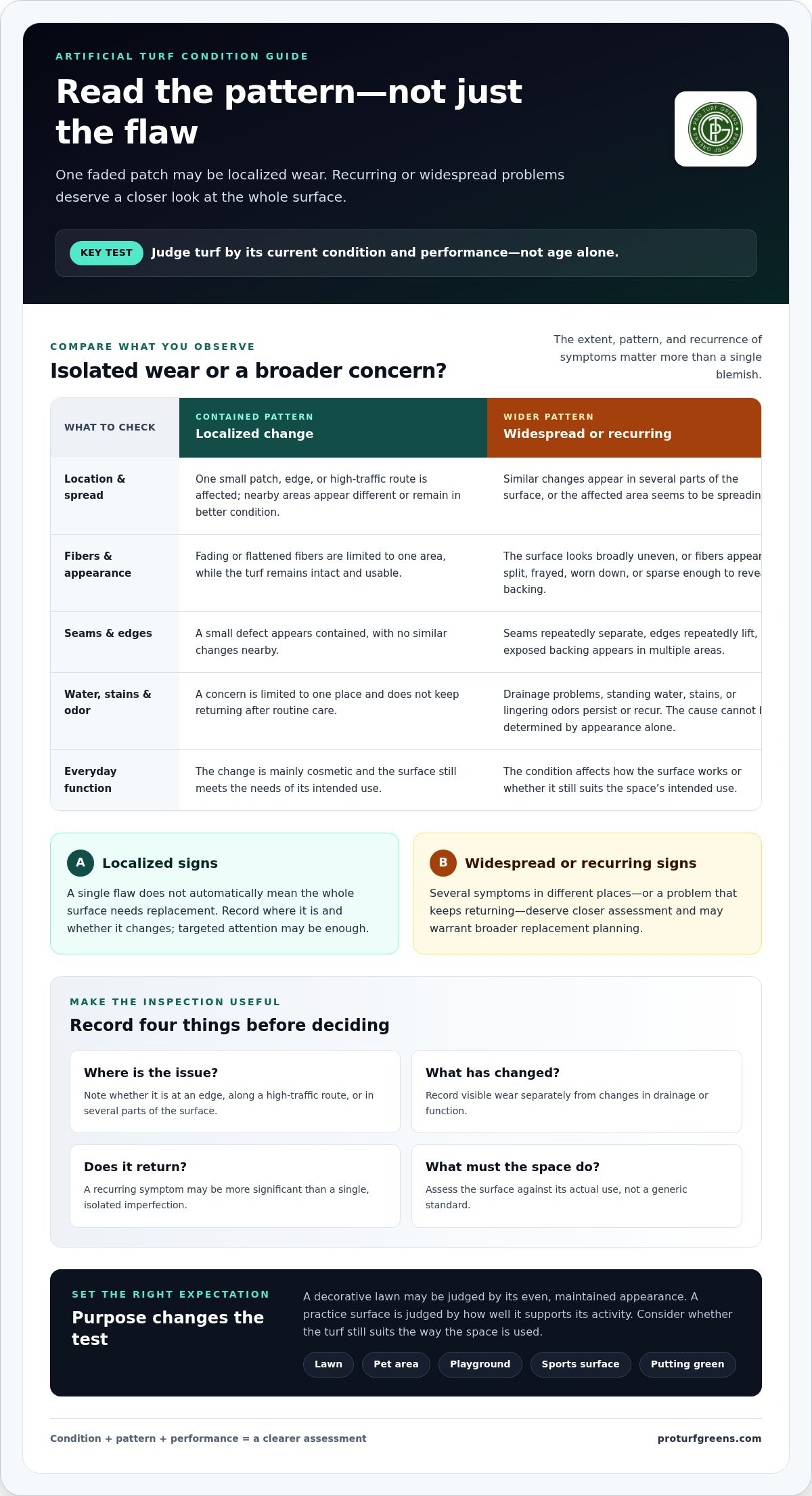
Artificial turf replacement is best treated as a condition assessment, not a date on the calendar. A surface may still serve its purpose despite some fading or flattened fibers. Another may look fine at first glance but have recurring seam, drainage, or stability problems. The key question is whether the turf and the area beneath it continue to meet the needs of the space.
Age can provide context, but it can’t establish a replacement deadline on its own. Turf experiences different levels of foot traffic and sun exposure, and maintenance, installation, and intended use also matter. A lightly used decorative lawn and a frequently used sports surface won’t necessarily show wear at the same pace. Assess the condition now, whether it is changing, and whether it affects everyday use.
What counts as a meaningful sign of turf deterioration?
A change in appearance is worth noting, but it doesn’t automatically mean the whole surface needs replacement. Check whether fibers still look consistent after routine care, whether seams remain closed, and whether backing is visible. Observe how water moves across the area, too. One small defect may be localized; several symptoms in different places, or a problem that keeps returning, deserve closer attention.
Separate what you see from what you experience. A faded corner may be mainly cosmetic if the turf remains intact and usable. A seam that repeatedly opens or a low spot where water regularly collects can affect function and merits further assessment. The Artificial Turf Overview provides general background on turf materials and uses, but judge your own surface by its visible condition and performance.
Why surface use matters when judging replacement
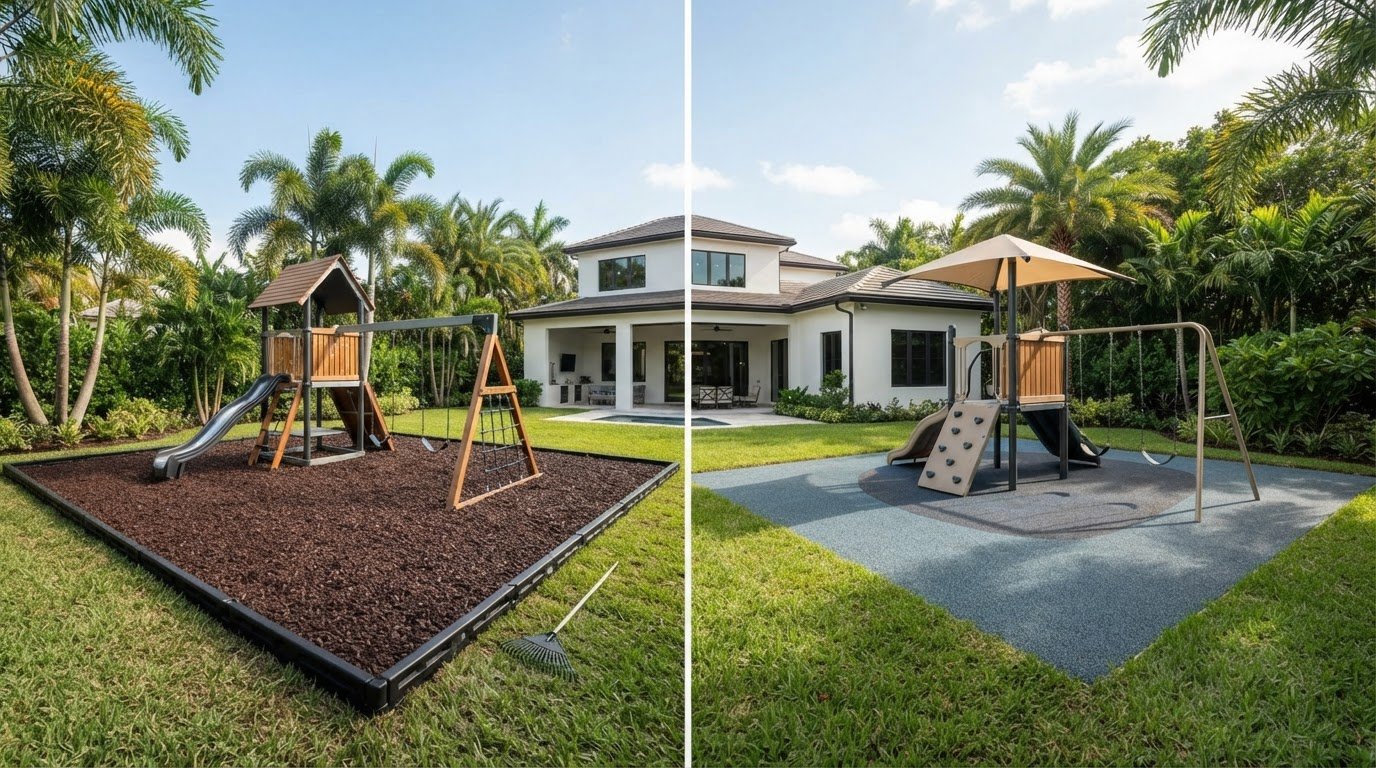
Expectations depend on what the turf is meant to do. A decorative lawn is often judged by its even, maintained appearance, while a practice surface is judged by how well it supports the intended activity. For a putting green, consider whether its condition still suits your practice. In pet and play areas, observe whether the surface remains practical for everyday use.
Before deciding, consider these questions together:
- Where is the issue? Note whether it’s limited to an edge, a high-traffic route, or several parts of the surface.
- What has changed? Record visible wear separately from changes in drainage or function.
- Does the issue return? A recurring symptom may be more significant than a single, isolated imperfection.
- What does the space need to do? Assess the surface against its actual use, whether it’s a lawn, pet area, playground, sports surface, or putting green.
These observations put the signs your artificial turf needs replacement into context. The goal isn’t to treat every flaw as a failure. It’s to determine whether the issue is isolated or part of a broader decline in condition and usability. That distinction gives you a more informed starting point for considering repair or replacement.
Signs your artificial turf needs replacement: appearance and performance
A single flaw doesn’t tell the whole story. Fading, flattened fibers, a stain, or one lifted edge may affect only a small area. The more useful questions are whether the issue is spreading, returning, or changing how the surface works. The signs your artificial turf needs replacement become more meaningful when several symptoms occur together or appear in different parts of the turf.
Visible wear: fading, matting, and damaged fibers
Look across both high-use and less-used areas. Compare walkways, play zones, or frequently used practice spots with sections that receive less foot traffic or are more protected. Differences in color and texture can help show whether wear is concentrated or widespread, but they don’t determine the need for replacement by themselves.
Fibers can lie flat in regularly used areas without being irreversibly damaged. Check whether they appear compressed or instead look split, frayed, worn down, or consistently displaced. A broad, uneven appearance deserves more attention than a small patch if it affects the overall look or usability of the space.
- Compare locations: Check busy areas against quieter sections of the same surface.
- Look closely at fibers: Note whether they’re flattened, visibly damaged, or sparse enough to reveal the backing.
- Track changes: Record whether discoloration or uneven wear is stable or appears to be spreading.
Functional problems: seams, odors, and drainage
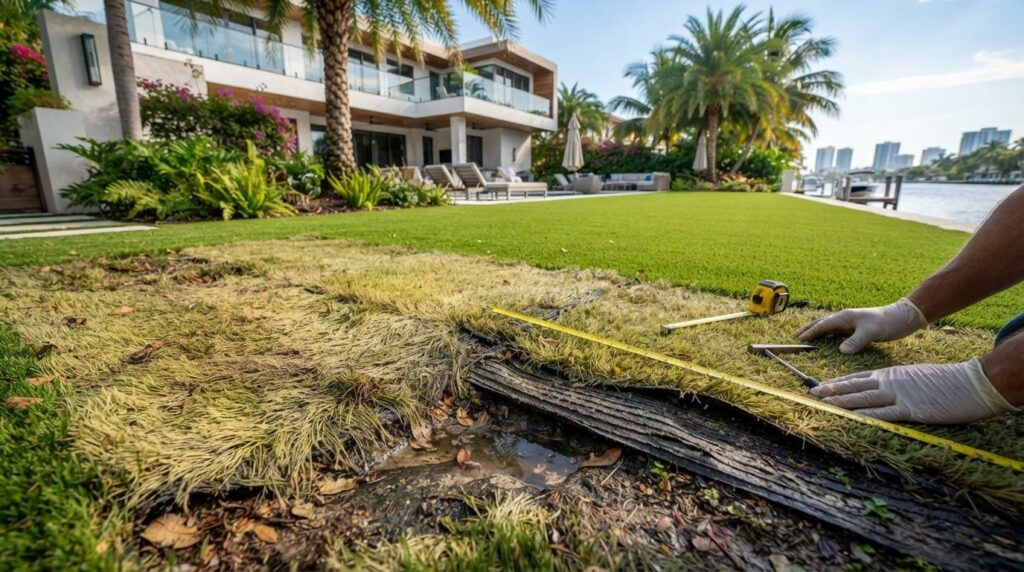
Seams that separate, edges that repeatedly lift, or exposed backing call for a closer look. Note how much of a seam is open and whether nearby sections show similar changes. A small defect may be contained. Repeated separation or visible backing across multiple areas can point to a broader concern that needs assessment.
Pay attention to persistent odors, recurring stains, and changes in drainage. Note whether the concern remains after routine care, returns in the same place, or occurs across a wider area. Standing water or a lingering smell may involve more than the visible fibers, but appearance alone can’t establish the cause. An assessment should consider the turf and the area beneath it rather than assume a specific problem.
Several widespread or recurring symptoms can matter more than one isolated blemish. Flattened fibers in one busy spot may be a localized change. Flattening across the surface combined with opening seams and repeated drainage concerns deserves a broader review. Consider the pattern, persistence, and effect on everyday use together.
Keep a simple record of the locations and symptoms you notice. Photos make changes easier to compare over time. If replacement is being considered, it’s also a chance to rethink how the area should function. Explore custom artificial turf design and installation as a starting point for planning a surface around its intended use.
Repair or replace artificial turf? Decide by scope and recurring problems
One worn spot doesn’t automatically mean the entire area needs replacement. Start by defining the boundaries of the problem: is it limited to one section, or do similar changes appear across the surface? Then consider whether the issue is stable or keeps returning. The extent and recurrence of a problem help guide the repair-or-replacement discussion.
Use this comparison as a starting point, not a final diagnosis. The same visible symptom can mean different things depending on its location, how often it returns, and whether other parts of the turf are affected.
| What you observe | What to assess | Decision signal |
|---|---|---|
| A single worn or damaged patch | Mark its boundaries and compare nearby fibers, seams, and backing. | A contained issue may call for targeted attention, subject to site assessment. |
| Similar wear across several areas | Check whether the fibers, seams, or backing show a consistent pattern of deterioration. | Widespread symptoms support considering replacement planning. |
| A concern that returns after attention | Record where it recurs and whether drainage or adjacent areas are also affected. | Recurrence merits a closer look beyond the visible spot. |
When a localized issue may call for targeted attention
If damage is confined to one edge, seam, or high-use area, establish how far it extends. Compare the affected patch with nearby turf that appears intact, and note whether the backing or surrounding seams are involved. This helps distinguish a contained defect from a wider pattern. It doesn’t identify the right repair on its own; site conditions and the turf beneath the visible surface also matter.
When broader deterioration points toward replacement planning
Several symptoms in separate areas deserve a broader review. Repeated seam separation alongside widespread fiber wear or recurring drainage concerns, for example, may indicate that the issue isn’t limited to one small patch. An inspection should consider the visible surface as well as seams, backing, and drainage. The goal is to understand the extent of deterioration before deciding whether replacement is the sensible next step.
Include the surface’s purpose in that decision. For a lawn, appearance and everyday use may be central; a pet area, playground, sports surface, or putting green has different functional expectations. If replacement is being considered, think about whether the current layout still supports how you want to use the space. The signs your artificial turf needs replacement should be weighed as a pattern, not as a checklist where one flaw automatically calls for a full project.
How to inspect artificial turf in South Florida before planning replacement
A methodical inspection can turn a general concern into useful information about where the turf has changed and how those changes affect the space. In South Florida, sun, heat, and heavy rain are part of the setting, but they don’t prove that a particular defect has a particular cause. Focus on what you can observe, where it occurs, and whether it returns.
A practical surface inspection checklist
Walk the full area instead of inspecting only the most noticeable spot. Look for fading, matting, split fibers, loose seams, or exposed backing. Note whether the signs cluster in high-use locations or appear across the surface. Keep observations factual: record what you see without diagnosing what may be happening beneath the turf.
- Scan the surface. Compare high-traffic sections with less-used areas, noting changes in color, fiber condition, or overall consistency.
- Check the seams and edges. Record any separation, lifting, or visible backing, including how far the affected section extends.
- Observe drainage. After rain, note where water remains or whether its movement seems different from other areas. Don’t assume the cause from a single observation.
- Map each concern. Mark affected locations on a simple sketch of the yard so you can see whether symptoms are isolated or spread across the surface.
Also note stains or odors and whether they persist after routine care. For a pet area, include where the concern appears and what regular care has been performed. This keeps the inspection focused on the surface’s condition rather than treating a stain or smell as proof of a specific underlying issue.
What to document for a South Florida turf assessment
Photos and brief notes make it easier to describe changes over time. Photograph the same locations from similar angles when you revisit them, and include a wider view to show where each spot sits within the full area. A close-up can capture fiber or seam detail; a broader image can show whether the issue is limited or part of a larger pattern.
- Surface and purpose: Note whether it’s a lawn, pet area, playground, sports surface, or putting green, and how the space is used day to day.
- Location and extent: Identify the affected section and whether nearby areas show similar signs.
- Timing and recurrence: Record when you notice the concern and whether it returns after periods of sun exposure or heavy rain.
- Observed impact: Describe any change in appearance, drainage, or everyday usability without guessing at its cause.
This record helps put the signs your artificial turf needs replacement in context and gives a South Florida specialist a clearer starting point for discussing the surface. If your notes show recurring or widespread concerns, discuss your artificial turf project with Pro Turf Greens and how the area should function going forward.
Plan artificial turf replacement with a South Florida specialist
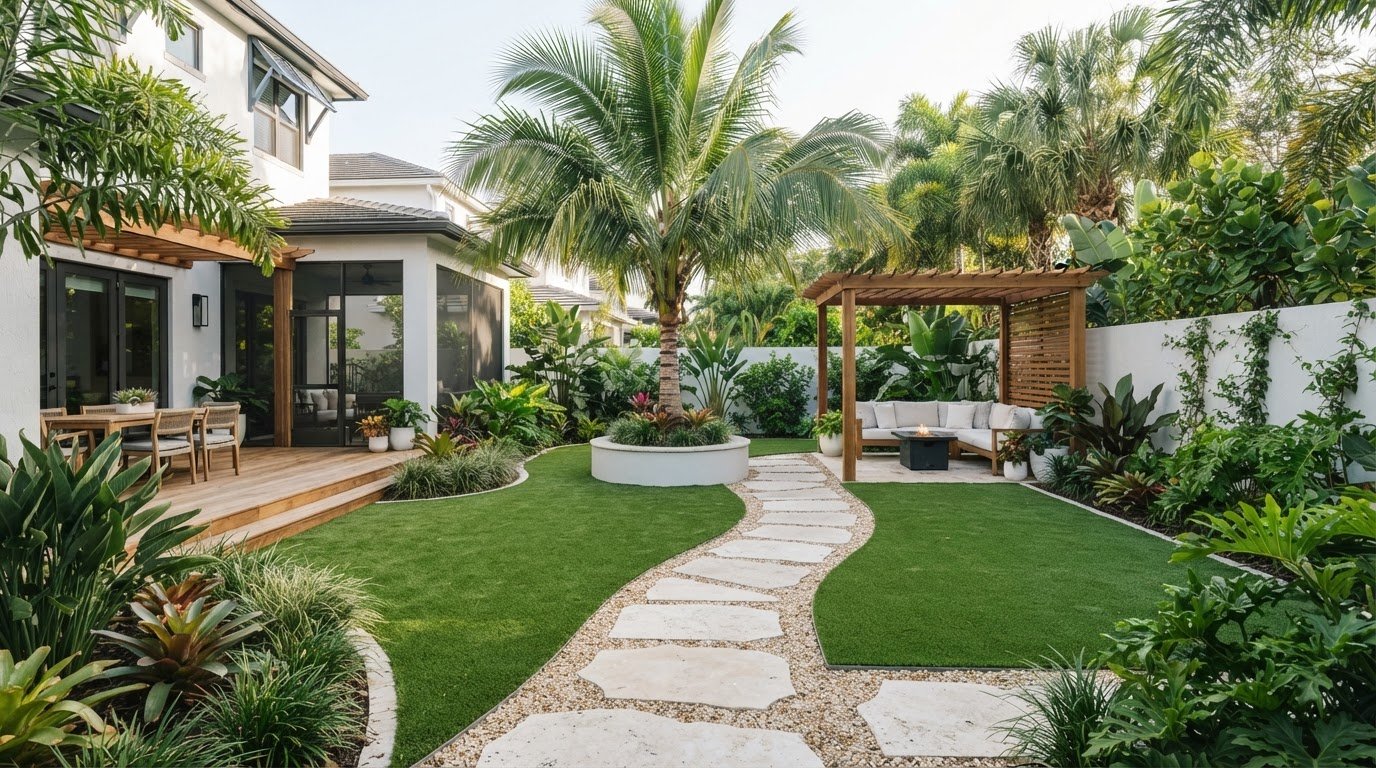
If replacement is the right next step, use the opportunity to reconsider what the space needs to do. A new surface doesn’t have to repeat the existing layout if your routines or priorities have changed. You might want a lawn that better suits everyday outdoor use, a dedicated area for pets, or a practice space designed around golf. Starting with purpose helps shape a project around more than the appearance of the old turf.
Match the replacement surface to the space
Think about how people use the area and which activities matter most. Artificial turf lawns can suit residential spaces where a consistent grass-like surface is desired. Pet-friendly parks and pet turf are designed for spaces intended for pets, while playground and recreational turf can serve areas planned for play. For golf practice, professional-grade putting greens provide a dedicated practice surface that can be custom designed.
Consider whether the current footprint still makes sense, too. A lawn may need to support a different mix of relaxation and recreation than before; a practice area may be better planned specifically for its intended use. Pro Turf Greens designs and installs artificial turf for residential and commercial projects in South Florida. The project discussion can begin with your priorities, rather than assumptions about what should replace the existing surface.
What to expect from a tailored project discussion
A useful project conversation can start with the condition of the current turf, the locations where concerns appear, and how the space is used. Photos and brief inspection notes can help explain what you’ve observed. From there, you can discuss whether the existing layout still fits your needs and what a replacement project should address. You don’t need to arrive with a final design; a clear description of your goals is a practical starting point.
Pro Turf Greens brings over 20 years in the artificial-turf industry to custom design and installation. The company works on surfaces with different purposes, from lawns and pet areas to recreational spaces and putting greens. For homeowners in Fort Lauderdale, Miami, Palm Beach, Boca Raton, Delray Beach, Jupiter, Palm Beach Gardens, Weston, and Coral Gables, planning with a South Florida specialist means discussing the project in the context of the local setting and how the area will be used.
For a related perspective on preparing for a project conversation, see Miami Artificial Turf Consultation: What to Expect in 2026. When you’re ready to discuss your existing surface and what you want it to become, request a tailored artificial turf consultation with Pro Turf Greens.
Make your next turf decision with confidence
The signs your artificial turf needs replacement can help you decide what deserves attention, but your next step can also shape what the space becomes. Think beyond restoring the old layout: consider how you want to use the area and what would make it more useful for your household. A well-planned project starts with your priorities.
Pro Turf Greens provides custom artificial turf design and installation for residential and commercial projects in South Florida, drawing on over 20 years in the artificial-turf industry. The team can help homeowners plan surfaces suited to their needs, including artificial turf lawns, pet-friendly parks, and professional-grade putting greens.
Share your goals and discuss a path forward with Pro Turf Greens. Request a free artificial turf consultation or call 561-221-1010.
Frequently Asked Questions
How long does artificial turf last?
Artificial turf has no single lifespan that fits every installation. Its condition reflects how often people use it, exposure to sun and weather, upkeep, and the installation context. A sheltered decorative section, for example, may show different wear from a frequently used pet area. Rather than treating age as a deadline, judge whether the surface still meets the needs of your space.
Can new artificial turf be installed over existing turf?
Whether new turf can go over an existing surface depends on site conditions, not appearance alone. Replacement planning should consider the current turf, including its seams and backing, as well as drainage and the area beneath it. A surface that looks even from above may still need closer review. These findings help determine a suitable project approach without assuming an overlay will or won’t work.
What happens to the base when artificial turf is replaced?
The base should be considered during replacement planning, but it shouldn’t automatically be assumed reusable or in need of rebuilding. Its condition, observed changes in the area, and the type of surface planned all influence the project scope. Including the underlying area in the assessment gives a more complete picture before work is planned, rather than basing decisions only on what’s visible at the surface.
Can artificial turf replacement include a different landscape layout?
Yes, replacement planning can include a fresh look at how the outdoor space should function. You can discuss whether the area should remain an artificial lawn or be planned for another use, such as a golf practice area. Sharing how you expect to use the space helps guide custom design discussions. The layout can be developed around the property and your priorities, rather than simply repeating the existing arrangement.
Does artificial turf still need care if it looks intact?
Yes, an intact appearance doesn’t make observation unnecessary. Keep track of whether seams remain settled, fibers change, odors or stains appear, or drainage seems different after rain. Also notice whether the area continues to serve its usual purpose. A lawn may look consistent while a specific section starts to feel different underfoot. Noting changes over time can help you decide whether closer assessment is useful.
What should I prepare for an artificial turf consultation?
Prepare a brief description of the surface’s main use, the symptoms you’ve noticed, and where they appear. Note whether an issue has returned and, if so, under what conditions. Photos can show both close-up details and the affected area in context. For a South Florida property, mentioning whether concerns are noticed after sun exposure or heavy rain can add useful context without determining a cause or project scope in advance.