In Florida, artificial turf’s lifespan depends less on a calendar date than on how well the installation handles sun, rain, and everyday use. So, how long does artificial turf last in Florida? A general estimate for quality turf is 15 to 25 years, but that range is not a guarantee. UV exposure, heavy rainfall, foot traffic, and installation quality can all affect how long turf looks and performs well.
It’s reasonable to wonder whether Florida’s climate will shorten your investment’s life or whether frequent use could leave turf looking worn sooner than expected. Weather is only one factor. Material quality, site-specific design, effective drainage, and routine care also contribute to how an installation holds up.
This guide explains how Florida conditions, use, and maintenance can affect turf over time, and what to consider when planning an installation. Pro Turf Greens designs and installs artificial turf for residential and commercial projects in South Florida, with custom plans shaped around each site and its intended use. Understanding the key factors can help you make a more informed decision about your outdoor space.
Key Takeaways
- Learn how long artificial turf may last in Florida and why a general estimate cannot predict the life of a specific installation.
- Understand how strong sun, heavy rain, and drainage conditions can affect turf’s appearance and performance over time.
- Consider how concentrated activity in pet areas, playgrounds, and sports or golf spaces creates different wear patterns from everyday lawn use.
- Use a simple inspection routine to spot debris buildup, surface changes, seam movement, or recurring drainage issues.
- See how Pro Turf Greens’ custom design and installation, backed by over 20 years in the artificial-turf industry, can account for a project’s purpose and site conditions.
How long does artificial turf last in Florida, and what does that estimate mean?
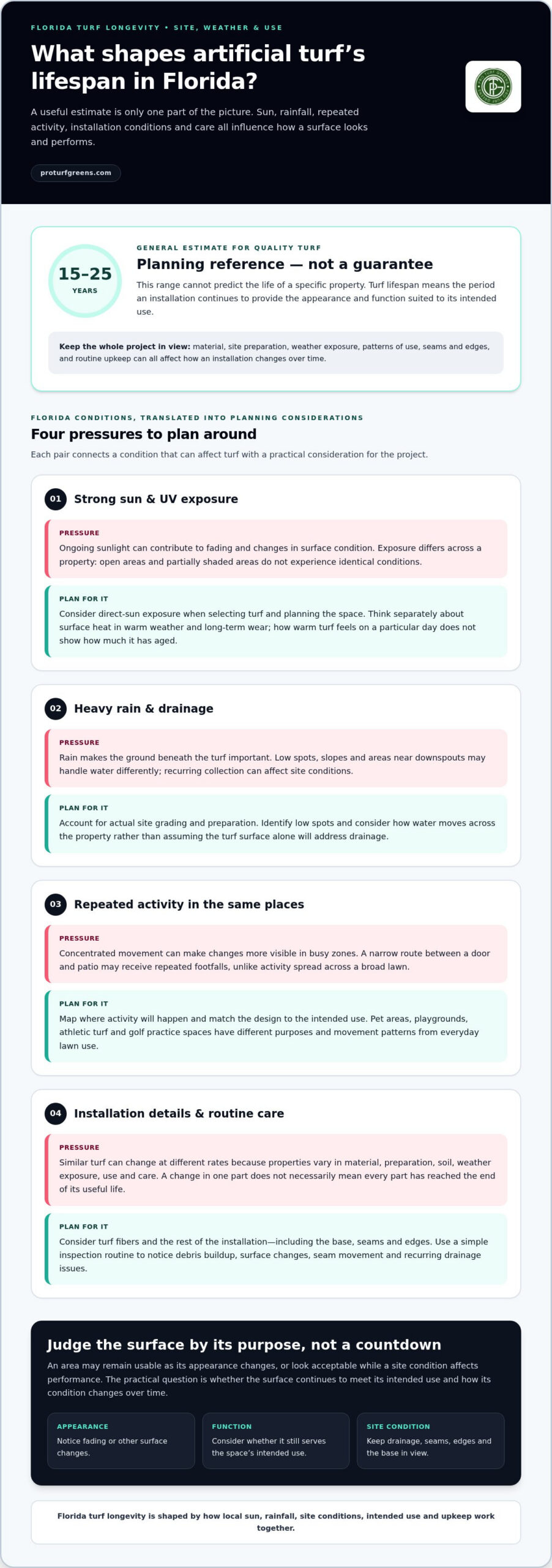
A commonly published estimate for quality artificial turf in Florida is about 15 to 25 years. Treat that range as a planning reference, not a guarantee or a prediction for a particular property. If you’re asking how long does artificial turf last in florida, the most useful answer is that longevity depends on the whole project: turf material, site preparation, weather exposure, how the surface is used, and the care it receives.
Turf lifespan is the period an installation continues to provide the appearance and function suited to its intended use. An area may remain usable as its appearance changes, or it may look acceptable while a site condition affects how it performs. The Artificial turf overview describes the material’s broad range of uses, but each application places different demands on the surface.
Florida conditions are part of the picture. Strong sunlight and UV exposure can affect the surface over time, while heavy rain makes site conditions and drainage important to plan for. Choosing a suitable turf material is only one part of a lasting result. Preparation beneath the surface, the condition of seams and edges, and routine upkeep also influence how an installation looks and functions.
Why Florida turf lifespan estimates vary
A lifespan estimate draws on projects with different materials, locations, installation conditions, and patterns of use. It cannot account for every property’s sun exposure, rainfall, soil, or routine. Two installations with similar turf may therefore change at different rates.
It also helps to distinguish the turf fibers from the rest of the installation. Material durability describes how the turf itself holds up; the base, seams, and surface condition are other parts of the project. A change in one area does not necessarily mean every part has reached the end of its useful life. Pro Turf Greens tailors artificial turf design and installation to the site and its intended use, supporting project planning without promising a fixed lifespan.
What a lifespan estimate can, and cannot, tell you
The estimate provides broad context for planning, not a countdown to replacement. It cannot predict the outcome for an individual project because site conditions and expectations differ. A residential lawn used for everyday outdoor living has a different pattern of activity from a pet area, playground, or golf surface. Repeated movement in a specific spot may change the appearance there more quickly than activity spread across a wider lawn.
Think of the range as context for planning, not a deadline. The practical question is whether the surface continues to meet its purpose and how its condition changes over time. Consider materials, site preparation, use, and upkeep together rather than relying on one number to judge long-term value.
How South Florida sun, rain, and use affect artificial turf longevity
South Florida’s climate puts several demands on artificial turf. Strong sun exposes open areas to ongoing UV radiation, while heavy rain makes slope and drainage important parts of installation planning. Add regular activity, and a shaded side yard may face different conditions from an exposed lawn or a frequently used play area. These local factors help explain why the question “how long does artificial turf last in florida” cannot be answered by material choice alone.
Sun and heat exposure in South Florida
For a space with long hours of direct sunlight, UV exposure is worth considering when selecting turf. Over time, sunlight can contribute to fading and changes in surface condition. Exposure varies across a property: an open backyard and a partially shaded area do not experience identical conditions.
Surface heat is a separate consideration from long-term wear. Turf can feel hot under direct sun, but how warm it feels on a particular day does not show how much the material has aged. When planning a sun-exposed area, consider how the space will be used in warm weather and how continued exposure may affect its appearance. Do not treat a product’s initial appearance or feel as a prediction of its long-term performance.
Rainfall, drainage, and project conditions
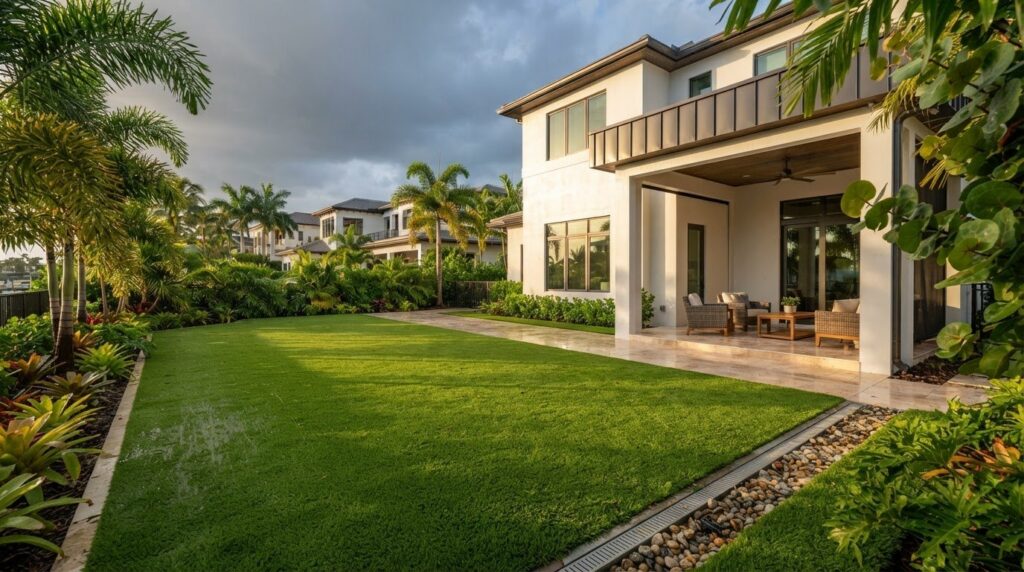
South Florida rain makes the ground beneath the turf an important part of longevity planning. Site grading and preparation influence where water moves. If water tends to collect in a low spot, identify that area during project planning rather than assuming the turf surface alone will address it.
Conditions can vary even within one property. A level area near a downspout, a sloped section, and a low corner may each handle rainfall differently. Planning around the actual site helps match the installation to those conditions. For more detail, a focused guide to South Florida turf drainage can help explain what to consider before installation.
Repeated use creates distinct wear patterns
Traffic affects where changes are most likely to become visible. Activity on a broad residential lawn may be spread across the surface, while a narrow route between a door and patio can receive repeated footfalls in the same area. Pet runs, playgrounds, athletic turf, and golf practice spaces also serve different purposes, so their busiest zones and movement patterns differ.
Turf longevity in South Florida depends on how local sun, rainfall, site conditions, and intended use work together. During planning, identify where people or pets are most likely to move and where the site receives the strongest sun or runoff. Pro Turf Greens tailors artificial turf design and installation to each project and its setting. To explore how those factors apply to your space, see custom artificial turf planning.
Which artificial turf uses face the most wear over time?
Artificial turf does not experience wear in the same way across every project. A lawn used for occasional gatherings, a pet area with a regular route, and a sports surface designed for repeated activity each face different patterns of movement. Asking how long does artificial turf last in florida without considering its purpose can miss what matters most: how the surface will be used and where activity will concentrate.
Rather than ranking applications by lifespan, compare the demands they place on the turf. Consider how often the area is used, whether people or pets follow the same paths, and whether play or practice focuses on particular zones. Those details help set practical expectations and guide the project design.
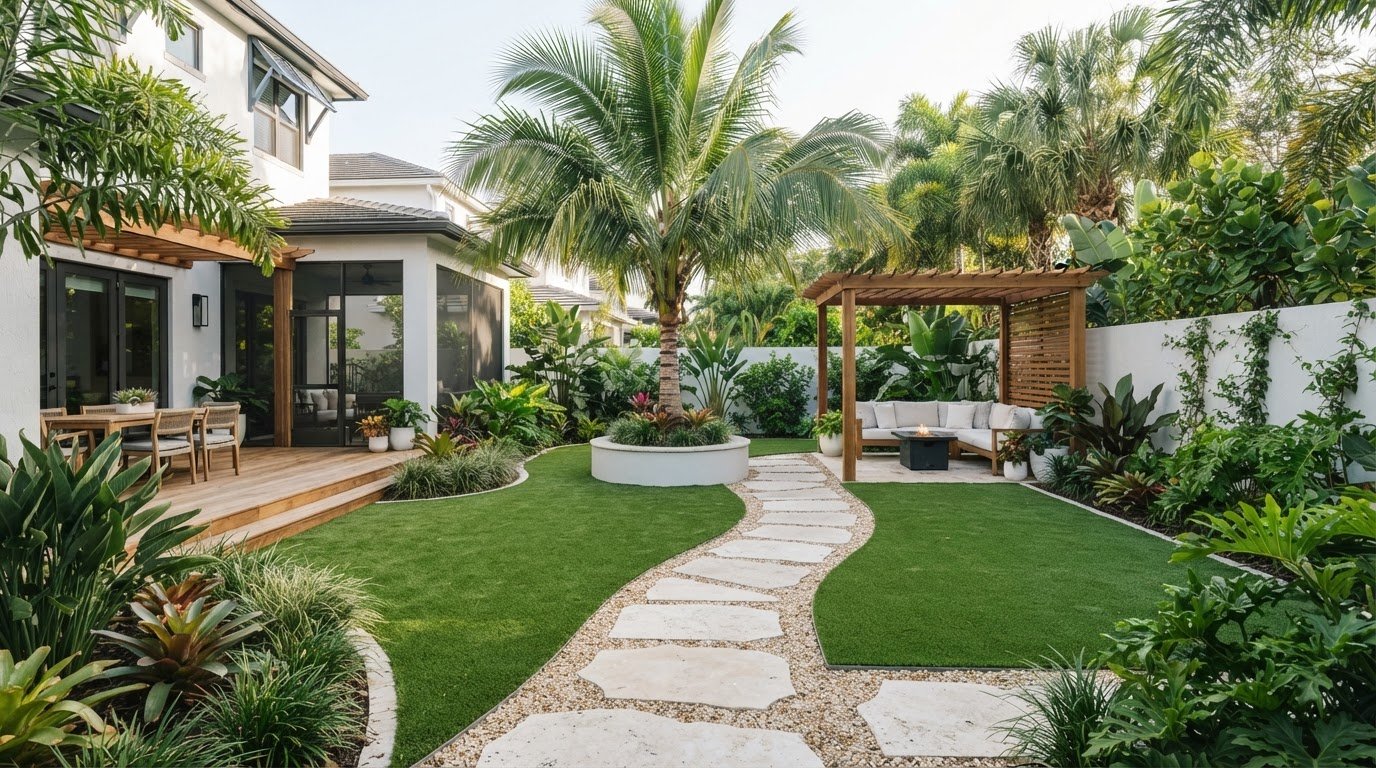
- Lawns: Activity is often spread across a wider area, although walkways, entrances, and gathering spots may get more repeated traffic.
- Pet areas: Pets may use familiar routes or favorite spots repeatedly, making those locations useful to consider during planning and later observation.
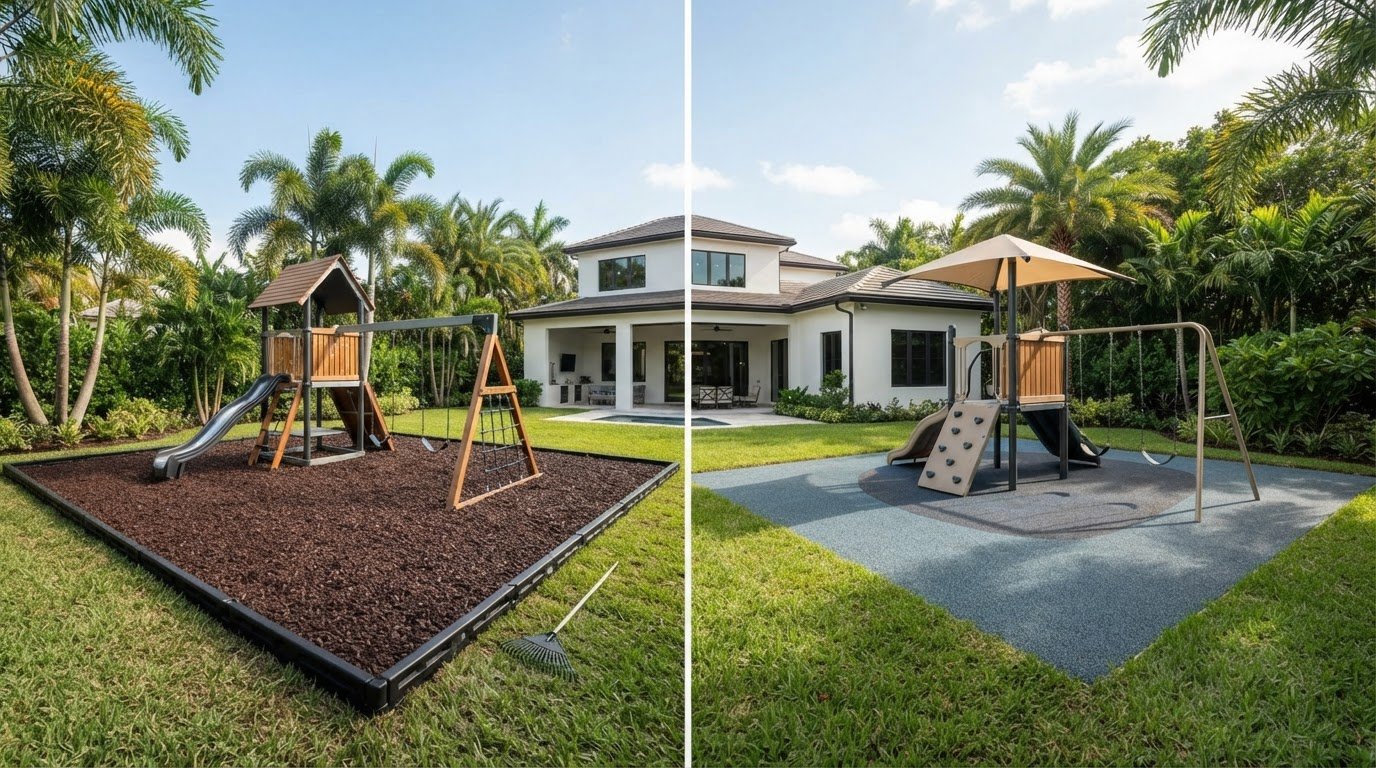
- Playgrounds: Play often centers around equipment and active zones, so wear may be more localized than on a broad lawn.
- Sports surfaces: Training and play involve repeated movement across designated areas. The pattern depends on the sport and layout.
- Golf projects: Putting greens and tee lines serve specific practice purposes, so activity is focused on the designed playing areas rather than distributed like typical lawn use.
How traffic patterns influence surface wear
Repeated routes, play areas, and activity zones are sensible places to observe over time. For example, a narrow path between a patio and a gate may receive more foot traffic than the surrounding lawn. A pet run may have a different pattern. Planning around intended use helps shape a design around how people and pets will move through the space. Homeowners considering a dedicated dog area can also explore guidance on artificial turf for dog runs in South Florida.
Why turf for golf and sports needs its own assessment
A general-purpose lawn and a specialized golf or sports surface have different functions, so they should not be treated as interchangeable when considering wear. Pro Turf Greens installs professional-grade putting greens and athletic turf, with project design tailored to the intended activity and site. A putting area supports golf practice; an athletic surface serves a different pattern of movement. A closer look at high-performance sports turf can help clarify the considerations for a specific project.
Surface changes may appear first in spots with concentrated activity, while less-used areas remain more uniform. That alone does not establish the condition or remaining usefulness of the entire installation. Observe how the surface performs across its different zones and assess changes in the context of its purpose. Matching the installation to its use from the start gives homeowners a more useful basis for evaluating performance than assuming every artificial-turf project has the same expected lifespan.
How to care for artificial turf and recognize changing conditions
A simple inspection can help you distinguish routine upkeep from a change that deserves closer attention. It does not need to follow a fixed schedule to be useful. After clearing debris or following heavy rain, look across the surface and compare busy areas with less-used sections. If you’re considering how long does artificial turf last in florida, these observations offer practical context about how your installation is changing, beyond its age alone.
What to inspect as turf ages
Look for changes in color, flattened areas, visible seam movement, and spots that seem uneven underfoot or to the eye. Note where each change appears and whether it is limited to a heavily used area or spans a broader section. A flattened patch or visible seam change does not automatically mean the entire installation needs replacement. It may point to a localized condition that needs closer attention.
Keep a simple record. A dated note or photo from the same viewpoint can help you tell whether a change is stable or becoming more noticeable. This is useful after strong sun and heavy rain, since surface appearance and water movement both help show how an installation is holding up. Record what you observe without assuming the cause.
Care habits that support a well-kept surface
Remove leaves and other debris so they do not remain on the surface. Rinse periodically to clear dirt and pollen, and brush occasionally with a soft-bristled brush to help fibers stand upright and limit matting. These are practical care habits, not a promise of a particular lifespan or a substitute for paying attention to changes in the installation.
After heavy rain, observe how water leaves the area. Keep visible drainage paths clear of debris, and note recurring pooling or slow drainage rather than treating it as a surface-cleaning issue. If water repeatedly collects in the same place, record where and when it happens. Rinsing or brushing will not resolve an underlying drainage concern.
Pet areas may need attention to messes as part of routine surface care. Remove waste promptly and rinse the affected area as appropriate. For changes beyond routine cleaning, such as a persistent seam issue or uneven surface, do not assume a cleaning step will fix the condition.
Monitor color, flattened areas, seams, surface level, debris, and how water drains after rain. These visible clues can help you decide whether routine care is enough or whether the installation needs closer attention. Pro Turf Greens designs and installs artificial turf for residential and commercial projects in South Florida, tailoring project planning to the site and intended use. To discuss your turf project and site conditions, connect with Pro Turf Greens.
Planning a long-lasting Florida turf installation with Pro Turf Greens
A durable installation starts with a clear understanding of what the space needs to do. A residential lawn for everyday use has different priorities from a pet area, playground, sports surface, driveway, or golf project. Site conditions matter too: sun exposure, areas where water collects, and the shape and layout of the space all inform project planning. Considering these details together makes the design more specific to the property and its intended use.
That planning is more useful than treating how long does artificial turf last in florida as a promise tied to a particular installation. No consultation can predict exactly how a surface will age. Instead, it gives homeowners an opportunity to discuss project goals, site conditions, and factors that may influence long-term appearance and function.
What a project-specific turf plan should consider
Start by describing the activity the area needs to support, including where people, pets, or players will spend the most time. Then consider how weather exposure and the property layout may shape the design. These details help align the project with real use instead of a generic idea of turf installation. Pro Turf Greens provides custom design and installation for residential and commercial projects, tailoring each plan to the site and its purpose.
Pro Turf Greens brings over 20 years of experience in the artificial-turf industry. That experience supports informed project planning, but it is not a promised turf lifespan. A consultation is an opportunity to discuss needs and design considerations, not a guarantee of how long a specific installation will last.
Explore a South Florida installation with Pro Turf Greens
Pro Turf Greens designs and installs artificial turf for residential and commercial uses, including lawns, pet-friendly parks, playgrounds, sports turf, driveways, and golf projects such as putting greens and tee lines. The intended activity guides the planning conversation: a golf practice space serves a different purpose from a family lawn or an athletic area. A custom design can account for those goals alongside the property’s conditions.
Pro Turf Greens serves Fort Lauderdale, Palm Beach, and Dade County, including Miami, Boca Raton, Delray Beach, Jupiter, Palm Beach Gardens, Weston, and Coral Gables. A free consultation gives homeowners an opportunity to discuss the space, how it will be used, and what matters most in the project. Sharing observations about sun, drainage, and high-activity areas can help make that conversation practical and focused. If you’re planning a South Florida turf installation, request a free consultation to discuss your project with Pro Turf Greens.
Start planning a turf space around your priorities
The question “how long does artificial turf last in florida” is a useful starting point, but the next decision is more personal: what should the space make possible? Think about how you want to use it, the conditions the site presents, and which details matter most to you. Those priorities can turn a broad lifespan estimate into a practical project conversation without treating any estimate as a promise.
Pro Turf Greens offers a free consultation to discuss artificial turf projects. Use the conversation to share your goals, talk through the site, and explore an approach suited to your property. A thoughtfully planned installation can help clarify the outdoor space you want to create.
Request a free artificial turf consultation and take the next step toward an outdoor space designed for the way you want to live.
Frequently Asked Questions
Does artificial turf fade in Florida’s sun?
Artificial turf can fade over time with continued sun exposure, though the degree varies by product and site conditions. An open yard may receive different exposure from a space shaded by a building for part of the day. If you notice color changes, compare areas with different sun exposure and keep notes or photos. A gradual color shift alone does not establish that the turf has stopped serving its purpose.
Can heavy Florida rain affect artificial turf?
Heavy rain can reveal how well the site handles water. After a storm, look for pooling that persists or returns in the same location, and note whether it occurs near a low point or another yard feature. A wet surface immediately after rain and recurring standing water are different observations. Make a note of persistent pooling and where it occurs, as this may point to drainage or underlying site conditions.
What happens if artificial turf develops a lifted seam?
Document a lifted seam and consider its location, how much of the seam appears affected, and whether the surrounding surface has shifted. Avoid pulling or pressing it back into place without understanding why it changed. If the separation is becoming more noticeable, the seam and surrounding area need closer attention. The appropriate response depends on the seam’s condition and the installation, so do not assume it requires full replacement.
Can damaged artificial turf be repaired instead of replaced?
Sometimes a localized issue may be addressed without replacing the entire surface, but the appropriate option depends on the type, extent, and cause of the damage. A small affected area and widespread deterioration are different situations. Record where the damage is and whether it appears to be growing before deciding what to do. The condition of the affected area and the wider installation will help determine whether a limited repair is suitable or whether there is a broader concern.
Does artificial turf need special care during Florida’s rainy season?
Rain does not necessarily call for a separate seasonal routine, but it offers a useful opportunity to observe how the surface and surrounding yard respond. After a storm, check whether leaves or other debris are blocking visible drainage paths and whether water repeatedly collects in one place. Clear debris and make a note of persistent pooling. This can help distinguish ordinary cleanup from a drainage pattern that deserves attention.
Is artificial turf suitable for both residential and commercial use in Florida?
Artificial turf can be designed for residential and commercial projects, with the plan shaped by how each space will be used. A private lawn, commercial outdoor area, and playground have different purposes and patterns of activity. Pro Turf Greens serves homeowners and businesses in South Florida, including Fort Lauderdale, Miami, Palm Beach, Boca Raton, Delray Beach, Jupiter, Palm Beach Gardens, Weston, and Coral Gables.
Does artificial turf lifespan differ between a lawn and a putting green?
It can, but the application alone does not determine how long either surface will last. A lawn and a putting green are designed for different activities, and their use patterns, site conditions, materials, and care all affect how they age. A putting green may receive repeated use in specific practice areas, while lawn traffic may be distributed differently. Compare each installation with its intended function rather than assuming one type always lasts longer.