A hose rinse helps clear fresh urine from synthetic grass, but it may not remove residue that causes lingering odor. For cleaning dog urine from synthetic grass, remove solid waste, rinse the affected area, then use a turf-appropriate cleaner as directed. Baking soda is an optional deodorizer: leave it on the area for 20 minutes, then sweep or vacuum it away.
The smell can be frustrating, especially when rinsing alone doesn’t solve it. Water can wash away surface residue, but it won’t eliminate uric acid, which isn’t water-soluble. Effective cleaning dog urine from synthetic grass addresses both visible mess and lingering odor while avoiding cleaner or deodorizer residue.
This guide explains cleaning dog urine from synthetic grass step by step, from removing solid waste and rinsing turf to treating urine residue and infill. You’ll also learn how to use baking soda as an optional deodorizer and adjust rinsing frequency to your yard and your dog’s use of the space.
Key Takeaways
- Remove solid waste promptly, then rinse the affected turf with a garden hose to help flush away lingering mess.
- For odor that remains after rinsing, use a turf-appropriate cleaner according to its directions; repeat treatment if needed.
- Adjust rinsing frequency to your yard’s conditions and use, with more frequent rinses potentially helpful in low-rainfall areas.
- Try baking soda as an optional deodorizer, and pay attention to infill and drainage when odor persists.
Applying baking soda as an optional deodorizer
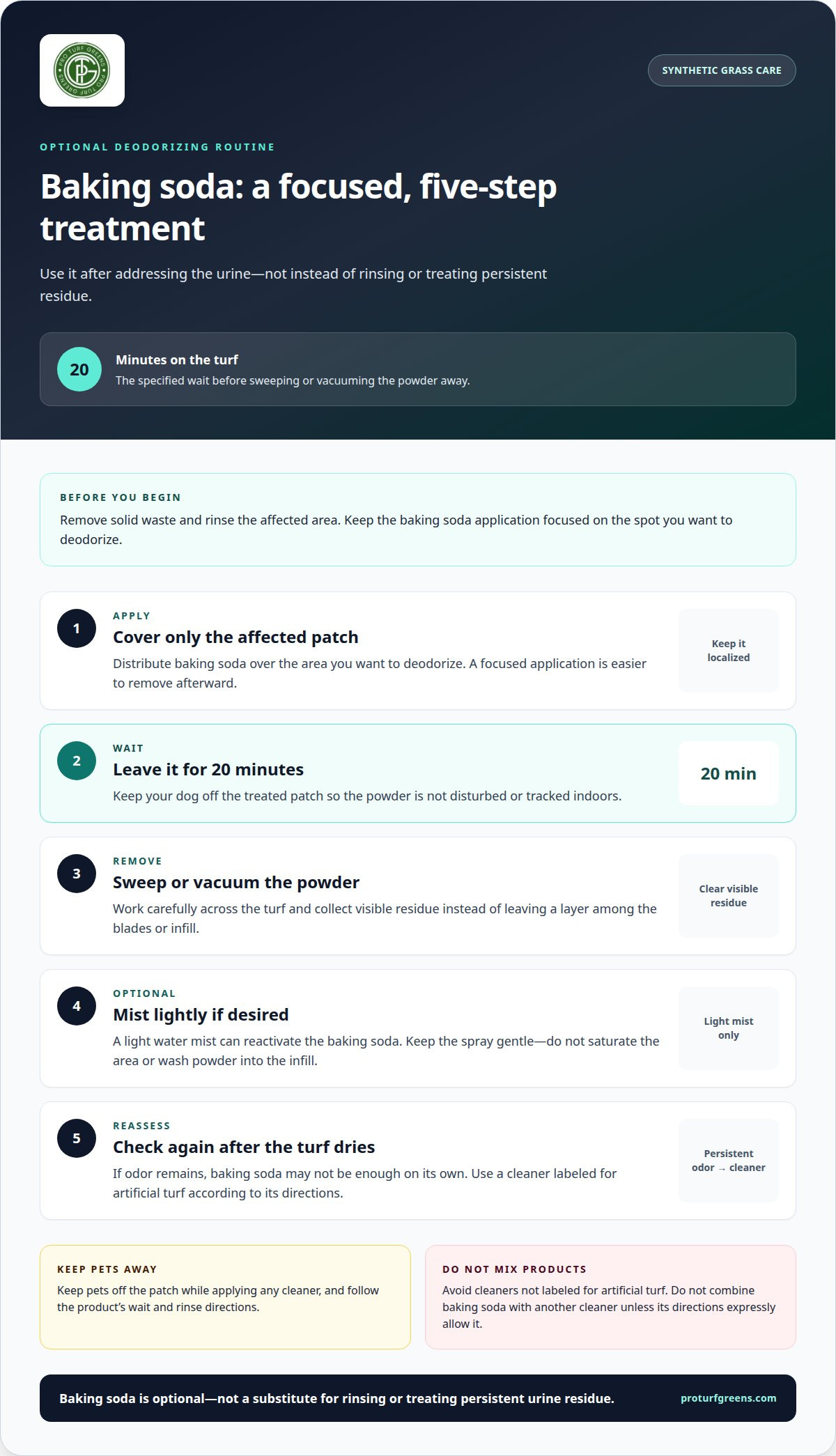
For routine care, rinse synthetic grass with water and use baking soda only as an optional deodorizer. Keep pets away while applying any cleaner, and follow its directions. Avoid cleaners not labeled for artificial turf, and never mix cleaning products.
- Apply it to the affected area. After addressing the urine, distribute baking soda over the spot you want to deodorize. Keep the application focused rather than covering the entire lawn. This makes it easier to remove the powder afterward.
- Give it time to work. Leave the baking soda on the synthetic grass for 20 minutes. Keep your dog off the treated patch during this step, so the powder isn’t disturbed or tracked indoors.
- Remove the powder. Sweep or vacuum the baking soda after the wait. Work carefully across the turf surface, and collect visible residue instead of leaving a layer among the blades or infill.
- Add a light water mist if desired. A light mist can reactivate the baking soda and provide additional deodorizing action. Keep the spray gentle, rather than saturating the area or washing powder into the infill.
- Reassess the area. Check the treated patch after the powder is removed and the turf has had time to dry. If odor remains, baking soda may not be enough on its own; use a turf-appropriate cleaner according to its label.
Baking soda is an optional deodorizing step, not a substitute for rinsing or treating persistent urine residue. Water alone won’t eliminate uric acid because it isn’t water-soluble. If you use a cleaner, keep pets out of the area during application, and follow the product’s wait and rinse directions. Don’t combine baking soda with another cleaner unless the product directions expressly allow it. A measured sequence helps keep treatment focused: apply, wait, remove, then mist lightly if needed.
How often to rinse turf
- Set a regular baseline. Rinse synthetic turf at least once a month to clear surface debris and dilute fresh urine residue. A monthly rinse is a practical starting point, not a fixed schedule for every yard. How quickly the area becomes soiled depends on rainfall, pet use, and the size of the space.
- Increase frequency when use is concentrated. Rinsing as often as once a week may suit low-rainfall areas, especially when a large dog uses a small yard. Frequent use in a compact space means urine reaches the same patches repeatedly. A weekly rinse helps address those areas before residue builds up.
- Choose an enzyme cleaner by its turf label. A suitable option is an enzyme-based cleaner labeled for artificial grass and intended for pet urine. Follow its directions for application and rinsing; more than one application may be needed. No single cleaner works best for every turf, so the label’s surface instructions matter.
- Adapt the routine in winter or during drought restrictions. Remove solid waste promptly and use a turf-appropriate cleaner according to its label. Rinse only when water use is permitted, and target the affected area rather than soaking the whole lawn. Resume the regular schedule when conditions allow.
- Adjust based on the yard’s conditions. Compare a small, lightly used area with a compact dog run. The dog run may need more frequent rinsing, while rain can contribute to flushing outdoor turf. Don’t assume rainfall reaches every spot equally: sheltered areas and repeatedly used patches may still need attention. Keep the schedule centered on actual use and local water limits.
How urine residue and infill affect drainage and odor
- Notice where the odor returns. Focus on patches your dog uses repeatedly, especially if the smell remains after rinsing. Urine residue can collect around the turf fibers and infill, where a surface rinse may not reach it effectively. Dog-urine odor can linger for months unless treated properly, so recurring odor needs more than a quick rinse.
- Consider how infill affects cleanup. Infill sits among the turf fibers, and residue within it can be harder to flush away than residue on the surface. Rinse the affected area thoroughly, then use a turf-appropriate odor cleaner according to its label. Don’t assume that adding more infill will resolve an odor problem.
- Don’t use infill quantity as a substitute for treatment. One pound of infill per square foot of turf is not enough coverage to fight odors. That figure is a warning against relying on a thin layer for odor control, not a recommended amount to add. Follow the turf system’s installation guidance rather than adding material by guesswork.
- Check whether drainage is part of the problem. If water pools or drains slowly in a repeatedly soiled spot, note where it happens and whether the issue persists after rinsing. Residue and infill are only part of the picture; drainage can also depend on the turf base and surrounding ground. Don’t try to solve persistent pooling by covering it with extra infill.
- Separate odor from material damage. Dog urine can leave residue and a persistent smell, but that alone doesn’t show that the turf, infill, or backing has been damaged. Look for a distinct change, such as loose infill or a lifted edge, rather than treating odor as proof of damage. Address residue first, then assess drainage and surface condition separately.
Removing solid waste and rinsing turf
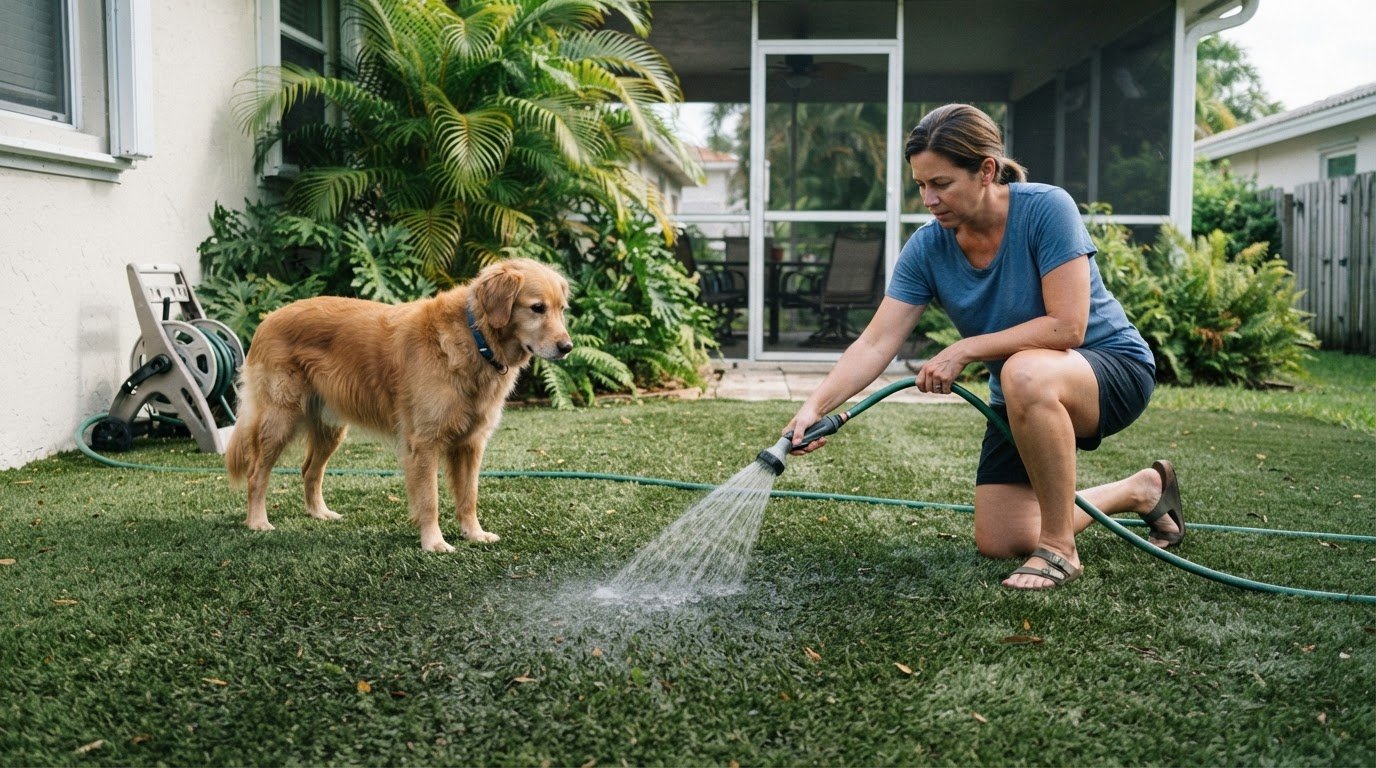
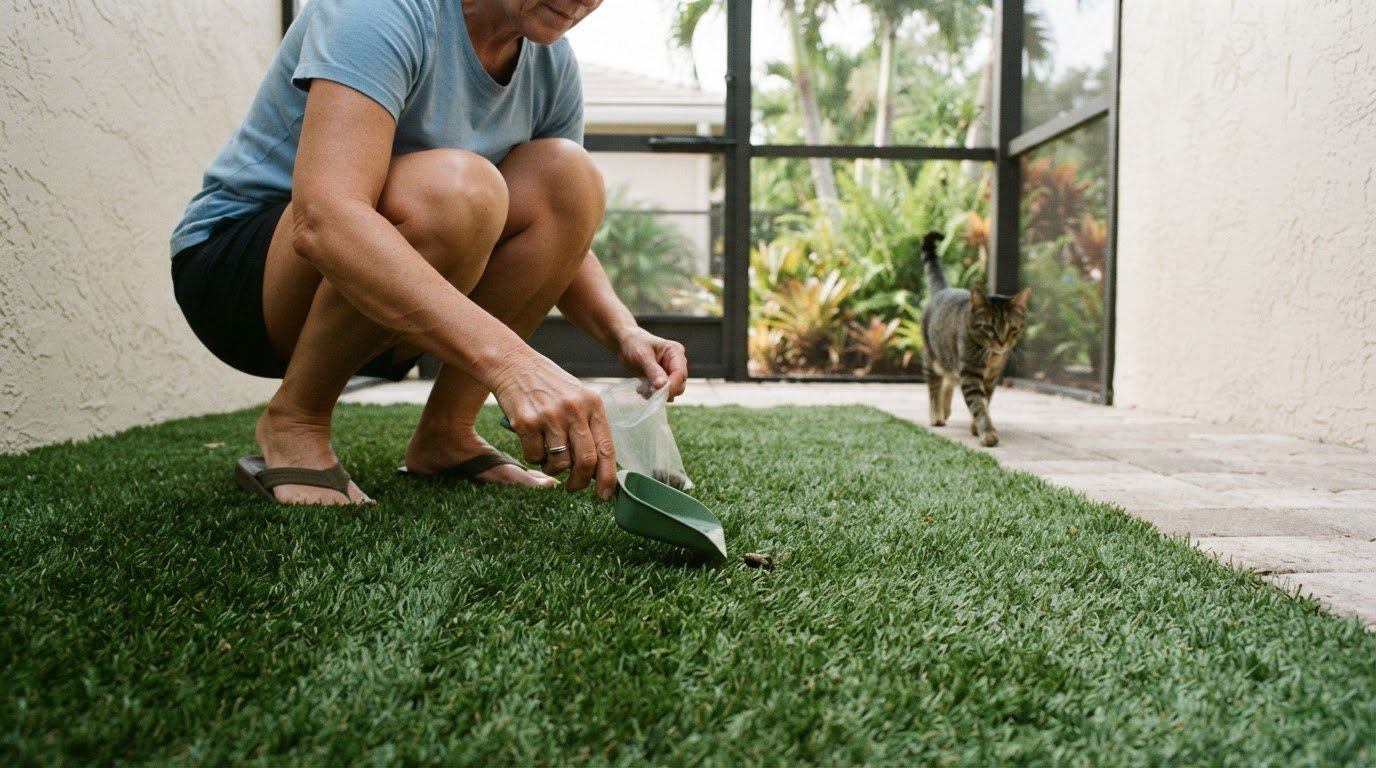
For fresh messes, remove solid waste first, then rinse the affected synthetic grass with a garden hose. This clears visible waste and helps flush away lingering urine.
-
Remove Solid Waste
Pick up solid dog waste promptly, lifting it from the turf rather than pressing it into the fibers. Check the patch for remaining pieces and remove them before adding water. Avoid spreading waste across nearby blades as you work. Clearing the surface first lets the rinse reach the affected turf instead of washing solid debris through the area.
-
Rinse Away Fresh Urine
Rinse the urine spot with a garden hose, directing water across the affected area to flush away lingering urine. For fresh urine, this is the immediate cleaning step. Use low to moderate water pressure if you apply a turf cleaner, and follow the product’s directions. Make sure the rinse covers the full spot, including its edges, not just the center.
- Apply a turf cleaner when needed. If odor remains, keep pets away and apply a cleaner labeled for artificial grass. Apply it to dry turf if its directions call for that method. Let the product sit for the stated time, then rinse thoroughly. One product’s directions may specify a 10-minute wait after spraying dry turf, but follow the label for the cleaner you use.
- Let the area dry before assessing it. After rinsing, allow the treated patch to dry. Then check whether odor remains before deciding on another application. An enzyme-based cleaner may require more than one application. Don’t add extra cleaner without following its directions, since the right process depends on the product.
- Keep the routine targeted. For a small fresh spot, rinse the affected patch rather than soaking unrelated turf. If several areas have been soiled, treat each patch so water and cleaner reach the spots that need attention. Prompt removal and a thorough rinse help prevent visible waste from spreading across the synthetic grass.
If recurring pet use is shaping your yard plans, explore synthetic turf options suited to your space.
Pro Turf Greens
Pro Turf Greens designs and installs artificial turf, including Lawns & Pet Turf, for homeowners planning an outdoor update. If odor keeps returning despite a consistent cleaning routine, reassess whether the turf area and its drainage suit how your dog uses the yard. A new pet-turf installation is a bigger step than routine cleaning, but it may make sense when updating a yard or replacing an existing surface. Pro Turf Greens can design an artificial turf solution around your space and its intended use, rather than treating recurring odor as a cleaning problem alone. For a yard redesign, consider how the pet area fits with outdoor activities and the overall layout. Contact Pro Turf Greens to discuss an artificial turf project for your space.
Plan a Turf Space That Fits Your Routine
A well-planned yard considers more than the surface beneath your dog’s paws. Think about how your household uses the space and where pet activity fits alongside recreation. For a broader outdoor update, Pro Turf Greens offers Backyard Putting Greens, Playgrounds & Recreational Turf, Tee Lines & Driving Ranges, and pet turf. A considered layout can give each area a clear purpose and support your daily routine.
For persistent odor, the next step may be assessing the turf area itself, not simply repeating the same cleaning routine. A conversation about your yard’s use can help you consider whether a turf project fits your plans. Contact Pro Turf Greens to discuss your outdoor space and possible next steps.
A thoughtful plan can make your yard more comfortable for pets and people alike.
Frequently Asked Questions
My Artificial Turf Smells Like Dog Pee – What Should I Do?
Start by identifying whether the odor is limited to one patch or spread across the turf. In Fort Lauderdale, Miami, Palm Beach, Boca Raton, Delray Beach, Jupiter, Palm Beach Gardens, Weston, and Coral Gables, note spots your dog uses repeatedly and whether water drains away from them. Treat affected areas with a cleaner labeled for artificial turf, following its directions. Once dry, reassess the smell; lingering odor may call for another application.
How do you remove dog urine odor from artificial turf?
Use an artificial-turf cleaner made for pet odors, applying it as directed. Cooler times, such as dawn or dusk, can help the product stay on the grass rather than evaporating quickly. Apply with low to moderate water pressure, and lightly mist with more odor eliminator if warm or windy conditions cause rapid drying. Let the turf dry before deciding whether another treatment is needed.
Can vinegar or baking soda remove dog urine from artificial turf?
Both can be optional household deodorizing approaches, but they don’t replace a turf cleaner when odor persists. For a vinegar solution, combine equal parts vinegar and water, then apply it to the affected area. Baking soda can be left on the spot for 20 minutes before sweeping or vacuuming. Don’t combine either method with another cleaner unless its label allows it.
How often should artificial grass be rinsed if dogs use it?
Rinse artificial grass at least once a month, and consider rinsing as often as once a week when use is concentrated. A small yard used regularly by a large dog may need more frequent attention than a larger, lightly used area. In places such as Palm Beach and Boca Raton, adjust the routine to rainfall, pet use, and any local water restrictions.
How do you clean dog urine from artificial grass with infill?
Rinse the soiled spot, then apply an artificial-turf cleaner suitable for pet urine and follow its label. Infill sits between the turf fibers, so work the cleaner over the affected patch without adding infill as a shortcut for odor control. Let the treatment dry, then assess the smell. Persistent odor may require another application according to the product directions.
Which enzymatic turf cleaners work best for dog urine?
No single enzymatic cleaner works best for every turf. Choose an enzyme-based cleaner labeled for artificial grass and pet urine, and follow its directions.