Artificial turf can be cat-friendly, but the surface alone does not determine safety. Whether artificial turf is safe for cats depends on its materials, drainage, installation and upkeep. With suitable materials and regular cleaning, it can provide a practical area for cats, although direct sunlight can make it warmer than natural grass.
It is sensible to consider what your cat might chew, scratch or dig, and how you will clean up urine and droppings. Unlike natural grass, artificial turf does not need fertilizers, pesticides or weed killers to stay green, but it still needs care to manage dirt, moisture and odors.
This guide explains what to look for in pet-friendly turf, how to clean up droppings and manage odors, and why drainage and heat matter. It also covers digging and claw wear, so you can weigh the practical considerations before choosing a surface for your cat.
Key Takeaways
- Assess turf materials and product information to make a more informed choice for a cat-friendly space.
- Learn which surface features can make cleaning easier and help manage lingering pet odors.
- Consider how your cat’s digging and scratching habits may affect the turf over time.
- Explore how professionally designed artificial turf can shape a durable, functional outdoor area.
Is Artificial Grass Safe for Cats?
Artificial grass can suit cats, but safety depends on the turf materials, installation and care. Whether artificial turf is safe for cats also depends on how the surface performs in your outdoor space.
Pet Turf Material Safety
Assessing pet turf materials means considering what the fibers, backing and infill contain, as well as how your cat uses the surface. This matters if a cat chews, licks or paws at the turf. Unlike some treated natural lawns, artificial grass does not need fertilizers, pesticides or weed killers to stay green, which can reduce exposure to those lawn chemicals.
Artificial grass may mean less exposure to lawn chemicals than a treated natural lawn, but no turf should be treated as edible. A cat that mouths loose fibers or infill may have different exposure from one that simply walks across the lawn. Material choices and a well-prepared, draining base are part of the overall safety picture for pets and children.
Sunlight and Turf Heat
Yes, artificial turf can become hotter than natural grass in direct sunlight, so it may feel uncomfortable for cats on a hot, sunny day. There is no single surface temperature that applies to every lawn; sunlight, shade and the turf system all affect how warm it gets. Check the surface before outdoor play rather than relying on a fixed temperature.
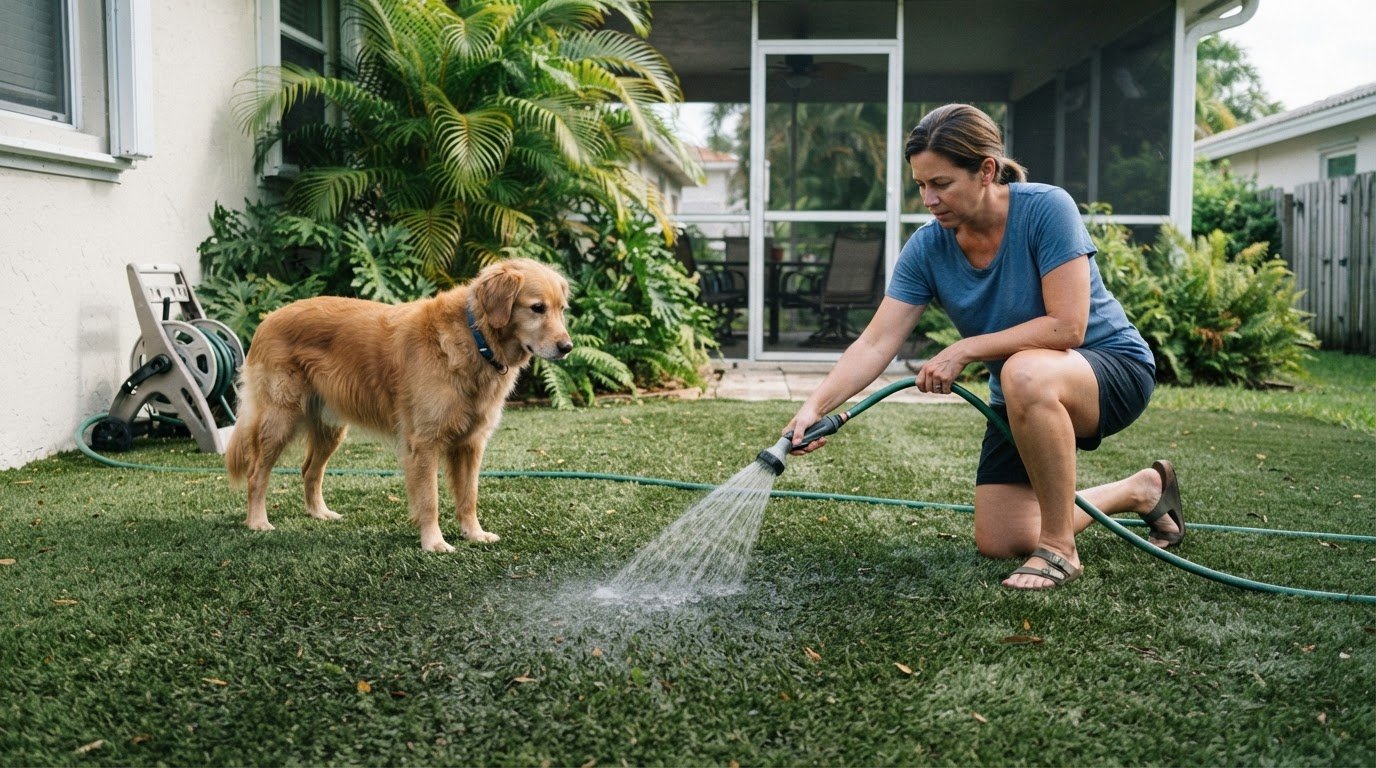
Shade can make the area more comfortable, while a quick rinse with a hose or sprinkler can cool the surface temporarily. According to the National Center for Biotechnology Information, watering can lower synthetic turf infill surface temperature, but the cooling effect lasts only a short time. For example, if the surface warms again in direct sun, move your cat to a shaded area. Cooling measures help manage heat, but don’t keep turf cool throughout a sunny day.
Choosing lead-safe, non-toxic artificial grass
For cat owners, choosing turf means considering its backing, fibers and infill, not just its appearance. Older or imported artificial grass backings might be treated with lead, which can harm pets and children if ingested. A cat that chews or paws loose material could have a different exposure risk than one that simply walks across the surface. Keep the intended use in mind when evaluating materials.
Look for lead-safe, non-toxic artificial grass made or inspected in the United States, and review product certifications for information about safety. A certification can help inform a choice, but the label alone doesn’t explain every material in the system. For example, ask what the backing and infill are made from, and whether the certification applies to the complete turf product or only a component.
“Non-toxic” does not automatically mean a surface is suitable for every cat’s sensitivities. If allergies are a concern, consider the specific materials and observe how your cat responds to the space. Natural grass has its own potential irritants, including pollen, while synthetic turf avoids the need for lawn fertilizers, pesticides and weed killers. A lawn-care routine without those chemicals does not remove the need to prevent chewing or swallowing turf pieces.
Watch for your cat chewing or swallowing backing, fibers or loose infill, and take possible ingestion seriously. If your cat appears unwell after contact, contact a veterinarian and describe the material involved. During installation in a yard or catio, keep cats away from the work area and loose components. Allow access only after installation is complete and debris has been cleared. Choose materials with clear safety information and drainage suited to the site. These precautions support an informed decision without assuming that one label answers every question.
Cleaning pet droppings from artificial grass
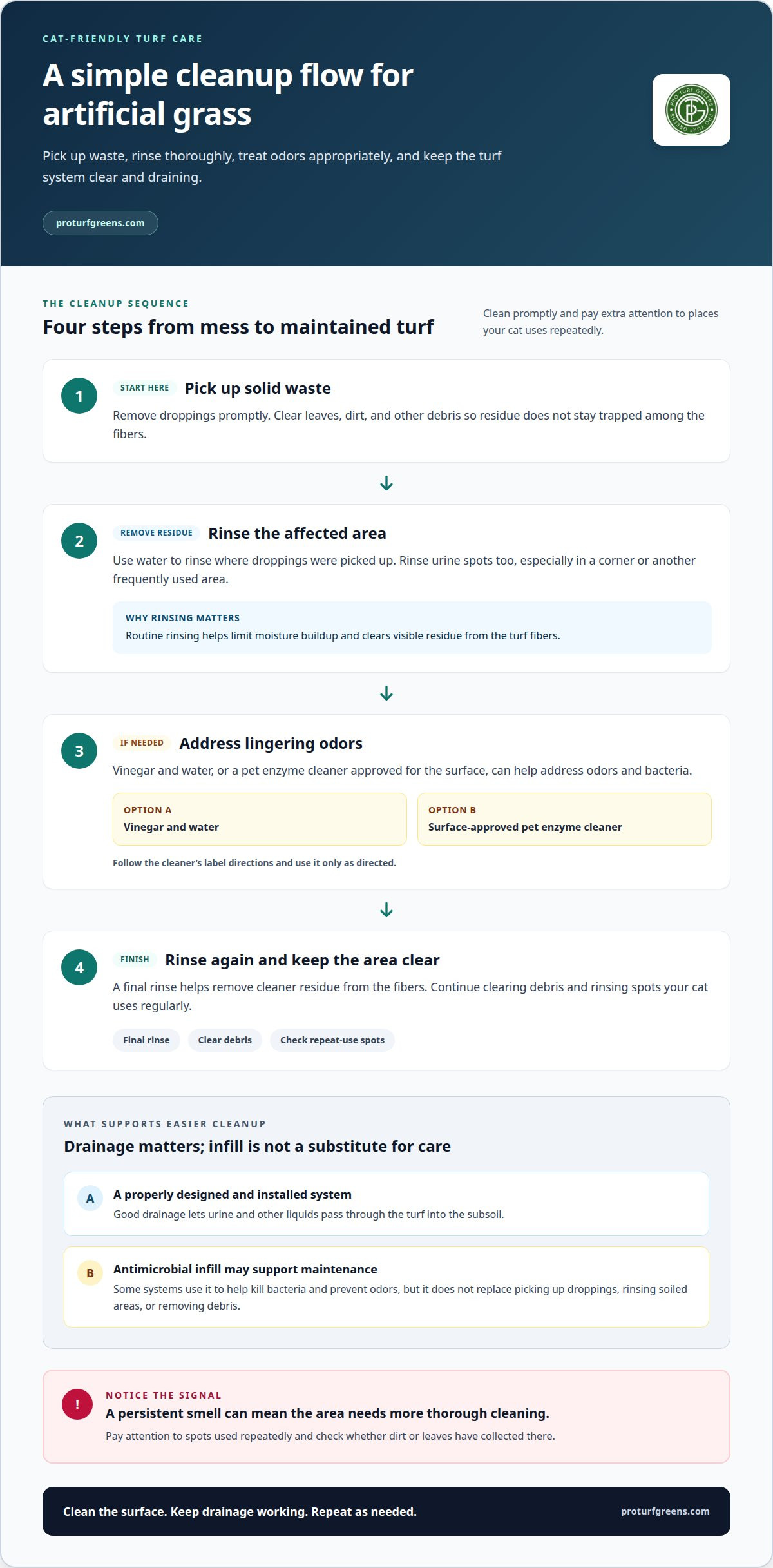
Regular cleanup helps keep artificial grass comfortable for cats and easier to maintain. Remove waste promptly, rinse the surface, use suitable cleaners and make sure the system drains effectively.
Removing Pet Waste
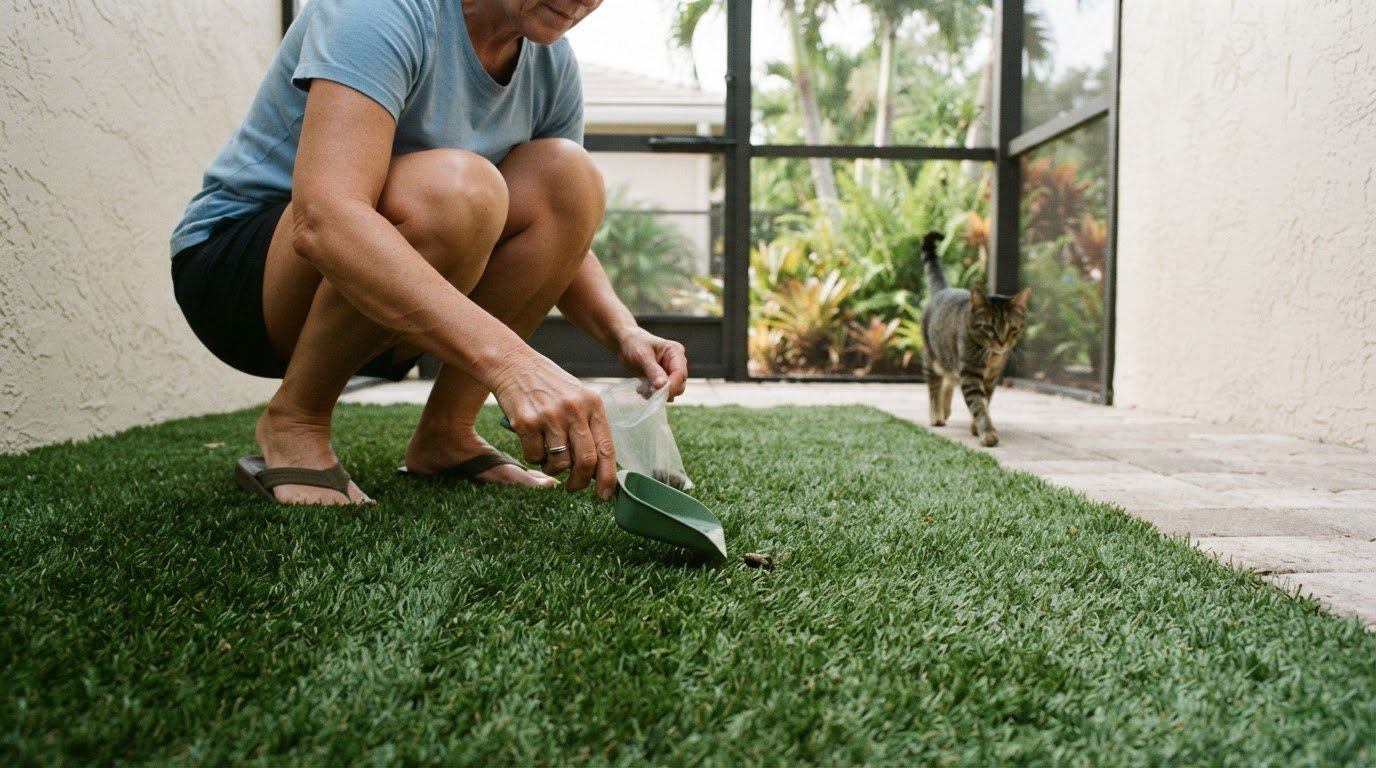
To clean up pet waste, pick up solid droppings and rinse the affected turf with water. This removes visible residue before it collects among the fibers. If your cat uses one corner, for example, remove the droppings and rinse that spot rather than leaving waste on the surface.
Rinse areas where your cat urinates, too. Vinegar and water or a pet enzyme cleaner approved for the surface can help address odors and bacteria. Follow the cleaner’s label directions and use it only as directed. A final rinse helps remove residue from the fibers.
Routine Cleaning and Contamination
Routine cleaning removes waste, dirt and debris that can accumulate on artificial grass. Regularly rinsing areas your pet uses helps limit moisture buildup, which can create conditions that bacteria and mold prefer. If leaves or dirt collect near a usual toilet spot, clear them and rinse the turf so residue does not remain trapped.
Artificial grass can hold pet urine odors that are difficult to detect and eliminate, especially if waste is left behind. A persistent smell can signal that the area needs more thorough rinsing or cleaning. Keep the surface clear of debris, and pay attention to spots your cat uses repeatedly.
Infill, Cleaners, and Drainage
Infill and drainage affect how easily liquids pass through the turf and how manageable cleanup is. Cat urine and other liquids can drain through artificial grass into the subsoil when the system is properly designed and installed to drain. Pet turf for residential use is intended to drain efficiently and be easy to clean, but routine rinsing still matters.
Some turf systems use antimicrobial infill to help kill bacteria and prevent odors. This can support maintenance, but it does not replace picking up droppings, rinsing soiled areas or removing debris. Choose a pet enzyme cleaner approved for the surface, and do not assume infill alone will keep the turf clean or odor-free.
Durability against digging and claws
Artificial turf durability depends on the surface materials and the quality of the installation. A cat’s habits matter, too: repeated scratching in one spot differs from occasional pawing.
Resistance to Scratching
Scratch resistance describes how well synthetic turf withstands repeated contact from claws. It matters most for cats that scratch after waking or repeatedly target one area. Persistent scratching can flatten, snag or loosen fibers, so inspect your cat’s favorite spots for changes. A cat that scratches beside a patio door, for example, may wear that patch faster than a rarely used corner.
Durability varies between turf systems, and no surface should be considered scratch-proof. If claws catch the fibers, redirect your cat to a suitable alternative, such as a scratching post near the outdoor area. Check the same patch periodically for visible wear to spot loose fibers or damage early.
Resistance to Digging
Resistance to digging depends on the installed surface and its edges, not just the visible turf fibers. Cats that dig at borders may work beneath an edge or seam, while a cat that only paws the surface creates different wear. This distinction matters because repeated digging can disturb the finish and expose the base.
Observe where your cat tries to dig, such as along a fence or garden border. If the turf lifts, shifts or develops a gap, keep your cat away from that spot until it is addressed. A durable-looking surface does not necessarily prevent determined digging. Installation quality and how the edges are secured affect how well the system holds together.
For cats that dig persistently, synthetic turf may not replace every natural digging area. A designated soil bed can offer an alternative, while the turf remains a cleaner route or play surface. Keep the areas distinct and watch whether your cat uses the intended spot. This can help reduce repeated clawing at a turf edge.
After installation, check the perimeter, joins and your cat’s preferred scratching spots. Look for lifted edges, gaps, loose fibers or areas that feel different underfoot. These visible signs help you track wear, though each installation may respond differently to claws. If you notice changes, limit access to the affected area until it is repaired.
Pro Turf Greens: Artificial Turf Driveways
Pro Turf Greens designs and installs artificial turf driveways for homeowners planning a broader outdoor upgrade. If your project includes a dedicated cat area, use the considerations in this guide to plan for materials, drainage and daily care. For recreational spaces, Pro Turf Greens also installs Backyard Putting Greens and Playgrounds & Recreational Turf.
An artificial turf driveway serves a different purpose from pet turf, so consider how each area will be used when planning your property. A clear layout can help separate vehicle access, recreation and spaces where pets spend time.
For a project that includes an artificial turf driveway, contact Pro Turf Greens to discuss your plans.
Plan an Outdoor Space That Fits Your Needs
As you plan your outdoor space, consider how each area should function for the people and pets who use it. Whether artificial turf is safe for cats can be part of a broader design conversation, alongside the activities your household wants to enjoy. A clear plan helps keep those needs in view as you shape the property.
Pro Turf Greens installs Backyard Putting Greens, Playgrounds & Recreational Turf, and Tee Lines & Driving Ranges. These options create dedicated areas for recreation and practice while keeping the overall design aligned with your goals. Think about the role each space should play, then choose a layout that works for your home.
Ready to discuss an outdoor turf project? Contact Pro Turf Greens for help and take the next step toward a thoughtfully planned space.
Frequently Asked Questions
Artificial Grass vs Natural Grass: Which Is Safer?
Neither surface is automatically safer in every situation; the trade-offs differ. Artificial grass avoids routine lawn fertilizers and weed killers, while natural grass offers soil for cats that like digging. A cat that chews plants or digs frequently may have different needs from one that mainly walks or rests outdoors. For homes in Fort Lauderdale, Miami, Palm Beach, Boca Raton, Delray Beach, Jupiter, Palm Beach Gardens, Weston and Coral Gables, consider the intended use and conditions of each yard area.
Can My Cat Destroy Synthetic Grass?
A determined cat can wear or disturb synthetic grass, especially if it repeatedly targets the same spot. Some cats accustomed to natural grass adapt to artificial grass, but not every cat will immediately accept its texture. Introduce the surface gradually and observe how your cat uses it. Changes in scratching or digging habits can help you spot a problem early.
Does Artificial Grass Harbor Bacteria or Mold?
Artificial grass can collect dirt and debris, and moisture can create conditions that bacteria and mold prefer. A shaded corner that stays damp, for example, deserves attention during routine yard checks. Remove leaves and other debris, then rinse areas your cat uses. If an odor persists after cleaning, check whether waste or moisture may be lingering in the turf system.
Does artificial grass cause cancer or contain crumb rubber?
Crumb rubber is an infill made from recycled tires, but it is not used in every artificial grass system. Its use on athletic fields and playgrounds does not establish that residential turf causes cancer. The word “synthetic” alone also does not identify a product’s materials. Review the stated composition of the turf and infill, and prevent cats from chewing or swallowing loose material.
Is It Safe?
Artificial turf can be suitable for cats when its materials, exposure to sunlight and everyday care fit the setting. Whether artificial turf is safe for cats also depends on how the animal uses it. A catio used for resting, for instance, has different demands from an area where a cat scratches or toilets. Consider those habits alongside the surface’s drainage and upkeep.
Is Pet Turf Suitable for Your Cat?
Pet turf may suit cats that need a defined indoor or outdoor area, including a catio over concrete or wood. To gauge an indoor cat’s response, try a small turf sample in a play or resting spot before planning a larger area. Notice whether your cat avoids, scratches or chews it. Those observations can help you decide whether the texture and intended use are a good fit.