What if the most dependable park turf plan starts below the surface? In South Florida, heavy rain, heat, and steady public use can shape how a park performs just as much as its appearance. Planning synthetic turf for community parks starts with understanding those conditions and what each area needs to support.
Choosing a surface means balancing several needs at once. Play areas, open recreation zones, and accessible routes each call for careful planning, while drainage, safety, and ongoing upkeep matter across the site. A useful starting point is to map how people will use the park, then assess whether each surface fits that activity and the site conditions.
This guide explains how to plan park turf around real activities and users, from matching the surface and base design to evaluating drainage, accessibility, heat, maintenance, and project scope. Pro Turf Greens designs and professionally installs playground and recreational turf for South Florida settings, with each project shaped around the site and community it serves.
Key Takeaways
- Start with the park’s activities and users so surface choices reflect how each area will be used.
- Plan play surfaces, accessible routes, and transitions as distinct parts of a cohesive site design.
- Compare synthetic turf and natural grass across upkeep, consistency, water needs, and project suitability.
- Document activity zones, access routes, site conditions, and constraints before making design decisions.
- Bring intended uses, site conditions, and surface selection together in one project plan.
Why Consider Synthetic Turf for a South Florida Community Park?
Synthetic turf for a park is an engineered surface selected to suit particular activities, users, and site conditions, not a one-size-fits-all lawn. That distinction matters in community parks, where a play zone, gathering space, and landscaped edge can face very different demands. Choose the surface according to how each area is intended to function.
For some park areas, synthetic turf can provide a more consistent-looking surface and reduce routine mowing compared with natural grass. That can help planners create a defined recreational zone for regular public use. It doesn’t mean the surface is maintenance-free: debris, wear, and changing site conditions still need attention. Suitability depends on the design, intended activity, local climate, and maintenance plan.
Synthetic turf has been developed for a range of settings and uses. For background on its development and technical applications, see this overview of the history of artificial turf. For park planning, the useful question isn’t simply whether turf can be installed, but where it fits and what the area needs to support.
Which community-park areas can synthetic turf serve?
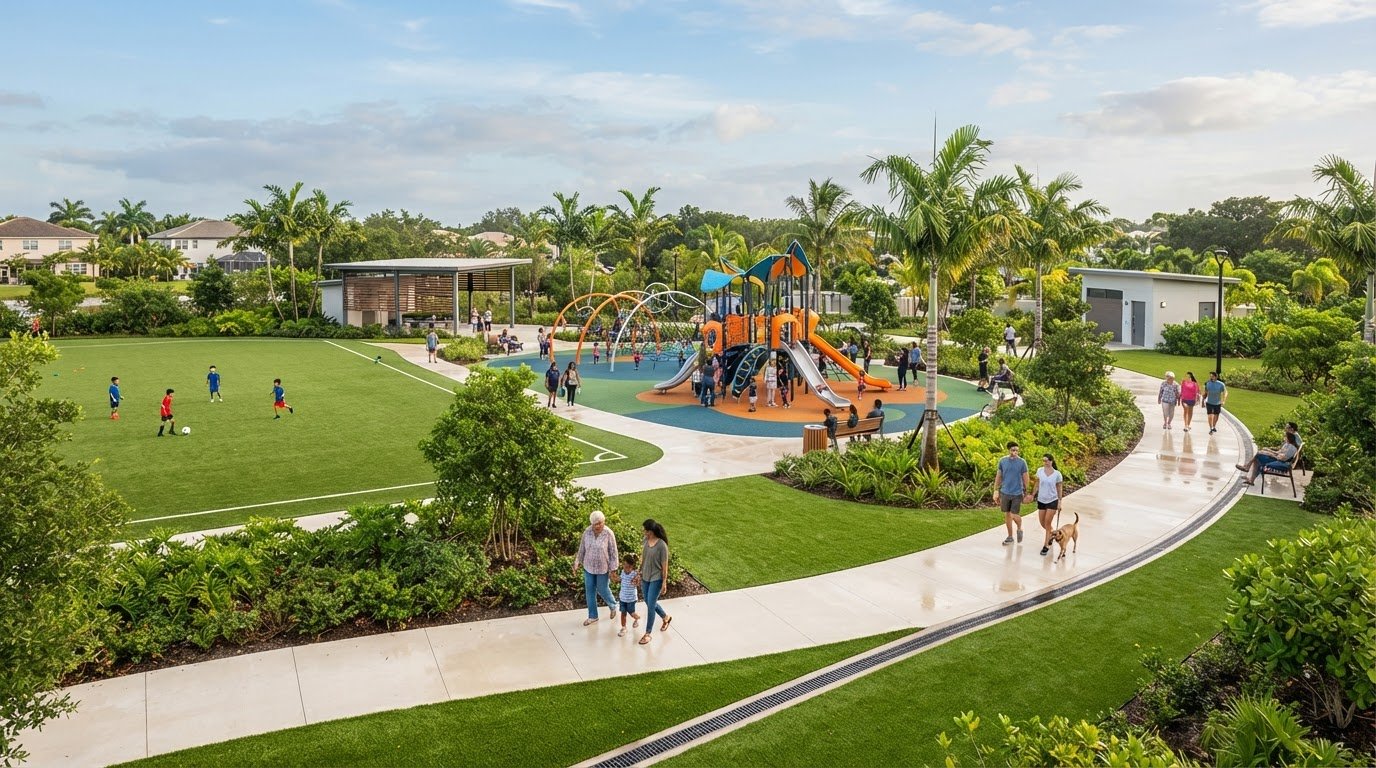
Potential applications include play areas, gathering spaces, and recreational zones. Each has a different use pattern: children may run and play in one zone, while another may host informal meetups or casual recreation. Plan active-use surfaces around those activities and users. Landscaped areas may have different priorities, such as planting or preserving a natural character.
A single park may call for multiple surface treatments rather than one material everywhere. Map activity zones and transitions early, so each surface suits its purpose instead of extending turf into areas where another landscape treatment makes more sense.
What South Florida conditions should planners consider?
Strong sun, humidity, and seasonal heavy rain belong in the site assessment. Sun and shade can vary across a park, affecting how different zones experience the elements. Note where water collects or flows after rain before settling on a surface design. Use these observations to guide planning rather than making blanket assumptions about temperature, flood resistance, or year-round use.
Considering site exposure alongside activity and upkeep creates a more useful project brief for synthetic turf for community parks. Pro Turf Greens designs and installs playground and recreational turf in South Florida, tailoring park projects to site conditions and community needs.
How Park Turf Design Connects Safety, Accessibility, and Drainage
Start surface decisions with the park’s activities, users, and site conditions, not with a turf sample alone. A play zone, accessible route, and recreational area may need different surface characteristics and construction details. Planning them together helps connect safety, access, and water management to the finished layout.
How should park planners think about play-area safety?
Start with the play equipment and potential fall height in each area. Those details inform the type of surfacing to consider. Impact attenuation depends on the complete system, including the turf and the layers beneath it, so don’t judge a surface by its appearance or face material alone. Before setting specifications, verify applicable ASTM requirements and local project rules for the site and equipment.
Accessible circulation needs separate attention. A play surface intended to address falls isn’t automatically suitable as an accessible route. Plan routes and transitions as connected but distinct elements, including how visitors will move between play areas, seating, paths, and nearby amenities. Verify applicable ADA and local accessibility requirements for the project rather than assuming a particular surface meets them.
How do accessibility and drainage shape the layout?
Map entrances, paths, transitions, and connections to park amenities before finalizing activity zones. This helps identify where surfaces meet and how visitors will move through the space. Check whether a proposed route crosses a slope, low point, or other site constraint that could affect the finished design.
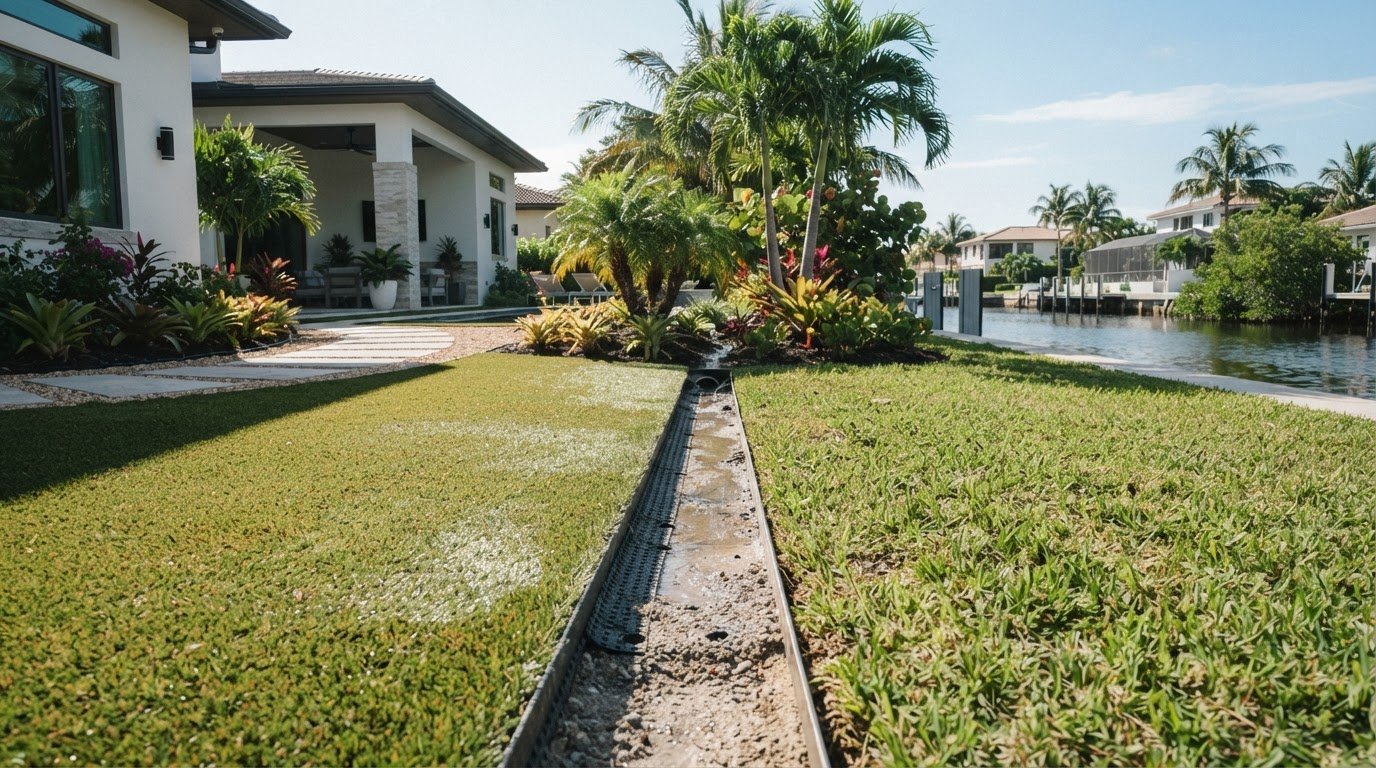
Drainage planning starts with understanding how water moves across the existing site. Review grading, drainage pathways, and low areas before installation, then coordinate base preparation and surface design with those conditions. If the layout ignores where rainwater collects or flows, the completed area may not function as intended. The goal is a cohesive plan that accounts for access and water movement, not a blanket promise of flood resistance.
For synthetic turf for community parks, design and installation should bring these decisions together from the outset. Pro Turf Greens designs and installs recreational turf in South Florida, tailoring projects to the site and its intended use. Planners developing a project can explore South Florida recreational turf design as part of that process.
Comparing Synthetic Turf with Natural Grass for Community Parks
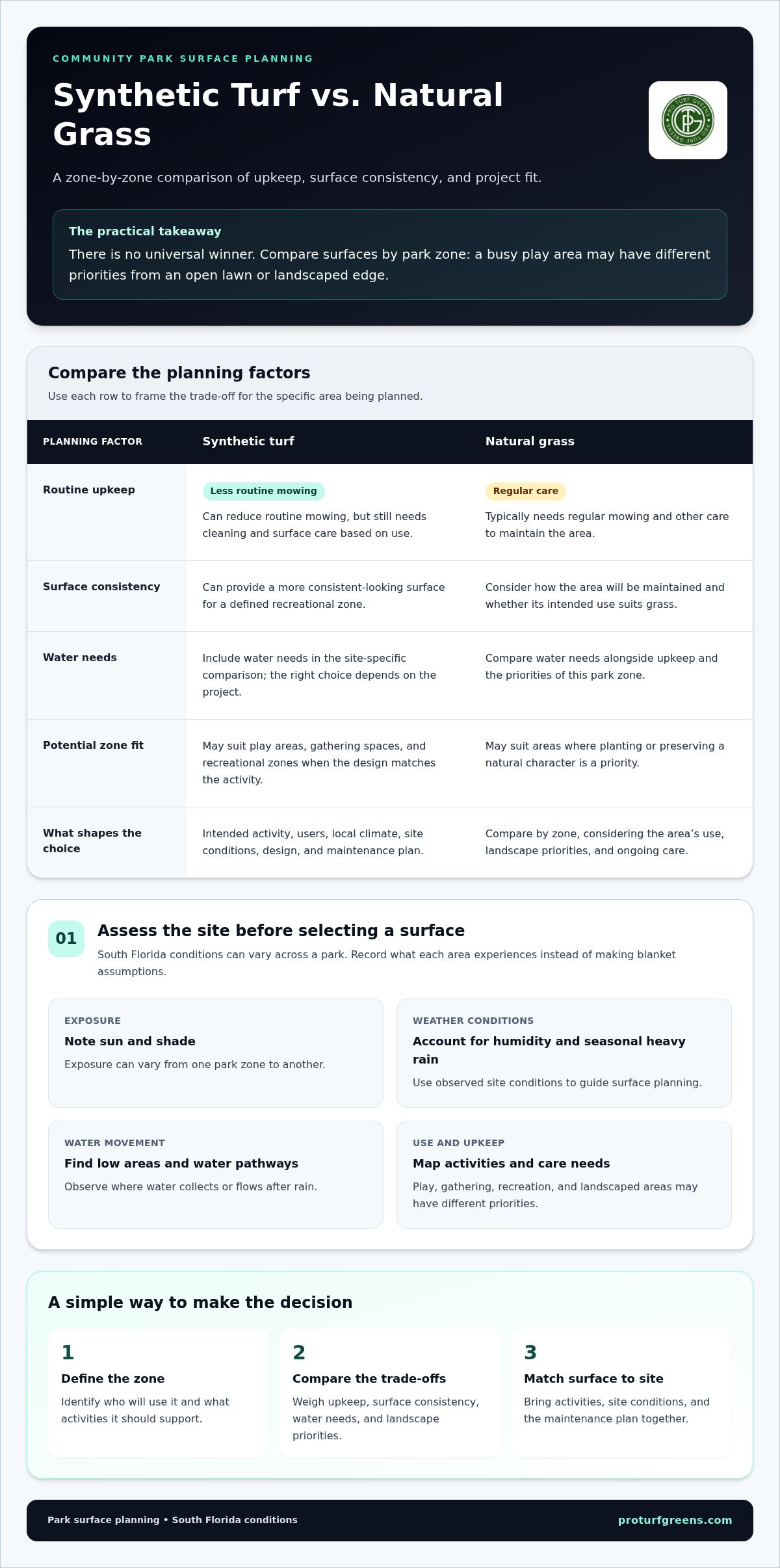
Choosing a park surface is a practical trade-off, not a contest with one universal winner. Natural grass and synthetic turf differ in routine care, appearance, water needs, and suitability for particular activities. Compare them by zone: a busy play area may have different priorities from a shaded landscape edge or open lawn.
| Planning factor | Synthetic turf | Natural grass |
|---|---|---|
| Upkeep | Reduces routine mowing, but still needs cleaning and surface care based on use. | Typically needs regular mowing and other care to maintain the area. |
| Surface consistency | Can offer a consistent appearance when the materials, installation, and care suit the site. | Appearance and condition can vary with weather, foot traffic, and care. |
| Water needs | Doesn’t need irrigation to grow, though cleaning may involve water. | May need watering to maintain growth, depending on rainfall and site conditions. |
| Project suitability | May suit selected recreational zones where a consistent surface and reduced mowing are priorities. | May suit areas where a living landscape is preferred and the site can support its care needs. |
Synthetic turf can reduce routine lawn care, but it isn’t maintenance-free. Debris removal, cleaning, and attention to wear remain part of caring for the surface. Natural grass also requires ongoing care, with needs shaped by local conditions and how people use the space.
When might synthetic turf fit a park better?
Consider synthetic turf for a zone where appearance consistency or recurring foot traffic is a priority, then match the surface system to the planned activity. A regularly used recreation area, for example, may have different requirements from a lightly used lawn or planted border. Turf isn’t automatically right for every zone; a park can combine surfaces to serve different purposes.
What trade-offs should planners include in the comparison?
Look beyond the initial surface choice. Account for sun exposure and heat, drainage, routine surface care, and eventual replacement planning. Use patterns matter too: pets, equipment, busy event schedules, and repeated foot traffic can all affect upkeep. A design suited to occasional use may not suit a heavily programmed area.
Results depend on the selected materials, site preparation, use patterns, and care over time. Keep environmental comparisons specific to the project and supported by reliable evidence rather than assuming either surface is better in every respect. A zone-by-zone comparison helps planners weigh convenience against site needs and long-term responsibilities.
A Practical Checklist for Planning Community-Park Turf
A clear project brief turns community needs into practical design decisions. Use this sequence to document how the park functions, what the site allows, and what the project team needs to coordinate before installation.
- Define park uses and users. Record intended activities, user groups, expected traffic, and operating needs. Distinguish play, gathering, recreation, and athletic uses so each zone is planned for its purpose.
- Map activity zones and routes. Mark where each activity will take place, along with entrances, accessible routes, transitions, and connections to amenities. Note where different surfaces meet.
- Document existing site conditions. Record dimensions, existing surfaces, shade and sun exposure, installation access, and visible drainage patterns. Identify low areas and other constraints that may affect layout or preparation.
- Set priorities and scope. Separate essential functions from optional enhancements. Clarify project boundaries, stakeholder responsibilities, and whether the work needs to be phased around park operations.
- Plan design and requirements. Use the brief to guide surface selection, site preparation, and project specifications. Applicable playground, accessibility, and local requirements depend on the site, so verify them for the project. The Florida playground turf safety guide offers related planning context.
- Assign installation and care responsibilities. Outline work sequencing, site access, and stakeholder coordination. Before reopening, identify who will handle routine inspection and cleaning, and how maintenance will be organized over time.
What should a community-park project brief include?
Make the brief specific enough to guide decisions: list activities, user groups, expected traffic, operating needs, and site observations in one place. Include access routes and constraints alongside dimensions and drainage notes. This gives designers and stakeholders a shared reference. Separating must-haves from optional additions also helps keep the scope focused.
How can planners prepare for installation and long-term care?
Work sequencing is easier to coordinate when access, site preparation, park operations, and stakeholder roles are discussed early. Define who will inspect and clean the surface before the site reopens, then include those responsibilities in the ongoing plan. If the park includes athletic zones, review high-performance sports turf planning as a separate design consideration.
A well-organized brief helps custom synthetic turf for community parks reflect actual use and site conditions. To discuss a South Florida recreational turf project, request a park turf consultation with Pro Turf Greens.
Plan a Community-Park Turf Project with a Local Installation Partner
A successful park-turf project brings intended activities, site conditions, and surface choices into one coordinated plan. Rather than treating turf as a finish selected at the end, use the design process to connect how each zone will be used with how it fits the site. This creates a clearer project scope and a surface plan shaped around the community.
Pro Turf Greens designs and installs recreational turf for parks, playgrounds, schools, and other settings across South Florida, including Miami, Fort Lauderdale, Palm Beach, Boca Raton, Delray Beach, Jupiter, Palm Beach Gardens, Weston, and Coral Gables. The project plan can bring site observations and stakeholder priorities together, with design decisions tailored to the park rather than assumed to suit every location.
What can a tailored park-turf design address?
A custom design can account for activity zones, circulation, transitions, and the park’s existing layout. A play area, open recreation space, and athletic zone may each have different use requirements, so connect intended activities to appropriate surface selection and installation details. Sun exposure, drainage patterns, access, and other site conditions also inform the design. The aim is a well-considered plan, not a blanket performance promise.
For municipal, school, and community decision-makers, early coordination makes project priorities easier to communicate. Gathering input from park staff, maintenance teams, and community stakeholders helps clarify which functions matter most and how the completed space will be used.
How can a community begin its project?
Bring together information that helps frame the project: available site dimensions or plans, intended uses, user and stakeholder needs, existing surface conditions, and known constraints. Notes on access, drainage, shade, and possible work phasing can also provide a useful starting point. Develop the scope around the project’s actual goals.
Pro Turf Greens partners with South Florida communities to design and professionally install recreational turf. A free consultation is a practical first step for discussing the site, priorities, and potential project approach before finalizing scope. For synthetic turf for community parks, an early conversation helps align the design with the park’s use and local conditions. Request a free turf consultation to begin discussing your project.
Build a Park Surface Plan Around Your Community
A successful park-turf project starts with the people and activities it needs to serve. Match each surface to its intended use, and plan safety, accessible routes, drainage, and maintenance as connected parts of the design. Comparing synthetic turf with natural grass by park zone can help clarify where each surface makes sense.
For synthetic turf for community parks, site conditions and thoughtful preparation matter as much as surface selection. A clear project brief gives decision-makers a practical starting point, with activity zones, user needs, access routes, and site constraints documented before the scope is finalized.
Pro Turf Greens provides synthetic turf design and professional installation across South Florida, including playground and recreational turf projects. Municipal, school, and community teams can bring their goals and site details to an initial conversation, then discuss an approach shaped around their park.
Request a free community-park turf consultation and take the next step toward a well-planned surface that supports the way your community uses its park.
Frequently Asked Questions
Is synthetic turf suitable for community parks?
Yes, synthetic turf can suit selected park areas when the surface system is designed around intended activities, users, site conditions, and maintenance. A play area, gathering space, and athletic zone may each have different requirements. Before selecting a surface, assess drainage, accessibility, sun exposure, and applicable safety requirements for the project. Turf isn’t automatically the right choice for every park zone, so consider its role within the broader site plan.
How long does synthetic turf last in a community park?
There’s no single lifespan that applies to every community-park installation. Longevity can vary with the selected turf system, site preparation, sun and weather exposure, frequency and type of use, and ongoing care. A heavily used recreation zone may experience different wear from a lightly used area. As part of project planning, discuss maintenance expectations and how the proposed design accounts for anticipated activity.
Does synthetic turf get hot in South Florida?
Surface temperature can vary with direct sunlight, shade, weather, materials, and surrounding site conditions. Turf in full sun may feel different from turf under shade, so consider exposure when locating play and recreation zones. Don’t assume any surface will stay cool during hot weather. Review how the park will be used and include practical heat-management considerations in the site-specific design, especially for areas used during sunny periods.
Does synthetic turf drain well during Florida rain?
Drainage depends on the complete installation, including site grading, base preparation, and planned drainage pathways. Turf alone won’t resolve standing water caused by underlying site conditions. Before design and installation, identify low areas and observe how water moves across the site during rain. The surface plan can then respond to those findings. Avoid assuming a system is flood-proof or assigning drainage capacity without verified project-specific information.
Is synthetic turf safe for playgrounds?
Playground safety depends on the intended use and complete surface system, including impact attenuation where required. Equipment, potential fall areas, installation, and maintenance all inform the planning. A turf label alone doesn’t establish that the finished surface meets every project requirement. Before construction, verify applicable playground standards, accessibility needs, and local specifications for the particular site and play equipment.
Is synthetic turf accessible for park visitors with disabilities?
Accessibility depends on the whole route and site design, not simply on whether turf is present. Plan how visitors will move along accessible paths, across transitions, and between play areas and amenities. The suitable surface can vary by location and intended use. Review the project against current accessibility requirements and local specifications before construction, and treat accessible routes as a coordinated part of the park layout.
What maintenance does community-park turf need?
Synthetic turf still needs regular care, and the maintenance plan should reflect the selected system, site conditions, and level of use. Tasks may include routine inspections, debris removal, and attention to drainage or heavily used areas. Assign responsibility for inspection and cleaning before the park reopens, and establish a process for reporting issues. Planning these duties early helps avoid treating turf as a maintenance-free surface.
How should a community start planning a synthetic-turf park project?
Begin by listing the park’s activities, users, desired outcomes, and known site constraints. Document existing surfaces, access routes, shade, and drainage observations, then identify requirements that need project-specific review. Pro Turf Greens designs and installs playground and recreational turf across South Florida, including Fort Lauderdale, Miami, Palm Beach, Boca Raton, Delray Beach, Jupiter, Palm Beach Gardens, Weston, and Coral Gables. Communities can request a free consultation to discuss project goals and next steps.