
Could artificial grass meet Florida’s statewide standards and still raise questions from your HOA about appearance or drainage? Yes. Florida’s Rule 62-308.100, effective May 19, 2026, limits local governments’ ability to ban compliant turf on qualifying residential properties, but it doesn’t remove an association’s architectural review process. That’s why HOA approval for artificial grass fort lauderdale homeowners seek depends on more than choosing a suitable turf product.
It’s understandable to feel uncertain when landscaping requirements are spread across governing documents, design standards, and application procedures. A clear, site-specific proposal helps the architectural review committee assess your plan, including the turf’s appearance, installation boundaries, and drainage approach. Florida law also prohibits an HOA from requiring a building permit before its architectural committee reviews an application, though government permits may still be required after approval.
This guide explains which HOA documents and review steps to examine, what to include in a visual proposal, and how to account for local installation requirements. You’ll also learn how to move from review planning toward a Fort Lauderdale turf installation designed for your property, without assuming approval is automatic.
Key Takeaways
- Start with your community’s governing documents and identify the correct architectural review process before planning the work.
- Show reviewers how the turf will look and fit the property, including its placement, edges, and transitions.
- Compare artificial grass and sod based on appearance, maintenance expectations, water use, and the documentation your HOA requests.
- For HOA approval for artificial grass fort lauderdale, submit a complete application and wait for written review before scheduling installation or removing existing landscaping.
- A tailored layout from Pro Turf Greens can help clarify your project concept as you plan a residential turf installation in Fort Lauderdale.
Why HOA Approval for Artificial Grass in Fort Lauderdale Starts With Your Community’s Rules
HOA approval can feel uncertain when landscaping differs from one property to another or when the requirements are spread across several documents. Each association has its own governing documents, review authority, and application process. For homeowners, approval means submitting a proposed change for review under the applicable rules and procedures. Living in Fort Lauderdale alone doesn’t determine whether a specific artificial grass proposal will be approved.
Association review is separate from government requirements. Florida Rule 62-308.100, effective May 19, 2026, sets minimum standards for synthetic turf on qualifying single-family residential properties of one acre or less and limits local governments’ ability to ban installations that meet those standards. It doesn’t eliminate HOA architectural review or make every design suitable for every site. Local permitting and other requirements can depend on project details, so verify current rules with the relevant government office before construction. For general background on turf and its uses, see this Artificial Turf Overview.
Which HOA documents can shape a Fort Lauderdale turf proposal?
Start with the recorded declaration, architectural or design guidelines, landscaping rules, and the association’s application forms. Read them together: one document may explain which changes require approval, while another sets design criteria or submission steps. Check amendment dates to make sure you’re using current versions. Then note submission deadlines and how decisions are communicated. This gives you a practical checklist before you prepare the proposal.
Look for language about landscape materials, visible changes, drainage, borders, or yard modifications. Rules and review authority can differ by community and property type, so don’t rely only on a neighbor’s experience or an old approval example. If a requirement is unclear, direct your question to the association through its stated process and keep the response with your project records.
Why the review process may differ between communities
Some associations assign applications to an architectural review committee (ARC); others give review authority to the board or use a property manager to receive materials and coordinate the process. The documents should identify who reviews the application, what information is required, and how the written decision is communicated. Under a July 1, 2026 amendment to Florida Statute 720.3035, an HOA can’t require a building permit before its architectural committee reviews an application, though government permits may still be required after approval.
Establish whether the proposed area is your private yard or association-controlled landscaping. A homeowner’s alteration may follow an individual architectural application, while work affecting shared landscaping or common areas can involve different authority and procedures. Florida Statutes Chapter 720 generally addresses homeowners’ associations, while Chapter 718 concerns condominium associations. Which provisions apply depends on the community’s legal structure and property. Verify current law and governing documents rather than assuming either chapter sets the same process for every property. Understanding these distinctions is an important first step toward HOA approval for artificial grass fort lauderdale homeowners can plan around.
What Fort Lauderdale HOAs May Evaluate in an Artificial Grass Application
An architectural reviewer needs to understand not only that you want artificial grass, but also how the proposed change will look and fit the property. The association may consider the visible color and texture, the area covered, the shape of the installation, and how its edges meet planting beds, walkways, fences, or other surfaces. A proposal that leaves these details unclear can be harder to assess against neighborhood standards.
Make the application specific to your yard. A simple plan with clear boundaries, labeled photos, and requested material details helps reviewers picture the finished result. Match every item to the association’s instructions, including any required forms, samples, or supporting documents. Don’t substitute a generic product description for information the application specifically requests.
How to make the proposed turf look clear on paper
Show the current yard and proposed design from useful viewpoints. A plan view can mark the turf area and its dimensions, while a perspective image helps communicate how the surface will look from the home or street. Include material or color information when requested, and label existing features so reviewers can distinguish what will stay from what will change.
- Use dated photos of the existing yard, including the proposed area and nearby landscape features.
- Mark the installation boundary and transitions to paths, planting beds, or other surfaces on a simple plan.
- Identify any sample, color, or material specifications required by the application.
For HOA approval for artificial grass fort lauderdale, make sure the visuals describe one consistent design. If the drawing shows turf extending to a walkway but the photos suggest a planted border, revise the packet so the intended edge is clear.
How to address drainage and maintenance questions
Rainfall and existing site conditions make drainage relevant to a Fort Lauderdale proposal. Describe the plan rather than promising a particular result. Note the yard’s existing slope, where water currently flows, and any nearby drains, swales, or low areas. Florida Rule 62-308.100 sets standards for qualifying installations, including permeability requirements for the turf system and subgrade, and prohibits installation in swales, ditches, or stormwater ponds. Confirm how the rule applies to the property and document site conditions accurately.
- Describe the existing surface and any visible drainage patterns in plain language.
- Outline the planned preparation and installation area without making unsupported claims about water flow or performance.
- Show how turf edges and transitions will meet adjoining surfaces, and address upkeep expectations if the application asks.
A professionally planned layout can make boundaries, transitions, and the intended appearance easier to communicate. Pro Turf Greens designs and installs residential artificial turf in Fort Lauderdale and across South Florida. Homeowners can explore a tailored turf layout as they develop a proposal for review.
Artificial Grass vs. Sod: Compare the Details Your Fort Lauderdale HOA May Notice
Choosing synthetic turf doesn’t remove the need to follow community landscaping standards. An HOA may review the finished appearance and location of either turf or natural sod, and its written rules may set expectations for planting, lawn coverage, or visible changes. Site conditions matter too. The useful comparison isn’t which option is universally better, but how each fits your property and the association’s requirements.
Use the comparison below to identify what to describe in your application and what to confirm in your community’s rules. Maintenance and water-use points are general considerations, not promises about a specific property or substitutes for the association’s standards.
- Appearance: Artificial grass has a consistent manufactured surface; sod has the varied appearance of living grass, which can change with growth and care. Compare the proposed look with neighborhood expectations, and confirm whether the HOA specifies acceptable materials, colors, or landscape coverage.
- Maintenance expectations: Synthetic turf doesn’t require mowing, while natural grass generally needs mowing and other ongoing lawn care. Don’t assume a lower-maintenance choice is automatically acceptable. Check whether the rules address upkeep, landscape condition, or permitted materials.
- Water use: Living grass typically needs water to remain healthy, with needs influenced by weather and site conditions. Artificial grass isn’t irrigated like a living lawn, but the project still needs a site-specific drainage plan. Confirm whether the HOA has landscape or irrigation requirements that apply.
- Project documentation: For either option, show the area, boundaries, and relationship to existing landscape features. A turf proposal may also need material details or installation information; a sod plan may need planting or landscape details. Follow the application’s written document requirements.
Which landscaping details are easiest to compare?
Start with the visible result: where the proposed surface begins and ends, how it meets walkways or planting beds, and whether the overall design fits the neighborhood. Then consider upkeep separately. A reviewer may assess a lawn’s appearance under community standards regardless of how much care it requires. Check the written rules for each point instead of treating one factor, such as water use, as a substitute for compliance.
Why a turf proposal still needs a site-specific plan
A generic product description can’t show how a design responds to your lot. Existing surfaces, yard shape, nearby landscape features, and drainage conditions all influence the proposed layout. A clear plan makes the intended footprint and transitions easy to understand, rather than implying every property can use the same design.
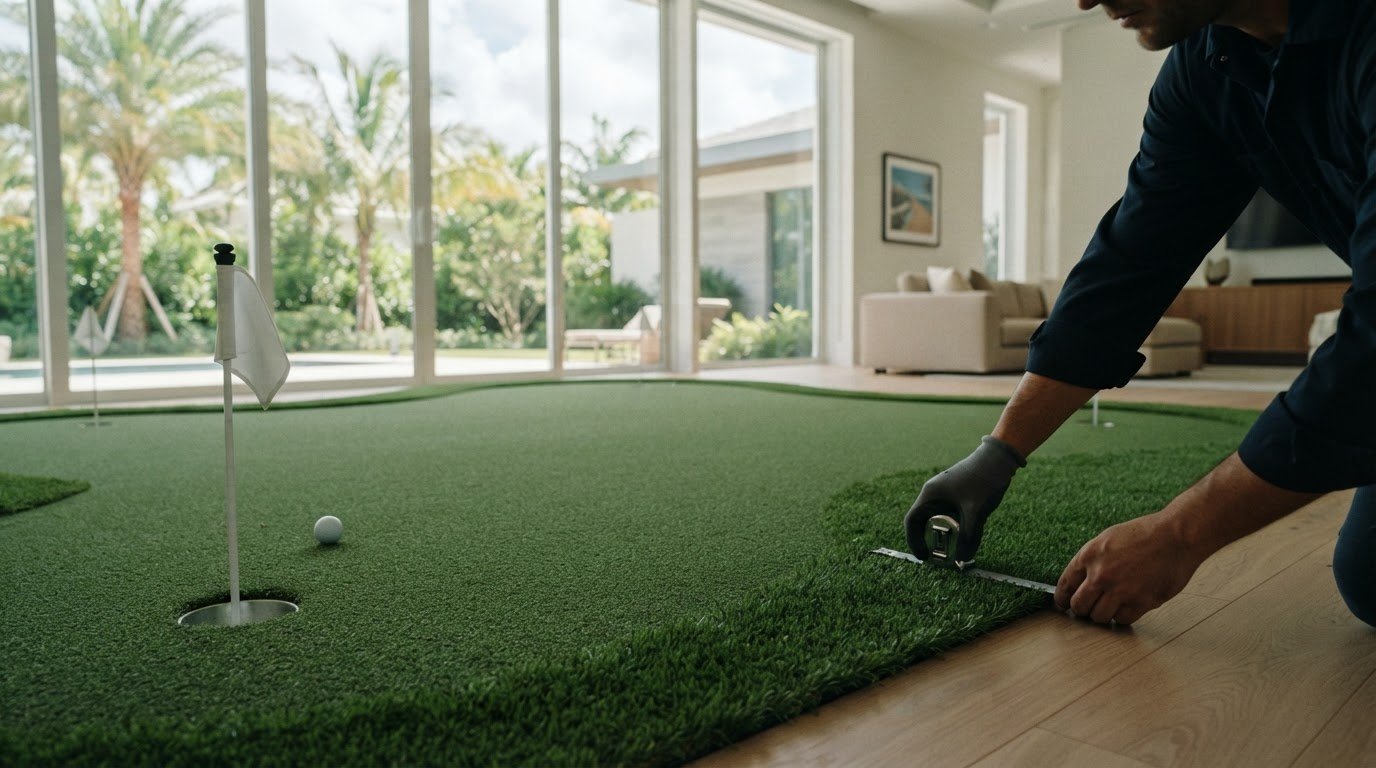
If the proposal includes a golf feature, such as a backyard putting green, the professional backyard putting green installation guide can help you consider that project type while developing a site-specific concept. Whether the plan is for a lawn or a golf feature, match its details to the HOA’s application instructions. This gives reviewers a concrete proposal to assess without suggesting that artificial grass is exempt from community rules or automatically approved.
How to Request HOA Approval for Artificial Grass in Fort Lauderdale
A clear application helps the association understand the exact work you’re proposing and gives you a record of the review. Follow the community’s stated process rather than relying on another homeowner’s experience. Keep association approval separate from government requirements: an HOA decision doesn’t establish whether a government permit or other local approval applies to your property.
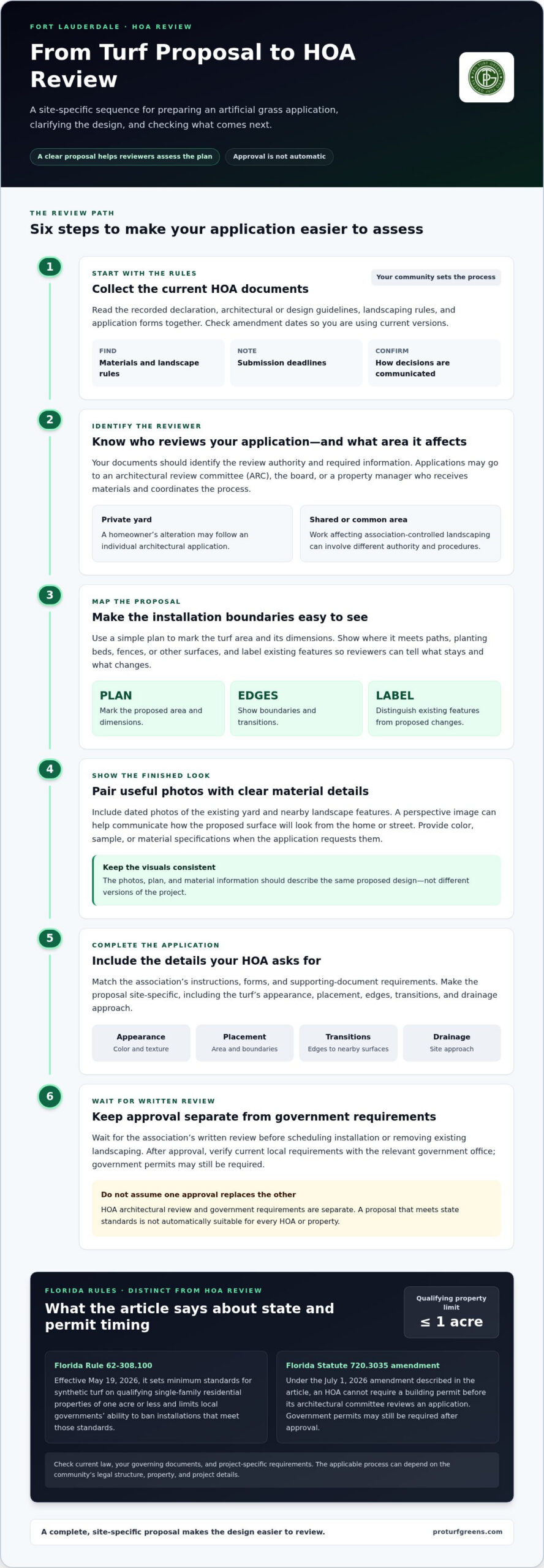
- Read the current rules. Review the governing documents, landscaping standards, application instructions, and any forms specific to exterior changes. Note submission deadlines and how the association says it will issue a decision.
- Confirm the application route. Identify whether materials go to an architectural review committee, the board, or a property manager, and confirm the accepted submission method. Ask procedural questions through the association’s designated channel.
- Prepare a site-specific plan. Assemble the required form, photos, layout, scope description, and any requested turf or drainage details. Check that the documents describe the same boundaries and finished design.
- Submit the complete packet. Save a copy of everything you send, along with the date and any delivery confirmation. Avoid scheduling construction or removing existing landscaping while the application is under review.
- Wait for written review. Keep the association’s response with your project records. If the decision includes conditions, understand them before moving ahead with the work.
Florida Statute 720.3035, as amended effective July 1, 2026, prohibits an HOA from requiring a homeowner to obtain a building permit before its architectural review committee reviews the application. Government permits may still be required after HOA approval. Confirm current requirements with the City of Fort Lauderdale or Broward County as applicable to your project. Association approval is not a substitute for that separate verification.
A practical HOA submission checklist for homeowners
Use the association’s instructions as your controlling checklist. Include the supporting materials requested, and make each item clear and consistent. A concise scope description should identify the project area and intended work without relying on vague terms such as “replace the lawn.” Retain both your submitted packet and the written response for reference.
- Completed association application form and labeled photos of the existing yard.
- Requested site plan, material details, or samples.
- Drainage notes or other supporting information required by the application.
- A copy of the submission and the association’s written decision.
What to do if the HOA asks for changes or denies the proposal
Keep the exchange constructive. Ask which written requirement or specific design concern informs the response, then compare that feedback with your submitted plan. A request to adjust an edge, boundary, or visible feature may call for a targeted revision rather than a completely different proposal. Review the governing documents for resubmission or appeal procedures and follow their stated steps.
For help shaping a residential turf concept into a clear, site-specific plan, request a Pro Turf Greens consultation. A well-organized application can support a fair review, but HOA approval for artificial grass fort lauderdale homeowners seek is never automatic.
Plan an HOA-Ready Fort Lauderdale Artificial Grass Project With Pro Turf Greens
Once you understand the association’s process, turn your yard goals into a design that’s clear on paper and tailored to the property. Pro Turf Greens designs and professionally installs residential artificial turf, including lawns and custom turf applications. A thoughtful layout can show where the work will happen, how it meets existing surfaces, and what the finished space is intended to look like.
Design planning can support a more complete application, but it can’t guarantee HOA approval. The association makes its decision under its governing documents and review procedures. Keep the design materials consistent with what you submitted, and don’t proceed with work until you’ve received the required approval and verified any separate government requirements that apply.
Turn the approved concept into a custom installation plan
After approval, the installation plan should reflect the concept the association reviewed. Pro Turf Greens can tailor a residential layout to the property’s boundaries, existing surfaces, and intended use, helping align the project scope with the approved design. A lawn, pet area, or backyard putting green may call for a different arrangement, so describe the specific application rather than relying on a generic turf description.
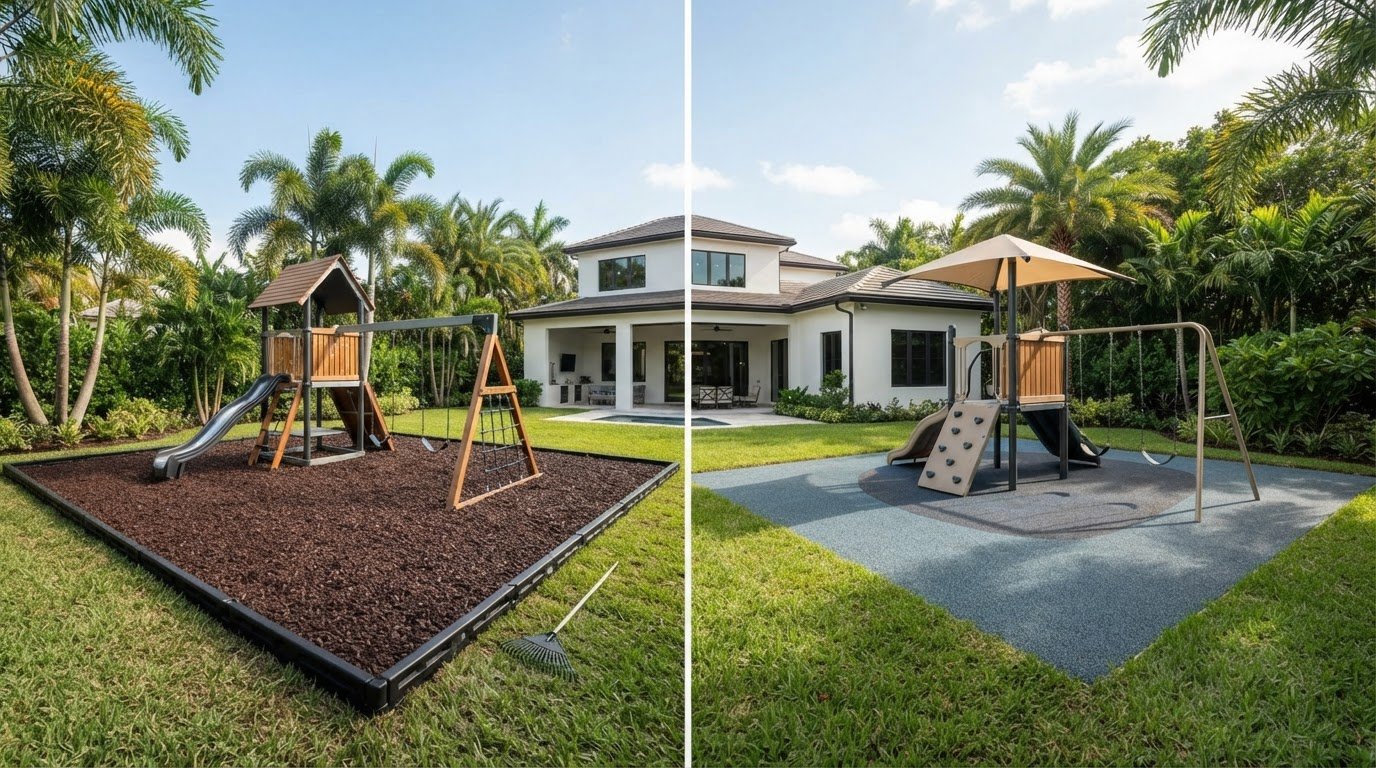
If your HOA proposal includes a shared play area, the Florida playground turf safety guide may help inform that part of the project. For a private residential yard, keep the scope focused on the approved area and any conditions stated in the association’s decision. If a design adjustment becomes necessary, document it and follow the HOA’s process for review before changing the approved concept.
Take the next step with a local consultation
A consultation is an opportunity to discuss your yard, intended use, and the association’s submission requirements while developing a project-specific plan. Bring the application instructions or any written feedback you’ve received so the proposed layout can address the details reviewers need to understand. Homeowners seeking HOA approval for artificial grass fort lauderdale can use this planning stage to clarify the concept without treating professional design as a promise of association approval.
Pro Turf Greens offers a free consultation by phone or through its website. To discuss your residential turf project and explore a tailored design, call 561-221-1010 or Request a free consultation with Pro Turf Greens.
Take the Next Step Toward a Turf Plan That Fits
Your HOA’s written response can become a useful starting point for shaping the project, whether it identifies a condition to address or confirms the concept can move forward. Keep the approved scope close as you plan the installation, so the finished work stays aligned with what the association reviewed. A measured next step can turn the idea into a considered improvement for your outdoor space.
Because HOA approval for artificial grass fort lauderdale depends on the specific community and proposal, treat design and review as connected processes, but not interchangeable ones. Pro Turf Greens offers a free consultation to discuss your artificial turf goals and help you consider a plan for your property. Bring your HOA’s instructions or written feedback to make the conversation more focused. Pro Turf Greens designs and installs artificial turf in Fort Lauderdale, Miami, Palm Beach, Boca Raton, Delray Beach, Jupiter, Palm Beach Gardens, Weston, and Coral Gables.
Request a free artificial turf consultation to discuss a tailored project for your property. With careful planning, you can move forward with clarity and confidence.
Frequently Asked Questions
Can an HOA in Florida prohibit artificial grass?
It depends on the community’s governing documents, applicable law, and the details of the proposed installation. Don’t assume artificial grass is either automatically permitted or always prohibited. HOA standards govern association review, while municipal rules address separate local requirements. Check current documents and applicable statutes for your property. Florida Statutes Chapter 720 or Chapter 718 may be relevant depending on whether the community is structured as a homeowners’ association or condominium association.
Does Fort Lauderdale require a permit for residential artificial grass?
There isn’t a single permit answer for every Fort Lauderdale residential turf project. Requirements may depend on the property, project scope, and rules in effect when work is planned. City or county requirements are separate from an HOA’s architectural review, so satisfying one process doesn’t settle the other. Before work begins, verify the current requirements that apply to your specific project with the City of Fort Lauderdale and Broward County.
Is artificial grass considered landscaping under HOA rules?
An association may define landscaping in its declaration, architectural standards, or application materials, and its wording can affect how it reviews artificial turf. The label alone doesn’t establish whether your project needs approval. Search current governing documents for terms such as “landscaping,” “exterior alterations,” and “artificial materials.” If more than one provision appears relevant, follow the association’s stated application process and keep a copy of any written clarification you receive.
Can an HOA require samples or photos before approving artificial grass?
Yes, an association may request supporting materials if its current application instructions call for them. One community might request photographs and turf details, while another may specify a different submission package. Use the association’s current form as your checklist instead of relying on another homeowner’s prior application. Keep copies of the completed form, all photos, plans, or samples submitted, and the association’s written response for your project records.
What happens if I install artificial grass before receiving HOA approval?
Possible consequences depend on the community’s governing documents and procedures, so a fine or removal shouldn’t be assumed as certain. Starting work first can still lead to avoidable disputes, redesign, or rework if the association challenges the project. Before changing the yard, check the required approval sequence and wait for the association’s written decision. If the response includes conditions, clarify how they affect the planned scope before construction begins.
Does HOA approval replace city or county approval for artificial grass?
No. HOA review and government requirements are distinct processes. The association considers its governing documents and architectural standards, while city or county rules may apply to the project based on its scope and location. Approval from one doesn’t establish that the other requirements have been met. For a Fort Lauderdale installation, verify current City of Fort Lauderdale and Broward County rules that apply to your property before construction.
Can an HOA approve artificial grass for a shared community area?
An HOA may consider a shared-area proposal, but the association’s governing documents and decision-making procedures determine how it’s handled. Common property isn’t the same as an individual homeowner’s yard, so a resident shouldn’t authorize or schedule work on it independently. A proposal may need to address how the space will look and be used, who oversees upkeep, and whether site conditions suit the design. Follow the association’s process for common-area decisions.