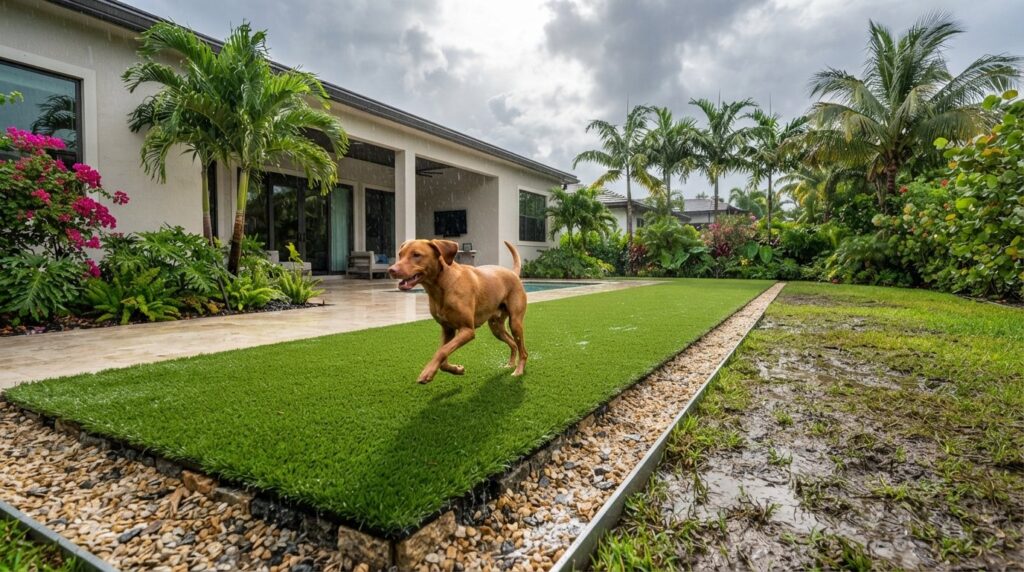
Imagine a typical Tuesday afternoon in Fort Lauderdale where a sudden tropical downpour dumps two inches of rain on your yard in thirty minutes. Within moments, your lawn transforms into a saturated bog, and your dog is already heading for the back door with paws caked in thick mud. You’ve likely spent years battling yellowing grass and the persistent odor of damp soil, only to find that traditional sod cannot survive the combination of pet activity and South Florida’s intense humidity. It’s a frustrating cycle that many homeowners in Miami and Palm Beach know all too well. This guide introduces you to the most durable mud-free dog run solutions engineered to handle our state’s 60 inches of annual rainfall.
You’ll discover how specialized pet turf systems and high-drainage sub-bases create a pristine, year-round outdoor space that remains functional regardless of the season. We will cover everything from 2026 Florida Statutes regarding synthetic turf to the antimicrobial materials that keep your backyard smelling fresh and feeling cool, even in the peak of July. By following this expert selection checklist, you can finally eliminate the mess and reclaim the beauty and cleanliness of your home’s exterior.
Key Takeaways
- Understand why South Florida’s extreme rainfall and high water table necessitate a specialized drainage system rather than simple topsoil or organic mulch.
- Evaluate essential performance metrics, including a vertical drainage capacity of at least 30 inches per hour, to identify the best mud-free dog run solutions for your home.
- Compare the long-term hygiene and temperature benefits of premium synthetic turf against the maintenance challenges and heat retention of loose aggregates like pea gravel.
- Discover the critical role of sub-grade engineering, highlighting how proper excavation and stone base selection prevent the “mud-pumping” effect common in local yards.
- Learn how a professional installation ensures your outdoor space remains clean, dry, and odor-free even through the peak of the tropical wet season.
Why Traditional Dog Runs Fail in the South Florida Climate
South Florida homeowners often face a losing battle against the elements. The specific combination of porous sandy soil and sudden, intense precipitation creates a unique environmental challenge for pet owners. While traditional landscaping might look lush for a few months, the introduction of a high-energy dog quickly exposes the fragility of natural surfaces. Once the protective layer of grass is compromised, the yard enters a “Point of No Return” where the ground stays permanently soft. This cycle of saturation and erosion effectively turns a backyard into a permanent swamp zone, leading many to seek specialized mud-free dog run solutions.
Organic materials like wood chips or cypress mulch are frequently suggested as quick fixes, but they rarely withstand the local humidity. These materials absorb moisture and trap heat, creating an ideal breeding ground for parasitic fungi and mold spores. During heavy storms, loose mulch often floats and displaces, leaving behind a patchy, uneven surface that retains foul odors from trapped pet waste. The result is an unsightly, unhygienic area that requires constant replenishment without ever solving the underlying drainage problem.
The Tropical Rain Factor
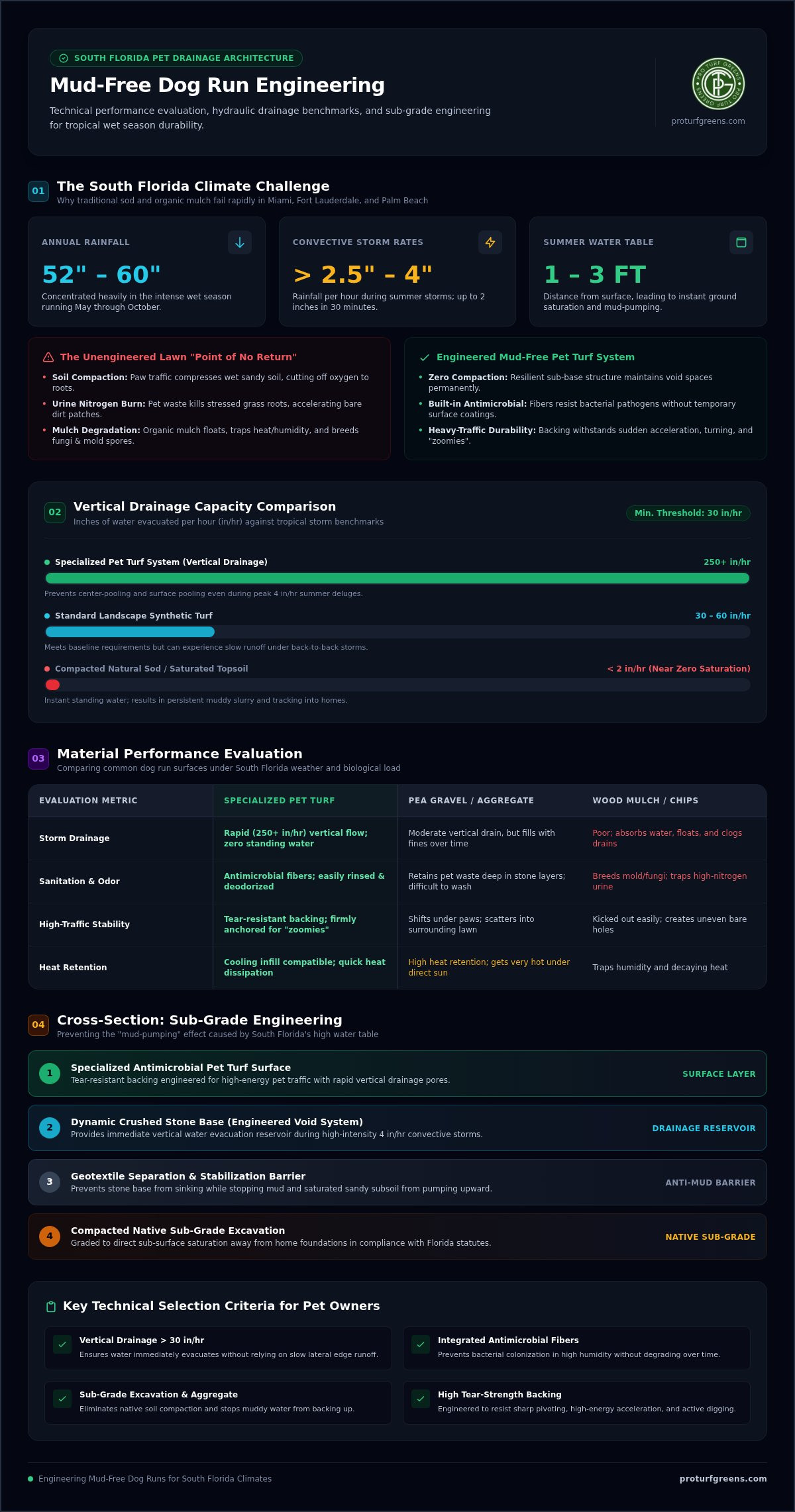
South Florida receives an average of 52 to 60 inches of rainfall annually, with the vast majority falling during the intense wet season from May through October. Standard backyard drainage systems were never designed to handle convective summer thunderstorms that deliver rainfall rates exceeding 2.5 inches per hour. In cities like Miami and Fort Lauderdale, the water table often sits within one to three feet of the surface during these months. This means the ground reaches total saturation almost instantly. Waiting for the yard to dry isn’t a viable strategy when the next storm is only hours away; instead, the soil remains a consistent, muddy slurry that pets track directly into your home.
Pet Waste and Sanitation Issues
A muddy backyard is more than just a cleaning nuisance; it’s a significant sanitation risk. When dog urine interacts with saturated soil, the high nitrogen content quickly kills any remaining grass roots, accelerating the transition to bare dirt. Mud acts as a porous sponge, trapping bacteria and pathogens in a damp environment where they can thrive for weeks. Unlike high-quality synthetic turf surfacing, which features engineered drainage and antimicrobial properties, natural soil becomes compacted under paw traffic. This compaction prevents oxygen from reaching the root zone, ensuring that new grass cannot grow back and leaving you with a permanent swamp zone that is nearly impossible to sanitize effectively.
The Mud-Free Essentials: A Performance Evaluation Checklist
Selecting the right materials for a dog run requires more than just an aesthetic eye. In South Florida, your choice must withstand extreme hydraulic pressure and high UV exposure. A reliable checklist for mud-free dog run solutions begins with technical performance metrics that prioritize sanitation and rapid water evacuation. You need a system that doesn’t just look like a lawn but functions like a high-performance drainage engine. This requires evaluating materials based on their ability to handle the “zoomies” without shifting, while simultaneously managing the biological load of a multi-pet environment.
Durability is non-negotiable for high-traffic pet areas. A high-quality backing should resist tearing even when large breeds accelerate or pivot sharply. Beyond physical strength, antimicrobial protection must be integrated into the fibers themselves rather than applied as a temporary coating. This ensures that the surface remains hygienic and odor-free, preventing the buildup of bacteria that typically thrives in damp, porous environments. If you’re unsure which material best suits your yard’s specific sun exposure, a custom site evaluation can provide clarity on the best layout for your needs.
Vertical vs. Edge Drainage
The most critical factor is the vertical drainage rate. While standard landscape products might drain 30 to 60 inches of rain per hour, specialized pet systems can exceed 250 inches per hour. This capacity is vital because local thunderstorms often deliver four inches of rain in a single hour. Relying on lateral or edge drainage often leads to center-pooling, where water sits on the surface and creates a slip hazard. Understanding Florida soil drainage and assessment is essential for ensuring your base layer can actually move this volume of water away from the surface. Permeability in South Florida sub-bases refers to the ability of the compacted stone layer to allow water to pass through into the water table without trapping silt or organic debris.
Pet Safety and Comfort Standards
Surface temperature is a significant safety concern for Florida pet owners. Standard synthetic fibers can reach 165°F in direct sunlight, which poses a severe burn risk to canine paw pads. High-end mud-free dog run solutions utilize heat-reflective technology and round-grain cooling infills to lower these temperatures by up to 30 degrees. This ensures your pets remain comfortable even during the peak afternoon heat in Miami or Fort Lauderdale. Furthermore, the “paw-feel” should balance softness with traction; a surface that is too slippery when wet can lead to joint injuries, while a surface that is too abrasive can cause irritation during play.
Comparing Popular Mud-Free Materials for High-Traffic Pet Areas
Selecting the right surface for a high-traffic pet area involves balancing upfront costs with long-term durability and hygiene. While many homeowners initially seek budget-friendly mud-free dog run solutions, the humid Florida climate quickly separates professional-grade systems from temporary fixes. Professional-grade synthetic turf remains the gold standard because it combines high-flow drainage with a surface that won’t shift, rot, or harbor pests. Unlike loose materials, it provides a stable, uniform environment that withstands the “zoomies” and heavy tropical downpours without deteriorating.
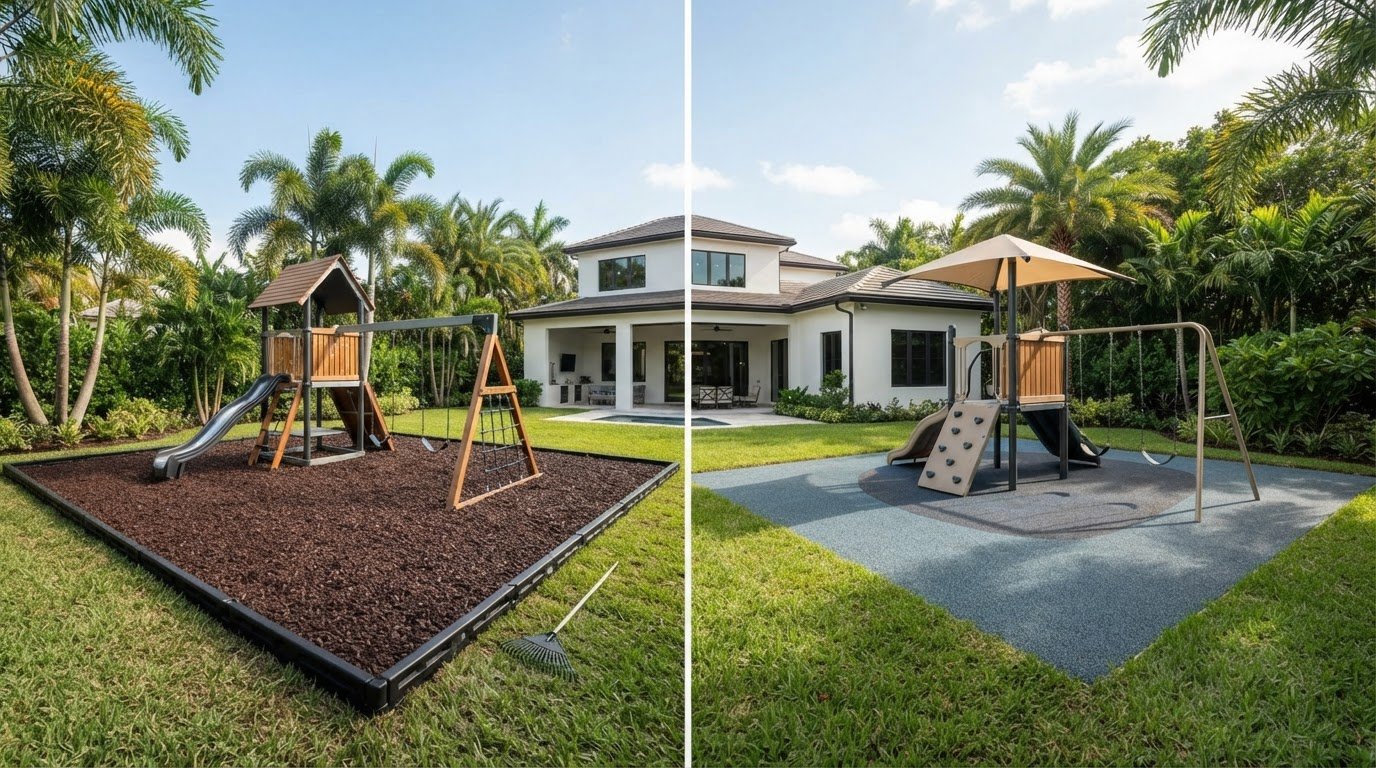
In contrast, pea gravel and river rock are often marketed as low-cost alternatives. While these aggregates offer decent drainage, they introduce significant maintenance challenges. Rounded stones shift constantly under paw traffic, creating uneven surfaces that can be uncomfortable for your dog’s joints. More importantly, these materials trap solid waste and hair, making them difficult to sanitize effectively. Over time, the stones can even get lodged between paw pads, leading to irritation or injury during active play.
Synthetic Turf vs. Aggregates
The choice between synthetic turf and aggregates often comes down to maintenance and sanitation. Raking gravel back into place after a Florida thunderstorm is a never-ending chore, whereas synthetic turf stays secured to its engineered base. From a hygiene perspective, liquid waste passes directly through the turf’s permeable backing into the stone sub-base. The structural principles behind all-weather mud-free surface construction emphasize that stability and drainage must work together to prevent surface contamination. While turf has a higher initial investment, its 10 to 15-year lifespan offers a much better return on investment than gravel, which requires frequent topping off and deep cleaning.
The Problem with Organic Mulch
Organic options like wood chips or rubber mulch are common in residential yards but are often excluded from professional daycare settings. Wood mulch breaks down rapidly in South Florida’s humidity, eventually turning into “organic mud” that retains moisture and fosters fungal growth. It also poses a safety risk, as dogs may ingest the chips or suffer from painful splinters. Rubber mulch presents a different hazard; it can reach surface temperatures between 140°F and 165°F in direct sun, risking paw burns. For a truly sanitary environment, learning how to clean synthetic grass is far simpler than managing the bacterial buildup found in damp, decomposing mulch. Hybrid turf, which attempts to mix synthetic fibers with live grass, is equally risky in Florida, as the living roots often rot in the saturated, high-traffic soil.
Implementation Guide: Engineering a Dry Dog Run
A truly effective mud-free dog run solutions system is an exercise in hydraulic engineering rather than simple landscaping. While the green surface provides the aesthetic appeal, the structural integrity of the installation depends entirely on the preparation of the sub-grade. In South Florida’s high-water-table environment, simply laying turf over existing soil results in failure as the organic matter underneath continues to rot and shift. Professional installation addresses this by creating a multi-layered filter that manages both heavy rainfall and biological waste.
The process begins with the precise removal of four to six inches of native soil. This excavation eliminates the “muck” layer that holds moisture and fosters the bacterial growth discussed in previous sections. Once excavated, the area is backfilled with a compacted, angular open-graded aggregate. Using #57 stone or similar crushed limestone ensures that the base remains stable under the heavy traffic of active dogs while providing a high-volume reservoir for stormwater. This structural foundation is what prevents the surface from sinking or becoming uneven over time.
Many DIY projects fail because they use standard plastic weed barriers that act as an impermeable liner. In a professional dog run, we utilize a non-woven geotextile fabric. This specialized membrane allows water and urine to pass through freely while preventing the native sandy soil from migrating upward and clogging the drainage base. It’s a critical component for maintaining the long-term permeability of the system in cities like Miami and Fort Lauderdale.
The Three-Layer Drainage System
- Layer 1: The permeable synthetic surface, featuring a flow-through backing that handles rainfall rates exceeding 250 inches per hour.
- Layer 2: The compacted aggregate base, providing the structural foundation and vertical drainage channel.
- Layer 3: The graded native sub-soil, prepared to move water away from the property’s foundation and into the local water table.
Odor Control and Infill Management
The final step in engineering a dry dog run is the application of specialized infill. Unlike standard silica sand, which can compact and trap odors, antimicrobial infills like zeolite are designed to neutralize ammonia on contact. These round-grained materials also protect the turf fibers from UV degradation and heavy foot traffic, ensuring the blades stay upright and resilient. For a deeper look at material science, you can read more about the best infill for pet turf for local conditions. Ready to transform your backyard? Schedule a professional site evaluation to see how our engineering standards can solve your mud problems for good.
Professional Installation: The Ultimate Mud-Free Solution
While the engineering principles of sub-base construction are straightforward on paper, the physical execution requires a level of precision that DIY efforts rarely achieve. Many homeowners attempt to install their own mud-free dog run solutions only to see the system fail within the first six months. This usually happens because residential-grade equipment cannot provide the necessary compaction for the aggregate base, or because the grading doesn’t account for the extreme volume of water typical during a Miami cloudburst. Without professional-grade excavation and heavy-duty plate compactors, the ground eventually shifts, creating new low spots where water pools and mud returns.
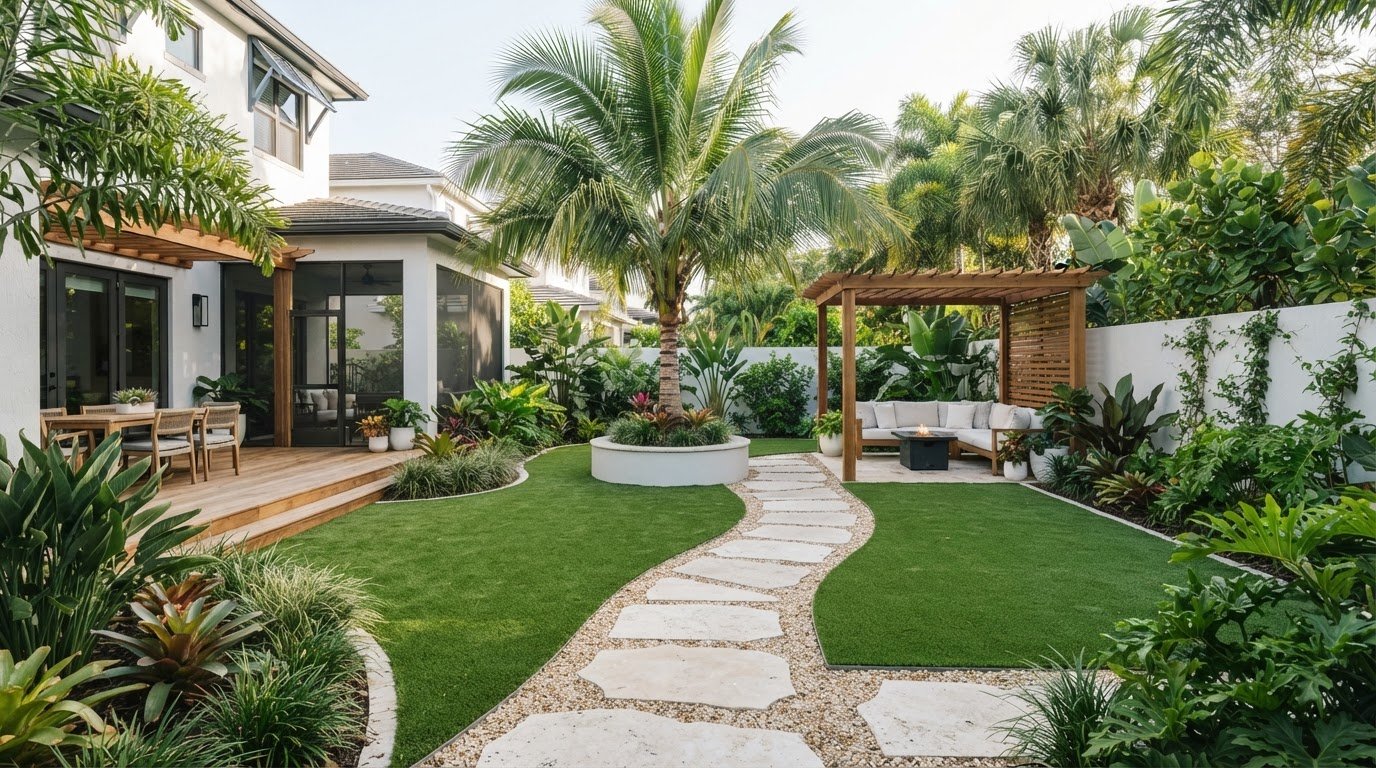
Pro Turf Greens approaches every project as a partnership in transformation. We don’t just lay turf; we engineer a comprehensive drainage system tailored to your property’s specific topography. Our team understands that a dog run shouldn’t be an eyesore tucked in a corner. It should be a functional, beautiful extension of your luxury outdoor living space. By integrating pet-specific zones with backyard putting greens or recreational turf, we create a cohesive aesthetic that enhances your home’s value while solving the practical mess of muddy paws once and for all.
Custom Design for Local Homes
Every property in South Florida presents a unique set of challenges. Whether you’re managing a compact patio in Boca Raton or a sprawling estate in Jupiter, the solution must be scaled appropriately to the land. We focus heavily on professional grading, ensuring that all runoff moves efficiently away from your home’s foundation and toward designated drainage areas. This level of detail allows us to create seamless transitions between different zones, such as connecting your pet’s play area to custom turf driveways or athletic surfaces. The result is a unified landscape that remains pristine even during the peak of the rainy season.
The Pro Turf Greens Quality Guarantee
Our commitment to excellence is grounded in the use of high-performance, pet-safe materials specifically selected for the Florida climate. We take quiet pride in our craftsmanship, knowing that our local expertise in Fort Lauderdale and Miami leads to superior project longevity. We avoid high-pressure tactics, opting instead to let the resilience of our custom-designed drainage systems speak for itself. If you’re ready to leave the “mud cycle” behind and upgrade to a clean, dry outdoor space that your family can enjoy year-round, contact us at 561-221-1010 to start your journey toward a permanent, mud-free solution.
Upgrade Your Backyard with a Year-Round Outdoor Sanctuary
South Florida’s unique climate demands a shift from traditional landscaping to specialized engineering. You’ve seen how the combination of intense tropical downpours and high-traffic pet activity can quickly destroy a natural lawn, leaving your home vulnerable to constant messes. By prioritizing high-flow drainage engineering and utilizing specialized pet-safe infill, you can finally break the cycle of muddy paws and yellowed grass. These mud-free dog run solutions don’t just solve a utility problem; they represent a significant upgrade to your home’s functionality and aesthetic appeal.
Our local South Florida expertise ensures that every installation is built to withstand the specific challenges of the Miami and Fort Lauderdale regions. We take pride in delivering results that balance technical precision with a high-end finish. If you’re ready to transform your outdoor space into a pristine, dry sanctuary for your pets, we invite you to take the next step. Request Your Free Mud-Free Consultation today and discover the difference that professional craftsmanship makes. Your clean, dry backyard is just a conversation away.
Frequently Asked Questions
What is the best ground cover for a dog run to prevent mud?
Professional-grade synthetic pet turf is the superior choice for homeowners seeking long-term mud-free dog run solutions. It eliminates the organic soil layer entirely, preventing mud formation at the source. Unlike wood chips that rot or gravel that shifts, this engineered surfacing provides a stable, clean environment for your pets. It easily withstands heavy paw traffic while allowing liquid waste to drain instantly into a specialized stone sub-base.
Can artificial turf handle heavy rain in South Florida without flooding?
Yes, provided the system utilizes a high-flow, fully permeable backing rather than standard hole-punched products. Specialized pet systems can drain hundreds of inches of water per hour, which is essential for handling intense Miami and Fort Lauderdale cloudbursts. A professional installation ensures that water moves through the turf and into the aggregate base immediately, preventing surface pooling and keeping the area usable even during the peak wet season.
How do I stop my dog from bringing mud into the house?
Transitioning your pet’s high-traffic zones to mud-free dog run solutions is the most effective way to keep your interiors clean. By replacing natural sod with synthetic turf and an engineered stone base, you remove the dirt and muck that clings to paws. Even after a severe thunderstorm, the surface remains dry and debris-free. This eliminates the need for constant paw-wiping and prevents yellow patches or soil erosion inside your home.
Is synthetic grass safe for dogs’ paws in the Florida heat?
Modern pet turf is safe when equipped with heat-reflective fiber technology and round-grain cooling infills. These specialized materials can lower surface temperatures by 15 to 30 degrees compared to standard artificial grass. While dark rubber mulch can reach dangerous levels in the sun, high-end turf stays comfortable. Owners in Palm Beach and Boca Raton should always opt for antimicrobial zeolite infills to maintain both coolness and hygiene for their pets.
How do you clean a dog run made of artificial turf?
Cleaning is a straightforward process that involves picking up solid waste and rinsing the area with a garden hose. The permeable backing allows urine to flush through into the drainage layer, preventing odor buildup. For deeper sanitation, you can use a pet-safe enzyme cleaner to neutralize bacteria. Unlike natural grass, the surface doesn’t become a swamp during cleaning, allowing your pets to return to their play area almost immediately.
Does a mud-free dog run require a special drainage system?
The surface material is only effective if it’s paired with a custom-engineered drainage base. This involves excavating the native “muck” soil and replacing it with four to six inches of compacted, open-graded stone. This layer acts as a reservoir, holding and filtering water until it can percolate into the Florida water table. Without this structural foundation, even the best turf will eventually fail or sink under the weight of active dogs.
What is the most durable material for a high-traffic dog run?
Specialized pet-grade synthetic turf is the most resilient material available for active dogs today. It’s designed with high-density fibers and reinforced backings that resist tearing during aggressive play or “zoomies.” While materials like pea gravel or mulch disperse and require constant replenishment, professional turf remains secured to its base. Its lifespan often extends beyond a decade, making it a reliable choice for large breeds in high-humidity regions like Jupiter and Weston.
How much does it cost to install a professional mud-free dog run?
The total investment for a professional installation depends on project complexity, site excavation depth, and the specific materials selected for your yard. Factors like the size of the run and your property’s current drainage efficiency will influence the final project fee. Because every South Florida home has unique topography, we recommend a site-specific evaluation to determine the best engineering plan for your clean, dry outdoor space.