The secret to a pristine, odor-free dog lawn has surprisingly little to do with the green blades you see on the surface. If you are exhausted by dead grass patches, cratered digging tracks, and muddy paw prints smeared across your floors, investing in pet friendly artificial turf feels like the ultimate relief. Yet, you might reasonably wonder whether synthetic fibers will truly hold up against heavy canine play, or if your yard will end up trapping foul ammonia odors and scorching sensitive paws under the intense midday sun.
You shouldn’t have to compromise between a spotless, vibrant lawn and your dog’s happiness. True longevity depends on what lies beneath the turf, where specialized sub-base engineering and rapid liquid drainage keep your outdoor space fresh and clean. In this guide, you’ll discover how to select a durable, non-toxic pet turf system tailored to withstand active dogs and extreme tropical weather. We’ll examine the vital differences in backing permeability, odor-neutralizing infills, and cooling technologies so you can create a safe, mud-free haven for your entire family.
Key Takeaways
- Understand how specialized pet friendly artificial turf differs from standard landscaping grass through advanced fiber resiliency and non-absorbent materials.
- Learn why fully permeable backing systems and odor-neutralizing infills are vital to preventing ammonia crystallization and handling heavy rainfall.
- Discover the optimal blade profiles and pile heights that simplify pet waste cleanup while protecting sensitive paws from midday heat.
- Identify the core excavation and aggregate sub-base standards required to eliminate liquid pooling and prevent structural ground settling.
- Explore why custom site engineering tailored to your dog’s size and play habits delivers long-term durability that DIY kits cannot match.
What Makes Artificial Turf Truly Pet-Friendly?
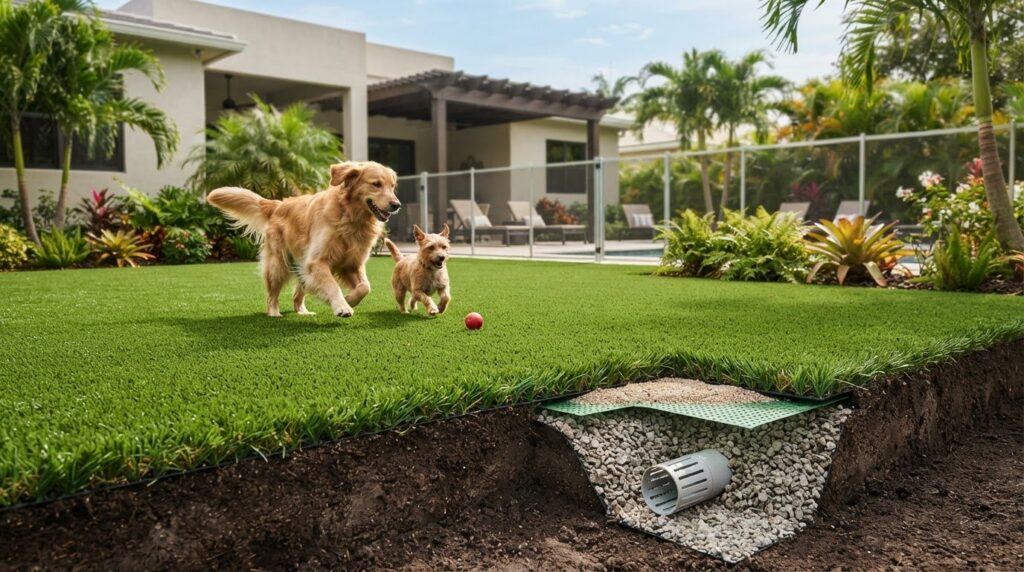
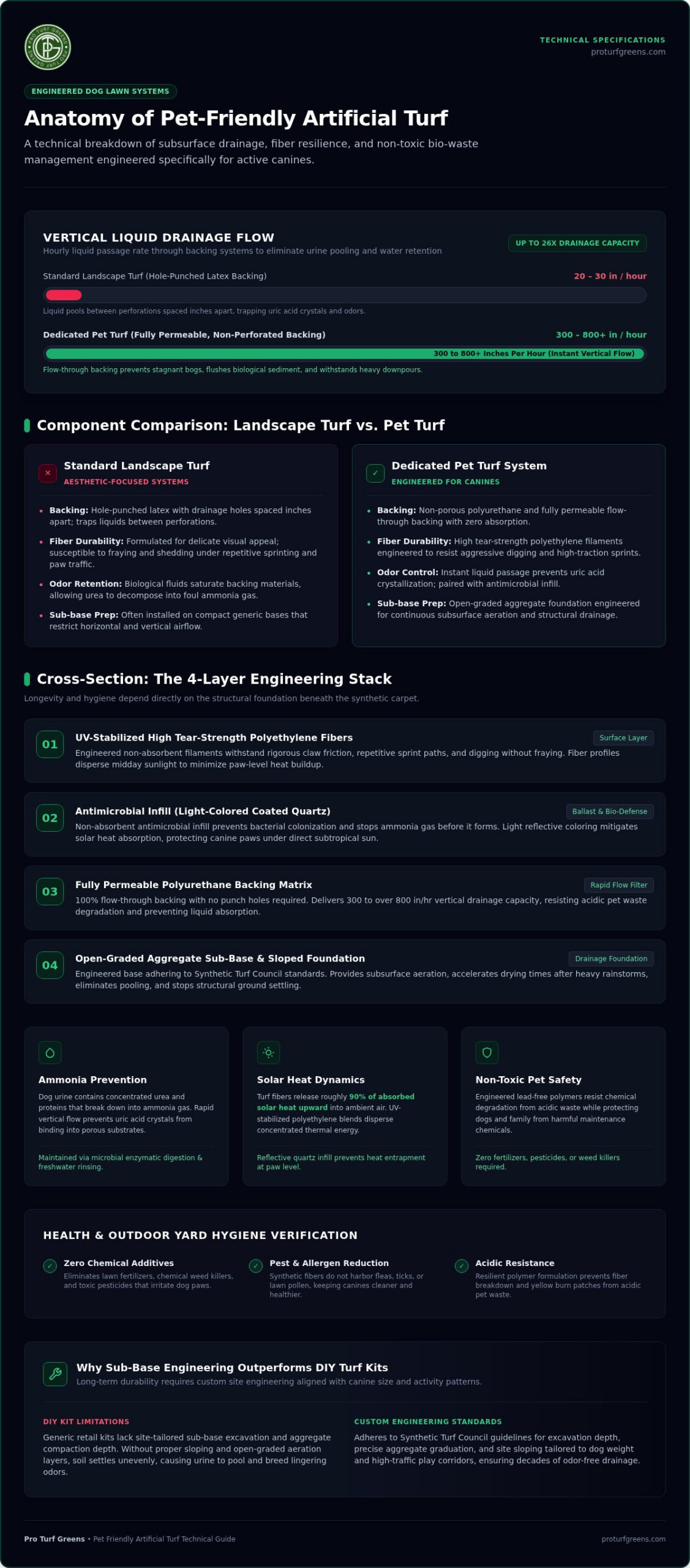
Genuine pet friendly artificial turf isn’t simply standard synthetic grass cut from a roll; it is an engineered outdoor system specifically manufactured for rapid drainage, structural resilience, and hygienic stability. While conventional turf focuses primarily on lush aesthetic appeal, pet-specific installations eliminate moisture retention to stop bacterial colonization before it can begin. At the heart of this resilience are high tear-strength polyethylene fibers. These robust filaments withstand rigorous paw traffic, repetitive sprint tracks, and aggressive digging behaviors without fraying or shedding.
Landscape Turf vs. Dedicated Pet Systems
Standard landscape turf emphasizes delicate fibers designed for light foot traffic rather than biological waste management. Traditional installations often rely on hole-punched latex backings that only drain through small perforations spaced inches apart. In a dog yard, this design allows urine to pool between holes, saturating the backing and creating lingering odors. By contrast, specialized pet systems feature non-absorbent yarns and fully permeable backings. When evaluating the composition and backing systems of artificial turf, it becomes clear why non-porous polyurethane and flow-through designs outperform perforated latex by letting liquids pass instantly into the prepared aggregate base below.
Non-Toxic Materials and Pet Safety Standards
Safety remains just as vital as physical durability. High-grade pet turf systems utilize non-toxic, lead-free formulations that safeguard curious pets and young children alike. Because canines constantly interact with the ground through their paws and noses, these surfaces provide distinct health advantages over natural grass:
- Chemical Stability: Resilient polymers resist structural breakdown from continuous exposure to acidic animal waste.
- Zero Harmful Additives: The surface eliminates the need for chemical fertilizers, weed killers, and toxic pesticides that irritate dog paws.
- Allergen Reduction: Non-absorbent fibers don’t harbor fleas, ticks, or pollen, keeping outdoor play areas substantially cleaner.
By blending physical toughness with non-toxic engineering, dedicated pet turf creates an outdoor retreat where dogs can run freely without compromising household hygiene or yard aesthetics.
Key Performance Factors: Drainage, Heat, and Odor Management
High-performing pet friendly artificial turf systems must solve two intense environmental challenges simultaneously: heavy biological waste and severe weather. In regions like South Florida, intense afternoon downpours quickly overwhelm standard perforated backing systems that only process 20 to 30 inches of water per hour. Fully permeable, non-perforated turf backings can drain 300 to over 800 inches per hour. This rapid vertical flow prevents standing water, flushes away waste particles, and ensures that frequent tropical rainstorms work as an asset rather than creating a stagnant, muddy bog.
Subsurface aeration plays an equally critical role. An open-graded aggregate sub-base promotes continuous air circulation beneath the synthetic carpet, accelerating drying times after heavy storms and discouraging fungal development. Coupled with routine freshwater rinsing to clear away biological sediment, an engineered drainage foundation keeps your lawn hygienic and structurally sound.
Eliminating Pet Urine Odors
Dog urine contains concentrated urea and proteins that decompose into noxious ammonia gas. If liquids cannot pass instantly through the backing, uric acid crystals bind inside porous materials and create persistent smells. To prevent this, adhering to recognized Synthetic Turf Council landscape installation guidelines for aggregate depth and proper sub-base sloping is essential. Installing non-absorbent antimicrobial infills arrests bacterial growth before ammonia gas can form, while periodic applications of microbial enzymatic cleaners easily digest stubborn organic compounds.
Managing Surface Heat in Sunny Climates
Direct subtropical sunlight transfers thermal energy rapidly into synthetic yard surfaces. Because turf fibers release roughly 90% of absorbed solar heat upward into the ambient air, proactive material selection is critical for canine comfort:
- Specialized Fiber Profiles: Modern UV-stabilized polyethylene blends disperse sunlight rather than absorbing concentrated heat.
- Reflective Infill Selection: Light-colored acrylic-coated quartz avoids trapping solar radiation, remaining cooler than dark sand or traditional materials.
- Evaporative Cooling Activation: Premium infills retain slight moisture and can reduce surface temperatures by 30°F to 50°F through simple evaporation after a brief water hose spray.
Partnering with a regional craftsman to install an engineered lawns and pet turf system ensures your outdoor space manages extreme humidity and punishing sun with effortless grace.
Selecting Materials: Turf Fibers, Backing Types, and Pet Infills
Choosing the right materials for pet friendly artificial turf requires balancing tactile comfort with mechanical functionality. While exceptionally tall, dense turf carpets look lush in showroom displays, pet yards require a practical approach. An optimal pile height sits between 1.0 and 1.25 inches. Shorter, resilient blades make scooping solid waste effortless, prevent canine traffic from flattening the surface, and ensure deep-cleaning rinses reach the base quickly.
Fiber Shape and Resiliency Under Heavy Paws
Canine play exerts intense lateral torque on synthetic grass blades. Flat, ribbon-style fibers quickly crease and remain permanently matted under daily sprint tracks. In contrast, engineered W-shaped and C-shaped polyethylene blades offer internal structural memory, springing back upright after vigorous activity. Beneath these upright blades, a texturized thatch layer stabilizes the infill and cushions pet joints, ensuring solid waste rests on top rather than settling deep into the root zone.
Backing Technology: Polyurethane vs. Latex
A turf system’s backing determines whether your yard remains fresh or harbors persistent odors. Traditional secondary latex backings act like dense sponges, absorbing moisture and uric acid crystals that gradually rot the backing material. Non-porous polyurethane coatings completely resist moisture absorption and shield the turf from chemical degradation. Combining polyurethane with fully permeable, non-perforated construction allows waste liquids to pass freely across the entire yard surface into the sub-base below.
The Infill Dilemma: Antimicrobial Sand vs. Zeolite
Infill acts as the stabilizing ballast for turf blades, but selecting the wrong medium leads to rapid failure. Standard raw silica sand should never be installed in dog yards, as its porous granules absorb urine salts and radiate harsh ammonia smells. High-performance pet yards require specialized alternatives:
- Antimicrobial Coated Quartz: Rounded quartz sand coated in an antimicrobial shield inhibits bacterial colonies and keeps ballast non-compacting.
- Clinoptilolite Zeolite: A porous volcanic mineral that traps ammonium ions through cation exchange, neutralizing odors before they release into the air.
Proper infill choices maintain a clean play environment while protecting dog paws from hot surface temperatures by supporting moisture-retaining cooling systems.
Step-by-Step Sub-Base Preparation and Installation for Dog Yards
Flawless ground preparation forms the structural backbone of every successful pet lawn. The process begins with excavating native soil down several inches to strip away organic debris, roots, and unstable sod that would otherwise decompose and create hollows under the synthetic surface. Establishing a consistent sub-grade slope between 0.5% and 1.0% directs subsurface runoff away from home foundations. Heavy mechanical plate compaction then locks the sub-grade to roughly 90% to 95% Proctor density, preventing localized ground dips where waste fluids could stagnate and eliminating soft spots that entice energetic dogs to dig.
Designing the Drainage Sub-Base
Pet systems demand open-graded aggregate foundations rather than unwashed stone dust or dense road base, which harden into impermeable crusts over time. Installing angular, washed granite or crushed limestone chips preserves open voids that let liquids drop straight through the sub-base into native sandy soils. A frequent mistake in pet areas involves laying non-woven geotextile weed fabric directly beneath the turf carpet. Placing fabric on top of the rock base traps dog hair, dander, and uric acid crystals right below the backing. Instead, geotextile membranes belong strictly beneath the crushed aggregate layer, resting against the excavated earth to separate soils without impeding vertical drainage.
Reinforced Perimeter Securing and Seam Locking
Vigorous dogs constantly test lawn borders, clawing at edges during high-speed chases. Standard landscape staples pull loose easily, creating tripping hazards and raw edges. High-performance installations lock the yard perimeter to heavy composite nailer boards or utilize deep spiral steel anchors driven flush into the aggregate base every few inches. Seams receive heavy-duty commercial seam tape combined with industrial waterproof adhesives, vulcanizing panels together into a unified sheet that resists determined paws. You can explore layout planning and dimension tips in our dog run artificial turf guide.
Precision ground engineering ensures that your pet friendly artificial turf survives both relentless canine antics and South Florida’s torrential summer cloudbursts. To build a resilient, odor-free foundation that stands the test of time, contact Pro Turf Greens to design your custom pet turf installation.
Why Custom Professional Installation Outperforms DIY Turf Kits
Drop-shipped turf rolls often promise quick weekend savings, but synthetic pet systems require specialized craftsmanship that boxed kits cannot provide. A homeowner operating a light hand-tamper simply cannot duplicate the compaction power of commercial vibratory equipment. Without deep, mechanical sub-base compaction, repeated pet traffic and settling soils quickly produce uneven hollows beneath the turf. Professional installation pairs industrial-grade site excavation with specialized power-brooming machinery, forcing infill deep into the texturized thatch layer to keep yarn fibers standing upright while locking ballast evenly across every square foot.
Master craftsmanship also shows in seamless joinery. Dogs instinctively investigate and claw at loose seams or exposed perimeter edges. Experienced installers use precision geometric cutting and heavy-duty bonding agents to eliminate visible seam lines, removing the vulnerable failure points that energetic pets routinely exploit.
Tailoring Turf Systems to Pet Size and Activity
Every pet lawn presents distinct biological and physical demands based on the animals using it. A yard shared by two active German Shepherds requires significantly denser thatch support, specialized infill distribution, and fortified perimeter anchors compared to an area designed for a single toy poodle. Professional design seamlessly accommodates these nuances:
- Custom Relief Zones: Designing dedicated, high-flow drainage runs in shaded dog pathways keeps central gathering areas clean.
- Integrated Living Spaces: Pet-grade resilience pairs effortlessly with backyard putting greens, pool decking surrounds, or children’s play zones without mismatched transitions.
- Targeted Traffic Reinforcement: High-speed fence lines and entryway gates receive enhanced structural anchoring to prevent turf shifting.
The Value of Expert Site Consultation
Property topography across South Florida presents unique challenges, from high water tables and dense tree root networks to abandoned irrigation lines. A thorough site evaluation identifies grading corrections before excavation begins, ensuring proper slope away from patios while preventing expensive drainage failures later. Investing in dedicated craftsmanship transforms your yard from a simple patch of synthetic carpet into an engineered, long-term asset. When you are ready to evaluate your property’s specific needs, schedule a comprehensive South Florida turf consultation to inspect your outdoor space and design the ideal pet friendly artificial turf environment.
Build an Odor-Free Outdoor Sanctuary for Your Dog
Creating a beautiful lawn that survives active dogs requires looking beyond superficial turf blades. True outdoor longevity comes down to an engineered system: open-graded aggregate foundations that evacuate liquids instantly, non-porous polyurethane backings that resist uric acid, and specialized infills that neutralize odors while keeping paw temperatures comfortable. When every structural layer works together, your yard stays vibrant, hygienic, and completely mud-free through every season.
Because every dog and property presents distinct physical challenges, tailored design makes all the difference. Investing in custom-engineered drainage systems built to withstand intense South Florida rain and heat protects your property against pooling water. At the same time, specialized pet-safe infills and commercial anchoring keep your lawn securely locked down against persistent, digging paws. Your backyard should be a shared haven where pets play freely and family gatherings thrive without mess. When you are ready to upgrade your outdoor lifestyle, request your custom pet turf consultation and experience the lasting value of premium pet friendly artificial turf.
Frequently Asked Questions
Will dog urine ruin artificial turf or make it smell permanently?
Dog urine won’t ruin dedicated pet turf or leave permanent odors when installed with a fully permeable backing. Unlike conventional latex backings that absorb fluids, polyurethane-backed pet systems let liquids flow straight through into the aggregate base. In warm South Florida locations like Miami and Fort Lauderdale, a weekly freshwater hose rinse prevents uric acid crystallization, keeping the synthetic fibers fresh and sanitary.
How do you clean and sanitize artificial grass after pets use it?
Routine sanitizing requires picking up solid waste promptly and giving the area a thorough freshwater rinse with your garden hose. For monthly maintenance, apply a bio-enzymatic cleaner specifically formulated to digest uric acid crystals and biological compounds. Never use harsh chlorine bleach or household ammonia, which break down synthetic yarn stabilizers and encourage dogs to re-mark their territory.
Can dogs dig through or tear up pet-friendly artificial turf?
Dogs cannot dig through properly installed pet friendly artificial turf. High tear-strength polyethylene fibers and reinforced backing layers easily withstand persistent canine clawing. Experienced installers secure borders using deep steel anchors or composite nailer boards flush against the ground. This eliminates loose edges and wrinkles, removing the temptation for dogs in Palm Beach or Boca Raton to chew, lift, or burrow.
Does artificial grass get too hot for dog paws in warm climates?
Artificial grass warms up under direct midday sun, but modern UV-resistant fibers and specialized cooling infills mitigate heat buildup significantly. Evaporative cooling infills lower surface temperatures noticeably after a brief water rinse before afternoon play. In sunny communities like Coral Gables and Delray Beach, homeowners often utilize shade sails, trees, or a quick two-minute sprinkler mist to ensure paw pads stay comfortable.
What is the best infill to use for yards with multiple dogs?
The best setup for multi-dog yards pairs an antimicrobial acrylic-coated quartz sand with natural clinoptilolite zeolite. Antimicrobial quartz provides dense ballast that prevents bacterial colonization, while porous zeolite captures ammonium ions through cation exchange to neutralize odors immediately. Avoid standard raw silica sand entirely, as it traps biological salts, compacts easily, and amplifies urine smells in humid coastal weather.
How long does a professionally installed pet turf lawn last?
A professionally installed pet turf system typically lasts 15 to 20 years with routine upkeep. Long-term durability hinges on comprehensive site excavation, commercial-grade sub-base compaction, and tear-resistant fiber engineering. In regions like Jupiter and Palm Beach Gardens that experience heavy downpours, a well-constructed open-graded aggregate base prevents the ground shifting, pooling, and drainage clogs that prematurely ruin DIY turf rolls.
Is pet-friendly artificial turf safe for puppies and chewing dogs?
Pet-friendly artificial turf is non-toxic, lead-free, and safe for curious puppies. High-grade synthetic lawns don’t require chemical fertilizers, harsh pesticides, or weed killers, removing toxic risks from your yard. Because professional installations lock down seams with industrial waterproof adhesives and secure edges firmly, energetic puppies cannot easily grasp or pull up loose fibers during daily outdoor training and playtime.