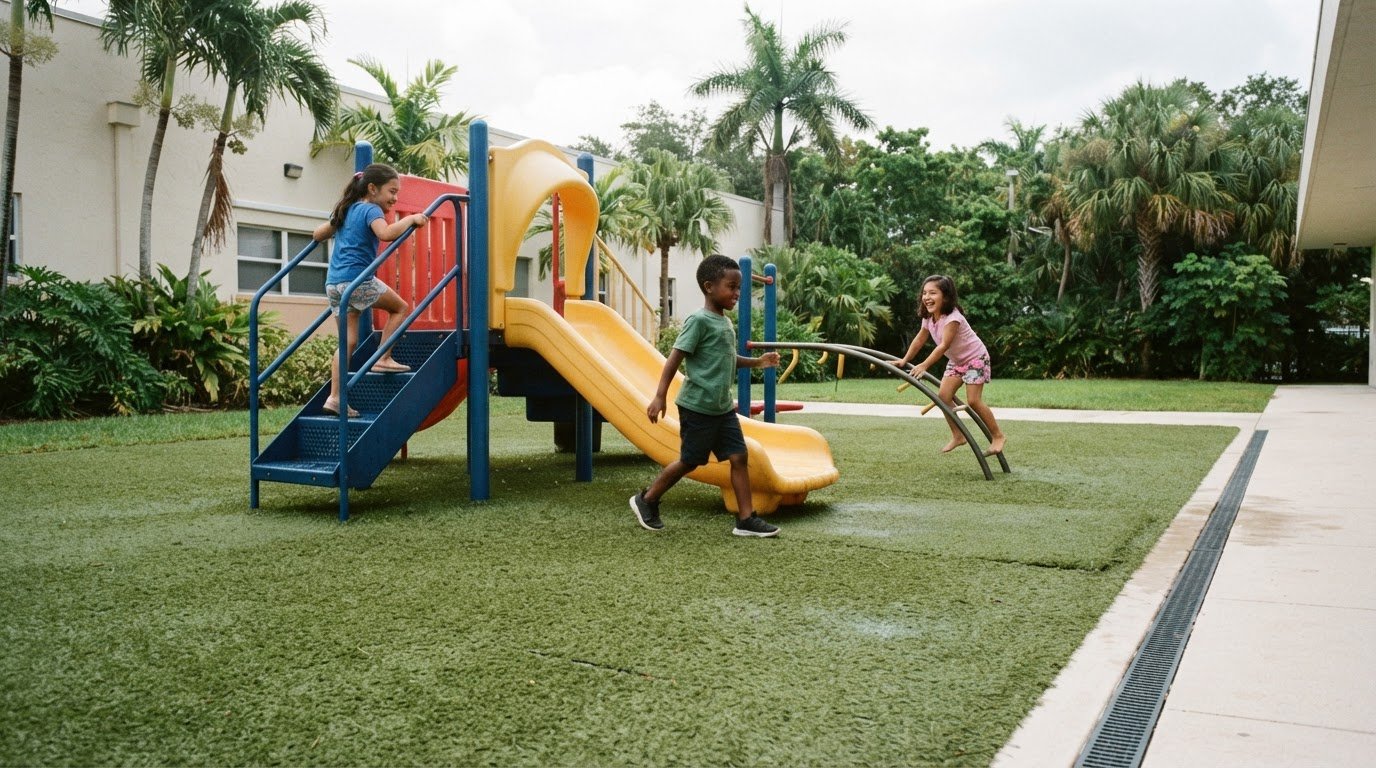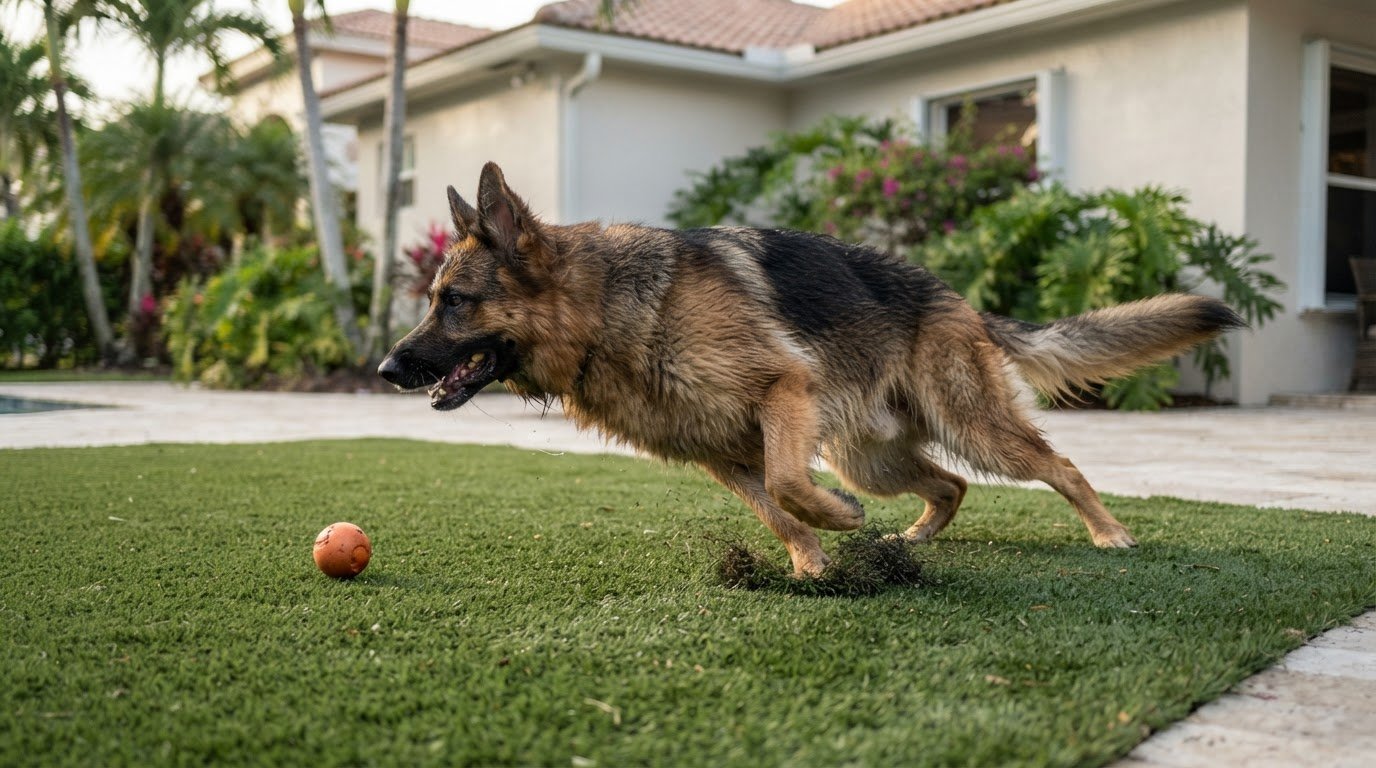
A playground surface is only as dependable as the system beneath it. For school playground turf installation in Miami, professionally installed turf can support safer play when paired with a shock-absorbing base designed to soften falls and drainage that helps water move through the surface. It can also help keep play areas usable after rain, without the mud and dust associated with worn grass.
Schools need a surface that can handle active play and support a clean, comfortable space for students. The right choice depends on how the area will be used, the play equipment and fall zones, and the design beneath the visible turf.
This article explains where playground turf can work, how safety and drainage factor into a school project, and what distinguishes an experienced installer. You’ll also learn how Pro Turf Greens approaches playground and recreational turf projects, so you can understand the considerations involved before planning a surface for your school.
Key Takeaways
- Understand how turf, its shock-absorbing base, and equipment impact zones work together to support safer play.
- See how drainage and surface design can help playgrounds stay usable through Miami’s rainy conditions.
- Learn which school spaces can benefit from turf and how resilience matters for daily play and activities.
- Discover what an experienced installer considers when planning a school playground surface for its use and site.
Want Great Artificial Grass For Playgrounds?
For school playground turf installation in Miami, the surface must suit daily use and local weather. Miami’s rainy season lasts six months, making drainage an important part of planning.
School Playground and Sports Turf
Artificial turf is a synthetic surface designed for school play areas and athletic spaces. It can support everyday recess and extracurricular activities without needing time to regrow after heavy use. For example, a school may plan one area for play and another for sports, with the layout shaped around how students move through each space. Clear use zones help match the surface to school routines.
Playground Turf Heat Management
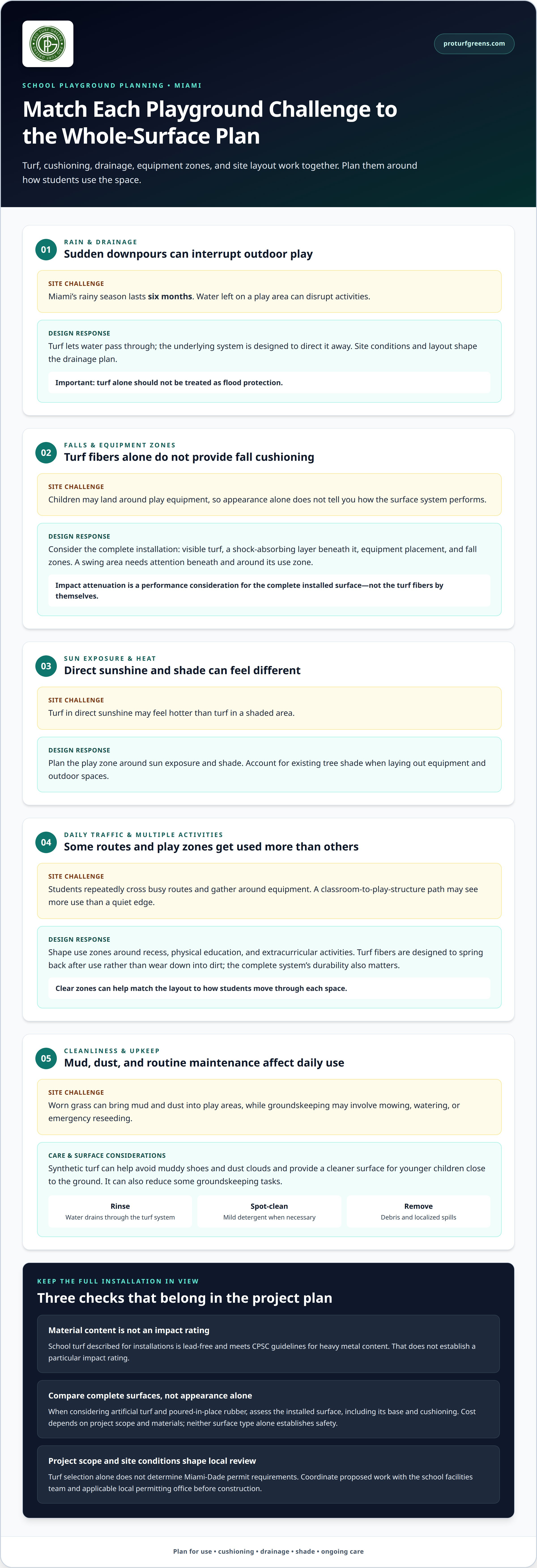
Heat management starts with considering sun exposure and shade. Turf in direct sunshine may feel hotter than turf in a shaded area, so the placement of play equipment and shaded spaces matters. For example, a school can account for existing tree shade when laying out a play zone. The goal is an outdoor area planned around the site’s sun and shade.
Drainage for Miami Rain and Flooding
Playground turf drainage is the design of the surface and underlying system to move rainwater away. In Miami, sudden downpours can interrupt outdoor activities if water remains on the play area. Turf systems allow water to pass through the surface, while the underlying design helps direct it away. Site conditions and layout shape the drainage plan; turf alone should not be treated as flood protection.
Plan these factors together rather than treating them as separate choices. A school may need a play surface for recess that also accommodates sports activities and drains after rain. Intended use, sun exposure, and site drainage all influence how the finished area functions. A carefully considered layout helps align the surface with the school’s needs.
The company manufactures and installs artificial grass for school soft-play and multi-use games areas, and provides aftercare and maintenance. Synthetic turf can avoid muddy shoes and dust clouds during recess, and provide a cleaner surface for younger children who spend time close to the ground.
It can also reduce groundskeeping tasks such as mowing, watering, and emergency reseeding.
Playground safety certifications and impact zones
Playground safety depends on the complete surface system, including cushioning and the areas beneath and around equipment. For schools, the fall zones and intended play activities should guide the design.
Playground Turf Layers and Fall Cushioning
A playground turf system combines visible turf with a shock-absorbing layer beneath it. That hidden layer matters because grass fibers alone do not provide cushioning designed to soften falls. Consider the base and padding alongside equipment placement, especially where children may land. A swing area, for example, needs attention to the surface beneath and around its use zone, not just the turf’s appearance.
Impact Attenuation and Safety Certifications
Impact attenuation describes how a surface system absorbs some force from a fall. It is a performance consideration for the complete installation, not a quality that can be judged by turf fibers alone. School turf described for installations is lead-free and meets CPSC guidelines for heavy metal content. That addresses material content, not whether every surface meets a particular impact rating.
For school playgrounds in South Florida, no single turf material or infill suits every site. Intended activity, fall zones, drainage design, and cushioning all affect the installation. Reviewing these elements together helps match the surface to how students use the space.
When comparing artificial turf with poured-in-place rubber, consider the entire installed surface, including its base and cushioning, rather than appearance alone. Cost depends on project scope and materials, while safety depends on how the complete system performs in its intended impact areas. Neither surface type alone establishes an installation’s safety.
Turf selection alone does not determine Miami-Dade permit requirements. Project scope and site conditions shape the relevant review, so schools should coordinate proposed work with their facilities team and applicable local permitting office before construction.
Where Can Synthetic Playground Turf Be Used?
Synthetic playground turf can suit school play areas used for recess, physical education, and extracurricular activities. Its resilience matters where students repeatedly cross the same routes or gather around play equipment.
Turf fibers are designed to spring back after use rather than wear down into dirt. This helps the surface handle repeated foot traffic, while the durability of the complete system matters during daily school and extracurricular activities. A busy route between a classroom and play structure, for example, may receive more use than a quiet edge of the playground.
Schools can plan turf for different outdoor zones, including open play areas and spaces for activities. Intended use should shape the layout: a multipurpose area needs room for planned movements, while a smaller play zone may prioritize access around equipment. Matching the installation to school routines helps distribute use across the space.
Playground turf can be rinsed with water, which drains through the turf system, and spot-cleaned with mild detergent when necessary. Removing debris and addressing localized spills helps keep the surface ready for students. The right routine depends on site use and the materials brought onto the play area.
No single lifespan figure applies to every school playground. Service life depends on installation, foot traffic, and ongoing care, including how heavily areas are used and maintained. A play zone used throughout the school day, for example, may experience different wear from a space used occasionally. These factors show why planning should account for expected use, not appearance alone.
For Miami schools, a clear maintenance plan can support consistent daily use. Staff can include rinsing and spot-cleaning in surface care, while drainage helps water pass through the system. These steps address routine cleanliness; the installation design and intensity of use also shape long-term condition.
Selecting an experienced school and playground turf installer
A well-planned installation accounts for the school’s site, activities, and construction constraints. A playground beside classroom entrances, for example, needs a layout that considers access routes and work areas. Performance depends on more than turf selection: preparation, drainage, cushioning, and precise installation all matter.
A school project typically moves from site assessment to design, preparation, installation, and a final review. The timeline depends on the area’s size, existing ground conditions, drainage needs, and site access. Before work begins, the installer and school should coordinate the project schedule around classes, outdoor activities, and safe access to other parts of campus.
Strong project planning addresses technical details early. The installation plan should account for intended play zones, equipment locations, surface edges, and water flow. A low-lying section, for instance, may need particular attention in the drainage plan. Discussing these conditions before installation helps align the design with the school’s daily use.
- Site fit: The plan reflects actual play areas, access routes, and ground conditions.
- System details: Turf, cushioning, and drainage are considered together, not as separate decisions.
- Work coordination: Installation timing accounts for school operations and access needs.
Ask how the installation plan addresses each of these points and how the completed work will be reviewed. A clear explanation should connect the proposed layout to school activities, describe the surface layers, and explain how the site’s drainage is handled. These specifics provide a more useful basis for evaluating the plan than appearance alone.
For a school considering a new playground surface, discuss a playground turf project with a team that plans installations around the site and its intended use.
Pro Turf Greens: Playgrounds & Recreational Turf
Pro Turf Greens installs playground and recreational turf for schools planning a new play surface or updating an existing area. Once your school has identified how students will use the space, a professionally designed installation can be shaped around those needs.
Project planning considers the site layout, play activities, drainage, and surface system. Sharing how students use the area helps guide a design suited to its purpose, whether it serves daily recess or multiple recreational activities. A thoughtful plan connects those priorities with the finished surface.
If your school is considering a playground turf project, contact Pro Turf Greens to discuss your plans.
Plan the Next Step for Your School’s Play Space
A successful playground project begins with a shared vision for how the space should serve students. Before planning school playground turf installation in Miami, bring together the school’s priorities, intended activities, and campus scheduling needs. This gives the project team a practical foundation for shaping a surface around the way your school operates.
Consider how the finished area should fit into the broader campus experience. A clear project brief can identify who uses the space, which activities it needs to accommodate, and how installation can be coordinated with school routines. These decisions turn a general renovation idea into a focused conversation about design and delivery.
When you’re ready to explore a playground turf project, contact Pro Turf Greens to discuss your school’s plans. A thoughtful starting point can make the next decisions easier and help move your vision toward a well-planned play space.
Frequently Asked Questions
Which companies install artificial turf on school playgrounds in Miami, Florida?
Pro Turf Greens installs playground and recreational turf for school projects in Miami. Its service area also includes Fort Lauderdale, Palm Beach, Boca Raton, Delray Beach, Jupiter, Palm Beach Gardens, Weston, and Coral Gables. The key is matching the proposed installation to campus use, access, and site conditions, keeping planning focused on the specific play area.
What Florida playground safety standards and fall-height ratings apply to artificial turf?
A fall-height rating should match the playground equipment and the complete surfacing system installed beneath it. Turf described for school installations is lead-free and meets CPSC guidelines for heavy metal content, addressing material content rather than fall protection. A rating for one turf-and-cushioning system, for example, should not be assumed to apply to a different installation or equipment layout.
best artificial turf materials and infill for school playgrounds in South Florida
No single turf material or infill suits every site. Choose based on intended activities, fall zones, drainage, and the cushioning system. School turf is described as lead-free and meeting CPSC guidelines for heavy metal content.