You might think a quick spray with the garden hose is refreshing your lawn, but in the South Florida heat, you’re likely just spreading the problem around. Many homeowners feel a sense of dread when the sun hits their yard, fearing that their premium investment is permanently ruined by a lingering scent. If you’ve been searching for how to get dog urine smell out of artificial turf, it’s important to understand that water alone doesn’t solve the issue. In fact, moisture can often reactivate trapped ammonia crystals, leading to that sharp, embarrassing odor that makes hosting guests feel impossible.
We understand the frustration of wanting a beautiful, sanitary space where your pets can play without compromising the freshness of your home. You deserve a backyard that remains an aspirational retreat, not a source of stress. This guide provides the exact science and step-by-step methods to neutralize pet odors at the molecular level, ensuring your synthetic lawn stays pristine year-round. We’ll explore high-flow drainage systems, the latest antimicrobial infills, and a simple maintenance routine designed for the unique demands of the 2026 Florida climate.
Key Takeaways
- Understand the chemical process of how urea transforms into ammonia crystals to effectively neutralize odors at their source rather than simply masking them.
- Master a professional five-step method for how to get dog urine smell out of artificial turf using bio-enzymatic treatments that safely consume organic waste.
- Discover why a high-flow drainage base and specialized antimicrobial infills are essential for maintaining a sanitary, odor-free surface in South Florida’s humid environment.
- Establish a simple yet effective maintenance schedule that leverages Florida’s seasonal weather patterns to keep your synthetic lawn fresh and inviting year-round.
Why Does Artificial Grass Smell Like Dog Urine?
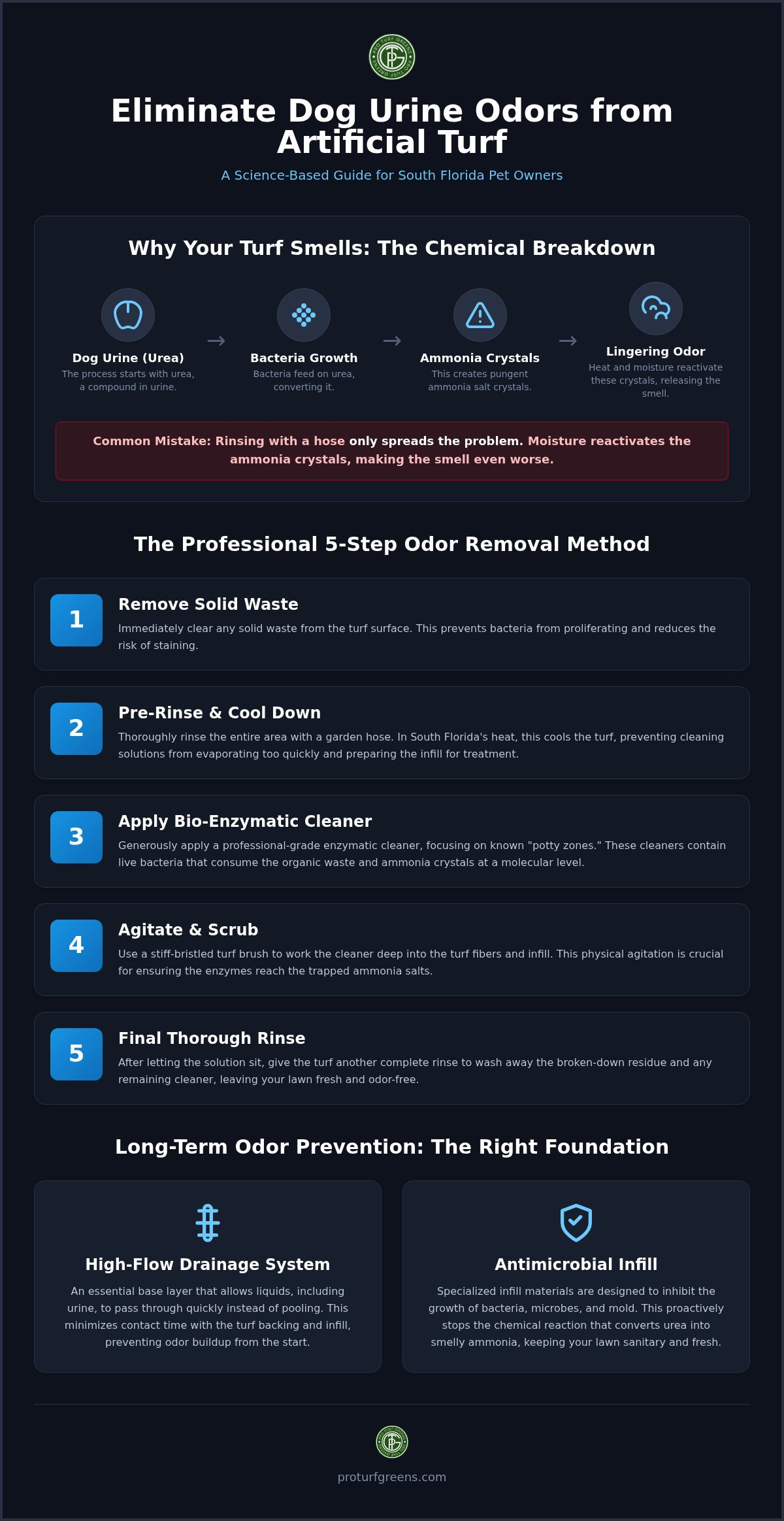
Many homeowners assume that artificial grass is a “set it and forget it” solution. While it significantly reduces traditional maintenance, the introduction of pets changes the chemical dynamic of your yard. If you’ve wondered how to get dog urine smell out of artificial turf, you must first understand that you aren’t just dealing with a liquid spill. You’re dealing with urea. Urea is the primary nitrogen-containing substance in mammalian urine that requires enzymatic breakdown. When your dog relieves themselves, the urea begins a metabolic transition. As it breaks down, it releases ammonia gas, which creates that unmistakable, pungent odor.
The Role of Ammonia in Turf Odors
The transition from liquid urine to ammonia gas is a biological process fueled by bacteria. As the urine settles, it seeps through the synthetic fibers and into the infill material below. Standard household cleaners or simple detergents often fail because they cannot break the resilient chemical bonds of these ammonia salts. Instead of neutralizing the source, these products often just mask the scent temporarily. Once the fragrance fades, the underlying ammonia remains. It stays trapped as concentrated crystals within the turf foundation, waiting for heat or moisture to reactivate the scent.
Environmental Factors in South Florida
Local conditions in Fort Lauderdale and surrounding areas exacerbate this issue significantly. The South Florida sun acts as a catalyst. High temperatures accelerate the off-gassing process, making the ammonia scent more intense during the peak of the day. Additionally, our regional humidity plays a deceptive role. In drier climates, moisture evaporates quickly. In South Florida, the heavy, moisture-laden air prevents rapid evaporation. This keeps the odors heavy and concentrated near the ground where you and your pets spend your time. UV rays can also degrade organic waste, but without proper intervention, this just leads to a more stubborn buildup of concentrated salts.
Rinsing with a garden hose is the most common mistake pet owners make. While it feels like you’re cleaning, you’re actually hydrating the dried urea crystals. This reactivation makes the smell even more potent. If you truly want to master how to get dog urine smell out of artificial turf, you must stop relying on water alone. Without a professional drainage system and the right neutralizing agents, you’re simply pushing the problem deeper into the base layers of your installation. Understanding this chemical and environmental intersection is the first step toward reclaiming your outdoor space.
5 Steps to Remove Pet Odors from Your Synthetic Lawn
Eliminating stubborn odors requires a methodical approach that goes beyond surface-level cleaning. If you’ve been struggling with how to get dog urine smell out of artificial turf, following these five professional steps will help restore your lawn’s freshness and maintain a sanitary environment for your family.
Step 1 & 2: Waste Removal and Hydration
The process begins with meticulous preparation. Always start by removing solid waste immediately. Leaving organic matter on the surface allows bacteria to proliferate, which complicates the cleaning process and increases the risk of permanent staining. Once the area is clear, perform a thorough pre-rinse using a standard garden hose. This step is vital because it hydrates the turf fibers and prepares the infill for treatment.
Cooling the lawn is especially important in South Florida. High heat can cause cleaning solutions to evaporate before they can effectively work. By saturating the area with water, you open the “pores” of the infill, allowing your treatment to penetrate deeper into the backing where ammonia salts often hide. Avoid using high-pressure washers during this phase. Excessive pressure can displace your infill material or even damage the synthetic backing, leading to drainage issues later.
Step 3 & 4: Neutralizing and Agitating
Once the lawn is damp, apply your chosen enzymatic or bio-neutralizing cleaner. Focus heavily on known “potty zones” where your dog frequently relieves themselves. It’s essential to saturate these areas rather than just misting the surface. As bacteria convert urea to ammonia, the resulting crystals hide deep within the turf pile, requiring a significant volume of cleaner to reach them.
This is where many DIY attempts fail. You must agitate the solution. Use a stiff-bristled turf brush or rake to work the cleaner deep into the fibers and down to the primary backing. This physical movement ensures the “living” bacteria in the cleaner reach the trapped salts. After agitation, allow the solution to “dwell” for at least ten to fifteen minutes. This dwell time is the most critical phase, as it gives the enzymes time to break down organic waste at a molecular level. If your current lawn seems to trap odors regardless of how often you clean, it may be time to consider a professional pet turf system designed with superior drainage and antimicrobial properties.
Step 5: The Final Flush
The final step is a gentle rinse to clear away the neutralized waste products. Use your hose to wash the broken-down particles through the drainage holes and into the base layer. This leaves your lawn sanitary, safe, and smelling fresh. By following this structured routine, you ensure that your outdoor investment remains a beautiful, functional space for your entire family. Regular execution of this process prevents the buildup of ammonia crystals, protecting both your turf’s longevity and your home’s curb appeal.
Choosing the Right Cleaning Solutions for Synthetic Grass
Selecting the appropriate cleaning agent is the single most important factor in determining how to get dog urine smell out of artificial turf successfully. While your local hardware store may offer a variety of general-purpose cleaners, many of these products only provide a temporary masking scent. To truly eliminate odors, you must utilize a solution that addresses the organic source of the problem. This requires moving beyond simple soaps and moving toward specialized, bio-enzymatic formulas designed for the rigors of pet ownership.
Many homeowners initially turn to household staples like white vinegar or baking soda. While vinegar is a natural acid that can provide minor relief, it often fails to penetrate the dense layers of turf infill or break down the resilient ammonia bonds. It’s also important to follow CDC guidelines on pet-safe cleaning to ensure you aren’t introducing irritants to your yard. Harsh chemicals like bleach should be avoided entirely. Bleach can compromise the integrity of your turf’s primary and secondary backing, leading to premature wear and creating potential safety hazards for your pets’ sensitive paws.
How Enzyme Cleaners Work
Bio-enzymatic cleaners contain “living” bacteria that produce specific enzymes to break down proteins and starches found in urine. This biological process is what actually removes the urea crystals that cause persistent odors. These cleaners are particularly effective for artificial turf for dog runs in South Florida because they continue to work even after the surface appears dry. As long as there is organic waste to consume, the enzymes remain active, providing a deep clean that standard detergents simply cannot match.
DIY vs. Professional Grade Products
When shopping for solutions, you’ll find a clear distinction between ready-to-use retail sprays and professional-grade concentrates. While the initial cost of a concentrate might seem higher, its ability to deeply saturate the turf makes it far more cost-effective for long-term maintenance. Professional-grade enzymatic solutions are designed to penetrate the perforated backing where odors truly hide. Using a high-quality antimicrobial spray as part of your routine helps maintain a sanitary environment while preserving the aesthetic excellence of your synthetic lawn. This investment ensures your outdoor space remains an aspirational lifestyle upgrade rather than a maintenance burden. To ensure your entire property reflects this same level of care, you can visit Ehrman’s Power Wash for professional exterior cleaning resources.
Long-Term Odor Prevention: Infill and Drainage Solutions
Cleaning your lawn is only half the battle. While knowing how to get dog urine smell out of artificial turf is essential for daily maintenance, the most effective strategy is preventing odor from taking root in the first place. This prevention starts long before the first pet enters the yard. It begins with the engineering of the sub-base, continues with the selection of antimicrobial materials, and concludes with a turf design that facilitates rapid waste removal. If your turf was installed without a high-flow drainage system, even the most expensive enzymatic cleaners will struggle to provide lasting results. Homeowners who want to make the right choice from the start should review the complete guide to selecting odor resistant pet turf to understand which materials and engineering standards deliver the best long-term results in Florida’s climate.
The Importance of a Permeable Sub-Base
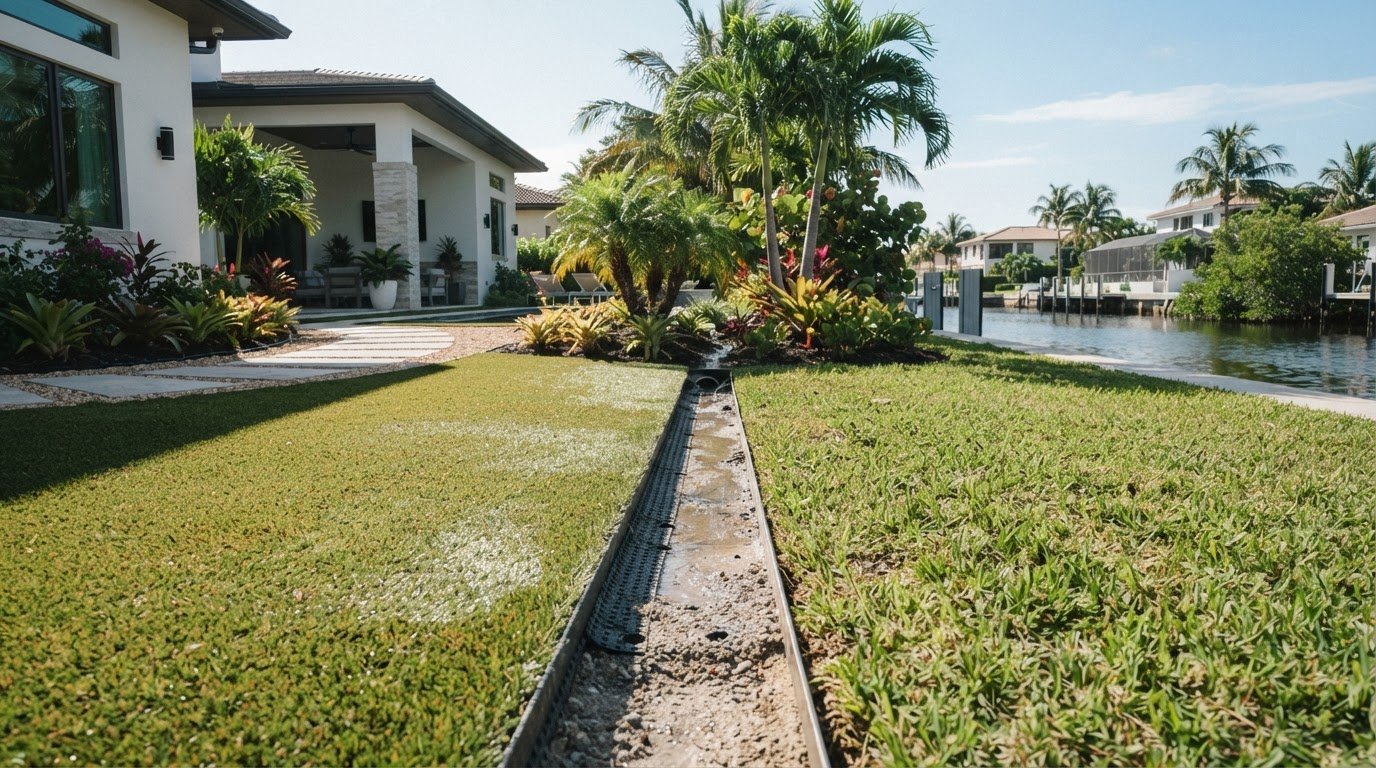
A permeable sub-base is the silent hero of a fresh-smelling lawn. In South Florida, where tropical downpours can deliver inches of water in minutes, your turf must be able to process high volumes of liquid instantly. We utilize a precise combination of crushed rock and granite dust to facilitate rapid vertical drainage. This engineered foundation prevents “pooling” under the turf, which is the primary cause of permanent, deep-seated odors. When the base is constructed correctly, Florida’s heavy rains actually become a maintenance asset, providing a natural, deep rinse that flushes waste through the system and away from your home. Homeowners who are also exploring water saving lawns South Florida residents are adopting will find that a well-engineered synthetic system addresses both odor control and water conservation simultaneously.
Selecting the Best Pet-Friendly Infill
The choice of infill is equally critical to the longevity of your installation. While standard silica sand is a common choice, its porous nature can trap moisture and organic matter. We recommend acrylic-coated sand, which is specifically designed to inhibit the growth of bacteria, mold, and mildew. These specialized coatings prevent the chemical reaction that turns urea into ammonia at a molecular level. It’s also wise to avoid rubber crumb infill for dog-heavy areas. Rubber tends to retain more heat in the Florida sun and can trap organic particles more easily than smooth, coated alternatives.
Selecting the right turf profile also plays a significant role in odor management. Shorter, perforated piles allow for better airflow and easier agitation during the cleaning process compared to dense, long-bladed varieties. Many homeowners find that adhering to professional backyard putting green installation standards leads to a superior pet lawn. These high-performance systems prioritize flat, well-drained surfaces that remain sanitary and aesthetically pleasing year-round. If you’re ready to invest in a yard that balances beauty with practical durability, contact the specialists at Pro Turf Greens to discuss a custom-tailored installation for your property.
Expert Maintenance Tips for South Florida Pet Turf Owners
Establishing a consistent maintenance routine is the final step in protecting your outdoor sanctuary. While high-quality installations reduce the effort required, the specific climate in Miami and Fort Lauderdale demands a strategic approach to long-term care. Homeowners often ask how to get dog urine smell out of artificial turf on a permanent basis. The answer lies in a balanced schedule that adapts to Florida’s seasonal shifts, ensuring your lawn remains as fresh as the day it was installed.
Seasonal Care for Miami and Fort Lauderdale
During our intense dry season, typically from November through April, you’ll need to increase your manual rinsing frequency. Without regular rainfall to flush the system, ammonia salts can accumulate more rapidly. Conversely, our hurricane season provides natural assistance through frequent downpours. We recommend leveraging these storms as a natural rinsing cycle, provided you keep your drainage outlets clear of organic debris like palm fronds or mulch. Managing the summer heat is also a priority. A quick misting before outdoor play can lower surface temperatures significantly, protecting your dog’s paws and keeping the environment comfortable.
Special attention should be paid to high-traffic zones, especially if you have integrated 15 stunning custom turf driveway designs for South Florida homes 2026 into your property. These areas often see concentrated use, requiring more frequent enzymatic applications to prevent odors from drifting toward your home’s entrance. A weekly rinse of these specific sections, combined with a monthly deep-treatment of the entire lawn, creates a reliable defense against bacterial buildup.
Signs Your Turf Needs Professional Attention
Even with diligent care, there are times when your turf may require professional intervention. You might notice “hot spots” that no longer respond to standard DIY cleaning or observe that your turf fibers have begun to lay flat. This often indicates that your infill levels have depleted or become compacted, which hinders drainage. Professional deep-clean services utilize specialized equipment to extract deeply embedded particles and restore the upright posture of the synthetic blades.
This professional refresh service extends the lifespan of your investment and ensures your backyard remains a sanitary, high-end retreat. It moves your yard beyond simple utility to an aspirational lifestyle upgrade that you can take pride in. If you’re ready to upgrade your outdoor experience and ensure your pets have the cleanest surface possible, contact Pro Turf Greens for a free consultation on pet-friendly turf solutions and discover the difference a professional-grade system can make for your South Florida home.
Reclaim Your Fresh, Vibrant Outdoor Lifestyle
Maintaining a pristine backyard in South Florida shouldn’t feel like a constant battle against the elements. By shifting your focus from temporary masking agents to science-backed enzymatic cleaners, you can effectively address the root cause of pet odors. You’ve learned that the secret to how to get dog urine smell out of artificial turf lies in a combination of professional-grade products, methodical agitation, and a high-performance drainage foundation. These elements work together to ensure your synthetic lawn remains a sanitary, inviting space for hosting guests and playing with your pets. To ensure the rest of your home’s exterior is just as pristine, check out Sabrina’s Window Cleaning.
If you’re tired of temporary fixes and want a permanent solution, our team is here to help. We provide specialized South Florida drainage systems and antimicrobial, pet-safe infill options that are custom-tailored for the local climate. Our expert local installation services in Miami and Fort Lauderdale are designed to deliver longevity and aesthetic excellence. You deserve a yard that reflects your high standards without the stress of lingering scents. Request a Free Pet Turf Consultation with Pro Turf Greens today to transform your outdoor space into a fresh, odor-free retreat. Your dream lawn is well within reach.
Frequently Asked Questions
Is vinegar safe to use on artificial turf for dog urine?
Vinegar is safe for your turf’s synthetic fibers, but it is rarely a permanent solution for persistent odors. While the acidity can provide a minor, temporary reduction in scent, it lacks the biological components necessary to break down resilient ammonia crystals. For those wondering how to get dog urine smell out of artificial turf permanently, vinegar should be viewed as a mild surface rinse rather than a deep-cleaning agent that can reach the backing.
How often should I clean my artificial grass if I have multiple dogs?
You should rinse high-traffic zones at least twice a week if you have multiple pets. A comprehensive deep clean with an enzymatic neutralizer should occur once a month to prevent organic waste from accumulating in the sub-base. Increasing the frequency of these rinses during the dry winter months in South Florida ensures that urea doesn’t have the opportunity to crystallize and create a lasting scent that disrupts your outdoor lifestyle.
Can I use a pressure washer to get the smell out of my turf?
Pressure washers are not recommended for cleaning synthetic grass because the high-velocity water can displace your infill and damage the turf’s secondary backing. This can lead to uneven surfaces and compromised drainage over time. While you should reserve high-pressure equipment for your surrounding hardscapes with the help of Pressure Pros of Palm Beach, a standard garden hose provides sufficient volume to flush away turf waste without the risk of structural damage. If your lawn requires a deeper refresh, a professional service using specialized equipment is a much safer alternative for your investment.
Will dog urine ruin the drainage of my synthetic lawn?
Dog urine will not ruin the drainage of a properly installed synthetic lawn, but the accumulation of organic solids can eventually slow the flow of water. This is why immediate waste removal and regular flushing are essential maintenance steps for any pet owner. If you notice water pooling, it often indicates that the infill has become compacted or that debris is blocking the perforated backing, rather than a failure caused by the urine itself.
Are enzymatic cleaners safe for my pets to walk on immediately?
Most bio-enzymatic cleaners are non-toxic and safe for pets, but it’s best to let the area dry completely before allowing dogs back onto the lawn. This ensures the solution has had ample “dwell time” to neutralize the ammonia at the molecular level. Once the turf is dry, there is no chemical residue that would irritate sensitive paws, making it a safe and sanitary surface for your entire family to enjoy without worry.
What is the best infill for preventing dog urine smells in Florida?
Acrylic-coated sand is the most effective infill for South Florida pet owners because its antimicrobial coating prevents bacteria from colonizing the surface. Unlike standard silica sand, it doesn’t absorb moisture or organic waste. Selecting a high-quality, non-porous infill is a critical component of how to get dog urine smell out of artificial turf in our humid, high-heat environment. It keeps the surface cooler and prevents odors from taking root in the foundation. Florida homeowners evaluating their options can also consult the 2026 checklist for odor resistant pet turf to compare infill materials and antimicrobial technologies before making a final decision.
Why does my artificial turf smell worse when it gets hot outside?
The scent of dog urine intensifies in the sun because heat accelerates the off-gassing process of ammonia. As temperatures rise, the concentrated salts trapped in your infill release gas more rapidly, making the odor much more noticeable. In South Florida, the combination of high UV exposure and humidity keeps these odors heavy and near the ground, which is why proactive neutralization is more effective than simply hosing the lawn down with water.
Does baking soda help with pet odors on synthetic grass?
Baking soda can help neutralize surface odors, but it often creates a thick paste that can clog the drainage holes in your turf’s backing. While it’s a safe household alternative for minor spot treatments, using it over large areas can lead to long-term drainage issues. For a more effective and cleaner result, stick to liquid enzymatic solutions that are specifically designed to wash through the system without leaving behind a powdery, obstructive residue.