A pet turf drainage system’s cost depends on more than lawn size. The pet turf drainage system cost also varies with the drainage design and the preparation needed beneath the turf, so projects with similar footprints can have different scopes.
It’s understandable to want a clear budget before choosing a system. This guide explains how project size, drainage design, and base preparation shape the overall investment, and what a professional considers when planning an installation. You’ll also learn how these elements work together to support reliable drainage and a finished surface suited to your pet’s needs.
Key Takeaways
- Compare project size alongside the full installation scope; a larger area can change the per-square-foot calculation.
- Separate turf material from the complete installation to understand how preparation and customization affect the overall estimate.
- Consider how the drainage design handles both rainwater and pet urine, since function and materials shape the system.
- Pay attention to the gravel or sand base: its preparation supports drainage and contributes to the finished surface’s performance.
How project size affects price per square foot
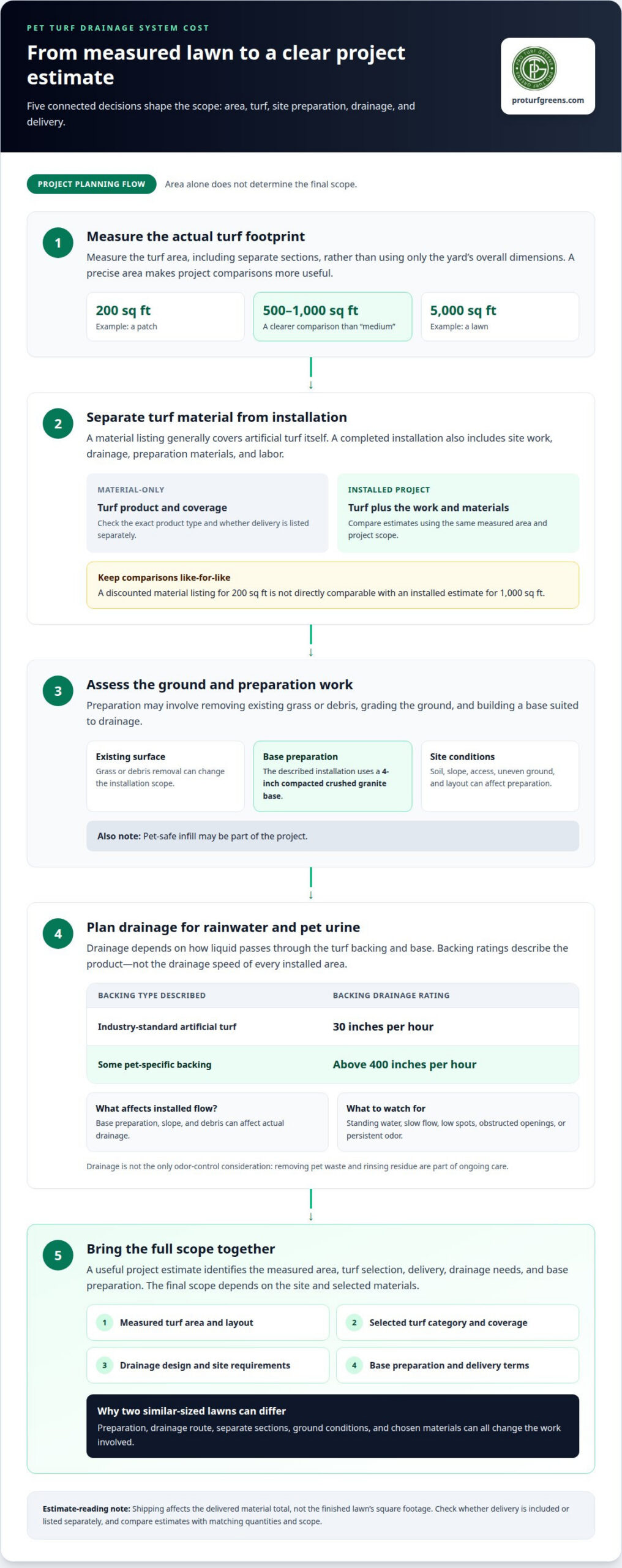
Project area changes how a per-square-foot estimate should be read. A 200-square-foot patch and a 5,000-square-foot lawn require different quantities of turf and preparation. Larger projects may spread some planning and delivery work across more square feet, while smaller projects can carry those tasks across less area. The final effect depends on the layout and installation scope, not area alone. Measure the actual turf footprint, including separate sections, rather than relying only on the yard’s overall dimensions. A 500-to-1,000-square-foot area, for example, gives a clearer comparison than calling a space simply “medium.”
Material listings and installed estimates describe different things. A product price per square foot generally covers the artificial turf material, while a completed project includes the work and materials needed to prepare and install it. Pet-specific turf and standard artificial grass are distinct product categories, so compare the exact product type and coverage before assessing a sale. A reduced material price doesn’t show what a finished area will cost. The pet turf drainage system cost depends on the area, drainage and base work required, and the selected turf. Ask for an estimate that separates these elements.
Shipping affects the delivered material total, not the square footage of the finished lawn. Order size, packaging, delivery distance, and seller terms can affect how shipping appears in a purchase. Check whether a sale price applies to the turf alone and whether delivery is included or listed separately. For example, a discounted material listing for a 200-square-foot area should not be compared directly with an installed estimate for 1,000 square feet. Those figures describe different quantities and scopes. A useful project estimate identifies the measured area, chosen turf category, delivery, drainage, and base preparation. The overall price depends on the project and is provided after a quote request, with area, product selection, drainage needs, and site preparation shaping the estimate.
How Much Does Pet Turf Cost?
Installed pet turf costs depend on the yard, selected materials, drainage design, and ground preparation. In South Florida, local requirements and property conditions can also shape the installation scope.
Material and Installed Project Costs
Turf material and a completed installation are different things. Material refers to the artificial grass itself, while an installed project also involves site work, drainage, and labor. For a useful comparison, review the specified turf and the work included in each estimate. The total depends on the project and is provided after a quote request.
Site Preparation and Installation Work
Preparation can involve removing existing grass or debris, grading the ground, and building a base suited to drainage. The described installation uses a four-inch compacted crushed granite base. Pet-safe infill may also be part of the project. A clear estimate describes these components, helping you distinguish a complete turf installation from a material-only purchase.
Factors That Increase Installation Costs
More extensive ground preparation, drainage requirements, and customized layouts can add installation work. Removing existing grass or debris changes the scope, as can choosing pet-specific turf and infill. Soil, slope, and access may also affect preparation. An estimate reflects the specific site and selected materials, rather than a standard price for every South Florida yard.
Costs by Area Size
A small lawn uses less turf than a larger yard, but the total also depends on layout and preparation. Separate sections, uneven ground, or a complex drainage route can change the work involved. Compare estimates using the measured turf area and the same project scope. This makes it easier to understand how installation needs differ across yards in Fort Lauderdale, Miami, and Palm Beach.
Local building or permit requirements and HOA rules can vary by property in South Florida. Pet turf drainage maintenance generally involves removing pet waste and rinsing the surface; cleaning costs depend on the service and work required.
Drainage and urine-flow function
Drainage performance depends on how water and urine pass through the turf backing and base. In pet areas, trapped moisture can contribute to lingering odors and pooling. A well-planned system supports water flow beyond the surface, but backing performance alone doesn’t determine how an installed area will drain.
Natural grass, gravel, and artificial grass handle water differently. Gravel allows liquid to pass through, while natural grass relies on soil drainage. Synthetic turf depends on permeable backing and a suitable base. Odor control also requires removing waste and rinsing residue, so drainage isn’t the only consideration. The pet turf drainage system cost reflects the selected materials and the work required for the site.
Backing drainage rates vary by product. Industry-standard artificial turf backing is described as draining at 30 inches per hour, while some pet-specific backing is rated above 400 inches per hour. These figures describe backing performance, not drainage speed across every installed area. Base preparation, slope, and debris can affect actual flow. That distinction helps explain why the pet turf drainage system cost may vary even when two products advertise different drainage ratings.
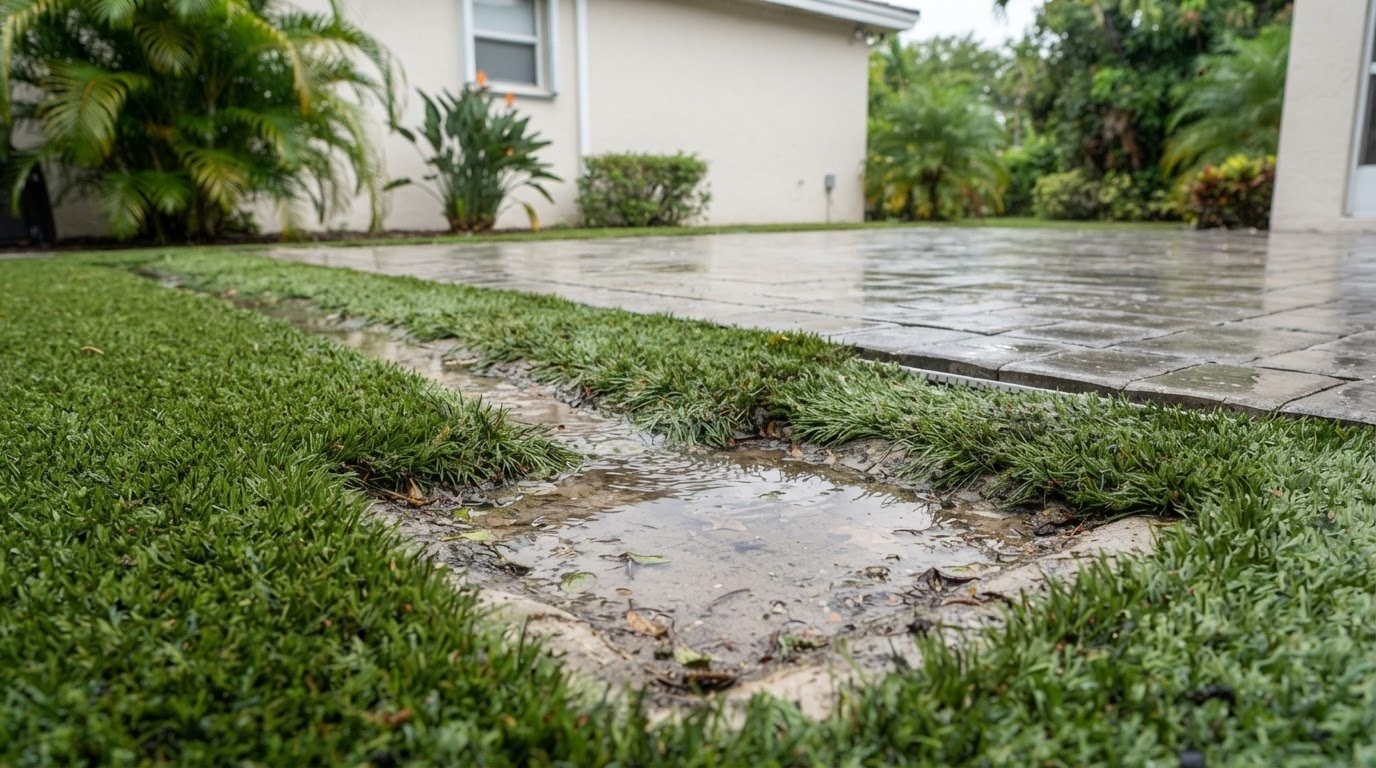
Common drainage problems include standing water, slow flow, and persistent odor. Debris may obstruct drainage openings, while uneven ground can create low spots. Repair expenses depend on the affected area, access, and whether the issue involves the backing, base, or surrounding drainage. To help prevent problems, installation planning should account for site conditions, and ongoing care should include removing waste and surface debris.
A small patch that pools after rain points to a different concern than odor across the full lawn. A professional assesses where water collects, whether drainage openings are clear, and how the base directs liquid. These observations help identify whether the issue relates to the surface, underlying materials, or drainage route, and guide a repair plan for the affected area.
Drainage-related base preparation
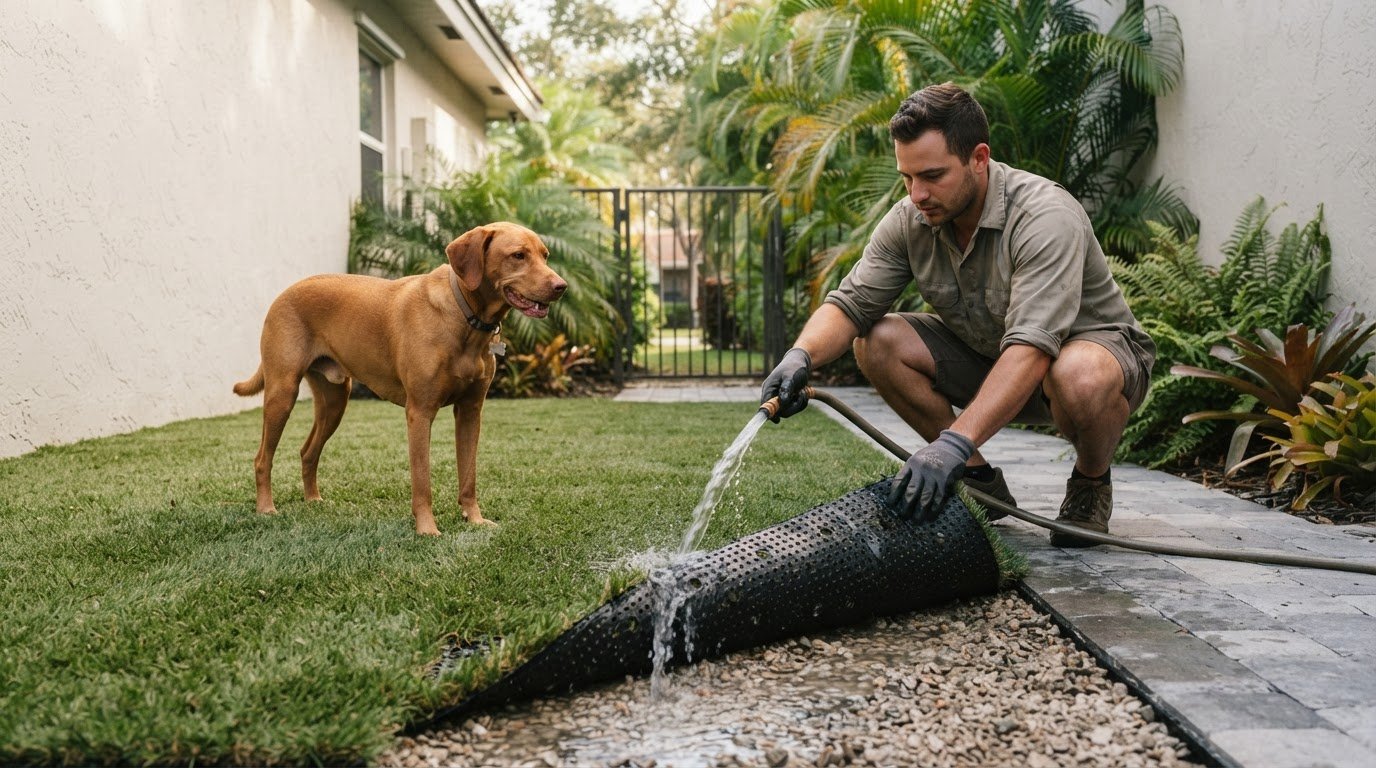
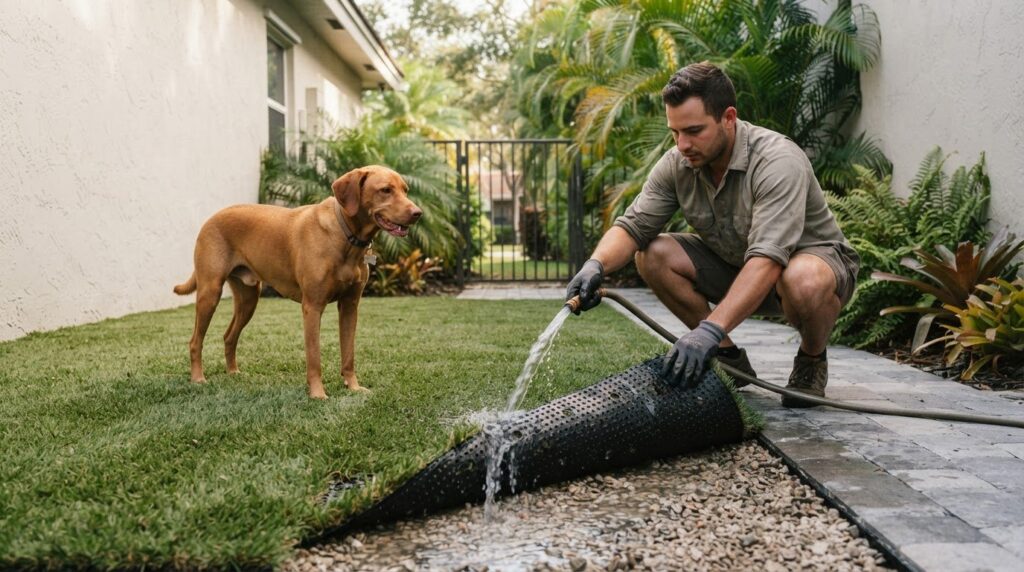
A gravel or sand base layer helps water move beneath pet turf. Its preparation shapes how the finished surface drains and handles everyday use. The installation team assesses the existing ground, identifies low areas, and plans a suitable route for water. Infill sits above the base, so it cannot compensate for poor grading or blocked drainage. A good design considers rainfall, pet use, and the site’s existing conditions together.
A French drain or subsurface drain adds a separate design and construction scope. Its cost depends on the trench route, excavation, drainage materials, and how the outlet connects with the site. A longer or more complex route requires more work than a straightforward base installation. The estimate should distinguish the drain from the turf and base preparation.
Professional installation involves more than turf and infill. Crews may use excavation, grading, and compaction equipment, along with gravel or sand and drainage components. Exact materials depend on the ground and planned water route. A professional coordinates the sequence: assess site conditions, prepare the ground, shape the base, integrate drainage, then install the turf. This helps avoid covering drainage issues beneath the finished surface.
Base preparation also affects where water goes after it passes through the turf. If the ground holds water or the planned outlet is poorly placed, a surface can drain slowly despite permeable backing. The installation plan accounts for existing slopes, low spots, and the area’s connection to suitable drainage. Discussing these conditions before work begins helps align the drainage design with the site, rather than relying on extra infill to solve a base problem. Plan your pet turf drainage installation with the ground and drainage requirements in mind.
Pro Turf Greens
Pro Turf Greens helps pet owners plan artificial turf projects around their yard’s drainage needs. For a pet area, the installation scope depends on the site, selected turf, base preparation, and how water will move through the finished surface. Discussing these elements together can clarify estimates and help align the project with the property’s conditions. Pro Turf Greens installs Lawns & Pet Turf, alongside other recreational turf solutions, for residential and commercial spaces.
If you’re weighing drainage options or planning a pet turf installation, contact Pro Turf Greens to discuss your project.
Plan a Pet Turf Project That Fits Your Yard
The next step is to turn your drainage priorities into a project plan that reflects how you use your yard. Consider where your pets spend time, how the space connects to the rest of the property, and what you want the finished landscape to support. These details help frame a practical conversation about the pet turf drainage system cost without assuming every yard needs the same design. A clear goal gives the installation team a useful starting point and helps you evaluate the choices that matter to your household.
Pro Turf Greens works across several artificial turf applications, including Backyard Putting Greens, Playgrounds & Recreational Turf, and Tee Lines & Driving Ranges. This range supports a considered approach to outdoor spaces based on their intended use, while keeping your pet area’s drainage needs central to planning.
Ready to discuss the possibilities for your yard? Contact Pro Turf Greens to start planning a surface that works for your space and your pets.
Frequently Asked Questions
How Does Artificial Grass Drain Dog Urine?
Dog urine passes through drainage openings in the turf backing and into the permeable base below. From there, it moves through the base and into the site’s drainage route. If urine remains near the surface, for example, the cause may be blocked openings, slow-draining ground, or a base that doesn’t direct liquid away effectively. Removing waste and rinsing the surface also help manage residue and odor.
What is the average total cost to install pet turf with drainage in a small, medium, or large yard?
There isn’t one installed total that applies to every small, medium, or large yard. The estimate depends on measured area, turf selection, drainage design, and site preparation. A pet area in Fort Lauderdale may have different ground conditions and project requirements than one in Miami. A useful estimate describes the scope for that specific yard rather than relying on a size label alone.
What factors affect pet turf drainage system installation costs, such as soil, slope, and access?
Soil conditions, slope, and access influence the preparation and drainage work a site needs. For example, uneven ground may require additional grading, while restricted access can affect how materials reach the installation area. The planned water outlet and any existing drainage features also shape the design. These factors affect labor and materials because they determine how the system connects with the property.
What drainage layers and materials are used under artificial grass for dogs, and how much do they cost?
Pet turf installations commonly use a gravel or sand base to support drainage beneath the surface. Some projects also need drainage components suited to the site’s water flow. Material costs depend on the chosen base, drainage design, and project complexity. An estimate is easier to assess when it identifies the base materials separately from added drainage work and turf.
How much does permeable pet turf or a specialized drainage backing cost compared with standard artificial turf?
Specialized backing and standard artificial turf can differ in material cost, but the installed comparison also depends on the drainage system and base. A higher drainage rating describes the backing’s performance, not the total installation cost. Compare the specified turf, backing, base preparation, and drainage scope together. This makes it clearer whether a product’s drainage characteristics suit the intended pet area.
How do pet turf drainage systems compare with natural grass, gravel, and standard artificial turf for cost and odor control?
Gravel lets liquid pass through, natural grass relies on soil drainage, and artificial turf depends on permeable backing and a suitable base.