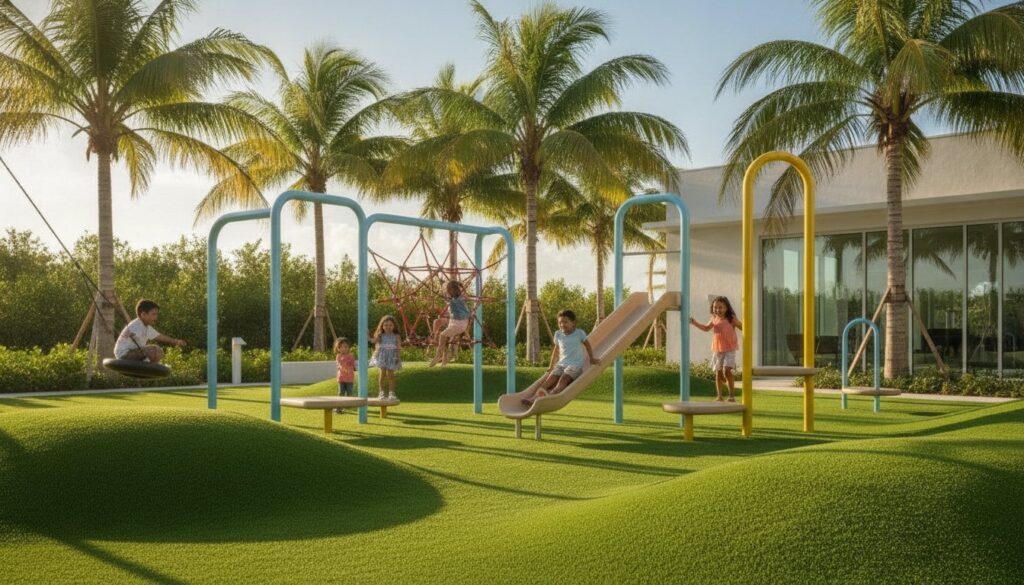
A mid-July afternoon in Miami often turns a standard play area into an unusable heat trap, where surface temperatures climb high enough to cause discomfort or even burns. Finding truly safe playground surfaces south florida requires more than just picking a soft material; it demands a solution specifically engineered for our unique tropical environment. You likely recognize that keeping children protected involves a constant battle against scorching sun, sudden downpours, and the long-term liability of fall injuries.
This 2026 protective guide explores the sophisticated engineering behind modern playground safety, focusing on impact protection and innovative heat-reflective technology designed for the South Florida climate. You’ll discover how to achieve a certified safe surface that meets the latest ASTM F1292-22 standards while ensuring your investment remains low-maintenance for over a decade. We will examine the transition from traditional materials to advanced synthetic turf systems that stay cool, dry, and inviting year-round, regardless of the weather. By focusing on durability and specialized material innovation, you can transform a high-liability area into a beautiful, high-performance recreational space.
Key Takeaways
- Identify the critical safety certifications, including ASTM F1292 and IPEMA, that ensure your surfacing provides the highest level of fall protection and impact attenuation.
- Discover how modern heat-reflective technology and UV stabilizers keep safe playground surfaces south florida cool to the touch and resistant to sun-induced fading.
- Learn why high-density shock pads are a non-negotiable component for preventing traumatic brain injuries through superior, multi-layered impact absorption.
- Understand the technical requirements for rapid-drainage sub-bases that effectively eliminate standing water and mold growth after heavy tropical downpours.
- Explore the benefits of partnering with a local specialist who understands how to design installations that account for Florida’s specific humidity and environmental factors.
Understanding Playground Safety Standards in South Florida
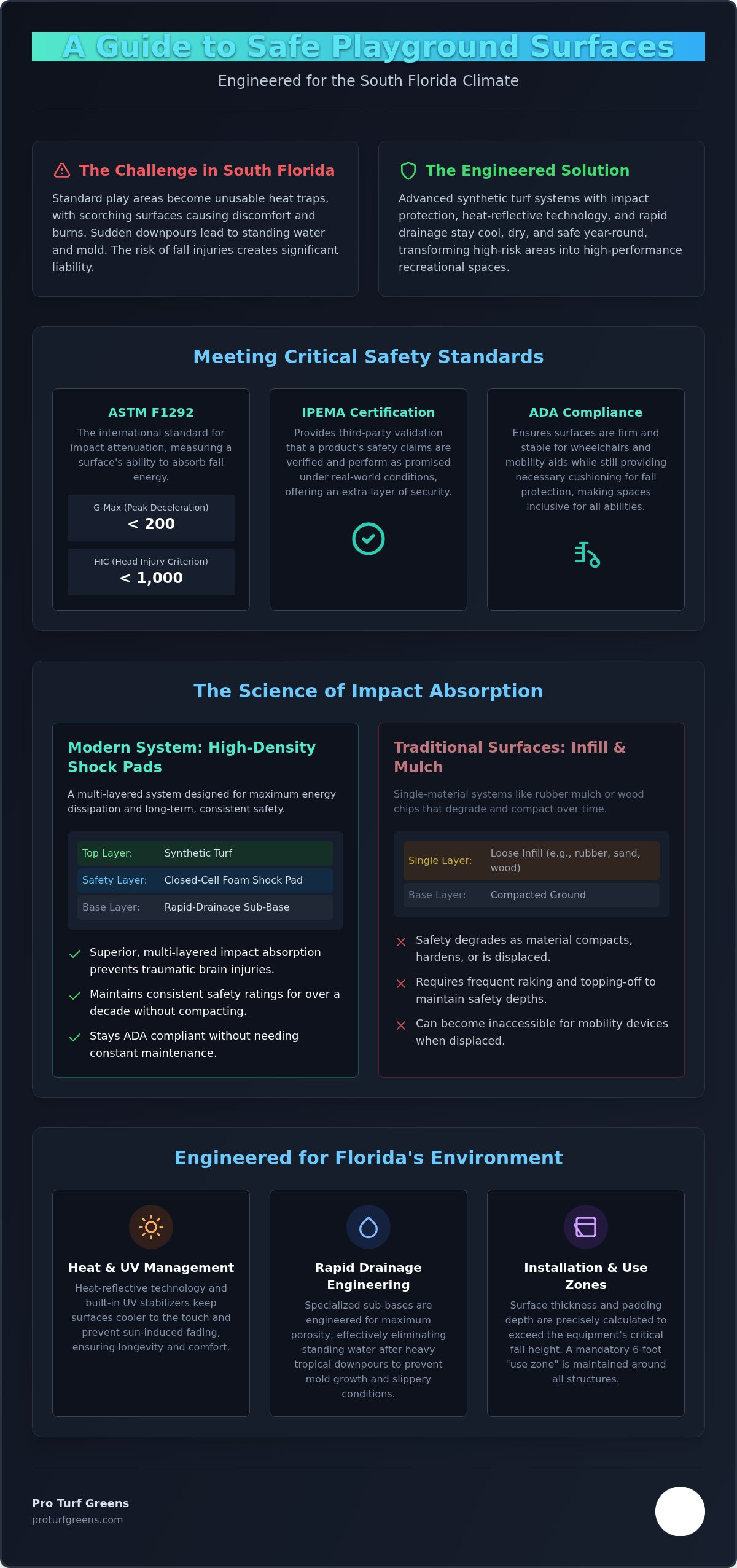
Safety in a recreational setting isn’t a matter of opinion; it’s a matter of rigorous engineering and verified testing. When selecting Playground surfacing materials for a new project, the primary benchmark you’ll encounter is ASTM F1292. This international standard governs impact attenuation, which is the surface’s ability to absorb energy and reduce the force of a fall. For schools, parks, and daycare centers, adhering to this standard is the first step in mitigating the risk of severe injuries. Performance requirements for these safe playground surfaces south florida mandate a G-max below 200 and a Head Injury Criterion score below 1,000 at the certified critical fall height.
Third-party validation through IPEMA certification provides an additional layer of security for facility managers. This certification means the manufacturer’s claims have been independently verified, ensuring the product performs as promised under real-world conditions. Head Injury Criterion (HIC) is the specialized calculation used to measure the specific impact force transmitted during a fall to ensure it remains below life-threatening thresholds. In South Florida, these certifications are essential for meeting the high standards expected by parents and local regulators alike.
Inclusive design is equally vital, as public spaces must remain accessible to children of all abilities. ADA compliance ensures that surfaces are firm and stable enough for wheelchairs and mobility aids while still providing the necessary cushioning for fall protection. Balancing these two requirements requires specialized materials and precise installation techniques that only a seasoned expert can provide.
Critical Fall Heights and Surface Thickness
Protecting children from falls requires matching the surface thickness to the highest potential fall point of your equipment. A “one size fits all” approach often leads to safety failures because different structures, such as high slides or climbing walls, impose different physical demands. We meticulously calculate the required depth of padding to ensure the impact absorption exceeds the equipment’s critical fall height. Additionally, a 6-foot “use zone” must be maintained around all structures, providing a consistent safety buffer where no obstacles or hard surfaces can interfere with a child’s movement.
Regulatory Compliance for Florida Facilities
Navigating the specific requirements for South Florida daycare licensing and HOA safety can be complex. Local inspectors often look for documented proof of compliance with national safety guidelines and the 2026 Florida Building Code. Professional installation by a local expert ensures that your project meets these stringent criteria from day one. You can learn more about these requirements in our guide on Playground Turf Safety Standards Florida. This proactive approach not only protects children but also safeguards your organization against liability concerns and long-term maintenance issues.
The Science of Impact Absorption: Shock Pads vs. Infill
Engineering a truly safe play environment involves looking beneath the surface to understand how energy dissipates during a fall. High-density foam shock pads serve as the foundation for modern safety; they are specifically designed to absorb the kinetic energy that leads to traumatic brain injuries. Unlike traditional materials that can harden or degrade over time, these closed-cell pads remain resilient. They ensure that the impact ratings established during your initial installation persist for years. For those investing in safe playground surfaces south florida, this multi-layered approach provides a level of security that single-material systems simply cannot match.
According to the U.S. Access Board guidelines on play surfaces, maintaining consistent impact attenuation is critical for both safety and accessibility. A system that utilizes non-compacting materials stays compliant with these federal standards without the need for constant mechanical tilling. This specialized engineering allows the surface to remain soft enough to protect children while staying firm enough to support mobility devices. If you are planning a facility upgrade, partnering with a knowledgeable specialist ensures that every layer of your playground is optimized for local conditions.
Why Shock Pads Outperform Loose Fill
Displacement remains one of the most significant risks in traditional playground design. In high-traffic zones, such as the base of a slide or beneath a swing set, loose materials like wood chips or rubber mulch naturally shift away. This leaves the most dangerous areas with the least protection. Integrated shock pads eliminate this vulnerability by providing a fixed, uniform safety layer that never migrates, regardless of how many children are playing. While mulch requires annual replenishment and frequent raking to stay safe, a permanent shock pad offers a superior long-term return on investment by removing those recurring costs.
Non-Toxic Infill Options for Kids
Infill plays a dual role in both safety and the longevity of the synthetic turf blades. It provides the final layer of cushioning while supporting the fibers to keep them upright and resilient. We prioritize the use of antimicrobial, acrylic-coated sand over traditional crumb rubber. This choice ensures the play area remains free of allergens and toxins, which is a major concern for parents and educators. By selecting non-toxic, allergen-free materials, we create a playground that is as healthy as it is durable. This advanced infill also helps regulate the temperature of safe playground surfaces south florida, providing a more comfortable experience during our intense summer months.
Managing Heat and UV Exposure in the South Florida Sun
Intense solar radiation in Miami and Fort Lauderdale creates a unique challenge for recreational safety. Standard rubber surfaces can absorb heat until they reach temperatures high enough to cause thermal burns during the peak months of July and August. To combat this, modern safe playground surfaces south florida utilize specialized heat-reflective turf technology engineered specifically for tropical climates. Infrared-reflective pigments are integrated into the turf fibers to deflect solar radiation, keeping surface temperatures significantly lower than traditional materials. These advancements ensure that the play area remains a comfortable environment rather than a heat hazard for children.
Beyond temperature management, the longevity of these materials depends on their ability to withstand constant UV exposure. Intense Florida sunlight can cause “turf rot” or significant color fading in low-quality products that lack proper protection. High-performance systems incorporate UV stabilizers that act as a permanent shield, preserving the structural integrity and vibrant appearance of the space for years. The CPSC Public Playground Safety Handbook highlights the importance of maintaining surface conditions to prevent hazards, and UV resistance is a cornerstone of that long-term safety strategy. By choosing materials built for this environment, you ensure the playground stays as resilient as it is beautiful.
Turf vs. Rubber: Thermal Performance
Poured-in-place rubber often acts as a massive heat sink, retaining high temperatures long after the sun has moved or cloud cover has arrived. In contrast, synthetic grass systems with advanced cooling technology offer a much shorter “cool-down” time, allowing children to return to play quickly after a typical afternoon rain shower. There’s also a distinct psychological benefit to these green, natural-looking spaces. They create a more inviting and serene atmosphere for children compared to the industrial aesthetic of black asphalt or dark rubber tiles, encouraging longer and more engaged play sessions.
UV Protection and Material Longevity
The chemical breakdown of polymers is a common failure point for inferior surfacing under the relentless South Florida sun. Choosing a system with a high-quality “wear layer” is essential for commercial playgrounds that face heavy daily use and extreme weather. This protective layer ensures the fibers remain resilient against both heavy foot traffic and solar degradation over a ten-year lifespan. For the hottest days of the year, simple maintenance routines like light misting with water can further lower surface temperatures, providing an additional layer of comfort for young explorers while they enjoy the outdoors.
Drainage Engineering: Preventing Mold and Standing Water
South Florida’s climate is defined by intense tropical downpours that can drop several inches of rain in a single hour. For safe playground surfaces south florida, the “per-hour” drainage rate is the most critical technical specification to consider. Without a high-capacity drainage system, water pools on the surface or, even worse, becomes trapped beneath it. This phenomenon, known as the “bathtub effect,” occurs when water saturates the safety layers but has nowhere to escape. Trapped moisture quickly leads to the growth of mold and mildew, creating health hazards and providing an ideal breeding ground for mosquitoes.
A professionally engineered sub-base acts as the primary defense against these environmental issues. By utilizing a multi-layered system of crushed stone and geotextiles, we create a rapid-drainage foundation that pulls moisture away from the play area instantly. This infrastructure ensures the surface remains dry and sanitary, preserving the long-term integrity of the impact-absorbing layers. It’s a specialized approach that transforms a potential swamp into a reliable, year-round recreational asset.
Perforated Backing and Permeability
The choice of turf backing significantly impacts how quickly a playground recovers after a storm. While traditional “hole-punched” backings offer some relief, a 100% permeable backing allows water to flow through the entire surface area without restriction. This level of permeability is essential for maintaining the performance of the underlying shock pad. It prevents the padding from becoming waterlogged, which can compromise its ability to absorb impact effectively. With the right technology, your playground can be dry and ready for use within minutes of a heavy Florida rain shower.
Sub-Base Construction for Florida Soils
Designing for the unique geography of places like Boca Raton or Miami requires an understanding of sandy soils and high water tables. A standard installation might sink or wrinkle over time if the foundation isn’t correctly stabilized. We use a compacted aggregate base to provide a firm, level platform that resists shifting and settling. This meticulous construction process prevents surface irregularities that could otherwise become trip hazards. For more detailed insights into the engineering of high-traffic recreational areas, you can explore our guide on High-Performance Sports Turf.
If you’re ready to ensure your facility stays dry and mold-free through every storm, contact our team for a professional drainage assessment.
Professional Installation: The Pro Turf Greens Difference
Selecting a local specialist for your recreational project ensures that every environmental variable, from salt air to high humidity, is accounted for during the construction process. National providers often apply a generic template to every installation, but South Florida’s unique landscape requires a more nuanced approach. We take pride in being a dedicated partner for Miami, Fort Lauderdale, and Palm Beach facilities, providing the meticulous craftsmanship needed to maintain safe playground surfaces south florida over the long term. Our team understands that a successful playground is not just about the materials used; it’s about how those materials are integrated into the specific site conditions, such as existing shade structures or aggressive tree roots.
Every project begins with a focus on precision and reliability. We don’t just deliver a product; we deliver a custom-engineered solution that transforms your facility into an aspirational community asset. By prioritizing local expertise, you gain access to a team that is deeply invested in the final outcome of every project, ensuring that your play area remains beautiful, functional, and compliant with all safety regulations for years to come.
From Consultation to Final Safety Check
Your project starts with a comprehensive on-site assessment where our experts evaluate the specific topography and drainage needs of your land. We pay close attention to details that others might overlook, such as the strategic placement of seams to prevent tripping hazards and the secure anchoring of turf edges. During the installation phase, our craftsmen use specialized techniques to ensure a seamless finish that looks as natural as it is durable. Before the first child steps onto the new surface, we perform a final safety inspection. This process verifies HIC compliance and ensures that the impact attenuation layers are perfectly aligned with your equipment’s critical fall heights, providing total peace of mind for facility managers.
Transforming Your Community Space
We have helped numerous schools and parks in West Palm Beach and the surrounding areas transition from high-maintenance natural grass or aging rubber to modern synthetic systems. These transformations offer more than just a visual upgrade; they provide a lifestyle improvement for the entire community. A mud-free, evergreen playground means children stay cleaner, allergens are reduced, and the area remains usable immediately after a storm. This consistency allows for more frequent outdoor activity and lowers the long-term operational costs associated with traditional lawn care. To begin your own transformation, Schedule your South Florida turf consultation today and see the difference that professional local expertise makes.
Investing in the Future of Safe Play
Creating a recreational space that withstands the rigors of our tropical climate requires a fusion of advanced engineering and meticulous local expertise. You now understand that the most effective safe playground surfaces south florida facilities can implement rely on more than just soft padding; they require integrated heat-reflective technology and high-capacity drainage systems. By prioritizing ASTM and IPEMA-compliant installations, you ensure that every child is protected by the highest national safety standards while enjoying a space that remains cool and dry year-round.
Our commitment to excellence is rooted in our deep understanding of the unique challenges faced by communities in Miami, Fort Lauderdale, and Palm Beach. We take pride in delivering professional-grade results that transform ordinary play areas into resilient, high-performance environments. Whether you’re managing a school, a public park, or a private daycare, our team is ready to guide you through every step of the design and installation process. We invite you to Request Your Free South Florida Playground Consultation and discover how our custom-tailored solutions can elevate your community’s recreational experience. Let’s build a safer, more vibrant future for our children together.
Frequently Asked Questions
Is artificial turf safe for toddlers and young children?
Yes, professionally installed synthetic turf is an exceptionally safe choice for toddlers. Unlike natural grass, it doesn’t harbor pests, pollen, or hidden debris that can cause allergic reactions or scrapes. When paired with high-density shock pads, it provides a consistent safety rating that protects young children from fall-related injuries. This makes it a preferred option for safe playground surfaces south florida in daycare centers and residential backyards alike.
How hot does playground turf get in the South Florida sun?
Standard synthetic materials can become quite warm, but we utilize advanced heat-reflective technology to mitigate this. Our specialized fibers incorporate infrared-reflective pigments that deflect solar energy rather than absorbing it. This engineering keeps the surface significantly cooler than traditional poured-in-place rubber or asphalt. For the hottest July afternoons in Miami, a quick rinse with water can further reduce temperatures, ensuring the play area remains comfortable for active children.
Does synthetic playground surfacing require a lot of maintenance?
One of the primary benefits of synthetic surfacing is its minimal maintenance requirement. You won’t need to worry about mowing, fertilizing, or the constant raking associated with loose-fill mulch. The system stays level and intact despite heavy daily use. Occasional leaf blowing to remove organic debris and a light rinsing to keep the fibers fresh are generally all that’s needed to preserve the playground’s beauty and safety for years.
How long does a professional playground turf installation last?
A professional-grade installation is built to endure South Florida’s intense environment for 10 to 15 years. We use high-quality UV stabilizers to prevent the material from becoming brittle or fading under the relentless sun in Fort Lauderdale and Boca Raton. The longevity of the system depends on the quality of the sub-base and the wear layer of the turf. This durability makes it a cost-effective alternative to surfaces that require frequent replacement.
Is the infill used in your playgrounds non-toxic?
We prioritize the health of children by using only non-toxic, antimicrobial infill materials. Our preferred choice is an acrylic-coated sand that doesn’t harbor bacteria or allergens. We avoid traditional crumb rubber infill, which can contain heavy metals and trap excessive heat. This commitment to safety ensures that the play environment is healthy for children to touch and play on, providing peace of mind for parents and educators in our community.
Can playground turf handle the heavy rain from Florida storms?
Our systems are specifically engineered to manage the high-volume rainfall typical of Florida’s tropical storms. We utilize 100% permeable backings and a compacted aggregate sub-base that allows water to drain at incredibly high rates per hour. This rapid-drainage technology prevents standing water and the “bathtub effect,” ensuring the playground is dry and ready for use shortly after a storm. It also eliminates the damp conditions that promote mold and mosquito breeding.
What is the best surface for a backyard playground in Miami?
Synthetic turf is the premier choice for backyard play areas in Miami due to its versatility and resilience. It provides a mud-free environment that looks lush and green regardless of the season or weather conditions. Unlike wood chips that can cause splinters or rubber mulch that migrates into your home, turf stays in place. It offers a sophisticated lifestyle upgrade that combines professional-grade safety with the beauty of a perfectly manicured lawn.
How do I know if my playground surface is ADA compliant?
ADA compliance is verified through specific testing for firmness and stability to ensure wheelchair accessibility. A compliant surface must allow mobility devices to move freely without sinking or becoming stuck while still meeting impact attenuation standards. Our expert team designs every project to meet these federal guidelines, providing inclusive play environments for children of all abilities. We provide the necessary documentation to confirm that your facility meets all current accessibility and safety requirements.