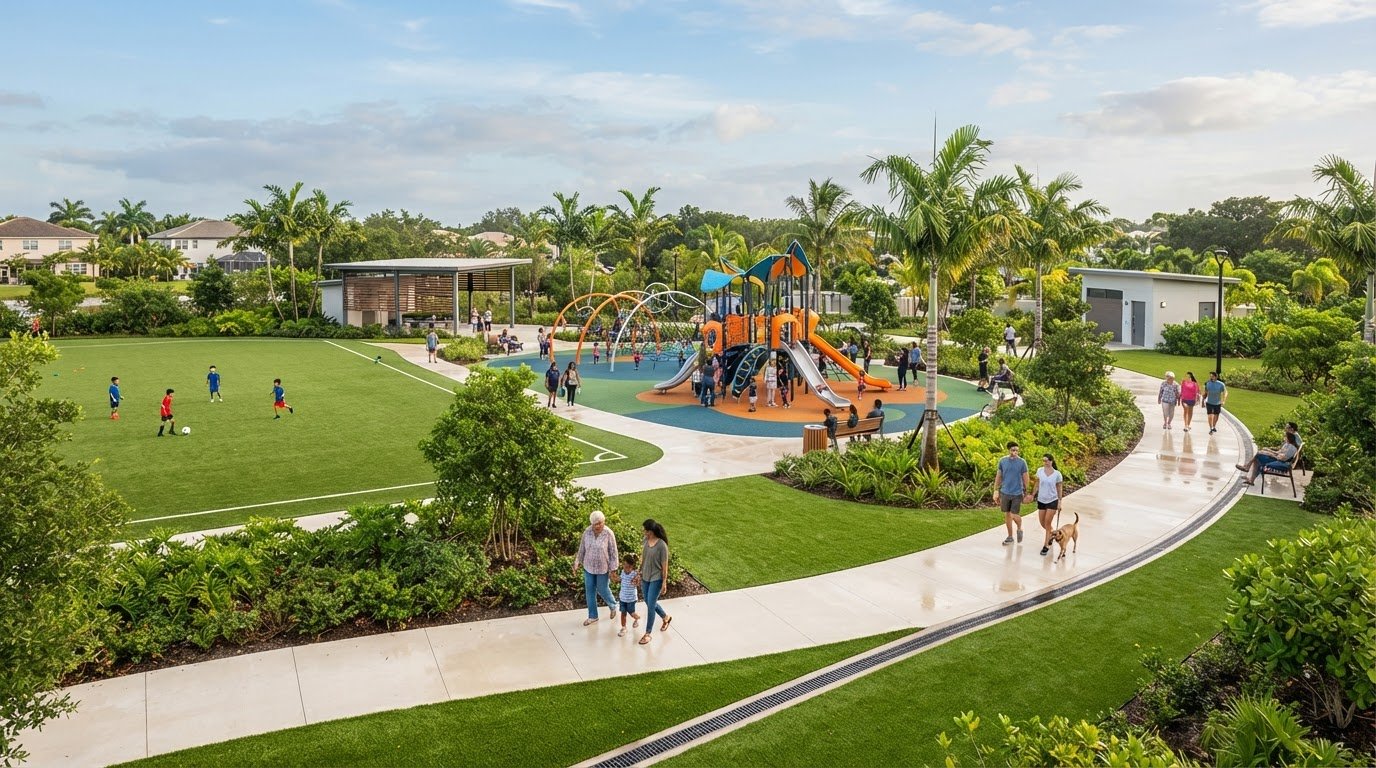

Did you know that falls account for 70% of all playground injuries? It’s a sobering statistic that keeps every school administrator and property manager in South Florida awake at night. You want a play area that’s vibrant and inviting, yet the pressure to meet evolving playground turf safety standards florida can feel overwhelming. Balancing the latest ASTM F1487-26 requirements with the need for a surface that doesn’t burn little feet in the Miami sun is a complex challenge that requires expert precision and local knowledge.
We understand that you need more than just a green space; you need a certified system that protects children and your organization’s reputation. This expert guide helps you master Florida’s strict safety regulations and environmental demands using high-performance synthetic turf surfacing. We’ll walk you through integrating the newest 2026 impact standards with climate-resilient engineering to create a space that is as safe as it is beautiful. From shock pad selection to ADA-compliant finishes, you’ll learn exactly how to build a playground that stands up to tropical storms and rigorous inspections while remaining cool to the touch all year long.
Key Takeaways
- Master the complex overlap of CPSC guidelines and ASTM F1292 to ensure your facility fully complies with the latest playground turf safety standards florida.
- Discover why the shock-absorbing underlayment is the most critical factor in achieving certified fall protection for specific equipment heights.
- Learn how specialized cooling technologies and infills can reduce surface temperatures by up to 30 degrees, ensuring the play area remains safe during peak Florida heat.
- Identify the specific IPEMA and ASTM F1951 certifications required to guarantee ADA accessibility and pass rigorous state safety inspections.
- Explore how professional-grade materials and climate-resilient engineering protect your investment against heavy foot traffic and tropical weather patterns.
Understanding Playground Turf Safety Standards in Florida
Florida’s vibrant outdoor spaces require a rigorous commitment to safety that goes far beyond aesthetics. The foundation for any compliant play area starts with the Consumer Product Safety Commission (CPSC) Public Playground Safety Handbook, specifically Publication #325. While these are federal guidelines, Florida’s local building codes frequently incorporate these standards as mandatory requirements for public and commercial venues. For property owners and school administrators, adhering to Playground surfacing standards is a vital step in mitigating liability and ensuring child welfare.
To guarantee that an installation truly meets these benchmarks, we look to the International Play Equipment Manufacturers Association (IPEMA). This certification is the industry’s gold standard, providing third-party validation that a specific turf system has been rigorously tested. It’s not enough to just buy “playground turf”; the entire assembly of fibers, infill, and underlayment must work together to meet the playground turf safety standards florida inspectors demand. This holistic approach ensures that the surface performs consistently under the pressure of daily use and the state’s unique environmental factors.
ASTM F1292: The Impact Attenuation Standard
This standard is the technical benchmark for measuring how well a surface absorbs the energy of a fall. It focuses on two primary metrics: G-max and the Head Injury Criterion (HIC). G-max measures the maximum acceleration produced by an impact, while HIC evaluates the likelihood of a head injury based on the duration of that impact. When we evaluate playground turf safety standards florida, we prioritize systems with lower G-max ratings. A lower rating means the surface is more forgiving, significantly reducing the risk of traumatic brain injuries. In the high-traffic environments of Miami and Fort Lauderdale, maintaining these ratings through proper shock pad engineering is essential for long-term safety and peace of mind.
ASTM F1951: Ensuring ADA Accessibility
Inclusivity is a legal mandate under the Americans with Disabilities Act (ADA), and ASTM F1951 defines the testing methods for surface maneuverability. Unlike wood mulch or sand, which can shift and create ruts, high-quality synthetic turf provides a firm, stable base for wheelchairs and walkers. Florida’s municipal parks and schools are subject to strict ADA enforcement, making synthetic systems a superior choice for compliance. A well-installed turf surface ensures that every child, regardless of mobility, can access play equipment without the physical barriers found in traditional loose-fill materials. It transforms a simple utility into a welcoming, high-end recreational space for the entire community.
Critical Fall Heights and Shock Pad Engineering
While the lush green fibers of a playground are what people see, the real protection lies beneath the surface. Synthetic turf alone cannot absorb the energy of a significant fall. This is why high-end installations rely on precision-engineered shock pads to meet playground turf safety standards florida. The most vital metric in this process is the Critical Fall Height (CFH). It’s the technical invisible line between a minor tumble and a serious injury.
CFH represents the maximum height from which a child could fall onto the surface without a high probability of a life-threatening head injury. The CPSC Public Playground Safety Handbook provides the framework for these measurements, emphasizing that the surfacing must match the specific equipment’s height. We advocate for “overbuilding” these safety margins. If your play structure has an 8-foot deck, installing a system rated for a 10-foot fall accounts for material settling and heavy usage over several years. This proactive approach ensures your facility stays compliant even as the materials age.
The thickness of the shock pad is directly proportional to its protective capability. A standard 1-inch pad might provide a 5-foot fall rating, whereas a 2-inch high-density pad can extend that protection to 10 feet or more. In South Florida, where humidity and heat can affect material flexibility, choosing a pad with high-quality resins is essential. This ensures the system remains compliant with playground turf safety standards florida throughout its entire lifespan. It’s a specialized engineering task that turns a standard lawn into a high-performance safety asset.
Calculating Your Required Fall Protection
Start by measuring the highest designated play surface of your equipment. This isn’t just the top rail; it’s the highest point a child is intended to stand on, such as a platform or climber. Once this height is confirmed, you must select a turf and pad combination that is IPEMA-certified for that exact elevation. Finally, always factor in a 20% safety buffer for high-traffic zones. Areas like the bottom of slides or under swings experience the most impact, and this extra margin compensates for any minor infill migration that occurs between maintenance visits.
Shock Pad Materials: Foam vs. Rubber
Choosing between closed-cell polyethylene foam and recycled rubber layers depends on your specific site needs. Foam pads offer exceptional consistency and are often easier to install with integrated drainage channels. These channels are crucial for Florida’s sudden tropical downpours, as they prevent water from pooling on the surface and causing slip hazards. Recycled rubber layers provide a denser feel and excellent long-term compression resistance, though they may require more intensive base preparation. If you’re weighing these options for a school or commercial park, a professional recreational turf consultation can help you select the material that best balances longevity with impact protection.
In South Florida, the definition of a safe play environment must account for the relentless sun and intense seasonal downpours. While the CPSC Public Playground Safety Handbook provides the national baseline for equipment and surfacing, local conditions demand specialized engineering to prevent thermal injuries and drainage failures. Adhering to playground turf safety standards florida means selecting materials that can withstand 90-degree days and three-inch-per-hour rain events without compromising the safety of the children using the space.
Humidity is the silent partner to Florida’s heat. In regions like Miami and Palm Beach, moisture trapped within a playground surface can quickly lead to the growth of mold, mildew, and bacteria. High-end synthetic systems designed for playground turf safety standards florida address this by incorporating antimicrobial protection directly into the turf fibers and infill. This specialized treatment ensures the play area remains sanitary and odor-free, even during the most sweltering summer months. It’s a critical layer of protection that often goes unnoticed until it’s missing.
Cooling Technologies for Play Surfaces
Surface temperature is a primary concern for any outdoor installation in the subtropics. Traditional materials, especially dark crumb rubber, can reach temperatures that cause skin irritation or burns. Modern cooling technologies, such as evaporative cooling infills, can reduce surface heat by up to 30 degrees. These systems work by capturing moisture from rainfall or irrigation and releasing it slowly as temperatures rise. Choosing lighter turf colors and non-toxic, rounded-granule infills further minimizes heat absorption, ensuring the playground remains a comfortable lifestyle upgrade rather than a heat hazard. The same advanced heat-reduction engineering used in synthetic grass for bocce ball courts in South Florida can be applied to playground surfaces to deliver measurable cooling benefits across all recreational installations.
Drainage Systems for Tropical Storm Resilience
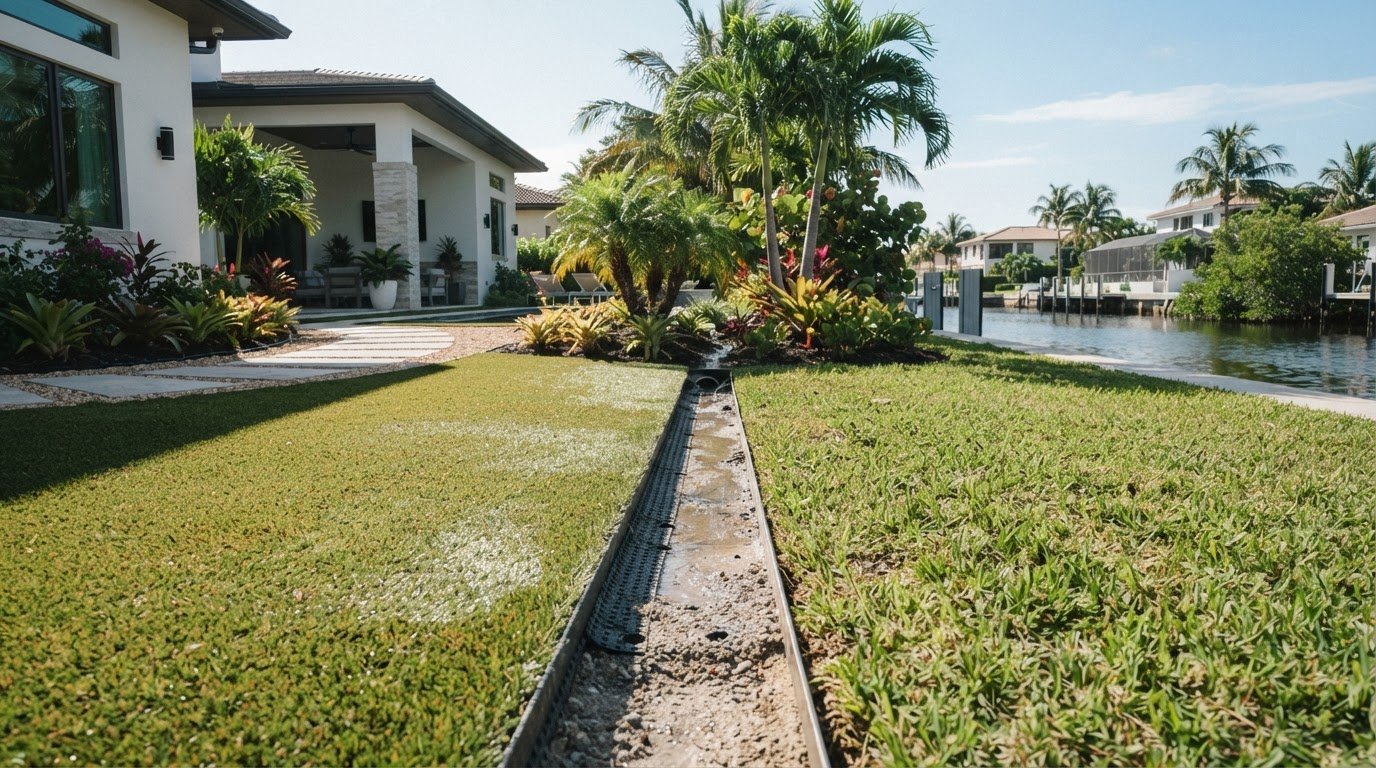
Florida’s “Big Rain” events can turn a poorly designed playground into a swamp in minutes. To prevent standing water and the resulting slip hazards, a sophisticated drainage system is mandatory. This begins with a permeable base layer of crushed stone and geofabric, which allows water to move vertically away from the surface. We evaluate turf backings based on their percolation rates, often choosing 100% permeable “edge-to-edge” backings over traditional hole-punched options. This rapid drainage prevents the “puddle effect” that attracts mosquitoes and ensures the play area is ready for use shortly after a tropical storm passes. Property owners throughout Miami-Dade who want to understand how these advanced drainage systems are evaluated during a site visit can learn more by scheduling an artificial turf consultation miami professionals rely on to assess local soil conditions and rainfall demands.

Compliance Checklist for Florida Schools and Daycares
Ensuring your project meets the playground turf safety standards florida requires a methodical verification process before the first child steps onto the surface. It isn’t just about choosing a high-quality product; it’s about validating an entire installation system. This checklist serves as your roadmap for passing state inspections and securing long-term liability protection for your facility.
- Verify IPEMA System Certification: Confirm that the specific combination of turf fibers, shock pad, and infill has been tested together. Certification for individual components does not guarantee the safety of the final assembly.
- Ensure ASTM F1951 Compliance: Accessibility is more than just a firm surface. Your installation must include a certified transition or “ramp” at every entry point to ensure seamless wheelchair and walker access.
- Conduct an ASTM F3313 Field Test: While lab tests are helpful, a post-installation field test verifies that the system performs as expected in your specific environment. This on-site impact test is the most reliable way to prove compliance to insurance providers.
- Gather Documentation: Keep all safety certificates, warranty details, and maintenance logs in a centralized file. Florida state inspectors and insurance adjusters will require these documents during routine safety audits.
If you’re managing a school or park project, our team can help you secure a certified playground and recreational turf installation that exceeds these benchmarks.
Daycare and Preschool Special Requirements
Facilities regulated by the Florida Department of Children and Families (DCF) face an extra layer of scrutiny. DCF surfacing guidelines emphasize non-toxic and lead-free materials, which are essential for younger children who are more likely to have direct contact with the ground. Selecting non toxic artificial grass that meets Florida’s updated 2026 standards is especially critical for daycare environments where toddlers spend extended time on the surface. We prioritize high-density fibers that offer a soft touch for toddlers while maintaining the durability needed for high-energy play. This balance ensures the playground remains a safe, inviting lifestyle upgrade for the families you serve.
Municipal and Community Park Standards
Meeting strict county-level procurement and safety specifications often requires more than just meeting the baseline. Municipal projects frequently demand higher “pull-force” standards for turf fibers to resist vandalism and heavy foot traffic. Long-term maintenance planning is also vital; without a schedule for infill replenishment and surface cleaning, initial safety ratings can degrade over time. By focusing on professional-grade materials and specialized engineering, community parks can maintain their safety certifications for years despite the challenges of the Florida climate.
The Pro Turf Greens Approach to Certified Play Surfaces
At Pro Turf Greens, we believe that a playground should be more than just a functional space; it should be a meticulously crafted environment where safety and aesthetics coexist. We apply the same ‘PGA-caliber’ precision found in our professional putting greens to every recreational surface we install. This high-end approach ensures that your facility doesn’t just meet playground turf safety standards florida, but sets a new benchmark for quality and resilience in our local communities.
Our expertise extends from the bustling urban parks of Miami to the private estates of Jupiter. This local knowledge is vital because Florida’s unique soil conditions and intense humidity levels directly impact how a turf system performs over time. We don’t offer one-size-fits-all solutions. Instead, we provide custom-tailored engineering that respects the strict playground turf safety standards florida inspectors look for in both residential and commercial landscapes. By using only lead-free, non-toxic materials, we ensure that every play area is as healthy as it is durable, giving parents and administrators complete peace of mind.
From Consultation to Certified Completion
The journey to a safer playground starts with a thorough site assessment. Our technicians evaluate existing equipment to determine the exact fall protection requirements and test the sub-base to ensure optimal drainage performance. We frequently collaborate with school boards, municipal planners, and HOAs to navigate the complex regulatory hurdles unique to our state. Because we’re seasoned specialists, our professional installation ensures that your system remains compliant with the newest 2026 ASTM F1487 standards while keeping your comprehensive manufacturer warranty fully intact.
Ready to Upgrade Your Play Area?
Choosing the right partner means moving beyond simple utility to achieve a true lifestyle upgrade. We take pride in transforming worn, high-traffic areas into lush, safe recreational environments that stand up to both tropical storms and daily play. If you’re ready to ensure your facility passes every inspection while providing a cool-to-the-touch surface for year-round use, we invite you to take the next step. Our team is dedicated to delivering results that are both beautiful and functional for the long term.
Contact Pro Turf Greens for a Professional Playground Consultation and discover how we can elevate your outdoor space with a free South Florida safety assessment.
Secure Your Playground with Proven Florida Expertise
Building a compliant play area is a significant investment in both child safety and property value. You now have the tools to evaluate playground turf safety standards florida, from calculating critical fall heights to selecting cooling infills that withstand the Miami sun. A successful installation relies on the seamless integration of IPEMA-certified systems and climate-resilient drainage to ensure long-term durability and protection against our unique environmental challenges.
Pro Turf Greens serves as your dedicated partner throughout South Florida, including Miami, Fort Lauderdale, and Palm Beach. We specialize in high-performance, non-toxic athletic and play surfaces that prioritize the well-being of every child. Our local knowledge ensures your project navigates state-specific drainage requirements and rigorous safety inspections with ease. It’s time to transform your recreational space into a high-end, safety-first environment that parents and administrators can trust for years to come.
Take the first step toward a certified, professional-grade installation today. Schedule a Free Playground Safety Consultation with Pro Turf Greens and let’s work together to build a safer, more vibrant community for our children.
Frequently Asked Questions
What is the most common playground safety standard used in Florida?
ASTM F1292 is the most widely recognized standard for impact attenuation across the state. It establishes the technical requirements for how well a surface absorbs energy during a fall to prevent serious head injuries. Most local building codes in South Florida directly reference this standard alongside the CPSC Public Playground Safety Handbook to ensure all public and commercial play areas provide a verified level of protection.
Does the Florida Department of Children and Families (DCF) require specific playground surfaces?
The Florida Department of Children and Families (DCF) mandates that all outdoor play areas have resilient surfacing under any equipment from which a child could fall. While they don’t exclusively require synthetic grass, the chosen surface must meet playground turf safety standards florida by providing documented impact absorption for the specific equipment height. DCF inspectors specifically look for surfaces that are well-maintained, non-toxic, and free of trip hazards.
How often should playground turf be inspected for safety compliance?
High-traffic playgrounds should undergo a basic visual inspection daily to check for debris or surface damage that could cause injury. A more comprehensive safety audit by a certified professional is recommended at least once a year. This detailed review ensures the infill levels remain consistent and the shock-absorbing properties haven’t degraded due to the intense Florida sun or heavy foot traffic, keeping your facility fully compliant.
Can artificial turf be installed over existing concrete or asphalt playgrounds?
Yes, artificial turf can be installed over hard surfaces like concrete or asphalt, provided a high-quality shock pad is utilized. Installing turf directly onto a hard base without an underlayment will not meet safety standards for fall protection. The combination of a specialized pad and turf creates a safe, compliant environment while saving the significant cost and time associated with removing the existing hardscape materials.
Is antimicrobial infill necessary for Florida playgrounds?
While not strictly a legal requirement, antimicrobial infill is highly recommended for Florida playgrounds due to our high humidity and frequent tropical rainfall. These specialized infills prevent the growth of bacteria, mold, and mildew within the turf system. This choice ensures the play area remains sanitary for children while also preventing the unpleasant odors that can develop when moisture is trapped in traditional playground surfacing materials.
How much cooler is ‘cool-turf’ compared to standard synthetic grass in Florida?
Specialized cooling technologies can reduce surface temperatures by up to 30 degrees compared to standard synthetic grass products. In South Florida, where sun exposure is constant, this temperature reduction is critical for preventing thermal discomfort and protecting sensitive skin. Utilizing evaporative cooling infills and heat-reflective fibers ensures the playground remains a usable lifestyle upgrade even during the peak afternoon hours of the summer season.
What is the difference between a shock pad and a base layer?
The base layer provides the structural foundation and drainage for the playground, while the shock pad is specifically engineered for impact safety. The base typically consists of compacted crushed stone designed to handle Florida’s heavy rainfall without shifting. The shock pad sits directly beneath the turf to absorb energy during a fall, ensuring the entire system meets the necessary safety ratings for critical fall heights.
Are there specific ADA requirements for playground entry points in Florida?
Florida playgrounds must comply with ADA standards by providing a firm and stable route to all play equipment for individuals with disabilities. This requires the turf system to meet ASTM F1951 specifications for maneuverability and wheelchair access. Additionally, entry points must feature beveled transitions or ramps to allow seamless access without creating a trip hazard at the edge where the turf meets the surrounding sidewalk. For a comprehensive overview of material safety requirements under Florida’s updated regulations, reviewing the 2026 checklist for non toxic artificial grass in Florida can help administrators verify that every component of their installation meets current state standards.