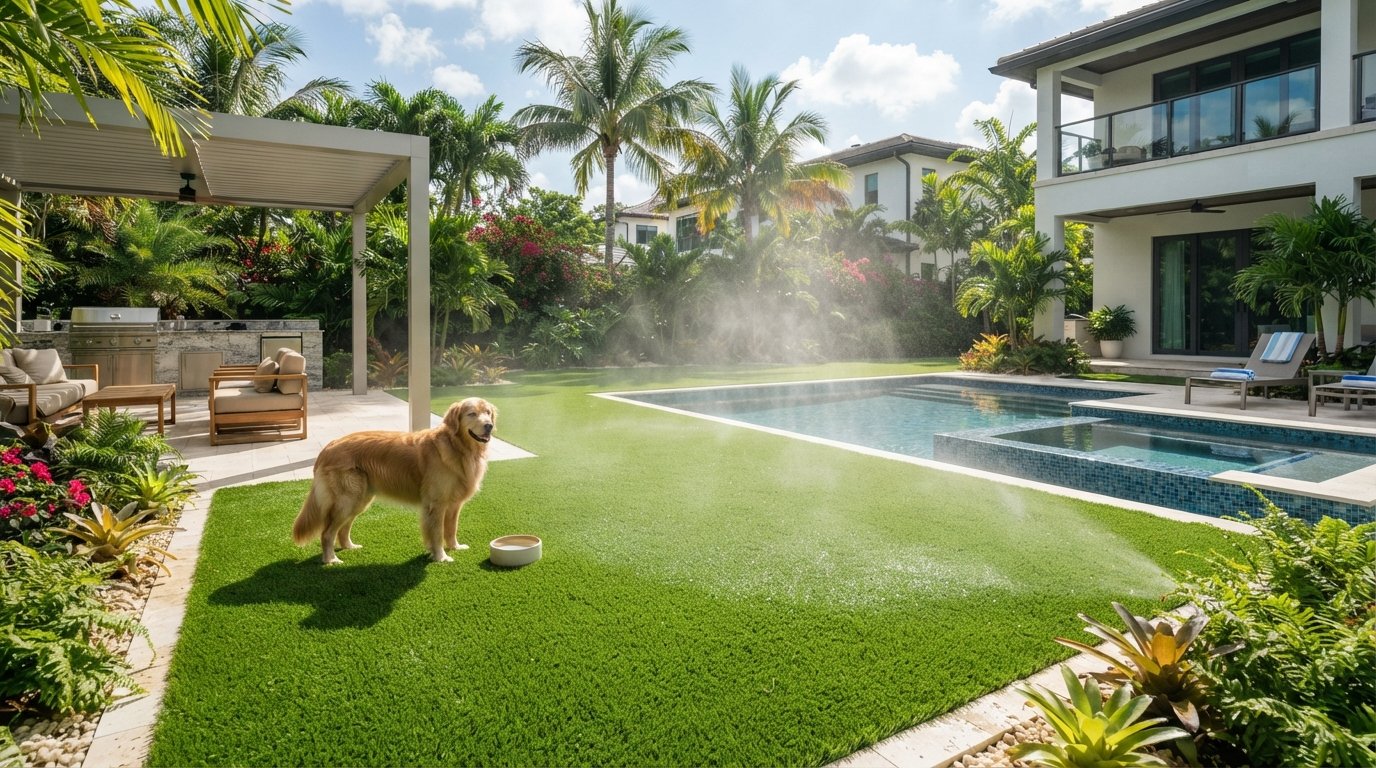
What if your backyard could absorb a tropical deluge as quickly as a professional-grade sponge, leaving it dry enough for a putting session just minutes after the clouds part? In South Florida, we don’t just experience rain; we navigate intense seasonal downpours that can quickly transform a standard lawn into a stagnant pool. You likely know the frustration of standing water that lingers for hours, or the unpleasant mildew smells that often follow a humid afternoon storm.
Finding the best artificial turf for heavy rain requires looking beyond the surface to the engineered systems beneath the blades. We’ll show you how to select and install high-performance synthetic grass designed to handle South Florida’s most intense rainstorms without flooding or shifting. By focusing on advanced permeability and a specialized sub-base, you can secure a dry, usable backyard immediately after the weather clears. This guide breaks down the technical features of modern drainage, from high-flow backings to the latest Florida DEP standards, ensuring your landscape remains a long-term asset rather than a swampy liability.
Key Takeaways
- Identify the technical differences between hole-punched and 100% permeable backings to select the best artificial turf for heavy rain.
- Discover why a custom-engineered sub-base is more important for flood prevention than the synthetic grass blades themselves.
- Learn how to balance luxury aesthetics with high-saturation performance by choosing the right pile height for rapid evaporation.
- Understand current Florida regulations regarding material permeability to ensure your new lawn remains compliant and functional.
- Explore how professional installation techniques prevent common drainage issues like “floating” turf or stagnant odors after intense tropical storms.
Why Heavy Rain is the Ultimate Test for South Florida Artificial Turf
In South Florida, a standard afternoon rainstorm can drop more water in thirty minutes than some states see in a month. This volume makes the region a unique laboratory for synthetic grass durability. Identifying the best artificial turf for heavy rain involves more than just looking at the green blades; it requires evaluating the underlying engineering that manages vertical water movement. While many products claim to be water-resistant, which simply means the fibers won’t degrade when wet, a high-drainage system is designed to actively transport thousands of gallons of water away from the surface and into the ground.
Modern Artificial turf systems have evolved from simple carpets into sophisticated drainage platforms. In our local climate, “high-flow” drainage refers to a system’s ability to percolate water at rates often exceeding 100 to 200 inches per hour per square yard. Because South Florida is famously flat, gravity doesn’t assist with surface runoff as it does in hilly regions. This lack of topography means that if your turf can’t handle vertical drainage, you’ll face the risk of the turf “floating” or shifting as the sub-base becomes oversaturated. Inferior backings often suffer from delamination when trapped in standing water, where the layers of the turf literally peel apart over time.
The South Florida Monsoon Factor
Rainfall patterns in cities like Fort Lauderdale and Miami are characterized by high-intensity bursts that overwhelm standard drainage rates. During these events, the best artificial turf for heavy rain must also resist silt accumulation. As heavy water flows across a property, it carries fine sediment that can clog the small drainage holes in traditional perforated turf. Without a high-flow backing, this silt creates a waterproof barrier that leads to permanent puddling and expensive repairs. Our local expertise ensures that every installation accounts for these tropical volume spikes and the specific challenges of our sandy, high-water-table environment.
Signs of Poor Drainage in Existing Landscapes
If you’re considering a transition to synthetic grass, your current lawn likely shows the scars of Florida’s climate. Common red flags include:
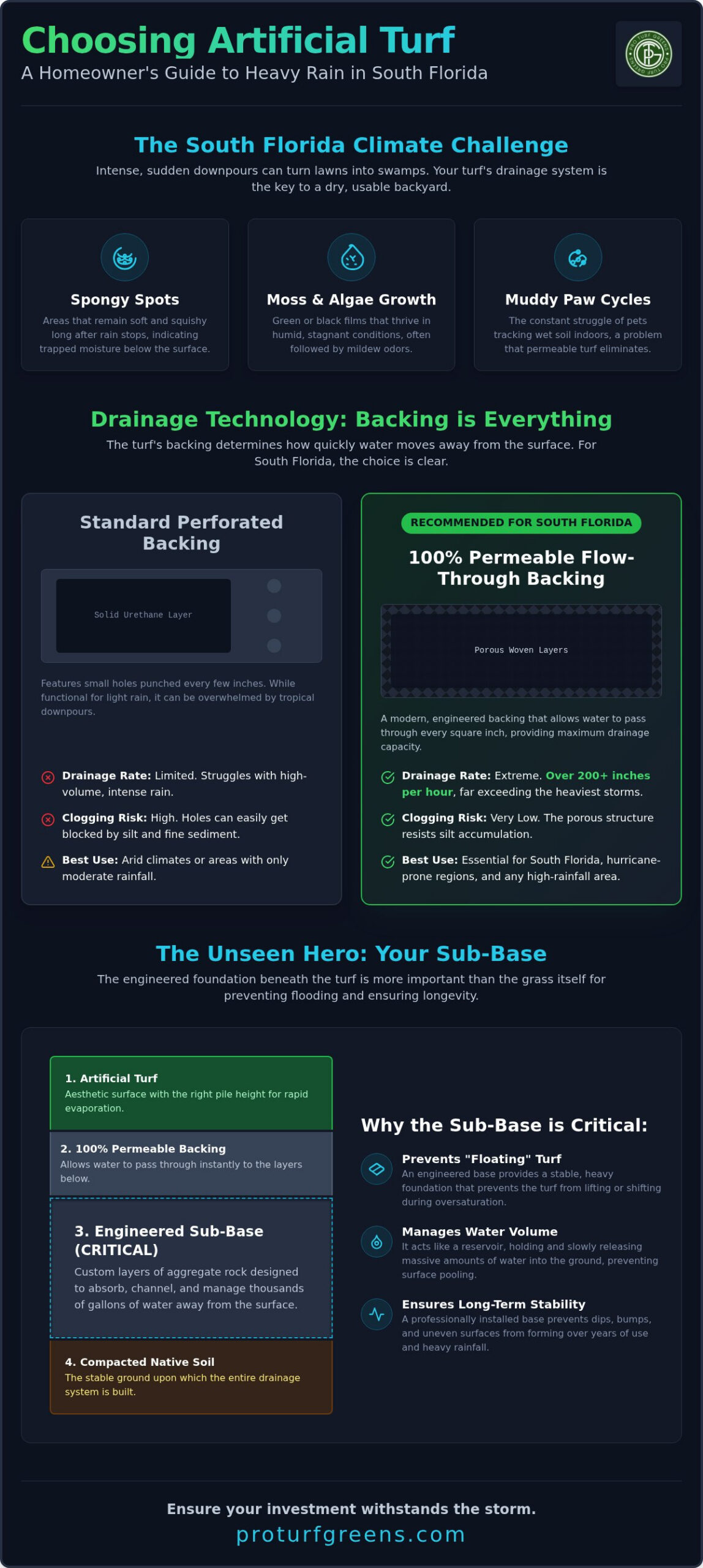
- Spongy spots: Areas that remain soft and “squishy” long after the rain stops, indicating trapped moisture.
- Moss and Algae: Green or black films on the soil surface that thrive in the humid, stagnant conditions following a storm.
- Muddy Paw Cycles: The constant struggle of pets bringing wet soil into the home, a problem that only a fully permeable turf system can solve.
A professional installation replaces these swampy conditions with a dry, stable surface. By engineering the system to work with South Florida’s high water table, we ensure that your backyard remains usable even during the peak of the hurricane season.
Understanding Drainage Technology: Perforated vs. 100% Permeable Backing
Selecting the best artificial turf for heavy rain requires a technical understanding of how water moves through the synthetic layers. Most products on the market fall into two categories: perforated and 100% permeable. Perforated turf, often called “hole-punched,” features a solid backing with drainage holes spaced every few inches. While this design handles moderate showers effectively, it can struggle during the vertical deluges common in South Florida. In contrast, 100% permeable or “flow-through” backings allow water to pass through every square inch of the material, offering a significantly higher capacity for volume management.
The material composition of these backings also plays a vital role in long-term performance. Many perforated products use a heavy urethane coating, which provides excellent blade retention and durability but creates a non-porous barrier between the holes. High-performance flow-through systems often utilize specialized polypropylene or woven layers that maintain structural integrity without the need for a solid coating. Integrating permeable surfaces into your landscape design is a proven method for managing stormwater, as these systems can process over 200 inches of rain per hour. This rate far exceeds the requirements of even the most intense tropical storms, ensuring your yard remains dry and stable.
When to Choose Perforated Turf
Perforated turf remains a reliable and cost-effective choice for many residential decorative lawns. If your property has a slight natural slope and isn’t prone to heavy saturation, a hole-punched system provides a beautiful aesthetic with adequate drainage for typical rain patterns. However, homeowners must be diligent about maintenance. Over time, organic debris and fine silt can settle into the drainage holes, creating blockages that lead to slow-moving puddles. Regular brushing and rinsing are essential to keep these micro-channels clear and functioning as intended.
The Benefits of Flow-Through Permeable Backing
For high-traffic areas and pet owners in communities like Boca Raton, 100% permeability is often the preferred solution. This technology eliminates the “puddling” effect entirely by allowing water, and pet waste, to move instantly into the sub-base. It prevents the accumulation of odors and moisture that can lead to mold or mildew in humid conditions. 100% permeable backing is the gold standard for South Florida storm resilience. By choosing this advanced engineering, you ensure your investment withstands the most rigorous climate challenges. If you are unsure which technology fits your specific lot, a professional turf consultation can help identify the ideal drainage profile for your backyard project.
The Invisible Foundation: Why Your Base Layer Matters More Than the Grass
Even the best artificial turf for heavy rain will underperform if it sits on a foundation that restricts vertical percolation. While the synthetic blades provide the aesthetic appeal, the sub-base is responsible for nearly 70 percent of your lawn’s drainage success. In the context of South Florida’s unique geology, this foundation must act as a high-capacity reservoir that captures storm runoff and allows it to dissipate into the sandy substrate. Without a correctly engineered base, even 100% permeable turf can suffer from “floating” or surface pooling during a typical tropical downpour.
Achieving this level of performance requires a “French Drain” philosophy applied to the entire yard. We replace existing soil with specific aggregates that prioritize void space, ensuring water has a clear path downward. Grading is equally vital; every project must incorporate a subtle slope, typically 1 to 2 percent, to guide excess water away from your home’s foundation and toward designated drainage zones. This precision prevents the swampy conditions that often plague DIY installations where the natural high water table of Florida isn’t properly accounted for.
Engineered Base Materials for High Saturation
Selecting the right aggregate is a technical decision that determines the lifespan of your drainage system. Many contractors use standard “road base” because it’s inexpensive, but these mixtures often contain too many “fines”—small dusty particles that eventually settle and create a concrete-like, impermeable layer. For South Florida’s sandy environment, we utilize a 3 to 4 inch compacted depth of clean, crushed granite or limestone. These larger, angular stones lock together for stability while leaving enough space for rapid water movement. In exceptionally flat or flood-prone Miami yards, we may also integrate specialized drainage tiles beneath the stone layer to accelerate water evacuation during peak saturation.
The Role of Infill in Water Management
Infill isn’t just about keeping the blades upright; it’s the first line of defense in your drainage strategy. In heavy rain, standard sand infill can become compacted or even wash away, leading to uneven surfaces and clogged backing. We recommend non-absorbent, high-density infill materials that allow water to pass through without swelling or trapping moisture. This choice is especially critical for specialized applications like dog runs, where hygiene and drainage are inseparable. For more technical specifics on managing moisture in active areas, explore our guide on the best infill for pet turf. By combining the right infill with a robust sub-base, you ensure your landscape remains dry, stable, and beautiful regardless of the weather forecast.
Selecting the Right Turf Style for High-Saturation Areas
Choosing the best artificial turf for heavy rain requires a careful balance between lush visual appeal and technical performance. While a high face weight often suggests luxury, extreme density can actually hinder drainage if the system isn’t properly engineered. Pile density must be calibrated with backing permeability to ensure water reaches the base layer without resistance. Shorter pile heights or specialized blade shapes, such as C-shaped or D-Wave fibers, provide superior evaporation rates in South Florida’s high humidity. These structures allow air to circulate more freely through the thatch, helping the surface return to a dry, usable state shortly after a storm.
Fiber selection becomes even more critical when managing the longevity of a high-saturation installation. Selecting the best artificial turf for heavy rain involves matching the fiber shape to the expected water volume to prevent surface tension from trapping moisture. Our high performance sports turf is designed with resilient blade structures that resist matting, which is essential for maintaining clear drainage channels. Similarly, pet friendly artificial turf utilizes specialized antimicrobial fibers and high-flow backings to prevent the stagnant odors that develop when moisture is trapped. By selecting a turf style that matches your specific activity level, you ensure that water moves through the system rather than sitting on the surface.
Turf for Putting Greens and Athletic Fields
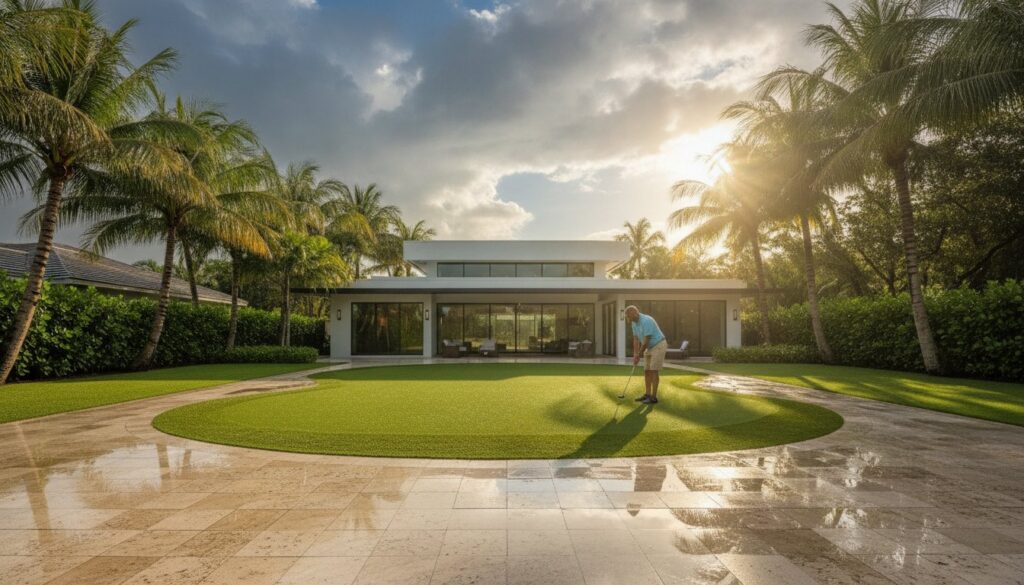
Precision is the hallmark of a successful backyard putting green installation. In our tropical climate, humidity and frequent rain can impact ball roll consistency if the surface remains damp for extended periods. Professional-grade tee lines and greens are engineered to shed water both laterally and vertically, ensuring the surface stays firm and true even during the peak of the rainy season. This level of craftsmanship ensures that your recreational space remains a high-performance asset rather than a maintenance burden.
Residential Lawns and Playgrounds
Safety and hygiene are the primary considerations for family-oriented spaces. We ensure all playground turf safety standards are met, providing a cushioned, slip-resistant surface that remains secure even when saturated. Quick-dry features are integrated into these play areas to prevent the growth of moss or bacteria in the humid hours that follow a downpour. This focus on reliability gives parents peace of mind that the play area is ready for use minutes after the clouds part.
If you’re ready to upgrade your landscape with a system designed for the Florida climate, book a consultation with our turf specialists to find your perfect match.
Professional Installation: Preventing Flooding and Mold in Your Backyard
Selecting the best artificial turf for heavy rain is a vital decision, but even the highest-quality product will fail without professional execution. DIY installations in flood-prone zones often lead to significant structural risks, as homeowners may not account for the precise grading needed to protect their home’s foundation. Without expert knowledge of local soil compaction and water table levels, a self-installed lawn can quickly become a floating hazard during a tropical depression. Professional installation ensures that the drainage systems discussed in previous sections work in harmony with your property’s unique landscape.
Our team approaches every project with the precision of a master craftsman, focusing on long-term resilience and aesthetic excellence. We don’t just lay turf; we engineer a comprehensive water management system. This involves calculating the exact slope required to guide runoff away from buildings and ensuring the sub-base is compacted to a standard that prevents shifting. By addressing these technical details during the initial build, we eliminate the standing water that leads to mold, mildew, and the unpleasant odors often associated with inferior setups.
The Pro Turf Greens Installation Advantage
We provide a dedicated partnership that begins with a custom site assessment, covering territories from Jupiter to Coral Gables. Every lot presents different challenges, from the sandy coastal soils of Palm Beach to the denser substrates found further inland. Our specialists use advanced seaming techniques that maintain the structural integrity of the lawn without creating impermeable barriers that block water flow. This meticulous attention to detail ensures that your investment remains as functional as it is beautiful. To learn more about our process, you can explore what to expect during a Miami artificial turf consultation.
Maintaining Your Turf After the Storm
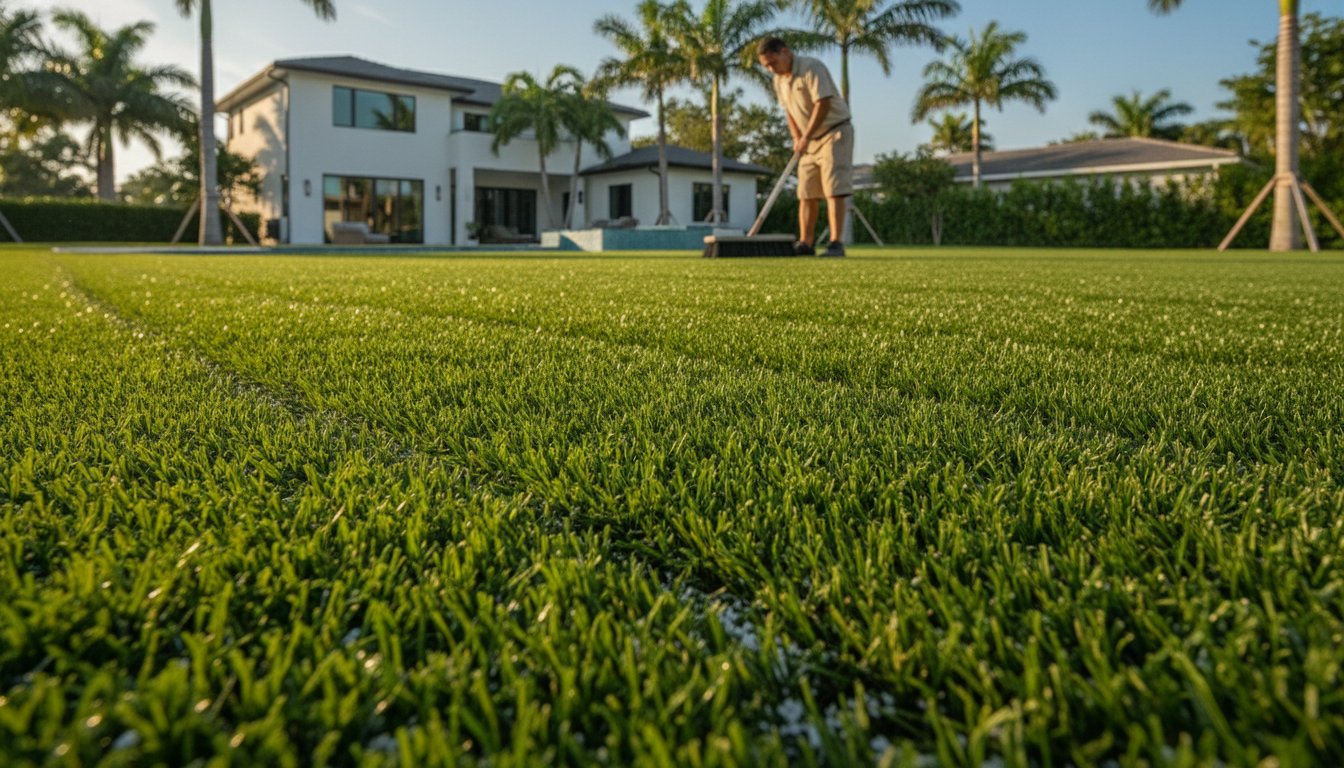
While a professionally installed system handles the heavy lifting of drainage, minor post-storm maintenance preserves its peak performance. Heavy rains often wash organic debris, such as leaves and silt, onto the surface. If left unattended, these materials can clog the drainage pores of even the best artificial turf for heavy rain. We recommend a simple routine of clearing large debris and occasionally rinsing the fibers to keep the flow-through backing clear. For active households with pets, using antimicrobial cleaners helps maintain a fresh-smelling environment by neutralizing any bacteria trapped in the humid air. You can find a full maintenance schedule in our guide on how to clean synthetic grass to ensure your lawn stays in pristine condition for years to come.
Transforming Your Landscape into a Storm-Ready Oasis
Achieving a beautiful backyard that stays dry during a tropical storm isn’t a matter of luck; it’s the result of precise engineering. We’ve explored how the intersection of 100% permeable backing and a meticulously crafted sub-base creates a drainage system that outperforms traditional lawns. By selecting the best artificial turf for heavy rain, you’re not just choosing a product; you’re investing in a sophisticated water management platform that protects your property and preserves your lifestyle.
Pro Turf Greens specializes in high-end climate resilience, offering custom-engineered drainage systems that meet the rigorous demands of our local environment. From Palm Beach to Miami, our expert installation ensures that your synthetic grass remains stable, hygienic, and mold-free for years to come. Don’t let the next seasonal downpour turn your yard into an unusable swamp. You can Schedule Your Free South Florida Turf Consultation today to discover how we can transform your landscape into a durable, year-round sanctuary. We’re ready to help you build a vibrant outdoor space that stands strong against the elements.
Frequently Asked Questions
Does artificial turf get slippery when it rains heavily?
High-quality synthetic grass is engineered with non-slip textures and specific blade shapes that maintain traction even when saturated. While natural grass can become a muddy, slippery mess, the best artificial turf for heavy rain utilizes a structured fiber design and specialized infill to provide a stable footing. This makes it a safer choice for playgrounds in Weston or pool surrounds in Miami, ensuring that family activities can resume safely as soon as the rain stops.
How long does it take for artificial grass to dry after a South Florida storm?
Most high-performance systems are dry enough to use within 15 to 30 minutes after a storm. Because modern turf products feature drainage rates of over 100 to 200 inches per hour per square yard, the water moves vertically through the system almost instantly. In the intense humidity of Boca Raton or Jupiter, this rapid drainage prevents the long-term dampness that typically plagues natural sod, allowing you to enjoy your outdoor space without delay.
Can heavy rain wash away the infill in my synthetic lawn?
Professional installation prevents infill washout by using high-density materials and secure anchoring. While cheap sand infill might shift during a tropical deluge, we utilize specialized, non-absorbent infill that stays locked within the turf fibers. This is particularly important for high-traffic athletic surfaces and pet areas in South Florida, where intense rainfall could otherwise displace lighter materials. Proper compaction of the sub-base also ensures the entire system remains stable and level.
Will artificial grass help prevent my backyard from flooding?
A correctly installed turf system acts as a high-capacity drainage platform for your property. By replacing compacted, impermeable soil with a 3 to 4 inch aggregate base, we create a reservoir that captures and dissipates stormwater. This engineered foundation prevents surface runoff from pooling against your home’s foundation. For homeowners in flood-prone areas of Miami or Fort Lauderdale, this vertical drainage capacity is a significant upgrade over traditional landscaping.
Is mould a common problem for artificial turf in humid climates like Miami?
Mold is not a common issue when you choose the best artificial turf for heavy rain with antimicrobial properties. High-end synthetic grass is designed with non-porous fibers and 100% permeable backings that don’t trap moisture or organic debris. In the humid climates of Coral Gables and Palm Beach Gardens, this airflow is essential. Regular maintenance, such as clearing leaves and rinsing the surface, further ensures that your lawn remains fresh and free of fungal growth.
What is the best backing for turf if I have large dogs and heavy rain?
For households with large dogs, a 100% permeable flow-through backing is the superior choice. Unlike traditional perforated backings that rely on small holes, flow-through technology allows liquid to pass through every square inch of the material. This prevents pet urine and rainwater from becoming trapped, which eliminates the stagnant odors often found in inferior products. It provides the highest level of hygiene and storm resilience for active pet runs in South Florida.
Do I need a special drain under my artificial turf?
The sub-base itself serves as the primary drainage system, but some lots require additional assistance. In exceptionally flat or low-lying areas of Miami, we may integrate specialized drainage tiles or a deeper stone foundation to move water more efficiently. Every project from Jupiter to Weston begins with a custom site assessment to determine if your specific topography requires these advanced measures. This ensures your lawn remains dry regardless of the local water table level.
How do I know if my current turf drainage is failing?
You can identify drainage failure by looking for persistent puddles, spongy spots, or a lingering damp smell after a storm. If your turf feels squishy hours after the rain has passed, it’s a sign that the backing or sub-base is clogged or improperly graded. Moss or algae growth on the surface also indicates trapped moisture. If you notice these issues in your Palm Beach or Delray Beach yard, it’s time to consult a professional specialist.