What if a lawn that reduces irrigation also brings trade-offs in heat, materials, and habitat? That’s the question behind eco friendly artificial grass. In South Florida, where water use, intense sun, and heavy rain all shape landscape decisions, synthetic turf can address some practical needs, but it isn’t impact-free. To compare it fairly with natural grass, look beyond the possibility of using less water.
To make a useful decision, consider what the turf is made from, how the site handles heat and rain, and how the surface will be used. The environmental balance depends on the product, the property, and the alternative. A lawn, pet area, and recreation surface can each have different material, installation, and care requirements.
This article explains the main benefits and limitations without treating “eco-friendly” as a guarantee. You’ll learn which material and installation details to consider, how to compare synthetic turf with a natural lawn, and what to plan for before starting a custom project in South Florida.
Key Takeaways
- Assess “eco-friendly” claims by looking at the full turf system, not just promises of reduced irrigation or maintenance.
- Artificial grass is still made from synthetic materials. Review product details when weighing its environmental trade-offs.
- Compare artificial and natural grass across water, upkeep, materials, and end-of-life handling. The balance depends on your property and habits.
- Plan around intended use, South Florida sun, rainfall, drainage, and the care the surface will need.
- Consider eco friendly artificial grass as one option in a custom turf project designed around your property’s needs.
Eco-Friendly Artificial Grass: What Does the Label Really Mean?
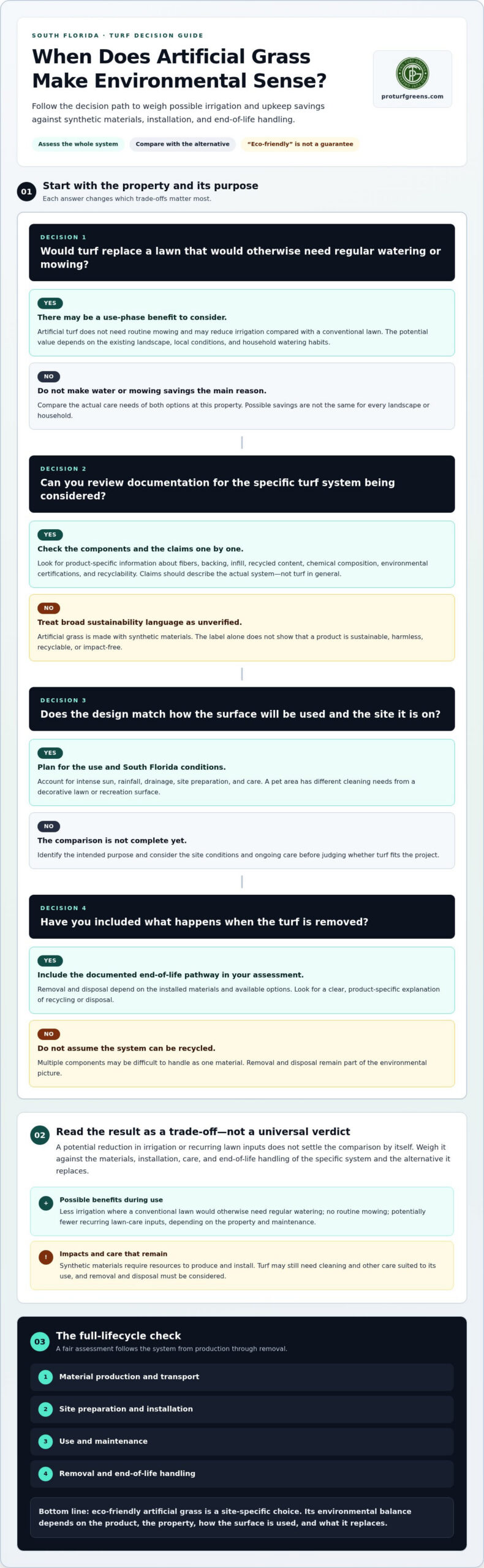
Eco-friendly artificial grass is synthetic turf whose environmental effects make sense for a particular site and purpose, considered across its full lifecycle. The label alone doesn’t prove a product is sustainable. A lawn replacement, pet area, and recreation surface have different demands, so the right comparison depends on how you’ll use the space and what it would take to maintain the alternative.
Artificial turf is made with synthetic materials, and its environmental profile involves more than what happens after installation. For background on how the product developed and the different forms it takes, see this overview of the history of artificial turf. The practical question is not whether turf has zero impact, but which impacts it may reduce and which remain.
Which environmental benefits may matter to a property owner?
Reduced irrigation may matter where a conventional lawn would otherwise need regular watering. In South Florida, the potential value depends on the existing landscape, local conditions, and household watering habits. Turf doesn’t need routine mowing, which can reduce that recurring task and associated lawn-care inputs. Those possible savings don’t eliminate all upkeep.
Artificial surfaces may still need cleaning and care suited to their use. Installation also involves materials and site preparation. A pet area, for example, has different cleaning needs from a putting green or decorative lawn. Compare the tasks each option would require at your property, including care for nearby plants, rather than assuming every household will save the same amount of water or maintenance.
Why does the full product lifecycle matter?
A fair assessment follows the turf through material production, transport, site preparation, installation, use, maintenance, and eventual end-of-life handling. A potential benefit during use, such as less irrigation, doesn’t settle the overall comparison by itself. Manufacturing and installation have impacts too, and what happens when the product is removed matters.
Be specific when evaluating product claims. Recycled content, recyclability, chemical composition, and disposal options can vary, so broad statements about all artificial grass may mislead. Look for product-specific documentation that describes the materials and claims for the system being considered. In South Florida, thoughtful design and installation can also help match the surface to its intended use and site conditions. Eco friendly artificial grass is best understood as a considered choice, not an automatic environmental upgrade.
Is Eco-Friendly Artificial Grass Still Plastic? The Trade-Offs Explained
Yes. Artificial grass is made with synthetic materials, so calling it eco-friendly doesn’t make it impact-free. The term describes a possible balance of benefits and drawbacks, not a guarantee that a turf system is harmless or sustainable. A sound comparison considers the materials, installation, maintenance, how long the surface serves its intended purpose, and what happens when it’s removed.
Product details matter. Turf fibers, backing, and infill can vary, and one system’s specifications shouldn’t be applied to every product. Claims about chemical content, recycled materials, or recyclability need to relate to the specific system. A broad label alone isn’t enough to judge environmental performance.
What should readers know about turf materials and infill?
Artificial turf systems can include several components, and their composition may differ by product. Review information about the actual system planned for the installation instead of assuming all fibers or infill have the same materials or properties. Pay particular attention to claims about recycled content, chemical ingredients, or environmental certifications. The documentation should describe the components, not just the general category of turf.
Infill is one part of the picture, not the whole system. Backing, fibers, installation materials, and the way the surface is used also contribute to its overall impact. Whether the project is for a lawn, pet area, or recreation surface, start by identifying its purpose and reviewing the product specifications against that use.
What happens when artificial grass reaches the end of its use?
Removal and disposal depend on the installed materials and the end-of-life options available. A turf system may contain multiple components that are difficult to handle as a single material. Don’t assume it can be recycled because a product or sales description uses sustainability language. Recycling and disposal claims should be supported by product-specific evidence and a clear explanation of the relevant pathway.
Consider both sides of the decision:
- Potential advantages: A suitable system may reduce some recurring lawn inputs, depending on what it replaces and how the property is maintained.
- Trade-offs: Synthetic materials require resources to produce and install, and eventual removal and disposal remain part of the environmental picture.
Environmental performance depends on the complete lifecycle, from material production and transport through site preparation, use, maintenance, and end-of-life handling, as well as the alternative the turf replaces. That’s why eco friendly artificial grass is best assessed as a specific project, not a universal claim. Explore custom artificial turf design and installation with Pro Turf Greens.
Artificial Grass vs. Natural Grass: Which Fits Your Environmental Priorities?
Neither surface is the better environmental choice in every situation. A natural lawn is living vegetation that may need irrigation and regular care. Artificial turf avoids some routine lawn tasks but introduces manufactured materials and an eventual removal question. Compare the options for your property, household habits, local conditions, and the specific turf system you’re considering.
| Factor | Artificial grass | Natural grass |
|---|---|---|
| Irrigation | May reduce routine watering compared with a lawn that needs regular irrigation. Site conditions and care still matter. | Water needs vary with climate, rainfall, grass type, and household watering practices. |
| Mowing | Doesn’t need mowing, though occasional cleaning and other care may be appropriate. | Typically requires mowing to maintain the desired appearance and height. |
| Material inputs | Uses manufactured components; materials vary by product and system. | Uses living grass and soil, with care inputs depending on the lawn and how it’s maintained. |
| Maintenance | Routine care differs from lawn care and depends on intended use and product guidance. | May involve watering, mowing, and other upkeep shaped by site conditions and preferences. |
| End-of-life | Removal and disposal depend on the installed materials and available pathways. | Remains a living landscape while maintained; changes to the lawn also depend on the chosen landscape plan. |
When could synthetic grass align with a property’s priorities?
Synthetic grass may suit an area where a consistent surface and less routine mowing are priorities, such as a designated recreation space. Before deciding, consider the intended activities, sun exposure, drainage, and expected foot traffic. A low-maintenance surface still needs appropriate care and periodic attention, so include those tasks in your comparison.
When might a natural lawn or mixed landscape be preferable?
A natural lawn or planted area may better fit a preference for living vegetation, habitat, or a natural soil surface. A mixed design can reserve turf for recreation or pet use while using planting beds and hardscape elsewhere. This lets you match each part of the property to its purpose instead of treating the entire yard as a single-surface decision.
Use your priorities to guide the choice:
- Water use: Compare the irrigation a natural lawn would need at your site with the care requirements of the specific turf system.
- Living landscape: Favor natural or planted areas where vegetation and habitat are central goals.
- Maintenance: Consider whether reducing routine mowing is worth the materials and end-of-life trade-offs of synthetic turf.
For eco friendly artificial grass, make the decision based on the whole property, not a single benefit. Local conditions, household routines, intended use, and product details can all change the balance.
How to Plan Eco-Friendly Artificial Grass for South Florida
A thoughtful turf project begins with the property, not a generic sustainability claim. South Florida’s sun and rainfall are important design conditions, but their effects vary with exposure, soil, drainage, product, and intended use. Use a clear planning sequence to connect environmental priorities with practical decisions and long-term performance.
- Define the intended use. Decide whether the area is for a lawn, pets, play, sports, or another recreational purpose. This helps shape the layout, surface selection, and care expectations.
- Assess the site. Note sun exposure, existing drainage patterns, soil conditions, nearby landscaping, and areas with frequent foot traffic. These details help identify design needs before installation.
- Plan the layout and drainage. Consider where water moves across the property and how the proposed surface will meet surrounding areas. Base preparation and drainage planning should respond to the site, not rely on a one-size-fits-all approach.
- Match the system to the use. Choose a turf design and installation plan suited to the activity and expected traffic. Different applications have different needs, so don’t assume one system suits every space.
- Plan for care. Understand the upkeep appropriate for the selected surface and include periodic attention in your long-term expectations.
What South Florida site conditions should the design account for?
Map where direct sun falls throughout the day, where water collects or flows after rain, and how the proposed area meets existing landscaping or hardscape. Soil and drainage patterns can influence site preparation and the installation plan. Surface temperature and performance also vary with product, location, and weather, so turf shouldn’t be treated as a way to eliminate heat concerns.
How can a project be designed around its actual use?
A pet area needs a layout and care plan suited to pets; a play space calls for attention to its intended activities. For dog areas, see this guide to artificial turf for dog runs in South Florida. For children’s spaces, review Florida playground turf safety standards as part of planning.
Site preparation and intended use both affect long-term turf performance. Explore custom artificial turf design with Pro Turf Greens to plan around your property.
Choosing an Eco-Conscious Turf Project with Pro Turf Greens
An eco-conscious turf project isn’t defined by a “green” label or a single promised benefit. It starts with a clear purpose, a careful look at the property, and design choices suited to how the surface will be used. Pro Turf Greens designs and installs custom artificial turf environments for residential and commercial properties across South Florida, with each project shaped around its application and site conditions.
A lawn, pet area, playground, and recreational surface each have different demands. A practical plan considers the intended activity, layout, drainage, site preparation, and expected care. These details help align the design with the property’s needs without assuming every turf system has the same materials or environmental profile.
What does a project-specific turf consultation help clarify?
A consultation gives homeowners a chance to discuss how they want to use the space and what the property requires. Existing landscaping, drainage patterns, available area, and expected foot traffic can all inform the design and installation plan. For a closer look at the process in Miami, read about a Miami artificial turf consultation.
Bring questions about preparation, layout, and intended use. Discussing these details early helps ground the plan in the actual property rather than broad claims about eco friendly artificial grass. The goal is a thoughtfully designed surface that fits its purpose and site.
What are practical next steps for interested homeowners?
A little preparation can make the project conversation more useful. Beforehand, note:
- The area: Measure the space or identify its approximate boundaries, including edges that meet planting beds, paths, or other surfaces.
- How you’ll use it: List the primary activities, such as everyday lawn use, pets, play, or recreation, and note where traffic is concentrated.
- Site concerns: Describe shaded and sun-exposed areas, existing drainage patterns, nearby landscaping, and any spots where water tends to collect.
- Your priorities: Identify what matters most, such as appearance, intended use, reduced routine mowing, or a design that works with other parts of the yard.
Pro Turf Greens can use these details to shape a custom turf plan for your South Florida property. Request a free turf consultation to discuss your project.
Make a Turf Choice That Fits Your Property
The most responsible turf decision isn’t based on a broad “eco-friendly” claim. Compare the full lifecycle with the alternative for your property, then weigh material and end-of-life considerations alongside possible reductions in irrigation or routine mowing. Site conditions matter too: South Florida sun, rainfall, drainage, and intended use all shape a durable project plan.
For some properties, eco friendly artificial grass may suit a lawn, pet area, playground, or recreation space. For others, living vegetation or a mix of turf and planting may better reflect environmental priorities. The right answer depends on what you want the space to do and how it will be cared for.
Pro Turf Greens specializes in custom design and professional artificial turf installation for residential and commercial properties across South Florida. Its projects include lawns, pet areas, playgrounds, and recreational spaces. Request a free consultation for your South Florida turf project to discuss your layout, intended use, and site conditions.
Frequently Asked Questions
Is eco-friendly artificial grass actually better for the environment?
It depends on the alternative and the impacts you value most. Artificial turf may reduce irrigation and routine mowing in some settings, but it also uses manufactured materials and eventually needs removal or disposal. Compare the full project lifecycle, including site preparation, product maintenance, and end-of-life options, rather than relying on one claimed benefit. The label “eco-friendly” alone doesn’t establish that a particular system is environmentally preferable.
Can artificial grass save water in South Florida?
It can reduce the irrigation required for a conventional lawn, but the amount depends on the property, existing landscape, and household watering habits. Savings aren’t identical for every installation, and turf doesn’t eliminate all outdoor water use. Nearby plants may still need irrigation, and cleaning requirements vary with use. Consider these needs alongside site drainage, and treat numerical water-savings claims cautiously unless supported by reliable, relevant evidence.
Does artificial grass contain plastic?
Artificial grass is made with synthetic components, though materials vary by product and system. Fibers and infill are separate parts, so don’t assume they share the same composition or environmental properties. Product-specific documentation is the best basis for claims about recycled content, chemical ingredients, or recyclability. Its synthetic composition belongs in a balanced assessment, alongside possible reductions in some lawn-care inputs and the materials and processes involved in installation.
Does artificial grass get too hot in Florida?
Surface temperature varies with the turf product, direct sun, shade, weather, and nearby materials. Artificial grass shouldn’t be described as heat-proof or assumed to stay cool in strong sunlight. Consider the site’s exposure and how the area will be used, particularly if children or pets spend time there. Any product-specific temperature statement should be supported by reliable information about that product and the conditions under which it was assessed.
Can artificial grass drain well during South Florida rain?
Drainage depends on the turf system, base preparation, underlying site conditions, and installation quality. Artificial grass doesn’t automatically correct standing water or poor drainage. A site assessment should consider existing water flow, soil conditions, and how the area will be prepared. Design choices should suit the property rather than rely on general claims. Avoid promises of flood prevention or specific drainage rates unless supported by verified product or project data.
Is artificial grass recyclable at the end of its life?
Recyclability depends on the installed materials and the disposal or recycling pathways available when the turf is removed. Some systems contain multiple components, and you shouldn’t assume they can all be separated or recycled. Review product-specific documentation and consider local end-of-life options before treating recyclability as an environmental benefit. Planning for removal alongside installation gives a more complete picture than judging a surface only by appearance or routine maintenance.
How do I choose eco-friendly artificial grass for my property?
Start with the space’s purpose, site conditions, and the environmental priorities that matter most to you. Compare product-specific material information, expected maintenance, drainage needs, and end-of-life options, and account for South Florida sun and rainfall. Pro Turf Greens designs and installs custom turf for properties in Fort Lauderdale, Miami, Palm Beach, Boca Raton, Delray Beach, Jupiter, Palm Beach Gardens, Weston, and Coral Gables, including lawns, pet areas, playgrounds, and recreation spaces.