What should you look for when searching for artificial turf installers near me? Proximity is a useful starting point, but the right fit also depends on experience with your type of project, a clear plan for the site, and a design shaped around how you’ll use the space.
A lawn that looks good in a photo may not suit your property or daily routine. South Florida’s sun and rain, the condition of the site, and the activities the area needs to support all matter during planning. A family lawn, pet area, putting green, and recreational or sports surface each call for a different approach.
This guide explains how to compare local turf teams, plan for site conditions, and prepare for a project discussion. Pro Turf Greens designs and installs artificial turf for residential and commercial properties, including lawns, pet areas, putting greens, playgrounds, and sports surfaces. The team serves customers in Fort Lauderdale, Miami, Palm Beach, Boca Raton, Delray Beach, Jupiter, Palm Beach Gardens, Weston, and Coral Gables.
Key Takeaways
- When comparing artificial turf installers near me, look for experience that matches your project and a plan shaped around your property and intended use.
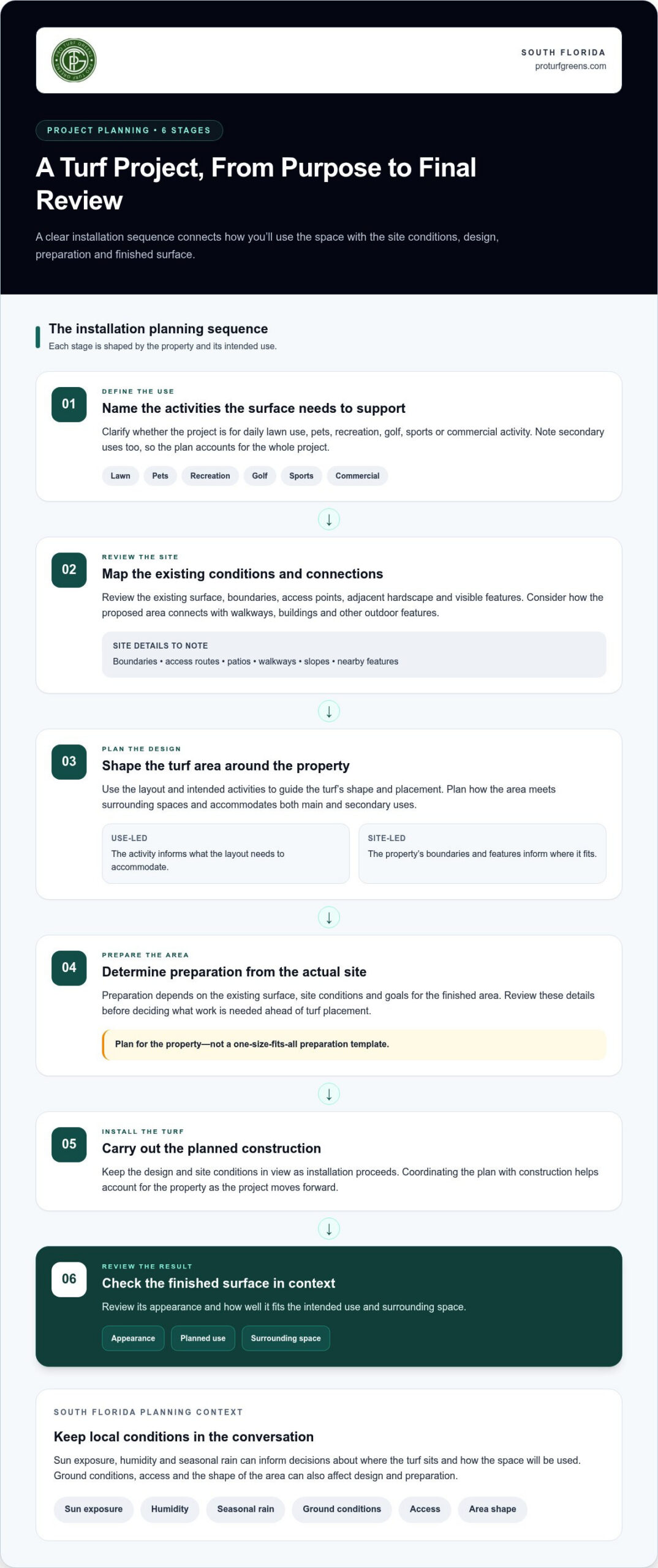
- Installation planning starts with defining the project’s purpose, then reviewing the site, developing a design, preparing the area, installing the turf, and reviewing the finished surface.
- Residential lawns, pet areas, recreation spaces, sports applications, and commercial properties have different planning priorities.
- Bring approximate project boundaries, intended use, access details, and relevant site photos to make a project discussion more productive.
- Pro Turf Greens designs and installs custom artificial turf for residential, recreational, and commercial projects across South Florida.
How to Find Artificial Turf Installers Near Me in South Florida
Search results can make local artificial turf companies look similar, even when their project experience differs. A residential lawn, commercial recreation area, and sports surface each have distinct priorities. Start by identifying how you’ll use the space, how it connects to the rest of the property, and what the existing site may require.
These details matter throughout South Florida, whether your property is in Miami, Fort Lauderdale, Palm Beach, Boca Raton, Delray Beach, Jupiter, Palm Beach Gardens, Weston, or Coral Gables. Sun exposure, rain, ground conditions, access, and the shape of the area can all affect design and preparation. When comparing installers, ask how their experience relates to your project and how they account for these site details.
Match the installer’s work to your property
Look for experience with the type of surface you want, not just artificial turf in general. A design should suit the setting, the people who will use it, and its connections to walkways, buildings, or other outdoor features. Pro Turf Greens designs and installs turf for lawns, pet areas, recreation spaces, and sports applications, tailoring each project to its intended use.
That range is useful when a property has more than one purpose. A yard might need an open area for everyday use alongside a dedicated activity space. A commercial property may need turf that supports recreation and fits its overall layout. If golf is central to your plans, the backyard putting green installation guide covers considerations for shaping a putting project. For general background, Wikipedia provides an overview of the history and composition of artificial turf.
Consider the whole property, not only the proposed turf area. Existing edges, slopes, routes for moving materials, and nearby features can affect the design and installation plan. Pointing these out during a project discussion helps keep the plan grounded in the actual site.
Look for a clear, project-specific process
A clear process makes it easier to understand how the project moves from site planning through preparation and construction. Pro Turf Greens develops a tailored design and installation approach for residential and commercial spaces, based on the property and its intended use. The existing surface and project goals help determine the scope.
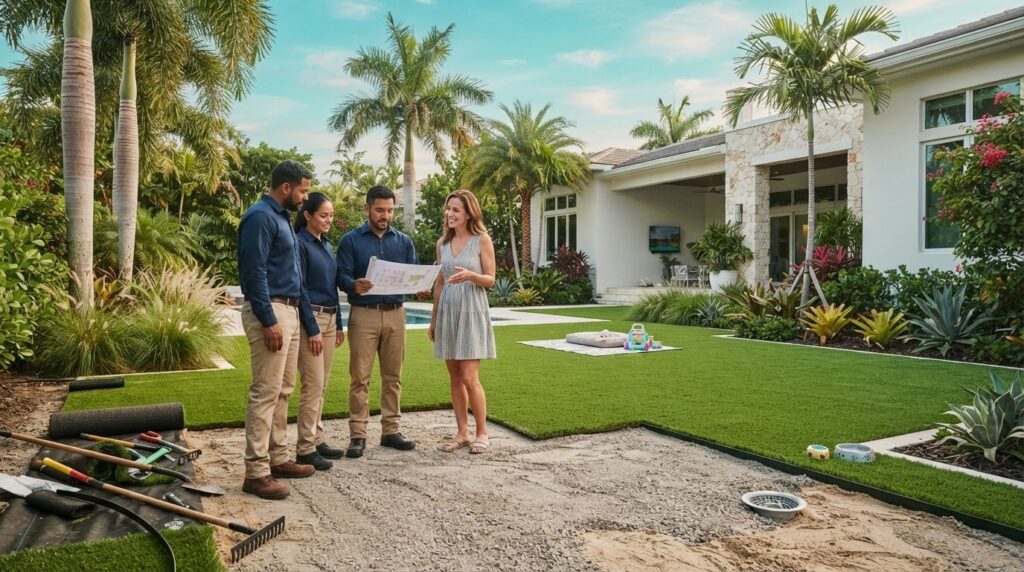
Start with how you’ll use the space and how its layout can support that use. This keeps decisions tied to your property instead of a generic plan. During a consultation, describe the activities you have in mind, the areas you want to include, and any visible site features that may affect the design.
How Artificial Turf Installation Is Planned for South Florida Properties
A well-organized installation follows clear stages, with details shaped by the property rather than a one-size-fits-all template. Existing surfaces, boundaries, access, and intended use influence the scope. South Florida’s strong sun, humidity, and seasonal rain are also relevant when planning the layout and construction.
For homeowners comparing artificial turf installers near me, this sequence helps clarify what to discuss and why:
- Define the use. Decide whether the surface is for daily lawn use, pets, recreation, golf, sports, or commercial activity.
- Review the site. Note the existing surface, boundaries, access points, adjacent hardscape, and visible features that may affect the design.
- Plan the design. Shape the proposed turf area around the property’s layout and the activities it needs to support.
- Prepare the area. Determine the preparation needed based on existing site conditions and intended use.
- Install the turf. Carry out the planned construction with the design and site conditions in view.
- Review the result. Check the finished surface’s appearance and how it fits the planned use and surrounding space.
Start with the use and layout
Everyday lawn use differs from recreation, sports, or commercial use. Naming the main activity helps define what the layout needs to accommodate. Note any secondary uses, too, so the design does not overlook important parts of the project. Boundaries, access routes, patios, and walkways help establish how the turf should meet the rest of the property.
Let the intended use and site layout guide both the design and preparation plan. The shape and placement of the turf should respond to the activity, while a site review helps identify how existing conditions may affect construction.
Plan site preparation and installation
Site review and preparation depend on the property, so they should not be assumed in advance. The existing surface and goals for the finished area help determine what work is needed before turf placement. Coordinating design with construction helps account for site conditions as the project progresses.
Include South Florida weather in the planning conversation. Sun exposure, humidity, and seasonal rain can help frame decisions about where the turf will sit and how the space will be used. The Synthetic Turf Council installation guidelines provide broader industry context, while a local project plan needs to respond to the property itself. If you’re preparing for that discussion, the South Florida artificial turf consultation guide can help you organize your questions. You can also explore Pro Turf Greens’ artificial turf design and installation as you consider the project.
Which Artificial Turf Installation Fits Your Property and Its Use?
The right turf project depends on what the space needs to do, not simply whether the property is residential or commercial. A lawn for everyday outdoor living has different priorities from a pet area, playground, or athletic surface. Use the comparison below to identify useful questions for your project discussion. The design should reflect your specific site and intended use.
| Property type | Primary activity | Planning priority |
|---|---|---|
| Residential lawn | Everyday outdoor living | Appearance, access, and fit with the surrounding landscape |
| Pet area | Daily use by pets | How the space is arranged for pets and people |
| Recreation space | Play and leisure | Layout that supports the activities planned for the area |
| Sports application | Practice or athletic activity | Design suited to the specific sport and use |
| Commercial property | Customer, staff, or recreational use | How turf fits the site’s purpose and overall layout |
These categories are starting points, not fixed templates. A home might combine lawn and recreation uses, while a commercial property may have spaces for different activities. Describe the primary use, any secondary uses, and how people move through the area to clarify which application fits.
Residential lawns, pets, and outdoor living
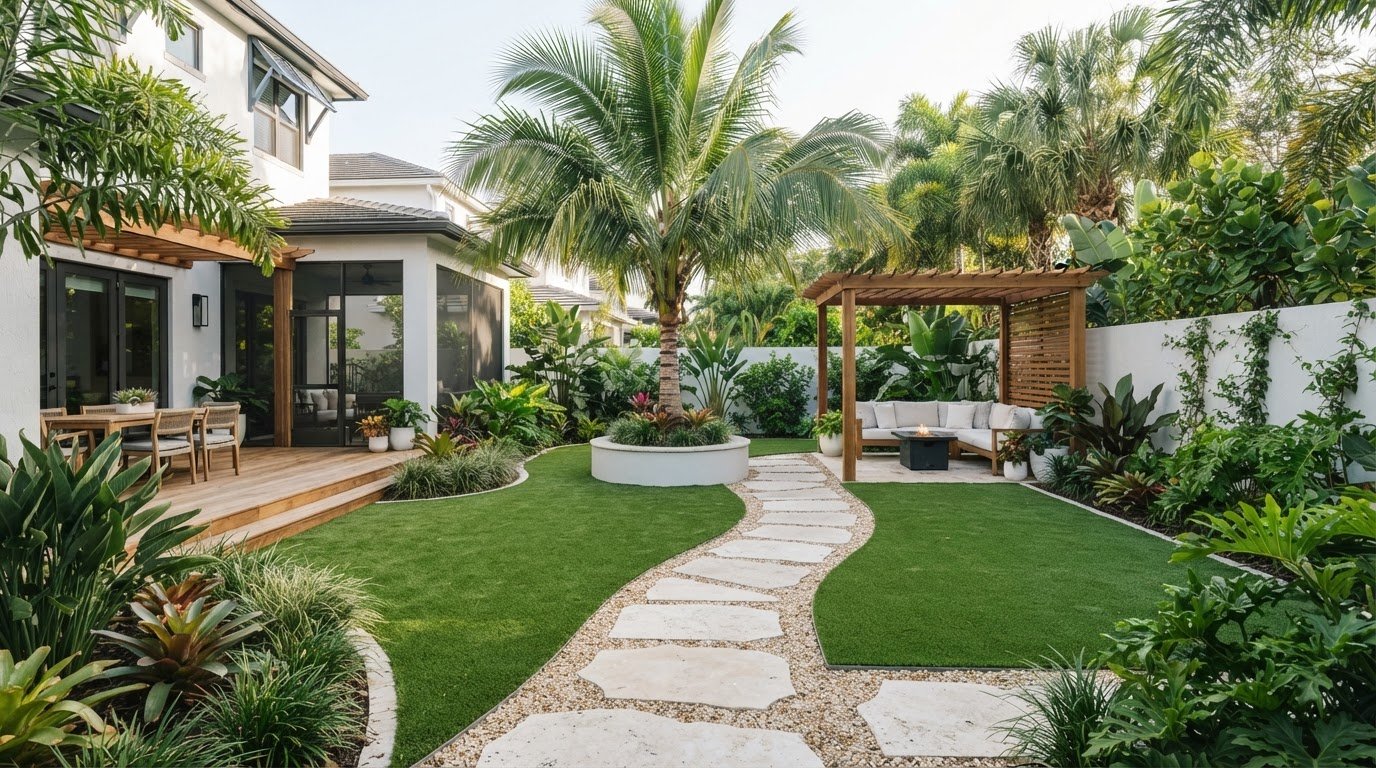
For a residential lawn, consider how the finished surface will relate to planting areas, patios, paths, and other landscape features. Think about how people enter the space and which areas need to stay open for everyday use.
Plan a pet area around how pets use the space rather than treating it as a general lawn. Consider where pets spend time and how the area connects to the rest of the yard. The South Florida dog-run turf guide offers more detail for planning around pets.
Recreation, sports, and commercial spaces
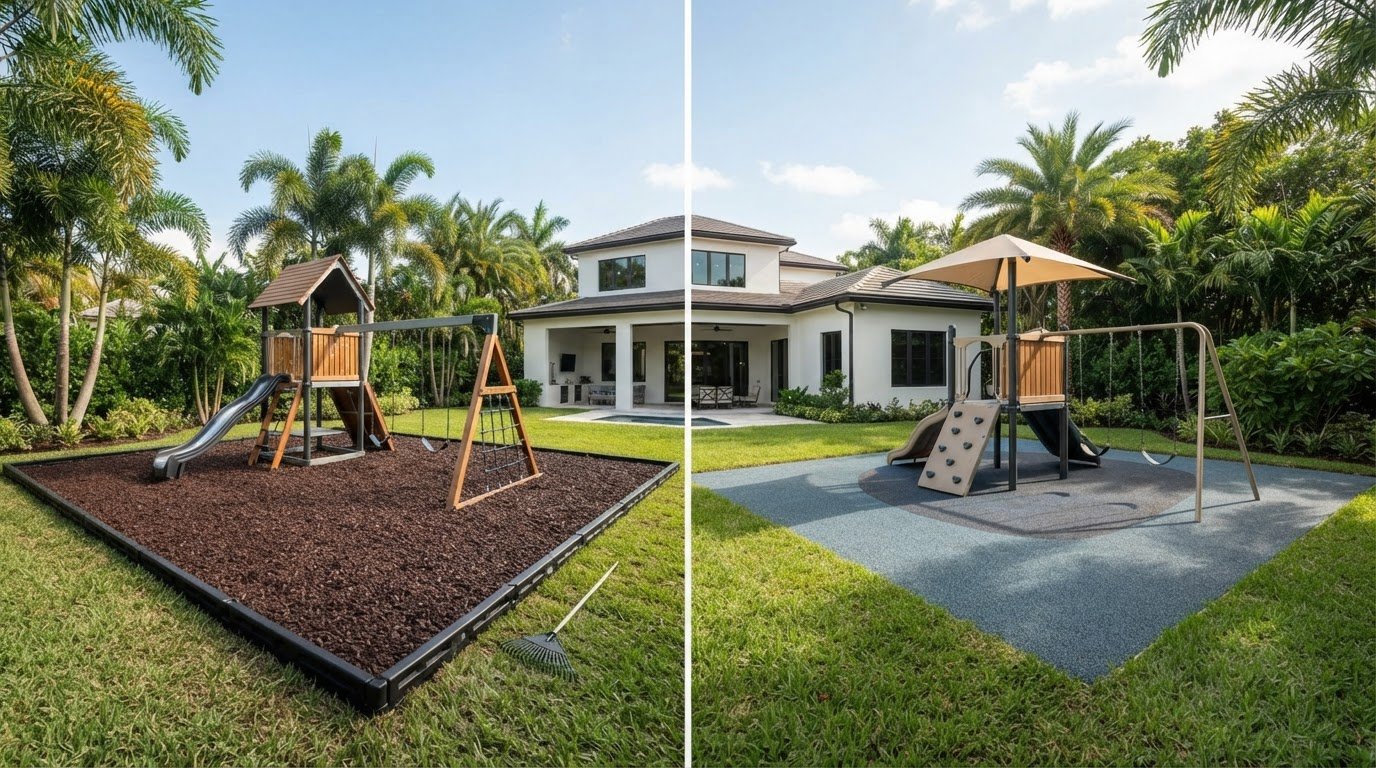
Recreation projects are designed for play or leisure, while sports installations are organized around a particular athletic activity. Putting greens, playgrounds, tee lines, driving ranges, and athletic surfaces are distinct applications, shaped by how people will use them. Naming the activity helps keep the design focused.
Commercial projects also start with the intended use. A recreational space has different priorities from an area intended for sports or other everyday property activity. Pro Turf Greens designs and installs residential and commercial turf projects around their intended use. For more on athletic surfaces, explore the high-performance sports turf guide. A clear description of the activity and site helps turn broad goals into a focused design.
What to Prepare Before Hiring a South Florida Turf Installer
A little preparation makes a project conversation more productive. You don’t need a finished design or exact measurements. A clear description of how you want to use the space, what surrounds it, and what you’ve noticed about the site gives the installation team a useful starting point. It also helps keep the discussion focused on your priorities.
Build a concise project brief
Start with the people and activities the space needs to accommodate. Note whether it’s for everyday lawn use, pets, recreation, sports, or a mix. Then sketch the approximate project boundaries and mark how people will enter and move through the area. Rough dimensions can help describe the scope.
Gather these details before a consultation:
- Approximate dimensions or a simple sketch showing the proposed turf area
- Intended activities and who will use the space
- Access points, gates, walkways, and nearby hardscape
- Existing surfaces and surrounding landscape features
- Photos that show the area from more than one angle
Photos can show details that are difficult to explain, such as a narrow side yard, a transition beside a patio, or landscaping close to the proposed turf edge. Your notes don’t need to answer every design question. They give the team context for discussing priorities and how the project could fit the property.
Discuss local site conditions and design goals
Make a note of site features that may affect planning. Is part of the area sloped? What surface is there now? Have you noticed places where water tends to collect after rain? Mention nearby planting beds, trees, walls, or other features you want the design to work around. These observations help inform a site-specific assessment, but do not determine the technical plan on their own.
Describe local conditions, too. Point out areas that receive strong sun, stay shaded, or are regularly exposed to rain. Then clarify your design priorities: a natural-looking lawn, a defined pet area, a recreational layout, or a surface suited to a particular activity. If appearance and function both matter, explain which areas should serve each purpose.
A focused brief connects your goals to the property’s real conditions. Pro Turf Greens uses those details to discuss a tailored artificial turf plan for your residential or commercial space. Start a project discussion with Pro Turf Greens when you’re ready to bring your notes, photos, and ideas together.
Plan Your Artificial Turf Project with Pro Turf Greens
Choosing among artificial turf installers near me is easier when you can discuss the project with a team that specializes in turf design and installation. Pro Turf Greens serves residential and commercial clients across South Florida, developing each project around the property, intended activity, and desired appearance. A consultation gives you a practical starting point for turning those ideas into a tailored plan.
A tailored installation for homes and businesses
Every property has its own layout and priorities. An open backyard lawn, a defined pet area, a playground, and a commercial sports space call for different design considerations. Pro Turf Greens works across residential, recreational, and commercial projects, including lawns and pet turf, playgrounds and recreational turf, athletic and sports surfaces, and artificial turf driveways.
Golf-focused projects can include backyard putting greens, tee lines, and driving ranges. Start by describing how you want the finished area to function and look. A driveway serves a different purpose from a play area, while a putting green has a specific recreational focus. Sharing the property’s location, the area you have in mind, and your main priorities grounds the design discussion in your project.
For a home, your priorities might include how the turf fits the surrounding landscape and everyday routines. For a business, you might focus on how the space supports its intended activity and relates to the rest of the property. Pro Turf Greens uses these goals to guide custom design and professional installation, rather than treating every project as the same type of surface.
Request a free artificial turf consultation
A consultation is an opportunity to discuss the site, intended use, and the details that matter most to you. Share what you hope to create, point out property features that may shape the plan, and talk through the project’s priorities with a South Florida turf specialist. You don’t need a complete design in hand. A clear idea of the intended use is a helpful place to begin.
To prepare, bring your property location, a description of the activity the space should support, and any preferences about appearance or layout. Photos or a rough sketch can illustrate your ideas, and questions about how the project fits the site can guide the conversation.
Request a free consultation by calling 561-221-1010 or through the website. Request a free consultation and start planning an artificial turf installation shaped around your property and goals.
Turn Your Turf Idea into a Clear Next Step
Before moving forward, identify the outcome that matters most. It might be a more cohesive-looking outdoor space, a dedicated place for play, or a surface designed around a specific activity. That priority gives the design conversation direction, even if you’re still weighing details.
A search for artificial turf installers near me can introduce many possibilities, but a good project discussion starts with your goals and the character of your property. Consider what you want the space to make easier or more enjoyable, and which details you’re open to shaping as the plan develops. That focus helps turn a broad idea into a project that fits your needs.
When you’re ready, bring your goals and questions to Pro Turf Greens. Start a conversation about your artificial turf project and discuss a plan shaped around how you want to use your space.
Frequently Asked Questions
How much does artificial turf installation cost near me?
The cost depends on the project’s size, intended use, design, and site preparation, so an estimate needs to reflect the property. A straightforward lawn and a custom putting green involve different planning and construction needs. For projects in Miami, Fort Lauderdale, Palm Beach, Boca Raton, Delray Beach, Jupiter, Palm Beach Gardens, Weston, and Coral Gables, sharing the project scope with artificial turf installers near me helps clarify what the estimate covers.
How long does an artificial turf installation take?
There isn’t one timeline for every installation. The project area, existing surface, preparation requirements, and design all affect the work involved. A compact, clearly defined section may have a different scope from a larger property with several activity areas. During project planning, discuss any dates or access needs that matter to you so they can be considered alongside the site-specific installation plan.
Does artificial turf need regular maintenance?
Artificial turf still benefits from occasional care, though the routine differs from tending a natural lawn. Remove leaves and other debris, and check the surface periodically for areas that need attention after heavy use or weather. For a pet area, clean up waste promptly and follow care guidance suited to that installation. The appropriate routine can vary with the turf’s purpose, surrounding trees, and how often the space is used.
Can artificial turf be installed over concrete?
Artificial turf may be suitable for some concrete areas, but the existing surface needs to be assessed first. Its condition, evenness, edges, and how water moves across the area can affect whether the site is suitable and how installation should be planned. A small patio and a larger paved recreation area may present different design questions. A site review helps determine the appropriate approach.
Can artificial turf be installed on a sloped yard?
A sloped yard may be suitable for artificial turf, depending on its shape, condition, and intended use. The angle and transitions to nearby surfaces can influence the design and preparation, so assess the site before deciding on an installation approach. Share where the slope begins and ends, how you plan to use that area, and any concerns you’ve noticed after rain.
Does artificial turf need to be watered?
Artificial turf doesn’t need irrigation to grow because it isn’t living grass. You may still choose to rinse a surface to remove dust, spills, or residue, depending on how the area is used. A pet space may have different cleaning needs from a decorative lawn or putting area. The care routine depends on the installation and its everyday use, not on watering for growth.
Can artificial turf be installed in a small yard?
Yes, a small yard can be designed for artificial turf. A compact footprint can work for a defined lawn, pet area, or putting feature, depending on the property and your goals. Measure the space approximately and note fixed features such as steps, planters, gates, or a narrow side passage. Those details help shape a layout that uses the available area thoughtfully without making it feel crowded.