What if the success of your poolside turf depends less on the grass itself than on how the surface, drainage, and pool edges work together? In Palm Beach, strong sun, humidity, splashes, and heavy rain all shape how an outdoor space feels and functions. Planning artificial grass for pool area Palm Beach homes calls for more than choosing a color or blade style: the layout, site conditions, and connection to nearby hardscape matter too.
This guide offers a practical framework for assessing poolside turf. Learn what to consider about drainage and water flow, how to compare comfort, appearance, and upkeep, and why transitions between turf, coping, and hardscape deserve careful planning.
You’ll also find guidance on connecting the pool area with the wider outdoor space and planning a professional installation. Pro Turf Greens designs and installs custom artificial turf projects in South Florida, helping homeowners plan poolside spaces around their properties and intended use.
Key Takeaways
- Poolside turf is a landscape surface, not a replacement for every deck material. Plan it to complement coping, paving, and outdoor living areas.
- For artificial grass for pool area palm beach projects, consider sun exposure, shade, and surrounding surfaces when assessing comfort and appearance.
- Evaluate drainage as a system shaped by the base, grading, and site conditions, rather than by the turf alone.
- Compare turf options by intended use, exposure, drainage needs, visual style, and maintenance expectations.
- A coordinated installation plan accounts for layout, site access, pool equipment, drains, and transitions to adjacent surfaces.
Artificial Grass for a Pool Area in Palm Beach: Is It a Good Fit?
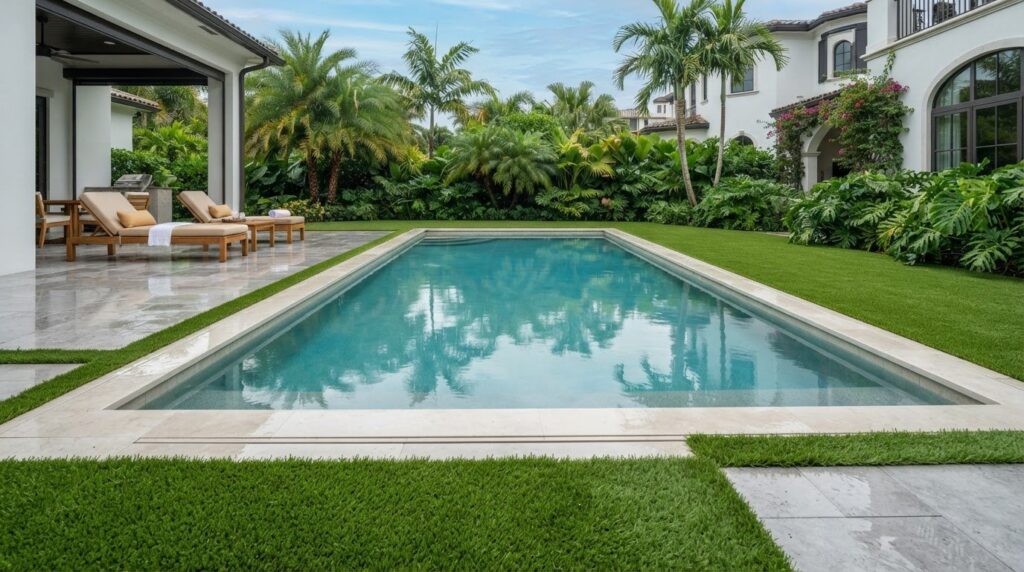
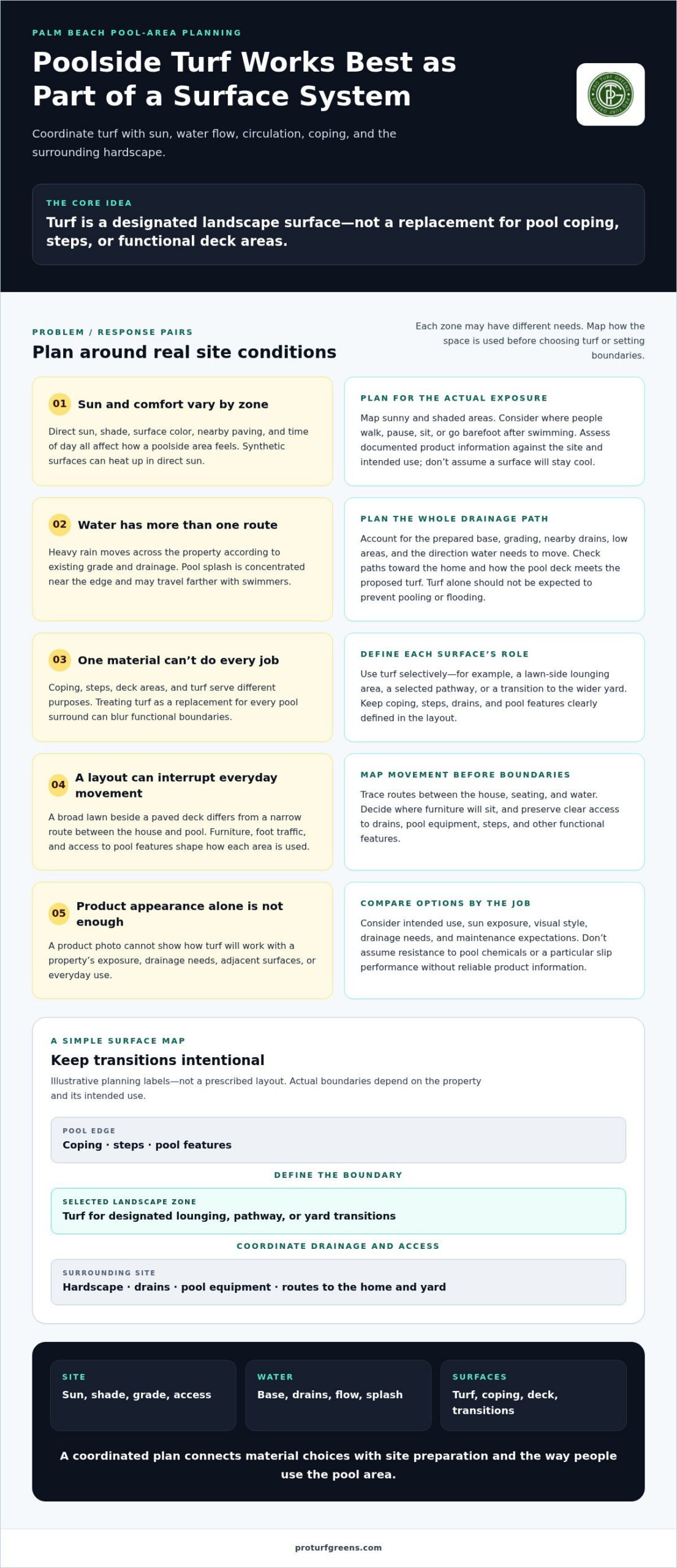
Artificial grass can create a consistent green finish in selected parts of a pool landscape, especially where homeowners want a lawn-like setting without mowing that area. It is not a one-material solution for the entire pool surround. A well-planned design treats turf as one surface among several, with each material chosen for its role and its boundaries clearly defined.
Poolside turf is an artificial landscape surface for designated areas around a pool; it is not pool coping, a deck, or a substitute for functional hardscape. Coping, steps, and other pool features serve different purposes and should remain distinct in the layout. For general background on the material and its uses, see Artificial turf.
Whether artificial grass for pool area palm beach is a good fit depends on how you use the space and how the property handles water. A lawn-side lounging zone needs a different plan from a narrow route between the house and pool. Sun exposure, existing grade, drainage, access, and adjacent surfaces all influence the design. There is no single layout or turf specification for every property.
Which parts of a Palm Beach pool area can use artificial grass?
Depending on the site, turf may suit lawn-side lounging areas, selected pathways, or transitions between the pool environment and the wider yard. These are design options, not automatic recommendations. A broad lawn beside a paved pool deck, for example, can create a defined place for outdoor furniture. A narrow passage may need a different surface to keep circulation clear.
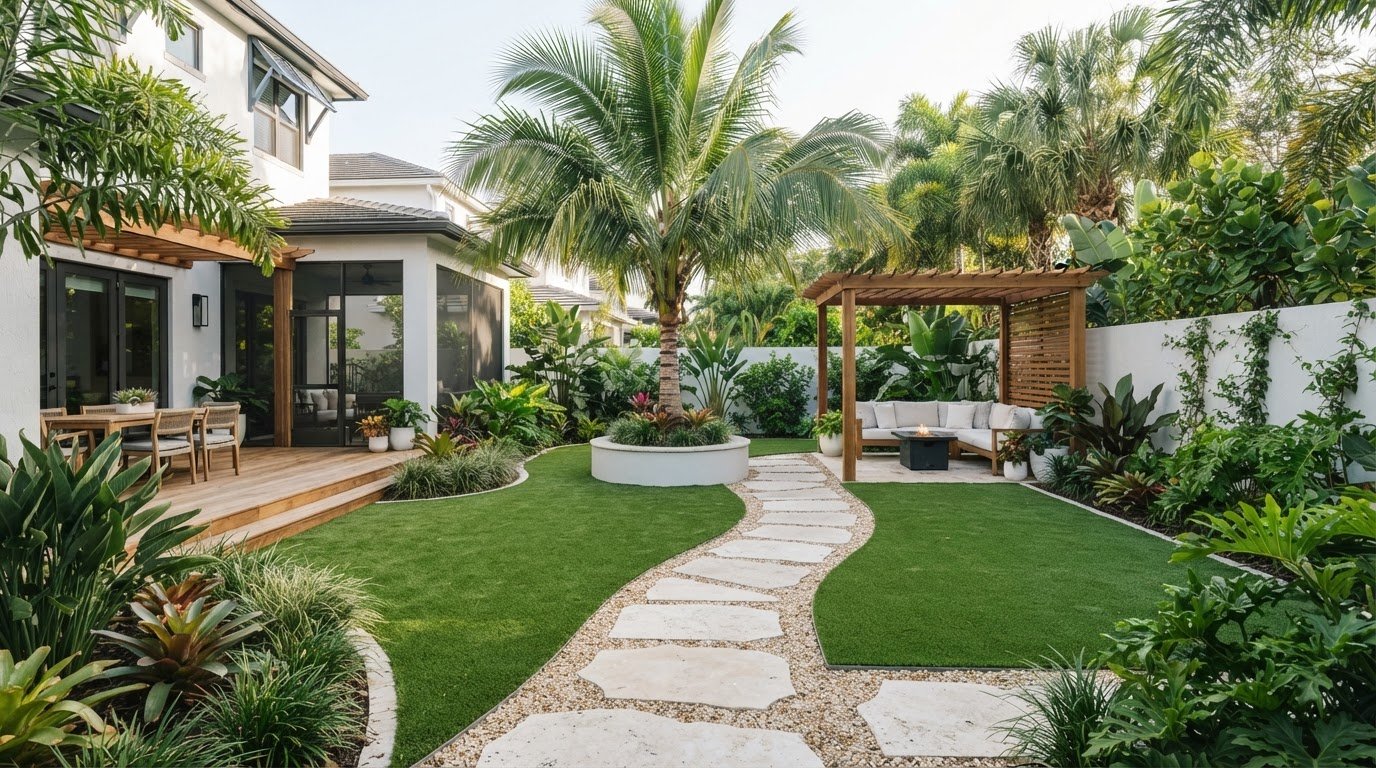
Plan boundaries around coping, steps, drains, and pool equipment deliberately. Then map how people move between the house, seating, and water, and decide where furniture will sit. A whole-yard plan helps the finished space feel connected while preserving access to functional pool features.
What South Florida conditions should shape the decision?
Palm Beach properties experience intense sun, humidity, and seasonal downpours, but exposure varies from site to site. A coastal yard may face different conditions from an inland property, and shade from buildings or landscaping can change how each area is used. Map sunny and shaded zones before settling on a layout or visual direction.
Rain management is a site-planning question, not something turf alone can resolve. Existing grade, the prepared base, nearby drains, and the direction water needs to move all matter. General climate considerations also do not establish product-specific performance for heat, drainage, chemical exposure, or slip resistance. Base those decisions on reliable information about the materials and the project conditions.
How Poolside Turf Handles Sun, Rain, and Everyday Use
Poolside comfort depends on more than the turf underfoot. Direct sunlight, shade patterns, surface color, nearby paving, and how people use the space all affect how it feels. A sunlit strip beside a pool deck may feel different from a shaded lawn-side seating zone. Compare the planned surface with its actual surroundings, not just a product image or description.
Poolside performance depends on both material selection and site preparation. The turf is one part of the system: the existing base, grading, drainage paths, and relationship to surrounding hardscape matter too. For broader guidance on designing landscapes for Florida conditions, the University of Florida’s Florida-Friendly Landscaping for Pool Areas resource can help inform decisions about the wider setting.
Does artificial grass get hot beside a pool?
Synthetic surfaces can heat up in direct sun, and no single temperature or comfort expectation applies to every pool area. Exposure varies with shade, time of day, surface color, and nearby materials. A large paved area creates a different setting from a yard with planted shade, while a darker surface may look and feel different from a lighter one.
Think about barefoot use and where people are likely to pause, sit, or walk after swimming. Note which areas receive direct sun and which are shaded, then consider how the turf will meet the deck and other surfaces. Don’t assume a product will stay cool. Evaluate its documented information against the site conditions and intended use.
How should rainwater and pool splash be considered?
Rainfall and pool splash are related but distinct planning concerns. Heavy rain must be considered in relation to the site’s existing grade, base, drainage features, and the direction water flows across the property. Pool water is usually concentrated near the edge and may be carried farther by swimmers. Plan for both patterns, rather than expecting turf alone to manage them.
Before deciding on an installation approach, identify low areas, nearby drains, paths toward the home, and how the pool deck meets the proposed turf. A professional site plan can account for those conditions instead of treating the surface as a standalone layer. Turf should not be assumed to prevent pooling, flooding, or water moving toward the house.
Everyday use matters as well. Furniture, foot traffic, and repeated splashing can affect how the area is used and maintained, so choose materials for the intended setting. Don’t assume turf is resistant to pool chemicals or has a particular slip performance unless reliable product information supports that claim. Custom pool-area turf planning brings material choices and site preparation into one coordinated design.
How to Compare Artificial Grass Options for a Palm Beach Pool
Compare poolside turf by how it will function in each part of the yard, not by a product photo alone. A surface beside a shaded seating area has different priorities from one exposed to strong sun or placed along a route between the house and pool. For artificial grass for pool area palm beach projects, use intended purpose, exposure, drainage, appearance, and upkeep as a practical shortlist.
Selection principle: Match the surface choice to the use and site conditions, not appearance alone. Use this comparison framework to clarify what to prioritize before reviewing product details:
| Factor | What to compare | Why it matters |
|---|---|---|
| Intended use | Lawn-side lounging, a transition zone, or another landscape use | The purpose of the area shapes the desired feel, layout, and material criteria. |
| Sun exposure | Direct sun, partial shade, and nearby surfaces | Exposure affects perceived comfort and how the turf fits into the space. |
| Drainage needs | Documented product information alongside the site’s base and grade | Surface selection should align with the property’s water-management conditions. |
| Appearance | Pile presentation, color, texture, and relationship to the landscape | These details influence whether the finished area looks cohesive beside the home and pool. |
| Maintenance expectations | Care guidance for the specific material and how the area will be used | Clear expectations help homeowners plan for routine upkeep. |
Which turf characteristics matter most near a pool?
Start with documented information about the material, its intended application, and drainage. Then consider how the pile’s appearance, color, and texture will look across the whole yard. A subtle visual transition may suit a refined landscape, while a more distinct edge can define separate activity zones. Product-specific claims about heat, chemical exposure, or slip performance need reliable support; they are not universal turf characteristics.
When should artificial grass be paired with hardscape?
Pool coping and hardscape serve defined functions, such as edging, walking, or placing furniture. Turf serves a landscape role, so a mixed-surface plan may work better than extending one material across the entire pool area. Clear transitions can frame movement routes and make the design feel intentional. The same coordination between turf and hard surfaces matters in artificial turf driveway design.
Before comparing options, map where people walk, where furniture sits, and which areas should remain open. Assess each zone against the table instead of asking one product to meet every need. This keeps selection grounded in the property’s layout and connects the pool, hardscape, and surrounding landscape.
Plan a Pool-Area Turf Installation: Site, Drainage, and Details
A successful installation begins with the property, not a standard template. For artificial grass for pool area palm beach projects, the proposed turf zone needs to work with the existing grade, pool features, access routes, and nearby surfaces. A clear plan aligns the finished look with how the household uses the space while keeping practical details in view.
A project typically moves through these stages:
- Review the layout. Mark the areas being considered for turf and note where people walk, sit, and enter the pool.
- Assess site conditions. Consider visible grade changes, low spots, access for installation, existing drains, and pool equipment.
- Plan transitions. Define how turf will meet coping, steps, paving, and other fixed features.
- Prepare the area. Plan site preparation around the property and intended installation, rather than assuming a standard construction detail.
- Install to the project plan. Coordinate the selected surface and prepared site with the overall landscape design.
Preparation is project-specific. Existing conditions and the proposed layout shape the work, so don’t assume a base depth or other construction specification without assessing the site.
What should a pool-area site assessment cover?
Walk the pool perimeter and trace the edges of nearby hardscape, access routes, and proposed turf areas. Observe where rainwater appears to flow and note visible low spots, without treating those observations as a diagnosis of hidden drainage conditions. Also consider sun and shade, coastal exposure, nearby landscaping, and how the household uses the yard.
Before planning, gather a few practical preferences:
- The intended use of each proposed turf zone
- Areas with direct sun and areas with shade
- Visible water-flow patterns and low spots after rain
- Preferred colors, textures, and overall landscape appearance
These notes give the design process a useful starting point. If the yard also needs a separate pet-use area, the South Florida dog-run turf guide can help you consider how that zone relates to the pool layout.
How can the turf and pool edges meet cleanly?
Plan transitions before installation. Define where turf stops in relation to coping, drains, steps, and paving, and keep pool equipment and other functional features accessible. These boundaries help the finished layout read clearly and support practical movement through the yard. Pro Turf Greens designs and installs custom artificial turf projects for Palm Beach properties, tailoring the plan to the site and its intended use.
Bring your layout, site observations, and design preferences together with Pro Turf Greens’ pool-area turf planning to plan a professionally installed outdoor space.
Create a Palm Beach Poolside Space with Pro Turf Greens
Choosing turf is only one part of shaping a finished poolside space. The layout needs to connect the pool edge, hardscape, outdoor living areas, and the rest of the yard in a way that suits how you use the property. Pro Turf Greens is a South Florida artificial turf specialist serving Palm Beach, with custom design and professional installation tailored to the project and local conditions.
For an artificial grass for pool area palm beach project, a site-specific plan considers where turf belongs, how it meets coping and paving, which areas receive sun or shade, and how drainage conditions inform preparation. Intended use matters too: a lounging zone, a route across the yard, and an area beside pool equipment may each call for a different layout. Considering these details together helps create a cohesive, purposeful design.
What to bring to a pool-area turf consultation
A few simple notes can make a consultation more productive. Share property photos or a rough sketch, and mark the areas you’re considering for turf. Describe how you use each outdoor zone, where you notice water moving after rain, and which spots receive sun or shade. Include pool access, equipment, nearby hardscape, and the look and feel you want for the completed space.
It’s also useful to note how people move from the home to the pool and where you’d like furniture to sit. These details connect practical requirements with your design preferences.
Turn the design plan into a local installation project
A consultation is an opportunity to discuss your property, priorities, and project goals with a local specialist. Pro Turf Greens plans custom artificial turf design and installation around pool edges, adjacent surfaces, exposure, drainage considerations, and intended use. Discussing the whole poolside landscape helps establish a clear direction for the project instead of treating the turf as an isolated surface.
Before the discussion, consider which parts of the yard should remain hardscape, where a lawn-like appearance would be most useful, and how you want the pool area to connect with the wider outdoor space. You don’t need a finished design; photos, observations, and a few preferences are a practical starting point.
Pro Turf Greens offers a free consultation through its website or by phone at 561-221-1010. The company serves Fort Lauderdale, Miami, Palm Beach, Boca Raton, Delray Beach, Jupiter, Palm Beach Gardens, Weston, and Coral Gables. If you’re planning a poolside update, request a free pool-area turf consultation to discuss your property and the layout you have in mind.
Start Shaping Your Poolside Plan
A more considered outdoor space begins with a clear picture of how you want to use it. Think about where you’d like a lawn-like surface, what should remain hardscape, and how the pool area can connect with the rest of your yard. Those priorities give your design conversation a practical starting point.
As you plan artificial grass for pool area palm beach, keep the goal in view: a layout that feels right for your property and supports the way you move, relax, and gather outdoors. Turn your ideas and site observations into a project plan tailored to the space.
Begin planning your poolside layout with Pro Turf Greens. Bring your vision, questions, and notes about the space, then take the next step toward an outdoor setting designed around your home.
Frequently Asked Questions
Is artificial grass a good choice for a pool area in Palm Beach?
Artificial grass can suit a Palm Beach pool area when the site’s sun exposure, drainage, pool-edge layout, and planned use align with the project. It may work in a lawn-side lounge or connecting landscape strip, while coping and walking areas retain their functional materials. For artificial grass for pool area palm beach homes, assess where chairs go, how people enter the pool, and which zones should stay paved before settling on a layout.
Can artificial grass get too hot around a swimming pool?
Synthetic surfaces can warm under direct sun, and comfort varies with exposure and nearby materials. A fully exposed section beside pale paving may feel different from a shaded lawn area screened by the house or planting. Note the shade at the times your household typically uses the pool, and consider whether people will cross the turf barefoot. A site-specific review is more useful than assuming any turf will remain cool.
Does artificial grass drain after heavy rain in Palm Beach?
Drainage after heavy Palm Beach rain depends on the turf system as well as the prepared base, grading, and site conditions. A product’s ability to let water pass through does not by itself ensure the yard can carry that water away. Before planning, note visible pooling, runoff paths, and nearby drains after rainfall. Share these observations during design; they help frame the drainage discussion without implying that turf prevents flooding.
Can pool chemicals damage artificial grass?
Potential damage depends on the turf materials, the substance, its concentration, and how exposure occurs. Don’t assume chlorine or salt resistance from a product’s appearance or its location beside a pool. Review the documented care guidance for the specific materials selected, especially if splashes are frequent or pool water is routinely carried onto the surface. Keep layout and edge decisions separate from unverified assumptions about chemical performance.
Is artificial grass slippery when wet beside a pool?
Wet traction is specific to the product and installation, so appearance alone cannot establish how a surface performs. Consider turf separately from dedicated pool-deck materials, particularly where people turn, step out of the water, or use stairs. Preserve clear routes across coping, steps, and walking areas, and rely on suitable evidence for any traction claim. No surface should be described as slip-proof without substantiation.
How do you maintain artificial grass around a pool?
Routine care generally starts with clearing leaves and loose debris so the area remains neat and visible. Follow care instructions for the installed material rather than applying a household cleaner or treatment by assumption. Poolside conditions, nearby trees, windblown debris, and how the space is used can all affect upkeep. A Palm Beach yard shaded by foliage, for example, may collect different debris from an open, hardscaped pool surround.
How long does it take to install artificial grass around a pool?
There is no fixed installation timeline for every pool area. Duration depends on the size of the proposed turf zone, site access, preparation needs, drainage considerations, and details such as edges around existing paving or equipment. A compact, open area and a layout requiring more site-specific coordination will not necessarily follow the same work plan. Discussing the property and project goals helps establish a realistic sequence without assuming a completion date in advance.
Can artificial grass be installed next to existing pool coping and pavers?
Yes, a layout can be designed around existing coping and pavers, treating them as functional elements rather than surfaces to cover. Planning should account for how turf meets each edge, as well as drains, steps, and access routes. For example, the boundary beside a paved seating area may differ from one near pool equipment. The appropriate transition and preparation depend on site conditions, and turf does not replace coping, barriers, or other pool features.