For many Florida homeowners, artificial grass may reach break-even in about 4 to 5 years, depending on how much they currently spend on lawn care. That makes the return on investment for artificial grass in Florida a question of more than installation: water use, ongoing maintenance, curb appeal, and how long the lawn serves your household all affect the calculation.
It’s reasonable to look beyond the upfront investment and ask how artificial grass could affect monthly expenses and your home’s appeal. This guide explains how reduced irrigation and lawn-care needs may influence payback, what turf can and can’t tell you about property value, and why results vary by property. You’ll also find practical factors to weigh when comparing a turf lawn with natural grass, so you can decide whether the long-term value fits your priorities.
Key Takeaways
- Assess potential payback by weighing upfront installation against the lawn-care and irrigation expenses you may reduce over time.
- Artificial grass may support curb appeal, but its effect on a home’s value depends on how buyers view the yard and the property as a whole.
- Estimate water savings from your current irrigation habits, allowing for occasional rinsing to clean artificial turf.
- Explore how a turf driveway or another recreational turf feature could complement your property’s layout and intended use.
What is the return on investment for artificial turf?
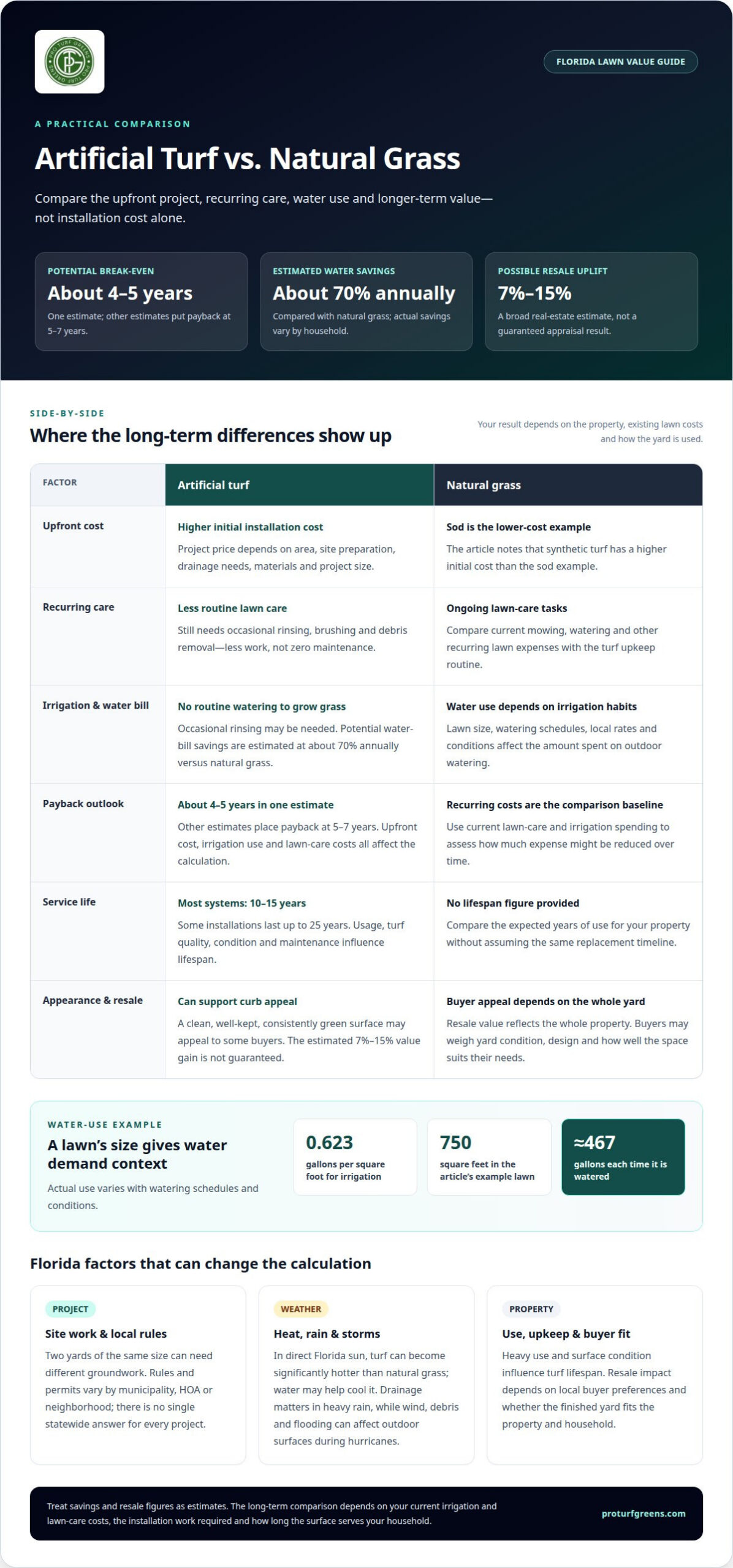
Artificial turf may break even in about 4 to 5 years, while other estimates place payback at 5 to 7 years. The return on investment for artificial grass in Florida depends on installation expenses, irrigation use, and ongoing lawn-care costs.
South Florida Installation Costs
Artificial turf installation costs in South Florida depend on the area and the work needed beneath the surface. A project quote from Pro Turf Greens reflects site preparation, drainage needs, material choices, and project size. These factors matter because two yards with the same square footage may need different groundwork. A smaller, straightforward area and a yard requiring substantial preparation will have different cost structures.
Ongoing Lawn Maintenance Expenses
Maintenance expenses are the recurring costs of keeping a lawn usable and presentable. Compare those categories with your current spending to estimate how maintenance could affect payback.
Natural grass also brings irrigation and sod expenses. Synthetic turf has a higher initial installation cost than that sod example, but reduced watering and lawn-care needs can change the longer-term calculation. To assess the return on investment for artificial grass in Florida, compare ongoing expenses with the initial project outlay, rather than looking at installation cost alone.
Florida has no statewide artificial-turf regulations, but rules can vary by municipality, HOA, or neighborhood. Permit requirements are local and project-specific, so there isn’t one statewide answer for every installation.
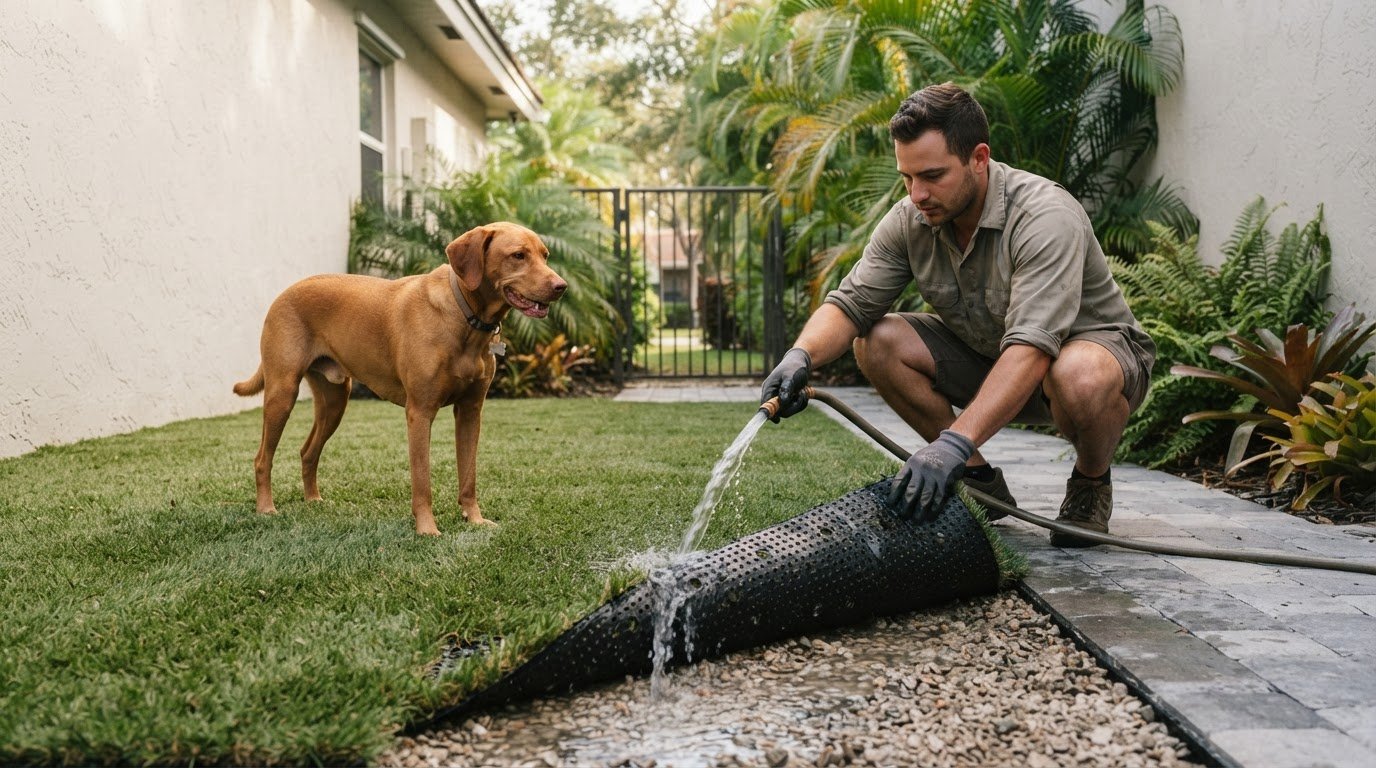
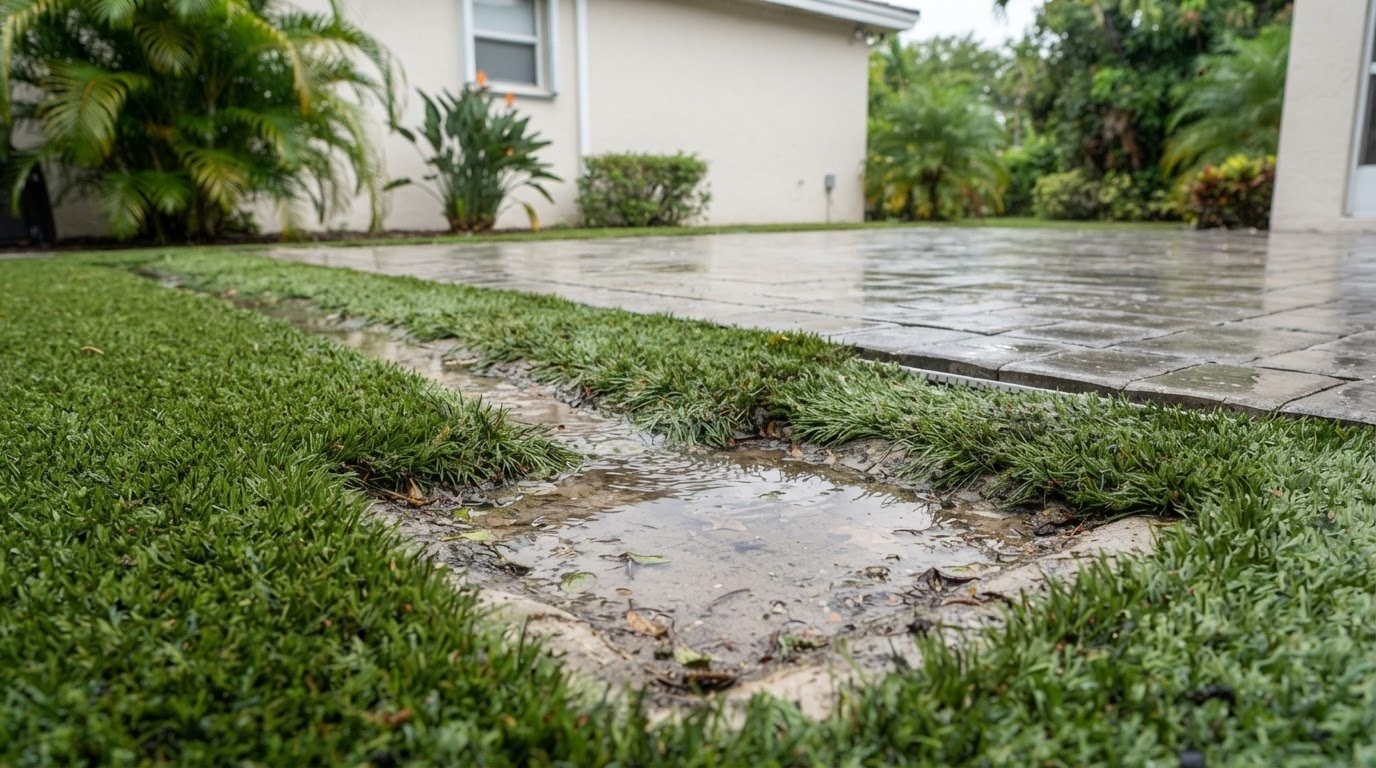
In Florida heat, artificial turf can become significantly hotter than natural grass in direct sunlight; water may help cool it. Heavy rain makes drainage important, since pooling can contribute to odors or premature turf failure. Hurricane conditions differ from routine weather, and wind, debris, and flooding can affect outdoor surfaces.
Does Artificial Turf Increase Your Home Value?
An artificial lawn can influence buyer appeal, but resale value reflects the whole property, not one surface. Consider the estimated effect on value alongside lifespan, upkeep, and how you use the backyard.
Estimated Home-Value Gains
Estimated home-value gains describe a possible resale uplift associated with artificial turf. Real estate professionals estimate that turf can increase a home’s value by 7% to 15%. Treat this as a broad estimate, not a guaranteed appraisal result. Buyers may value a consistently green yard, especially when it presents as clean and well maintained. The effect depends on the property, local buyer preferences, and the condition and design of the artificial lawn.
Lifespan and Replacement Considerations
Lifespan is the period an artificial lawn remains serviceable before replacement. Most artificial lawn systems last 10 to 15 years, depending on usage and turf quality; some installations last up to 25 years. This timeline matters because replacement can affect the long-term value calculation. Heavy backyard use, surface condition, and maintenance all influence how long the turf remains attractive and functional.
A well-kept surface can support curb appeal in everyday use and when a home is shown to buyers. Natural grass can be damaged by foot traffic, weather, and use when soil is wet. Artificial turf offers a different surface, but its appearance and condition still matter. Buyers may also consider whether the yard suits their needs, from entertaining to recreation.
Turf Investment Compared with Natural Grass
Comparing turf with natural grass means considering both recurring expenses and the property’s presentation. Savings on irrigation and lawn care can contribute to long-term value, while an attractive, usable backyard may strengthen buyer interest. The water bill is one part of the calculation, not a direct measure of added home value. Consider how long you expect to stay and how the surface will serve your household.
For a backyard planned around recreation, backyard putting green options can help shape the space around a specific use.
Water-bill savings and water conservation
Water savings depend on how much outdoor irrigation a natural lawn needs. An estimate uses 0.623 gallons per square foot for irrigation; a 750-square-foot lawn therefore uses about 467 gallons each time it’s watered. That example helps homeowners connect lawn size with water demand, although actual use varies with watering schedules and conditions.
Local rates and household irrigation habits shape the effect on your water bill.
Synthetic turf doesn’t need routine watering to keep grass growing, but occasional rinsing may be needed for cleaning. Potential water-bill savings are estimated at about 70% annually compared with natural grass. That estimate won’t apply equally to every home: the result depends on existing outdoor water use and how much lawn is converted.
For a long-term comparison, consider the water you expect to avoid using over the years you’ll use the surface, alongside installation and upkeep. Water rates affect the value of each gallon saved: higher rates make avoided irrigation more valuable, while modest irrigation use limits the savings. If lawn watering drives a costly water bill, conservation deserves more weight in the calculation.
Reduced lawn care can also mean less time spent mowing and watering. Synthetic turf still needs occasional rinsing, brushing, and debris removal, so the time saving means less work, not zero maintenance. For example, a household that regularly schedules mowing can compare that recurring task with the simpler upkeep routine. Fewer lawn-care tasks may add practical value beyond water savings, especially for homeowners who prefer usable outdoor space to routine grass care.
Property value and curb appeal
Artificial turf’s consistent appearance can shape a home’s curb appeal, from a street-facing lawn to a backyard gathering area. Its effect on resale depends on how well the finished space suits the property.
Resale Appeal
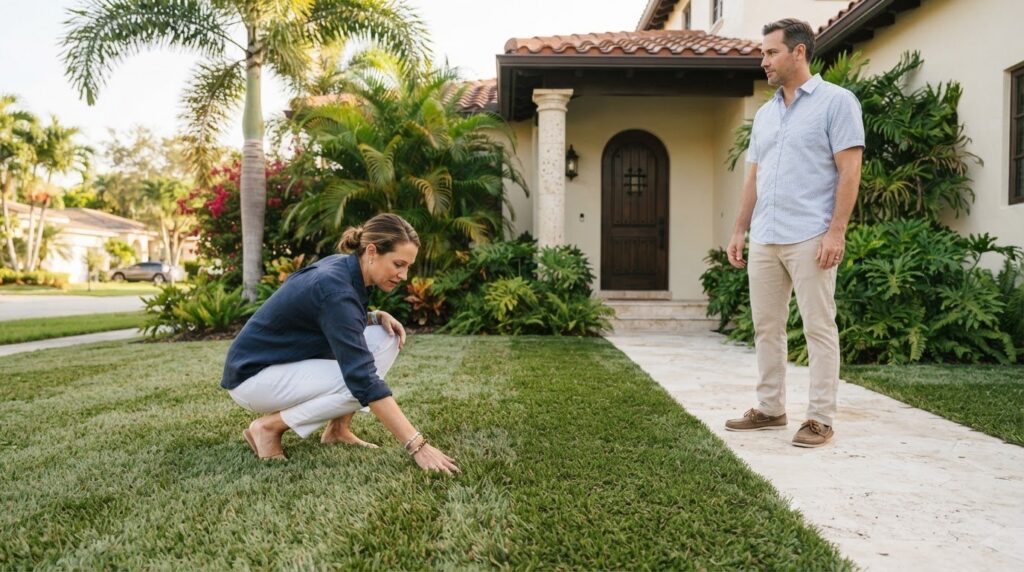
Curb appeal is the visual impression a home makes before buyers enter. A neat lawn can help the exterior feel cared for during a showing, while worn patches or uneven growth can distract from the home. Artificial turf provides a uniform surface without seasonal brown patches. Buyers still consider the entire property, including the home’s condition, layout, and outdoor spaces.
Year-Round Appearance
Year-round appearance means keeping a lawn green-looking through changing seasons. Artificial turf stays green year-round, maintaining a consistent look when natural grass may appear stressed. That can help a front lawn frame the entrance and give a backyard a more finished appearance. The surface still needs occasional rinsing, brushing, and debris removal to stay presentable.
Property Value Effects
Property value effects describe how a landscape feature influences buyers’ perception and the home’s overall appeal. A tidy artificial lawn can make outdoor areas look ready for use, but curb appeal alone doesn’t determine a sale price. Buyers may weigh the lawn’s condition, how well its design suits the home, and the maintenance involved, alongside other property features.
Compared with natural grass, artificial turf eliminates mowing, fertilizer, pesticides, and grass seed. That can reduce routine lawn-care tasks, though occasional upkeep remains part of ownership. For example, before showings, a homeowner can clear leaves and brush flattened areas. These details help the surface look intentional and well maintained.
To shape an outdoor area around a cohesive appearance, explore turf design options suited to the property.
Pro Turf Greens: Artificial Turf Driveways
Pro Turf Greens installs artificial turf driveways for homeowners considering a durable alternative for part of their outdoor space. A driveway may suit a property where the goal is to create a defined, finished-looking area rather than replace the entire lawn. Its place in a return-on-investment calculation depends on the project’s purpose and the expenses it may replace.
The right turf feature also depends on how you use your property. A backyard putting green creates space for practice, while playground and recreational turf can define a play area. Tee lines and driving ranges support golf practice at home. Each option serves a different purpose, so weigh its intended function alongside appearance and upkeep when considering long-term value.
If an artificial turf driveway fits your plans, contact Pro Turf Greens to discuss your project.
Choose the Turf Investment That Fits Your Plans
Start by deciding what you want your outdoor space to do. A lawn replacement, practice area, and play surface serve different needs, so focus first on the parts of your property you use most and the upkeep you want to reduce. That practical fit can help you assess the return on investment from artificial grass in Florida for your household, beyond resale expectations alone.
Pro Turf Greens offers Backyard Putting Greens, Playgrounds & Recreational Turf, and Tee Lines & Driving Ranges for different outdoor uses. Consider which feature best supports your plans, then discuss how it could work with your property’s layout. A well-considered project starts with a clear purpose and a surface designed around it.
Contact Pro Turf Greens to discuss your lawn and explore a suitable next step for your space.
Frequently Asked Questions
Does artificial turf save money in the long run?
Artificial turf can reduce recurring lawn expenses, particularly irrigation and routine grass care. One estimate places the break-even period at about 4 to 5 years, depending on existing maintenance spending. To judge the longer-term effect, include the initial installation, ongoing turf upkeep, and the lawn costs you expect to avoid. Savings build over time rather than appearing as an immediate reduction in household expenses.
How do you calculate the payback period on artificial grass?
Divide the installation cost by estimated annual net savings to calculate a simple payback period. First subtract expected annual turf upkeep from your current yearly irrigation and lawn-care expenses. For example, include mowing and watering costs only if you currently pay them. Lower annual savings mean a longer payback period; don’t count expenses that won’t actually change after installation.
Do Artificial Lawns Need Maintenance?
Yes. Artificial lawns need occasional rinsing, brushing, and debris removal, and infill may need replenishment. These tasks help keep the surface clean and its fibers upright. For a pet-use area, regular cleaning and rinsing help limit odor buildup. The routine differs from caring for natural grass, but artificial turf isn’t maintenance-free, so include these tasks in your ownership-cost comparison.
What is the average cost to install artificial grass in Florida per square foot?
There isn’t one project price that applies to every Florida property. The price depends on project area, site preparation, drainage needs, and material choices, and is given after a quote request. Those same factors matter for homeowners in Fort Lauderdale, Miami, Palm Beach, Boca Raton, Delray Beach, Jupiter, Palm Beach Gardens, Weston, and Coral Gables. Compare the defined project scope, not square footage alone.
How much does natural grass lawn maintenance cost in Florida each year?
To make that figure useful for your property, separate recurring care expenses from one-time work. Include the services you actually pay for, such as lawn care and irrigation, then compare those annual costs with the expected upkeep of an artificial surface.
What is the typical lifespan of artificial turf in Florida’s climate?
Most artificial lawn systems last 10 to 15 years, depending on turf quality and use; some installations last up to 25 years. A heavily used play area and a lightly used decorative lawn won’t experience the same wear. For a Florida property, drainage during heavy rain also matters to the installation’s performance. Consider anticipated use and surface condition when estimating replacement timing.