A drought-tolerant lawn still needs water, but the right grass and landscape plan can help it handle dry spells with less stress. Drought-tolerant lawn solutions in South Florida include choosing between sun-loving Bermuda and Zoysia, which can suit partially shaded areas. According to the University of Florida Institute of Food and Agricultural Sciences, apply ½ to ¾ inch of water when turfgrass shows drought stress, then wait until stress is noticeable before watering again.
A dry or thinning lawn can be frustrating, especially when the weather shifts between heavy rain and long stretches without it. The answer isn’t always to water more: matching plants and turf to sunlight, soil, drainage, and irrigation coverage can make a landscape more resilient. This guide explains how drought-resistant lawns work, how to plan a Florida-friendly yard, when Bermuda and Zoysia may go dormant, and where groundcovers can make more sense than grass.
Key Takeaways
- Match warm-season grass to the yard’s sunlight, soil, and drainage instead of choosing by drought tolerance alone.
- Plan irrigation zones around plant moisture needs, and account for establishment care when adding drought-friendly plants.
- Understand how dormancy affects Bermuda and Zoysia so seasonal color changes don’t automatically signal permanent lawn damage.
- Where grass repeatedly struggles, consider whether mulch, groundcovers, or an artificial lawn better suits the space.
1. What Is A Drought-Resistant Lawn?
In Florida, drought-resistant lawns use warm-season grasses that can manage heat and dry spells. Bermuda and Zoysia are common options, but their needs differ. Bermuda tolerates heat, drought, and salt, yet requires full sun and excellent drainage. Its rapid growth can help it recover from stress, and adequate rain may help it green up in a week. Choosing drought tolerant lawn solutions in South Florida means matching grass to the yard, not simply picking the variety with the strongest reputation for dry-weather resilience.
How often should South Florida lawns be watered during dry weather? According to the University of Florida Institute of Food and Agricultural Sciences (UF/IFAS), apply ½ to ¾ inch when turf shows drought stress, then wait until stress is noticeable again before watering. Adjust for rainfall and stop irrigation before water runs off the soil.
How can soil testing, compost, and mulch improve lawn drought resistance in South Florida? Soil testing helps track nutrient levels and pH, while compost can help soil retain moisture. Mulch limits evaporation and moderates soil temperature, making it useful around planting beds beside turf. These practices support drought-tolerant lawn solutions in South Florida when they address the site’s actual soil and planting conditions.
Zoysia suits some partially shaded landscapes and requires less water than St. Augustine. St. Augustine is common in South Florida, but its performance depends on placement: match it to the yard’s sun and shade conditions rather than assuming one grass works everywhere. Centipede grass can withstand 3-4 weeks without water, but drought tolerance alone doesn’t determine whether it suits a lawn. Consider each grass’s growth, drainage needs, light exposure, and maintenance before selecting it.
What are the risks of invasive or unsuitable drought-tolerant lawn plants in South Florida? A plant that spreads beyond its intended area can displace other landscape plants and become difficult to manage. Choose Florida-friendly or native plants suited to the site, and keep them in appropriate planting areas instead of substituting an unfamiliar species for turf.
2. Florida-specific drought-friendly landscape planning
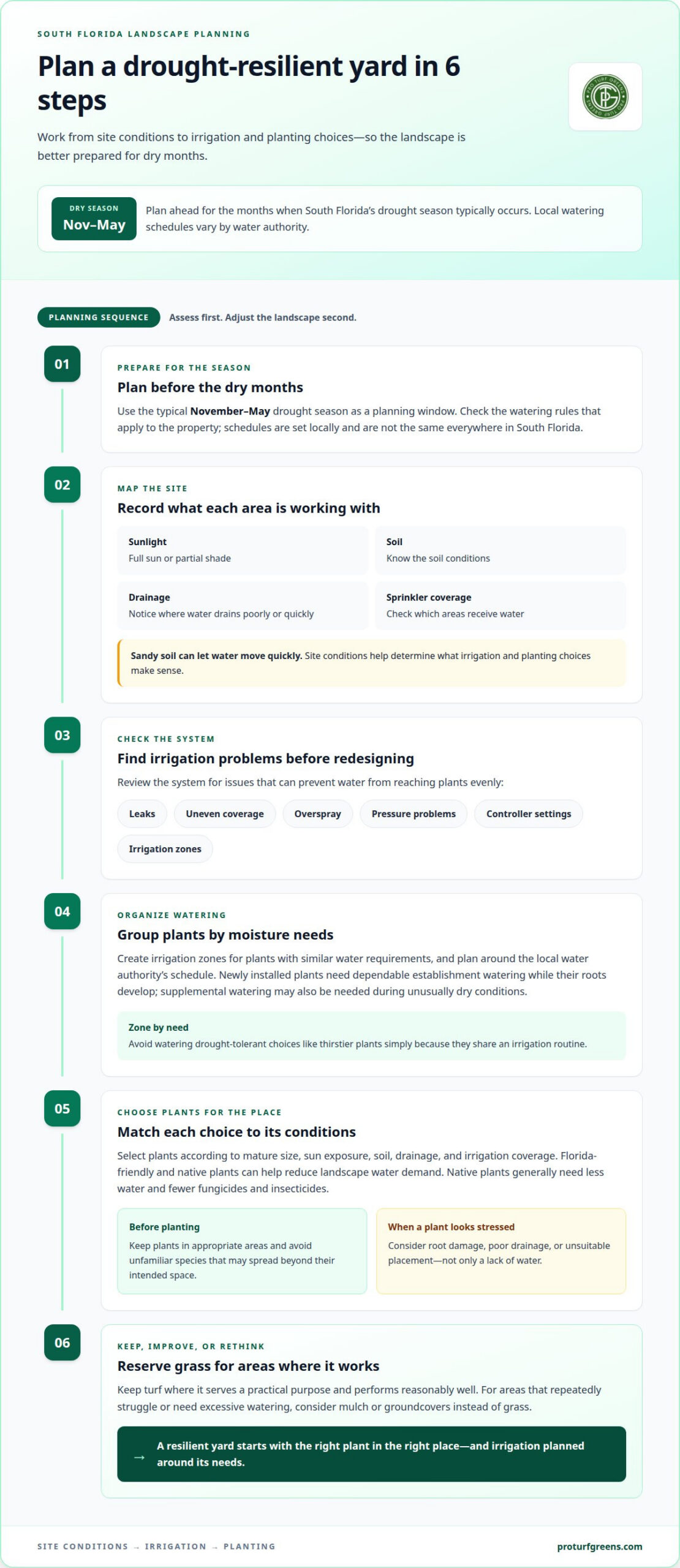
Florida’s drought season typically runs between November and May. Plan for dry months before choosing plants or adjusting irrigation. First map each area’s sunlight, soil, drainage, and sprinkler coverage. Sandy soil can let water move quickly, so irrigation needs depend partly on soil conditions. Keep turf where it serves a practical purpose and performs reasonably well. Rethink areas that repeatedly struggle or require excessive watering.
What are South Florida’s lawn irrigation restrictions and watering schedules? Watering days and schedules are set locally, so the applicable rules depend on the property’s water authority. Design irrigation zones and routines around those requirements rather than assuming one schedule applies throughout South Florida.
Review the irrigation system before redesigning the landscape. Look for leaks, uneven coverage, overspray, and pressure problems, and check controller settings and irrigation zones. These steps can show whether plants are receiving water where they need it. Group plants with similar moisture requirements so drought-tolerant choices aren’t watered like thirstier plants. Newly installed plants need dependable establishment watering while their roots develop. Supplemental watering may also be needed during unusually dry conditions.
Florida-friendly and native plants can help reduce landscape water demand. Native plants generally need less water and fewer fungicides and insecticides. Choose plants according to mature size, sun exposure, soil, drainage, and irrigation coverage. A plant that appears stressed may have root damage, poor drainage, or unsuitable placement, not simply a lack of water. Mulch around planting areas can protect soil and limit evaporation, while groundcovers can suit spots where grass struggles.
Are there rebates or incentives for replacing thirsty lawns with Florida-friendly landscaping? Replacing turf doesn’t automatically establish rebate eligibility; incentives depend on local program criteria. Treat potential incentives as separate from the design decision. A resilient landscape should make sense for the site, with practical turf areas, well-matched plants, and irrigation zones suited to their needs.
Watering days and schedules are set by the local water authority, so requirements vary across South Florida. Plan irrigation around the rules that apply to the property rather than assuming one schedule is used throughout the region.
3. Allowing Bermuda and Zoysia to go dormant
Bermuda and Zoysia may turn brown and slow their growth during dry weather. In South Florida, a January cold snap can also affect warm-season turf. Dormancy means reduced growth, not proof that grass has died. Don’t treat every brown patch as a reason to increase irrigation. First consider recent rainfall, cold conditions, and whether the color change affects the whole lawn or only isolated areas.
Water needs depend on the goal. Dormant Bermuda can survive on 1 inch of water every 2-3 weeks. For Bermuda and Zoysia, another recommendation is 0.5 inch every week to maintain healthy roots. These figures describe different watering approaches, so consider whether the priority is basic survival or maintaining root health. Apply water evenly and stop before it runs off. Adjust for rainfall rather than watering automatically through a wet week.
During dormancy, avoid pushing new growth with nitrogen fertilizer. Nitrogen encourages shoots rather than roots, which isn’t helpful during drought. Adjust mowing to the grass’s condition, and don’t remove more than one third of a leaf blade at once. If the lawn has stopped growing, mow less often; avoid cutting brown turf simply to make it look green. Watch for changes after rain or warmer conditions return.
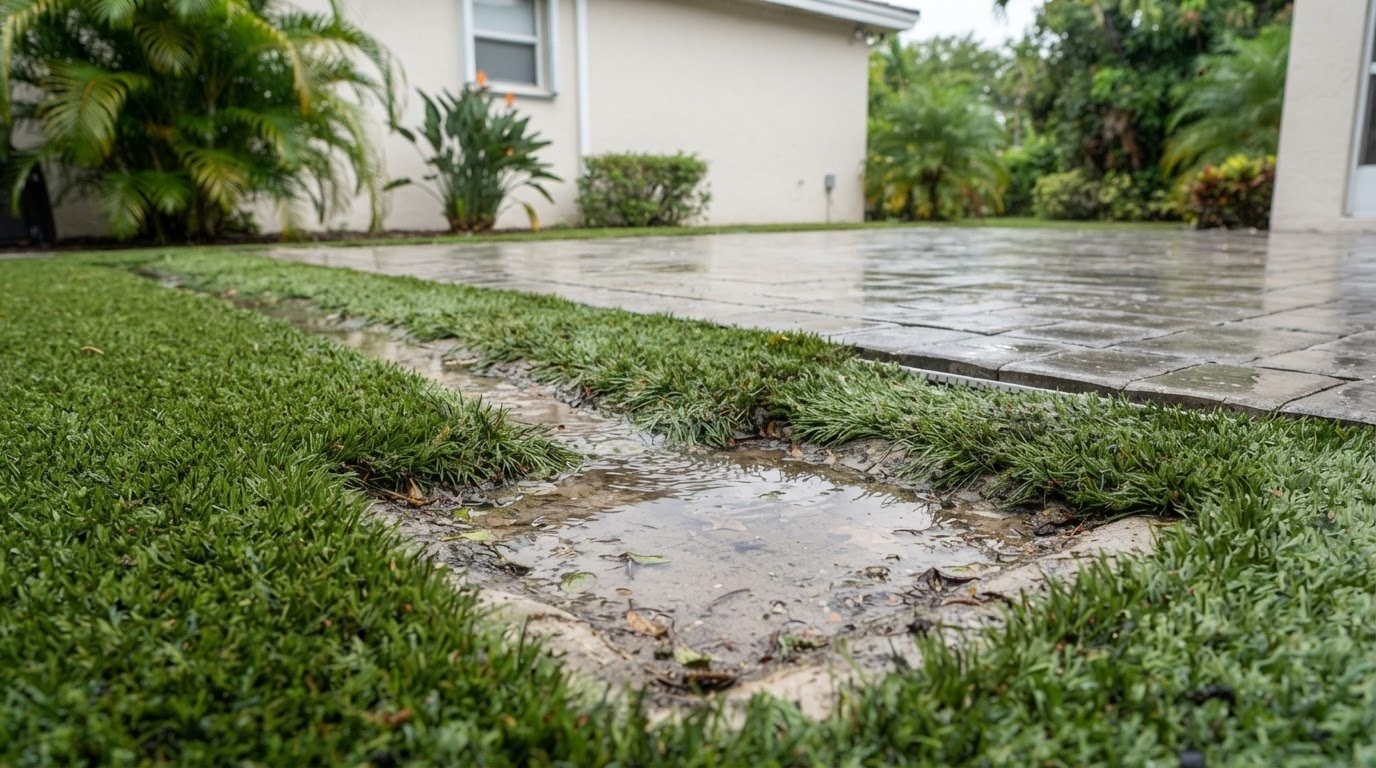
Distinguish dormant turf from problems that may need a different response. A small, sharply defined brown area can point to localized damage, while broader color change may reflect seasonal stress. Check irrigation coverage, drainage, and signs of wilt before changing the whole lawn’s watering routine. Native planting beds beside Bermuda or Zoysia also need their own moisture plan; dormant turf and neighboring plants don’t necessarily share the same needs. A measured approach helps conserve water while protecting lawn roots through dry or cool periods.
4. What are the best drought-tolerant lawn alternatives to grass in South Florida?
Where turf repeatedly fails, replace the problem area rather than the entire yard. Mulched beds and groundcovers such as Asiatic jasmine can suit places where grass cannot survive long term. A narrow strip beside a building, for example, may work better as a planted bed than as struggling turf. Keep grass where it serves a practical purpose, such as an outdoor activity area.
Plan the landscape as connected spaces, not one continuous lawn. Combine groundcovers, flowering plants, shade trees, mulched beds, and outdoor gathering areas. Each element can serve a different function: groundcovers cover difficult patches, while a gathering space preserves room for outdoor use. Match plant placement to sunlight, soil, drainage, and irrigation coverage. A drought-friendly design can still feel green and welcoming without relying on grass everywhere.
Mulch is useful around planted beds because it helps limit evaporation, moderate soil temperature, and reduce weed pressure. Keep mulch in planting areas rather than treating it as a substitute for every surface. Newly installed plants need regular establishment watering while their roots develop, and supplemental watering may be needed during unusually dry conditions. Group plants with similar moisture needs so irrigation supports the bed without unnecessarily watering drought-tolerant choices.
Before removing turf, identify why that area struggles. Poor drainage, root damage, soil conditions, or unsuitable plant placement can cause stress that extra watering won’t solve. If the spot remains difficult, consider a groundcover such as Asiatic jasmine or a mulched planting bed. If it serves a practical purpose, retain turf there and redesign less successful areas. This targeted approach preserves useful lawn space while making the landscape more responsive to South Florida’s dry periods.
For a tailored approach to transforming a difficult lawn area, explore lawn design options.
Pro Turf Greens: Lawns & Pet Turf
Pro Turf Greens designs and installs artificial turf lawns and pet-friendly turf for homeowners considering an alternative where natural grass repeatedly struggles. Artificial turf can provide a consistent surface without depending on grass growth through dry periods. Consider how each part of the yard is used: a pet area has different needs from a putting space or play area. Pro Turf Greens also designs and installs professional-grade putting greens, safe playgrounds, tee lines, and driving ranges. These options complement a landscape plan that keeps natural planting where it works and rethinks difficult lawn sections. For a project in Fort Lauderdale, Miami, Palm Beach, Boca Raton, Delray Beach, Jupiter, Palm Beach Gardens, Weston, or Coral Gables, request a free consultation with Pro Turf Greens.
Shape Your Yard Around How You Live
Your next step is to decide what each part of the yard should make possible. A space used for gathering, play, or practice may benefit from a different surface than a planted garden. That practical choice can guide how you balance natural areas with drought tolerant lawn solutions in South Florida, creating an outdoor environment suited to your routines and the local climate.
Pro Turf Greens offers options for distinct activities, including Backyard Putting Greens, Playgrounds & Recreational Turf, and Tee Lines & Driving Ranges. Consider which spaces would make daily life more enjoyable, then plan the landscape around those priorities rather than treating every area alike. A considered design can make your yard feel purposeful and inviting. Contact Pro Turf Greens today to discuss a direction for your outdoor space, and take the next step toward a landscape shaped around the way you live.
Frequently Asked Questions
Why Improve Drought Tolerance?
Improving drought tolerance helps a lawn withstand dry spells with less irrigation pressure. It also gives homeowners more options than increasing watering whenever grass looks stressed. For example, a landscape can reserve turf for recreation and use planting beds where grass struggles. In Fort Lauderdale, Miami, Palm Beach, Boca Raton, Del Rey Beach, Jupiter, Palm Beach Gardens, Weston, and Coral Gables, the best approach still depends on each yard’s conditions.
Need Help Saving Your Lawn?
Identify the pattern of damage before changing lawn care. If dry areas follow sprinkler coverage, uneven irrigation may be involved; isolated patches can have different causes. Note whether the grass is thinning, discolored, or simply growing more slowly, and consider drainage and soil conditions. This assessment helps distinguish a lawn that needs adjusted care from an area better suited to another landscape use.
What Is A Drought-Resistant Lawn?
A drought-resistant lawn uses turf that can withstand dry conditions better than less suitable grass. It still needs appropriate care, especially while becoming established, and drought tolerance doesn’t mean a lawn never needs water. Treat a sunny, well-drained area planted with Bermuda differently from a partly shaded spot. Select grass to fit the site rather than relying on one variety across the entire yard.
What Affects the Cost of Drought-Friendly Landscaping?
Project scope drives the cost of drought-friendly landscaping. Relevant factors include the area being changed, existing site conditions, plant choices, preparation, and any irrigation adjustments. A small planting bed requires a different plan from replacing a large lawn area. Establishment care also matters because new plants need watering while roots develop. The cost depends on the specific project; request a quote to discuss your plans.
Which Lawn Grasses Are Most Drought Tolerant in South Florida?
Bermuda, Zoysia, Bahia, and Centipede are options to consider, but site conditions affect the choice. Bermuda suits sunny, well-drained areas; Zoysia can work in partial shade. Bahia can survive on 1 inch of water monthly, while Centipede can go 3-4 weeks without water. Those figures describe drought tolerance, not an ideal schedule for every lawn.
How Do St. Augustinegrass, Bahia Grass, Zoysia, and Bermuda Compare for Drought Tolerance and Maintenance in South Florida?
Bahia tolerates extended dry conditions, while Bermuda handles heat but grows rapidly and needs frequent mowing during peak growth. Zoysia needs less water than St. Augustine and can suit partial shade. St. Augustine is common locally but needs 1.5-2 inches of water weekly during peak summer and is medium-to-high maintenance. Compare sunlight, water needs, and mowing before choosing.