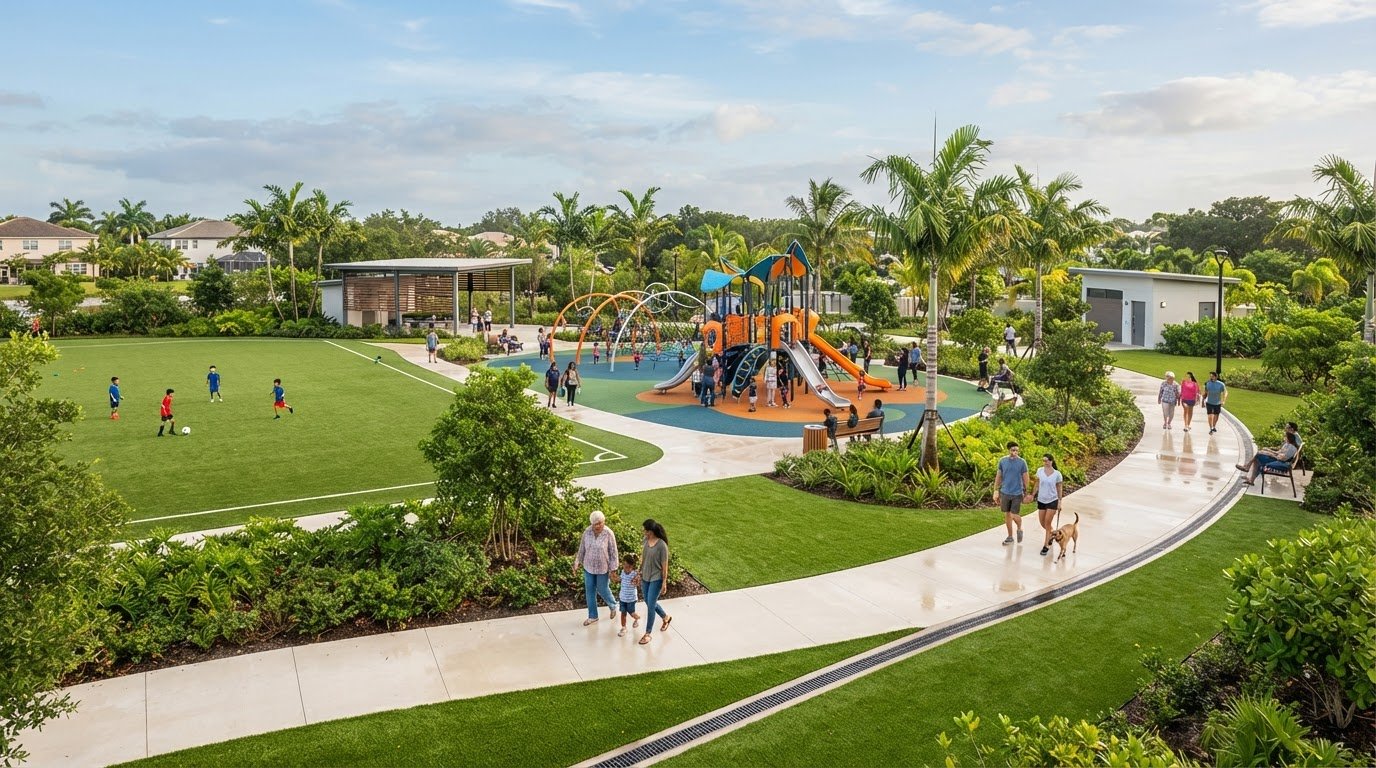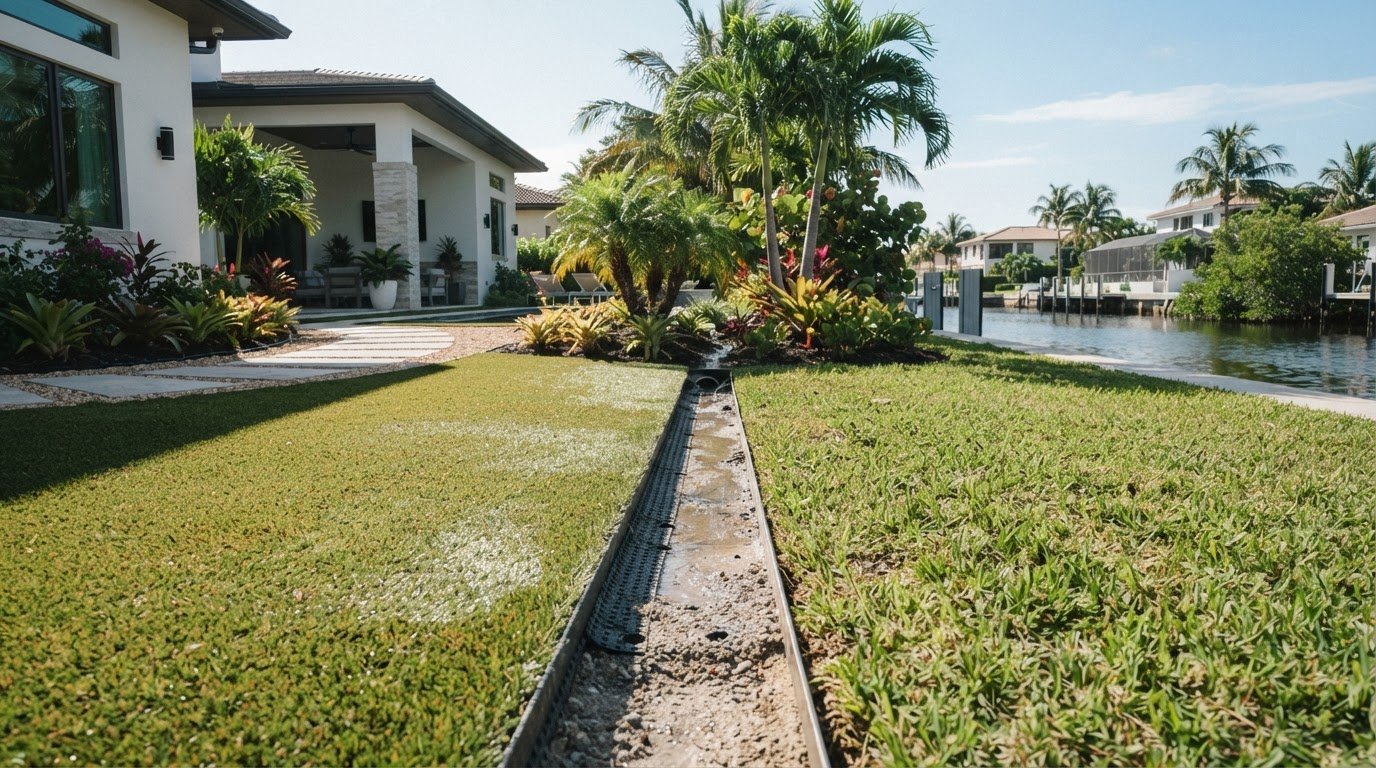
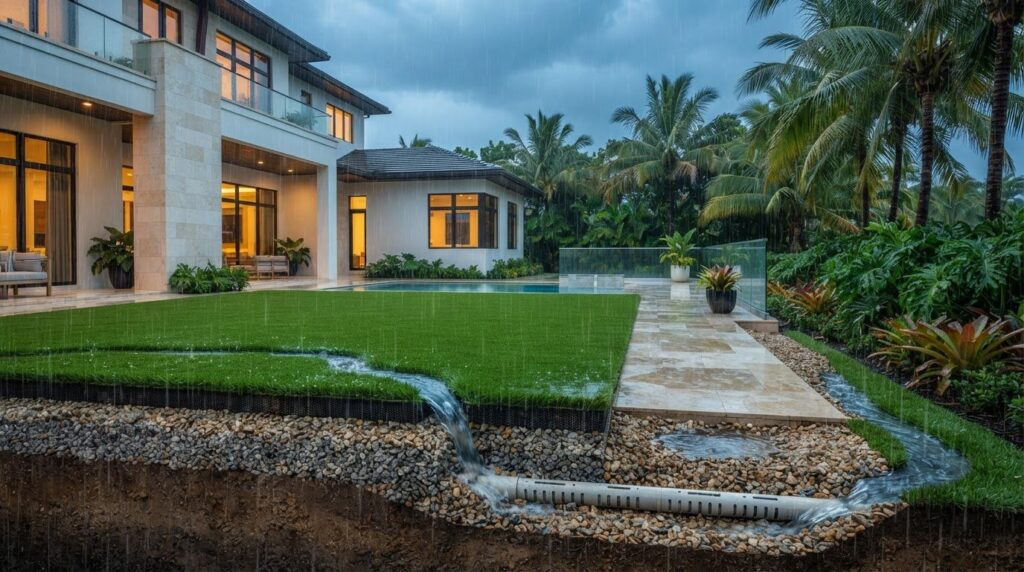
What keeps artificial turf clear of standing water often lies beneath the surface, not in the turf itself. In South Florida, heavy rain can quickly show whether water has a path through the turf and away from the area. Effective artificial turf drainage solutions account for the entire installation, from the turf backing to the prepared base and the site’s water routes.
When evaluating a project, look beyond how permeable the turf is. Soil, grading, existing drainage, and how you plan to use the space all affect how the installation should be designed. A lawn, pet area, playground, or sports surface may have different site conditions and practical priorities.
This guide explains how water moves through an artificial turf system, compares common drainage approaches, and outlines what to assess before installation. Whether your property is in Fort Lauderdale, Miami, Palm Beach, Boca Raton, Delray Beach, Jupiter, Palm Beach Gardens, Weston, or Coral Gables, understanding the layers beneath the turf can help you plan for your site rather than rely on a one-size-fits-all solution.
Key Takeaways
- Drainage depends on the full installation, not just how easily water passes through the turf.
- Slope, runoff routes, soil, water-table conditions, and intended use can all shape site planning.
- Grading, permeable base construction, and supplemental drainage address different site needs.
- Observing where rainwater pools and how it moves can help identify areas for assessment.
- Lawns, pet areas, playgrounds, and sports surfaces can have different drainage priorities.
How artificial turf drainage works during South Florida rain
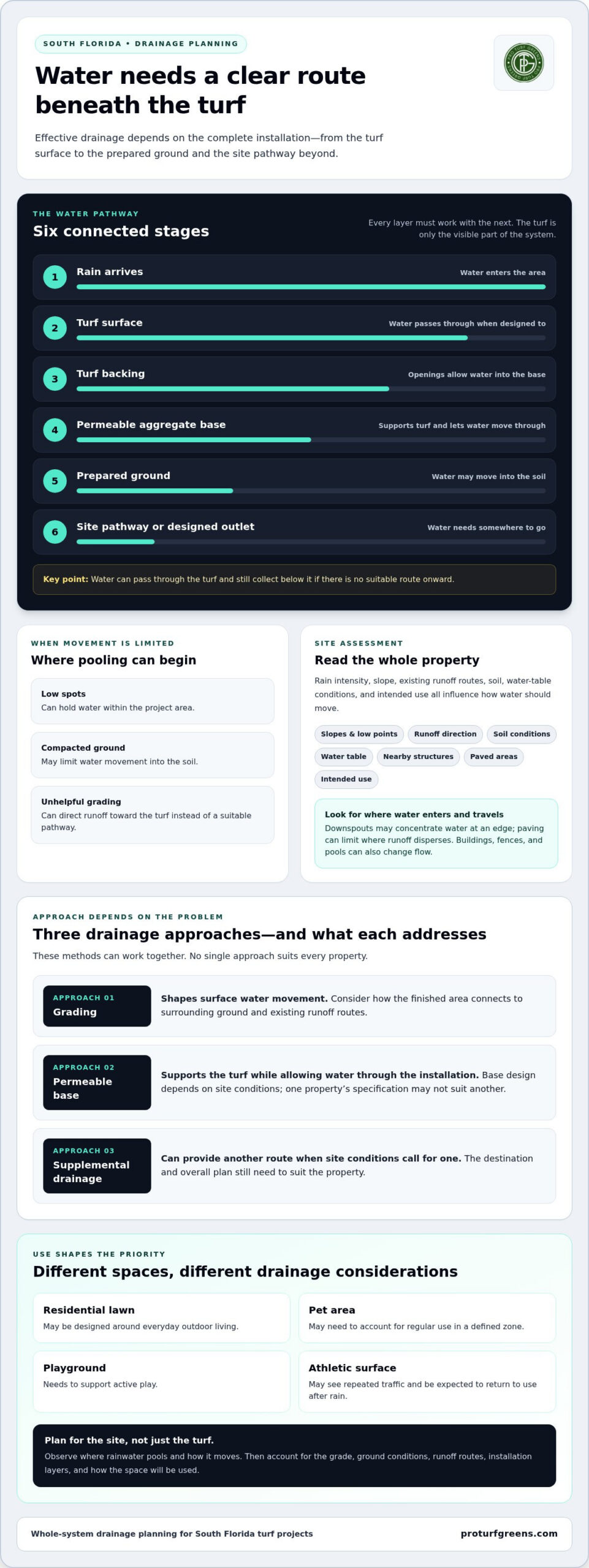
Artificial turf drainage is the movement of water through the finished surface and installation layers toward a suitable pathway on or below the site. Depending on the property, water may filter into prepared ground or be directed toward a designed outlet. The turf is only the visible part of the system.
Think of the route as a connected sequence:
Rain → turf surface → backing → permeable base → prepared ground → site pathway or designed outlet
Each layer needs to work with the next. During heavy rain, water may arrive faster than the ground can absorb it. The yard’s slope, low areas, and existing runoff routes then become especially important. A drainage plan considers where water enters the area, how it moves through the installation, and where it can go afterward.
What happens to rainwater beneath artificial turf?
When the turf and installation are designed to allow it, rain passes through openings in the surface and backing into the base. A stable, permeable aggregate base supports the turf while allowing water to move through it. Base design depends on the site, so a specification that works for one property should not automatically be assumed to suit another.
Below the base, water still needs somewhere to go. It may move into prepared ground or follow a planned route toward an outlet. Soil and site layout affect which pathway makes sense. Infill is another component in some turf systems. Crumb rubber infill, for example, is a material used in artificial turf. Infill and a permeable backing do not replace planning for the layers beneath them.
Why turf permeability is only one part of drainage
Permeability describes water passing through a material. Complete system drainage also depends on water moving through the base and onward through or away from the prepared ground. Water can pass through the turf and still collect below it if the site has no suitable route forward.
Low spots can hold water, while compacted ground may limit movement into the soil. Grading can also contribute to pooling if it directs runoff toward the turf instead of an appropriate pathway. These conditions need to be considered together. Changing one part of the installation will not necessarily resolve a constraint elsewhere in the system.
That is why artificial turf drainage solutions are planned around the whole site, not just the turf’s stated permeability. For South Florida properties, the design process starts by understanding the existing grade, ground conditions, and how water already moves across the area. The installation approach can then be matched to those conditions.
South Florida site conditions that shape artificial turf drainage
Drainage planning starts with the property, not a standard detail. Rainfall intensity, the yard’s slope, existing runoff routes, and how the turf will be used all influence how water should move through the finished area. A level lawn, a sloped side yard, and a play space bordered by hard surfaces can call for different design decisions.
Buildings, fences, pools, and paved areas can change where runoff enters, collects, or travels. A roof downspout may concentrate water at one edge, while paving can limit where it can disperse. Note these features during a site assessment so the installation plan responds to the property rather than assuming the same drainage approach works everywhere.
How grading, soil, and runoff affect the installation
Surface levels matter. A low point within the project area may collect water, and the ground around the turf can affect whether runoff moves toward or away from it. Assess the direction of existing runoff and how the finished area will connect to its surroundings.
Soil composition and water-table conditions vary from property to property, so neither should be assumed based on the region alone. They can affect whether water moves into the prepared ground or needs another planned route. The University of Florida IFAS publication on turf water management offers broader context on turf water use and management. Drainage planning still needs to account for the specific site.
Why intended use changes drainage priorities
How people use the space helps set practical priorities. A residential lawn may be designed for everyday outdoor living, while a pet area may need to account for regular use in a defined zone. A playground needs to support active play, and an athletic surface may see repeated traffic and be expected to return to use after rain. Frequent use can make drainage an important part of planning.
For athletic projects, explore the high-performance sports turf guide for considerations beyond the yard itself. Across lawns, pet areas, playgrounds, and sports surfaces, artificial turf drainage solutions should reflect both site conditions and the demands placed on the surface.
A useful site assessment records slopes, low points, nearby structures and paving, visible runoff routes, soil and water-table considerations, and intended use. Pro Turf Greens designs custom residential and commercial turf projects across South Florida, incorporating property-specific conditions into project planning. To discuss your site and its intended use, request a turf project consultation.
Comparing artificial turf drainage solutions for different sites
Compare drainage approaches by the problem each is meant to address. Grading shapes surface water movement. A permeable base supports the turf while allowing water through the installation. Supplemental drainage can provide another route when site conditions call for one. These methods can work together, but no single approach suits every property.
| Approach | Purpose | Site conditions to consider | Questions it helps answer |
|---|---|---|---|
| Grading | Shape the prepared area to support planned surface water movement. | Existing slopes, low points, surrounding yard levels, and nearby structures or paving. | Where will surface water travel, and can the area connect to an appropriate site pathway? |
| Permeable base construction | Provide a stable foundation that allows water to move through the base. | Ground conditions, intended turf use, and whether water can move onward below the base. | How should the base support the surface while fitting the conditions beneath it? |
| Supplemental drainage | Add a planned route for water where grading and base construction alone may not address site needs. | Persistent collection points, limited natural pathways, and the availability of a suitable outlet. | Is an added drainage feature appropriate, and where can it direct water? |
Grading and permeable base construction
Where site conditions permit, shaping the prepared area can guide water toward a suitable route instead of leaving it in a low spot. The base does more than support the turf: its construction is part of the drainage plan. Its design should reflect the project and the ground below it, rather than follow a universal depth or material specification.
A permeable base alone does not ensure water will move away from the area. If the underlying ground limits infiltration or there is no appropriate pathway beyond the base, water may still collect. The design needs to account for the full route, from the surface through the base and onward.
When supplemental drainage may be considered
A French drain or another supplemental feature may be considered when the site assessment shows that an additional water-management route is needed. It is not automatically required for every turf installation. Its usefulness depends on where water collects, how the feature connects to the surrounding runoff path, and whether there is a suitable outlet. A drain without a workable destination does not resolve the underlying routing question.
Drainage design depends on both the base and the site. The right combination of artificial turf drainage solutions follows from evaluating the ground, grades, water pathways, and intended use, then planning the installation as a connected system.
How to spot and prevent artificial turf drainage problems
Water on the surface after a storm does not automatically mean the installation has a drainage problem. Notice where it gathers, whether the same area collects water again, and how runoff moves around the turf. Recurring patterns can indicate when the site needs closer assessment.
What should you check when water pools on turf?
After rainfall, observe the area before drawing conclusions. Temporary wetness may differ from persistent pooling, and surface appearance alone cannot confirm what is happening below. Record what you see and look for patterns across rain events.
- Note the location: Record where water collects and whether the same spots recur.
- Check nearby features: Observe slopes, paved areas, roof runoff, and any visible drainage outlets.
- Document conditions: Take photos and note the rainfall context, including where water appears to enter or gather.
- Look for changes: Settled areas, a blocked visible outlet, or runoff directed toward the turf may warrant professional assessment.
A recurring low spot could relate to grading, the prepared base, the ground below, or a nearby runoff route. These are possibilities to assess, not diagnoses to make from the surface alone. Avoid cutting into or lifting installed turf to investigate. The visible surface is part of a larger system, and altering it without understanding the construction can complicate assessment.
How to reduce drainage risks before installation
Before turf is placed, site assessment and preparation can identify slopes, low points, nearby hardscape, and existing water pathways. This information helps shape the construction plan around the property instead of treating drainage as a feature of the turf alone. Planning early also lets the intended use guide the design.
For a pet area, regular use and cleanup needs belong in the planning conversation. A pet turf guide can help homeowners consider how the space will function day to day, alongside its drainage requirements. The same principle applies to lawns, play areas, and athletic surfaces: account for use and site conditions before selecting construction details.
If pooling keeps returning, or you are planning a new installation, discuss your turf drainage project with Pro Turf Greens. A property-specific review can inform suitable artificial turf drainage solutions without assuming one approach fits every yard.
Plan an artificial turf drainage solution with a South Florida installation team
A well-planned turf project moves from purpose to site conditions, then to water movement and construction details. Start by defining how you will use the space. Next, assess the ground and existing runoff routes. With that context, the installation plan can account for how water should move through and away from the finished area before turf and construction details are selected.
What a project-specific drainage plan should account for
Assessment includes the grade, low points, existing runoff, surrounding surfaces, and intended use. A paved border, roof runoff, or nearby structure may influence where water can travel, while conditions beneath the surface affect the route beyond the base. Site conditions shape the appropriate approach and expected water pathway, so construction details are tailored to the property rather than copied from a generic diagram.
Planning matters across different project types, but the priorities are not identical. A residential lawn, pet area, playground, or sports surface serves a different purpose and may see different patterns of use and traffic. Pro Turf Greens designs and professionally installs custom artificial turf projects for residential and commercial properties across South Florida, with planning informed by the space and its intended function.
Next steps for a South Florida turf project
Before discussing a project, note the area you have in mind, what it needs to support, and whether you have observed recurring pooling. Photos and notes about where water gathers or appears to flow can help describe the site. They provide useful context, but do not replace assessing how the installation layers and surrounding ground should work together.
With a clear picture of the project, plan the water pathway alongside the surface design. This is the foundation of thoughtful artificial turf drainage solutions: fit the design to the site, then select construction details to suit its conditions and use. Pro Turf Greens offers free consultations for South Florida turf projects. Request one to discuss your property and plan an outdoor upgrade around its conditions and intended use.
Plan a Turf Project Built for Your Property
Effective artificial turf drainage solutions start with the conditions beneath and around the surface. Turf permeability matters, but so do grading, the prepared base, soil, runoff routes, and the space’s intended use. A site-specific plan considers how these elements work together rather than relying on one drainage feature for every yard.
That planning supports a considered project, whether you are envisioning a residential lawn, pet area, playground, or athletic surface. Pro Turf Greens designs and professionally installs custom artificial turf for residential and commercial projects across South Florida, tailoring each project to its setting and purpose.
Have a project area in mind? Note how you plan to use it and where water tends to collect, then request a free consultation for your South Florida turf project. Pro Turf Greens can help plan a custom installation around your property and the way you want to use the space.
Frequently Asked Questions
Is artificial turf permeable?
Many artificial turf systems are designed to let water pass through the surface, but permeability alone does not determine whether the complete installation drains well. Water also needs to move through the backing and base, then into or away from the prepared ground along a suitable pathway. Product and construction details vary, so review the specifications for the system being considered instead of assuming a universal drainage rate.
How does artificial turf drain during heavy rain?
Rain may pass through permeable turf and its backing into the prepared base, then move through or away from the site according to the ground and drainage design. During intense rain, grade, soil, water-table conditions, and available outlets can all influence water movement. A site assessment helps identify which factors matter for a particular South Florida property and how they should inform the installation plan.
Can artificial turf flood or develop standing water?
Yes. Standing water can occur if water cannot move through the full installation or leave the area effectively. Possible contributors include low spots, compacted ground, unsuitable grading, blocked outlets, or runoff entering from nearby surfaces. The turf is only one part of the system. Persistent pooling calls for an assessment of the installation and site, not a diagnosis based only on the visible surface.
Do you need a French drain under artificial turf?
No, a French drain is not necessary for every artificial turf project. Whether supplemental drainage is appropriate depends on the site’s grade, soil, water movement, and the availability of a suitable outlet. A considered plan accounts for the full pathway water must follow. Treating a particular drain as a default fix can overlook other site conditions that influence drainage.
What base is best for artificial turf drainage?
There is no single base specification that suits every property. Base design depends on the turf application, ground conditions, grading, and intended water pathway. A permeable aggregate base is commonly used as a structural and drainage component, but it cannot address every limitation beneath or around it. Project-specific assessment helps determine appropriate construction details for the site and its intended use.
Why does my artificial turf have puddles after rain?
Puddles may relate to a low area, restricted water movement, the underlying base, or runoff entering from nearby surfaces. Note whether water collects in the same place after rain, and observe surrounding slopes and visible outlets. Do not diagnose the cause from a photo or surface appearance alone. If pooling persists or recurs, a professional assessment can consider the complete installation and site conditions.
Does artificial turf drainage matter for pet areas and sports surfaces?
Yes. Drainage is a practical consideration for turf areas used by people or pets, especially where the surface needs to return to use after rainfall. A pet area and an athletic surface may have different priorities based on use, traffic, and surrounding runoff. Pro Turf Greens designs and installs custom turf projects in Fort Lauderdale, Miami, Palm Beach, Boca Raton, Delray Beach, Jupiter, Palm Beach Gardens, Weston, and Coral Gables.