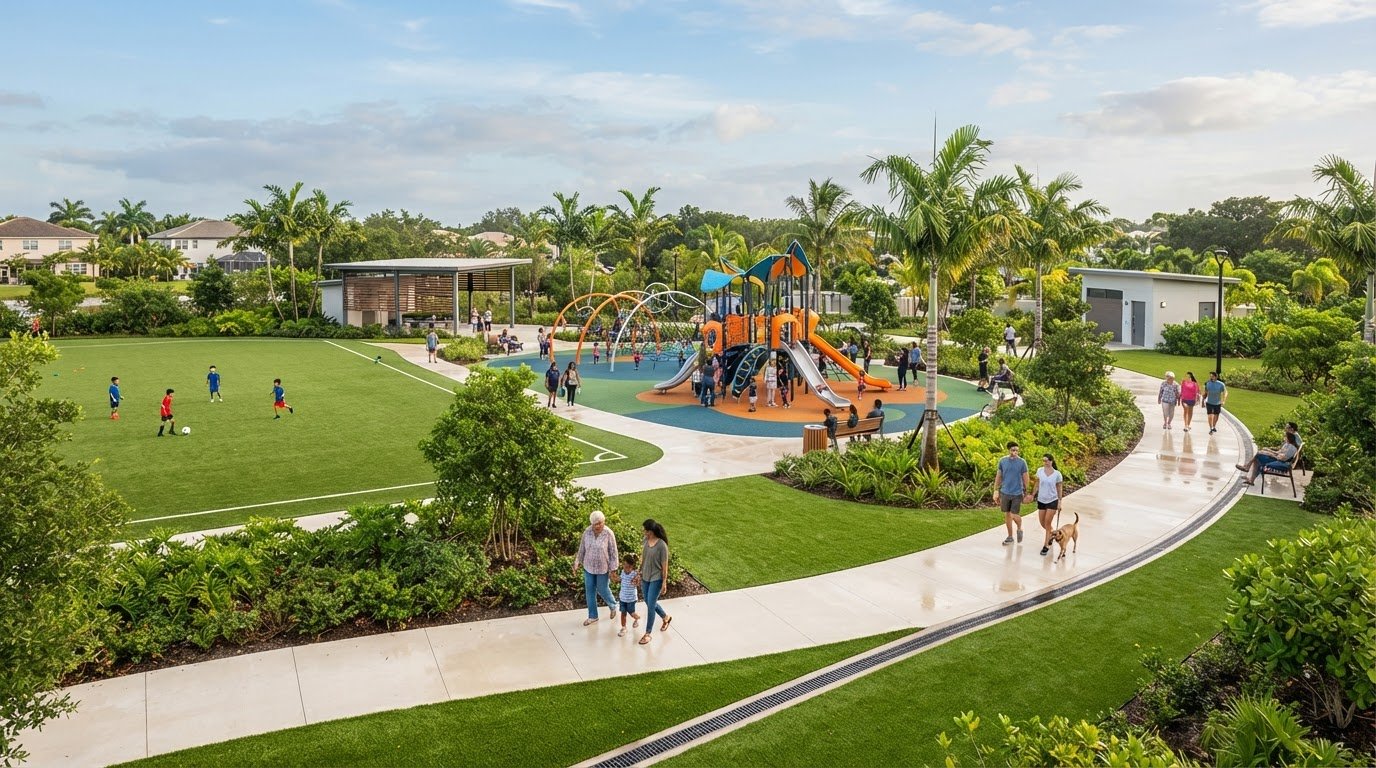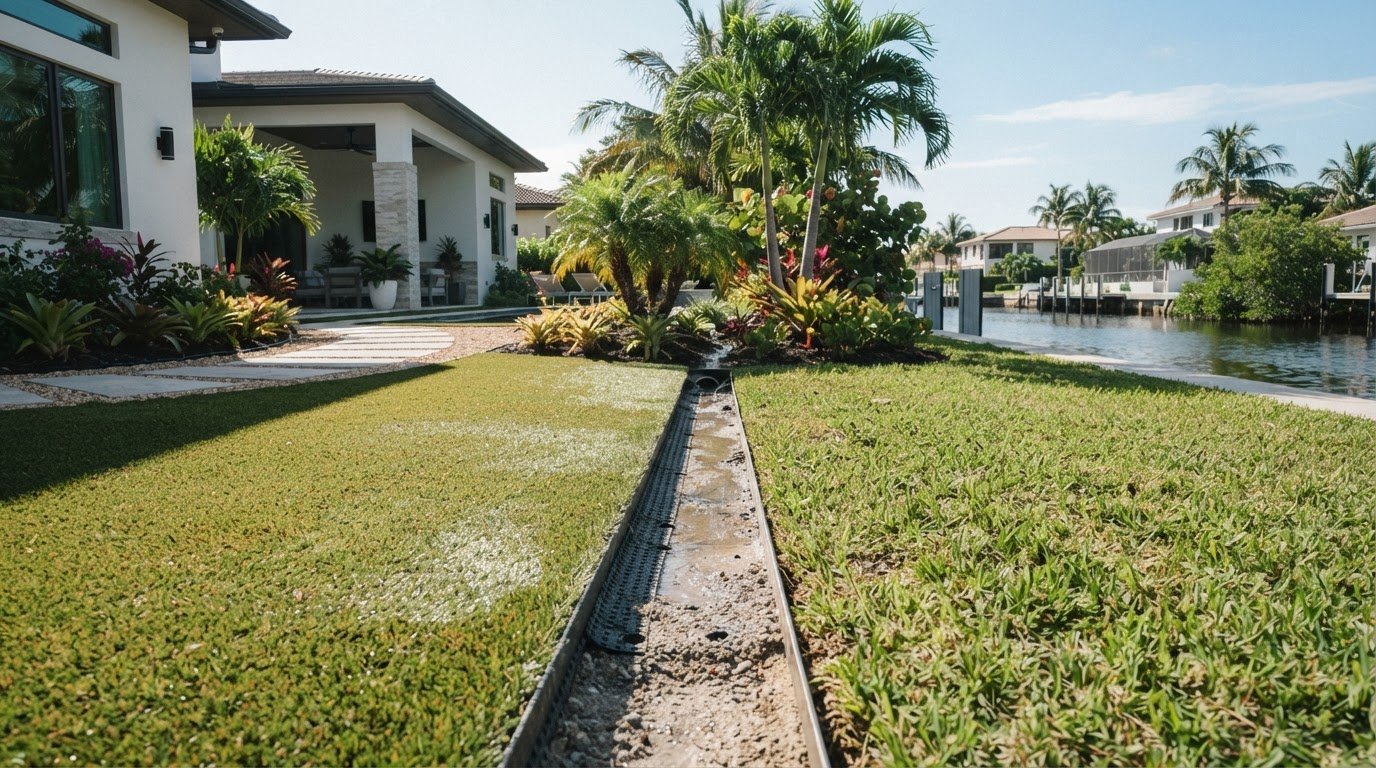

A single turf surface can support more than one backyard sport, but choosing by appearance alone can leave you with a space that doesn’t suit the way your family plays. The right synthetic turf for backyard sports depends on the activities, users, and play priorities you’re planning for, as well as the conditions beneath and around the surface. In South Florida, drainage, heat, durability, and routine care all deserve attention from the start.
If you’re unsure whether one setup can handle your mix of sports, start by listing how you expect to use the space. This guide explains how turf and base choices can affect play, how to plan a layout around your yard, and what to ask about safety and maintenance. You’ll also find site conditions to discuss with an installer, so the plan reflects how the space will be used, not just how it looks on installation day.
Key Takeaways
- Choose synthetic turf for backyard sports based on how often you play, who will use the space, and which activities matter most.
- Consider turf, specified infill, base preparation, and drainage as parts of one system. Ask how each choice relates to your intended use.
- Plan the layout around the movements and equipment involved in soccer drills, batting practice, or agility training. Decide where a shared space may require compromises.
- Account for South Florida rain, heat, and site drainage during planning. The right construction approach depends on the property.
- Bring activity details, yard dimensions, photos, and site concerns to an installer. Ask about design, drainage, product documentation, and care.
Synthetic Turf for Backyard Sports: Start With How You Play
The right backyard sports surface depends on more than the sport’s name. Consider who will use it, how they’ll move, how often they’ll play, and the yard’s shape and conditions. A space for occasional family play has different priorities from an area used for focused skill practice or repeated training. Don’t assume one setup will perform identically for every purpose.
Before comparing turf options, write down a few planning details:
- Activities: Which sports and practice drills do you want to accommodate?
- Users: What age groups and skill levels will use the space?
- Available area: What usable dimensions remain after accounting for boundaries, obstacles, and access?
- Frequency: Is play occasional, regular practice, or repeated training?
Design the surface around the activities that matter most, not around a generic “all-purpose” label. This turns a broad product search into a practical conversation about how the space should function.
Which backyard sports and practice activities are you planning?
Separate activities by movement and equipment. Ball sports may involve running, passing, and changing direction. Agility drills focus on repeated starts, stops, and footwork. Batting practice brings swings, balls, and possibly a net or cage into the plan. General recreation may call for a more flexible open area. Each use raises different questions about surface feel, layout, and equipment placement. If household members have different priorities, decide which activity needs the most space or happens most often. Equipment, movement patterns, and intensity can all influence design decisions.
Artificial turf broadly describes a surface of synthetic fibers, but that definition doesn’t explain how a particular system will suit your activity. Ask what the proposed surface and layout are intended to support.
Can one synthetic turf area serve multiple sports?
Sometimes a shared area works well when the activities have compatible surface and layout needs. Compromises may involve dimensions, markings, ball response, or dedicated equipment zones. For example, an open layout for general drills may not provide the boundaries or setup needed for another activity. List your uses by frequency, then identify which are essential and which are occasional. This gives you a clearer basis for discussing trade-offs with a design-and-installation professional.
How Synthetic Sports Turf Is Built: Surface, Base, and Drainage
Sports turf is more than the visible fibers. The installed surface is a system that may include turf, specified infill, and a prepared base, with construction and drainage planned for the property. Each part can affect how the area feels and functions. A sample’s color or appearance alone won’t tell you whether it suits your intended use.
An installed synthetic turf system combines a selected surface, specified infill where used, and a site-prepared base with drainage suited to the property. Ask for product documentation and a clear explanation of how the proposed materials and construction relate to your activities. The Synthetic Turf Council’s industry performance guidelines can provide useful background as you prepare questions for an installer.
What turf and infill considerations affect backyard play?
Fiber type, pile height, density, and infill are product-specific variables, not universal settings to choose by rule of thumb. They may influence ball movement, footing, and care requirements, but the effects depend on the product and system. Ask the installer to compare these factors across options and explain the documentation behind each recommendation. A specification suited to one activity may not be the right choice for another, so consider intended use and supporting information together.
Useful questions include:
- How might the proposed surface affect ball movement and footing for our planned activities?
- What infill is specified, if any, and why is it part of this system?
- What routine care does the product documentation recommend?
Why do base preparation and drainage matter in South Florida?
The base should be planned around the conditions at your property, not an assumed standard yard. A site review should consider grading, existing soil, runoff paths, and constraints that could affect drainage. In South Florida, ask how the proposed construction accounts for local rain and how heat may affect the surface in its intended location. These are important planning questions, not guarantees of a particular result.
Ask the installer to explain the proposed base preparation and drainage approach, including how it responds to runoff paths and site limitations. Point out any areas that hold water or slope toward a structure. A custom assessment can connect those observations with the turf and activity plan. You can discuss your backyard sports turf project with a South Florida design-and-installation partner.
Compare Backyard Turf Setups for Soccer, Batting, and Agility Practice
The same yard can serve different practice goals, but each setup makes different demands on usable space and equipment. Use this comparison to identify what to plan before selecting dimensions, markings, or a surface system. These are examples for discussion, not a guarantee that every turf option suits every activity.
| Intended activity | Layout needs | Design questions | Likely trade-offs |
|---|---|---|---|
| Soccer drills | Clear space for passing, movement, and a goal or practice target, with practical boundaries around the play area. | Will drills be mostly stationary or involve running across the area? Where could goals go? | Permanent markings and goals can limit flexibility for other household uses. |
| Batting practice | A possible defined lane, with room to position netting and store or set up equipment. | Does the activity need a dedicated lane? How will equipment be contained and kept clear of other play? | A lane or equipment zone can reduce the open space available for shared recreation. |
| Agility training | Open movement space for changing direction, with room for training markers or equipment. | What movements and drills are planned, and what footing questions should be reviewed with the installer? | Temporary equipment may preserve flexibility, while frequent setup and removal can affect convenience. |
What should a backyard soccer practice area include?
Start with clear space for the drills people actually practice, then plan where goals, targets, and boundaries will go. A household that also uses the yard for general play may prefer removable equipment or minimal markings over a layout that permanently defines one activity. Set dimensions according to the property and intended users. Don’t call a home practice area a regulation field unless its dimensions have been checked against the relevant standard.
How do batting and agility areas change the design?
Batting practice may call for a defined lane, netting, and a dedicated place for equipment. Agility work needs room to move and a discussion about footing for the planned drills. Consider when and how each activity will take place. If equipment or use patterns create conflicts, consider separate zones or different activity times instead of asking one layout to serve every purpose at once.
For more detail on athletic surface systems, explore this high-performance sports turf guide. It can help you prepare focused questions, while a property-specific plan should still account for available area, equipment, and preferred activities. The best synthetic turf for backyard sports plan makes trade-offs visible before layout decisions are finalized.

Plan a Backyard Sports Turf Project for South Florida Conditions
A practical project plan moves from activities to site conditions, layout, construction, and care. Each decision informs the next. The space needed for regular practice affects the layout, while the property’s slope and runoff patterns help shape site preparation. South Florida rain and heat belong in the site discussion, but they don’t create the same requirements in every yard.
An on-site assessment matters because the right turf plan depends on how your household will use the space and what the property can support. Use this sequence to prepare:
- Define activities: Note the sports, drills, users, equipment, and frequency of play.
- Assess the site: Record dimensions, slopes, access routes, existing surfaces, and areas where water collects or flows after rain.
- Plan the layout: Identify clear play zones, boundaries, equipment placement, and any compromises needed for shared use.
- Review construction: Ask which preparation steps are proposed and how they address existing site conditions.
- Discuss care: Confirm the routine cleaning and maintenance guidance for the specific turf system.
What should homeowners assess before installation?
Bring practical observations to the site review, not just a preferred turf color or sample. Measure the usable yard and note slopes, gates and other access routes, existing surfaces, and the equipment you expect to use. After rain, notice where water pools and which direction it travels. Ask the installer to connect each proposed preparation step to those observations, including any site constraints that could affect the plan.
What safety and maintenance questions belong in the plan?
Request product documentation relevant to the planned activities and intended users, then discuss what it does and doesn’t establish. Ask for care instructions specific to the selected system, including routine cleaning and debris removal. If play involves falls or installed equipment, confirm appropriate surfacing requirements with qualified professionals rather than assuming a turf surface alone addresses them. Clear answers help align the project with how the yard will be used.
These questions can make a conversation with a local design-and-installation partner more productive. Pro Turf Greens offers custom synthetic turf design and installation in South Florida, with consultations available by phone or through its website. Share your site observations and activity priorities to discuss a backyard sports turf assessment before settling on a system.
Choose a Local Partner for Custom Backyard Sports Turf
A useful consultation starts with your routine, not a turf sample. Bring a short list of primary and secondary activities, who will use the yard, photos from several angles, approximate dimensions, and notes about slopes, access, pooling water, or other site concerns. These details help a design-and-installation professional consider the whole space instead of recommending a surface based on appearance alone.
What should you ask a synthetic turf installer?
Ask how the proposed surface relates to your main sport and occasional uses, then request an explanation of the design choices and product documentation. Discuss base preparation, drainage planning, and maintenance for the proposed system. Before moving forward, clarify the project scope, installation sequence, and assumptions about existing conditions. Direct answers make it easier to compare recommendations and understand what the plan includes.
How can a consultation turn ideas into a practical layout?
Use the discussion to rank activities and work through compromises before dimensions and markings are settled. Review how access routes, boundaries, goals or other equipment, and shared-use zones fit the usable yard. If one activity happens often and another only occasionally, make that distinction clear. A suitable plan for synthetic turf for backyard sports should reflect actual play habits and site conditions, not an idealized list of possible uses.
Pro Turf Greens designs and installs athletic and sports turf, tee lines, driving ranges, and recreational surfaces for South Florida residential and commercial clients. For readers planning a project in Miami, the Miami artificial turf consultation guide offers local context on what to expect from a consultation.
Bring your questions and site notes to a conversation about your project. You can request a free consultation by phone or through the Pro Turf Greens website.
Turn Your Backyard Sports Plan Into a Clear Next Step
The best synthetic turf for backyard sports starts with how your household will use the space. Prioritize activities and users, then consider how the turf, prepared base, drainage, and layout need to work together. A plan for casual recreation may differ from one built around regular practice. Shared areas can involve trade-offs in markings, equipment, and usable space.
Before choosing a system, gather yard dimensions, photos, and notes about slopes, access, and water flow. Ask how design and construction recommendations respond to your property, and request product information and care guidance relevant to your intended use. These conversations help turn a general idea into a practical project scope.
Pro Turf Greens provides custom design and professional installation for residential and commercial turf projects in South Florida. Confirm service availability for your city, then request a free consultation to discuss your activities, site conditions, and layout. Thoughtful planning and local guidance can help you take a confident first step toward a backyard designed for the way you play.
Frequently Asked Questions
Is synthetic turf suitable for multiple backyard sports?
It can be, if the activities have compatible surface and layout needs. A shared area might accommodate casual ball play and agility drills, but markings, dimensions, ball response, or equipment zones can involve trade-offs. List your household’s primary and occasional activities, then ask an installer how proposed options relate to each use. Synthetic turf for backyard sports should be selected around actual play habits, not an assumption that one setup performs equally for every sport.
Can synthetic turf be installed in a South Florida backyard?
Yes, synthetic turf can be considered for a South Florida backyard, but the site and intended use should guide the design. Rain, heat, grading, runoff, and drainage constraints are useful topics to raise during an assessment. Pro Turf Greens designs and installs turf projects in South Florida communities including Fort Lauderdale, Miami, Palm Beach, Boca Raton, Delray Beach, Del Rey Beach, Jupiter, Palm Beach Gardens, Weston, and Coral Gables. Confirm current availability for your specific location.
What should I put under backyard sports turf?
Backyard sports turf is installed over a prepared base selected for the property, rather than a single underlayer that suits every yard. Existing soil, grading, access, and water movement can all affect preparation recommendations. Ask the installer to explain the proposed base materials and construction steps, and how they address your site conditions and activities. Request product documentation as well, so the proposed turf and any specified infill are considered as parts of the complete system.
How do I choose turf for soccer or batting practice?
Start with how the area will be used. For soccer, consider the clear space needed for drills, goals, and boundaries. For batting practice, discuss whether you need a defined lane, netting, or a dedicated equipment zone. Ask the installer to compare proposed turf characteristics and documentation for each use, including questions about ball movement, footing, and care. If the activities need different layouts, decide which one takes priority or whether zones can be separated.
Does backyard sports turf need drainage?
Drainage should be part of the project assessment, though the approach depends on the property. Ask the installer to review grading, existing soil, runoff paths, and places where water collects after rain. In South Florida, share what you’ve observed during wet weather and ask how the proposed base and drainage plan responds to those conditions. Don’t assume every yard needs the same solution or that a particular turf product guarantees a specific drainage outcome.
How do you maintain synthetic turf used for backyard sports?
Synthetic turf still needs routine care. Follow the product-specific guidance for cleaning and removing leaves or other debris, and ask whether the selected system has additional maintenance needs. The type of turf and infill can affect care recommendations, so get instructions for the actual products installed instead of relying on a generic schedule. Before installation, clarify what upkeep may be needed to keep the surface in the intended condition for its planned activities.