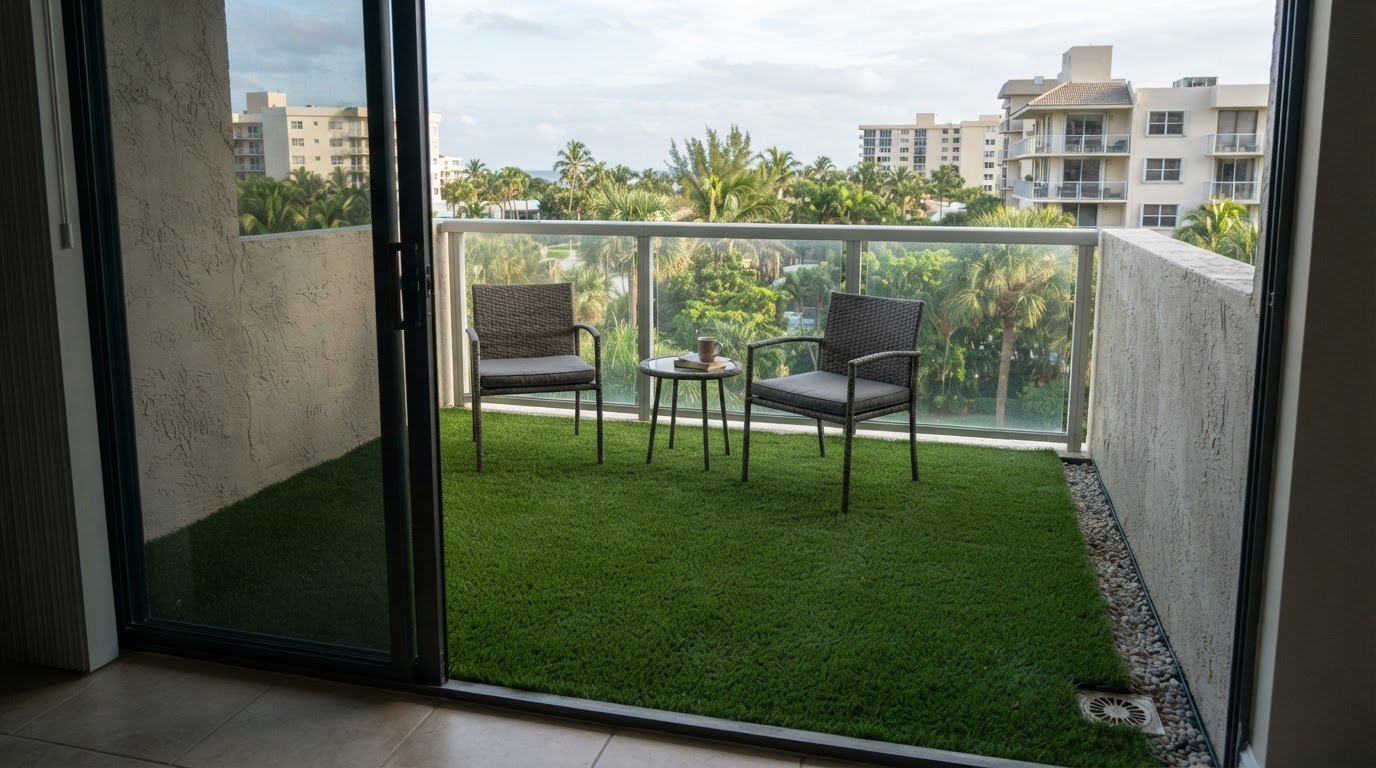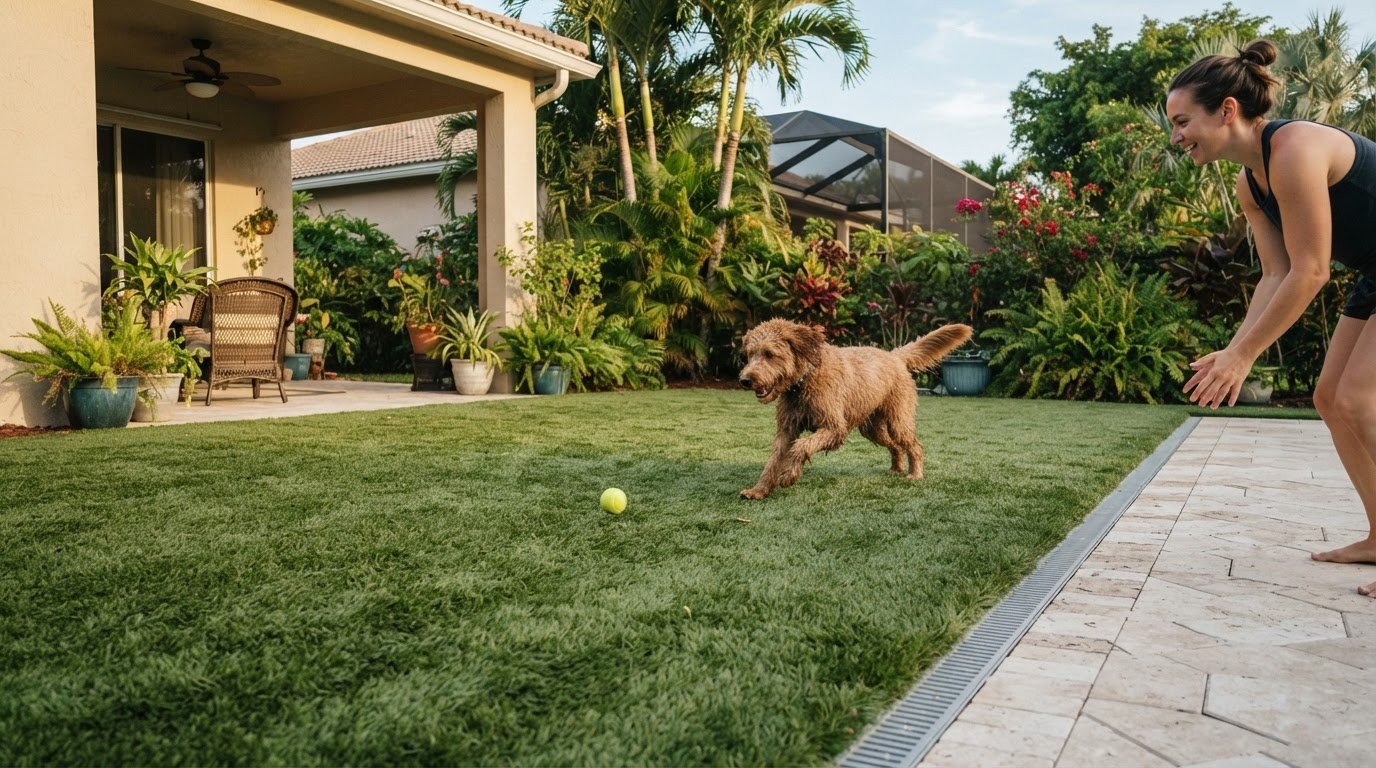
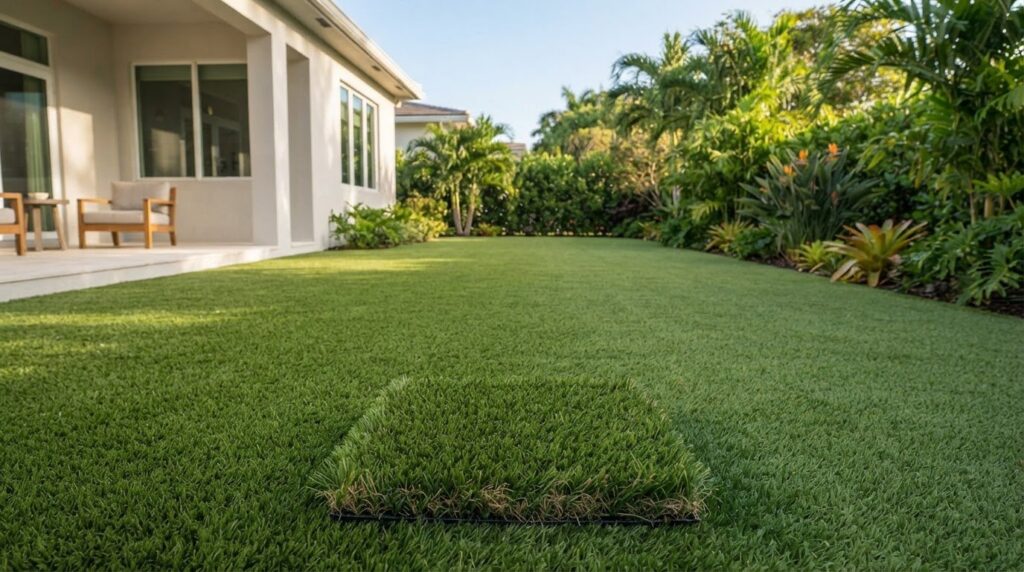
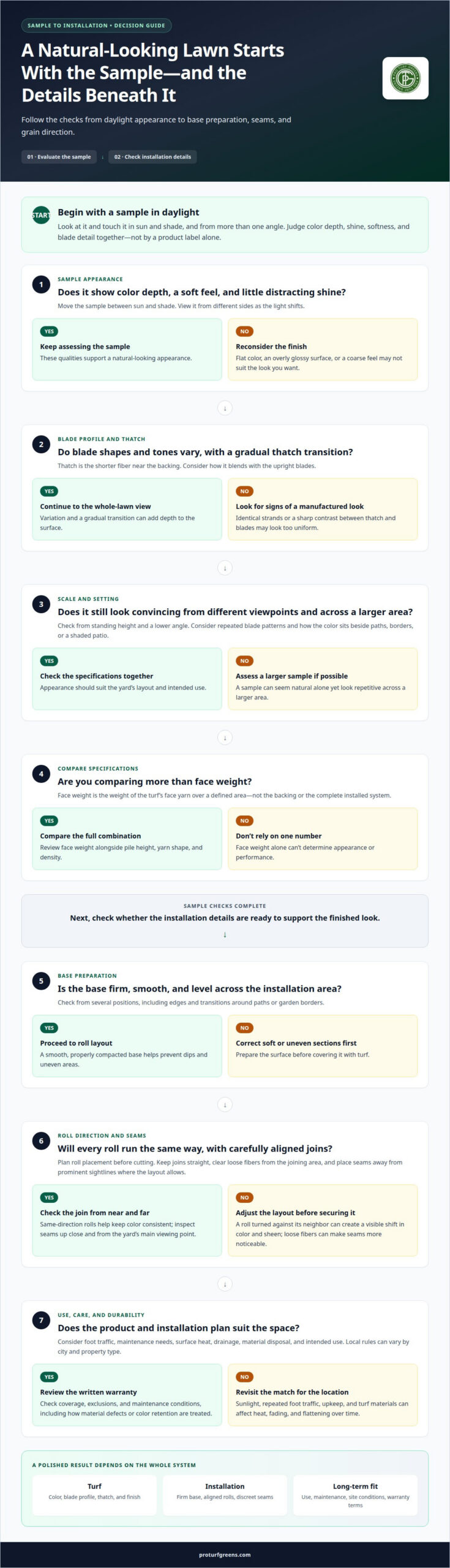
A lush color alone doesn’t make artificial grass look convincing. Artificial turf that looks real has natural-looking color depth, a soft feel, and little distracting shine when you view and touch a sample in daylight. Flat color, an overly glossy surface, or a coarse feel may not suit the look you want.
It’s easy to focus on the turf itself and overlook the details that shape the finished lawn. Seams, consistent grain direction, and a smooth, compacted base all affect how natural and polished the surface looks.
This guide explains how to assess appearance and spot signs of low-quality turf, then walks through installation details, warranty terms, and durability. You’ll know what to look for in a sample and how to evaluate whether the finished lawn is designed for a lasting, natural-looking result.
Key Takeaways
- Compare residential turf by how its pile, color variation, and overall finish appear together, rather than relying on a product label alone.
- Look for careful installation: a smooth, compacted base, aligned roll direction, and discreet seams help create a more consistent lawn.
- Assess samples in daylight and review warranty terms alongside durability factors to judge whether the turf suits your space and use.
- Explore Pro Turf Greens’ backyard putting greens when you want a purpose-designed turf feature as part of your outdoor space.
What Company Makes The Most Realistic Artificial Grass?
No single turf model looks most realistic in every home. Compare specific options by their yarn, color variation, face weight, and finish.
Residential Turf Specifications
Face weight describes the weight of the turf’s face yarn over a defined area, not the backing or the complete installed system. Compare it alongside pile height, yarn shape, and density, since one specification alone can’t determine appearance or performance.
Inspect whether the blades have varied tones and profiles instead of one uniform green shape. Yarn design, color blending, and backing construction all affect how turf looks and performs. Review the model’s specifications and compare samples rather than assuming that a higher face weight means a more natural lawn.
Choosing A Lawn Turf
The best residential turf is the model that suits your preferred appearance, foot traffic, and maintenance needs. Compare it with natural grass in daylight: turf can keep a consistent appearance without mowing, while natural grass changes with growth and upkeep. View and touch samples to assess shine, color depth, and softness.
To maintain a realistic finish, clear leaves and debris, rinse off surface dirt, and brush flattened blades back into position. Local rules can vary by city and property type, so review applicable municipal and community requirements before installation. Consider surface heat, drainage, material disposal, and intended use when evaluating the turf specifications and installation plan.
Installation quality, seams, and grain direction
Choose turf for its intended use, then install it over a smooth, properly compacted base. Lay every roll in the same direction to keep the color consistent across the finished surface.
Installation Quality
A natural-looking result begins beneath the visible blades. A smooth, properly compacted base helps prevent dips and uneven areas that can make a lawn look poorly finished. Prepare the surface so it’s firm and level across the full installation area before laying the turf.
Check the prepared base from several positions, including the edges and transitions around paths or garden borders. Correct any section that feels soft or looks uneven before covering it. For an artificial turf driveway, a consistent base helps the surface meet the surrounding hardscape cleanly.
Careful fitting matters around curves and fixed features, too. Cut the turf to follow the edge rather than leaving irregular gaps or excess material. A neat perimeter gives the lawn a deliberate outline and helps it look integrated with the yard.
Seams and Grain Direction
Where two rolls meet, align their edges carefully and keep the join straight. Loose fibers caught between the edges can make a seam more visible, so clear the joining area before bringing the sections together. Inspect the connection up close and from the yard’s main viewing point.
Run every roll in the same direction. Turf blades lean naturally, and turning one roll against its neighbor can create a noticeable shift in color and sheen. Before securing the layout, check the fiber direction across each section, especially where the lawn changes shape.
Plan roll placement before cutting. Position joins away from prominent sightlines where the layout allows, and avoid small, awkward pieces at visible borders. These steps help maintain a continuous appearance across the lawn. For a project with a defined layout, artificial turf installation planning can help bring base preparation, seams, and roll direction together.
Natural-looking artificial grass
A convincing lawn depends on how turf details work together, not on a single feature. Assess blade shape, color variation, visible thatch, and surface finish as a whole. A sample that looks natural by itself may seem too uniform across a larger area, so consider how repeated blades and colors will appear across the lawn.
Start with the blade profile. Look for variation in shape and tone rather than strands that all appear identical. View the sample from standing height and from a lower angle. A blade that looks detailed up close, for instance, may form a flat, repetitive pattern when viewed from a patio or window.
Check how the thatch, the shorter fibers near the backing, blends with the upright blades. A gradual transition can add depth, while a sharp contrast may make the surface look manufactured. Compare the color balance with nearby features, such as a stone path, garden border, or shaded patio, to see whether the turf suits its setting.
Lighting changes what you notice. Move the sample between sun and shade, then view it from different sides. This shows how the surface finish and blade angles affect its appearance as the light shifts. Turf beside a bright pool deck, for example, may look different from turf beneath a tree canopy.
Artificial turf that looks real should also suit the way you use the space. A neat, even finish may fit a formal garden, while a more varied appearance may better complement a relaxed backyard. Inspect a larger sample when possible and look for repeated patterns before choosing. Matching the appearance to the yard’s layout helps the finished surface feel intentional, not like a separate, uniform panel.
Warranty and long-term durability
Artificial turf can become hot in direct sun, fade with exposure, and flatten under repeated foot traffic. How quickly these changes appear depends on sunlight, use, upkeep, and the turf’s materials.
Read the written warranty before choosing a product. Identify what it covers, such as material defects or color retention, and note any exclusions or maintenance conditions. A warranty may treat manufacturing issues differently from wear caused by regular use, so review the terms rather than relying on the headline coverage period.
Durability also depends on where the turf will go. A shaded side yard and a sunny play area face different conditions, while a high-traffic route receives more repeated pressure than a rarely used corner. Match the turf’s intended application to how people, pets, or equipment will use the space.
To compare products, examine the backing, yarn, and care instructions together. Review how the manufacturer defines fading, flattening, and wear, and keep those details with the product documentation. Clear definitions make warranty comparisons more useful than comparing coverage periods alone.
Heat is affected by direct sun and surrounding surfaces, such as stone or concrete. Shade and rinsing can cool the surface, but turf should not be assumed to stay cool underfoot in strong sunlight. For areas used by children or pets, plan where shade and access to water will be available.
Routine care helps preserve appearance. Remove leaves and debris, rinse away dirt, and brush flattened fibers upright with a suitable brush. Follow the manufacturer’s care guidance, since unsuitable tools or cleaning products may damage the turf or affect warranty coverage.
Keep purchase documents, warranty terms, and maintenance records together. If an issue appears, photograph the affected area and note its location and use. To discuss a turf project with durability in mind, explore artificial turf options.
Pro Turf Greens: Backyard Putting Greens
Pro Turf Greens designs and installs backyard putting greens for homeowners planning a dedicated practice area. When weighing turf appearance against how you’ll use the space, consider how a putting green’s layout and intended play differ from a conventional lawn. The right choice depends on the surface’s purpose, not appearance alone.
For a residential lawn, Pro Turf Greens also offers Lawns & Pet Turf. Consider the area’s main use before settling on a solution: putting practice calls for a different design goal than everyday yard use. Discussing the space and your priorities helps align the turf application with your project.
Contact Pro Turf Greens to discuss your backyard putting green or lawn project.
Shape a Turf Plan Around Your Space
Choosing artificial turf that looks real is ultimately about matching the surface to how you want your property to function. Before moving ahead, picture how you’ll use the space through an ordinary week: for quiet practice, active play, or a clean, usable lawn. That purpose can guide your choices more clearly than appearance alone.
Pro Turf Greens can turn that vision into a project, whether you’re considering a backyard putting green, recreational turf for play, or a tee line or driving range. Think about who will use the space, how it connects to the rest of the property, and the atmosphere you want to create. Those priorities give your project a clear starting point and keep design decisions aligned with everyday use.
When you’re ready to explore the next step, contact Pro Turf Greens about your turf project. A thoughtful plan can turn an outdoor area into a setting that feels suited to your routines and ready for what comes next.
Frequently Asked Questions
How can I tell if artificial grass is low quality?
Inspect the sample’s backing and tufting, not just its surface. Look for uneven rows, visible gaps, or fibers that pull loose when handled gently. Press and release the sample to see whether it keeps its shape. If the color or texture changes sharply across one piece, compare another sample before deciding. These checks can reveal flaws that a small product photo may hide.
What Makes Artificial Grass Look Real?
Artificial turf that looks real fits the visual character of the surrounding yard instead of appearing like a separate, uniform mat. Consider how its tone and texture relate to nearby paving, planting, and outdoor furniture. A highly uniform green, for example, can stand out beside a varied garden, even if the sample looked convincing alone. Evaluate the whole setting, not just the individual fibers.
What features make artificial turf look realistic?
Realism comes from the combined effect of blade profiles, subtle color variation, and the shorter fibers around the base. Consider how these details appear across a broad area, not just on a single swatch. A repeating pattern can become obvious across a long lawn or around a patio. Compare the turf with the property’s existing landscape before choosing a visual style.
Which artificial grass brands have the most realistic appearance?
No single brand is the best choice for every property, and a brand name alone can’t establish realism. Compare specific models by their documented materials, appearance, and warranty terms. For projects in Fort Lauderdale, Miami, Palm Beach, Boca Raton, Delray Beach, Jupiter, Palm Beach Gardens, Weston, or Coral Gables, judge samples in the setting where they’ll be installed. Choose a style that works with the home and landscape, not just the label.
How do pile height, blade shape, color, and thatch affect realism?
These features shape the lawn together. Pile height affects its overall profile, while blade shape influences how individual strands look up close. Color variation adds visual depth, and thatch can soften the transition between blades and backing. Compare samples side by side in the same setting to see which combination looks balanced both up close and across the yard.