In Weston, residential turf installation starts with matching the surface and base to how you’ll use the lawn, its drainage needs, and South Florida’s weather. Artificial turf eliminates routine watering, mowing, and fertilizing, while pet areas need particular attention to drainage and cleanup.
A lawn that looks polished year-round is appealing, but performance also depends on how the installation handles sun, rain, foot traffic, and pets. Start with the ground you have and how your household plans to use the space.
This guide explains which surfaces suit residential turf, how installation works on different ground conditions, and what Weston’s climate means for long-term performance. You’ll also learn which project factors shape the design, so you can understand the decisions behind a lawn built for your home and pets.
Key Takeaways
- Match turf to how your household uses the yard, with pet areas designed around drainage and easy cleanup.
- Assess the existing ground before installation; surface condition and preparation shape how the turf system is built.
- Plan for South Florida’s sun and rain by considering drainage, exposure, and expected foot traffic.
- Compare project scope, site preparation, and intended use to understand what influences the overall installation cost.
Residential lawn and pet turf applications
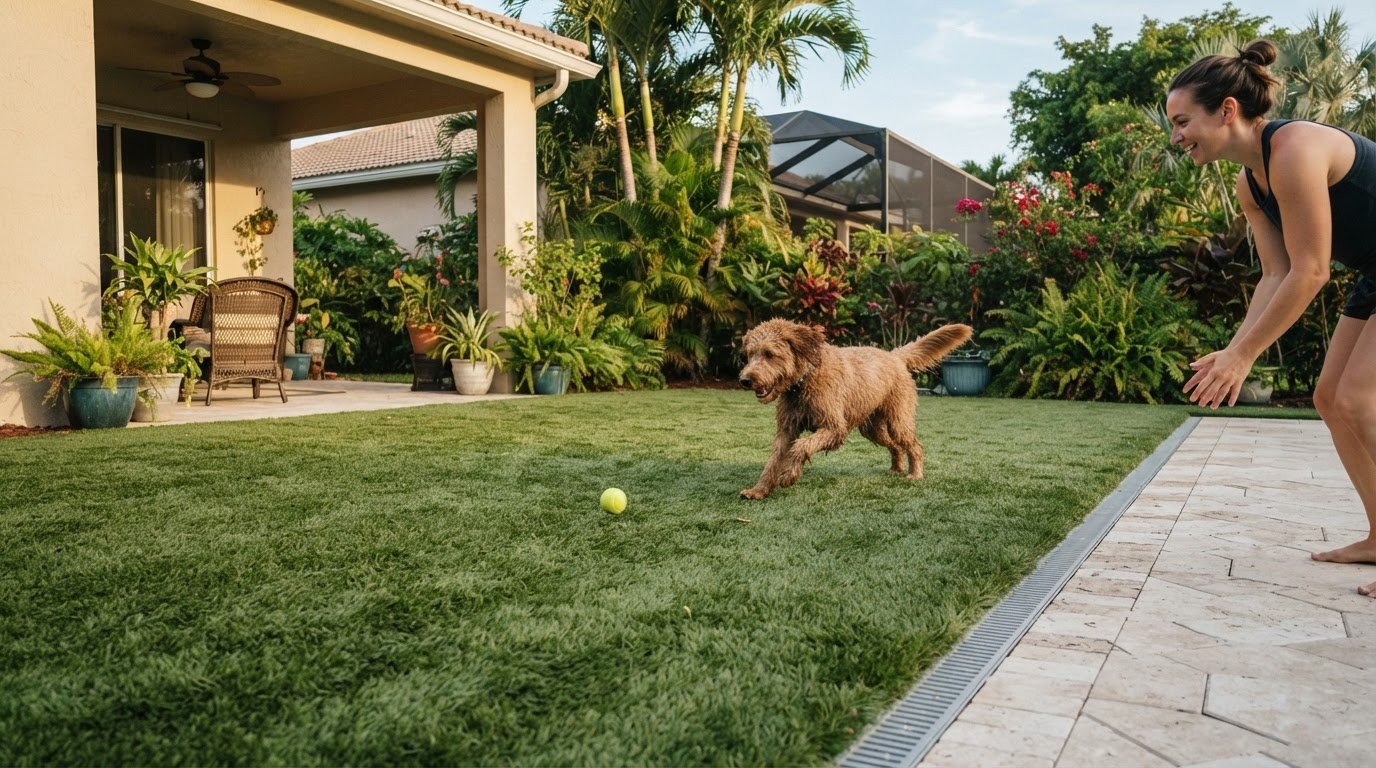
Residential turf can cover a full lawn or define specific zones for pets, play, and outdoor activities. The right layout depends on how each area will function and the care it needs.
Reduced Watering and Fertilizer Use
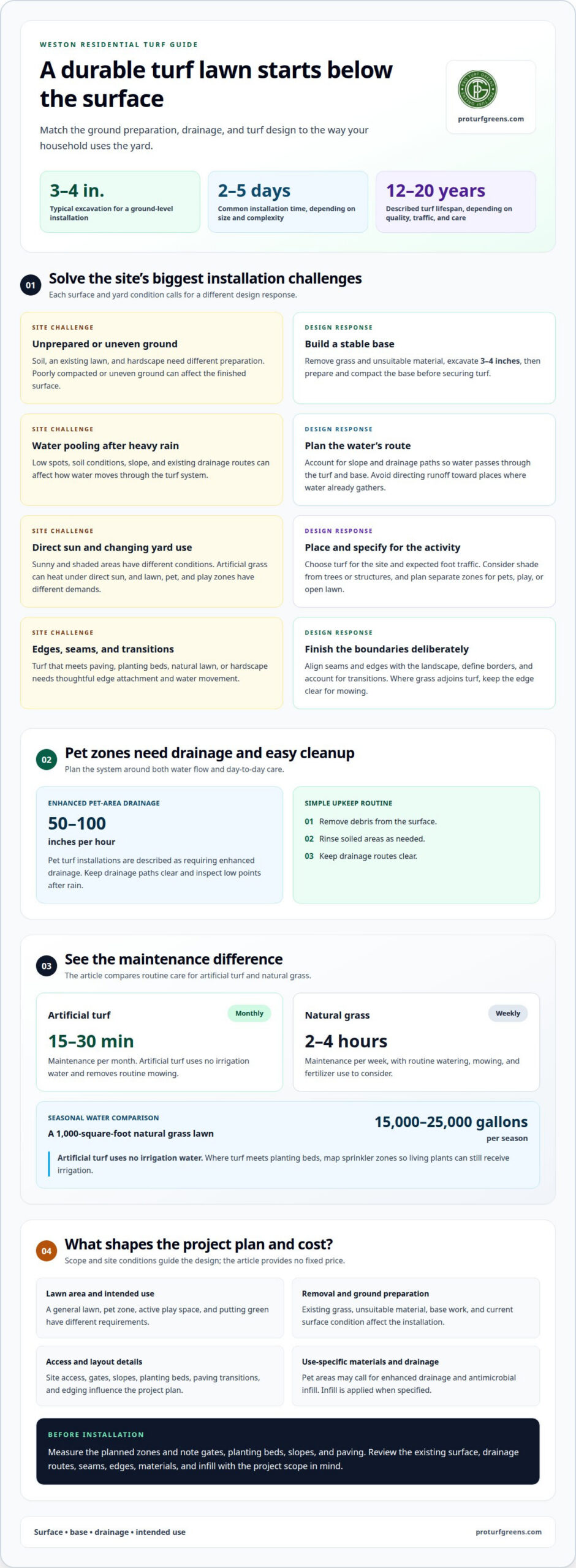
A 1,000-square-foot natural grass lawn uses 15,000-25,000 gallons of water per season; artificial turf uses none for irrigation. Replacing grass also removes routine mowing and reduces fertilizer and other lawn-care products. Map sprinkler zones before planning the project, especially where turf meets planting beds. That boundary helps preserve irrigation for living plants without watering the artificial surface.
Backyard Lawn Projects
Backyard turf can define a pet run, play zone, or open lawn without replacing the entire landscape. Measure the areas you have in mind and note gates, planting beds, slopes, and paving transitions, since these details affect the layout and preparation. Permit and HOA approvals depend on the project and property rules, so treat municipal review and community covenants as separate planning considerations.
Turf Choices for Lawns, Pets, and Play
For South Florida lawns, choose turf based on appearance and foot traffic; pet areas need drainage and practical cleanup, while play spaces should suit active use. Pet turf installations are described as requiring enhanced drainage of 50-100 inches per hour. For maintenance, remove debris, rinse soiled areas, and keep drainage paths clear. Artificial turf needs 15-30 minutes of maintenance monthly, compared with 2-4 hours weekly for natural grass.
Residential Installation Cost Factors
Installation cost varies with lawn area, removal and ground preparation, site access, edging, and intended use. Pet areas may need enhanced drainage and antimicrobial infill, adding design considerations. A putting green also has different performance needs from a general backyard lawn. The price depends on the project and is provided after a quote request; site preparation and intended use are key factors.
Artificial turf can suit residential yards, commercial landscapes, pet areas, and high-traffic spaces. For a home, that flexibility can help define separate zones for shared outdoor use.
Artificial turf can reduce the resources needed to maintain a natural lawn by eliminating routine watering and reducing the need for fertilizers and other lawn-care products. Consider these effects alongside how each area will be used.
Synthetic turf installation surfaces
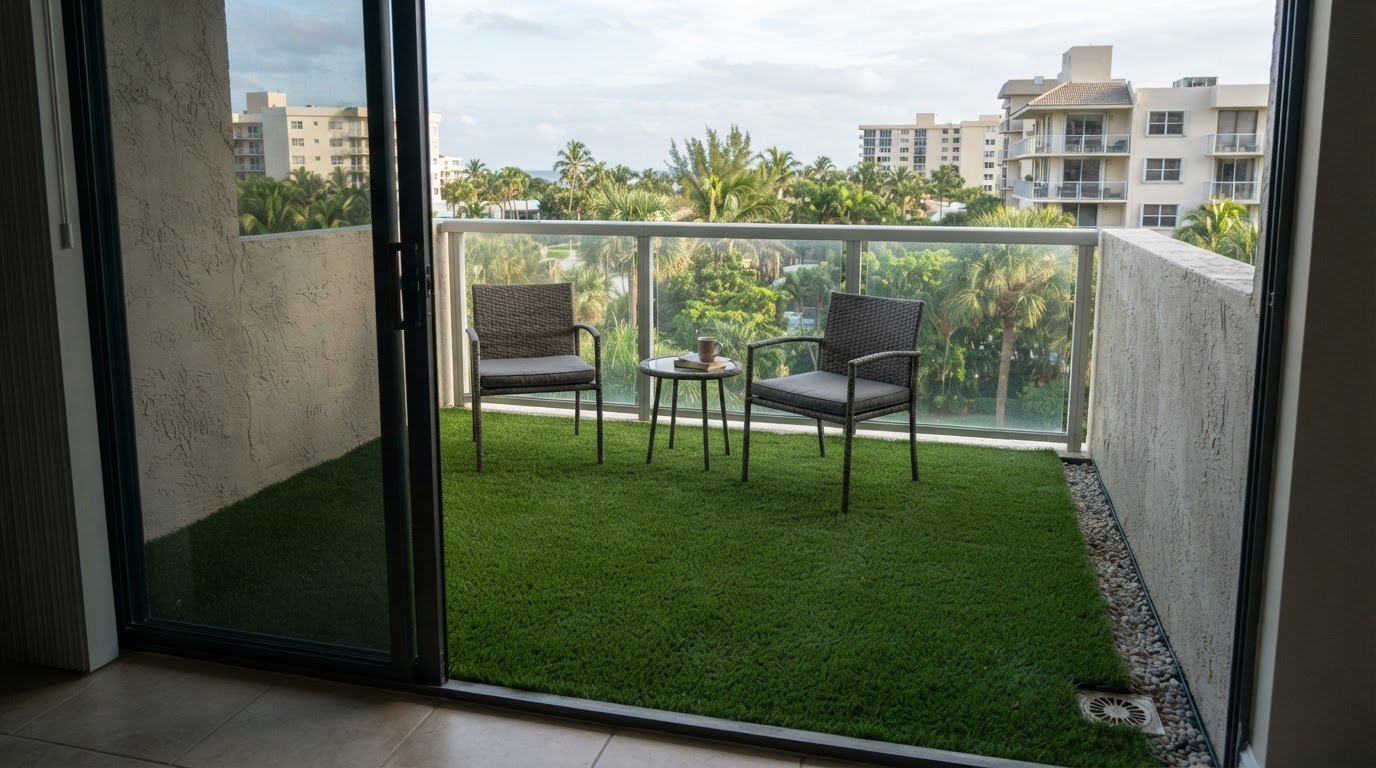
Artificial grass installation starts with the ground beneath the surface. Soil, an existing lawn, and hardscape each require different preparation, so identify the current surface and intended use before planning the work.
A typical ground-level installation involves these steps:
- Remove existing grass and unsuitable material, then excavate 3-4 inches.
- Prepare and compact the base to create a stable foundation.
- Fit and secure the turf, aligning seams and edges with the landscape.
- Apply infill when specified, then brush the fibers and inspect the finished area.
Base preparation matters because uneven or poorly compacted ground can affect the finished surface. Over existing hardscape, the design must account for transitions, edge attachment, and water movement. These details also matter where turf meets paving, planting beds, or a backyard green.
Installation commonly takes 2-5 days, depending on project size and complexity. Artificial turf is described as lasting 12-20 years, depending on product quality, traffic levels, and maintenance.
When planning residential turf installation in Weston, consider how the site will be prepared, how seams and edges will be finished, and how the design will manage drainage. Discuss the materials and infill planned for the project, along with how the surface will suit your yard’s use, such as pets, play, or golf practice. Comparing the project scope and design priorities helps clarify which plan fits your property.
For homeowners planning a dedicated practice area, explore backyard putting greens as one possible application of synthetic turf.
South Florida climate and turf performance
South Florida’s sun, heat, and heavy rain all influence how artificial grass performs on a Weston property. Modern artificial turf is designed to withstand prolonged sun exposure, changing weather, and heavy foot traffic, but the installation still needs a base that moves water away from the surface.
Drainage matters especially after intense rain. Water should pass through the turf and base rather than collect in low spots; slope, soil, and existing drainage routes all affect the flow. After a storm, look for standing water, slow-drying areas, or debris blocking drainage. These signs can point to parts of the landscape that need attention.
Sun exposure also shapes how you use the yard. A sunny play area and a shaded side yard have different conditions, so plan around where people and pets spend time. Artificial grass can heat under direct sun, so consider shade from existing trees or structures when choosing a location. Choose turf to suit the site rather than simply selecting the greenest sample.
When planning artificial grass installation, consider where turf meets natural lawn, pavers, and planting beds. Keep edges defined so a mower can trim adjoining grass without catching turf fibers. Plan runoff toward suitable drainage areas, rather than directing it where water already gathers.
Seasonal care focuses on inspection rather than intensive lawn routines. Remove leaves and other debris, check seams and edges, and rinse areas that need cleaning. After a rainy stretch, for example, clear compacted debris and inspect low points before the next storm. These steps help maintain the surface and keep water flow visible. In Weston, drainage planning and sun exposure deserve as much attention as appearance.
What factors affect the cost of residential turf installation in Weston?
The scope of a residential turf project depends on its area, site conditions, material selection, and intended use. When discussing the project, consider turf and installation alongside preparation, edging, drainage, and design features. A straightforward lawn and a pet area with drainage needs, for example, call for different plans.
Start by measuring the area and identifying what needs removal. Existing grass, uneven ground, narrow access, and intricate edges can require more preparation. A yard with several planting beds or curved borders takes more careful cutting and finishing than an open rectangle. These site details affect both the work and the amount of material needed.
- Area and layout: Larger spaces need more turf, while curves and separate zones create more cuts and seams.
- Ground preparation: Existing surface condition determines removal, leveling, and base work.
- Drainage: Pet areas may call for enhanced drainage and antimicrobial infill.
- Use and finish: A lawn, play area, and putting green have distinct performance and design requirements.
Material choice also influences the project. Turf intended for frequent activity may differ from a decorative landscape surface, and infill selection can depend on how the space will be used. For pet areas, enhanced drainage and antimicrobial infill add project components. The layout, surface, and drainage plan together determine the installation scope.
The price depends on the project and is provided after a quote request. To prepare, note the intended use, approximate area, existing surface, and any drainage concerns. Those details help define the work involved before choosing a design. Weston homeowners planning a lawn or pet area can request a project quote from Pro Turf Greens based on their property’s needs.
Pet-specific requirements like antimicrobial infill and specialized drainage add to the overall investment for animal-friendly spaces. Include this added cost when considering a pet-area installation, and check that the quote clearly reflects those components. This makes it easier to compare a pet-focused plan with a simpler lawn scope, while keeping the material and drainage choices aligned with the intended use.
Before requesting an estimate, identify whether enhanced drainage and antimicrobial infill are desired, so the proposed work can be considered alongside the rest of the preparation and layout.
Pro Turf Greens: Backyard Putting Greens
Pro Turf Greens designs and installs artificial turf for Weston homeowners, from backyard putting greens to lawns and pet turf. Turn to the team when you’re ready to plan a surface for golf practice, pets, or recreation. Offerings include Backyard Putting Greens, Lawns & Pet Turf, Playgrounds & Recreational Turf, and Tee Lines & Driving Ranges.
For a putting green, consider how the practice area should fit the yard and connect with surrounding landscape features. For a household lawn or pet area, plan around daily use and the surface’s role outdoors. These priorities help the design feel integrated with your property.
Contact Pro Turf Greens to discuss your project, or visit proturfgreens.com.
Shape an Outdoor Space Around Your Next Chapter
A useful next step is to decide what you want your yard to make possible: a place to unwind, a space for children’s recreation, or a dedicated setting for golf practice. That priority can guide the layout and keep the project focused on how your household uses the space.
For residential turf installation in Weston, consider how the new surface will connect with your home, planting beds, walkways, and everyday routes through the yard. Pro Turf Greens also designs and installs Playgrounds & Recreational Turf and Tee Lines & Driving Ranges for different outdoor goals.
Bring your intended use and a sense of the space you want to transform into your next planning conversation. Contact Pro Turf Greens about your project and take the next step toward a yard designed around your lifestyle.
Frequently Asked Questions
Which artificial turf installers serve residential customers in Weston, Florida?
Pro Turf Greens serves homeowners in Weston with artificial turf solutions, including lawns and pet turf. Its South Florida service area also includes Fort Lauderdale, Miami, Palm Beach, Boca Raton, Delray Beach, Jupiter, Palm Beach Gardens, and Coral Gables. Before planning a Weston project, identify whether your priority is a household lawn, pet use, or another outdoor application, and describe how you want to use the space.
How does artificial turf compare with natural grass in Weston’s climate?
Artificial turf is a manufactured surface, while natural grass is living ground cover that grows and changes with conditions. That difference affects how each fits a Weston landscape: natural grass may suit planting areas where living vegetation matters, while turf can define a distinct, consistently designed zone. Consider the balance of lawn, planting beds, and outdoor living areas before deciding whether to replace all the grass or only part of it.
What are common problems and risks with artificial turf in hot, rainy South Florida?
In South Florida, water flow is a key installation consideration: rain can reveal low spots where water collects rather than drains away. Debris can also obscure seams and edges, making regular inspection useful. After a heavy shower, look for pooled water and clear leaves from drainage paths. In sunny areas, consider shade and intended use when choosing where people and pets will spend time.