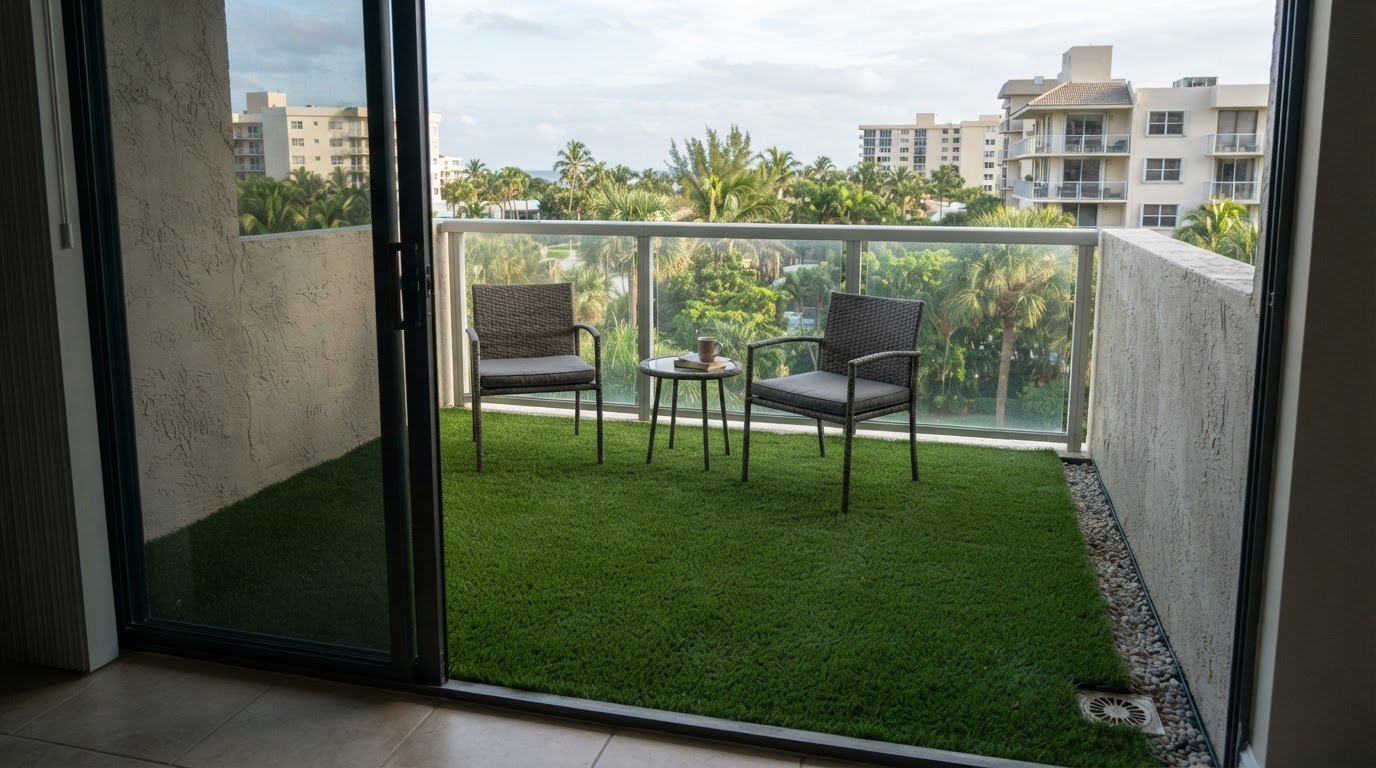
Fake grass for a Delray Beach balcony can create a softer, greener-looking surface without watering or mowing. Many Palm Beach County HOAs allow artificial grass when it meets community standards, so approval depends on your association’s rules and the proposed design.
A balcony installation needs to suit the space and its intended use. Consider drainage, secure edges, and day-to-day upkeep before work begins. If children or pets will use the area, these practical details matter as much as appearance.
This guide compares turf options for balconies and other applications, explains what to consider before installation, and covers HOA approval and family safety. You’ll also see how a clear design plan and product information can help you assess whether artificial turf is a suitable fit for your home.
Key Takeaways
- Match the turf type to how you’ll use the space, whether you want a balcony refresh, a play area, or a putting surface.
- Prepare a clear design plan and product details to support an HOA review, and account for any community standards.
- For family-friendly use, consider surface feel, routine cleaning, and how the area will be used by children and pets.
- Plan for water to drain away from the balcony rather than collect beneath the turf, with the existing surface and drainage in mind.
Artificial turf products for different applications
The right artificial turf depends on the surface and how you plan to use it. For fake grass on a Delray Beach balcony, consider drainage, intended use, and how the turf will stay in place.
Rooftop, Deck, and Balcony Turf
On rooftops, decks, and balconies, turf adds a softer, green finish to a hard surface. Compare samples for appearance and feel, then consider the surface beneath them and where rainwater flows. Measure around doors, drains, and built-in features before planning the layout. Keep drains accessible and avoid raised edges across doorways.
Pet-Friendly Balcony Grass
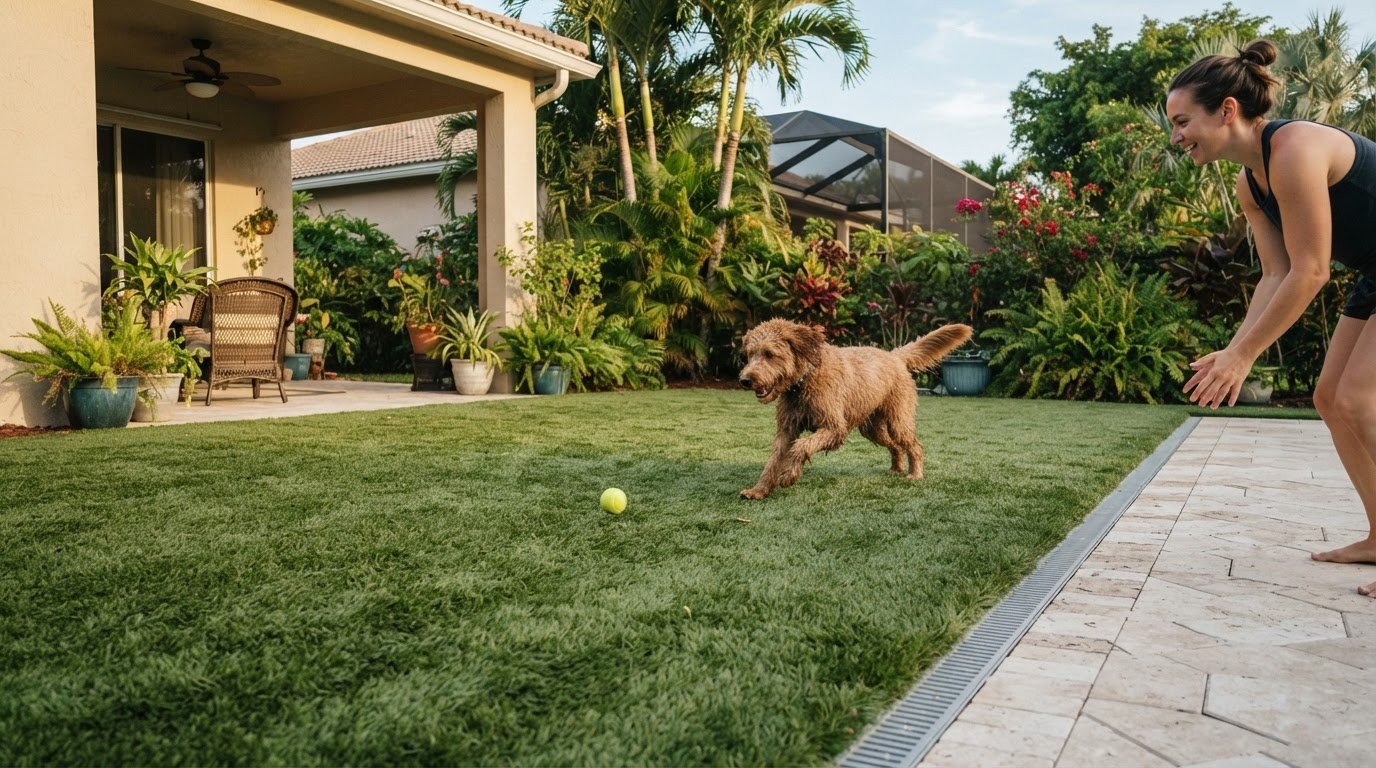
For pet areas, consider how easily you can pick up solid waste, rinse the surface, and manage drainage. Some pet-friendly artificial grass has high-flow drainage to help water pass through. On a balcony, check where runoff will go and whether the entire surface is easy to reach for cleaning. These details matter for everyday use, not just appearance.
For patios and pool surroundings, artificial grass can provide a neat surface under barefoot traffic and stand up to salt or chlorinated water. Walkways need a layout with secure edges and clear access. For larger landscape areas, synthetic turf avoids mowing and watering, while turf driveways suit a different use: vehicle access.
Delray Beach homeowners should also distinguish lawn irrigation rules from turf upkeep. The South Florida Water Management District restricts lawn watering in Delray Beach to three days a week all year, between 7 p.m. and 7 a.m. Artificial grass doesn’t need watering or mowing, so it can reduce those routine lawn tasks.
For a clean fit, measure the area, dry-fit each piece, and keep seams away from prominent sightlines. Lay the turf evenly to reduce ripples, then secure its perimeter with a method suited to the surface. Don’t drill or fasten through balcony waterproofing without accounting for the membrane. Keep drainage paths open and check door clearance before finishing the edges.
Will my Delray Beach HOA or historic district approve artificial turf?
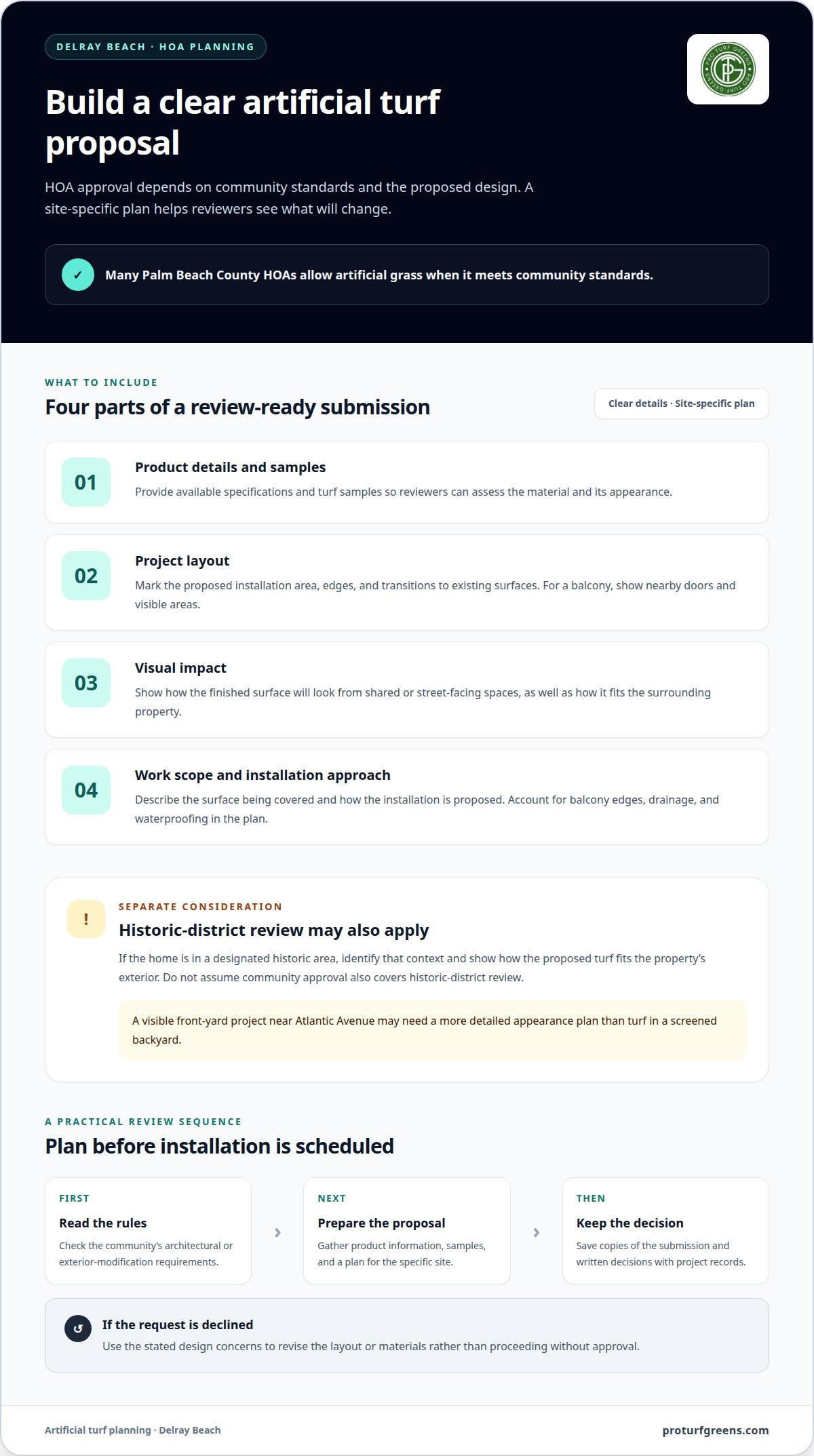
Approval depends on the community’s standards and the project’s appearance. Many HOAs in Palm Beach County allow artificial grass when it meets those standards. Product specifications, samples, and a clean design plan can help reviewers assess synthetic grass before turf installation begins.
Prepare a concise submission that shows exactly what will change. Include the proposed area, turf samples, product details, and a layout of the finished surface. A balcony plan can show edges, nearby doors, and visible areas; a backyard plan can identify where putting greens or lawn sections will sit. Clear drawings make the proposal easier to assess.
- Product details: Include available specifications and samples so reviewers can assess the material’s appearance.
- Project layout: Mark the installation area, edges, and transitions to existing surfaces.
- Visual impact: Show how the durable synthetic grass will look from shared or street-facing spaces.
- Work scope: Describe the surface being covered and the proposed installation approach.
Historic-district considerations may require separate attention. If your home is in a designated area, identify that context in your submission and show how the proposed surface fits the property’s exterior. A visible front-yard project near Atlantic Avenue, for example, may call for a more detailed appearance plan than turf in a screened backyard. Don’t assume community approval also covers historic-district review.
Start by reading your community’s architectural or exterior-modification rules. Then prepare product information, samples, and a site-specific plan before scheduling installation in Delray Beach. Keep copies of your submission and written decisions with your project records. If your request is declined, use the stated design concerns to revise the layout or materials rather than proceeding without approval.
For projects centered on a backyard putting green, explore backyard putting green turf as one application to include in your planning. A clear proposal helps connect the selected turf, its placement, and the community’s visual standards.
Safety for children and families
For a balcony or outdoor play area, consider the finished surface as part of the whole space. Synthetic turf changes the feel underfoot, but it doesn’t replace supervision, safe balcony barriers, or clear access to doors and drains. Before children use the area, walk the full surface and look for lifted edges, loose seams, or objects that could create trip hazards.
Artificial grass doesn’t need weed killers, fertilizers, pesticides, or insecticides as part of routine lawn care. That can simplify upkeep for South Florida households comparing synthetic turf with natural grass. Products can differ in materials and performance, so review product details and samples when selecting a surface for children.
- Check the edges: Press along seams and perimeter transitions, especially beside a doorway or balcony threshold.
- Keep routes open: Leave a clear path between the play area, the door, and any drainage point.
- Plan cleaning: Remove leaves and debris, and rinse the surface when needed to keep the outdoor area tidy.
- Match the use: A spot for putting practice has different needs than a play space where children sit or crawl.
For turf in Delray, drainage and upkeep also affect everyday family use. Pet-friendly grass can allow solids to be picked up and the surface rinsed, while high-flow drainage helps water move through. Keep cleaning supplies accessible, and avoid leaving toys or furniture where they obstruct drainage or create uneven transitions.
Before installation, inspect the balcony surface and note where water exits. After placing the turf, check that edges lie flat and drains remain accessible. In a backyard, make the same checks around play zones, walkways, and putting areas. These steps help you assess how the surface fits your routine rather than assuming turf alone makes a space safe.
What drainage and waterproofing does balcony artificial grass need?
Balcony turf should let rain pass through while keeping existing drains accessible. Engineered turf backings and a properly graded base help move water off the surface after typical downpours. The balcony’s waterproofing remains important: turf manages surface water, but it shouldn’t be treated as a replacement waterproofing layer.
Before installation, inspect the balcony floor and locate its drains, slope, door thresholds, and any areas where water collects. Clear debris from drainage openings and plan the turf layout so they remain uncovered. If the floor slopes toward a drain, preserve that route rather than blocking it with tight edges or stored items.
- Map the flow: Note where rain enters, travels, and exits the balcony.
- Protect access: Keep drain covers reachable for inspection and cleaning.
- Plan the fit: Measure around thresholds and fixed features, leaving drainage paths unobstructed.
- Review the base: Use a properly graded base where the installation design calls for one.
Check the waterproofing before covering the floor. Look for visible damage, peeling material, or areas that stay wet after rain. Turf can make the surface below harder to see, so address drainage problems before laying it. Avoid puncturing the balcony membrane to fasten turf; choose an approach that secures the edges without compromising the waterproofing.
For pet areas, drainage affects cleanup as well as rainwater flow. Pet-friendly artificial grass can make solid waste easier to pick up and allow the surface to be rinsed. Plan where rinse water will go, and keep the outlet clear of leaves and debris. After installation, run water across the turf and check whether it reaches the drain without pooling.
For a separate ground-level application, explore artificial turf driveway solutions and consider how surface drainage is planned for that setting.
Pro Turf Greens: Backyard Putting Greens
Pro Turf Greens designs and installs backyard putting greens for homeowners planning a dedicated practice area. A putting green is a different project from balcony turf: it is designed around the available yard space and how you want to practice. Defining the intended use and layout helps shape a surface that fits the outdoor setting.
For other family-focused spaces, Pro Turf Greens also offers Playgrounds & Recreational Turf and Lawns & Pet Turf. Tee Lines & Driving Ranges suit projects designed for golf practice beyond a putting green. Choose an application based on how your household plans to use the space.
If your project is a backyard putting green or another listed turf application, contact Pro Turf Greens to discuss your plans.
Plan a Turf Project That Fits Your Space
Choosing fake grass for a Delray Beach balcony starts with a clear picture of how you want the space to work. Consider your daily routine, preferred appearance, and how the finished surface should connect with the rest of your home. A thoughtful plan can make a small outdoor area a more inviting extension of your living space.
For projects beyond a balcony, Pro Turf Greens offers Backyard Putting Greens, Playgrounds & Recreational Turf, and Tee Lines & Driving Ranges. Each application serves a distinct purpose, from creating a place to practise putting to shaping a dedicated recreational area. Share your goals to focus the conversation on an appropriate turf application and layout.
Whether you’re planning a balcony refresh or considering a larger outdoor project, take the next step at your pace. Contact Pro Turf Greens to discuss your project and start shaping a space that feels right for your home.
Frequently Asked Questions
Need Artificial Grass Installed?
Yes, professional artificial turf installation is available for the applications Pro Turf Greens provides. The company designs and installs projects such as residential lawns, pet turf, playground surfaces, and putting greens. For a home project, first define the surface and how you’ll use it. A balcony has different drainage and attachment needs from a yard, so the installation approach should suit that setting.
Is Synthetic Grass Safe for Kids and Families?
Choose a turf application that fits how people will use the space. Pro Turf Greens offers Playgrounds & Recreational Turf for recreational areas, rather than treating every turf surface as a playground product. Consider children’s activities, access routes, and the surrounding space when choosing an application. Artificial turf also avoids the need for lawn-care chemicals such as fertilizers and pesticides.
How Fast Is Installation and When Can the Lawn Be Enjoyed?
Most residential artificial turf installations take one to three days. A balcony’s schedule depends on the project scope and preparation, while a larger lawn involves a different work area. Plan to enjoy the surface after installation is complete and the work area is ready for normal use. For example, consider how installers will access the balcony and move materials before scheduling the work.
What Maintenance Does an Artificial Turf Lawn Need?
Artificial turf can be maintained with occasional rinsing, leaf blowing, and light brushing in high-traffic areas. Clear leaves before rinsing, then brush flattened fibers in walkways to refresh their appearance. Pet areas may need more frequent rinsing after use. Keeping drains and edges clear also makes routine care easier and helps prevent debris from collecting around the turf.
Where Can I Buy Artificial Turf for a Balcony Near Delray Beach, Florida?
For fake grass on a Delray Beach balcony, first identify the surface and intended use, then consider suitable turf applications. Pro Turf Greens serves Delray Beach and communities including Fort Lauderdale, Miami, Palm Beach, Boca Raton, Jupiter, Palm Beach Gardens, Weston, and Coral Gables. Its offerings include Lawns & Pet Turf and recreational turf for nearby yard projects.
What Is the Average Price of Balcony Artificial Grass per Square Foot in Delray Beach?
Project cost depends on the balcony dimensions, existing surface, preparation, turf selection, edge finishing, and drainage requirements. These details shape the scope of work, so a per-square-foot figure alone may not reflect the complete project. Share the balcony’s measurements and surface details when requesting a quote.