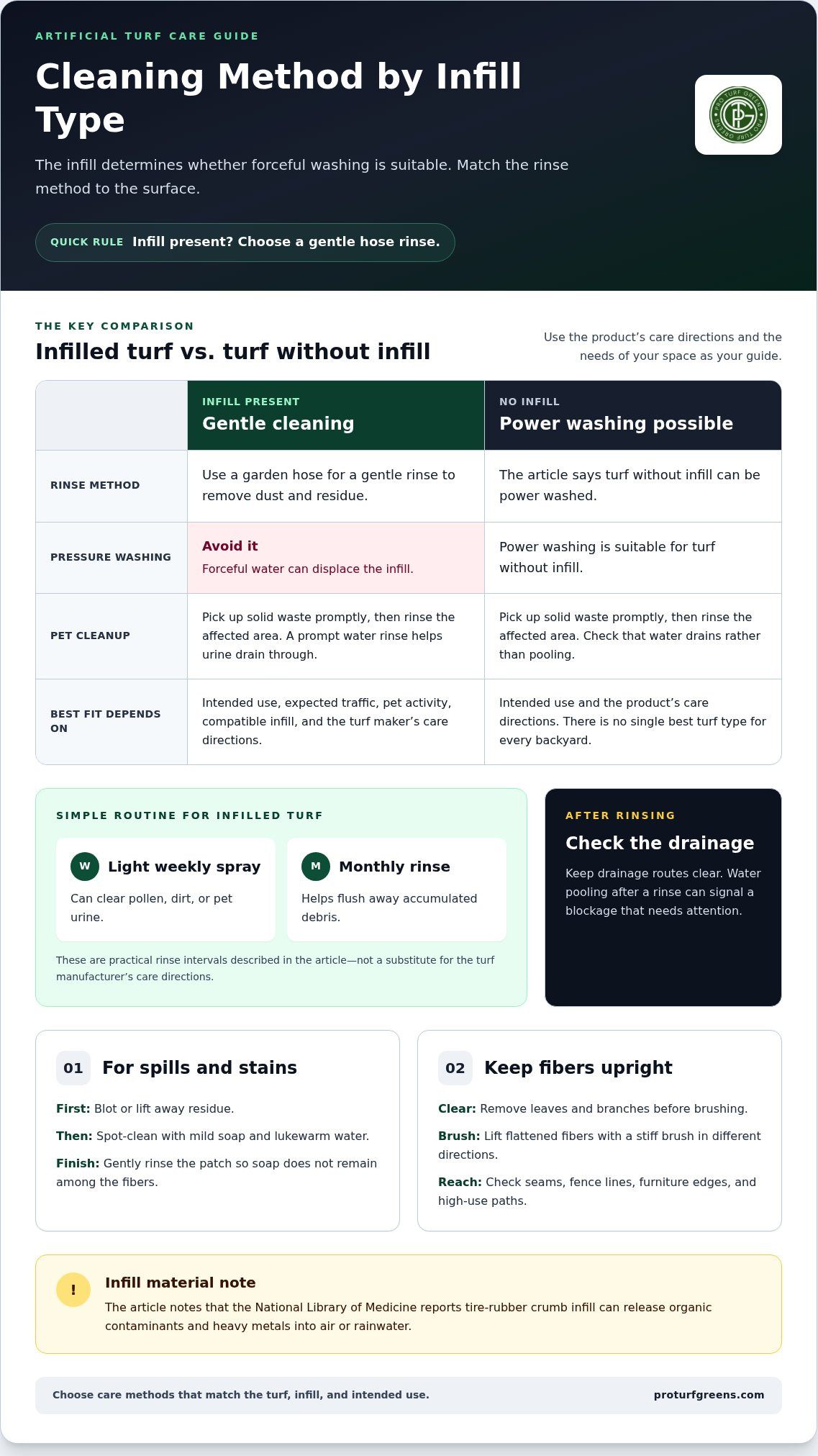
The easiest-care turf is not always the kind you can blast clean. For a low-maintenance artificial grass backyard, whether power washing is suitable depends on the infill: turf without infill can be power washed, while pressure washing infilled turf can wash the material away. A gentle hose rinse is a better routine option for infilled turf.
It is understandable to want a backyard that stays neat without constant watering, mowing, or complicated upkeep. Artificial grass still benefits from simple care, such as clearing debris, rinsing when needed, and brushing flattened fibers back into place.
This guide explains how infill affects cleaning, what to consider for play areas and gardens, and how to make compact backyard layouts feel purposeful. You will also find practical ways to keep turf tidy and plan an inviting outdoor space around the way you use it.
Key Takeaways
- Match infill and cleaning methods to the turf: use a gentle hose rinse for infilled grass, and avoid pressure washing that could displace the infill.
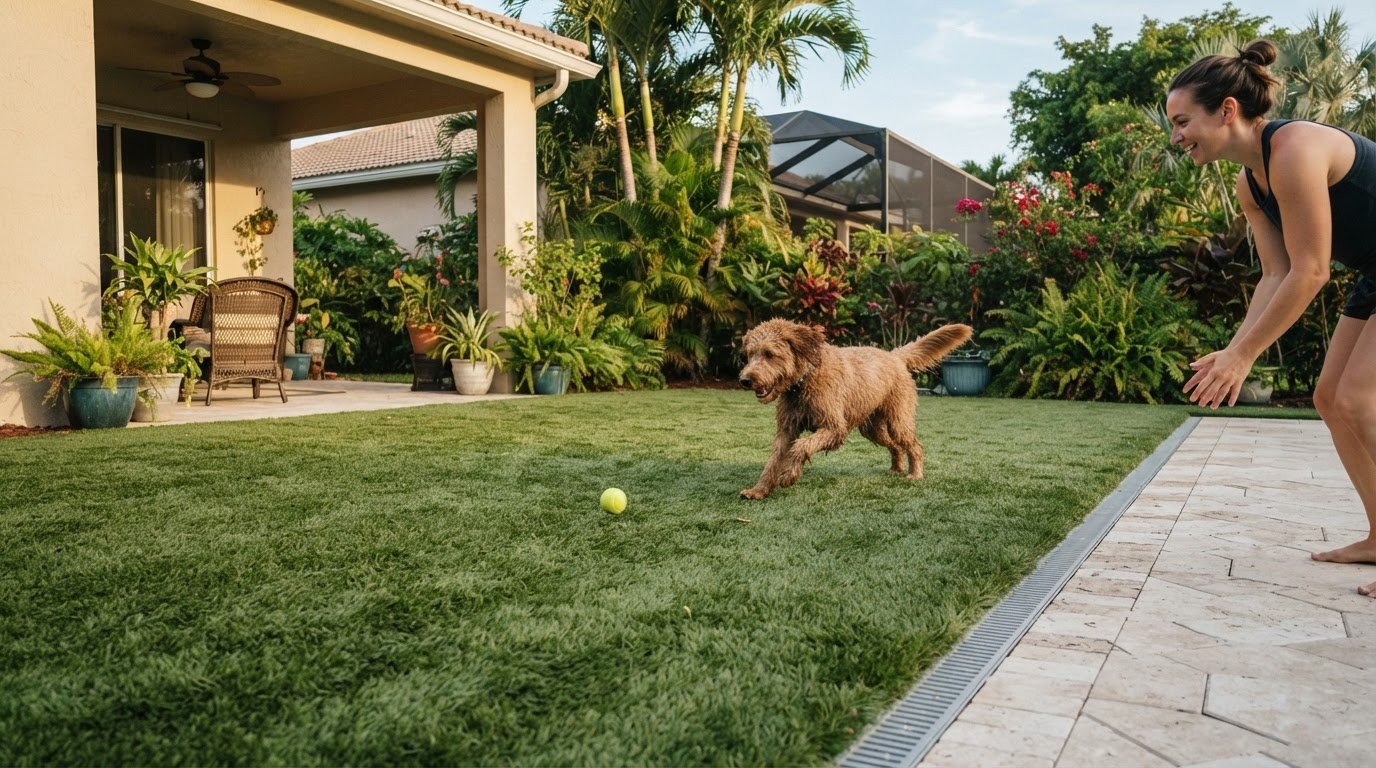
- For pet areas, pick up solid waste promptly and rinse urine to help keep the surface fresh.
- Plan play and garden zones around how you’ll use the yard, combining turf with planting beds, paths, or contrasting materials.
- Clear leaves and other debris, then brush flattened fibers in different directions to help keep the grass upright and neat.
1. Which Infill Should You Choose for Landscape Turf?
Choose infill and synthetic turf according to how you will use your outdoor space. A garden seating area has different demands from a children’s play zone or a pet run. Check the turf manufacturer’s care directions and choose compatible infill suited to expected traffic and cleaning. For example, pet areas need a plan for frequent rinsing and waste removal.
For a low-maintenance setup, choose landscape turf designed for its intended use, with compatible infill. There is no single best type for every backyard: use, pet activity, and product care requirements guide the choice. To help prevent weeds, remove existing vegetation before installation and use a weed barrier beneath a prepared, permeable base. Keep drainage routes clear so water can move away from the surface.
Pet cleanup is straightforward: pick up solid waste, then rinse the affected area. A prompt water rinse helps urine drain through the turf and keeps the surface fresher. For a pet run, include this task in your regular outdoor cleanup rather than waiting for visible odor. Drainage matters too, so check that water does not pool after rinsing.
Use a garden hose for gentle rinsing. Artificial grass does not need regular watering to stay green, but water helps remove dust and residue. A light weekly spray can clear pollen, dirt, or pet urine, and a monthly rinse helps flush away accumulated debris. Avoid pressure washing infilled turf because forceful water can displace the infill.
For spills and stains, blot or lift away residue first, then spot-clean with mild soap and lukewarm water. Gently rinse the treated patch so soap does not remain among the fibers. This works for everyday messes, such as a drink spill near patio seating. The National Library of Medicine notes that tire-rubber crumb infill can release organic contaminants and heavy metals into air or rainwater.
Routine care also includes brushing flattened fibers with a stiff brush in different directions. Clear leaves and branches first so debris does not get caught in the blades. Occasional maintenance supports the appearance and lifespan of an artificial grass installation, helping the lawn remain ready for everyday use.
2. Artificial grass for play areas and gardens
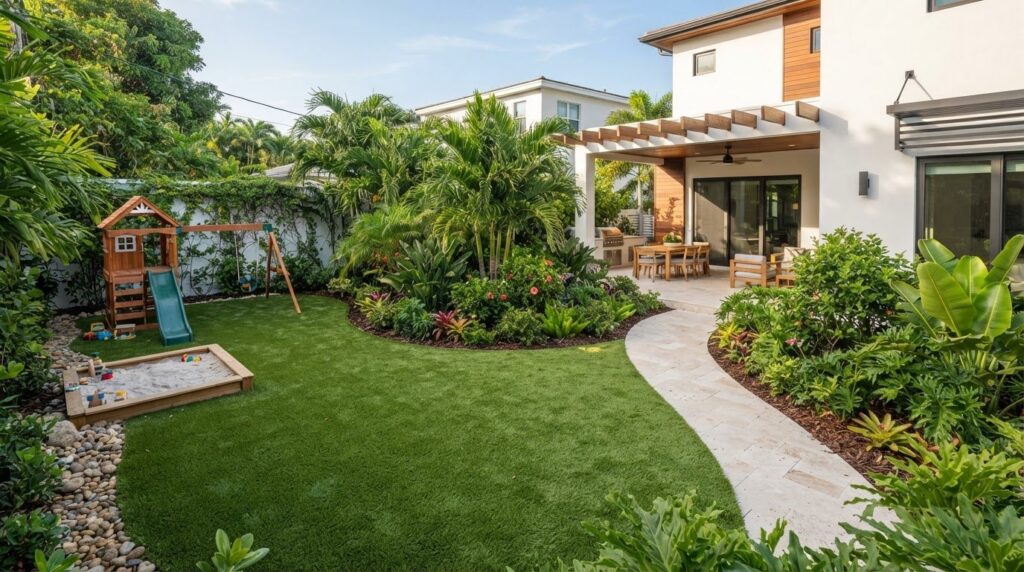
Artificial turf can define play and garden areas without making a backyard feel like one uninterrupted surface. For example, use a central lawn for play, then frame it with raised planters or curved paths. Stepping stones between garden beds create a clear route and add another texture.
A garden maze can take shape with curved turf paths around raised beds. For a small outdoor movie area, leave an open patch for lounging and arrange portable seating nearby. These layouts give each zone a purpose, from play to planting, without crowding the yard.
Artificial turf usually requires less routine maintenance than natural grass because it does not grow and need mowing. It also does not need fertilizer to stay green. Which option costs less over time depends on installation and ongoing care, so compare the upkeep each landscape requires.
HOA covenants may set conditions for landscaping or exterior appearance. Review your community’s governing documents before installation, since requirements can differ from one community to another.
Installation cost per square foot depends on the project and is provided after a quote request; the area, site preparation, turf choice, and layout affect the price.
Artificial grass can feel warmer than natural grass in direct sun. Shade from a nearby tree or pergola, along with a light water rinse, can cool the surface temporarily. In play areas, plan shaded breaks and keep the intended activity zone clear.
Artificial turf does not need regular watering to stay green, which can reduce water use. However, the National Library of Medicine notes that tire-rubber crumb infill can release organic contaminants and heavy metals into air or rainwater. In gardens, pair turf with planter beds and choose infill suited to the space’s use.
For a backyard plan that balances play, planting, and open space, explore artificial turf layout options.
3. Clearing debris to prevent matting
Debris can hide in seams, along fences, and beneath outdoor furniture, where it gets pressed into synthetic turf. Start at one edge and work across the lawn in sections, checking each boundary before moving inward. This makes missed leaves easier to spot and keeps loose material from scattering over areas you have already cleared.
Choose a flexible leaf rake or soft-bristled broom for broad areas. Pull lightly across the fibers rather than digging into the backing. Around a planter or bench leg, use a hand brush to lift small leaves and seed pods. Move chairs and toys as you go so debris does not remain compressed beneath them.
A low-maintenance artificial grass backyard benefits from removing debris before it gathers in corners or between blades. After a windy day, pick up larger branches by hand, then sweep away leaves and litter. For fallen blossoms near a garden bed, work outward from the border so the material does not get pushed deeper into the pile.
Fine dust may remain after visible debris is gone. Use a gentle hose spray to carry loose particles toward the drainage area, then check whether water flows away freely. Clear leaves covering drainage edges; water that remains pooled can signal a blockage that needs attention.
Once the surface is clear, inspect high-use paths between the door, seating, and play equipment. Brush flattened fibers in different directions to lift them. A low-maintenance artificial grass backyard is easier to keep orderly when furniture placement leaves room to reach these traffic routes.
Adjust your routine to the debris your yard collects. A tree over the lawn may drop leaves and seed pods, while an open patio may gather dust and windblown wrappers. Removing each type with the right tool helps prevent buildup and makes routine cleanup more effective.
4. Artificial grass in compact backyard designs
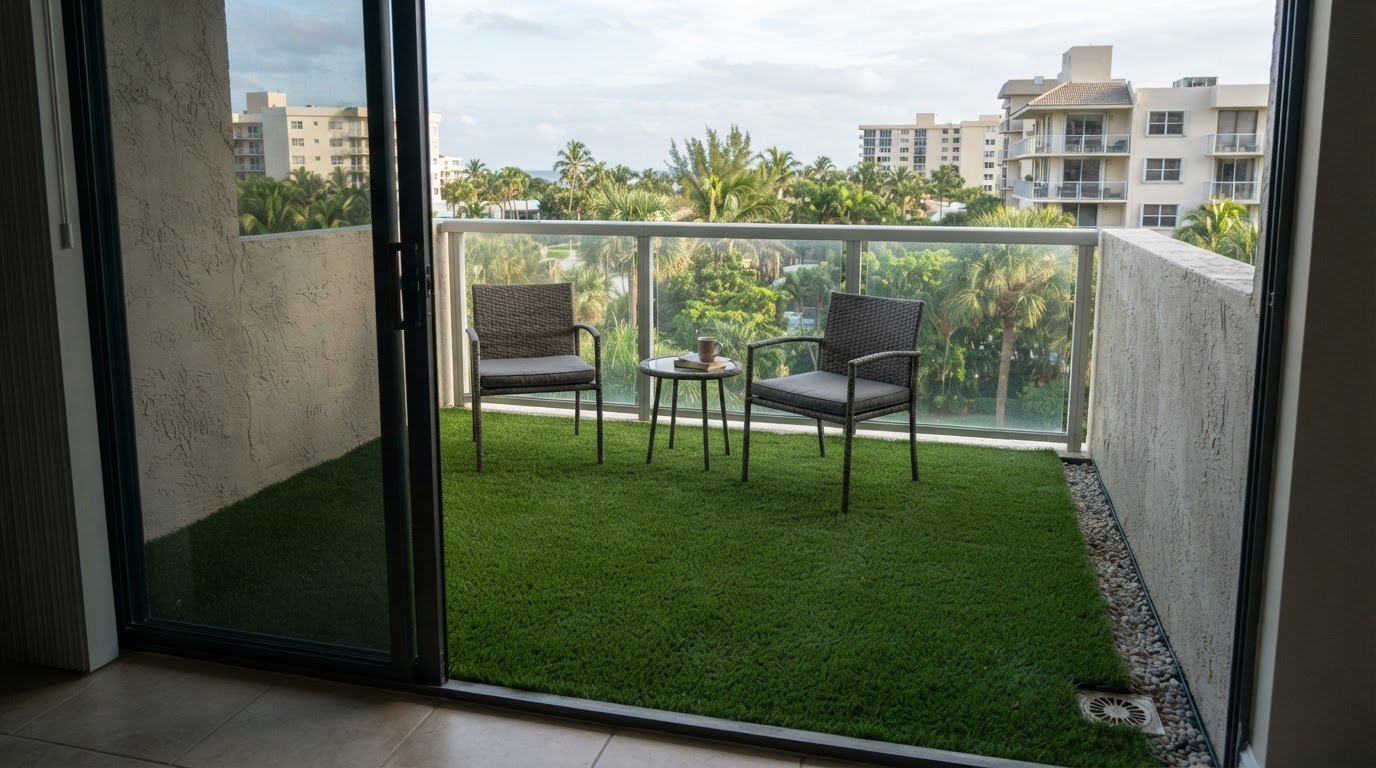
In a compact backyard, artificial grass works best when it has a defined role rather than covering every surface. Sketch the yard and mark the route from the door to the seating before choosing borders. For example, frame a turf island with smooth stones or white gravel to create contrast and make the layout feel intentional.
A low-maintenance artificial grass backyard can feel more spacious when each zone has a clear purpose. Use a central turf area for lounging or play, then separate it from raised wooden or composite decking. Built-in benches with hidden storage can keep cushions and garden tools organized without taking up extra floor space.
Think vertically as well as across the ground. A lattice screen or trellis with climbing plants can enclose a seating nook and add privacy. Place a hanging chair or compact seating pod on the grass, then keep its approach path clear. In a narrow courtyard, this can distinguish one corner without crowding the landscape.
Vary turf pile height to guide the eye through a small yard. Shorter grass can define a walkway or seating edge, while taller turf draws attention to a focal area. Make each transition purposeful, such as placing a taller patch beside a planter instead of scattering different textures throughout the space.
For another defined feature, outline a small turf area with gravel or smooth stones. Leave surrounding hardscape visible so the shape stands out and people can move around it. Repeating one border material near the entrance and seating zone can connect separate areas in a compact yard.
Plan upkeep alongside the layout. Keep leaf-catching planters away from tight corners, leave access to drainage edges, and choose furniture that can be moved for cleaning beneath it. These details help a low-maintenance artificial grass backyard stay practical while preserving clear transitions between turf, stone, and seating.
Ready to shape a compact backyard around a dedicated turf feature? Plan a backyard turf design that makes purposeful use of every zone.
Pro Turf Greens: Backyard Putting Greens
Pro Turf Greens designs and installs Backyard Putting Greens for homeowners who want a dedicated place to practice at home. A putting green gives an outdoor area a clear recreational purpose, while Playgrounds & Recreational Turf and Lawns & Pet Turf suit different household needs. Tee Lines & Driving Ranges offer options for backyard golf practice beyond putting.
Consider how you will use the space before choosing a turf solution. A compact yard might prioritize putting practice, while a family backyard may need a play zone or a lawn designed for pets. Pro Turf Greens can shape the installation around your intended use and layout.
Contact Pro Turf Greens to discuss your backyard turf project.
Shape the Backyard Around How You’ll Use It
Start planning with the activity that matters most. A backyard designed with low-maintenance artificial grass feels more considered when the usable turf area, access routes, and surrounding materials work together. Sketch the space and mark where people enter, sit, play, or practice. That plan helps you decide which areas should remain open and where borders or planting can add definition.
Then consider how the layout will fit your everyday routine. A clear route makes it easier to move between the house and outdoor zones, while thoughtfully placed seating keeps the center available for the activity you value. In a compact yard, one purposeful turf feature can make the space feel cohesive without crowding it.
For a project tailored to your backyard and its intended use, contact Pro Turf Greens today. A well-planned design can make your outdoor space more inviting and easier to enjoy.
Frequently Asked Questions
Can I powerwash my turf?
Only power wash artificial turf without infill; pressure washing infilled turf can dislodge the material. For a small dirty patch, use a garden hose and spot-clean rather than applying high pressure across the lawn. Follow the product instructions for your turf’s care. Infill type matters because it affects how the surface responds to forceful water.
How can I extend the life of my turf?
Routine care can help artificial turf last longer. Clear leaves and branches, remove spills promptly, and brush flattened fibers upright instead of letting traffic press them down. Keep drainage paths clear and look for areas where water pools after rinsing. Infill may need replenishing every few years if material washes away or drains through the turf.
What is Artificial Grass?
Artificial grass is a synthetic surface made to resemble natural grass, with fibers attached to a backing. It can create a green outdoor area without growing or requiring mowing. The finished surface also depends on installation, infill, and the ground beneath it. For homes in Fort Lauderdale, Miami, Palm Beach, Boca Raton, Delray Beach, Jupiter, Palm Beach Gardens, Weston, and Coral Gables, plan around the yard’s intended use and drainage.
Which Infill Should You Choose for Landscape Turf?
Choose infill to suit the turf’s intended use and care needs, rather than assuming one material works for every landscape. For a pet area, consider how waste cleanup and rinsing fit your routine. The National Library of Medicine notes that tire-rubber crumb infill can release organic contaminants and heavy metals into air or rainwater. Match your choice to the surface and its maintenance requirements.
What is the lifespan of backyard artificial turf?
Artificial turf can last up to 20 years with regular maintenance and proper care. Its longevity depends on keeping the surface clean, addressing flattened fibers, and maintaining effective drainage. High-traffic areas may need more attention than parts of the yard used mainly for viewing. Follow the turf’s care directions, and inspect busy spots regularly for changes in appearance.
How often does artificial turf need cleaning and maintenance?
Use a light weekly hose spray to clear dust, dirt, pollen, or pet urine, and rinse the turf every month. Clean spills when they happen and remove solid pet waste promptly. Your routine can also include brushing flattened fibers and clearing leaves or branches. These tasks help keep the surface tidy without treating artificial grass as maintenance-free.