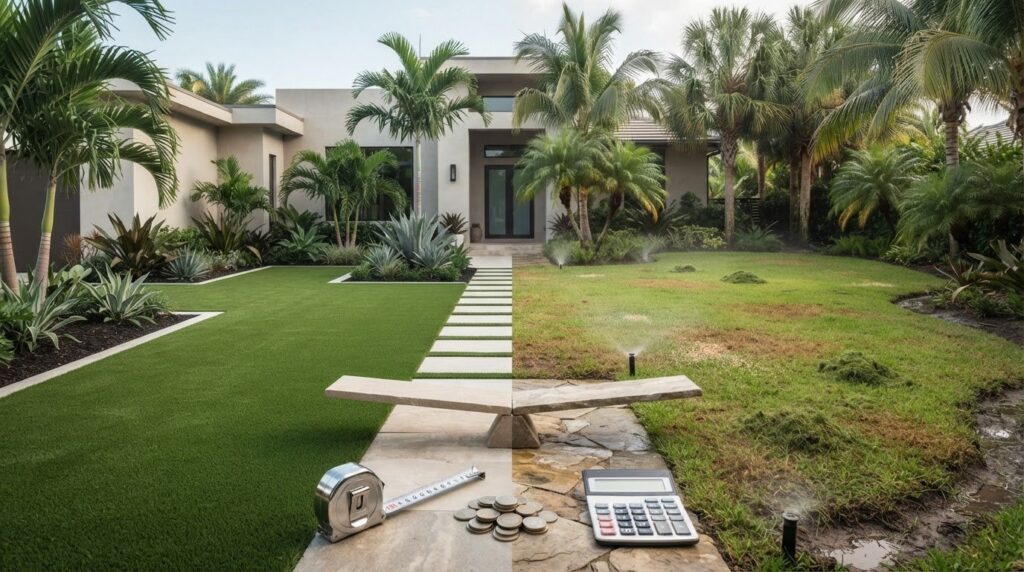
Natural sod often seems like the economical choice on day one, but it functions more like an endless operational subscription than a true home asset. When evaluating artificial turf vs sod cost, looking solely at the initial installation price overlooks the relentless cycle of irrigation, chemical treatments, and weekend maintenance. If you’re tired of watching your monthly budget evaporate through rising water bills and struggling with patchy, heat-stressed grass damaged by pets, your frustration is completely justified.
This guide uncovers the true lifetime expense of both surfaces, showing you exactly which lawn solution delivers superior long-term financial value. We explore the balance between upfront installation capital and recurring care expenses, mapping out clear break-even timelines so you can confidently select the right surface for your lifestyle and property goals.
Key Takeaways
- Learn why evaluating artificial turf vs sod cost requires looking beyond day-one installation to treat natural grass as a continuous subscription and synthetic turf as an amortized asset.
- Uncover the compounding operational expenses of natural lawns, from escalating municipal water tier rates to contracted maintenance and chemical treatments.
- Discover how to calculate your property’s break-even horizon and identify when cumulative maintenance savings begin delivering positive financial returns.
- Understand how intense weather, drainage demands, and active pet use dramatically accelerate natural lawn failure and increase replacement frequency.
- Gain a clear decision framework to audit your current landscaping expenses and select the ideal surface engineered for your lifestyle and property goals.
Upfront Capital Investment: How Artificial Turf and Natural Sod Compare
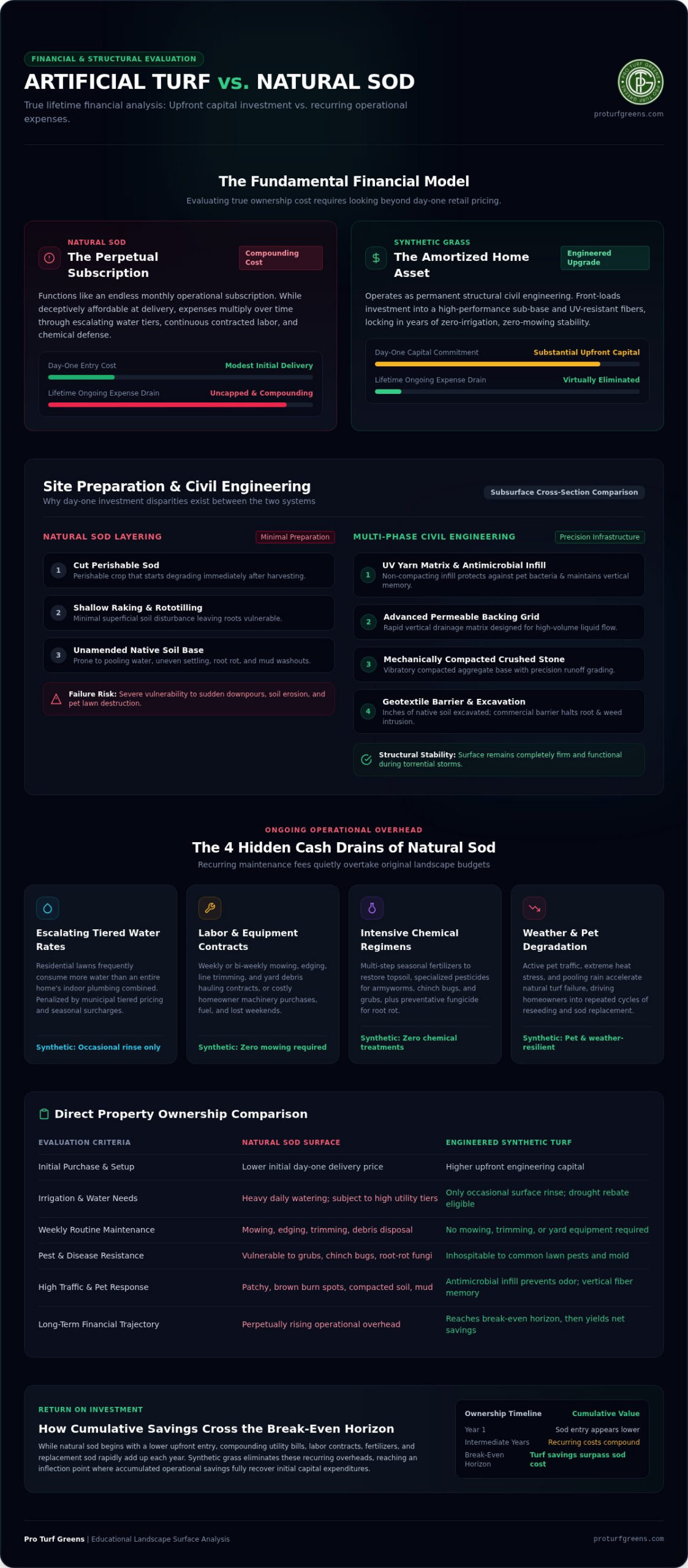
Evaluating the true artificial turf vs sod cost equation requires looking well past surface impressions. Natural sod appears deceptively affordable upon initial delivery, yet property owners often watch estimates escalate as grading corrections, topsoil amendments, and irrigation zone modifications tally up. In contrast, synthetic grass demands a substantial upfront capital commitment. It functions as an engineered infrastructure upgrade rather than a temporary botanical layer, front-loading years of operational stability into meticulous day-one preparation.
Site Preparation and Structural Engineering Requirements
Installing natural sod typically entails shallow rototilling, minor raking, and unrolling cut grass across existing soil. While straightforward, this minimal preparation leaves lawns vulnerable to root rot, pooling water, and uneven settling. A premium synthetic installation demands multi-phase civil engineering beneath the surface:
- Excavation of several inches of native soil to eliminate organic matter and weed networks
- Installation of commercial geotextile barriers that prevent subterranean vegetation intrusion
- Placement and mechanical vibratory compaction of dense, crushed stone aggregate sub-bases
- Precision grading calibrated to guide rapid surface runoff into dedicated channels
In storm-prone regions subject to sudden, intense downpours, a custom-engineered drainage sub-base safeguards the property against washouts, keeping the surface firm and functional where natural turf quickly turns into standing mud.
Material Quality and Craftsmanship Variables
Material specifications directly shape initial capital requirements and determine long-term durability. Palleted sod is a perishable, uniform crop that begins degrading the moment harvesters cut it from the field. Modern synthetic systems represent decades of chemical and textile innovation. From the early history and development of artificial turf to modern high-resilience systems, contemporary installations combine multi-component yarn matrices designed for intense UV resistance with advanced permeable backing grids.
Pairing these resilient fibers with specialized, non-compacting antimicrobial infill prevents bacterial buildup from pet waste and ensures vertical blade memory under constant foot traffic. When weighing the total artificial turf vs sod cost, investing in master craftsmanship and high-grade materials at installation creates an asset engineered to withstand harsh weathering without premature failure.
The Hidden Ongoing Maintenance Expenses of Natural Sod
Day-one expenditures only reveal part of the financial equation. While living grass looks modest on initial estimates, recurring maintenance fees quietly compound into a continuous operational subscription that quickly overtakes your initial budget. Over an extended ownership lifecycle, constant mechanical upkeep, irrigation billing, and seasonal restorative treatments turn natural turf into a relentless operational drain.
Water Consumption and Escalating Utility Rates
Keeping natural lawns lush in hot climates requires rigorous, daily hydration schedules. As municipalities confront strained water supplies, tiered billing structures and seasonal surcharges penalize extensive landscape irrigation. In many regions, residential sod absorbs more water than the entire household’s indoor plumbing combined. Synthetic turf bypasses this ongoing overhead entirely, needing only an occasional surface rinse to clear dust or organic debris. In drought-impacted regions, property owners can even offset transition expenses through programs like local government rebates that incentivize replacing thirsty sod with water-smart surfaces.
Chemical Treatments, Equipment, and Labor Contracts
Beyond water consumption, keeping natural sod alive demands sustained labor and an aggressive chemical regimen. Professional service contracts routinely bundle essential operations that quickly accumulate:
- Weekly or bi-weekly mowing, edging, line trimming, and debris hauling
- Multi-step seasonal fertilization programs to replenish depleted topsoils
- Targeted pesticide applications to combat armyworms, chinch bugs, and grubs
- Preventative fungicide regimens designed to stop destructive root-rot spores
Every service visit drains both capital and personal time. Homeowners managing their own lawns face constant machinery maintenance, fuel purchases, and lost weekends behind a noisy mower.
The Inevitable Cycle of Turf Replacement
Living sod varieties struggle against dense shade, heavy rainstorms, and intense foot traffic. Standing surface water rots turf root structures, turning shaded backyard corners into thin, muddy zones. Property owners find themselves trapped in a costly loop of aerating, stripping ruined patches, and buying replacement sod pallets every few seasons. Investing in proper sub-surface grading and Comparing Turf Drainage Solutions for Florida Rain eliminates this recurring decay by moving excess water away immediately. If you want to end recurring landscaping overhead and protect your yard against Florida weather, scheduling a consultation with Pro Turf Greens offers a clear path toward a resilient, permanent outdoor asset.
Long-Term Return on Investment: Calculating the Break-Even Horizon
Determining the financial wisdom of an outdoor surface upgrade requires looking past day-one ledger entries. When analyzing the total artificial turf vs sod cost trajectory, the fundamental difference lies in capital allocation. Synthetic grass represents an upfront capital expenditure that amortizes predictably over decades. Living sod functions as an open-ended operational liability subject to compounding service inflation, equipment depreciation, and rising utility rates.
The Five-to-Ten-Year Cumulative Cost Trajectory
Charting both surfaces on a multi-year balance sheet reveals divergent financial curves. Synthetic turf costs flatten out immediately following installation. Routine care remains minimal, requiring only brief rinsing cycles and occasional fiber re-blooming. Even when adhering strictly to environmental guidelines for water-efficient turfgrass management, natural sod expenses compound steadily year after year:
- Synthetic grass costs rise at a shallow, predictable baseline over a 15- to 25-year operational lifespan.
- Natural sod expenditures accelerate steadily as contract mowing, aeration, and fertilizer inputs increase with labor inflation.
- Municipal water billing tier adjustments create steeper annual spikes for irrigated grass compared to zero-water synthetic surfaces.
Most residential properties reach an investment cross-over between four and seven years. After crossing this threshold, the accumulated operational savings from synthetic grass fully offset the initial engineering outlay, returning cash directly to your bottom line.
Property Valuation and Aesthetic Dividends
Beyond recurring ledger savings, premium synthetic turf yields measurable equity dividends. Prospective homebuyers increasingly view traditional sod as an unwelcome maintenance chore that demands weekend labor or pricey service contracts. A pristine, weed-free exterior provides instant curb appeal that retains its lush vibrance through summer heat waves and seasonal dry spells without brown dormant cycles.
Modern luxury properties often extend these architectural upgrades beyond standard lawns. Integrating custom turf driveway designs and backyard leisure surfaces transforms functional spaces into striking architectural highlights. In the broader artificial turf vs sod cost calculation, synthetic systems act as durable property assets that protect equity while permanently stabilizing your exterior maintenance overhead.
Environmental and Lifestyle Factors Influencing Real Ownership Costs
Regional climate patterns and everyday household activity fundamentally alter your real-world landscaping expenditures. While standard balance sheets focus on routine mowing, environmental stress and active pets regularly trigger unexpected repairs that distort the artificial turf vs sod cost dynamic. Factoring in regional weather patterns and family use patterns reveals which outdoor surface genuinely protects your budget over time.
Subtropical Climate Demands and Water Table Pressure
Southern climates subject living grass to unrelenting biological pressure. Prolonged high humidity accelerates fungal spore proliferation, while mandatory municipal watering restrictions leave shallow root networks vulnerable to scorched browning during peak summer droughts. When severe rainstorms saturate regional soils, natural lawns frequently drown beneath poor-draining topsoils, rotting fragile grass blades from underneath.
Synthetic grass systems utilize UV-stabilized polyethylene and polypropylene yarns specifically engineered to resist extreme solar degradation without fading or becoming brittle. Combined with perforated backing layers, high-performance synthetic surfaces evacuate tropical stormwater at high rates. This engineering eliminates standing water and prevents the seasonal die-off cycles common to living turf varieties.
High-Traffic Durability for Pets and Recreational Living
Active pets quickly transform living grass into an expensive maintenance nightmare. Concentrated nitrogen in dog urine causes unsightly chemical burns across natural sod, while aggressive digging and daily fetch routines shred root structures into muddy, rutted bare spots. Restoring these ruined sections demands constant topsoil replacement, seed sowing, and protective temporary fencing that never truly solves the core problem.
Dedicated pet installations resolve these lifestyle headaches through specialized construction:
- Permeable backing grids that flush animal waste down into aggregate drainage bases
- Non-absorbent antimicrobial infills that neutralize ammonia odors before they concentrate
- Tear-resistant backing meshes that stop pets from digging up yard perimeters
- Porous, mud-free play surfaces that prevent dirt and allergens from entering living rooms
For an in-depth breakdown of dedicated animal systems, explore our guide to artificial turf for dog runs. Switching to durable synthetic materials also eliminates synthetic pesticide and herbicide runoff, safeguarding pets and family members while protecting local waterways. When factoring recurring pet damage into the artificial turf vs sod cost calculation, synthetic surfaces provide unmatched operational resilience. If you are ready to eliminate muddy paws and continuous yard repairs, schedule a project consultation with Pro Turf Greens to upgrade your grounds with high-performance residential turf.
Choosing the Ideal Lawn Solution for Your Property and Budget
Selecting the optimal ground cover comes down to evaluating your household routines alongside an objective assessment of your property. While natural sod may suit properties slated for short-term turnover, synthetic turf serves as a permanent architectural upgrade for owners planning multi-year occupancy. Navigating the artificial turf vs sod cost comparison effectively requires taking stock of your real-world yard layout, community standards, and current exterior service invoices.
Conducting an Honest Property and Budget Audit
Begin by compiling twelve months of exterior maintenance records to establish an accurate operational baseline. Include your municipal water tier spikes during drought restrictions, lawn crew invoices, pest treatments, and periodic patching sod purchases. If mature shade trees or structural overhangs continually starve living grass of necessary photosynthesis, continuous re-sodding becomes an exercise in futility.
Next, confirm your local neighborhood parameters before moving forward:
- Review Homeowner Association covenants regarding permissible synthetic blade heights, face weights, and natural fiber color blends.
- Check state statutes, as several regions now prohibit HOAs from banning water-efficient synthetic lawns outright.
- Identify primary property use zones, balancing active pet corridors against low-traffic ornamental areas.
Establishing these parameters early prevents expensive design revisions and ensures your investment satisfies both neighborhood aesthetics and functional demands.
The Professional Site Evaluation and Engineering Process
Master craftsmanship during the initial site assessment safeguards your long-term return on investment. Precision engineering prevents common installation pitfalls like shifting sub-bases, poor grade transitions, and trapped moisture. During a professional evaluation, field specialists assess the unique physical profile of your grounds:
- Native soil percolation rates and natural grade fall lines to prevent pooling
- Depth and layout of subterranean irrigation, electrical conduits, and tree root networks
- Yarn geometry, infill density, and permeable backing specifications matched to foot traffic
For a detailed walkthrough of this on-site engineering review, consult our comprehensive consultation expectation guide. Partnering with seasoned synthetic specialists ensures your base construction withstands severe local weather, settling the artificial turf vs sod cost debate with a durable asset built to last for decades.
Transform Your Lawn Into a Permanent Financial Asset
Weighing the true artificial turf vs sod cost comes down to choosing between perpetual landscape subscriptions and lasting property equity. While living grass demands an unending stream of water bills, chemical treatments, and seasonal re-sodding, synthetic turf permanently stabilizes your exterior overhead. Making the transition turns a demanding yard into a high-performance feature that enhances your lifestyle while protecting your bottom line.
Specialized, high-durability synthetic surfaces engineered to endure intense heat and torrential rain deliver a pristine setting that stands up to family life and pets alike. Behind every enduring installation is master craftsmanship backed by custom-engineered aggregate sub-base systems designed for rapid drainage and flawless stability. Take the first step toward reclaiming your weekends and securing your property’s value. Schedule a project consultation with Pro Turf Greens to design an outdoor space built for long-term luxury and performance.
Frequently Asked Questions
How many years does it typically take for artificial turf to pay for itself compared to sod?
Artificial turf typically reaches its break-even point within four to seven years of continuous use. When analyzing artificial turf vs sod cost over time, synthetic grass eliminates weekly mowing contracts, seasonal aerating, pest control treatments, and escalating irrigation surcharges. In high-cost utility regions across South Florida, properties with larger square footages or existing high water consumption often reach this financial payback threshold even faster.
Does installing synthetic grass increase the overall property value of a residential home?
Installing synthetic grass enhances residential property value by boosting year-round curb appeal and providing buyers with a zero-maintenance exterior. In communities across Palm Beach, Miami, and Coral Gables, prospective homeowners value exterior spaces that stay immaculate without the ongoing expenses of lawn equipment or landscapers. Flawless greenery creates an immediate visual impact during showings, elevating market desirability and distinguishing the residence from neighboring homes.
What ongoing maintenance expenses are required for artificial turf over its lifespan?
Synthetic turf requires minimal maintenance expenses, representing a fraction of traditional lawn care costs. Upkeep mainly consists of using a leaf blower to clear organic debris, occasionally rinsing the surface with a garden hose, and periodically cross-brushing the fibers to keep blades standing tall. You never have to budget for gas mowers, irrigation pipe repairs, chemical fertilizers, or expensive sod re-installation.
Why does natural sod often fail or require complete replacement in subtropical climates?
Natural sod struggles under the intense biological stresses typical of South Florida cities like Fort Lauderdale and Boca Raton. High humidity and standing moisture create breeding grounds for fungal diseases, while pests such as chinch bugs quickly destroy root systems. Alternating cycles of heavy tropical downpours and blazing sunshine exhaust living sod varieties, frequently turning shaded or poorly drained yards into bare mud patches that require expensive replacement.
How does artificial turf impact monthly water bills compared to natural grass irrigation?
Artificial turf cuts outdoor water usage dramatically, reducing property irrigation demands by up to 70 percent compared to living sod. Traditional lawns demand thousands of gallons of water each month just to survive regional heat and dry spells. Synthetic grass requires zero irrigation to stay green, shielding homeowners in Weston and Jupiter from steep tiered utility pricing, seasonal drought surcharges, and municipal watering restrictions.
Is synthetic turf a cost-effective choice for households with multiple large dogs?
Synthetic pet turf proves highly cost-effective for dog owners by eliminating continuous sod replacement, mud cleanup, and toxic lawn chemicals. Large dogs quickly destroy living grass with persistent running, digging, and high-nitrogen urine burns. Dedicated pet systems feature durable backing grids and specialized antimicrobial infill that drain fluids instantly and stop odor buildup, protecting the long-term artificial turf vs sod cost calculation for active pet households across Delray Beach.
Can artificial turf be installed directly over existing sod to reduce project costs?
Synthetic turf should never be laid directly over existing sod. Proper installation requires excavating native soil, laying a geotextile weed barrier, and compacting a multi-layered aggregate sub-base. Skipping excavation causes the trapped sod underneath to decompose, creating uneven dips, trapped bacterial odors, and severe drainage failures. Investing in professional site preparation ensures the surface remains level, drains quickly, and delivers its full multi-decade lifespan.