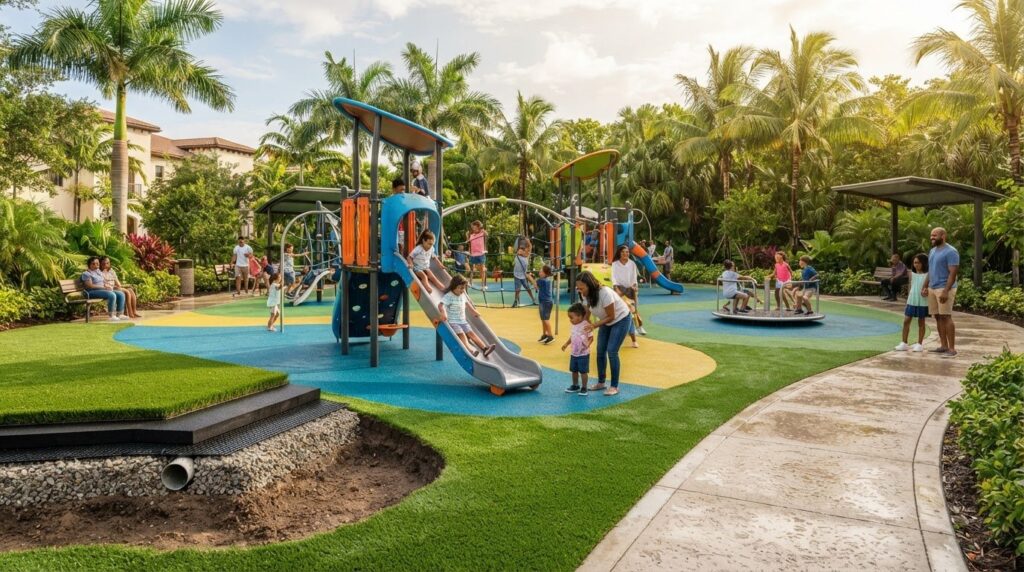
The visible turf is only the finish, not the whole playground surface system. If you’re searching for “playground turf installation florida,” you may be wondering whether turf alone can cushion falls, or whether South Florida’s heavy rain and humidity could make a play area difficult to use.
Those concerns point to the right starting place: a successful project depends on how the surface is planned for the site and the people who will use it. Turf, the underlying base, drainage, and any impact-absorbing layer each play a different role. The right combination depends on factors such as equipment, fall heights, and existing ground conditions. Confirm applicable requirements and standards with relevant authorities and qualified project professionals.
This guide covers safety, drainage, site preparation, accessibility, and maintenance. It also explains what to ask when comparing materials and installer proposals, so you can discuss a clear, site-specific scope for a home, school, or community playground.
Key Takeaways
- Plan playground turf installation florida as a complete surface system, not simply a layer of synthetic grass.
- Match impact-attenuating surfacing and accessible routes to the equipment, intended users, and project requirements.
- Ask how rainfall, drainage, soil conditions, humidity, and sun exposure will be assessed at your site.
- Compare written proposals for site preparation, drainage, materials, installation scope, and project-specific documentation.
- Use a site-specific discussion with an installer to clarify intended use, maintenance questions, and what the proposed system includes.
What Does Playground Turf Installation in Florida Include?
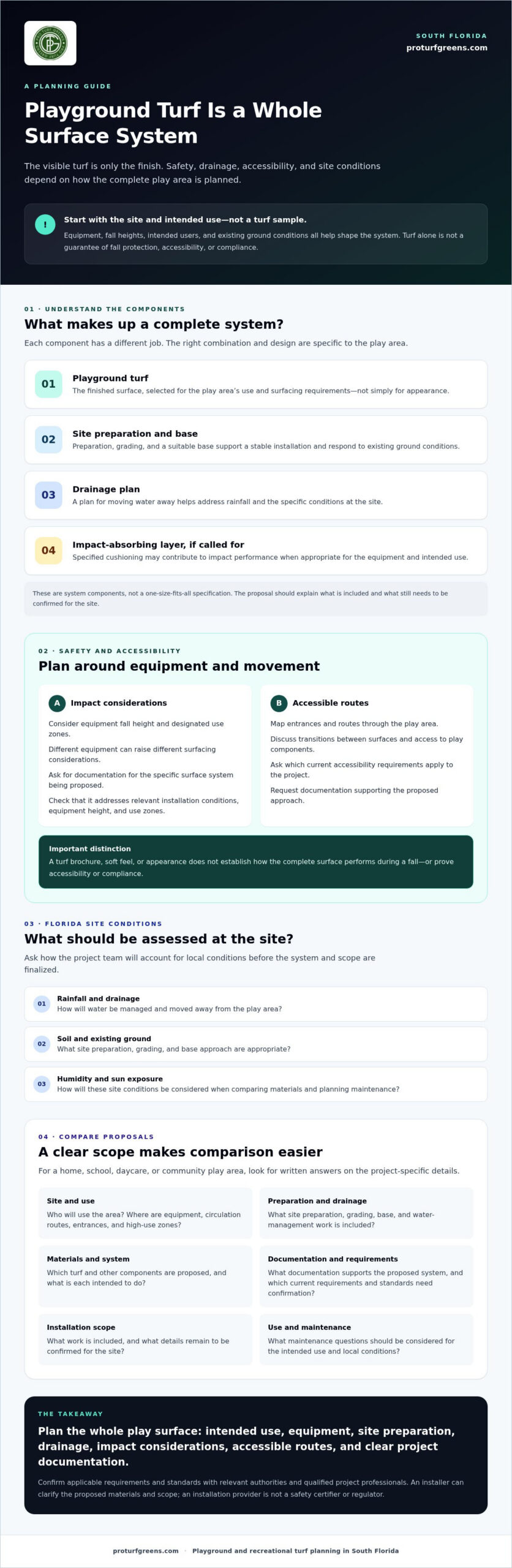
Playground turf installation in Florida means planning and constructing a complete play-surfacing system, not simply rolling out synthetic grass. Playground turf is selected and installed for the play area’s use and surfacing requirements. Ordinary landscape turf, by contrast, is primarily intended for groundcover and appearance.
Projects may serve schools, daycare areas, community spaces, or private play areas, and each needs a clear brief. A toddler area may have different equipment and movement patterns from a play space designed for older children. Before comparing turf options, consider who will use the area, where equipment and circulation routes will go, and which spots are likely to see the most activity.
Which Florida play areas can use recreational turf?
Recreational turf can be considered for residential and commercial play areas, but don’t assume one specification suits every setting. Map high-use zones around equipment, entrances, and gathering points separately from borders, paths, and surrounding landscape. This makes it easier to identify where durability, cushioning, drainage, or accessibility may need particular attention. For broad context on playground design and safety, see this playground overview.
What is included in a complete turf surface system?
The visible turf is only one component. A project scope may also include site preparation and grading, a suitable base, a plan for moving water away, and a cushioning layer if the intended application calls for one. Each element has a distinct purpose: turf provides the finished surface, base preparation supports a stable installation, drainage helps manage water, and specified cushioning is intended to contribute to impact performance.
Appearance alone can’t show how a surface will perform during a fall. Impact performance depends on the documented surfacing system and how it is installed, including whether its components suit the equipment and intended use. Before approving a proposal, request documentation for the specific turf and system being offered. Ask how it applies to your play area, and confirm current requirements and applicable standards with relevant authorities and qualified project professionals.
A clear scope should state what is included and what still needs to be confirmed for the site. Pro Turf Greens designs and installs playground and recreational turf for residential and commercial clients in South Florida. A site-specific conversation can help clarify intended use, layout, and installation scope. Turf alone should not be treated as a guarantee of fall protection or compliance.
How Should Florida Playground Turf Address Safety and Accessibility?
Safety planning starts with the play equipment, not the turf sample. Equipment fall height and designated use zones help determine what impact-attenuating surfacing may be appropriate, so a system selected for one area may not suit another. A low platform and a taller climbing structure can raise different considerations. Turf’s appearance or softness underfoot doesn’t establish how the complete surface will perform during a fall.
Use guidance from the CPSC Public Playground Safety Handbook as a reference, and ask qualified project professionals to identify which current requirements apply to your site. ASTM International publishes relevant playground and surfacing standards, but confirm applicable standards and editions for the specific project. Pro Turf Greens is an installation provider, not a safety certifier or regulator. Its Florida playground turf safety standards guide offers additional background for planning questions.
How can buyers verify fall-protection documentation?
Request test documentation for the proposed surface system, not just a brochure for the visible turf. Check that the documentation identifies the system tested and addresses relevant installation conditions, equipment height, and designated use zones. Ask which components the test covers and whether the planned installation matches them. If those details are unclear, ask a project professional or relevant authority what evidence is needed before selecting materials.
What accessibility questions belong in the project brief?
Map how users will reach and move through the play area before selecting surfacing. Include entrances, routes, transitions between surfaces, and access to play components in the discussion. Ask the design and installation team which current accessibility requirements apply and what documentation supports the proposed approach. Don’t treat a turf specification as proof of accessibility or compliance; the full layout and project conditions need review.
For playground turf installation florida, include safety and access in the written project scope. Before comparing proposals, gather equipment information, intended users, the site layout, applicable documentation, and questions about transitions. This gives qualified professionals a clearer basis for reviewing the system and identifying what still needs verification.
If you’re planning a South Florida play area, a site-specific conversation can help clarify intended use, layout, and installation scope. You can discuss playground turf planning with Pro Turf Greens as part of that process.
Which Florida Site Conditions Shape Playground Turf Installation?
Florida weather is only part of the site picture. Existing grades, runoff paths, soil and subgrade, shade, sun exposure, and expected activity all need to be considered before installation. Drainage should be designed for the actual site, not assumed from the turf type. Assess base preparation and drainage together: grading, subgrade conditions, and the route planned for water to leave the area all affect how the surface system is prepared and performs after rain.
What should a Florida playground site assessment cover?
If possible, walk the area after rainfall. Note low spots, runoff paths, nearby drainage features, and places where water appears to collect. Record visible soil and base conditions for the installation team to assess, along with access constraints that could affect preparation. Also note shaded and sun-exposed areas and where play or foot traffic is likely to concentrate. These observations help you ask focused questions about materials and care without assuming a particular surface temperature or outcome.
How should the system handle heavy rain and frequent use?
Ask the installer to explain how water is expected to move through the proposed surface and where it will exit the site. The CPSC Public Playground Safety Handbook is a useful reference for playground surfacing and safety context, but drainage still requires a project-specific assessment. Discuss how the proposed system relates to the play activities and expected traffic, then request clear maintenance guidance for after storms and busy periods.
| Site condition | Question for the installer | Documentation or observation to request |
|---|---|---|
| Heavy rainfall, runoff, or low spots | How will water move through and away from the play area? | A site-specific drainage explanation that identifies the intended water exit route and any observed pooling. |
| Sandy or variable subgrade | How will existing soil and base conditions inform site preparation? | Recorded site observations and a written description of the proposed preparation scope. |
| Humidity and frequent use | What care does the proposed system need after wet weather and high-use periods? | Maintenance instructions relevant to the selected system and intended activity. |
| Strong sun or changing shade | How does exposure factor into material selection and ongoing care? | Site observations of sun and shade, plus applicable material documentation. |
This checklist makes playground turf installation florida a site-led decision rather than a product-only choice. For a project in South Florida, a site-specific discussion with Pro Turf Greens about playground turf can help clarify intended use, site preparation, and installation scope.
What Should You Ask Before Hiring a Florida Playground Turf Installer?
A useful proposal explains how the project will be planned for its users and site, not just which turf material is named. Before comparing installers, define who will use the area, what activities and equipment it will support, and how people will enter and move through it. Then ask how the site will be assessed, what system documents are available, what work the proposal includes, and what care the finished surface will need.
Clear answers make proposals easier to compare. Confirm who is responsible for assessing site conditions and coordinating installation details. Also ask how questions or changes will be communicated during the project.
Which questions reveal whether a proposal is playground-specific?
Ask how the proposed system relates to the equipment, expected fall heights, and play patterns. Request documents identifying the specified materials and any applicable performance testing, then clarify which components the documentation covers. The proposal should also state what site preparation and drainage work is included or excluded. If answers are general or rely on the turf product alone, request project-specific clarification before moving forward.
How can you compare installation proposals fairly?
Compare proposals for equivalent project boundaries and surface areas, then review the details behind the totals. Check how each addresses access, edges, transitions, adjoining surfaces, preparation, drainage, materials, and installation. Ask what documentation will be provided for the proposed system and how maintenance guidance will be shared.
Use this checklist to evaluate each written scope:
- Users and activity: Does the proposal reflect intended users, equipment, and play patterns?
- Site preparation: Does it describe the planned work and identify exclusions?
- Drainage: Does it explain how water will be managed at this specific site?
- Materials and documentation: Are the proposed components identified, with relevant system information provided?
- Installation and follow-up: Are access, edges, transitions, communication about schedule changes or site limitations, and maintenance guidance addressed?
For playground turf installation florida, the most useful comparison isn’t simply which proposal sounds most complete. Look for one that clearly connects intended use, observed site conditions, the specified system, and installation scope, while identifying what still needs verification with qualified professionals.
Once you’ve organized your questions, you can request a playground turf consultation with Pro Turf Greens to discuss your South Florida project’s intended use, layout, and installation scope.
Plan Your Playground Turf Project with Pro Turf Greens
A well-planned project brings five decisions together: who will use the play area, what safety and system documents apply, how water will drain, what site preparation is needed, and exactly what the proposal includes. Pro Turf Greens designs and installs playground and recreational turf for residential and commercial clients in South Florida, including Miami, Fort Lauderdale, Palm Beach, and Boca Raton. The company installs turf; qualified professionals and relevant authorities should review project requirements and safety documentation.
What information should you prepare for a consultation?
A few details can make an initial project discussion more useful. Gather what you know, and flag anything that still needs to be measured or confirmed.
- Play area: Approximate dimensions, site photos, existing surfaces, and access limitations.
- Intended use: Equipment details, expected activities, and the user groups the space is meant to serve.
- Site concerns: Areas where water collects, visible drainage issues, and shade or sun patterns worth discussing.
- Project questions: Desired timing, proposed system documentation, preparation and installation scope, and ongoing care.
You don’t need every answer in advance. Sharing uncertainties helps identify what should be assessed or verified before the project scope is finalized.
What happens after you request a project discussion?
Next steps depend on the location, site conditions, intended use, and project requirements. Be ready to discuss what the play area needs to support and what you’ve observed on site. A consultation can help clarify layout, preparation questions, and the proposed installation scope. It doesn’t replace review of applicable requirements or system documentation by the appropriate professionals.
For a broader look at preparing for a conversation about an artificial turf project in Miami, see the Miami artificial turf consultation guide. Its planning questions may also help you organize details for a playground project.
For playground turf installation florida, a clear discussion should leave you with a better understanding of what is known, what needs site review, and what the written proposal covers. Pro Turf Greens serves South Florida communities, including Miami, Fort Lauderdale, Palm Beach, and Boca Raton. Contact the team by phone or through the website to request a free consultation and discuss your playground’s location, intended users, and project needs.
Start Planning a Play Area That Fits Your Site
A strong playground turf project begins with the intended users and the conditions on the ground. Consider how equipment, play patterns, and access needs shape the project, then ask how the proposed surface system is documented for its application. In Florida, drainage and base preparation deserve close attention because site grades, soil, and runoff all influence planning.
As you compare proposals, look for a clear scope covering preparation, drainage, materials, installation, and maintenance guidance. Confirm project-specific safety and accessibility requirements with qualified professionals and relevant authorities. These steps can help you make a more informed choice for playground turf installation florida, without relying on appearance alone to judge a system’s suitability.
Pro Turf Greens designs and installs playground and recreational turf for residential and commercial clients across South Florida, including Fort Lauderdale, Miami, Palm Beach, Boca Raton, Delray Beach, Jupiter, Palm Beach Gardens, Weston, and Coral Gables. Request a free consultation by phone or through the website to discuss your location, intended use, and project questions. Request a free playground turf consultation and take the next step toward a thoughtfully planned play area.
Frequently Asked Questions
Can artificial turf provide enough fall protection for a playground?
It depends on the complete surfacing system, equipment fall height, installation, and project requirements. Turf by itself doesn’t establish adequate impact protection. Ask for documentation covering the specific system and intended use, including relevant installation conditions and equipment use zones. Before approving the design, confirm applicable requirements with qualified professionals and relevant authorities. A turf product description alone isn’t evidence that the full installed surface provides appropriate fall protection.
How does playground turf handle heavy Florida rain?
Rain performance depends on site grading, base preparation, drainage design, and where water can exit the play area. Ask the installer to explain the proposed water path and identify low spots, runoff patterns, and drainage concerns observed during the site assessment. Turf shouldn’t be assumed to resolve an existing drainage issue. For playground turf installation florida projects, request a site-specific explanation of drainage and preparation rather than relying on the turf type alone.
Is playground turf suitable for Florida schools and daycares?
It can be considered for schools and daycare areas, but suitability depends on the users, equipment, traffic, accessibility needs, maintenance expectations, and applicable project requirements. Ask for documentation about the proposed surfacing system and how it relates to the intended play area. School or childcare operators should confirm current requirements with qualified professionals and relevant authorities. A product description alone can’t establish that a system is appropriate for a particular site.
What should I ask a playground turf installer before hiring them?
Ask how the proposed system relates to the equipment, use zones, expected activities, and site conditions. Request a written scope explaining preparation, drainage, materials, installation, and exclusions, along with applicable performance documentation. Clarify how edges and transitions will be handled, who assesses the site, and what maintenance the surface needs. Compare proposals on equivalent project details, not just appearance or the turf product name.
Does playground turf need a special base in Florida?
Base requirements depend on existing soil, grading, drainage, site use, and the proposed surfacing system. Ground and water conditions can vary between Florida sites, so a generic specification may not reflect what a particular play area needs. Ask the installer to assess the location and describe the proposed base preparation, drainage approach, and any assumptions or exclusions in writing. Confirm that the described system matches the project’s intended use.
How do I know whether playground turf meets accessibility requirements?
Accessibility depends on the complete installed surface and the design of routes, entrances, transitions, and access to play components. Ask which current requirements apply to your project and request relevant documentation for the proposed system. Have qualified professionals review the design and installation details for the specific site. Don’t assume a turf product is accessible because it’s marketed for playground or recreational use, or because it looks level and firm.
How do I get a playground turf installation consultation in South Florida?
Prepare your site location, approximate play-area dimensions, photos, equipment details, and intended user groups. Note drainage or access concerns, existing surfaces, and project requirements you already know about. Pro Turf Greens offers a free consultation by phone at 561-221-1010 or through its website. The company serves South Florida communities including Fort Lauderdale, Miami, Palm Beach, Boca Raton, Delray Beach, Jupiter, Palm Beach Gardens, Weston, and Coral Gables.