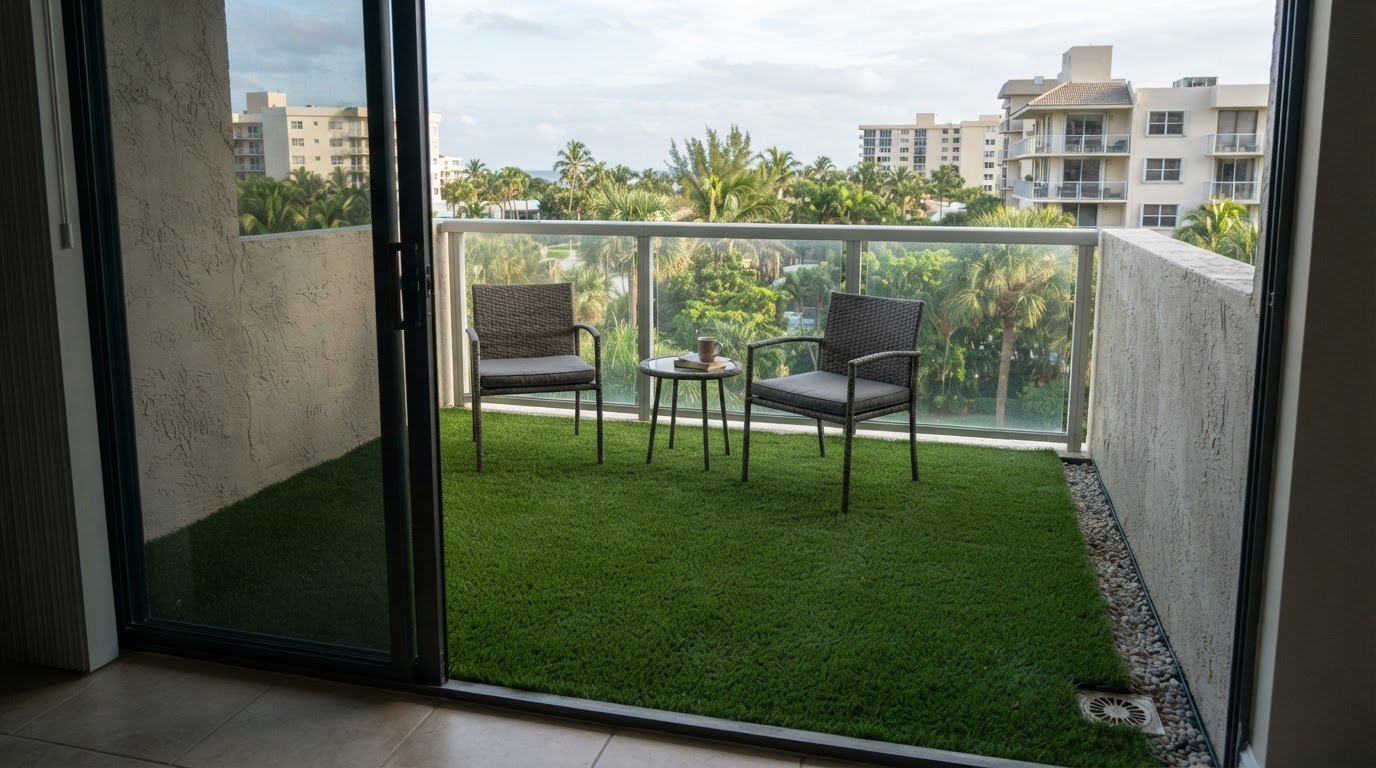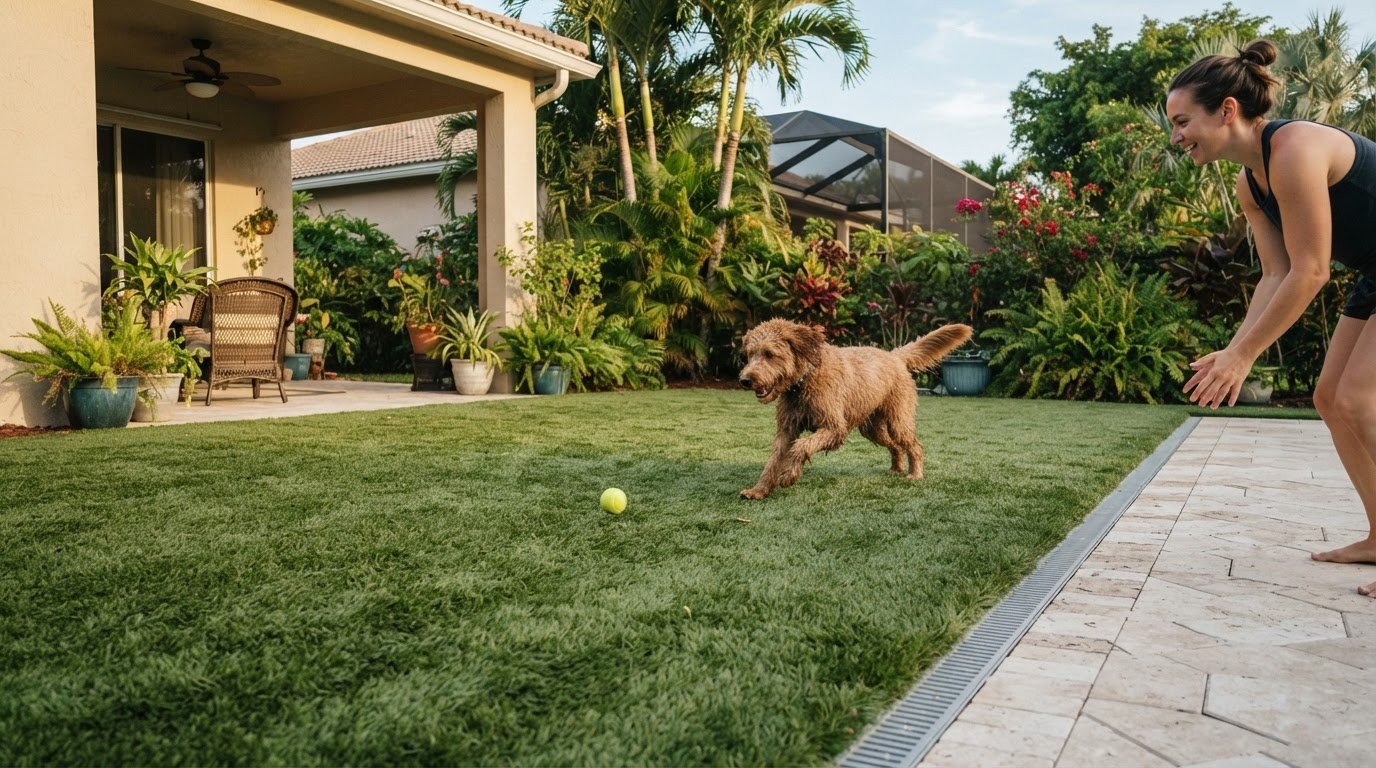
A year round artificial turf lawn can last 10 to 25 years, depending on material quality and maintenance. That long lifespan makes it a practical option for Florida homeowners who want a green yard across the seasons, but durability depends on more than the turf itself.
It’s sensible to weigh the upfront investment against how well the lawn will hold up over time. The right choice of turf, careful installation and routine care all influence the result, while the size and requirements of the project shape its cost.
This guide explains what affects artificial turf lifespan and cost, how Florida’s outdoor conditions factor into durability, and what DIY installation involves compared with professional service. You’ll have a clearer basis for deciding whether artificial grass suits your home and what to consider before moving ahead.
Key Takeaways
- Artificial turf can last 10 to 25 years, with material quality and maintenance influencing its lifespan.
- Compare project costs by considering the lawn’s size and the specific installation requirements, not just the turf material.
- Assess how your outdoor conditions and intended use affect the turf materials and upkeep that suit your yard.
- DIY installation is possible, while professional installation can address drainage, base preparation, and overall aesthetics.
How long does artificial turf last?
Artificial turf can last 10 to 25 years, with material quality and maintenance shaping its lifespan. Regular care can support a lifespan of up to 20 years. For a residential lawn, that means the surface can remain green through seasonal changes, while wear in high-use areas may affect its appearance sooner.
Appearance depends on the fibers, infill, and how the lawn is used. Leaves and debris can hide the blades, so remove them with a leaf blower or soft rake. For routine care, rinse artificial grass every month. This helps clear dust and loose debris from the surface.
Good drainage starts beneath the turf. A permeable surface and properly prepared base help water move through instead of pooling. Before installation, note where water flows across the yard and whether low spots collect it. These details can affect drainage and the finished appearance.
Use turf to distinguish a play or seating area from planting beds, paths, or natural ground. A clean edge around flower beds helps define the layout. Artificial grass creates a consistent green surface, but it does not provide the changing texture or living plants of a planted garden.
Local requirements and HOA restrictions vary by community. Before installation, review your HOA’s landscaping documents and local rules, especially any requirements concerning visible yard materials or drainage changes.
Yes, artificial turf can become hot under summer sun. Rinsing it with water can cool the surface temporarily, while shade from trees or structures reduces direct sun exposure. When planning seating and play areas, consider how sunny and shaded parts of the yard will be used.
Health considerations include lead dust and activity-specific injury findings. The Centers for Disease Control and Prevention (CDC) advises restricting children under 6 from artificial turf if its dust contains more than 400 ppm lead. In football games, BMJ reported an adjusted rate of lower-extremity injuries on artificial turf 3.34 times the rate on natural grass. That football finding describes game injuries, not every residential use.
Artificial turf offers a consistently green appearance without mowing the synthetic surface. Tradeoffs include routine rinsing, surface heat, and the need to plan carefully for drainage and planting areas. Weigh these factors against how your household will use the lawn.
Artificial grass costs
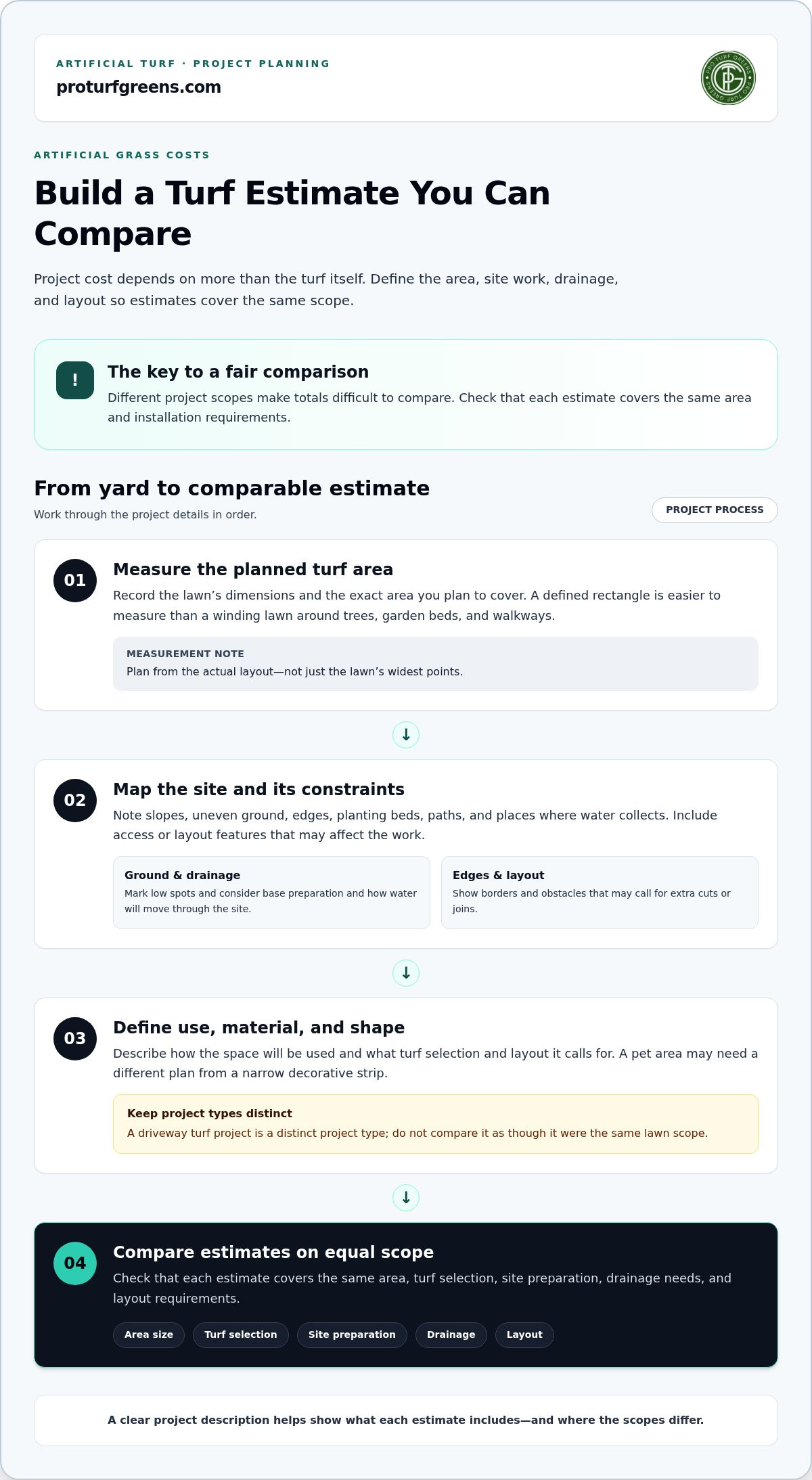
Artificial grass installation costs depend on the area’s size and the work the site requires. A compact, level backyard and a larger yard with uneven ground call for different amounts of preparation and material. To describe your project clearly, measure the planned turf area and note slopes, edges, planting beds, and places where water collects.
The turf itself is only one part of the project. Material selection affects the amount needed, while the site’s condition determines the preparation involved. A defined rectangle is simpler to measure than a winding lawn around trees, garden beds, and walkways. Sketching the layout helps identify where cuts and joins may be needed.
Installation details also shape the final quote. Base preparation and drainage need consideration before the surface is laid, and the finished appearance depends on how the turf fits the site. If the yard has low spots or uneven edges, include those areas in the project plan rather than estimating from the lawn’s widest points alone.
The cost of an artificial turf project depends on its scope. Area size, turf selection, site preparation, drainage needs, and layout are key factors. When comparing estimates, check that they cover the same area and installation requirements. Different project scopes make totals difficult to compare fairly.
Before requesting a quote, record the lawn’s dimensions, identify the intended use, and mark features that affect access or layout. For example, a pet area may need a different plan from a narrow decorative strip. If you’re considering turf for a driveway instead, explore artificial turf driveway options as a distinct project type.
Artificial grass materials and outdoor durability
Material selection affects how a lawn looks and performs outdoors. In Florida, compare the visible fibers, backing, and intended use before choosing turf.
Artificial Grass Materials
Artificial grass combines synthetic fibers with a backing that holds them in place. Some installations also use infill between the fibers. View a sample in daylight and compare its color and feel with the surrounding landscape. A family lawn, pet area, and decorative strip serve different purposes, so consider how each space will be used.
Consider how the material is intended to perform under your expected foot traffic. A route between a patio and a gate, for example, may see more use than a border beside a garden bed. View the sample from several angles, since blade direction can affect its appearance. Choose turf that suits both the setting and the activity.
Outdoor Durability
Florida’s coastal conditions include salt, sand, and high humidity. Artificial turf remains unaffected by salt, sand, and high humidity in coastal regions. That makes these conditions relevant when comparing materials for an outdoor setting. Also consider exposure to direct sun, foot traffic, and debris, since each affects how the surface looks and feels during everyday use.
Durability depends on the turf material and its installation. Check how the backing and edges are finished, especially beside paths or planting beds. Loose edges can disrupt clean landscape lines. Choose boundaries that fit the yard’s shape, and plan transitions where turf meets stone, concrete, or garden soil.
Before deciding, view the sample beside existing plants, hardscape, and exterior finishes. Choose a green that complements the home rather than competes with its landscaping. In a narrow side yard, a consistent surface can visually connect the gate and patio. In a garden, defined planting borders preserve space for flowers and shrubs.
Match the material to the location, expected use, and visual design. If possible, assess a sample in the actual outdoor setting and compare its color in sun and shade. This helps you judge whether the turf suits the home’s landscape and South Florida’s coastal environment.
DIY versus professional installation
DIY installation is possible, but professional work can address drainage, base preparation, and appearance. The right approach depends on site conditions, layout complexity, and the preparation required.
DIY Installation Steps
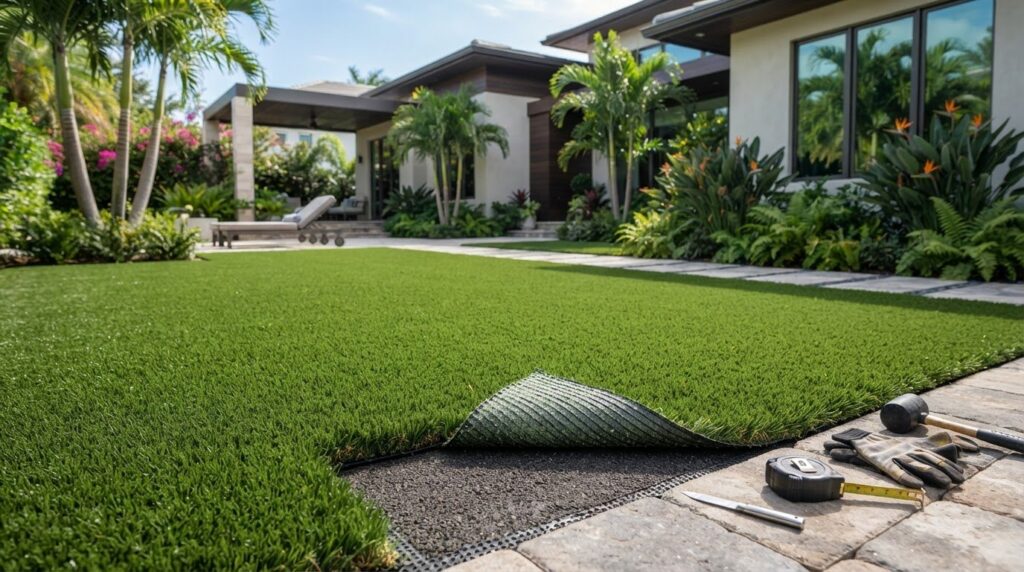
A practical installation sequence starts with site preparation and ends with finishing. Measure the area and mark edges, including where turf meets a patio or garden bed. Then prepare the base, lay and fit the turf, join sections, secure the edges, and finish the surface according to the turf instructions.
- Clear the area and plan the boundaries.
- Prepare a stable base and account for drainage.
- Lay the turf, aligning its direction across the space.
- Join sections and secure edges neatly.
- Finish and inspect the surface for uneven areas.
DIY work gives you direct control over each stage, but every step affects the next. For example, an uneven base can show through the finished lawn.
Professional Installation
Professional installation is worth considering when a yard has drainage challenges, uneven ground, or a complex shape. The base and water flow need attention before turf is laid. Accurate joins and finished edges also help the surface follow curves around planting beds or paths.
Consider professional installation when the project includes several transitions, such as turf meeting stone, a patio, and garden borders. A clear project scope helps align the layout with how you plan to use the yard.
Assess the site before choosing an approach. A simple, open area may be easier to lay than a yard with slopes, tight corners, or water that collects after rain. DIY requires planning and careful work at each stage; professional installation addresses the base, drainage, and finished appearance.
Either way, map the boundaries and intended use first. Marking a play area separately from a walkway, for example, clarifies the layout and highlights where edges need attention. This also helps define the work before installation begins.
For a driveway project, explore professional artificial turf driveway installation as an alternative to a lawn installation.
Pro Turf Greens: Backyard Putting Greens
Pro Turf Greens designs and installs backyard putting greens for homeowners seeking a dedicated practice area at home. A putting green can give a section of the yard a clear purpose, with a layout planned around the available space and surrounding landscape.
If you want a full lawn rather than a golf practice area, Pro Turf Greens also installs artificial turf lawns and pet turf. Playgrounds and recreational turf, as well as tee lines and driving ranges, serve other outdoor needs. The right option depends on how you want your property to function, from everyday lawn space to a tailored recreation area.
To discuss an artificial turf project suited to your home and intended use, contact Pro Turf Greens for a free consultation.
Shape an outdoor space that fits your plans
Start by deciding what you want your yard to make possible. A year-round artificial turf lawn can be planned around how you use the space, from everyday relaxation to a dedicated recreational feature. Consider which areas should stay open, where people will gather, and how the finished layout should connect with your home.
For a focused recreation area, Pro Turf Greens installs Backyard Putting Greens, Playgrounds & Recreational Turf, and Tee Lines & Driving Ranges. These options help frame the project around the purpose of your outdoor space, rather than choosing a surface without a clear use in mind.
Share your project goals with Contact Pro Turf Greens today and take a considered step toward a yard designed for the way you want to live outdoors.
Frequently Asked Questions
Do you need drainage for fake grass?
Yes, the installation needs a way to move water through or away from the surface. Drainage planning matters in South Florida yards where rainwater collects in low spots or near patios. Note where water currently flows and pools. The base and site layout should support drainage rather than trap water beneath the turf.
What is artificial grass?
Artificial grass is a manufactured surface designed to resemble a natural lawn without living grass blades. It can cover areas where homeowners want a consistent landscape surface, such as a side yard or a defined section beside a patio. The finished appearance depends on the turf selected and how it fits the property’s layout, surrounding plants, and intended use.
Which infill should you choose for landscape turf?
Choose infill according to the area’s intended use and the turf manufacturer’s guidance. A decorative space beside a garden has different priorities from a pet area or a spot used for regular activity. Consider how the infill feels underfoot and how it fits the surface’s maintenance needs. Match it to the location rather than choosing by appearance alone.
What is a year-round artificial turf lawn?
A year-round artificial turf lawn is a synthetic grass surface designed to maintain a green appearance through seasonal changes. In Fort Lauderdale, Miami, Palm Beach, Boca Raton, Delray Beach, Jupiter, Palm Beach Gardens, Weston, and Coral Gables, it can provide a consistent landscape backdrop without relying on growing conditions. Its appearance and performance still depend on suitable material selection, installation, and routine care.
How much does artificial turf lawn installation cost in the United States?
Installation cost varies with the area’s size and the project’s specific requirements, so a single figure won’t apply to every U.S. home. The price depends on the case and is given after a quote request. Key factors include the turf selected, site preparation, drainage needs, and layout complexity. A measured plan helps describe the project scope clearly.
How long does artificial turf last in different climates?
Artificial turf can last 10 to 25 years, depending on material quality and maintenance. Climate affects the conditions a lawn faces, so consider local exposure and how the area will be used. For example, a shaded yard and a fully exposed one may have different care needs. Regular upkeep helps preserve the surface across changing seasons.