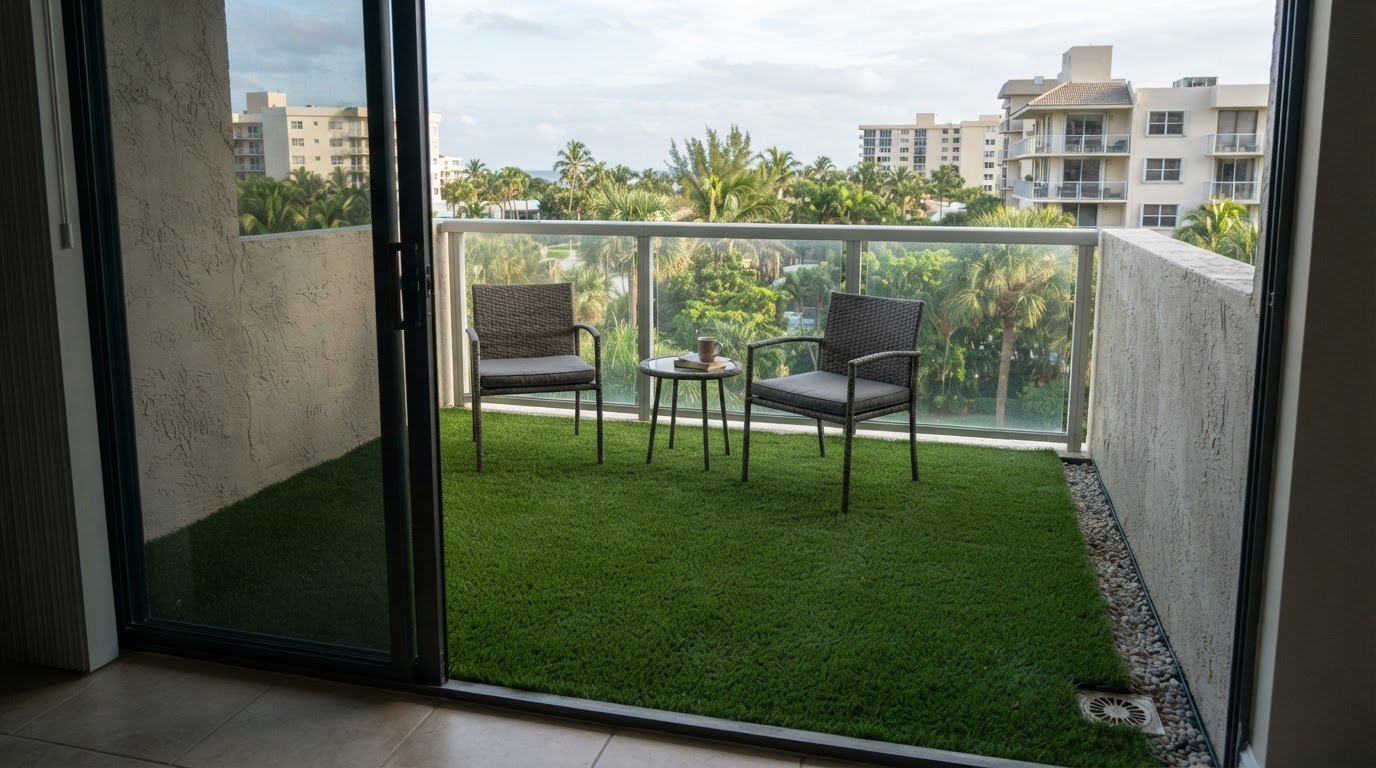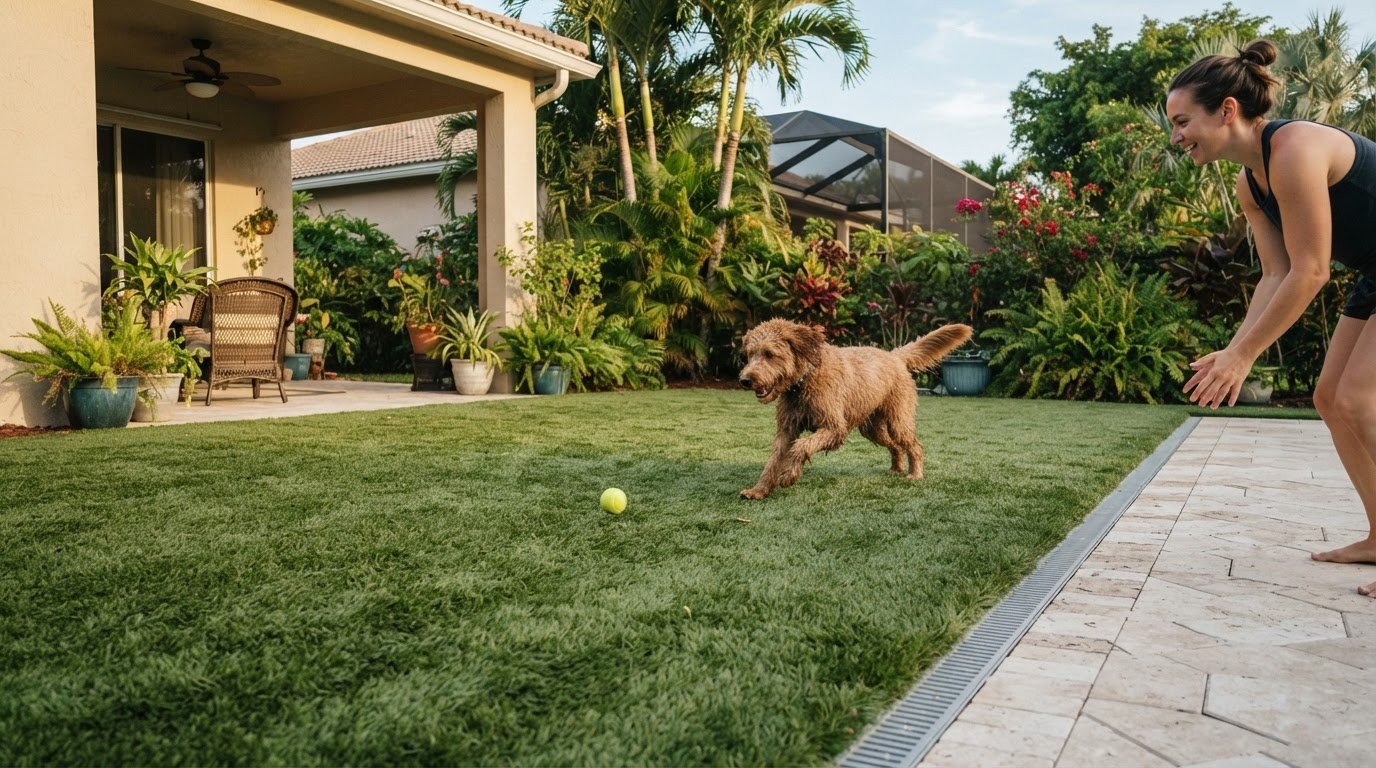
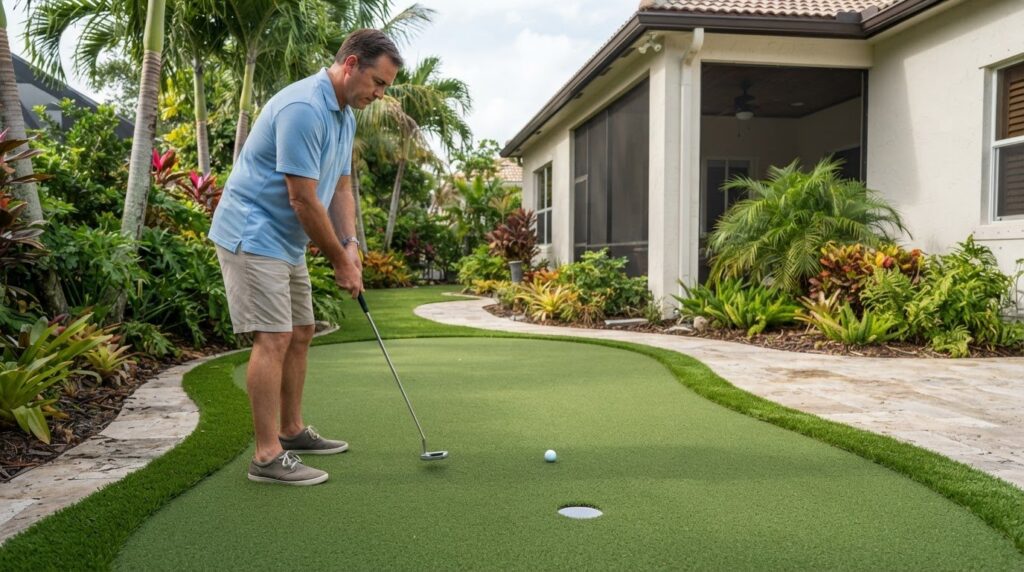
The square-foot rate is only part of the picture: artificial grass cost per square foot installed in Florida depends on turf selection, site preparation, layout, and project size. A compact or intricate area may take different work than a broad, straightforward lawn. A useful estimate reflects the complete project, not just its surface area.
It’s natural to focus on the per-square-foot figure when planning a turf upgrade, but the installation scope matters just as much. Site preparation, shaping, and material requirements all affect the work involved.
This article explains the main factors that affect installation costs, how project size can influence per-square-foot pricing, and what to consider when weighing DIY against professional installation. It also shows how to assess the scope, whether you’re planning a compact area or a larger lawn, so you can better understand the work involved.
Key Takeaways
- Compare estimates by checking what they include, from site preparation and turf materials to labor and finishing details.
- Measure the area and consider its shape and condition, since project size alone doesn’t determine the final per-square-foot rate.
- Weigh DIY savings against the tools, time, and precision required for a well-prepared, even installation.
- Choose turf and installation details around how you plan to use the space, whether for a lawn, pets, recreation, or putting practice.
How Much Does Artificial Grass Cost in 2026?
There is no single useful figure for every Florida installation. The total depends on turf selection, preparation, labor, layout, and the property itself. National averages can provide context, but the required work varies from site to site.
Turf Installation Pricing Factors
Turf installation pricing reflects the full scope, from removing natural grass to preparing a stable base. Two lawns with the same area may require different labor and site preparation, so square footage alone does not tell the whole story.
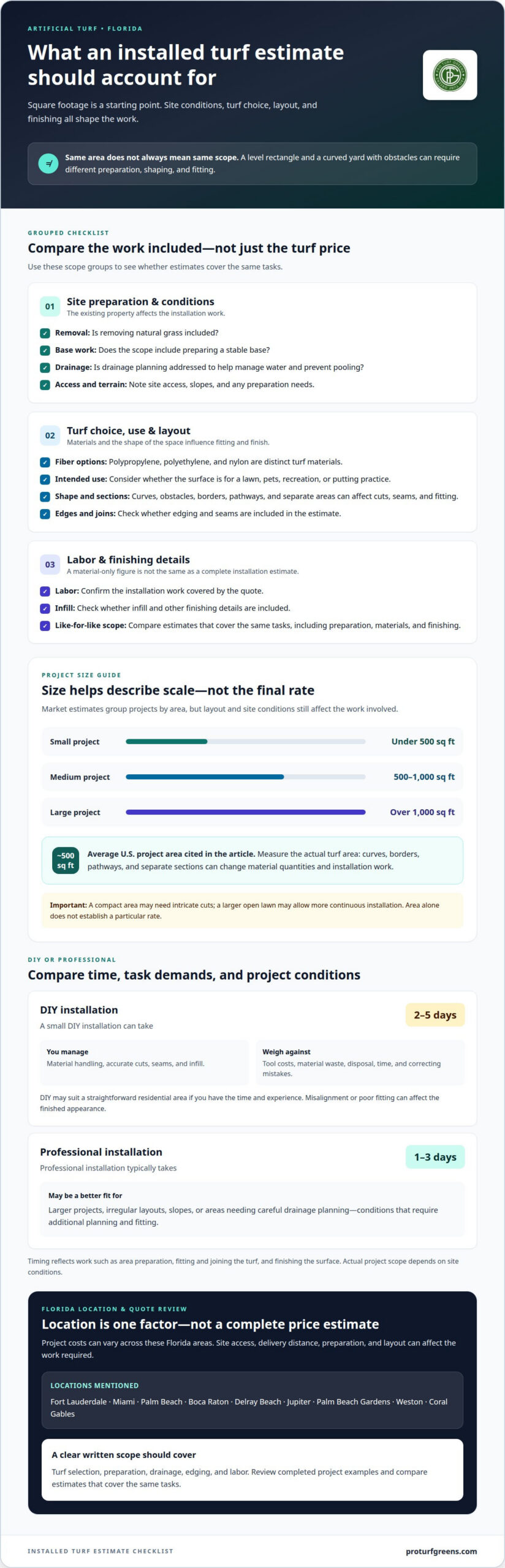
A level rectangle requires different shaping than a curved yard with obstacles. Removal, edging, base work, drainage planning, and seams also affect the scope. The average U.S. artificial turf project covers about 500 square feet, but its size doesn’t determine how complex the work will be.
Compared with natural grass, artificial turf shifts the project toward installation rather than planting and ongoing lawn care. A fair comparison considers both the initial project scope and the maintenance each surface requires.
Turf Materials, Quality, and Features
Artificial turf varies by fiber type and construction, so your selection affects the surface and its intended use. Polypropylene, polyethylene, and nylon are distinct material options.
Turf and installation details should suit the space. A lawn, pet area, and recreational surface may call for different characteristics. Preparation matters too: the base supports the turf, while drainage planning helps manage water and prevent pooling.
Compare estimates by checking whether they include removal, base preparation, edging, seams, and infill. A material-only figure does not describe the same scope as a complete installation estimate.
Florida Regional Price Differences
Project costs can vary in Fort Lauderdale, Miami, Palm Beach, Boca Raton, Delray Beach, Jupiter, Palm Beach Gardens, Weston, and Coral Gables. Site access, delivery distance, preparation, and layout can affect the work required. Location alone cannot establish a reliable project rate.
When assessing an installer, look for a clear written scope covering turf selection, preparation, drainage, edging, and labor. Review completed project examples and compare estimates that cover the same tasks. This makes it easier to distinguish a well-defined plan from a quote that leaves important work unclear.
DIY vs Professional Cost to Install Artificial Turf: Which Option Is Worth It?
DIY installation can reduce labor costs, but it leaves the homeowner responsible for the entire process. Professional installation puts that work in the hands of an experienced crew, while the project cost still depends on its scope and site conditions.
A small DIY artificial turf installation can take 2 to 5 days. Professional installation typically takes 1 to 3 days. The difference reflects the time needed to prepare the area, fit and join the synthetic turf, and finish the surface. A homeowner should weigh those tasks against available time and installation experience.
DIY may suit a straightforward residential area if you can manage material handling, accurate cuts, seams, and infill. Misalignment or poor fitting can affect the finished appearance. Weigh any labor savings against tool costs, material waste, disposal, and the effort needed to correct mistakes.
Professional installation may be a better fit for larger projects, irregular layouts, slopes, or areas that need careful drainage planning. These conditions require additional planning and fitting. Review the project scope to see which tasks are included, then compare estimates for the same work rather than just the turf.
Commercial spaces differ from residential lawns because intended use and layout shape the installation plan. A home lawn may prioritize a consistent, comfortable surface, while a larger recreational site may have distinct use areas and more complex edges. In either case, the investment depends on turf selection, area, access, and preparation.
The price depends on the project and is provided after a quote request; turf choice, area, access, preparation, slopes, and drainage shape the scope. For an artificial turf project, compare the work involved with your timeline, skills, and intended use before choosing DIY or professional installation.
Project size and per-square-foot pricing
Installed pricing is often expressed per square foot, but it is more than a material calculation. The estimate should account for the synthetic grass and the work required to install it. Area affects material quantities, while preparation, access, layout, and finishing affect labor. Multiplying a material figure by the yard size will not capture the full installation.
Project size provides a useful starting point for comparing scopes. Market estimates group small projects as under 500 square feet, medium projects as 500 to 1,000 square feet, and large projects as over 1,000 square feet. These categories help describe scale, not guarantee a particular rate. A compact area can still require intricate cuts, while a larger open lawn may allow more continuous installation.
The average U.S. artificial grass project covers about 500 square feet. At that size, measure the actual turf area rather than relying on a rough yard estimate. Curves, borders, pathways, or separate sections can change the amount of turf and installation work. A 500-square-foot area with a simple outline may have a different scope than the same area divided into narrow sections.
Infill and finishing details should be part of an installed estimate, not left out because they are less visible. Ask whether the scope covers site preparation, base work, seams, edging, and infill. For example, an estimate excluding removal or base preparation covers different work from one that includes those tasks. Comparing like-for-like scopes makes the per-square-foot figure more meaningful.
Commercial projects may include larger areas or multiple use zones, so the estimate should reflect the full layout rather than a residential lawn rate. Annual upkeep is separate from installation and should not be folded into the initial square-foot figure. A clear estimate distinguishes installation from later maintenance and explains how measured area and site conditions shape the project scope.
Artificial grass installation cost per square foot
For Florida homeowners, the useful installed rate is specific to the project, not a figure that fits every property. It reflects turf, labor, and site work together. A per-square-foot rate is meaningful only when estimates cover comparable tasks, such as removing the existing surface, preparing the base, fitting the turf, and finishing the edges.
Installation costs change with site conditions. An accessible, straightforward lawn requires different preparation from a Florida yard with uneven ground, limited access, or a complex outline. Drainage planning and base preparation also affect the work. Minimal preparation can simplify a project, while grading or removal adds tasks that a turf-material figure alone will not show.
Compare the scope before comparing the rate. Check whether each estimate includes materials, labor, removal, base work, seams, edging, and infill. One proposal may cover turf supply only, while another includes installation and site preparation. Those are different scopes, even if both use a per-square-foot figure.
Start by measuring the area and noting site conditions. Then compare each estimate against the same task list and intended use. A lawn, pet area, or artificial turf driveway may call for different materials and preparation. The lowest figure may leave out work required for your chosen surface, so review what is included before judging value.
There isn’t a defensible single Florida average for every installation type and property condition. The project’s materials, access, layout, and preparation determine the relevant installed rate. The price depends on the case and is provided after a quote request. For a driveway project, explore artificial turf driveway options as one example of a surface with its own installation scope.
Pro Turf Greens: Backyard Putting Greens
Pro Turf Greens can design an artificial turf project around how you plan to use the space. For a dedicated practice area, Backyard Putting Greens offer a focused option; Playgrounds & Recreational Turf and Lawns & Pet Turf suit different household needs.
Before choosing a design, consider the intended use, available area, and features that matter most. A putting green, play space, and pet area each call for a distinct plan. Pro Turf Greens also offers Tee Lines & Driving Ranges for practice beyond the backyard.
Contact Pro Turf Greens to discuss your artificial turf project and find the right fit for your space.
Shape Your Outdoor Space Around How You’ll Use It
Before settling on a layout, picture how the finished space should support your routine. A practice area, a place for active play, and a lawn each serve a different purpose. Keeping the intended use in focus makes artificial grass cost per square foot installed in Florida one part of a broader decision about fit, function, and design.
Pro Turf Greens offers Backyard Putting Greens, Playgrounds & Recreational Turf, and Tee Lines & Driving Ranges. These options let homeowners plan outdoor spaces for different kinds of recreation and practice. Start with the activity you want the area to support, then choose a design that suits the available space.
Ready to explore a turf project shaped around your plans? Contact Pro Turf Greens today to discuss the space you have in mind. Your next step can begin with a clear vision and a thoughtful conversation.
Frequently Asked Questions
Do you need a permit to install artificial grass?
Permit requirements depend on the local jurisdiction and the proposed work, so there is no single answer for every Florida property. Before installation, ask your city or county building department whether your project requires approval. This is a useful first step in Fort Lauderdale, Miami, Palm Beach, Boca Raton, Delray Beach, Jupiter, Palm Beach Gardens, Weston, and Coral Gables.
Is artificial grass worth having?
Artificial grass can be worthwhile if its maintenance profile and appearance suit your household. Consider how you use the yard, whether natural grass upkeep is a burden, and how long you expect to stay in the property. Market estimates describe artificial turf as lasting 10 to 20 years, depending on quality and maintenance, so material selection and care matter to the long-term decision.
What’s Included in the Cost?
An installation estimate may include turf materials, labor, and project-specific preparation. Review the written scope for grass removal, base work, seams, edging, infill, and drainage planning. An estimate for turf supply alone does not cover the same work as one that includes installation and preparation. Confirming the included tasks helps you compare proposals on an equal basis.
How much does artificial turf installation cost in Florida by project size?
Project size affects the total investment, but square footage alone does not determine the installed price. A small area may need careful trimming around its boundaries, while a broad space may require more material and installation work. For a useful estimate, measure the area and note separate sections, curves, access limits, and each space’s intended use.
What factors affect artificial grass installation prices in Florida?
Material selection, site condition, access, layout, removal, and finishing details all affect installation pricing. A flat, open rectangle has a different scope from a yard with slopes, narrow sections, or curved edges. Intended use matters too: a lawn, pet area, or recreational surface may call for different turf choices and installation planning.
What are the costs of artificial grass materials, labor, base preparation, and drainage?
Costs depend on the project, so treat these as separate parts of the installation scope rather than assuming a standard breakdown. Turf type affects material selection; site conditions affect preparation and labor; drainage planning depends on the surface and layout. Ask for an estimate that identifies these components so you can see which work and materials the total covers.