Choosing infill is about finding the right fit, not simply picking a material. The most useful questions to ask about turf infill cover which options suit the application, what each product contains, and how the particle size and amount are selected. Common lawn options include silica sand and Envirofill; other materials include zeolite, crumb rubber, TPE, and organic infills such as cork, coconut fiber, or walnut shell.
It’s reasonable to start with the material, but the right choice also depends on how the turf should look and function. A putting green, pet area, and recreational surface can have different requirements, so discuss the intended use alongside the infill.
This guide covers questions to ask about material options, additives, infill sizing, and installation details. You’ll also learn what a clear quote should explain and how an installer’s experience can inform the plan, helping you review the details before work begins.
Key Takeaways
- Ask how infill is made and whether its ingredients can vary between batches, especially when recycled materials are used.
- Make the installation quote clear about the selected infill and how its type and amount suit the intended use.
- Look beyond product labels: ask about turf and infill components, additives, and available written disclosures.
- Choose infill size for the application, since the right fit can influence how the turf looks and performs.
1. How Long Has the Manufacturer Been Producing and Installing Turf?
Time in the industry can provide useful context, but transparency about materials matters too. Ask how long the manufacturer has produced the turf and whether it also handles installation. Then ask what the infill contains, whether it is new or recycled, and whether its ingredients vary between batches. Manufacturers may provide a complete ingredient list for new materials; recycled materials can vary from lot to lot.
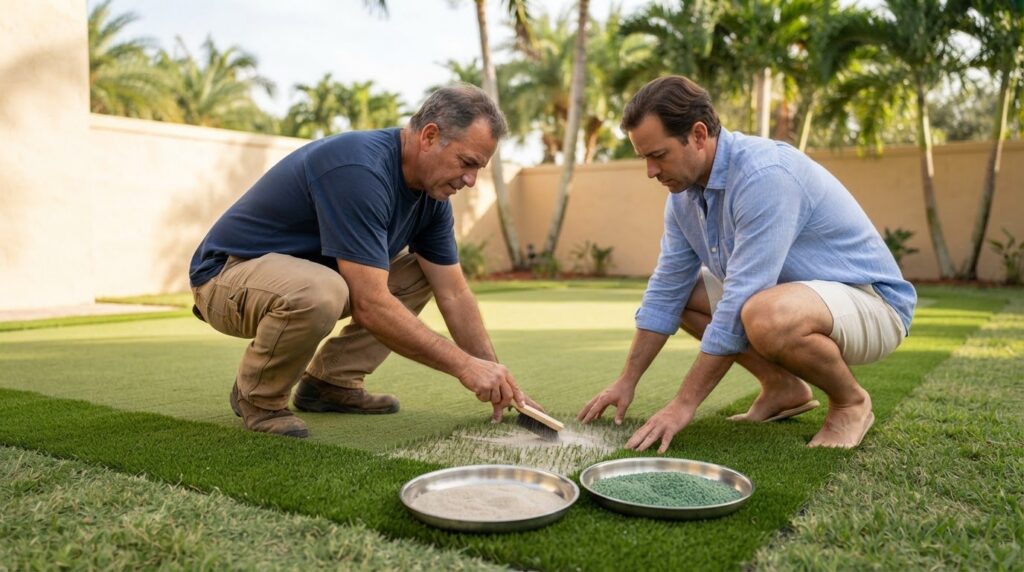
Request the material details in writing, including the infill name and whether it is silica sand, Envirofill, zeolite, crumb rubber, TPE, or an organic material such as cork, coconut fiber, or walnut shell. These options differ, so connect the choice to the planned use. Infill supports turf blades, provides ballast, and contributes to cushioning underfoot. The turf itself may use nylon, polyethylene, or polypropylene fibers, which also affect its characteristics.
Discuss heat directly. Turf infill can become hot in direct sun; rubber infill and zeolite can become extremely hot and give off an unpleasant odor. Silica sand is described as durable and as helping keep turf cool. Ask which material best suits the site’s sun exposure and intended activity instead of judging by a product label alone.
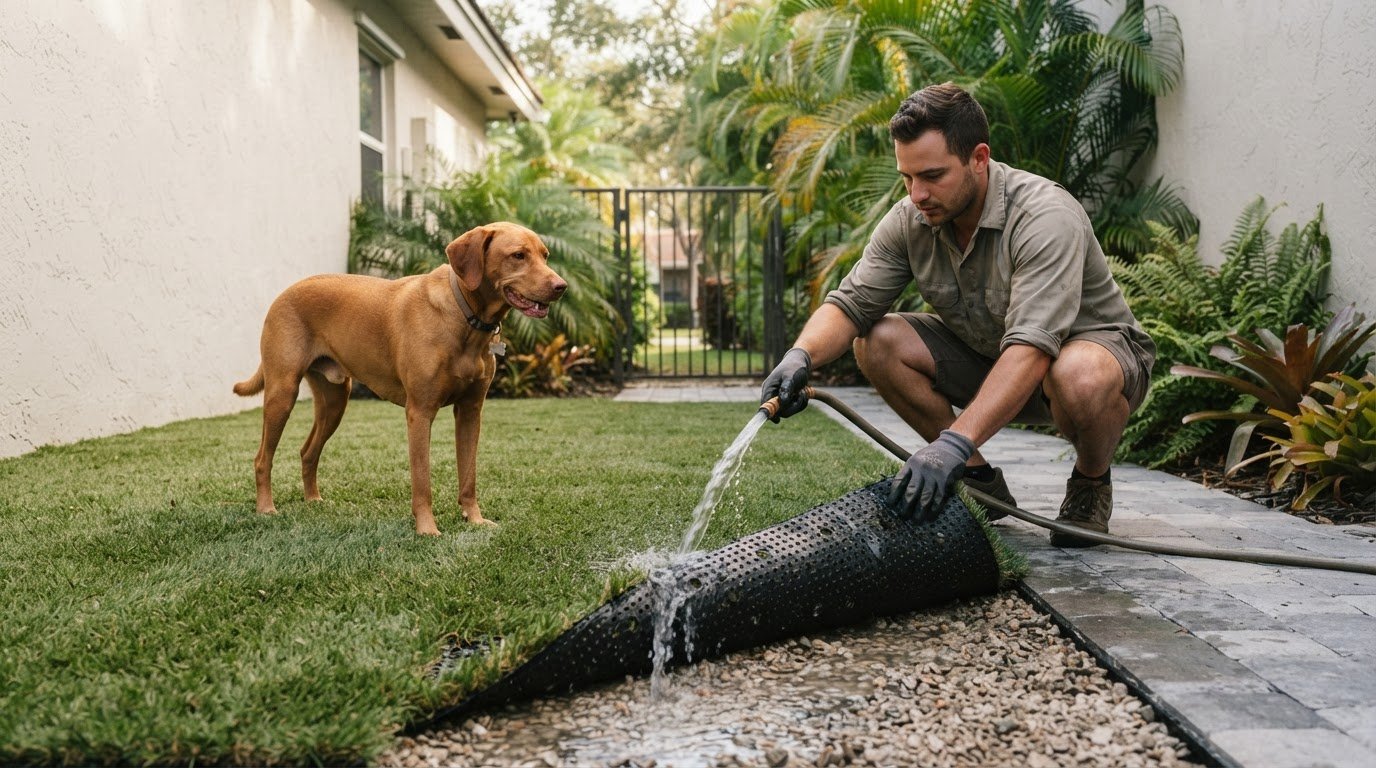
For routine cleaning and maintenance, remove surface debris and brush regularly to keep the fibers upright. For light residential turf without pets, inspect the infill annually and top it up if needed. Removing infill is different from routine cleaning: discuss why removal is needed, such as for replacement, and how the turf system will be protected during the work.
For a driveway, ask how the selected turf and infill suit the surface’s intended use. A clear answer should connect the material choice to appearance, feel, and maintenance, not just the manufacturer’s time in business.
2. Requesting an infill option in the installation quote
A useful quote connects the chosen infill to the entire turf installation, not just a material name. It should identify the infill, explain how the specified amount fits the turf requirements, and describe the included work. Manufacturer experience and installer experience are separate: the manufacturer makes the turf or infill, while the installation team prepares the surface and places the material. A history of comparable projects can help explain how the installer approaches those steps.
The quote should also clarify who performs the work. If an installation team is outsourced, the scope can name that arrangement and identify who coordinates preparation, infill placement, and a final review. Clear responsibility helps prevent gaps between the manufacturer’s material instructions and the crew’s installation method. A well-scoped turf installation plan also connects the infill choice to the intended use and surface conditions.
How much does turf infill cost, including installation? The price depends on the infill material, surface area, turf specifications, and installation scope; the total is provided after a quote request. Ask for the quote to separate material from labor and describe the work each amount covers, rather than relying on a material-only estimate.
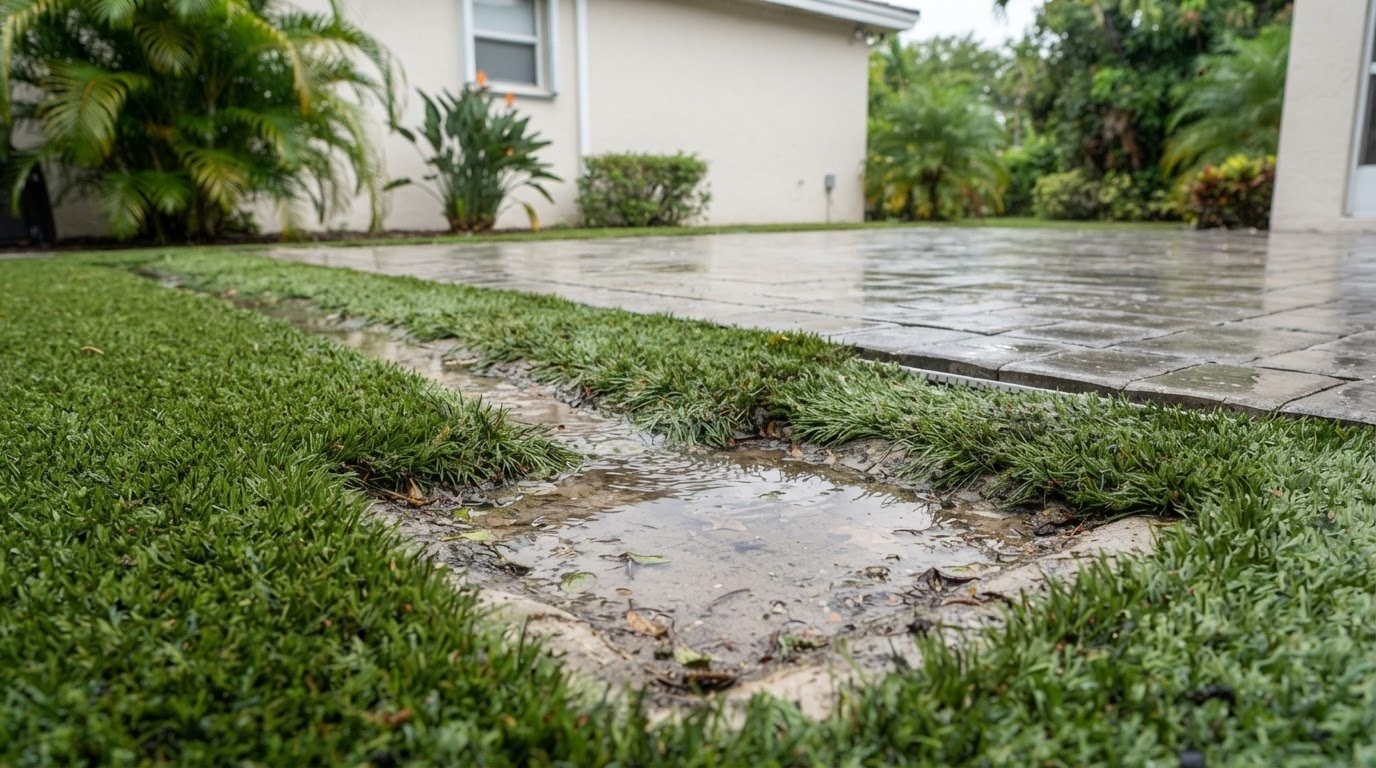
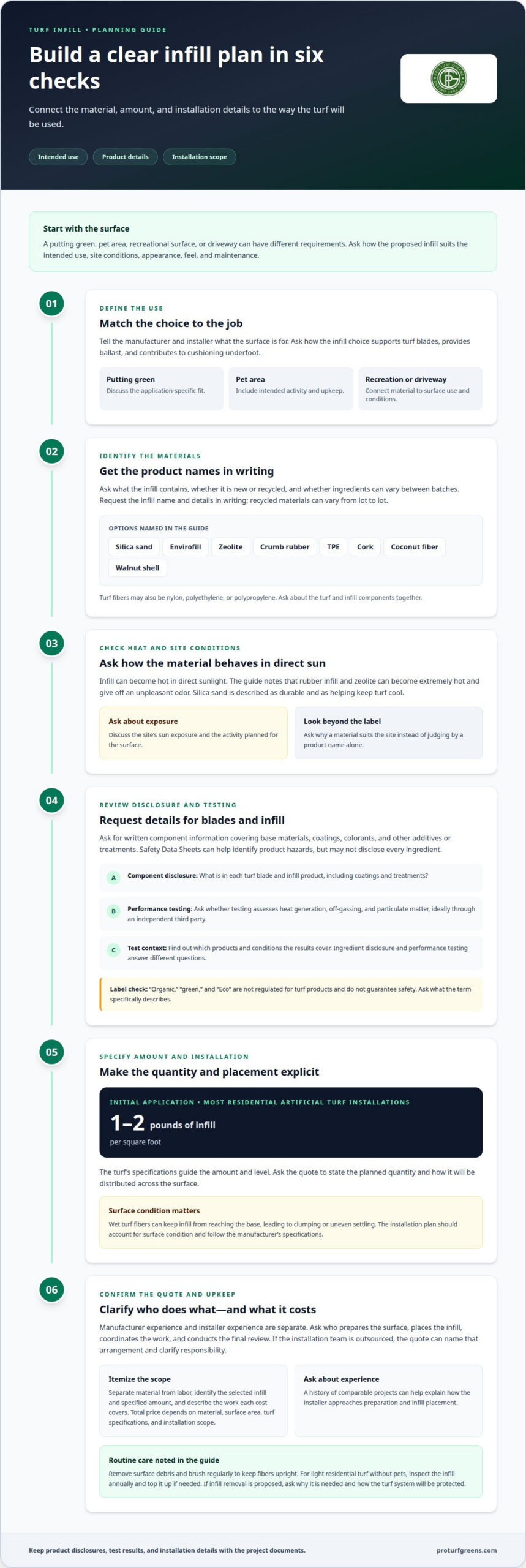
Infill placement deserves specific attention. Most residential artificial turf installations require 1 to 2 pounds of infill per square foot for an initial application, while the turf’s specifications guide the amount and level. The quote can state the planned quantity and how the installer will distribute it across the surface. Wet turf fibers can prevent infill from reaching the base, causing clumping or uneven settling. A sound installation plan therefore accounts for surface condition and follows the manufacturer’s specifications. These details make the quote easier to assess alongside the installer’s relevant project experience.
The total depends on the infill material, surface area, turf specifications, and installation scope. Request an itemized quote to see the material and labor costs and the work included in each.
3. Chemical additives and coatings in turf blades and infill
Ask for written disclosure of the components in both the artificial grass blades and the infill. Include coatings, colorants, and other additives, not just the base materials. Safety Data Sheets can help identify product hazards, but they don’t necessarily disclose every ingredient. Manufacturers aren’t required to list every ingredient on those sheets, so an SDS alone may not provide a complete component list.
For a sports surface with regular foot traffic, ask whether the turf or infill contains contaminants or potentially harmful chemicals. Request a written account of product components, including blade coatings and infill treatments. Clear documentation helps you understand what makes up the installed system, rather than relying on broad descriptions such as “artificial grass” or “low maintenance.”
Ask how the complete surface performs under realistic playing conditions. Relevant testing can assess heat generation, off-gassing, and particulate matter, ideally through an independent third party. These are distinct measures: ingredient disclosure describes what a product contains, while testing evaluates how the system behaves during use. Ask which products and conditions the results cover.
Interpret labels carefully. Terms such as “organic,” “green,” and “Eco” aren’t regulated for turf products and don’t guarantee safety. An “Eco” label, for example, doesn’t replace written component disclosure or performance testing. Ask what specific material or characteristic the label describes, and seek supporting product information instead of treating the word as proof of a particular composition.
Keep the answers with the installation documents. A practical review has three steps: identify each blade and infill product, collect written component disclosures, and review any independent test results for the intended use. For artificial turf used by children, pets, or athletes, this record helps connect product details to the surface’s purpose and expected traffic.
4. Choosing infill size for putting greens and other applications
“Size” can mean particle size or the total amount of infill. Ask which particle size the turf manufacturer recommends for the specific synthetic turf and how the installer will meet that recommendation. Granule size and material affect the surface’s appearance and function, so the choice should suit the application rather than follow a one-size-fits-all rule.
Most residential artificial turf installations require 1 to 2 pounds of infill per square foot for an initial application. The proper amount depends on the turf system and manufacturer specifications, so the installation plan should state its intended weight per square foot.
For a putting green, ask how the selected infill size and amount support the turf’s intended playing characteristics. A lawn, driveway, or sports field has different demands, so describe the activity and expected traffic. The answer should explain how the material and particle size suit the surface, not simply name an infill product.
Pile height also affects quantity: synthetic turf with fibers over 1.5 inches requires more infill to reach the fiber base. Ask the installer to account for that height and state the planned amount in the quote. Infill levels should follow manufacturer specifications when required for safety requirements, particularly on sports and training surfaces with H.I.C. or GMAX ratings.
Before installation, clarify how the crew will distribute the specified amount evenly and confirm the finished level against the turf manufacturer’s instructions. This helps you understand whether the surface is designed for its intended use and how to assess future top-ups. The key is to select particle size and quantity together, based on turf specifications, pile height, and activity.
For a putting green tailored to its intended play, discuss your putting green project.
Pro Turf Greens
Pro Turf Greens helps homeowners plan artificial turf projects around their intended use, from play and recreation to putting and everyday lawn use. If you’re weighing infill material, particle size, or the specified amount for your surface, discuss how those choices fit the project.
For Backyard Putting Greens, Playgrounds & Recreational Turf, Tee Lines & Driving Ranges, and Lawns & Pet Turf, the application guides the conversation. Share how you expect to use the area and which infill questions remain, such as how the proposed material and installation plan fit the turf system. This gives the project discussion a practical starting point without treating one infill choice as right for every surface.
For guidance on an artificial turf project and its infill choices, contact Pro Turf Greens.
Shape the Next Step for Your Turf Project
Your next step is to turn your ideas into a clear project brief. Consider how you want the finished space to feel and function, which priorities matter most, and what decisions you still need to make. A focused conversation can connect those preferences to practical design choices before installation begins.
Use questions to ask about turf infill as a framework for discussing your project goals, not as a checklist detached from the space itself. Keep your questions to ask about turf infill focused on how material and sizing decisions support the intended use. Sharing your priorities gives the conversation a practical starting point.
Bring your ideas and remaining questions to Pro Turf Greens. Contact Pro Turf Greens today to discuss your project and take a considered next step toward a surface designed around your needs.
Frequently Asked Questions
What Infill Options Are Available?
Common options include silica sand, Envirofill, zeolite, crumb rubber, TPE, and organic materials such as cork, coconut fiber, or walnut shell. For a Boca Raton project, compare options by the turf system and intended activity, not by material name alone. Ask which choices are compatible with the selected turf and what product documentation explains their composition and recommended use.
What Is the Best Artificial Grass Infill for Pets?
The best fit depends on how the pet area is used and the turf system’s requirements. For heavy daily pet use, inspect infill seasonally and consider professional infill service annually. Discuss how the selected material suits the surface and the maintenance you expect to manage. For occasional pet use, include the areas pets use most in routine inspections, since wear can be uneven.
Why Is Infill Needed for Turf?
Infill supports turf fibers, provides ballast, and adds cushioning underfoot. Without a suitable infill plan, the surface may not feel or perform as intended. A play area and a decorative lawn, for example, have different priorities. Relate the choice to the activity, turf specifications, and the feel you want from the finished surface.
How Does Infill Change Over Time?
Infill may need attention as a surface is used, so inspect its distribution instead of assuming it remains even everywhere. In a residential area with light use and no pets, inspect annually and top up if needed. With moderate foot traffic and occasional pets, inspect twice per year and top up high-traffic zones. These checks can help identify uneven areas early.
What Are the Pros and Cons of Each Type?
Silica sand is durable and is described as helping keep turf cool. Rubber infill and zeolite can become extremely hot in the sun and give off an unpleasant odor. TPE is reported to have a service life of over 10 years. Organic options include cork, coconut fiber, and walnut shell. Compare each material’s characteristics against the turf’s intended use and specifications.
What Is the Difference Between Silica Sand and Zeolite Infill?
Silica sand is a durable infill and is described as helping keep turf cool; zeolite is another option with different performance characteristics. Compare them for the specific turf system, intended activity, and site conditions. In direct sun, include surface heat in the discussion. Ask how each material’s recommended application fits the turf specifications and maintenance plan.