The cost of a poolside turf project depends on more than the area to cover. Non-slip turf for around pools can create a comfortable-looking surface beside the water, but the condition of the existing base and the installation details also affect the result.
Artificial turf is used around pool areas as a non-slip surface that can reduce risk in a hazardous area, while staying green year-round. It can go over concrete when the slab and installation approach are suitable, so the surface condition matters as much as the turf itself.
It’s reasonable to ask whether turf around a pool meets ADA requirements, but the label “non-slip” alone doesn’t answer that. This guide covers accessibility, installation over concrete, UV exposure and heat, as well as the factors that affect installation cost. Learn how the base, preparation, drainage and layout influence the work, and what to consider when planning a poolside surface that balances function with a polished finish.
Key Takeaways
- Learn which poolside conditions matter when choosing an artificial turf surface, beyond its appearance.
- Understand what makes existing concrete a suitable base and how installation details affect the finished surface.
- See how sun exposure and heat can influence comfort and long-term turf performance.
- Identify the project details that shape installation costs, from site preparation to layout complexity.
Artificial turf around pool areas
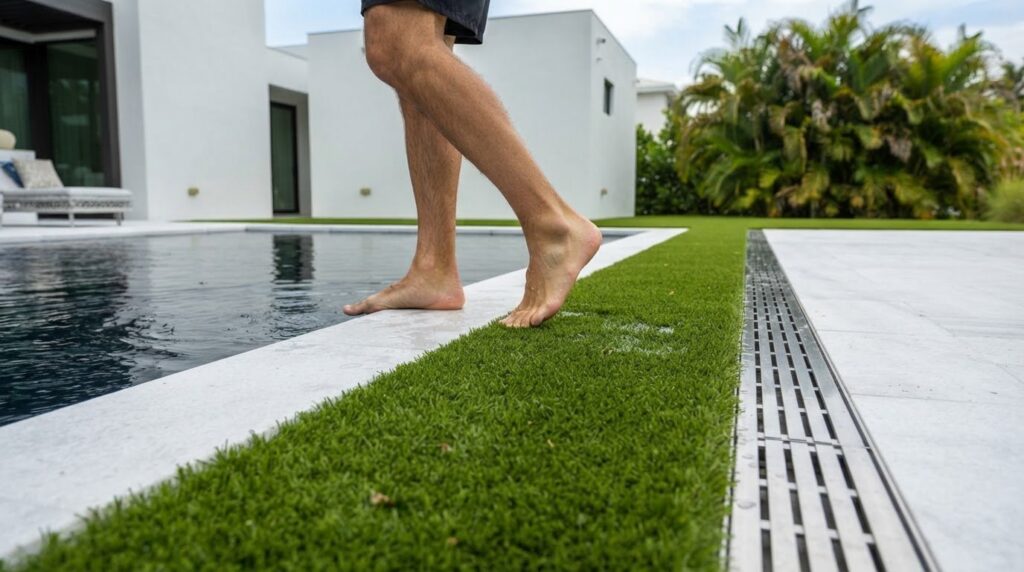
Around a pool, splashes, wet feet and tracked-in debris all affect how a surface performs. Artificial turf can provide a green, non-slip surface beside the water year-round.
Chlorine and Pool Chemical Compatibility
Chlorinated water, saltwater and pool-treatment products can splash onto turf, so chemical exposure is worth considering when choosing a poolside surface. Their effects depend on the turf’s materials and construction, so don’t assume every surface responds the same way. Rinse visible residue with clean water and follow the product’s care guidance for cleaning agents. This avoids relying on an unverified chemical-resistance claim.
Routine care means removing leaves and debris, rinsing away pool residue, and brushing flattened fibers back into place as needed. Turf is easier to use when the surface is clean and debris isn’t collecting between the blades.
Mold, Bacteria, and Standing Water
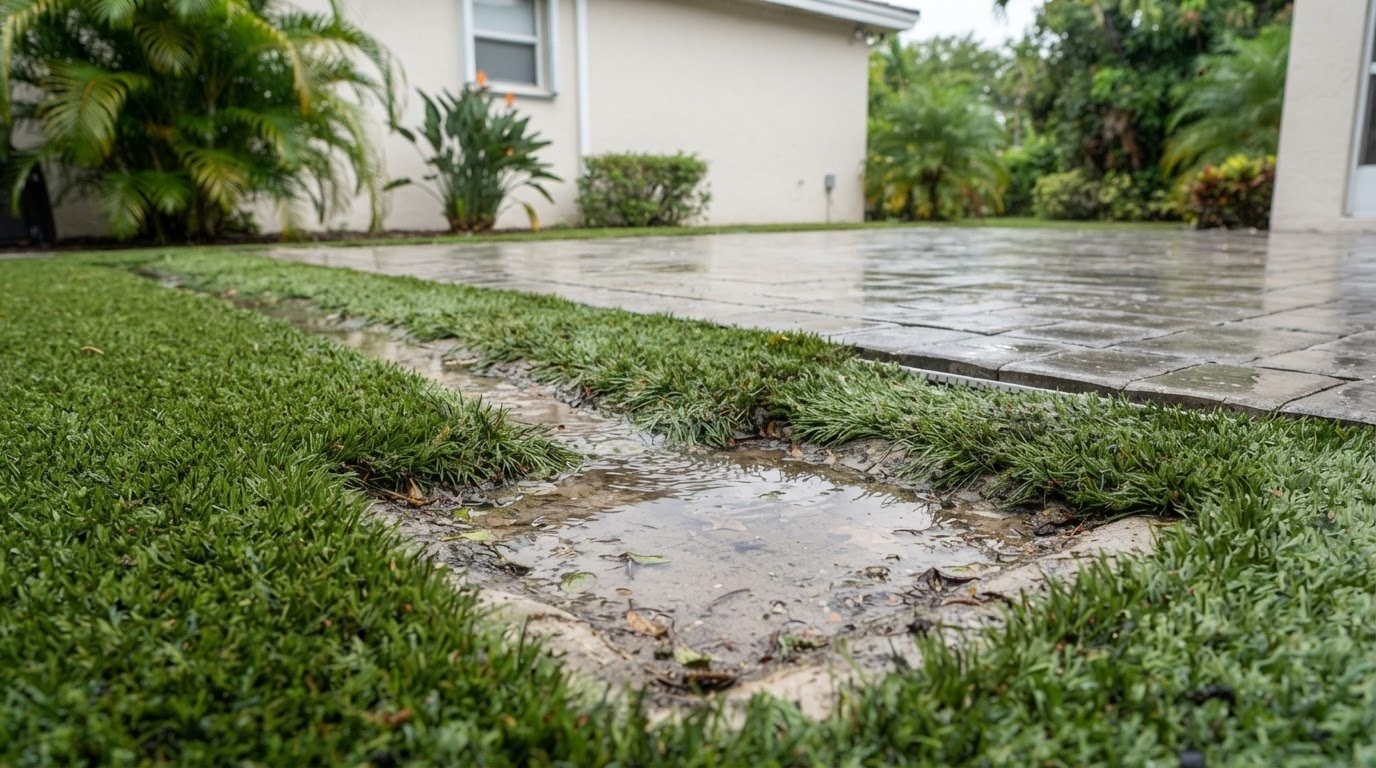
Water trapped beneath poolside turf can leave persistently damp conditions, while leaves and organic debris can hold moisture on the surface. These conditions can contribute to mold or bacterial growth, making drainage an important part of the installation. The finished base should let water flow away rather than collect underneath. Low spots and blocked drainage paths can leave standing water after pool use or rain.
Rubberized pool surfacing is another option. It creates a distinct look from natural grass, so compare how it feels underfoot and suits the pool’s layout. Turf provides a green finish, while rubberized surfacing may suit a design focused on a continuous resilient surface. Neither label alone establishes accessibility or performance: the installed surface and its conditions matter.
Poolside turf is commonly supplied in rolls, with listed pool-surround artificial grass described at 2 metres wide. That size can inform layout planning, but pool curves, steps, and fittings affect how seams and edges are arranged. Careful detailing around those features helps create a more consistent finish.
Can they be installed over existing concrete?
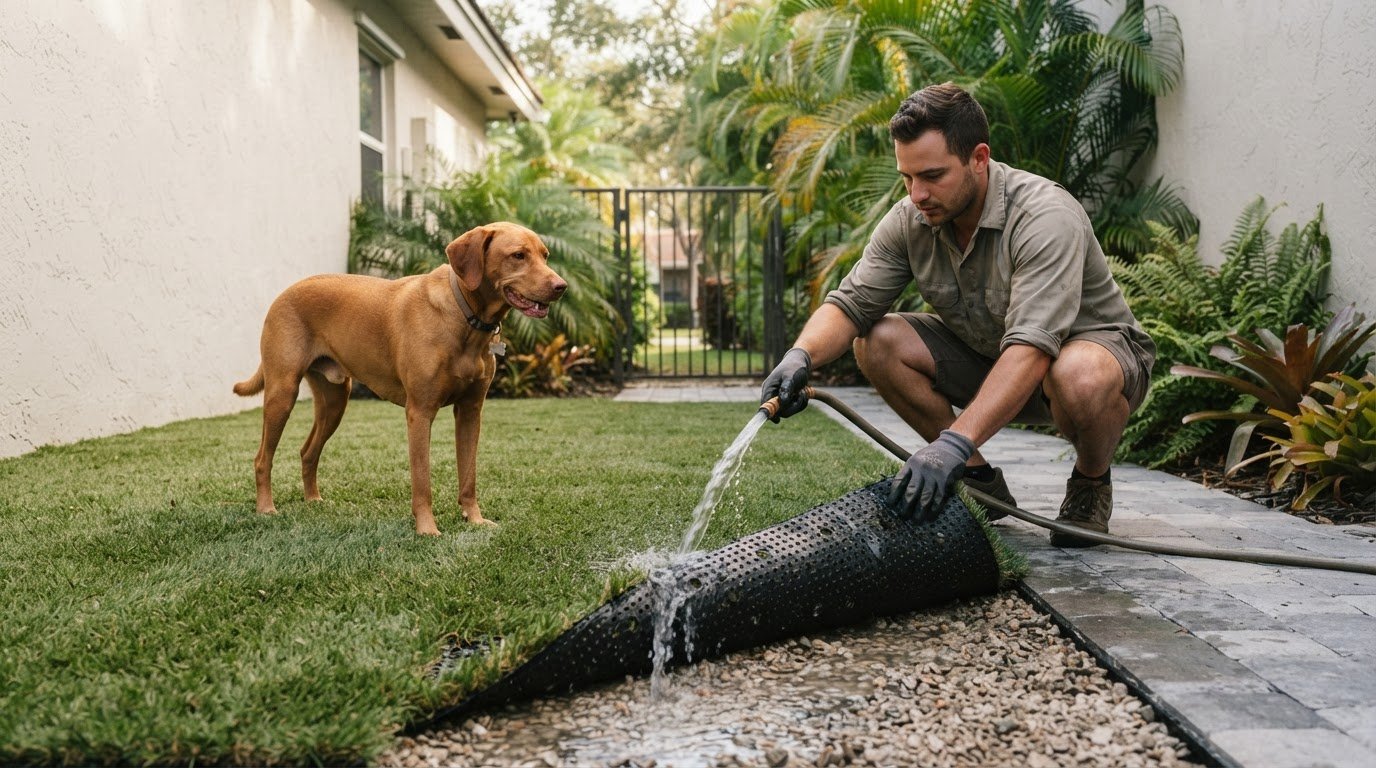
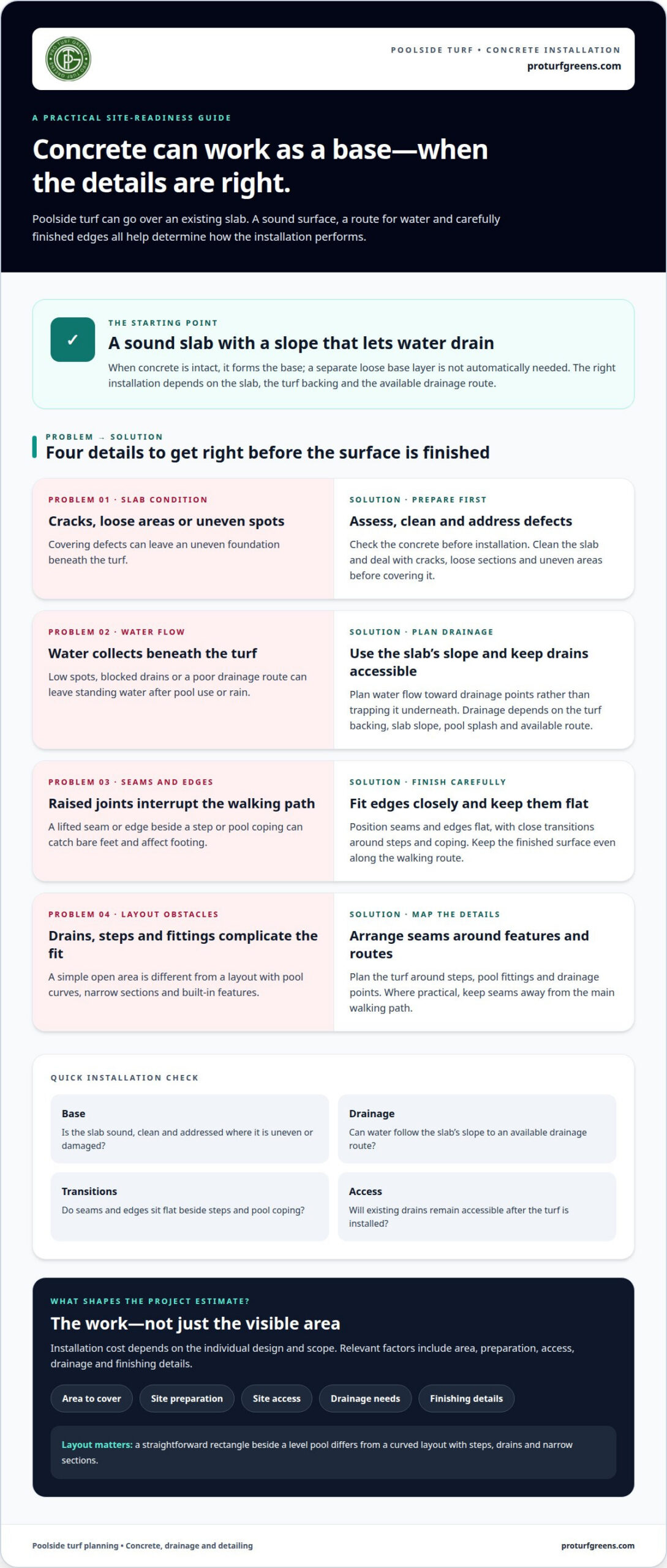
Yes, artificial turf can go over concrete when the slab is sound and its slope allows water to drain. Installation details affect drainage and footing, so the slab and its edges need careful attention.
Drainage and Slip-Resistant Installation
Poolside installation needs to account for the concrete slab’s slope, water flow and the turf backing. The surface should not create low spots where water can collect. Slip resistance also depends on the finished surface, including seams and transitions near steps or pool coping. Fit these areas closely, without raised edges that could catch bare feet.
Before covering concrete, assess cracks, loose sections and uneven areas. Clean the slab and address defects, then position the turf so seams and edges sit flat. A raised joint beside a pool step, for example, can interrupt an otherwise even walking path. Keep existing drains accessible, and plan the layout to direct water toward drainage points rather than trap it beneath the turf.
Base Material and Drainage Rate
On an intact slab, the concrete itself forms the base, so a separate loose base layer isn’t automatically needed. Drainage depends on the turf backing, slab slope, pool splash and available drainage route. There’s no single drainage rate suited to every pool deck. Design the installation for those conditions and avoid blocking existing drains.
Compared with decking, turf creates a continuous green finish, while deck boards have visible joints and a different feel underfoot. Concrete deck tiles offer a modular surface, with a distinct appearance created by separate pieces and joints. Turf over concrete avoids a full deck replacement, though slab preparation and edge detailing remain important. Every option needs a stable, well-drained surface around pool fittings and steps.
For another paved application, the same attention to surface preparation informs artificial turf driveway projects.
UV resistance and heat reduction
Poolside turf is exposed to strong sunlight, warm surfaces and regular splashing. UV exposure can affect its appearance over time, while direct sun can make the walking surface hot. Consider material selection and shade planning to address both conditions.
UV resistance depends on the turf’s materials and construction, so the general label “artificial grass” doesn’t explain how a surface handles sunlight. Review product information for UV resistance and care guidance. Turf beside an uncovered south-facing pool, for example, may receive more direct sun than turf under a covered patio, which can affect how its color and fibers age.
Heat is a separate consideration from UV durability. In full sun, a surface can become uncomfortable for bare feet, regardless of its green appearance. Shade from a pool umbrella or covered seating area can reduce direct exposure on frequently used paths. Check the surface with a hand before walking barefoot, especially after extended afternoon sun.
Artificial turf is used around pools as a non-slip surface, but that doesn’t mean every installation prevents slips. Wet leaves, sunscreen residue, uneven seams and loose transitions can affect footing. Keep walking routes clear, rinse away residue, and maintain a flat finish where turf meets coping or steps.
For example, a narrow strip between a pool ladder and lounge chairs needs a clear, stable path. Where practical, plan seams away from that route and avoid raised edges that could catch a foot. Maintain the surface and walk carefully when it’s wet. Shade, drainage and clean turf each address different concerns, so no single feature replaces the others.
Factors affecting installation cost
Poolside turf installation cost depends on the scope of work, not just the visible surface area. A straightforward rectangle beside a level pool differs from a curved layout with steps, drains and narrow sections. The project price depends on the individual design. Area, preparation, access, drainage and finishing details all shape the estimate.
Start with the footprint. A larger surface requires more turf and installation work, while curves and cutouts can add measuring and fitting. Material needs to be shaped around pool steps, ladders, drains and built-in seating. A simple rectangular deck generally involves fewer detailed cuts than a perimeter with several corners and obstacles.
The existing surface is another major factor. A clean, stable concrete slab with an even slope may need less preparation than one with cracks, loose sections or uneven transitions. Removing an old surface, correcting defects or preparing a different base adds work. Access matters, too: a narrow side passage can make moving materials and equipment more difficult than an open route to the pool deck.
Drainage and edge details affect the labor and finish. The layout must work with existing drains and direct water away without covering drainage points. Edges around coping, steps and adjoining paving need careful fitting. Several transitions can require more precision than turf ending along one straight border. Material selection and seam placement also influence the installation plan.
To make an estimate useful, define the area, surface type, access route, and features that need cutouts. Include whether existing turf or another covering needs removal, and identify drainage points. These details help clarify which preparation steps and finishing work the project needs. For a tailored project discussion, request a poolside turf estimate.
Pro Turf Greens
Pro Turf Greens designs and installs artificial turf for residential and commercial spaces. If you’re considering a poolside surface alongside other backyard improvements, the team can help plan how the turf fits into a cohesive outdoor design.
Pro Turf Greens installs Backyard Putting Greens, Playgrounds & Recreational Turf, Tee Lines & Driving Ranges, and Lawns & Pet Turf. These options serve different needs, from recreation to everyday lawn use. For a pool-area project, start by defining the surface conditions, drainage needs and how the surrounding space should function.
Contact Pro Turf Greens to discuss your artificial turf project and the outdoor space you want to improve.
Plan a poolside space that fits your backyard
Choosing non-slip turf for around pools is one part of creating an outdoor space that feels cohesive and works for everyday use. Consider how people move between the pool, seating and recreation areas, then plan transitions so each zone connects naturally. A clear project outline helps turn those ideas into a practical design discussion.
Pro Turf Greens also installs Backyard Putting Greens, Playgrounds & Recreational Turf, and Tee Lines & Driving Ranges. These options can complement different ways of using a backyard, from recreation and practice to simply enjoying the outdoors. Discuss how the pool area should fit the wider space and what you want the finished design to achieve.
Contact Pro Turf Greens to discuss your pool and explore a thoughtful direction for your outdoor project.
Frequently Asked Questions
Are these surfaces ADA compliant?
A surface isn’t automatically ADA-compliant simply because it’s marketed as non-slip. Accessibility depends on the completed route, including transitions, joints, firmness, stability and changes in level. For a pool deck in Fort Lauderdale, consider the full path from the access point to the poolside, including gates and seating areas. Turf alone doesn’t establish whether a route meets applicable accessibility requirements.
How long do these surfaces last?
There isn’t one service-life figure that applies to every pool installation. Strong sun in Miami or Palm Beach, foot traffic, cleaning and installation quality all influence how a surface wears. Look for signs such as flattened fibers, open seams, loose edges or visible backing damage. These may indicate that the surface needs attention, even if the surrounding area still looks intact.
How much does installation cost?
Installation cost depends on the specific project. The estimate reflects the area to cover, the existing surface condition, preparation, access and layout details. A pool deck with curved edges, steps and several drains, for example, needs different fitting work than a simple open area. A project assessment helps define the scope.
What Are the Best Non-Slip Surfacing Materials for Pool Areas?
No single material suits every pool deck. Choosing non-slip turf for around pools means weighing its green finish against rubberized surfacing, concrete deck tiles and pavers. Compare intended use, appearance, surface feel, drainage and edge transitions. A family pool used frequently barefoot may call for different priorities than a deck designed mainly for seating.
What types of artificial turf are best for pool areas?
The best non-slip turf for around pools is designed for outdoor use, with product information that addresses sunlight, drainage and poolside care. The choice also needs to suit the deck’s shape and how people use it. A narrow walking route beside lounge chairs, for example, may call for different seam placement than a broad area used for seating.
How slip-resistant is artificial turf when wet compared with concrete or pavers?
There’s no reliable universal ranking for wet turf, concrete and pavers. Footing can vary with surface texture, wear, residue, drainage and installation details. A smooth or dirty surface may feel different from a clean, well-maintained one. Compare the specific finished surfaces under poolside conditions, including the transitions and joints where people move between turf, paving and steps.