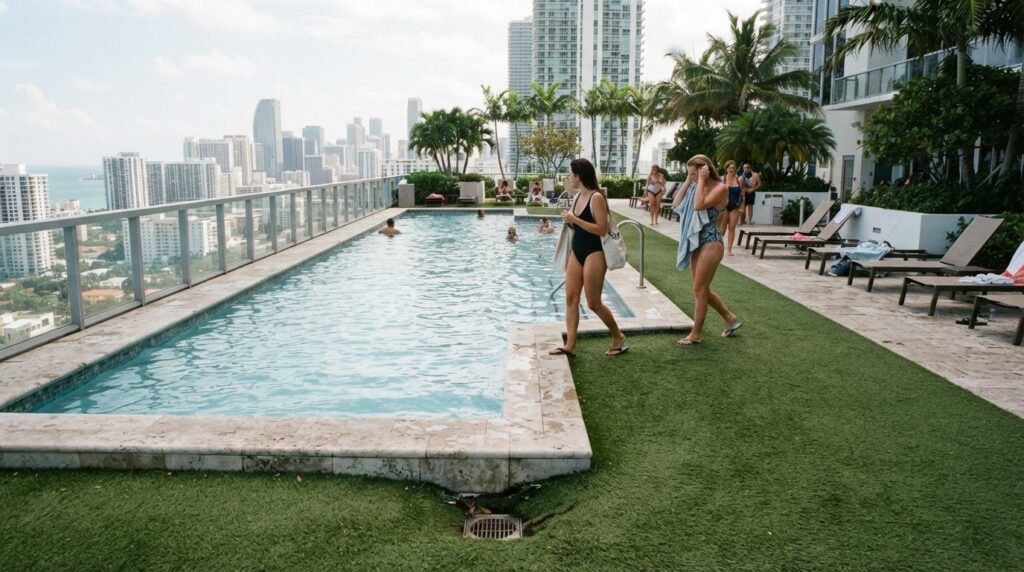
Artificial turf can be used around pools, on patios, and on rooftops when the surface and installation suit the setting. Rooftop turf installation in Miami requires attention to the roof structure and any added weight, not just the finished appearance. The U.S. Environmental Protection Agency says a structural engineer should evaluate whether a building can carry added weight when a new roof will add weight.
It’s natural to wonder whether turf designed for a poolside or patio can also work above ground. Each setting has different surface considerations, and rooftop projects need particular care before installation begins. This guide explains what to consider for pools, patios, and rooftops, what rooftop surfaces may require, and how Miami-Dade permits and building codes factor into planning. It also covers the South Florida areas Pro Turf Greens serves, including Fort Lauderdale, Miami, Palm Beach, Boca Raton, Delray Beach, Jupiter, Palm Beach Gardens, Weston, and Coral Gables.
Key Takeaways
- Artificial turf can suit pools, patios, and rooftops when the surface and installation are appropriate for the setting.
- For a rooftop project, understand the existing surface and how added weight may affect the building.
- Miami-Dade permits and building codes are part of rooftop project planning, alongside surface and structural considerations.
- Learn how a professional installation is planned and which South Florida areas are served.
Can Artificial Turf be used around pools, patios, or rooftops?
Yes. Artificial turf can be installed around pools, across patios, and on rooftops when the surface and project conditions are suitable. In Miami, each setting calls for a different assessment: poolside turf needs to work with the surrounding hardscape, while rooftop turf must be considered as part of the building. Artificial grass can also define an outdoor lounge or soften a balcony where living grass is impractical.
For patios, a professional considers the existing surface, edges, transitions, and water flow. For example, turf beside pavers needs a clean boundary that keeps the surfaces visually aligned. Around a pool, the layout should account for the pool edge and nearby walking areas. These details affect both the finish and how the space functions day to day.
Rooftop and balcony projects need a closer look at the underlying structure before installation. The U.S. Environmental Protection Agency says a structural engineer should evaluate whether a building can carry added weight when a new roof will add weight. This evaluation helps determine whether the planned surface is appropriate for the building.
Artificial grass doesn’t need irrigation to stay green like a living lawn, although cleaning may still use water. Routine brushing or grooming can help prevent matting, especially in frequently used areas such as a patio seating zone. The surface’s exposure and intended use influence its care needs.
Reviews for rooftop turf installation in Miami can offer insight into communication, workmanship, and completed rooftop projects. Look for examples that match your setting, since a ground-level lawn and a rooftop are different applications. Pro Turf Greens designs and installs artificial turf for residential and commercial spaces in South Florida, including Miami.
Rooftop installation surface requirements
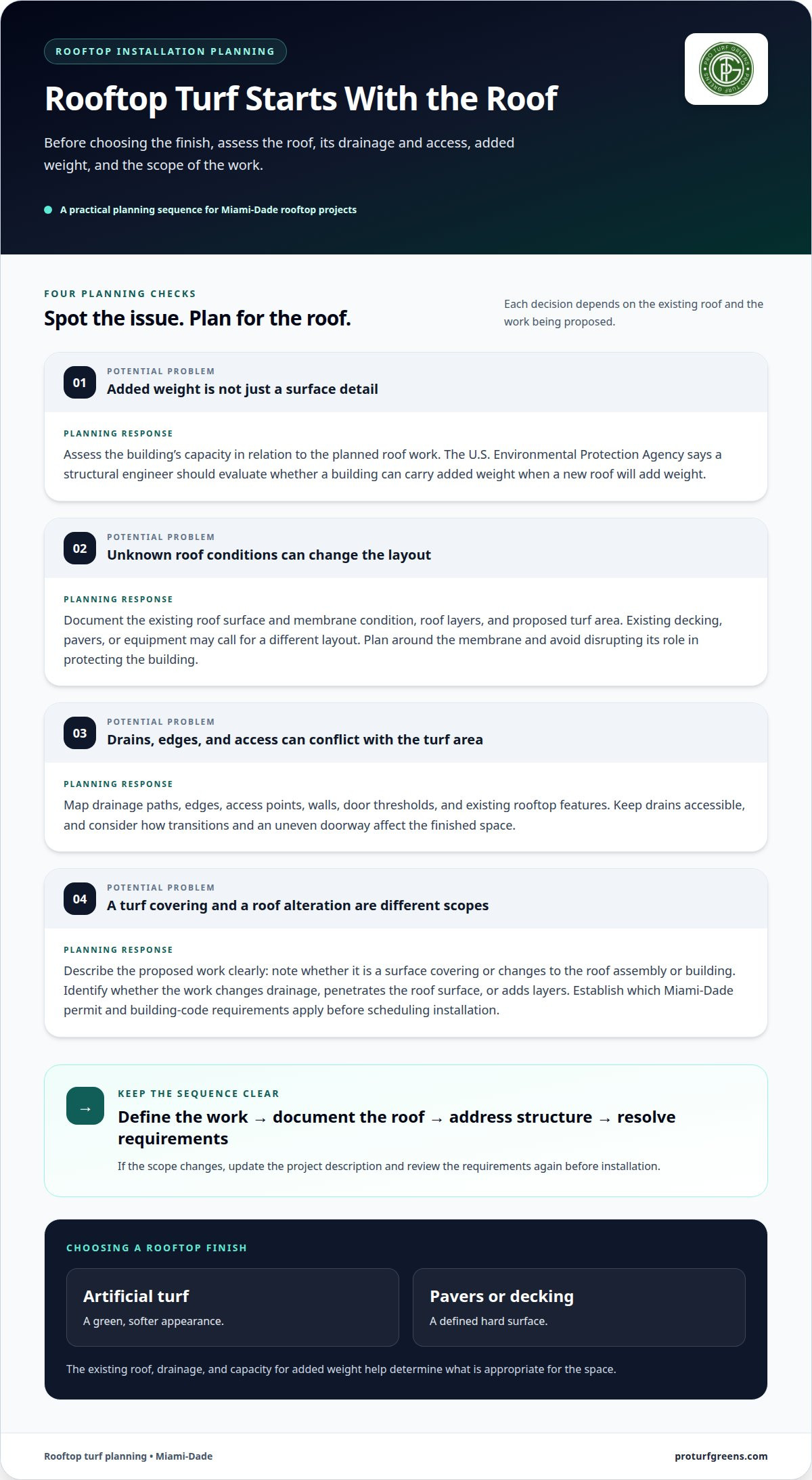
Turf, pavers, and decking create different rooftop finishes: turf offers a green, softer appearance, while pavers and decking create a defined hard surface. For Miami rooftop turf, begin by assessing the existing roof, its drainage, and its capacity for added weight.
Rooftop Surface Preparation
A professional assessment considers the roof surface, drainage paths, edges, access, and planned turf area. These details affect how the installation meets walls, door thresholds, drains, and existing rooftop features. For example, a drain beneath a proposed seating area needs to remain accessible, while an uneven doorway transition can affect how the finished space functions.
The roof membrane matters, too. The installation plan needs to account for its condition and avoid disrupting its role in protecting the building. Before work begins, the project team evaluates the area and identifies preparation needs. A rooftop with existing decking, pavers, or equipment may require a different layout from an open, level terrace.
Permit and Building Code Considerations
Miami-Dade permits and building codes belong in the planning process because the project scope and roof conditions shape which requirements apply. Identify relevant local requirements before finalizing installation details, rather than treating rooftop turf as a ground-level lawn project.
Added weight is a structural consideration. The U.S. This review assesses the building’s capacity in relation to the planned roof work. The existing roof layers and proposed installation both inform the evaluation.
Surface preparation and code planning are connected: the existing assembly, drainage, access points, and project scope all influence the installation approach. A rooftop with a membrane, pavers, or built-in equipment needs a plan suited to those conditions. This assessment helps determine whether artificial turf fits the intended space and how to coordinate the work responsibly.
Miami-Dade rooftop artificial turf permits and building codes
For a Miami-Dade rooftop project, distinguish the turf layout from any proposed roof alteration. Permit considerations depend on the planned work, so the project description should distinguish a surface covering from changes to the roof assembly or building.
A professional can organize project details before permit requirements are assessed. Document the roof’s current surface, proposed turf area, access points, drainage features, and any other planned construction. For example, placing turf over an existing rooftop surface is a different scope from altering that surface or adding structural layers. This distinction gives the review a clearer starting point.
Building capacity is another key consideration if the proposed work adds weight. The U.S. This evaluation relates the building’s capacity to the proposed roof work, rather than treating turf as an isolated finish.
In Miami-Dade, the project team should establish which local permit and building-code requirements apply before scheduling installation. The relevant review may depend on the property, existing roof construction, and whether the work changes drainage, penetrates the roof surface, or adds layers. These are useful scope details to document, not a substitute for the applicable local review.
A clear sequence keeps the process organized: define the proposed work, document roof conditions, address structural questions, then resolve applicable permit requirements before installation. If the scope changes, such as by adding construction beyond the original turf plan, update the project description and review accordingly. Keeping these decisions together helps align installation planning with existing building conditions and Miami-Dade requirements.
How professionals install artificial turf on a rooftop step by step
A rooftop installation follows a planned sequence, from defining the intended use to inspecting the finished surface. Each stage accounts for the roof layout, access, and features such as drains or doorways.
- Define the intended use. The project team establishes whether the rooftop will serve as a lounge, play area, or green accent. That purpose guides the layout and helps identify which areas need clear access.
- Document the rooftop. Professionals measure the proposed area and note drains, thresholds, walls, and fixed equipment. For example, a drain should remain reachable rather than being covered by the finished turf.
- Coordinate project approvals. Before installation begins, the team aligns the scope with applicable permit and building-code requirements. Any required structural review must also inform the planned work.
- Prepare the surface. Installers review the roof area and address preparation needs identified during planning. They account for the existing roof assembly and take care to preserve its protective function.
- Plan the turf layout. The material is positioned to suit the space and its boundaries. A layout around a doorway, for instance, needs a considered transition that keeps access practical.
- Fit edges and features. Installers shape the turf around the rooftop’s defined edges and obstacles. They keep drains and other service features accessible, while creating a neat finish against adjacent surfaces.
- Inspect the completed area. A final walkthrough checks the overall fit, transitions, and access points. Routine brushing or grooming can help prevent matting as the rooftop surface is used.
This sequence gives the project a clear path from planning through final inspection. To discuss professional turf installation for your project, contact Pro Turf Greens.
Pro Turf Greens
Pro Turf Greens designs and installs artificial turf spaces for South Florida properties, from residential lawns to recreational areas. If you’re considering turf for a rooftop, patio, or broader outdoor plan, start by discussing the project’s intended use and site conditions.
Its offerings include Backyard Putting Greens, Playgrounds & Recreational Turf, Tee Lines & Driving Ranges, and Lawns & Pet Turf. These options serve different purposes, whether you’re planning a dedicated play space or a lawn for everyday use. A clear picture of how you want the space to function helps guide the project.
For help considering your artificial turf project, contact Pro Turf Greens.
Plan a rooftop space that fits your home
A rooftop can become a more welcoming extension of your home when its design starts with how you want to use it. Consider whether you’re creating a quiet retreat, an open entertaining area, or a green space that complements nearby pools and patios. That vision gives the installation conversation a practical starting point.
For rooftop turf installation in Miami, discuss the property, intended use, and project scope with Pro Turf Greens. The company also installs Backyard Putting Greens, Playgrounds & Recreational Turf, and Tee Lines & Driving Ranges for other outdoor goals. The right direction depends on the space you want to create and how it will serve your household.
Bring your rooftop plans into focus and explore how artificial turf may fit your outdoor space. Contact Pro Turf Greens today to start the conversation.
Frequently Asked Questions
Do you offer warranties and local support in Miami?
Pro Turf Greens’ business information describes local artificial-turf services, but makes no warranty or service-guarantee promise. Its service area includes Miami and nearby communities such as Fort Lauderdale, Palm Beach, Boca Raton, Delray Beach, Jupiter, Palm Beach Gardens, Weston, and Coral Gables. Local service and warranty coverage are separate considerations, so don’t assume a warranty is included with an installation.
How does drainage work with Florida rain?
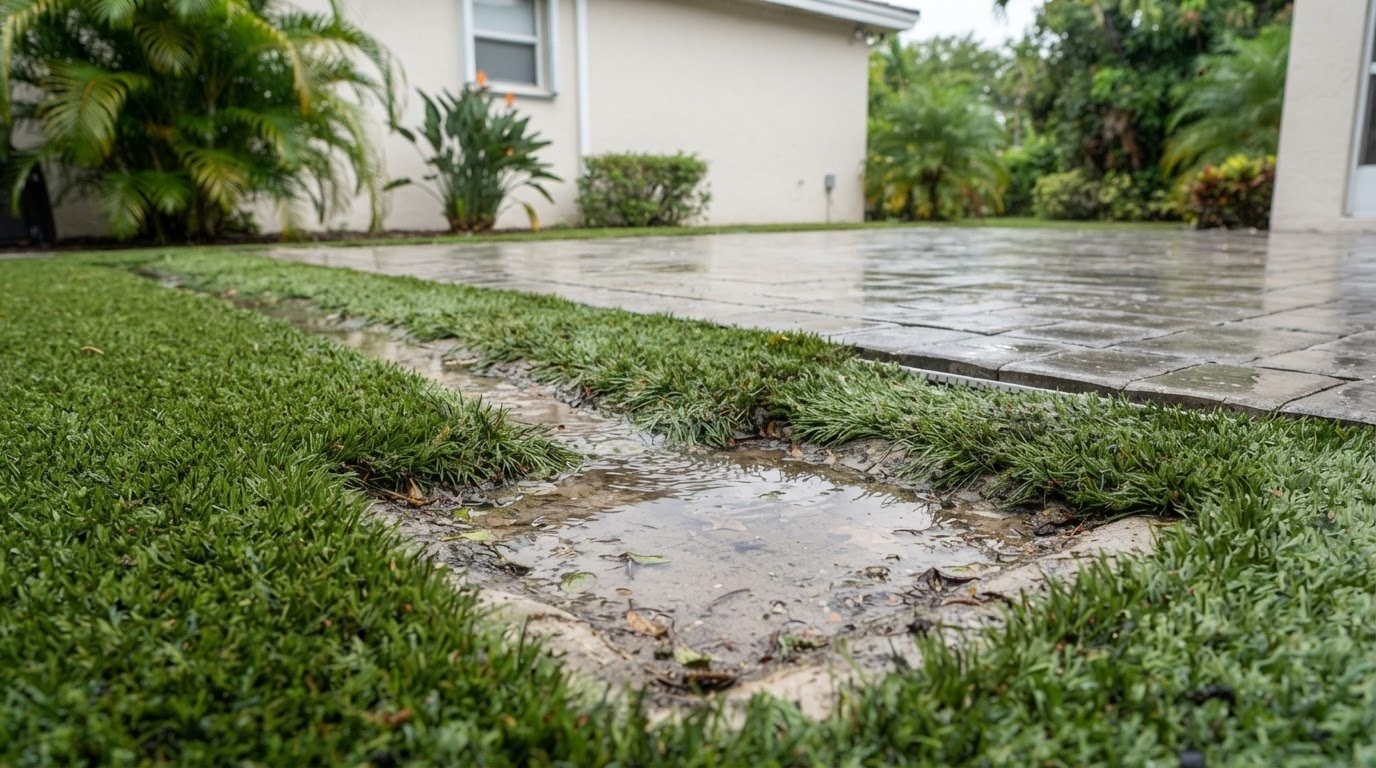
Rooftop drainage depends on the existing roof and how its drains direct water. The turf layout should preserve access to drainage points rather than cover them. For example, if a rooftop drain sits near a wall or seating area, installers need to account for it in the layout. Rainwater management also depends on the roof’s slope and existing drainage system.
How durable is artificial turf in Miami’s climate?
Durability depends on the turf’s construction, rooftop exposure, foot traffic, installation, and upkeep. Direct sun and frequent use can influence how the surface wears over time. A sheltered rooftop lounge and an open deck used regularly have different demands. Routine brushing or grooming can help limit matting, while cleaning needs depend on how the rooftop is used.
How long does installation take in Miami?
Installation time depends on project scope, rooftop access, surface preparation, and layout. An open deck differs from a roof with multiple drains, door thresholds, and fixed features. Permit coordination or structural review may also affect scheduling. The process begins with a site assessment, then moves through preparation, fitting, and a final inspection.
Which rooftop artificial turf installation companies serve Miami, FL?
Pro Turf Greens serves Miami and surrounding South Florida communities with artificial-turf projects. Its listed work includes a rooftop artificial-grass patio design for a Miami estate. For rooftop turf installation in Miami, the relevant project considerations include the roof layout, intended use, surface, and access. These specifics help shape a plan for the rooftop rather than a standard ground-level lawn.
What is the best artificial turf for rooftop decks in Miami’s climate?
The best fit depends on the rooftop’s exposure, intended use, existing surface, and drainage layout. A deck designed for quiet seating has different needs from one used for frequent gatherings. The turf plan must also suit the roof’s conditions and project scope. Comparing these factors helps identify a suitable option without assuming one specification works for every Miami rooftop.