What if the secret to lowering your handicap wasn’t a more expensive putter, but a professional-grade practice surface just steps from your patio? Many South Florida homeowners find themselves captivated by the idea of a private retreat, yet they often stall when trying to pin down a realistic backyard putting green cost. It’s understandable to feel overwhelmed by the wide range of estimates found online, especially when you’re balancing the desire for PGA-caliber performance with the practical realities of our local environment.
We recognize that an elite putting green is a significant lifestyle upgrade and a meticulous engineering project rather than just a simple landscaping addition. This comprehensive 2026 guide clarifies the critical factors that influence your total investment, ensuring you have the confidence to choose quality over compromise. You’ll discover how specialized base construction manages heavy tropical rainfall and why advanced material selection is vital for longevity in the high heat. We’ll also examine the latest Florida regulations, such as Rule 62-308.100, to help you maximize the long-term value of your custom installation.
Key Takeaways
- Recognize that a realistic backyard putting green cost reflects a multi-layered athletic system designed for professional-grade performance rather than just a simple aesthetic addition.
- Identify the primary investment drivers, from material quality to design complexity, to help you budget accurately for a custom-tailored golf experience.
- Understand the long-term risks of DIY installation, including base failure and drainage issues, and why professional craftsmanship is essential for surface longevity.
- Learn how South Florida-specific engineering, such as specialized limestone sub-bases, ensures your green remains resilient against high heat and heavy tropical rain.
- Discover how to maximize your investment’s value by incorporating versatile features like chipping stations and multi-tier undulations during the design phase.
The True Cost of a Backyard Putting Green: Beyond Square Footage
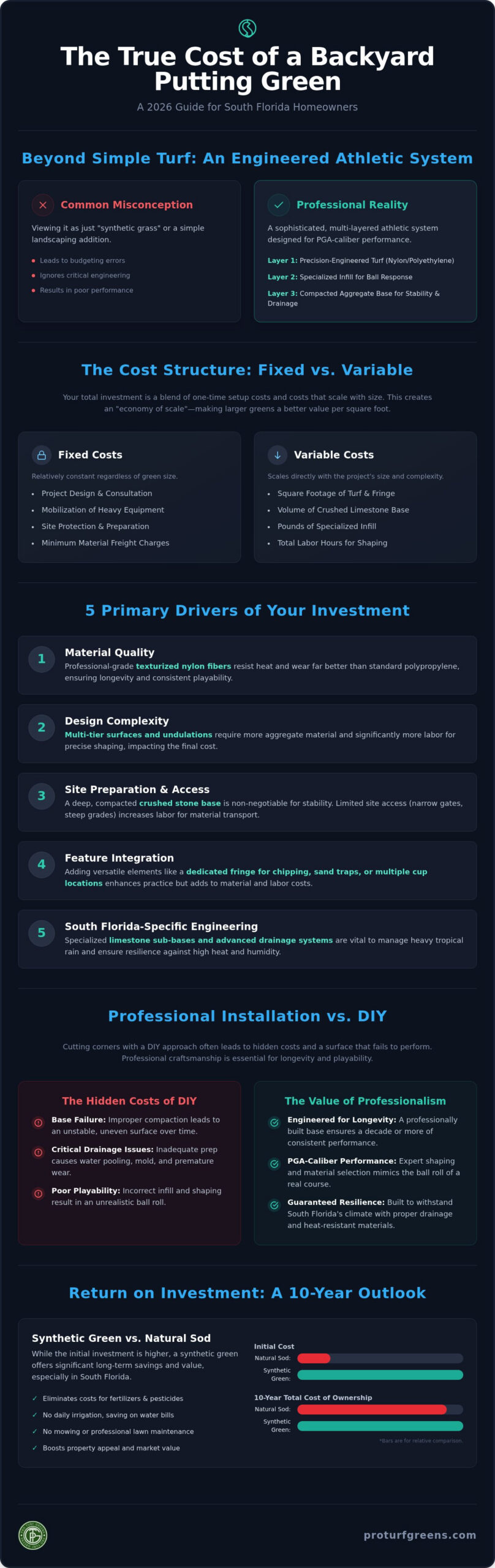
Viewing a professional putting green as mere “synthetic grass” is a common misconception that often leads to budgeting errors. In reality, a high-performance green is a sophisticated, multi-layered athletic system designed to mimic the ball roll and reception of a PGA-caliber course. To understand your backyard putting green cost, you must look beneath the surface at the specialized engineering required for stability and drainage. Modern installations rely on a complex history and composition of artificial turf that has evolved from basic carpet to precision-engineered nylon and polyethylene fibers. These materials are paired with a compacted aggregate base and specific infill ratios to ensure the surface remains true for years.
Every professional installation involves a blend of fixed and variable costs. Fixed costs remain relatively constant regardless of the green’s size, while variable costs scale with the square footage. Understanding this distinction is vital for accurate financial planning.
- Fixed Costs: Project design and consultation, mobilization of heavy equipment, site protection, and minimum material freight charges.
- Variable Costs: Total square footage of turf and fringe, volume of base materials like crushed limestone, pounds of specialized infill, and total labor hours for shaping and finishing.
This cost structure creates a significant “economy of scale.” Because the logistical effort to move a crew and equipment to a South Florida home is similar for most residential projects, a 500-square-foot green isn’t exactly half the price of a 1,000-square-foot green. Larger projects often provide better relative value because the fixed mobilization costs are distributed over a wider area.
Why ‘Price Per Square Foot’ Can Be Misleading
Relying solely on a flat square-foot rate ignores the logistical realities of South Florida construction. Mobilization costs include the specialized transport of plate compactors and power brooms to your property. If your backyard has limited accessibility, such as a narrow gate or steep grade, labor costs increase because materials must be moved by hand or smaller, less efficient machinery. Additionally, professional-grade golf turf often requires minimum order volumes from manufacturers, which can impact the unit price for smaller, boutique designs.
The ROI of Synthetic Turf in 2026
While the initial backyard putting green cost is higher than natural sod, the total cost of ownership over a ten-year period tells a different story. In 2026, South Florida homeowners face rising costs for professional lawn maintenance and stricter water usage regulations during the dry season. A synthetic green eliminates the need for expensive fertilizers, pesticides, and daily irrigation. Beyond the monthly savings, a custom athletic amenity significantly boosts property appeal, positioning your home as a premier estate in the competitive local real estate market.
5 Primary Drivers of Your Putting Green Investment
While every project is unique, five specific variables consistently dictate the final backyard putting green cost. These factors ensure your investment delivers a surface that performs as beautifully as it looks. Understanding these drivers allows you to prioritize features that align with your practice goals while maintaining a realistic budget. From the materials chosen to the expertise of the crew, every decision impacts the longevity and playability of the final product.
- Material Quality: Professional-grade installations utilize texturized nylon fibers. Unlike standard polypropylene turf used in general landscaping, high-end nylon resists heat and maintains its shape under heavy foot traffic.
- Design Complexity: A flat green is straightforward to install, but most golfers desire multi-tier surfaces with subtle breaks, which can influence the overall backyard putting green cost. These undulations require more aggregate material and significant labor hours to shape correctly.
- Site Preparation: In our local environment, excavation depth is non-negotiable. A deep, compacted crushed stone base provides the necessary foundation to prevent shifting and ensures the surface remains perfectly level over time.
- Feature Integration: Adding a fringe area for chipping or a sand trap transforms a simple green into a comprehensive short-game facility. Each additional cup placement and fringe transition adds to the material and labor requirements.
- Labor Expertise: The skill of the “shaper” is the most critical labor component. These specialists understand how a ball should break and spend hours fine-tuning the base before a single blade of turf is laid.
Surface Performance and Turf Selection
The density of the turf and the volume of infill used directly determine how the ball reacts. Stimp speed refers to the distance a golf ball travels on a putting surface as measured by a Stimpmeter, directly indicating the green’s relative fastness or slowness. To achieve a specific speed, builders use rounded silica sand infill. This specialized material settles between the fibers to provide consistent resistance and support, preventing the turf from matting down. If you’re ready to explore these options for your own space, scheduling a consultation with a design expert can help clarify which materials best suit your playing style.
Labor and Craftsmanship: The ‘Shaping’ Factor
There’s a significant distinction between a general turf installer and a dedicated golf green builder. An installer simply rolls out a product; a builder crafts a landscape. Creating realistic breaks and smooth transitions requires hand-tooling the base and meticulously cutting the turf to fit the design. The process of seaming the green to the surrounding fringe or apron turf is particularly time-intensive. It requires surgical precision to ensure the seams are invisible and the transition doesn’t interfere with your chipping practice.
Professional Installation vs. DIY: The Hidden Costs of Cutting Corners
The appeal of a lower initial backyard putting green cost often leads homeowners to consider the DIY route. While a weekend project might seem feasible, the technical requirements of a true athletic surface are vastly different from laying standard sod. Cutting corners during the installation process frequently results in hidden expenses that surface long after the project is finished. A professional build is an investment in long-term performance, ensuring the surface remains true for years of daily practice.
One of the most significant risks is “base failure.” A putting green requires a much higher level of compaction than a typical lawn. Without professional-grade equipment and techniques, the aggregate base often settles unevenly. This leads to frustrating surface dips and “birdbaths” within the first two years. Fixing these structural issues usually requires a complete tear-out and reconstruction, effectively doubling your total investment over time. A professional crew understands the specific compaction ratios needed to maintain a rock-solid foundation.
Professional installation also provides a level of aesthetic and functional perfection that is difficult to replicate without years of experience. Visible seams are a common DIY pitfall. These lines don’t just look unappealing; they create inconsistent ball breaks that can ruin your practice session. A seasoned craftsman uses specialized seaming techniques and golf-specific adhesives to ensure the surface is entirely monolithic. This attention to detail ensures that the ball rolls exactly as it would on a championship course.
Finally, consider the warranty value. Most DIY material suppliers offer limited warranties that only cover manufacturing defects in the turf itself. In contrast, a professional installation includes a comprehensive guarantee that covers both materials and workmanship. This partnership ensures that if any drainage or settling issues arise, you have a dedicated expert to resolve them. When calculating your backyard putting green cost, the peace of mind provided by a professional guarantee is a vital factor in the overall value proposition.
The Complexity of the Sub-Base
Achieving a true ball roll depends entirely on the precision of the sub-base. Unlike a decorative lawn where minor undulations are hidden by tall grass, a putting green reveals every imperfection. This requires a meticulous grading process that balances drainage with playability. Integrating a custom putting green design involves calculated slopes and breaks that only a specialist can execute with consistent accuracy. Each layer of aggregate must be leveled to within a fraction of an inch to ensure the final surface performs as intended.
Tooling and Specialized Equipment
The cost of renting professional equipment can quickly erode any savings from a DIY approach. Renting a heavy-duty plate compactor, a sod cutter, and a power broom for several days represents a significant expense. Beyond rentals, specialized turf shears and high-strength seaming tapes are necessary for a clean finish. A power broom plays a critical role in setting the turf blades upright and evenly distributing the infill, which is essential for a consistent stimp speed. Manual infill spreading often leaves the green feeling “bumpy” and unpredictable underfoot.
South Florida Specifics: Drainage, Base Prep, and Permitting
South Florida’s environmental conditions demand a specialized approach to construction that directly influences the backyard putting green cost. While a standard installation might suffice in drier climates, our local geography requires specific engineering to survive the elements. We leverage the “limestone advantage” by using locally sourced crushed limestone for the sub-base. This material provides exceptional stability and natural filtration, which is critical when building on our region’s unique sandy soil and high water table.
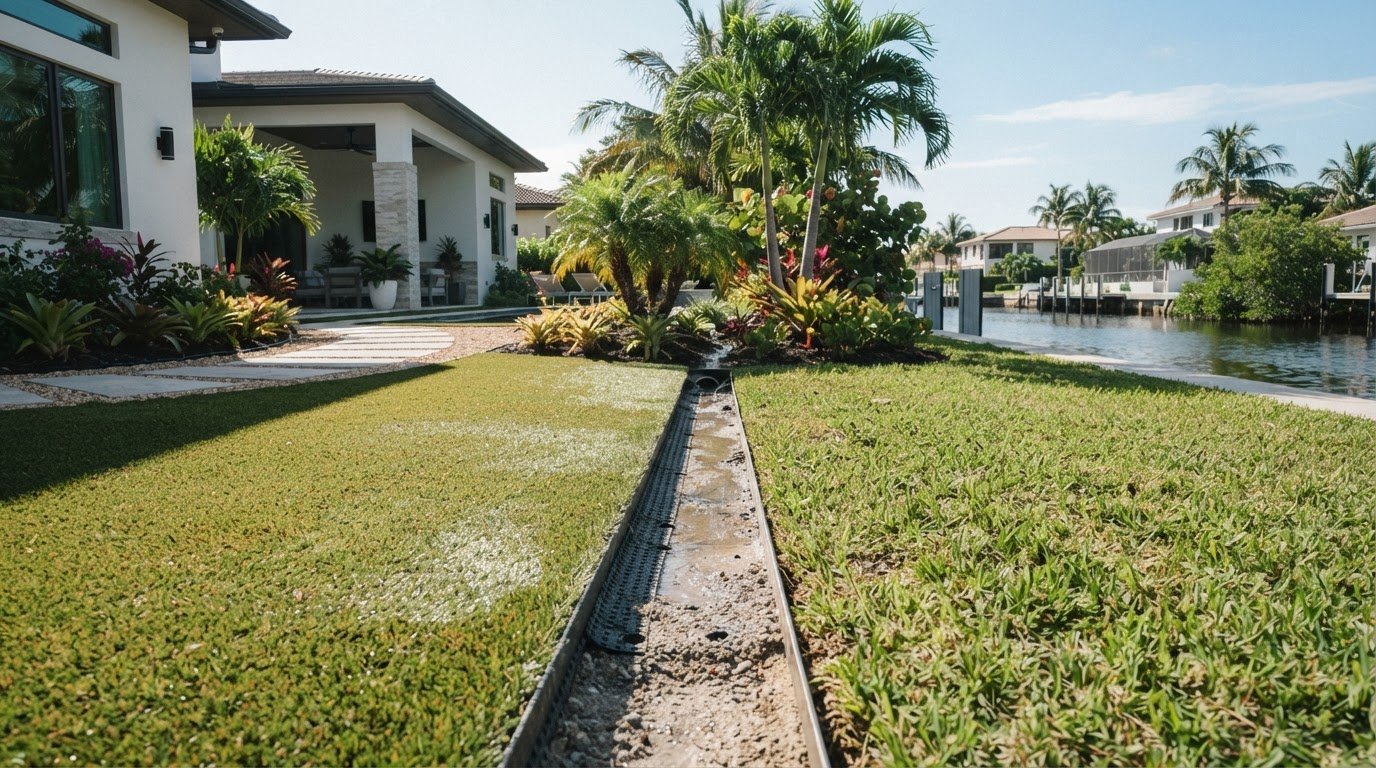
Managing our intense tropical weather is another primary consideration for any serious golfer. Florida’s sudden downpours can deliver two inches of rain per hour, a volume that would overwhelm a standard drainage setup and lead to surface bubbling. We engineer systems that include perforated pipes and strategic weep holes to move water away from the playing surface rapidly. This prevents the base from saturating and ensures your green is ready for play minutes after a storm passes, protecting the long-term integrity of your investment.
Engineering for the Florida Climate
Humidity isn’t just a comfort issue; it affects the chemical integrity of the installation. High moisture levels can interfere with how turf adhesives cure, requiring our craftsmen to use specialized, moisture-cured bonding agents. If you’re considering a larger project for a business or HOA, our commercial putting green installation South Florida checklist provides more detail on these technical requirements. These climate-focused choices protect your green from the warping and peeling often seen in lower-quality builds.
Permitting and Property Lines
Navigating the legal landscape is as important as the construction itself. In Broward County, specific setback requirements dictate how close an athletic surface can be to your property line. Additionally, municipalities in Miami and Fort Lauderdale often enforce “impermeable surface” caps. These rules limit how much of your lot can be covered by materials that don’t allow water to soak into the ground. We act as your partner in this process, ensuring your design meets all local municipal codes while maximizing your available practice space.
Heat mitigation is the final piece of the puzzle. The intense South Florida sun can degrade inferior synthetic fibers quickly and make them too hot to touch. We select materials specifically engineered with UV inhibitors and cooling technology to remain comfortable underfoot and vibrant for years. If you’re ready to start your project with a team that understands these local nuances, schedule your professional design consultation to receive a tailored estimate for your specific property.
Maximizing Value: The Pro Turf Greens Design Approach
At Pro Turf Greens, we view the design phase as a collaborative partnership rather than a simple transaction. Our process begins with an in-depth consultation where we align your specific golf goals with your backyard putting green cost expectations. Whether you’re a scratch golfer seeking a high-stimp surface for serious practice or a homeowner wanting a versatile space for family entertainment, we tailor every undulation and fringe cut to your vision. This stage is where we identify opportunities to increase the utility of your investment, such as adding chipping stations that allow for a comprehensive short-game routine.
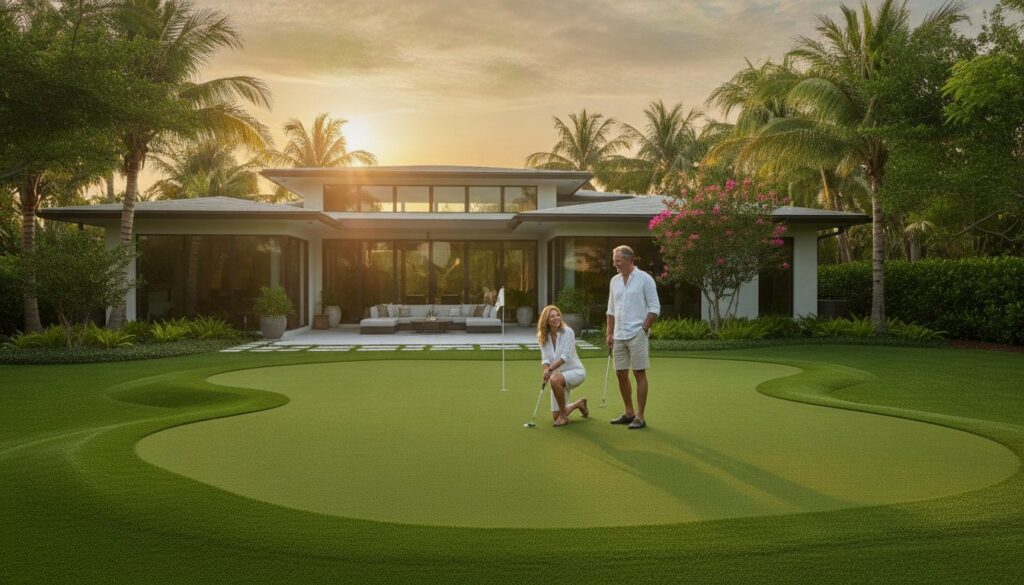
Integrating a professional green into your existing landscape requires a meticulous eye for detail. We don’t just place turf; we blend the synthetic surface with your natural surroundings, pool decks, and outdoor living areas. This seamless transition ensures your green feels like a natural extension of your home’s luxury aesthetic rather than an afterthought. To ensure the final result meets your exact standards, we conduct a comprehensive final walkthrough. During this session, we can calibrate the speed and break of the green to your personal preference, ensuring every putt feels exactly as you intended.
Personalized Layout Planning
Optimizing a compact footprint is one of our specialties. We use clever geometry and varied fringe widths to make even a smaller backyard feel like a full-scale practice facility. For clients with more expansive lots, we often integrate multiple tee boxes at varying distances to create a true “backyard golf course” experience. This level of customization adds incredible value to your property and your game. You can explore some of our most successful transformations in our guide to backyard putting green design ideas.
The Professional Guarantee
Choosing a professional build means investing in a surface designed for a 15+ year lifespan. Our comprehensive installation warranty provides South Florida homeowners with lasting security, covering everything from base stability to UV resilience. We also provide ongoing support and maintenance tips to keep your green performing at its peak through every season of tropical weather. If you’re ready to transform your outdoor space and receive a precise understanding of your backyard putting green cost, we invite you to take the first step. Request your free South Florida consultation today and experience our dedication to craftsmanship firsthand.
Transforming Your Backyard into a Professional Golf Retreat
Investing in a private practice area is more than a simple home improvement; it’s a commitment to your passion for the game and a significant upgrade to your lifestyle. We’ve explored how a professional surface is a complex athletic system that requires precision engineering, especially in our unique local climate. From selecting PGA-caliber turf materials to implementing specialized South Florida drainage expertise, every choice you make today ensures a high-performance retreat that lasts for years. Understanding these technical nuances is the best way to protect your investment while enhancing your property’s value.
Navigating your backyard putting green cost doesn’t have to be a solo effort. Our team brings local Fort Lauderdale craftsmanship and a dedicated partnership approach to every project, ensuring your design meets both your playing goals and your property’s specific requirements. We’re here to guide you through the planning process with transparency and expertise. Schedule Your Free Professional Putting Green Consultation to begin your transformation today. We look forward to helping you create the ultimate backyard golf experience right in your own home.
Frequently Asked Questions
Is a backyard putting green worth the cost for my home’s resale value?
A professionally installed synthetic green often increases a home’s marketability and overall property value, particularly in the South Florida luxury real estate market. Potential buyers view it as a high-end, low-maintenance amenity that offers an immediate lifestyle upgrade. While the specific return on investment varies by neighborhood, it serves as a unique differentiator that can lead to a faster sale and higher offers in competitive areas.
How much maintenance does a synthetic putting green actually require?
Maintenance is minimal, requiring only a fraction of the effort needed for natural sod. You’ll need to use a leaf blower to remove organic debris and occasionally rinse the turf with a garden hose to clear dust. Periodic brushing with a stiff-bristled broom helps keep the fibers upright and ensures the infill remains evenly distributed, which is essential for maintaining a consistent ball roll over time.
Can I install a putting green on top of my existing concrete patio?
It’s possible to install synthetic turf over concrete, provided the surface is level and has adequate pitch for water runoff. We use specialized underlayment pads to mimic the feel of a natural base and ensure the ball reacts correctly. However, a traditional aggregate base is usually preferred for larger projects to allow for more complex undulations and superior drainage during our heavy tropical rainstorms.
What happens to the green during a Florida hurricane or heavy storm?
Professional-grade greens are engineered to withstand the intense wind and rain associated with Florida’s storm season. The heavy aggregate base and weighted infill keep the turf securely in place even during significant gusts. Our advanced drainage systems, featuring perforated pipes and limestone sub-bases, allow water to permeate the surface rapidly, preventing the pooling or “floating” that often occurs with inferior DIY installations.
How long does the professional installation process typically take?
A standard residential installation typically takes between five and ten business days from initial excavation to the final walkthrough. Larger projects or those with complex features like sand traps and multi-tier undulations may require additional time for meticulous shaping. We manage the entire timeline, including site preparation and material delivery, to ensure a seamless transformation of your outdoor space with minimal disruption to your daily routine.
Does the turf get too hot for bare feet in the summer?
While all synthetic surfaces absorb heat, we utilize advanced turf fibers engineered with UV inhibitors and cooling technology to mitigate surface temperatures. The specific type of infill used also plays a role in heat dissipation. During peak South Florida summer afternoons, the surface will feel warm, but it remains significantly more comfortable than traditional pavers or concrete decks found in most backyards.
Can the green be customized for left-handed golfers or specific practice drills?
Customization is a hallmark of our design philosophy, allowing us to tailor every cup placement and break to your specific needs. We can engineer the layout to accommodate left-handed stances or create specific chipping stations that target your weakest short-game areas. This level of personalization ensures that your backyard putting green cost translates into a functional practice facility that actually helps lower your handicap.
What is the average lifespan of a professional-grade synthetic golf green?
A high-quality synthetic green typically has a lifespan of 15 to 20 years when installed by seasoned professionals. The longevity of the project depends on the quality of the nylon fibers and the stability of the compacted base. Because our materials are built for local humidity and sun exposure, they resist the fading and degradation that commonly affect lower-grade products, ensuring your backyard putting green cost provides value for decades.