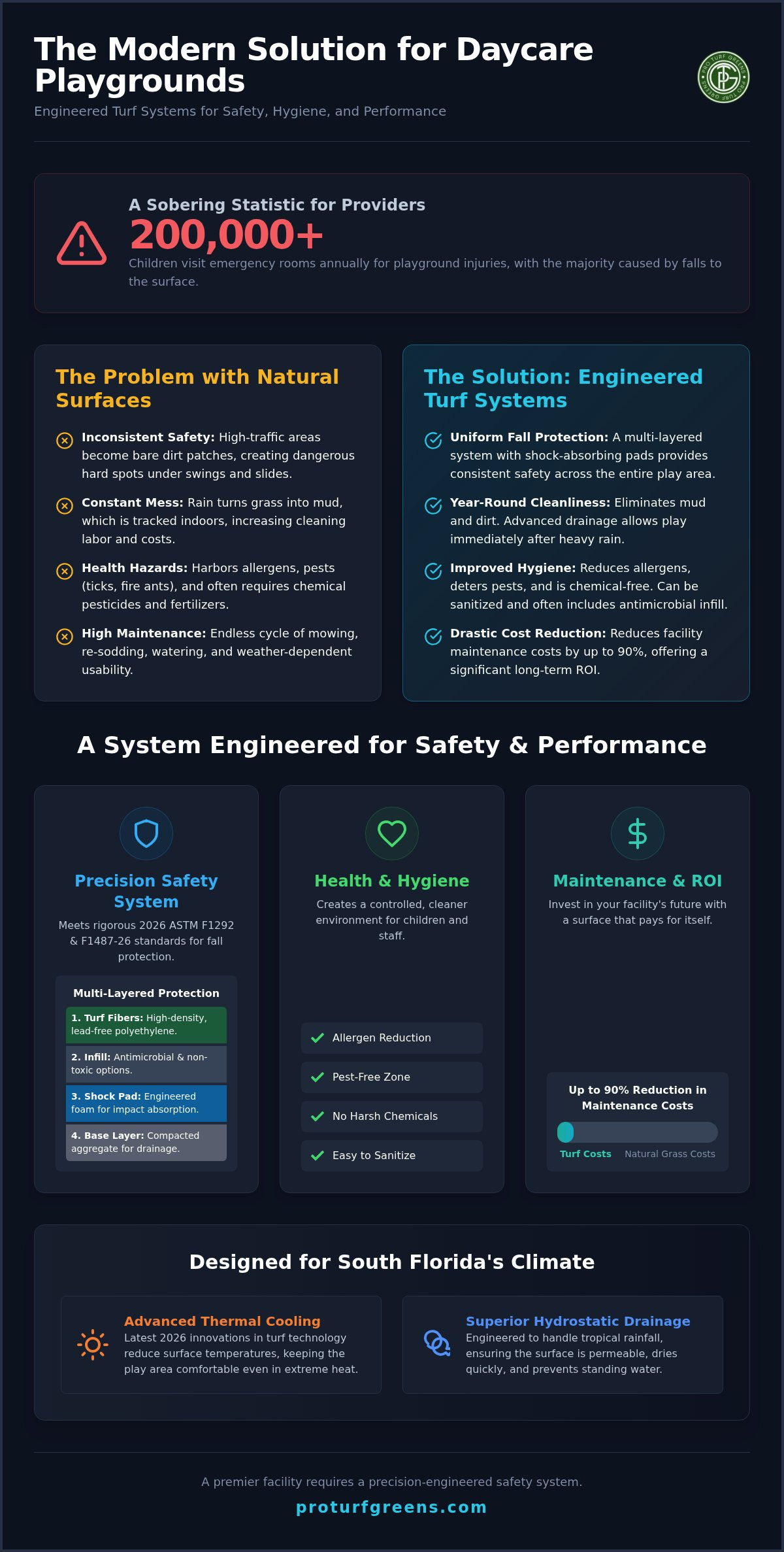
Over 200,000 children visit emergency rooms annually for playground injuries, and the majority of those incidents stem from falls to the surface. It’s a sobering reality for any facility manager considering the best artificial turf for daycare centers. You likely spend hours worrying about muddy footprints tracking into your classrooms or the liability of uneven, sun-baked grass. We understand that maintaining a safe, high-end environment in South Florida’s volatile climate is a constant challenge for dedicated providers.
You’re likely tired of the constant cycle of re-sodding and the liability concerns that come with natural lawns. We believe that a premier facility requires a precision-engineered safety system, not just a patch of grass. Choosing a high-performance synthetic surface allows you to invest in a play area that meets the rigorous ASTM F1487-26 standards while eliminating the endless cycle of mowing and messy tropical mud.
This guide details how the latest 2026 innovations in thermal cooling and shock-absorbing pads address South Florida’s specific heat and drainage needs. You’ll discover the long-term ROI of professional recreational turf and learn how to remain compliant with Florida’s newest regulations for permeable, lead-free surfacing. Let’s explore how to transform your outdoor space into a year-round sanctuary for play.
Key Takeaways
- Understand why modern artificial turf for daycare centers is a multi-layered safety system that meets the updated 2026 ASTM F1292 standards for fall protection.
- Discover how advanced thermal cooling and hydrostatic drainage systems handle South Florida’s extreme heat and tropical rainfall.
- Learn how to reduce facility maintenance costs by up to 90% while eliminating mud tracking and daily cleaning routines.
- Explore custom design options that allow for age-appropriate play zones, from sensory paths for toddlers to high-traffic areas for preschoolers.
- Gain insights into the 2026 Florida regulations that mandate permeable, lead-free surfacing for commercial play environments.
Why Daycare Centers are Switching to Artificial Turf
High-end daycare facilities are moving away from traditional landscaping in favor of precision-engineered synthetic systems. A professional-grade installation of artificial turf for daycare centers is a sophisticated, multi-layered surfacing system. It combines high-density polyethylene fibers with specialized backing and drainage layers designed to withstand the rigors of high-traffic educational environments. For a technical overview of artificial turf and its evolution, one can see how these materials have transitioned from simple athletic surfaces to complex safety solutions.
South Florida’s tropical climate creates a constant struggle with the “mud factor.” Heavy rain showers turn natural grass into a slurry of dirt that kids inevitably track into classrooms. This increases cleaning labor and accelerates wear on indoor flooring. Beyond the mess, synthetic grass offers several health-centric benefits:
- Allergen Reduction: By removing natural pollen-producing blades, centers provide a safer space for children with seasonal sensitivities.
- Pest Management: Ticks, fleas, and fire ants find no food source or nesting ground in synthetic fibers.
- Chemical-Free Safety: Managers can maintain a pest-free zone without relying on harsh chemical pesticides or fertilizers.
From Muddy Yards to Year-Round Play
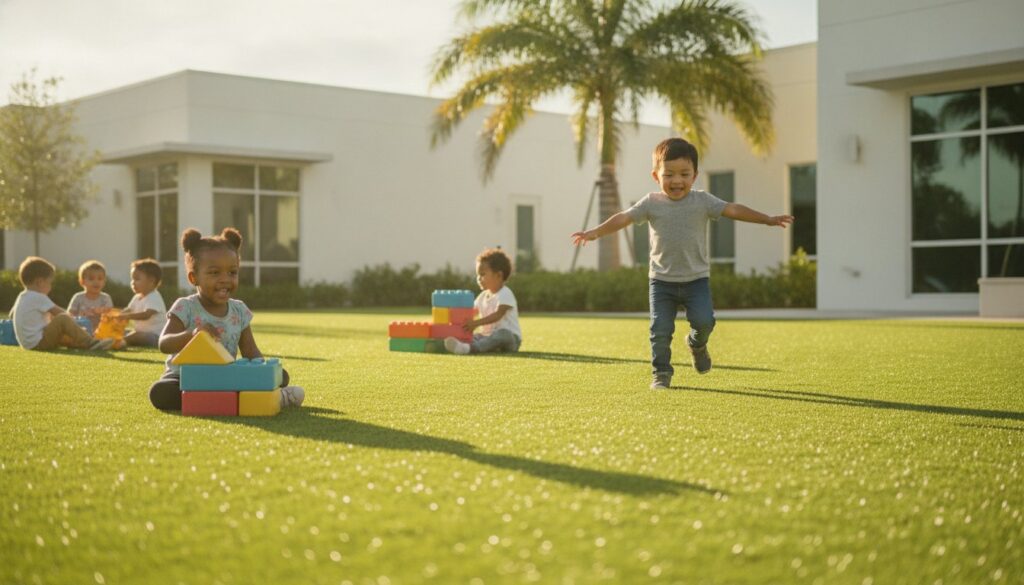
Natural grass simply isn’t built to handle the concentrated foot traffic of twenty or thirty active children. Within weeks, high-use areas under swings or near exit doors become bare dirt patches. Artificial turf for daycare centers remains lush and functional regardless of how many toddlers run across it daily. This consistency ensures that your curriculum isn’t dictated by the weather. You can maintain your outdoor play schedule even immediately after a heavy downpour. This reliability creates a luxury aesthetic that resonates with prospective parents during facility tours. A vibrant, green yard suggests a level of meticulous care and investment that distinguishes your center from the competition.
Hygiene and Health in Group Settings
Maintaining a sterile environment is a priority for any childcare provider. Modern synthetic systems often feature antimicrobial infill options. These specialized materials work to prevent the growth of bacteria and mold in shared play spaces. If an accident occurs, the surface is remarkably easy to sanitize. You can use mild, child-safe disinfectants during flu and cold seasons without damaging the fibers. We ensure all materials are lead-free and non-toxic, providing peace of mind for staff and parents alike. It’s about creating a controlled, predictable environment where health is never a secondary concern.
Safety Standards: Fall Heights and Shock Absorption
Safety in a childcare environment isn’t a secondary feature; it’s the foundation of a high-end facility. When directors choose artificial turf for daycare centers, they’re investing in a precision-engineered system designed to mitigate the risks associated with active play. The primary metric for this protection is G-Max testing, which measures the shock-absorbing properties of the surface. For daycare liability and child safety, maintaining a Head Injury Criterion (HIC) score below 1000 is a non-negotiable requirement. Unlike wood mulch or rubber crumbs that displace during play, synthetic systems offer uniform protection across the entire area.
Consistency is where synthetic surfaces truly outperform loose-fill alternatives. Children naturally kick mulch away from high-impact zones, such as slide exits or under swings, which creates dangerous “dead spots” where the concrete or hard-packed earth is exposed. While some older facilities still utilize recycled materials, recent Federal research on tire crumb infill has prompted many providers to switch to cleaner, encapsulated, or organic infill options that prioritize the health of curious toddlers. A partnership with a meticulous craftsman ensures your safety system is installed with the precision your students deserve.
Engineered Padding Systems
The secret to superior fall protection lies in specialized foam underlayments hidden beneath the green blades. These pads vary in thickness to match the specific fall heights of your playground equipment. A six-foot slide requires a different level of attenuation than a two-foot toddler climber. Professional installation is critical here because we secure the padding to prevent the shifting or bunching that often plagues low-budget setups. You can review the specific Playground Turf Safety Standards Florida mandates to ensure your facility remains fully compliant with local licensing boards.
Non-Slip and Non-Abrasive Textures
Young skin is exceptionally sensitive, making the choice of fiber structure vital for comfort. We select soft-to-the-touch blade structures that minimize the risk of skin abrasions or “turf burn” during tumbles. These modern textures also provide exceptional traction, which helps reduce slip-and-fall incidents even when the surface is damp from morning dew or a light afternoon shower. IPEMA compliance for daycare surfacing in 2026 signifies that the entire turf and padding system has been third-party validated to meet the most current ASTM safety specifications for impact attenuation within designated use zones.
The South Florida Challenge: Heat and Drainage
South Florida is a demanding environment for any outdoor surface. Between the relentless UV index and seasonal tropical storms, artificial turf for daycare centers has to do more than just look good. It acts as a specialized barrier against the elements. We prioritize UV stabilization in every project to ensure the fibers don’t become brittle or lose their color after a single summer. This resilience is paired with heat-reflective technology that specifically targets thermal absorption, ensuring the play area remains a welcoming space even in July.
Cooling Technologies for Playgrounds
Managing surface heat is essential for toddler safety during peak afternoon hours. We recommend utilizing specialized cooling infills that can reduce surface temperatures by up to 30 degrees compared to traditional infill materials. Selecting lighter-colored turf blends also plays a significant role in reflecting solar energy rather than trapping it. For a deeper look at these specific methods, you can read our guide on How to Keep Artificial Turf Cool in Florida. These small adjustments in material selection make a massive difference in the daily comfort of the children in your care.
Rapid Drainage Systems
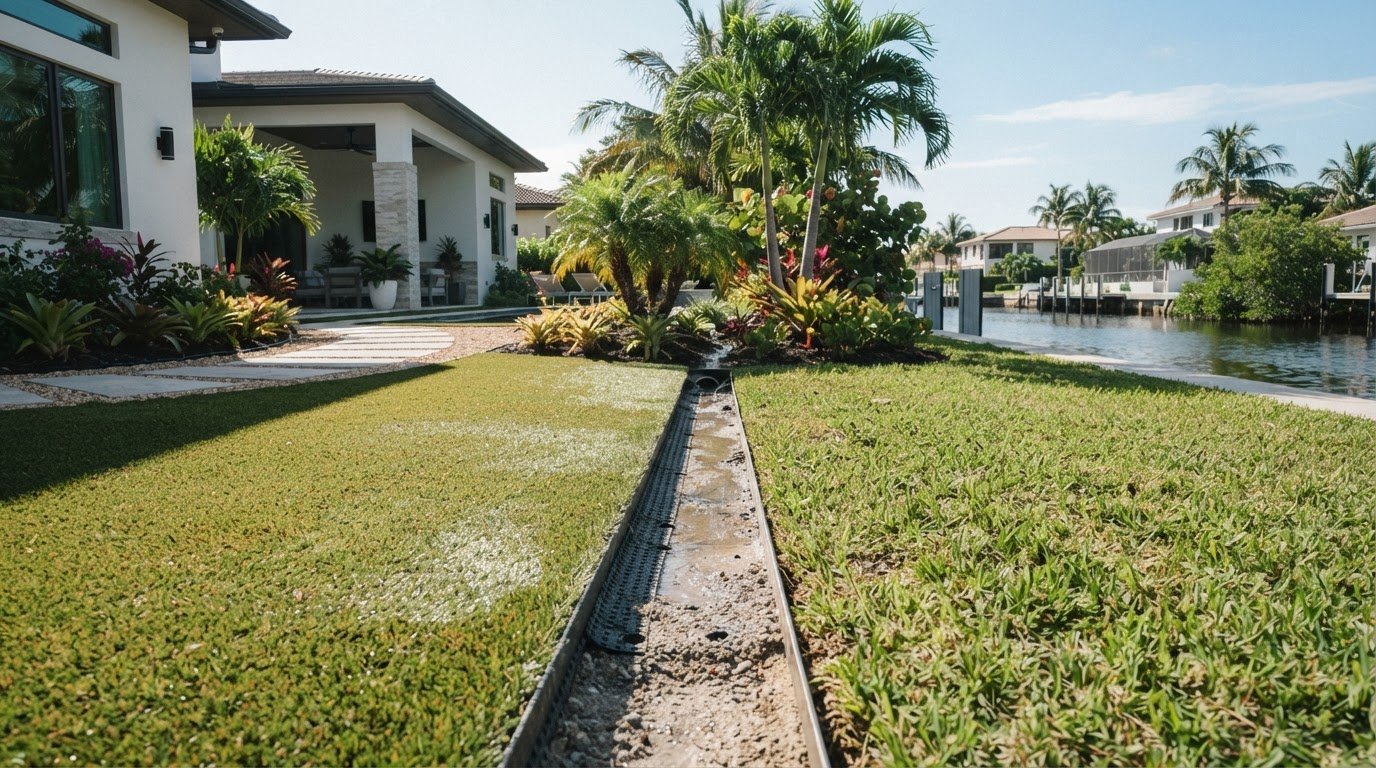
A sudden tropical downpour can dump inches of rain in minutes, often leaving natural grass yards unusable for days. Our engineering focuses on hydrostatic drainage systems capable of handling over 30 inches of rain per hour. We typically utilize 100% permeable backing rather than simple perforated options to ensure water moves vertically into the sub-base immediately. This prevents the puddling that causes facility downtime and ensures kids can return to play as soon as the clouds clear. It’s about maximizing your usable square footage regardless of the weather.
The foundation is just as important as the turf itself. South Florida’s limestone-rich soil requires a carefully compacted crushed stone base to facilitate this high-volume water evacuation. In our humid climate, this rapid airflow is also the primary defense against mold and mildew. High-flow backing ensures moisture doesn’t sit against the fibers, preventing the damp, musty odors that can plague lower-quality installations. It’s a comprehensive approach to moisture management that keeps your play area clean and dry. By choosing a system designed for our specific geography, you protect both your investment and the health of your students.
Maintenance and ROI: The Business Case for Daycare Owners
Investing in artificial turf for daycare centers is more than an aesthetic choice; it’s a strategic business decision that transforms a recurring expense into a long-term asset. For most facility owners, the outdoor play area is often the most expensive zone to maintain. Natural grass requires a relentless cycle of mowing, edging, and fertilizing, alongside the periodic cost of full sod replacement when high-traffic areas inevitably fail. By switching to a synthetic system, you eliminate these service fees entirely. You also realize significant utility savings, as a typical 1,000-square-foot natural lawn can consume over 170,000 gallons of water annually.
Longevity is another critical factor in the commercial ROI equation. While residential-grade products might wear down quickly, a professional-grade installation is engineered to last 15 to 20 years, even under the daily stress of dozens of active children. This durability ensures your “uptime” remains at 100%. You’ll no longer lose valuable curriculum hours because the yard is too wet or the grass is being treated with chemicals. Your facility stays open and functional regardless of the season.
Daily and Weekly Upkeep Simplified
The transition to synthetic grass drastically reduces the labor hours required from your janitorial or maintenance staff. Instead of managing a mud pit after a storm, the morning check becomes a simple 10-minute task of removing loose debris. For high-use commercial environments, we recommend a consistent deep-cleaning protocol to maintain hygiene and fiber resilience. You can find more detailed maintenance strategies in our High-Performance Sports Turf Guide, which outlines the best practices for preserving the integrity of high-traffic synthetic surfaces over several decades.
Projecting the 10-Year ROI
When you calculate the total cost of ownership over a decade, the financial benefits become undeniable. Beyond the direct savings on landscaping crews and water bills, a high-end playground serves as a powerful marketing tool. Prospective parents are often willing to pay a tuition premium for facilities that prioritize safety, cleanliness, and modern infrastructure. Most commercial facilities find that their synthetic system pays for itself through eliminated maintenance labor and water costs within the first five years of operation. If you’re ready to see how these numbers apply to your specific location, contact us for a custom-tailored ROI analysis of your play space.
Designing Your Ideal Daycare Play Space with Pro Turf Greens
Designing a world-class play environment requires a balance between creative vision and technical engineering. When planning artificial turf for daycare centers, we don’t just see a green field; we see a landscape of developmental opportunities. We specialize in creating custom layouts that segment your outdoor space into specific activity zones. This might include high-energy multi-sport areas for older children, winding sensory paths for toddlers, and secluded quiet areas for reading or rest. By zoning your facility according to age groups, you can apply different turf specifications, such as increased padding for infant crawl zones or ultra-durable fibers for preschooler sprint paths.
Multi-Functional Play Zones
Integrating various textures and materials enhances the sensory experience for developing minds. We often blend synthetic turf with other high-end surfaces like poured-in-place rubber or modern pavers to create a sophisticated, multi-textural environment. You can even incorporate educational elements directly into the design. Using colored turf to create permanent shapes, numbers, or hopscotch patterns turns the ground itself into a teaching tool. For facilities looking to maximize their recreational offerings, our Multi-Sport Game Court Turf provides a versatile foundation for everything from soccer to group exercises.
The Pro Turf Greens Advantage
Local expertise is the most critical factor in ensuring your installation survives the unique challenges of Fort Lauderdale. Our team brings a commitment to meticulous craftsmanship that distant contractors simply cannot match. We understand that South Florida’s sandy terrain requires a specifically engineered sub-base to prevent shifting or sinkholes over time. Our construction process begins with a comprehensive site assessment, followed by a professional subgrade preparation that accounts for local soil composition and drainage requirements.
Our team acts as a dedicated partner from the initial site assessment through the final construction phase. This methodical approach ensures that every detail, from the seam integration to the infill depth, meets our exacting standards for beauty and function. Your facility deserves a play space that reflects your commitment to excellence. Schedule your free daycare turf consultation today to begin the transformation of your outdoor environment.
Transforming Your Facility into a Premier Learning Environment
Establishing a high-standard play area is a significant step toward defining your facility as a leader in childcare excellence. By prioritizing precision-engineered safety systems and advanced thermal cooling, you’re not just installing a surface; you’re creating a reliable sanctuary for growth. We’ve explored how artificial turf for daycare centers eliminates the “mud factor” while providing a consistent, shock-absorbing foundation that meets the most rigorous safety standards. This investment ensures your outdoor space remains functional and beautiful through every season.
Pro Turf Greens specializes in meeting the unique climate needs of South Florida, ensuring every installation offers commercial-grade durability that withstands both heavy foot traffic and intense tropical storms. Our expert teams provide dedicated service across Miami, Fort Lauderdale, and Palm Beach with a focus on meticulous craftsmanship and long-term reliability. We invite you to Request a Free Daycare Turf Consultation to see how a custom-designed synthetic landscape can transform your facility’s daily operations and professional appeal. Let’s build a safer, more beautiful future for your students together.
Frequently Asked Questions
Is artificial turf safe for infants and toddlers who put things in their mouths?
Modern artificial turf for daycare centers is manufactured using non-toxic, lead-free materials that are safe for children of all ages. Pro Turf Greens selects high-density fibers that don’t shed easily, which minimizes the risk of accidental ingestion. These materials are chemically inert and don’t contain the pesticides or heavy metals often found in treated natural grass or older recycled rubber products. This ensures a clean environment where infants can crawl and explore safely.
How hot does artificial turf get in the South Florida sun?
Synthetic surfaces do absorb solar heat, but Pro Turf Greens mitigates this through specialized cooling infills and heat-reflective fiber technology. These innovations can reduce surface temperatures by as much as 30 degrees compared to standard turf. Pro Turf Greens also advises facilities to incorporate shade structures over play zones to ensure the area remains comfortable. A quick rinse with water can also provide an immediate cooling effect during the peak of a summer afternoon.
Does daycare turf require a special type of infill for hygiene?
Pro Turf Greens recommends utilizing antimicrobial acrylic-coated sand infills for daycare environments. This specialized material is designed to prevent the growth of bacteria, mold, and mildew in shared play spaces. Unlike standard silica sand, these coated options don’t absorb moisture or odors. This creates a more hygienic foundation that supports a healthier outdoor classroom for both students and staff while simplifying your daily cleaning routines.
How long does a commercial daycare turf installation typically last?
A professional commercial installation typically lasts between 15 and 20 years when maintained correctly. Pro Turf Greens engineers these systems to withstand the constant friction and high foot traffic of dozens of active children daily. The high-density backing and UV-stabilized fibers prevent premature wear and fading from the intense Florida sun. Investing in a professional-grade system ensures your center avoids the frequent replacement costs associated with lower-quality residential products.
What happens to the turf during a Florida hurricane or tropical storm?
Professional turf systems are designed to handle South Florida’s extreme weather through high-flow drainage and secure perimeter anchoring. Pro Turf Greens’ hydrostatic systems can evacuate over 30 inches of rain per hour, preventing the flooding often seen on natural lawns. The turf is mechanically secured to withstand high wind speeds. This ensures the surface remains intact and ready for play once the storm passes and any external debris is cleared away.
Can artificial turf be installed over existing concrete or asphalt play areas?
Artificial turf can be installed over existing hard surfaces like concrete or asphalt. However, Pro Turf Greens must first install a specialized shock-absorbing safety pad to ensure the area meets fall height requirements. This transformation allows you to turn a dangerous, hard courtyard into a soft, compliant play zone. Pro Turf Greens also ensures proper drainage channels are established so water doesn’t pool beneath the new surface during heavy tropical downpours.
How do you clean and sanitize turf after a child gets sick outdoors?
Sanitizing the surface is straightforward using child-safe disinfectants or specialized turf cleaning solutions. Because the backing is 100% permeable, liquids flush through the system into the sub-base rather than lingering on the blades. For localized incidents, a simple rinse followed by an enzymatic cleaner will eliminate pathogens and odors effectively. This ease of maintenance helps your staff maintain a high standard of hygiene during cold and flu seasons.
Does the turf meet Florida’s specific playground safety and fall height regulations?
Pro Turf Greens’ systems are specifically designed to comply with Florida’s playground safety standards and the updated 2026 ASTM F1292 requirements. Pro Turf Greens performs site-specific assessments to determine the necessary padding thickness based on the fall heights of your existing equipment. By using IPEMA-certified systems, your facility remains compliant with local licensing boards. This meticulous approach to artificial turf for daycare centers protects both the children in your care and your business liability.