
In the intense South Florida climate, choosing the wrong material for your lawn is a recipe for a backyard that smells like a kennel and feels like a frying pan. While many homeowners focus on the aesthetic appeal of the synthetic grass, the actual performance happens beneath the blades. You likely understand the frustration of lingering ammonia odors or turf that becomes far too hot for paws during a Miami afternoon. Finding the best infill for pet turf is about more than just stability. It’s about creating a sophisticated bio-filter that handles tropical downpours and UV exposure with ease.
We believe your outdoor space should be a source of pride rather than a maintenance headache. This guide provides a science-backed look at the latest innovations designed to eliminate odors and significantly reduce surface temperatures. You’ll discover how specialized materials like Zeolite and acrylic-coated sands transform a simple yard into a high-performance sanctuary. We’ll break down the top-performing options for 2026, ensuring your lawn remains cool, dry, and fresh regardless of the weather.
Key Takeaways
- Learn how specialized infill serves as a crucial bio-filter to neutralize ammonia odors and maintain the structural integrity of your synthetic lawn.
- Explore why advanced materials like Zeolite and antimicrobial acrylic-coated sand represent the best infill for pet turf to achieve a pristine, odor-free outdoor environment.
- Understand the impact of South Florida’s intense humidity on drainage and how to select materials that withstand heavy tropical rainfall without compacting.
- Utilize our selection framework to match infill durability and cooling properties with your pet’s size and your household’s specific activity levels.
- Discover why professional installation and power-brooming techniques are vital for the even distribution and long-term effectiveness of your pet turf system.
What is Pet Turf Infill and Why Does It Matter?
To understand the mechanics of a high-end synthetic lawn, we must look at what lies beneath the surface. Infill is the granular material spread between synthetic grass blades that acts as the “soil” of the system. While many homeowners assume all infills are created equal, selecting the best infill for pet turf involves choosing materials that serve as a functional bio-filter rather than just weight. Pet infill is a specialized antimicrobial or volcanic material designed to neutralize odors and inhibit bacterial growth at the source.
Understanding What is Pet Turf Infill helps clarify its three primary roles in your landscape. It provides vertical support to keep blades standing upright, protects the turf backing from direct UV degradation, and facilitates efficient drainage management. Without the correct material, even the highest quality turf will eventually fail under the pressures of pet use and environmental exposure.
The Problem with Traditional Silica Sand
Standard silica sand is often the default for general landscaping, but it’s a poor choice for households with dogs. Because silica sand is naturally porous, it acts like a sponge for pet urine. Over time, this traps bacteria and leads to a sharp “ammonia spike” that becomes particularly pungent in the humid South Florida weather. Heat accelerates the release of these gases, turning your backyard into an unpleasant environment for both humans and pets.
Beyond the smell, basic sand tends to compact when it becomes wet. In our region, constant moisture from humidity and rain causes these fine particles to bond together. This creates a hardened, non-draining surface that prevents water from reaching the base. It effectively ruins the permeability of your lawn, leading to standing water and a “swampy” feel that persists long after a storm has passed.
The Essential Role of Infill in Blade Longevity
A well-chosen infill does more than just manage hygiene; it preserves your long-term investment. Heavy dog traffic can quickly lead to “matting,” where the grass blades flatten and lose their realistic appearance. High-quality infill provides the lateral support necessary to keep those fibers resilient and upright. It acts as a physical buffer between the dog’s paws and the turf’s primary backing, absorbing the energy of every jump and sprint.
Infill also serves as a vital shield against South Florida’s intense UV rays. Without this protective layer, the sun’s energy would strike the turf backing directly, causing the material to become brittle and prone to tearing. This level of protection is essential for maintaining the premium aesthetic of artificial turf for dog runs south florida. When the infill is distributed correctly, it ensures the lawn remains lush, functional, and beautiful for years to come.
The Top 3 Infill Options for Pet Owners in 2026
Professional excellence in turf design requires more than just high-quality blades; it demands a sophisticated approach to the materials that sit between them. For homeowners seeking the best infill for pet turf, the market in 2026 has evolved toward highly specialized, non-toxic solutions. These advanced materials prioritize pet safety while addressing the specific challenges of South Florida’s climate. Choosing the right infill is the final step in ensuring your lawn remains a functional and beautiful part of your home.
Zeolite: The Natural Odor Neutralizer
Zeolite is a 100% natural, volcanic mineral that has become the gold standard for odor resistant pet turf. Its unique honeycomb-like structure acts as a molecular sieve, physically trapping ammonia ions before they can turn into gas. Unlike traditional sand that simply holds moisture, Zeolite uses an ion-exchange process to neutralize odors at the source. This organic mineral is also environmentally friendly, making it a safe choice for families who want to avoid synthetic chemicals in their recreational spaces. It remains highly effective even in the saturated conditions common during Florida’s rainy season.
Antimicrobial Sand: The Hygiene Specialist
Antimicrobial acrylic-coated sand is engineered for maximum hygiene and long-term durability. These granules are typically treated with specialized coatings that actively prevent the growth of mold, mildew, and bacteria. One of the most significant benefits is the physical shape of the particles. Unlike jagged natural sand, these granules are smooth and rounded. This meticulous design is gentler on dog paws and prevents the infill from compacting over time. Coated infills are particularly resilient in high-traffic areas, ensuring your lawn maintains its drainage capacity even with multiple large breeds.
In the intense Miami heat, surface temperature is a primary concern for every pet owner. Modern cooling infills utilize specialized coatings designed to reflect solar energy rather than absorbing it. These materials can lower the surface temperature of your lawn by 15 to 20 degrees, creating a much safer environment for pets during the midday sun. Selecting the best infill for pet turf means balancing these cooling properties with non-toxic certifications to ensure every family member is protected.
Selecting the right combination of these materials is a key step in a luxury lifestyle upgrade. If you are ready to transform your backyard into a fresh, high-performance sanctuary, the experts at Pro Turf Greens can help you select the ideal infill for your specific needs.
South Florida Climate: Why Your Zip Code Dictates Your Infill
Living in South Florida means navigating environmental extremes that quickly expose the weaknesses of subpar landscaping materials. While a specific infill might perform adequately in a dry climate like Arizona, our unique combination of “wet heat” and tropical intensity requires a more sophisticated solution. Selecting the best infill for pet turf in our region isn’t just about aesthetics; it’s a technical necessity to ensure your yard remains a functional asset rather than a maintenance burden.
The relationship between humidity and ammonia is particularly challenging here. In the stagnant, heavy air of a Miami summer, moisture prevents pet odors from dissipating naturally. This creates a “heavy” scent profile where urine smells become trapped near the ground. Coastal residents in areas like Boca Raton or Fort Lauderdale face the additional challenge of salt air. You need an infill that won’t corrode, clump, or lose its porous nature when exposed to the briny Atlantic breeze. High-quality materials like Zeolite remain chemically stable in these conditions, ensuring your lawn stays fresh year-round. Homeowners who want a deeper understanding of how to select the right system can benefit from reviewing a comprehensive guide to artificial turf for dogs miami residents trust to handle the region’s unique climate demands.
Managing the “Heat Island” Effect
Dark synthetic turf fibers are designed for realism, but they naturally absorb solar energy. Without the right material choice, your backyard can become a “heat island” that radiates warmth long after the sun goes down. Standard silica sand tends to hold onto this heat, making the surface uncomfortable for bare paws in July and August. In contrast, specialized cooling infills act as a thermal buffer. These materials can lower surface temperatures by 15 to 20 degrees by reflecting UV rays rather than absorbing them. To keep your pets safe during peak sun hours, we recommend a combination of cooling infills and occasional light rinsing to activate evaporative cooling properties.
Rapid Drainage for Florida Downpours
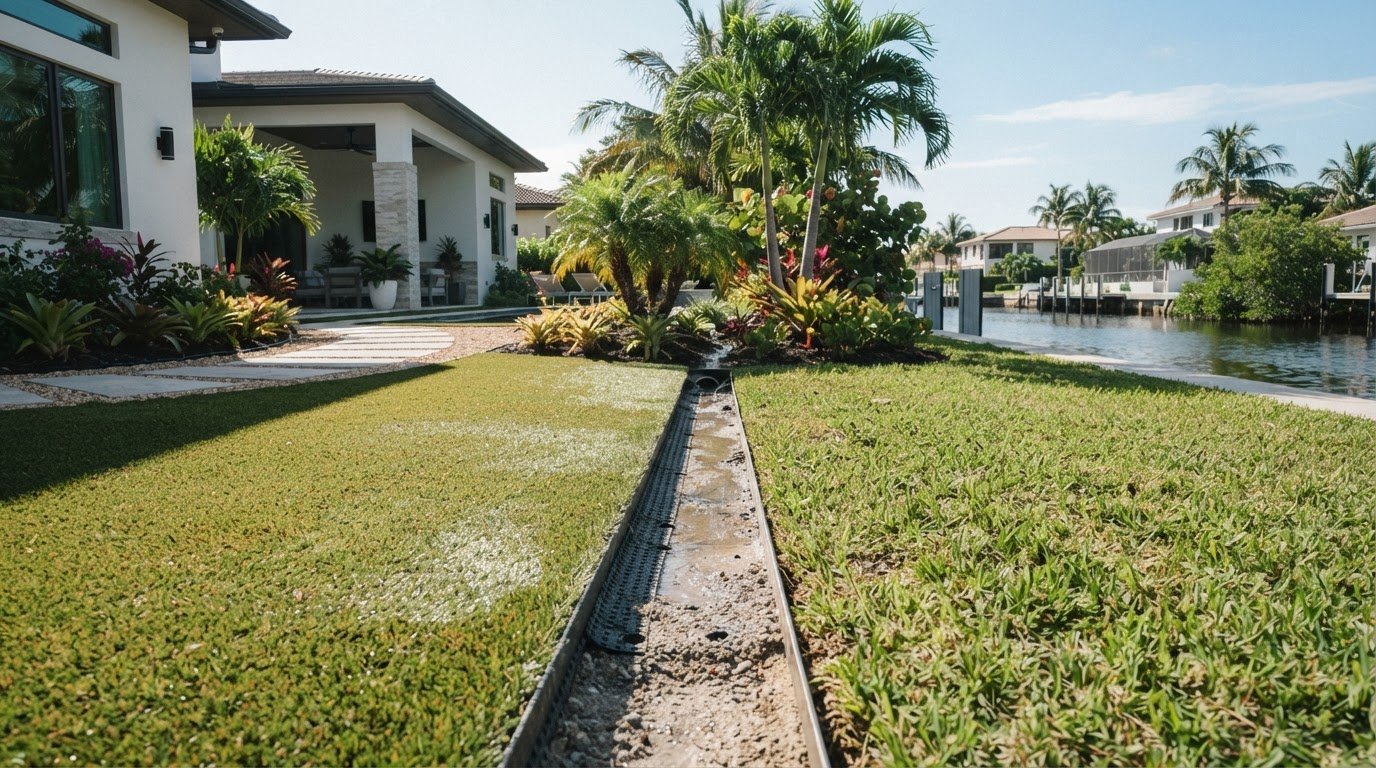
Our region is famous for sudden, torrential rainstorms that can drop inches of water in minutes. If your infill doesn’t allow for immediate permeability, you’ll face “ponding,” which creates a primary breeding ground for mosquitoes. The best infill for pet turf must facilitate instant transit of water through to the crushed stone sub-base. This ensures your pet’s play area dries quickly and remains hygienic. Choosing a high-flow system is a key part of maintaining water saving lawns South Florida homeowners rely on for both beauty and environmental resilience. A well-engineered infill ensures that even after a tropical storm, your turf is ready for use within minutes, not hours.

Selection Framework: Matching Infill to Your Household
Selecting the right materials for your landscape is a highly personal decision that depends on the unique dynamics of your household. While we’ve discussed the technical specifications of various materials, identifying the best infill for pet turf requires a closer look at your specific daily usage. A single small breed has a vastly different impact on a lawn than a pack of large, active dogs. Our selection framework helps you balance durability, hygiene, and budget to create a space that remains pristine for years.
Pet density is the most critical factor in determining your infill requirements. If your backyard serves as the primary exercise area for multiple dogs, the ammonia load increases exponentially. Similarly, dog size dictates the physical stress on the turf fibers. Large breeds, such as German Shepherds or Labradors, exert significant downward force that can lead to fiber compaction. For these situations, you need a high-durability infill that resists crushing while maintaining its porous structure for drainage.
It’s tempting to cut costs on infill during the initial installation, but this often leads to “odor regret” within the first six months. Investing in premium materials now ensures a fresh-smelling yard and extends the lifespan of the turf backing by protecting it from UV exposure and physical wear. Think of it as a long-term lifestyle upgrade rather than a simple utility purchase. Your willingness to perform basic maintenance, such as occasional rinsing, will also influence which material provides the highest value over time.
The Multi-Dog Household Solution
For households with several pets, a hybrid approach often yields the most successful results. We frequently recommend a Zeolite and antimicrobial blend to handle heavy use. This combination provides a double layer of protection: Zeolite captures ammonia while the antimicrobial coating prevents bacterial colonies from forming. You should also consider increasing the infill depth in designated “potty zones” where waste is most concentrated. This proactive strategy, combined with regular how to get dog urine smell out of artificial turf maintenance routines, ensures your yard stays fresh even in the Florida heat.
Low-Traffic and Small Breed Considerations
If you have a single small breed or a large decorative lawn with a small designated pet area, a simpler antimicrobial sand might suffice. In these cases, the priority shifts toward softness and aesthetic consistency. Smaller paws are more sensitive to texture, so choose a rounded granule that provides a comfortable walking surface. This allows you to manage costs effectively across a large installation while still providing a hygienic space for your pet. If you’re unsure which material fits your lifestyle, the team at Pro Turf Greens is ready to design a custom solution for your home.
Professional Installation: The Key to Infill Performance
The longevity and performance of your synthetic lawn depend as much on the precision of the installation as they do on the quality of the materials themselves. Even if you invest in the best infill for pet turf, a manual or DIY application often leads to disappointing results. Without specialized equipment, infill tends to clump on the surface rather than settling at the base of the fibers. This creates “patchy” odor control where some areas are protected while others become ammonia traps, ultimately compromising the hygiene of your entire outdoor space.
Professional installers utilize industrial power-brooms to ensure every granule reaches its intended destination. This mechanical process lifts the turf blades into a vertical position while vibrating the infill down to the primary backing. By seating the material at the very bottom of the fibers, we provide the lateral support needed to prevent matting and ensure the antimicrobial properties are concentrated where waste actually collects. This level of detail is what separates a high-end landscape from a basic utility installation.
It’s also vital to remember that infill cannot compensate for a poorly engineered foundation. A successful pet turf system requires a meticulously prepared base of crushed stone or shell-base that facilitates immediate vertical drainage. If the sub-base is compacted or improperly graded, water and urine will pool beneath the turf regardless of the infill used. At Pro Turf Greens, we focus on the entire system, ensuring the foundation, turf, and infill ratios are perfectly balanced for the specific needs of South Florida homes.
The Pro Turf Greens Difference
Our team provides a level of technical expertise that goes beyond simple product sales. We conduct a custom site analysis for every Miami and Fort Lauderdale project to account for local drainage patterns and soil composition. By using high-end, pet-safe materials that meet the rigorous 2026 climate standards, we eliminate the “hot spots” often found in subpar installations. Our goal is to create a seamless, beautiful surface that remains cool and fresh even during the peak of a tropical summer.
Next Steps for Pet Owners
Transforming your backyard into a luxury pet sanctuary begins with an expert evaluation of your property. We invite you to schedule a free consultation to discuss your specific layout and pet requirements. During this process, you can learn how to integrate your choice of the best infill for pet turf into a comprehensive artificial turf consultation miami. For personalized advice and a professional estimate, please call our local experts at 561-221-1010 to start your landscape transformation today.
Elevating Your Outdoor Living Standards
Achieving a high-performance backyard in our demanding climate requires a meticulous blend of material science and dedicated craftsmanship. By choosing the best infill for pet turf, you’re investing in a sophisticated bio-filter that actively manages South Florida’s intense UV exposure and sudden tropical rainfall. Whether you opt for the odor-neutralizing power of Zeolite or the advanced cooling technology of antimicrobial sand, your final choice ensures a fresh and safe environment for your pets.
At Pro Turf Greens, we specialize in odor-resistant installations designed for long-term resilience. Our team has provided local South Florida expertise since our inception, bringing PGA-caliber craftsmanship to residential lawns across the region. We’re committed to transforming your outdoor space into a pristine, maintenance-free sanctuary that enhances your daily life. If you’re ready to upgrade your landscape, Schedule Your Free South Florida Pet Turf Consultation with our experts today. Your perfect, pet-friendly lawn is just a conversation away.
Frequently Asked Questions
Is artificial turf infill safe for my dogs to play on?
Yes, modern infill materials are completely safe for pets when you select non-toxic, lead-free options. High-quality materials like Zeolite or acrylic-coated sand are inert and don’t contain harmful chemicals. These products are specifically engineered to withstand heavy play while remaining hypoallergenic. Choosing the best infill for pet turf ensures your dogs can run and roll without exposure to the dust or irritants found in traditional natural soil.
How often do I need to replenish or top off the infill?
You’ll generally only need to top off your infill every two to three years. While the material is designed to stay in place, heavy activity or extreme weather events can cause minor displacement over time. High-traffic zones near doorways or favorite play spots might require more frequent attention. Regular maintenance helps maintain the upright position of the grass blades and ensures the odor-control properties remain effective across the entire lawn.
Can I use regular playground sand as infill for my pet turf?
We strongly advise against using regular playground or masonry sand for synthetic pet areas. These materials are often too fine and lack the specialized coatings necessary to prevent bacterial growth. Regular sand absorbs moisture and traps urine, which creates a significant odor problem in our humid climate. Additionally, it tends to compact into a hard, non-porous layer that ruins the drainage capacity of your high-end turf system.
Does zeolite infill really stop the smell of dog urine?
Zeolite is exceptionally effective at neutralizing odors because it acts as a molecular sieve. Unlike products that simply mask smells, this volcanic mineral uses a natural ion-exchange process to capture ammonia before it can turn into a gas. This technical approach is vital for maintaining a fresh backyard in South Florida. It’s widely considered the best infill for pet turf when odor management is the primary concern for a homeowner.
What is the best infill for keeping turf cool in the Florida sun?
Acrylic-coated sands with reflective properties are the superior choice for temperature management in the Florida sun. These specialized materials are designed to reflect solar energy rather than absorbing it, which can lower surface temperatures by up to 20 degrees. Zeolite also provides a secondary cooling benefit by retaining small amounts of moisture that slowly evaporate. This combination creates a significantly more comfortable surface for sensitive paws during our intense summer afternoons.
Will heavy rain wash away the infill in my backyard?
Heavy tropical rain shouldn’t wash away your infill if it was professionally installed and settled with a power-broom. The granules are dense enough to stay at the base of the fibers even during significant downpours. Proper base preparation also ensures that water flows vertically through the system rather than moving horizontally across the surface. This engineered drainage prevents the “washout” effect that is common with poorly installed or DIY synthetic lawns.
Do I need different infill for a putting green if my dog uses it too?
Combining a professional putting surface with a pet area requires a specialized approach to material selection. Traditional putting green infill is designed for consistent ball roll and speed, but it doesn’t always offer antimicrobial protection. If your dog shares the space, we recommend using a round, antimicrobial coated sand. This allows you to maintain a high-performance golf experience while ensuring the area remains hygienic and free from pet-related odors.
How do I clean the infill once it is installed?
Cleaning your infill is a straightforward process that involves regular rinsing and occasional enzyme treatments. For daily maintenance, a quick spray with a garden hose helps move liquids through the infill and into the drainage base. For deeper sanitization, we suggest applying a pet-safe turf enzyme cleaner. These solutions break down organic matter trapped in the granules, ensuring your lawn stays fresh and the infill continues to function as an effective bio-filter.